Missing Addends: 5 Powerful Ways to Find the Hidden Part
Keep the whole in view while children find the hidden part, count how many more are needed and check their result.
Five counters lie on a tray. An adult covers some of them and leaves three in view. A child who says “three” has counted something accurately, even though that number does not answer the question about the hidden group. Missing addends are easier to teach when children can point to the whole, the known part and the part they are looking for. This guide gives early primary learners five ways to work through that relationship and check it. Three existing picture addition worksheets offer practice after the story and small quantities make sense.
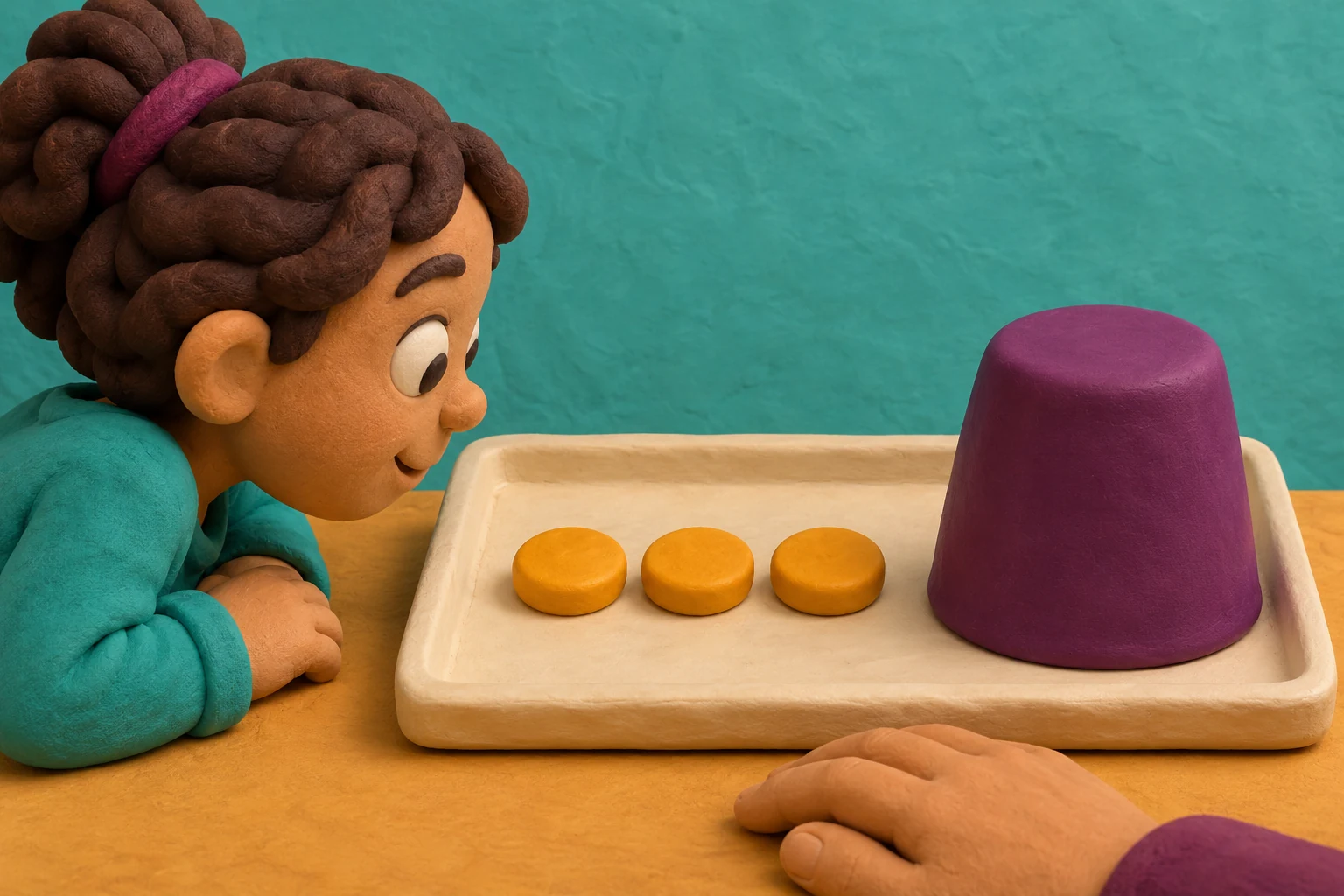
The cup hides a part without removing it from the total.
Give the empty space a meaning
In a sum such as 3 + □ = 5, the 5 tells how many are in all. The box represents an amount that joins 3 to make that whole. The known part is already available. In 3 + 2 = □, the box has a different job. Both parts are known and the whole is being asked for. Read each story before deciding what to write. A child can solve the same quantities in one arrangement and be unsure about the other.
Use whole-number examples with familiar totals at first. Large blocks, printed dots or wide paper counters are easy to move. The IES guide to early maths for families describes how children move through counting and comparing toward simple operations. Make sure the learner can count the intended whole and recognize what that final count refers to. Working within five can make the discussion easier before larger worksheet totals are useful.
Choose a method for finding missing addends
Cover a group without taking it away
Count five large counters together. Move three to one side and slide a cup over the remaining two. Say “We still have five in all. We can see three.” Ask the learner what the hidden part must be. A child who has lost track can look again at the complete grouping and repeat the move. Keep the total available by displaying five broad dots on another card or by saying it again. Hiding a group should illustrate the relationship rather than test memory of a number the adult mentioned once.
After a prediction, uncover the counters. Point to the two that had been hidden and then to all five. Ask how each count answers a different question. Show that the cover had changed what was visible, while the total stayed the same.

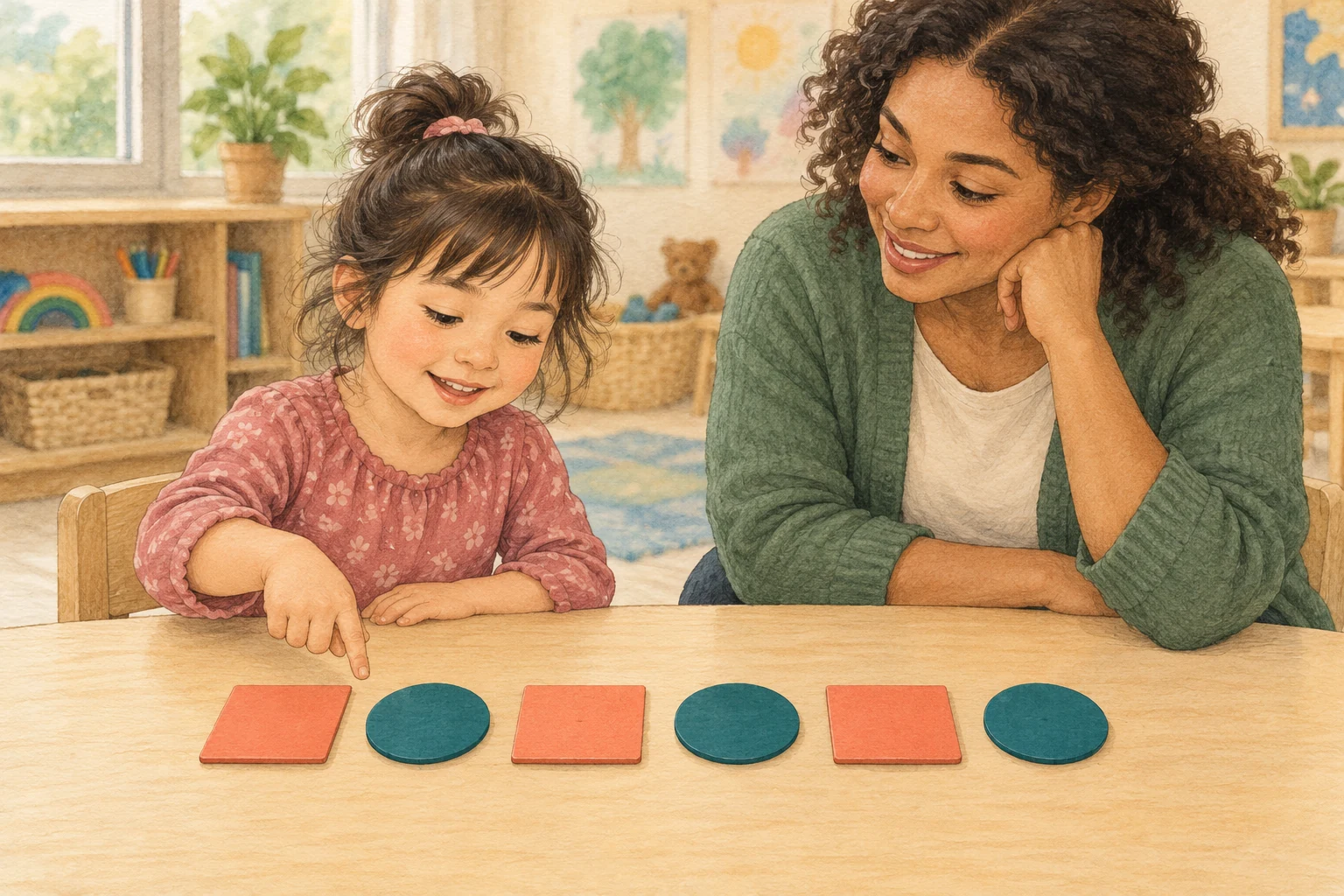
The two colours distinguish the known and hidden contributions when the group is revealed.
Fill the remaining spaces on a mat
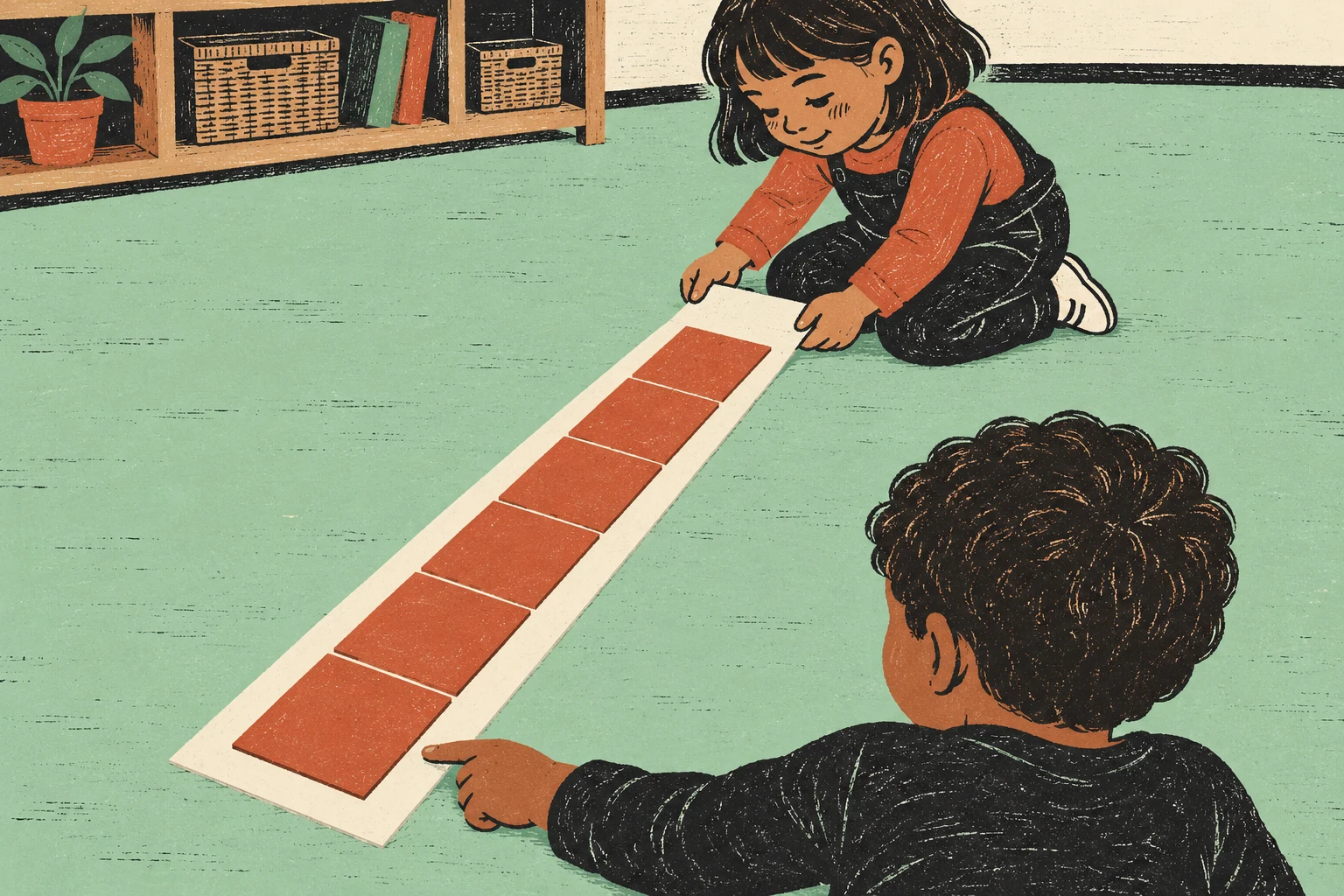
Draw five clearly spaced places. Put three counters in three spaces, one per space. Ask how many additional counters fit if every space needs one. The learner can place the counters and say which ones were added. Use separate colours or a physical gap when it helps keep the parts visible. Avoid relying on colour as the only distinction. The two additional pieces can stay on a different side of the tray before they are moved.
Count all again when ready. Then ask how many spaces were empty at the start. The two answers should refer back to two things: the whole set of spaces and the spaces that still needed filling. Give the child time to point.
Count the steps from the known part
For a learner comfortable counting forward from a number, agree that 3 counters are already placed. Say 4 as you place the next counter and 5 as you place another. Count the two new counters separately. If the child names the last number as the missing part, ask what it counts. “Five tells us how many are there now. How many did we add?” A finger tap or a separate mark for each addition can help. Encourage counting all when counting on is confusing.
Move to a different pair once the first explanation works. If you start with one object and want three in all, model that two actions are needed. A child might say “two, three” and still need help connecting that spoken sequence with the two additional objects.
Start from the whole and set the known part aside
Show five. Slide three to the known side and ask how many are left in the other part. Count two. Put the parts back together. This method can connect subtraction and addition for a child who already understands both operations. Keep the story clear: three counters remain on the mat as part of the known whole. They are temporarily set apart so you can inspect the remainder.

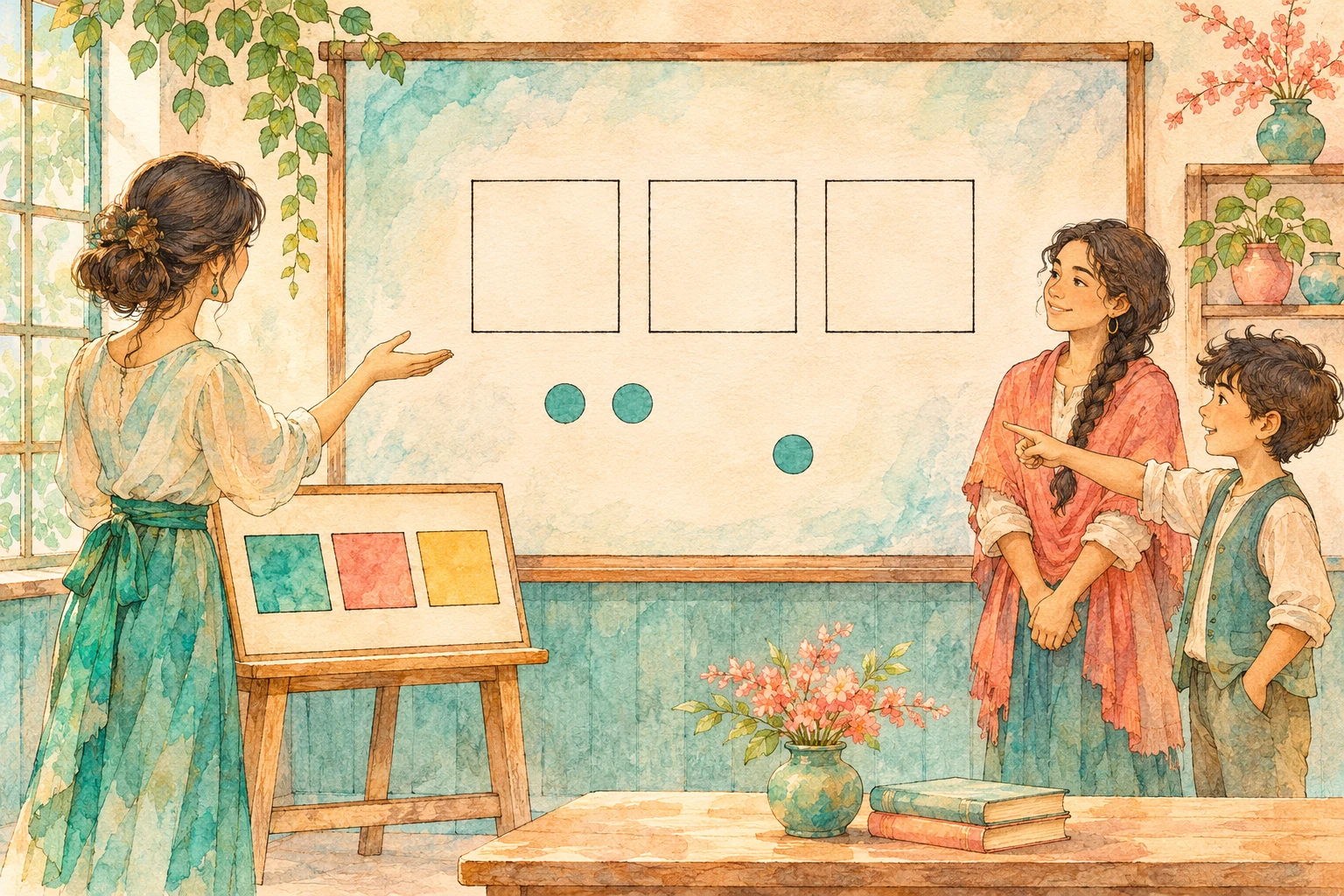
The gap allows a child to refer to each group before counting or combining them.
For children ready for symbols, 5 minus 3 equals 2 and 3 plus 2 equals 5 describe the same three quantities in related ways. The WWC early maths practice guide summary describes connecting familiar representations and language with formal symbols once the learner can use the underlying idea. Show each written number beside the group it describes.
Rebuild the full sentence to check it
Place separate cards for the known amount, the amount found and the whole beside the two groups and total. Say what each card names. Then read the finished equation using “is the same amount as” for the equals sign when that helps. The goal of the check is to find whether the two parts make the stated whole. If the counters do not show that, move a piece or recheck the original number before changing the answer.
Once the child can track the parts, try the unknown first, as in □ + 3 = 5. Explain that the order of the parts on the page changed. Build the relationship again rather than telling children to move a number mechanically. Two and three still make the same whole whichever part you record first.
Let the worksheet do the job it says it does
| Printed or spoken question | The unknown | A useful model |
|---|---|---|
| Three counters and two more. How many in all? | Whole | Combine and count both groups. |
| There should be five. Three are already on the tray. How many more? | One part | Fill the two remaining places and check the whole. |
| Five are on the tray in two groups. One group has three. How many in the other? | One part | Separate the known group and count the other. |
| Both sides should show five. Do they? | Whether the amounts agree | Check or rebuild each side. |
Three ways to select a printable problem
Open Fish and Shells: Clever Missing-Number Addition Worksheet to 10 and locate the section specifically marked for the missing number. The page also offers ordinary sums with the answer box after the equals sign. Select one of each kind for an older learner to compare. Before writing, ask them to point to the two visible numbers and say what each one counts. The pictured fish and shell groupings can supply context, and movable objects can help when a particular equation has no corresponding picture.
With Farmyard Addition Worksheet: Brilliant Ways to Finish Sums to 10, select a task about finishing a farm total. A child can show the additions with large paper shapes or draw simple marks on spare paper. If some pictured animals are already provided, keep those distinct from the newly drawn group. Ask which marks count toward the finished total.
Sunny Snack Addition Worksheet: Sweet Ways to Check Sums to 10 uses snack pictures and sums. Find a problem with both parts shown that the child can check, then make a similar problem on spare paper and cover one part. Keep the two questions distinct. This intentional comparison is additional teaching and need not be drawn onto the supplied sheet. Current panels list all three pages for ages five to eight with a watermarked one-page PDF sample and a clean membership option.

Two spaces and a separate record can make the known part, unknown part and total easier to discuss.
Six things you can notice during one turn
- Counting the whole. The learner includes every selected item once.
- Naming the parts. They can show which pieces are already present and which are needed.
- Keeping the original total. Covering or shifting a group does not change how many belong to the whole.
- Finding a manageable strategy. The child chooses whether to fill spaces, count on or inspect what's left.
- Matching symbols to amounts. The written box represents the amount they found.
- Checking for agreement. The reconstructed groups match the stated total.
A kitchen table and a classroom tray
Imagine setting places for visitors
In a hypothetical home example, there will be five seats and three napkins are already down. The child initially picks up five more. Their caregiver shows the occupied places and asks which places still need a napkin. The child fills two empty spots, then confirms that every seat has one. The adult can repeat the story using different numbers another day. The everyday result comes first.
Imagine a printed box causing a familiar mistake
In a hypothetical classroom, a learner writes 7 in the box in 5 + □ = 7. The teacher notices that the child read the last number from the page and sets out seven spaces. They put five counters in place together and add two. The learner points to the two added counters while the teacher shows where their number belongs. In the next turn the box goes after the equals sign and both parts are provided. The teacher asks what the box describes before any numeral is written.
Four small games for future turns
Leave an empty parking space
Mark a few parking spots on scrap paper and put a large toy into some of them. Ask how many more are needed if all the places will be used. Change the arrangement while keeping the number of spaces the same. Use broad toys that are safe for everyone taking part.
Send a message from the other tray
Show a known total and put an amount in one tray. The learner tells a pretend helper how many to bring for the empty tray. Use different kinds of large objects if the parts are hard to distinguish. The helper can check the total with the child.
Compare two ways to reach one total
Make five from one and four, then from three and two. Let the learner place the groups separately. Ask what changes in the parts and what stays constant in the whole. Choose only one total and let the learner invent another partition when ready.
Invite someone to translate the picture
A child draws big dots for two groups on scrap paper. Ask a partner to name the known quantities and decide which part should be hidden. The adult writes a matching sentence if needed. Compare the equation with the drawing and change whichever no longer describes the agreed story.
Let the explanation finish the game
A clear response can be a gesture to two counters or a sentence that distinguishes that pair from the whole. “Show me the ones we needed to add.” Give the child time to find them. Check the part by putting it back into the whole. A learner who can show what the missing amount means has done substantial mathematical work, even if the worksheet still has other boxes waiting.