Outdoor Observation: 5 Brilliant Jobs for Young Scientists
Return to one familiar place, compare what changed and make a record a child can explain. Five outdoor jobs with three existing worksheet links.
After a light rain, a child sees that the puddle beside a planter no longer touches the corner. A drawing from yesterday could help them explain what changed. Outdoor observation starts with that kind of ordinary discovery. Choose a safe familiar place and give preschool or early primary children one manageable way to look closely, record a feature and return to check it again. Three existing worksheets can help start conversations about plants, leaf piles and weather plans. The outdoor place itself supplies the details children will use as evidence.
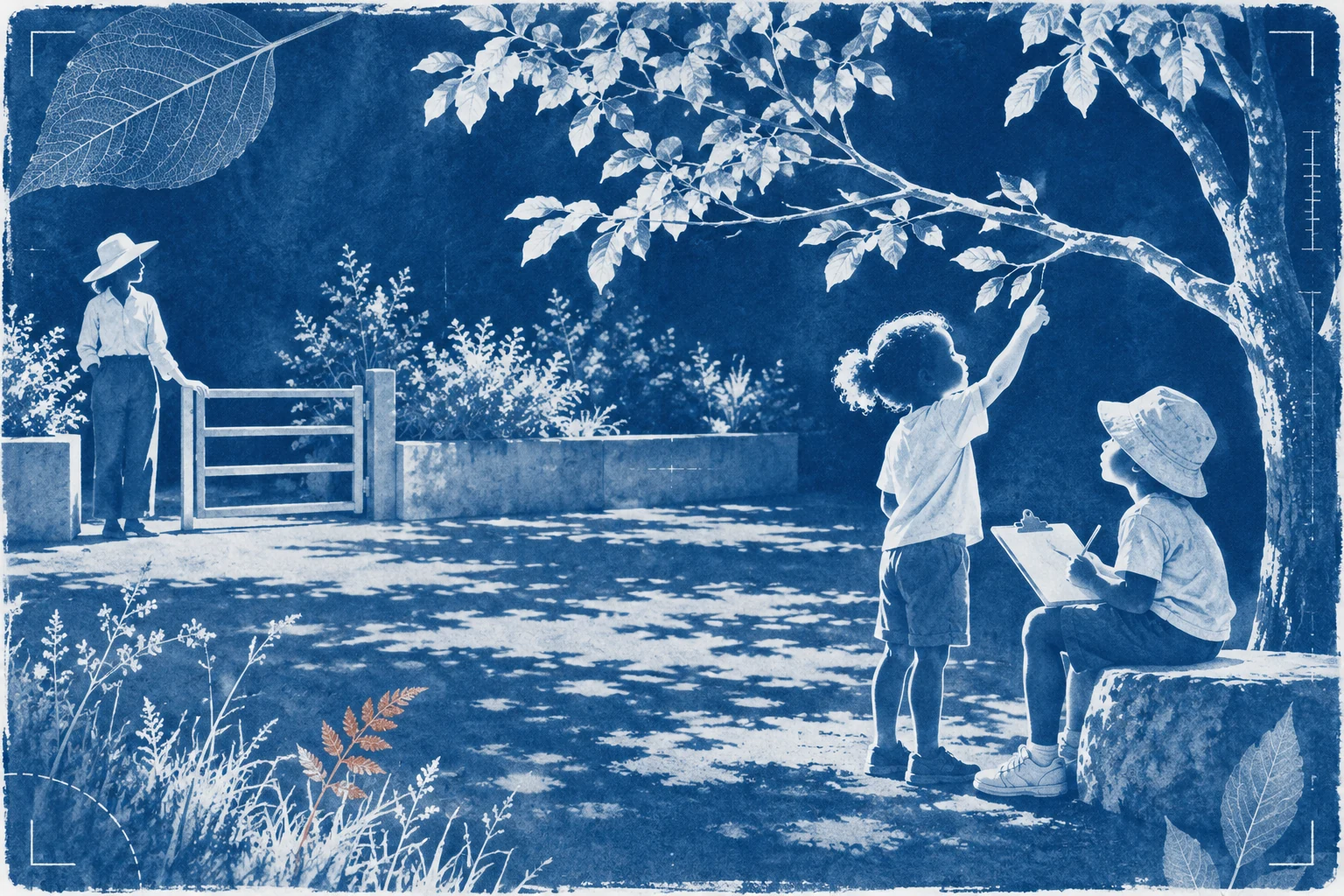
The courtyard scene suggests separate looking and recording jobs within an adult-supervised space.
Name an observation before suggesting a cause
“The puddle edge is here” describes a visible feature. “It got smaller because sunlight reached it” suggests an explanation. Both can start a useful conversation. The adult can name the difference gently and keep the explanation available for later checking. A single visit usually gives a poor basis for choosing between several possible causes. Water could move or soak into a surface as well as evaporate. The purpose for a young learner is to say what they can see and make a claim they can discuss with someone else.
Choose a place that can be looked at safely from a pavement, established path, sheltered spot or window. The same planter or fence can orient the child each time. Avoid requiring a trip to a park if you already have a view of a branch or a courtyard. Never ask children to taste or handle unknown plants, go near traffic, disturb wildlife or step into water to complete a record. Ask the child whether standing, sitting or looking from inside gives them a workable view.
Give outdoor observation five jobs to choose from
1. Find the same landmark again
Choose a site that has a memorable anchor. It might be the third paving stone next to a gate or the branch that crosses the view of a sturdy window sill. Ask the child to show how another person could find the place tomorrow. A simple adult drawing can show the landmark and the place to stand or sit.
If visits cannot happen regularly, use two observations a few minutes apart. Repeat from roughly the same view when possible. A wet patch may look bigger from close up because of perspective. If you change position, record that too. There is no need to promise the same change each time.
2. Look at one feature for long enough to describe it
Look at the outline of a leaf that is still on a plant, or zoom in from a familiar viewing point with a safe tool and adult support. Ask whether the edge looks smooth or has visible little points. A child may choose the dark line through the middle instead. Name the selected feature and compare it with something else the learner can see. Avoid choosing an exact plant name from a drawing when you cannot verify it.
NAEYC's outdoor exploration ideas for families include close looking, sketching and returning to a tree across changing conditions. Try the observing and recording ideas in a way that leaves living things where they are. The same close looking works from an open view even when touching an object is inappropriate.
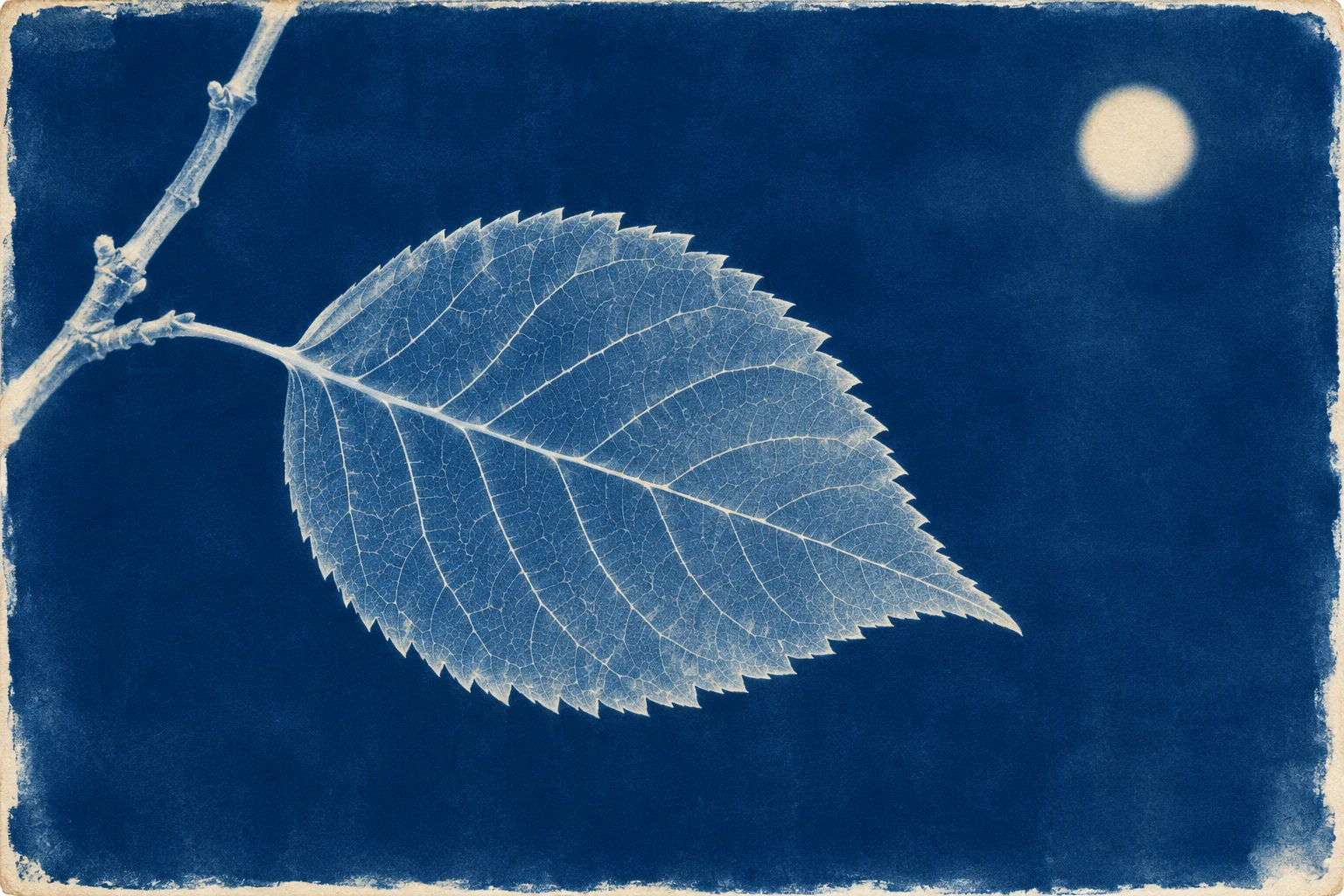
The leaf study invites children to choose one visible feature to describe.
3. Record just enough to recognise the detail later
A dark scratch on a fresh card can represent a branch. Add a point or a broad shape where the learner saw a bud. An adult can date the record and write the child's words if invited. Let the learner choose how much to mark. A gesture, a short dictated description or a sketch may all be suitable. A general drawing of a tree, although attractive, may omit the feature needed to compare visits.
Leaf Pile: Hedgehog Tracing, 5 Lovely Drawing Ideas is a hedgehog picture tracing resource. Use its leaf-pile theme to ask what belongs to a pretend story and what you really saw nearby. A child might add wavy marks for a leaf edge on separate scrap paper. Seeing no hedgehog is a complete report about the visit. A printable animal picture supplies no evidence about the presence of that animal.
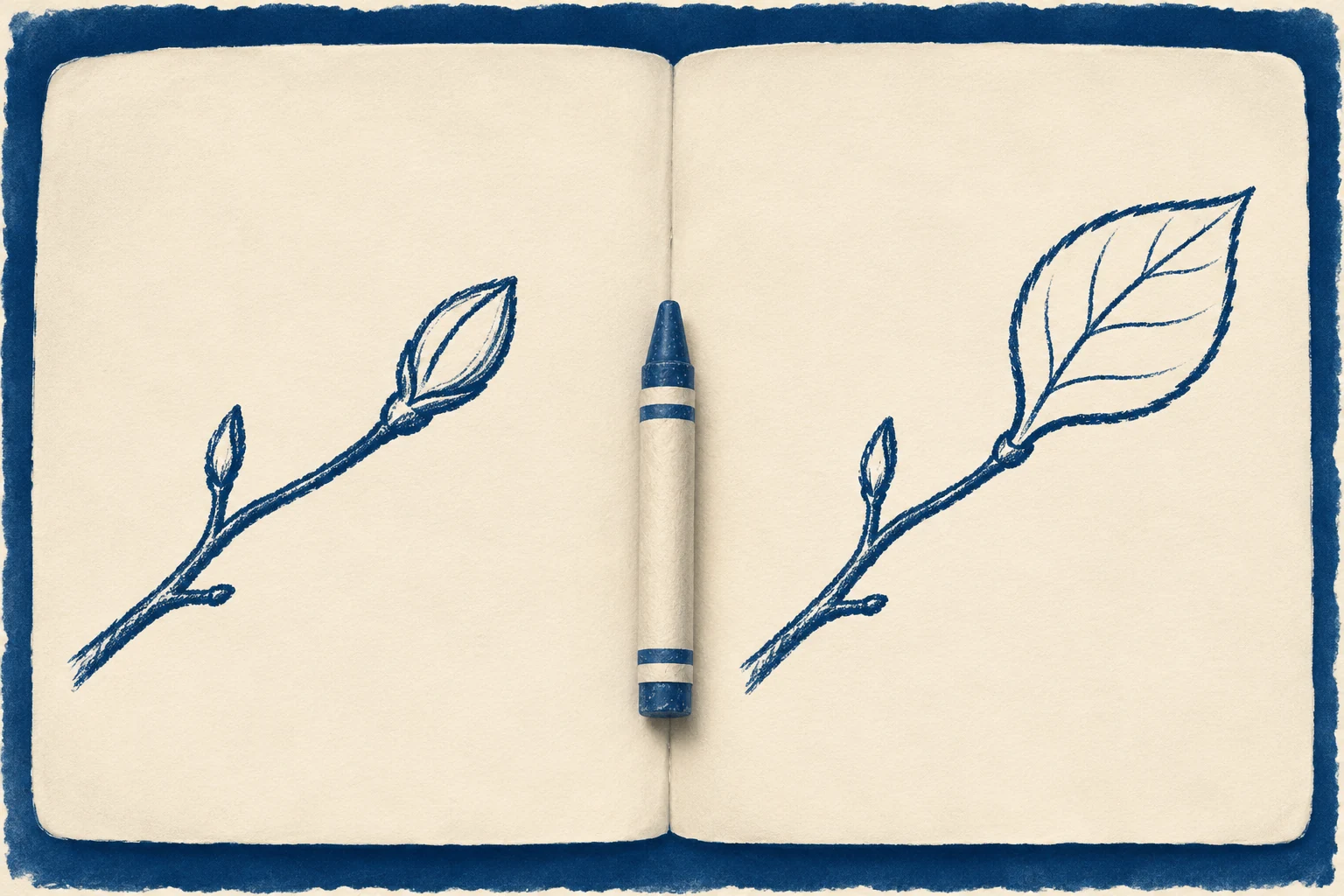
The sketch pair shows a possible comparison and is separate from the worksheet downloads.
4. Revisit and compare the same thing
Return to the short branch, planter edge or other landmark. Show the earlier record after the child has had time to look. Ask which feature can still be seen and which has changed. A new sketch beside the first gives the child two things to point to. If the drawn leaves are different sizes because the papers differ, state that before inferring anything about growth from the picture.
For a plant discussion, Plant Shelf: Watering Can Tracing, 5 Lovely Drawing Ideas has a dotted watering-can drawing. The tool outline can prompt useful words about handles and spouts or a child's story about caring for a plant. Then move to a fresh page for the real observation. If a plant needs care, an adult chooses the appropriate watering routine. Do not change it just to obtain a more dramatic observation.
5. Use a real observation to discuss a possible plan
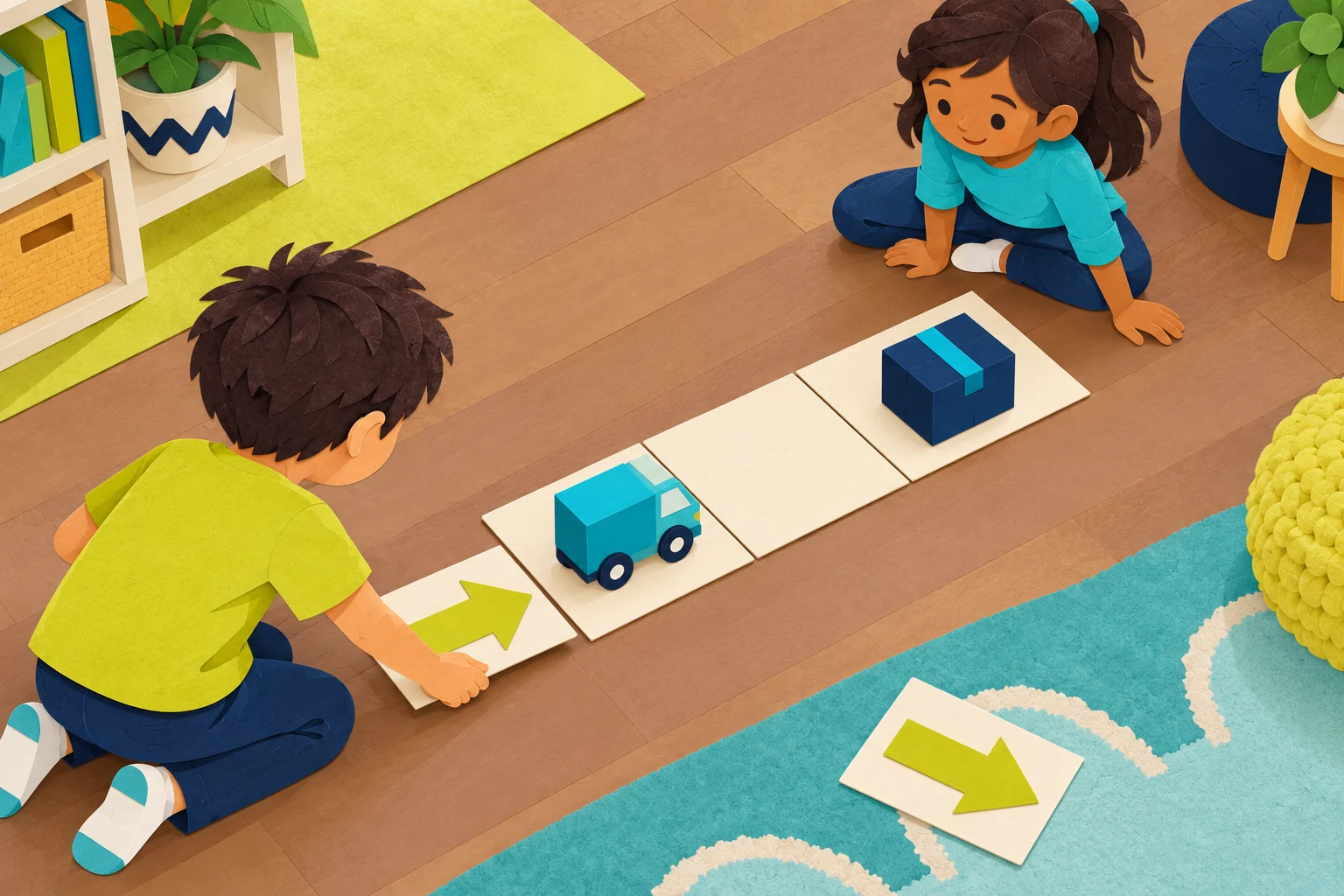
Compare “The path by the planter looks wet” with “If the usual path is too slippery, we will look through the window.” The first is a report. The second is a plan that depends on a condition. A more experienced reader might try a suitable sentence from Weather Watch: 5 Clever Ways to Write Sight Word Worksheet If, which asks readers to use the word if in a weather-related reading and writing task. A younger learner can use a picture choice or decide orally between two acceptable viewing places.
Avoid sending a child to test a doubtful surface. An adult decides when the route or weather makes a visit unsuitable. A cancelled outing can still produce a worthwhile comparison from indoors or using records already made.
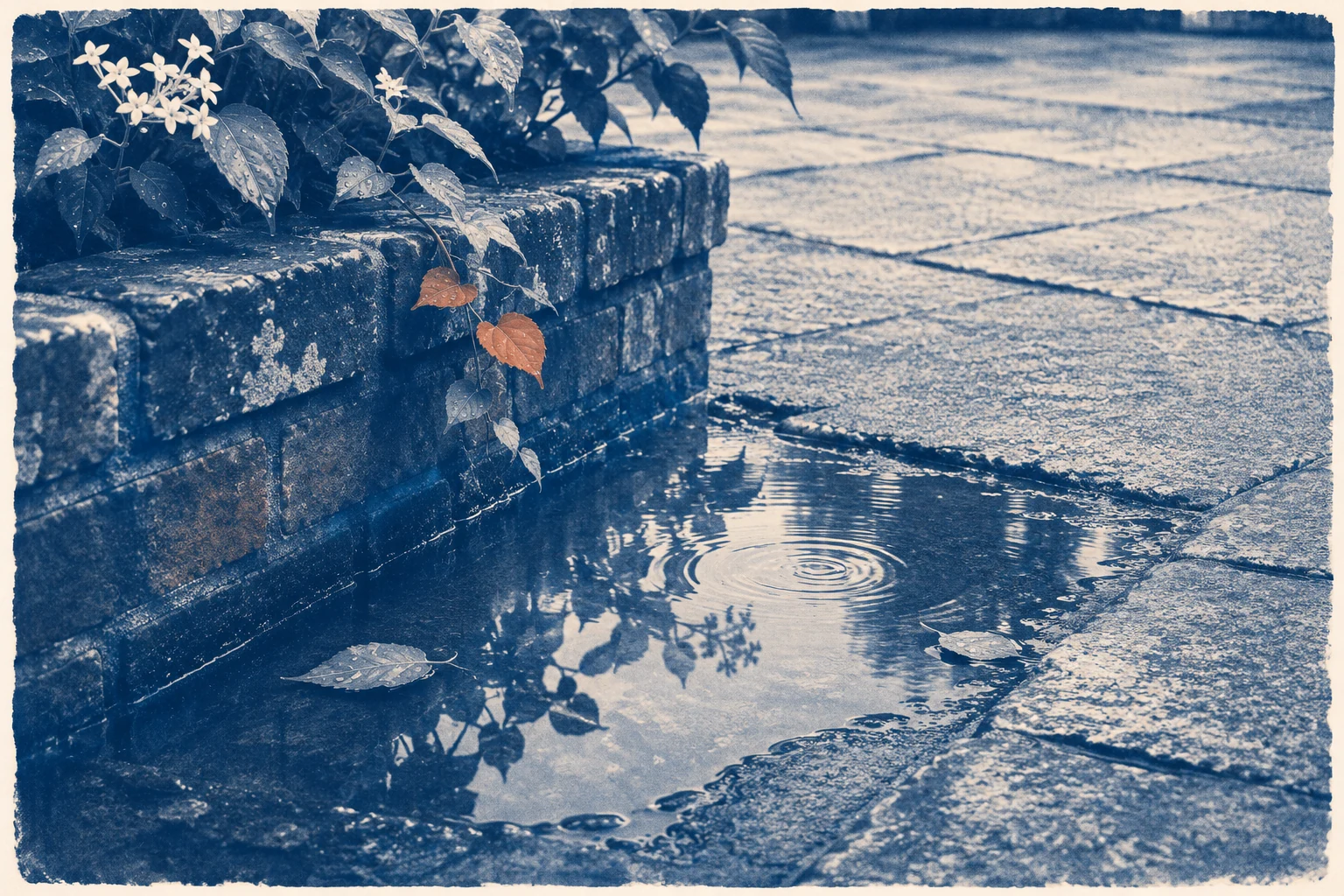
A stationary planter provides a reference for comparing changing puddle edges from a safe position.
Set up a first visit and a return visit
- Choose a safe spot. Identify a feature you can see from a comfortable viewpoint and agree on how to reach it.
- Pick one question together. Ask whether a particular feature exists now or whether it reaches a fixed point.
- Make a small record. Sketch, point or dictate. Include the place and time when those details are needed to repeat the visit.
- Return under safe conditions. Use the previous viewpoint when possible and note any meaningful differences in conditions.
- Compare and wonder. Show one visible difference or similarity, and keep explanations separate until there is more evidence.
| What a child might say | What kind of statement it is | How to continue |
|---|---|---|
| The puddle reaches the brick corner. | An observation that can be checked now | Find that exact corner on the first sketch. |
| I think it will be smaller after lunch. | A prediction | Record the guess and agree when you might look again. |
| It stopped raining yesterday. | A report about earlier conditions | Ask how the group knows and note any uncertainty. |
| The tree must have grown because my picture is bigger. | One possible explanation | Compare the actual feature and ask how the sketch was made. |
Two sessions to imagine before planning your own
At home, a window gives a reliable view
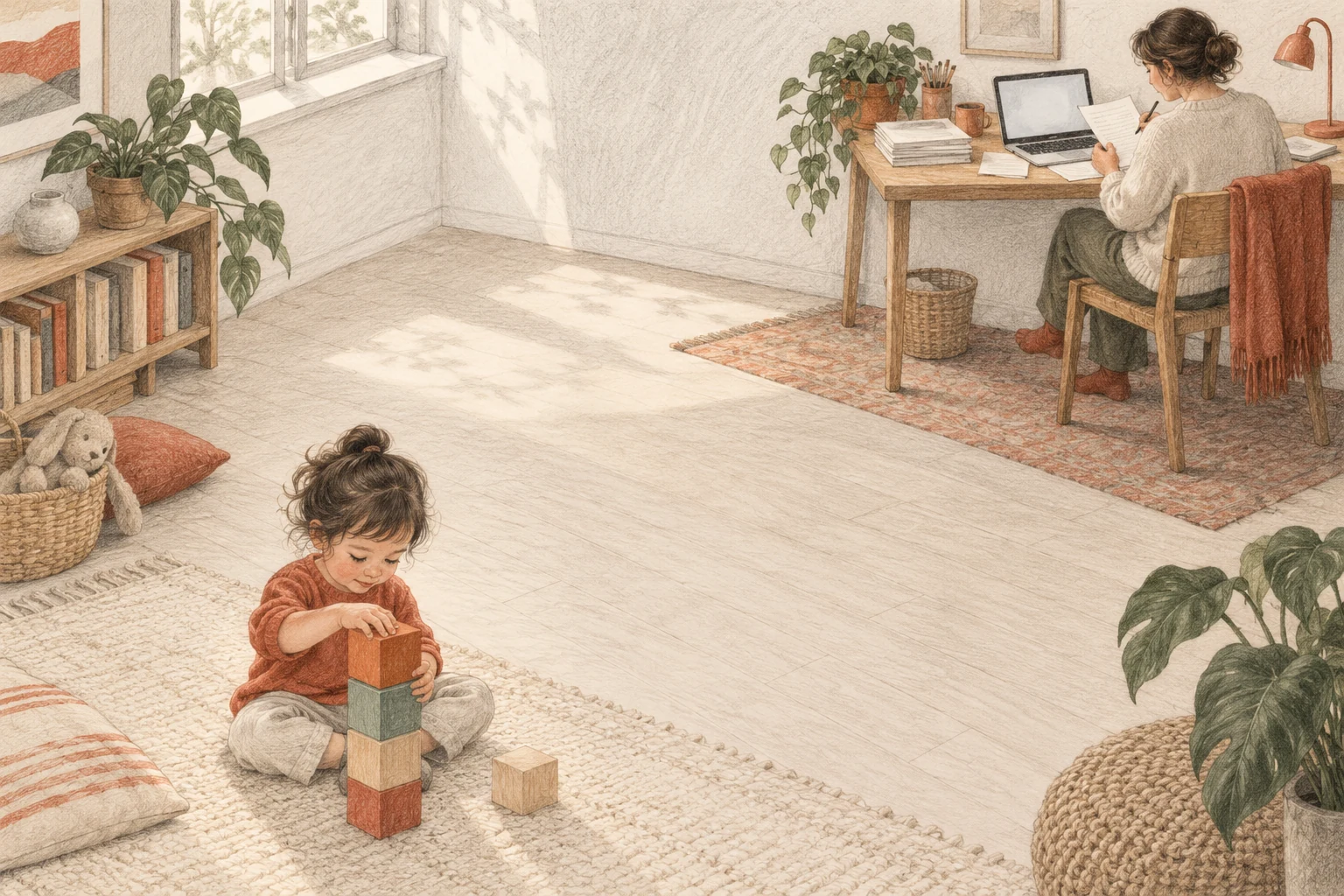
In a hypothetical home example, a child visits a window to look at a branch each morning. On one day, they draw a closed bud at the end of a short twig. Later they add a shape that looks open. A caregiver asks which place on the twig they recognized. The child points to the same little fork in both drawings. Their records give them something specific to compare. If the branch is obscured by rain on another day, the adult writes “could not see that part.” Missing information belongs in a record too.
At school, a dry place becomes the comparison point
In a hypothetical preschool example, a teacher takes a small group to a sheltered part of a courtyard after rain has passed. A child wants to stand in a puddle to see where it ends. The teacher points to the bricks and moves the group to a dry spot where they can still see the border. Two learners describe different corners. The class uses one marked corner on a plan to make both reports refer to the same place. Later, they compare observations from the same sheltered position.
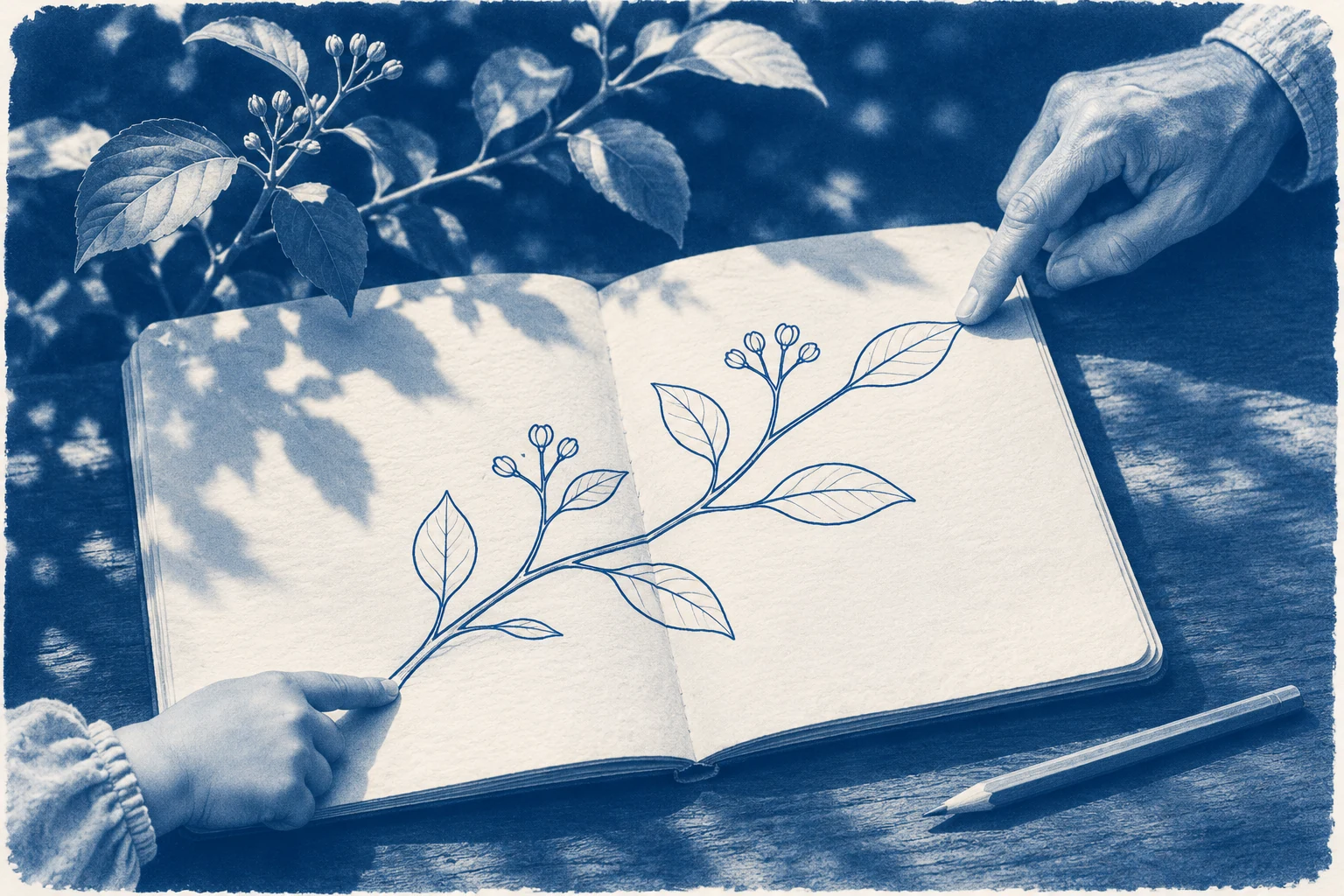
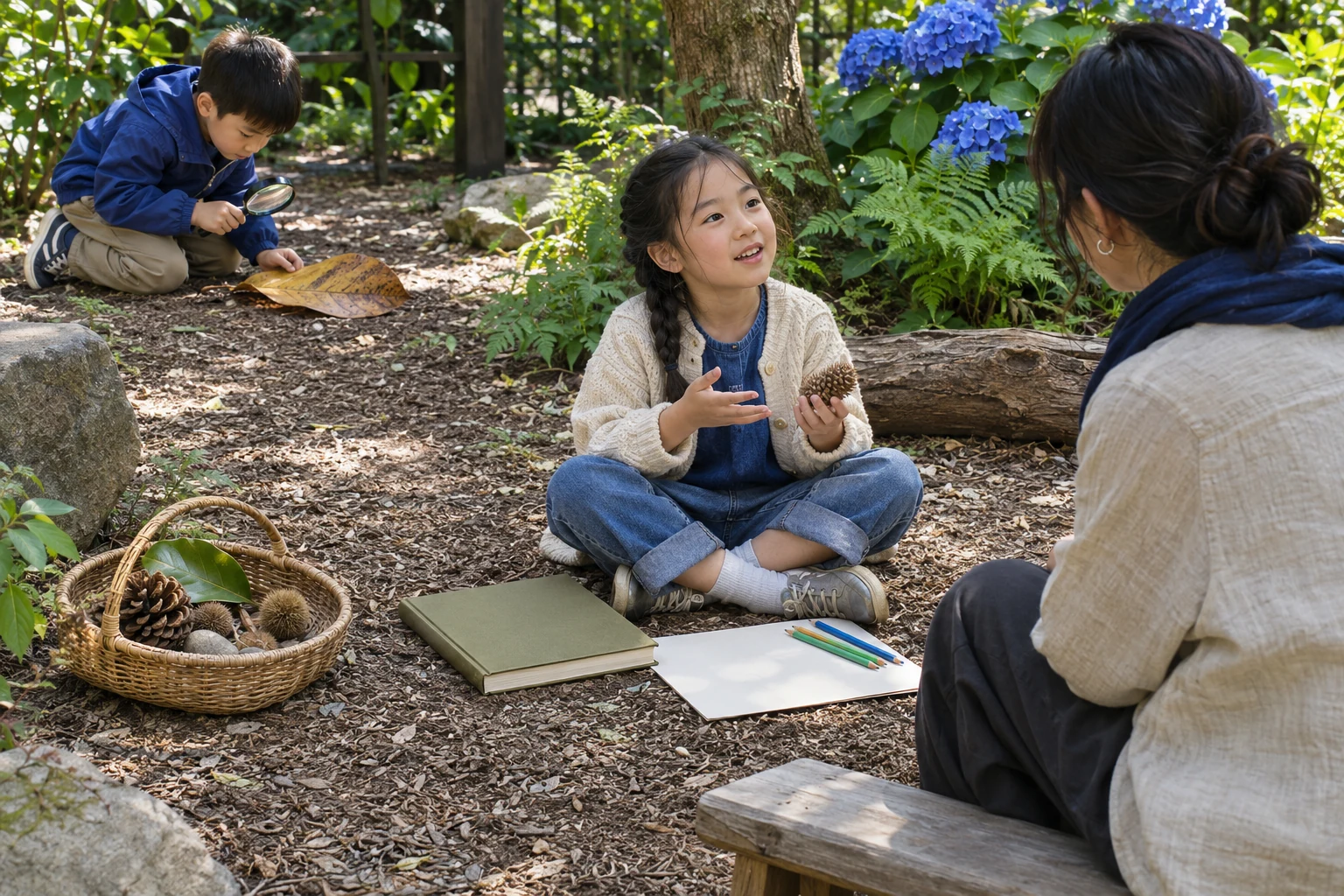
The drawing and real plant can support a short exchange between a child and an adult.
What to listen for in the children's reports
- Shared reference. Another person can identify the place, side or feature the observer means.
- Descriptive words. A child uses a word, sign or gesture that describes something actually seen.
- Recognition of change. Two records reveal a difference the child can point to.
- Recognition of stability. A child identifies one feature that still looks the same.
- Awareness of uncertainty. “I couldn't see it today” shows care about what the record can support.
- A follow-up question. The child suggests what they want to compare or check again.
Four investigations for ordinary days
Hear one sound from the same place
At two suitable moments, listen from the same safe spot. Record whether you hear a bird, a door or the wind in branches. No recording equipment is needed. Compare what you heard and what you could actually identify. Be willing to leave an unidentified sound as “a short tap.”
Find a shadow's end without looking at the light
Observe a railing or planter shadow from a safe position, keeping eyes away from the sun. Find whether its end falls before or beyond a particular paving line. Draw the relation or use a gesture. A later visit with cloud cover may have no distinct edge. Record that result.
Describe two surfaces from a path
Choose two visible surfaces such as a brick and smooth paving. Say which shows a wet patch and what clues you used, such as a darker area or a reflection. Wait for a safe later view and compare. Looking is enough. A child does not need to touch or walk on either surface.
Make a picture guide for a new observer
Invite the child to point to a safe position another child could use to see a feature. Draw one landmark and one viewing spot. Let the new observer check whether the instructions led them there. This turns a private discovery into a shared observation while leaving the site as it was.
Let a small observation stay small
The three linked pages offer one-page watermarked PDF samples and display a clean membership option. The two tracing pages list ages three to six. The weather sentence page lists five to eight and is best offered when the reading demand fits. Any of the outdoor jobs can happen with a gesture and a conversation alone.
“I see the fork you drew. Can you show me what is beside it today?” asks for a useful detail. Keep the place recognisable, the question small and the report honest. Take a child's interest in a single mark seriously. That mark might be the one they want to follow on the next visit.