Coding: 5 Smart Unplugged Games for Curious Kids
An arrow, a stop command and a partner turn planning into play. Five unplugged invitations connect familiar worksheets with testing and revising small instructions.
Two arrow cards and a stop sign are enough to begin a small investigation. Will a toy truck reach its parcel when someone follows those instructions exactly? Unplugged coding turns that question into play for preschool and kindergarten learners, without needing an app or a purchased robot. Children can prepare a short plan, test it with a partner and change the instruction that caused a surprise. Here are five ways parents and teachers can connect those decisions with familiar tracing and number worksheets, while keeping the activity manageable and the child's ideas visible.
🧩 Why coding belongs in a conversation about play
Digital tools are increasingly familiar in family and school life, but the thinking behind an instruction can be explored with ordinary objects. Coding, in this article, means representing a small sequence of commands under an agreed rule. An arrow might mean moving a toy to the next space; a palm picture might mean stopping. Establish those meanings before testing a plan.
NAEYC's 2026 resource on computational thinking for preschoolers includes hands-on, screen-free approaches to coding and sequencing. That current interest gives adults a useful reason to look beyond tapping a device. A short paper sequence lets a child inspect the instructions, change their order and discuss what happened.
These coding games are adult-supported suggestions, especially suitable for children around four to six who can participate in a brief shared plan. Younger or less experienced learners can begin with one action and an adult moving the prop. Counting, directional words and handling small cards remain separate demands; simplify any of those when they distract from the investigation.
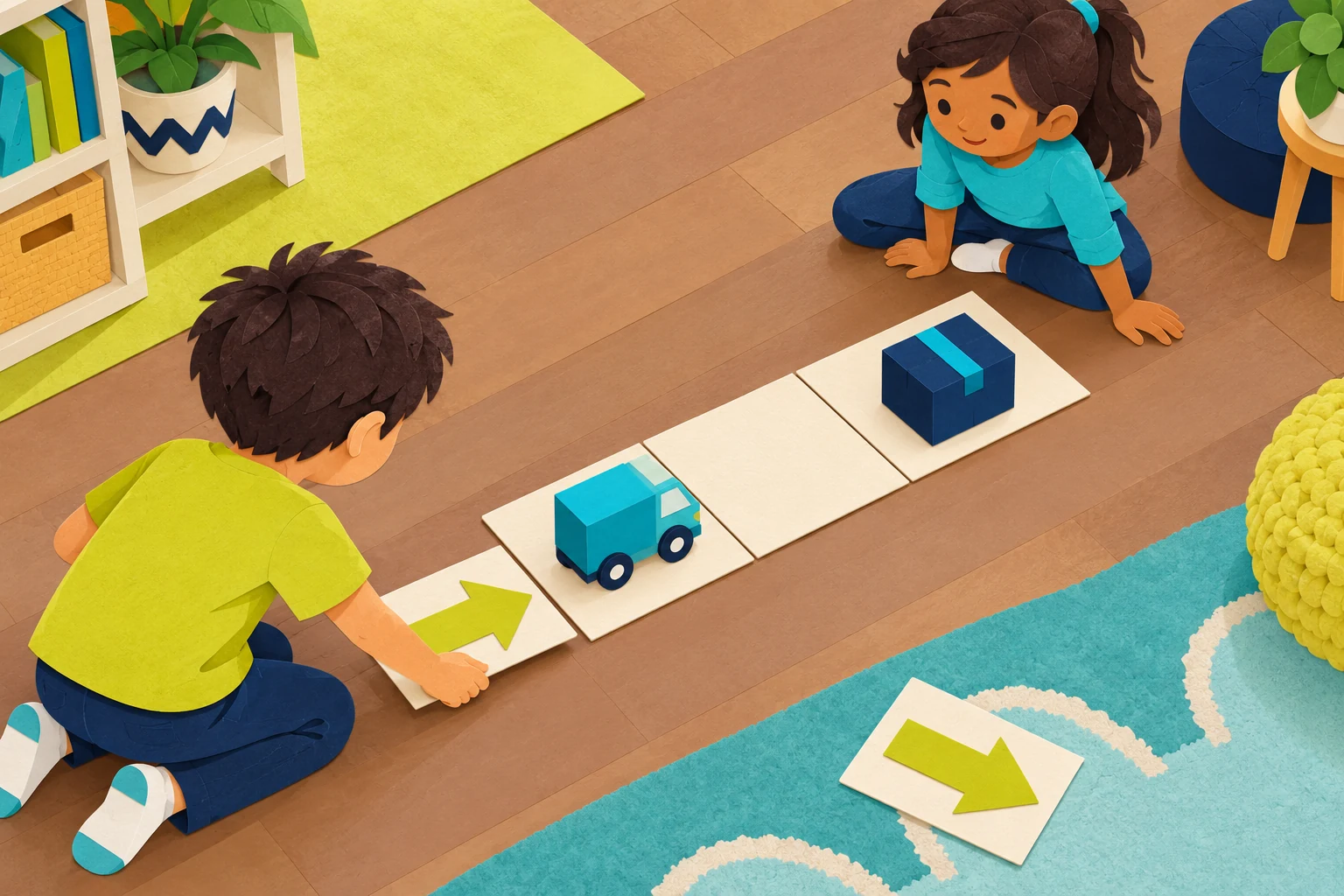
The children can arrange instructions before testing a delivery. The route and command cards are separate play materials.
Coding game 1: agree on a tiny command language
Make two arrow cards and one palm card on separate pieces of paper. Set a toy at the start of a straight route with two moves to its destination. Agree that one arrow means one move to the next space, and the palm ends the sequence. Keep the toy facing along the route throughout this first coding game.
Show the cards individually before combining them. Invite the child to tell you what one arrow does, with a gesture if preferred. Then arrange arrow, arrow, stop. One person reads or points to a command while the other performs it. Both partners should be able to see which instruction is being used.
For coding practice, give the child a genuine chance to predict the ending before the toy moves. The destination is a place in this particular game, not a reward for getting everything right. Reset the toy and try again when a card was skipped or its meaning became uncertain.
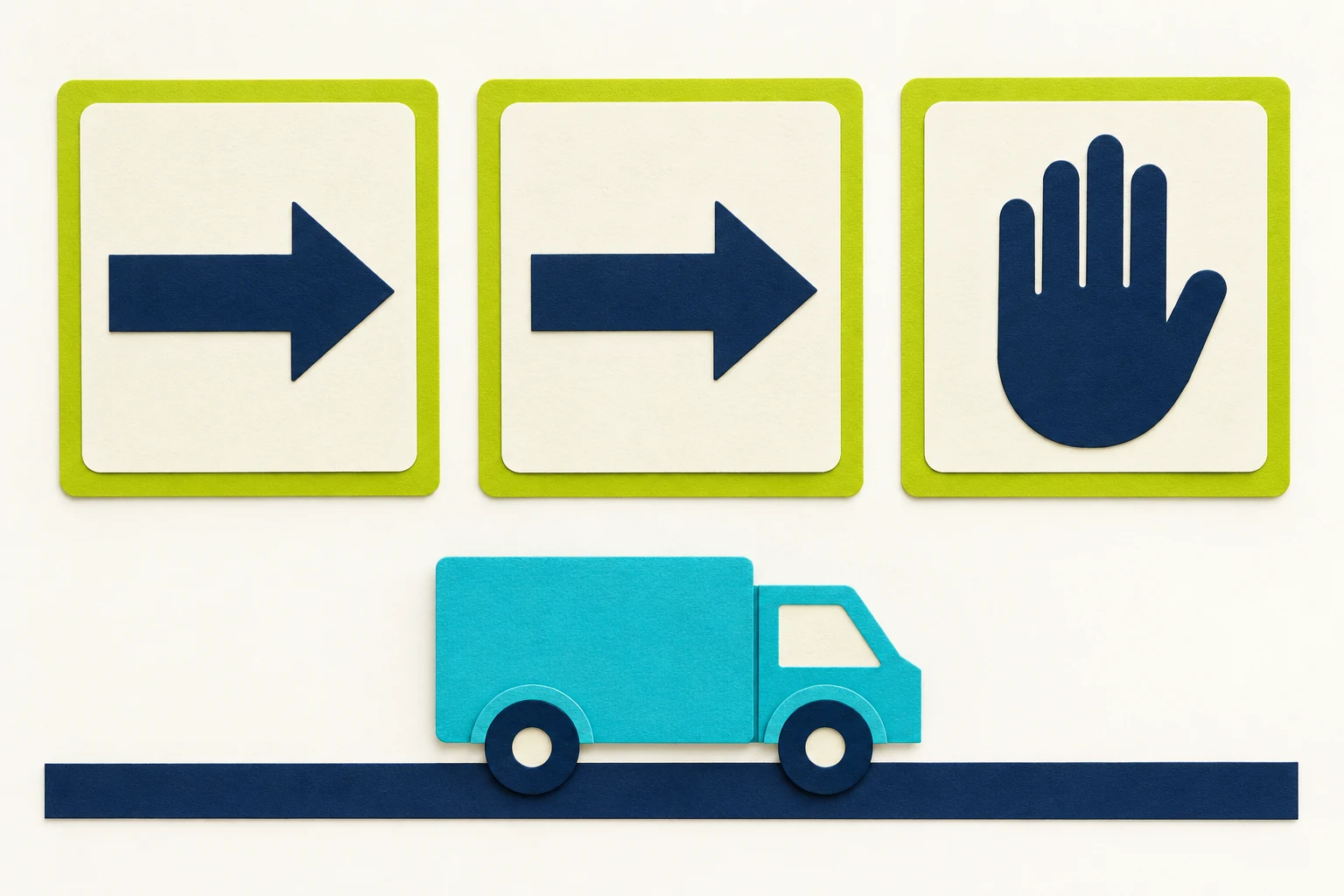
Under the agreed coding rule, each arrow requests one move and the palm ends the sequence.
Coding game 2: split a tracing job into visible actions
Choose one route from Trace 5 Essential Lines and Curves: Fun Paths for Little Hands (Ages 3-5). Its straight, slanted and curved guides have visible starting cues. Rather than using the whole page, explore one example. On scrap paper, an adult can draw simple pictures for three actions: point to the start, follow the selected path, and lift the finger at the end.
This coding invitation concerns the order of those actions. Place the pictures in a row, follow them, then ask which action must happen before the finger travels. The tracing guide supplies the movement route; your extra cards supply the plan. They are separate homemade props, not another download included with the worksheet.
A finger attempt is enough to test the sequence. If pencil practice follows, explain that handling the tool introduces another task. A child who organised the coding plan successfully may still need help making a precise mark. Notice those achievements separately rather than assuming one guarantees the other.
Coding game 3: find the instruction that stops the delivery
Return to the toy route and deliberately place stop between the two arrows. Before starting, remind everyone that stop ends the sequence; commands after it will not be performed in this coding game. Invite a prediction, then follow the cards literally and pause at the palm.
The truck has stopped before the parcel. Ask where the plan changed the movement. The child might point to the palm or suggest putting it last. Move that single card and test again from the same starting position. Changing one feature makes it easier to connect the revision with the new result.
Call the process debugging: finding and changing a problem in the instructions. Keep the error attached to the coding plan, not the person. A playful adult can be mistaken too. If the child proposes a different workable sequence, examine it together instead of insisting on an exact copy of your arrangement.
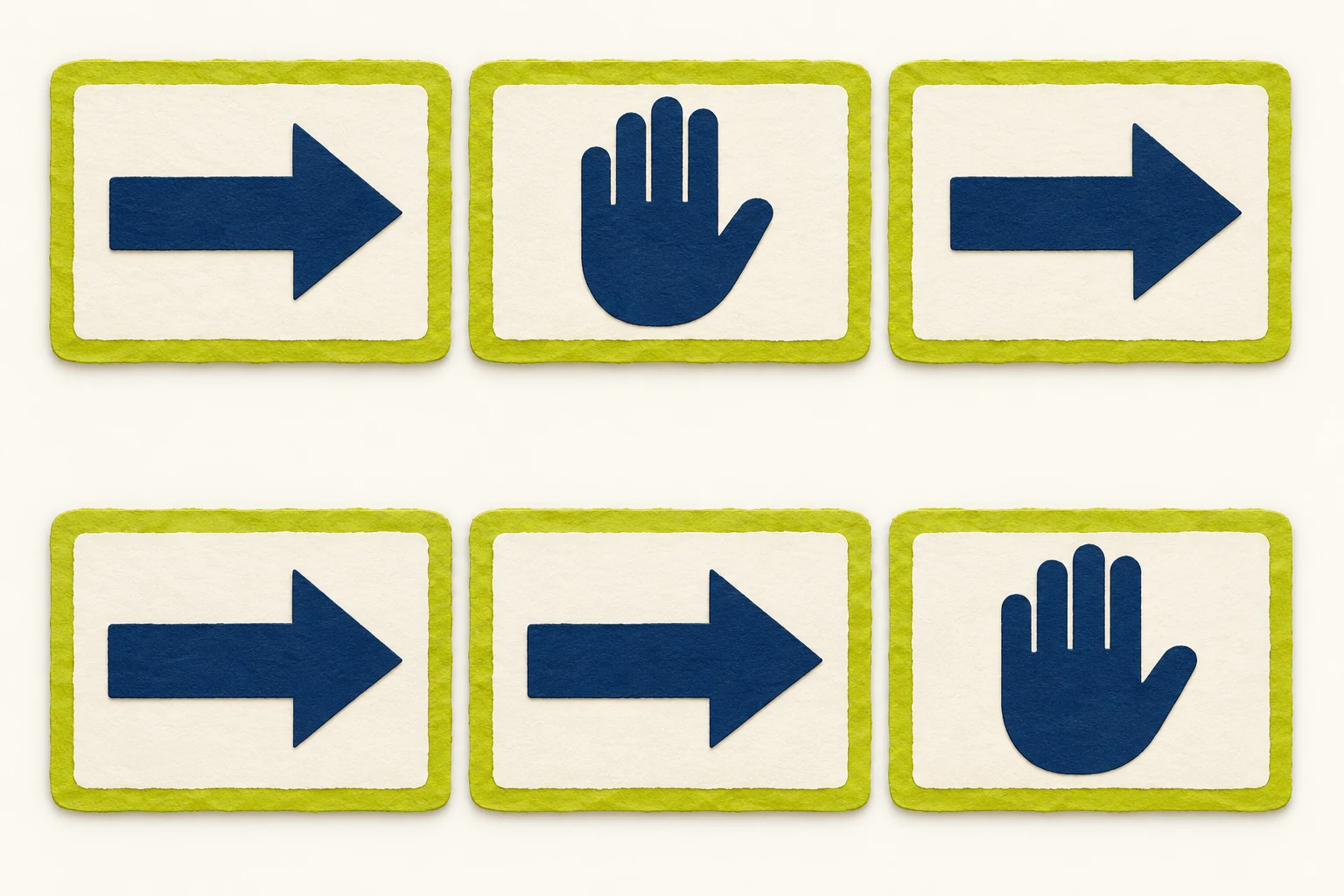
Compare the two coding sequences from the same starting arrangement, using the rule that stop ends the test.
Coding game 4: repeat an action and keep track
Use Number 2 Worksheet: 6 Powerful Games for Happy Sailors as a reference for a familiar amount. Look at the two complete sailboats, then agree on an action to perform twice, such as tapping the table gently. Prepare two identical action cards and move one aside after each tap. The coding sequence now records a repeated action.
Once that relationship is understood, Number 3 Worksheet: 4 Brilliant Rocket Mission Wins offers three complete rockets to count and compare with three action cards. Show that three cards can request three claps. The number of rockets names the amount; the pictures themselves do not tell the learner what action to perform. You establish that rule together.
This is a beginning coding experience with repetition, not a requirement to learn formal loop notation. Keep the expanded cards visible. Later, an adult may explain that a compact repeat instruction can stand for those same actions, but there is no need to add a new symbol while the child is still coordinating one card with one clap.
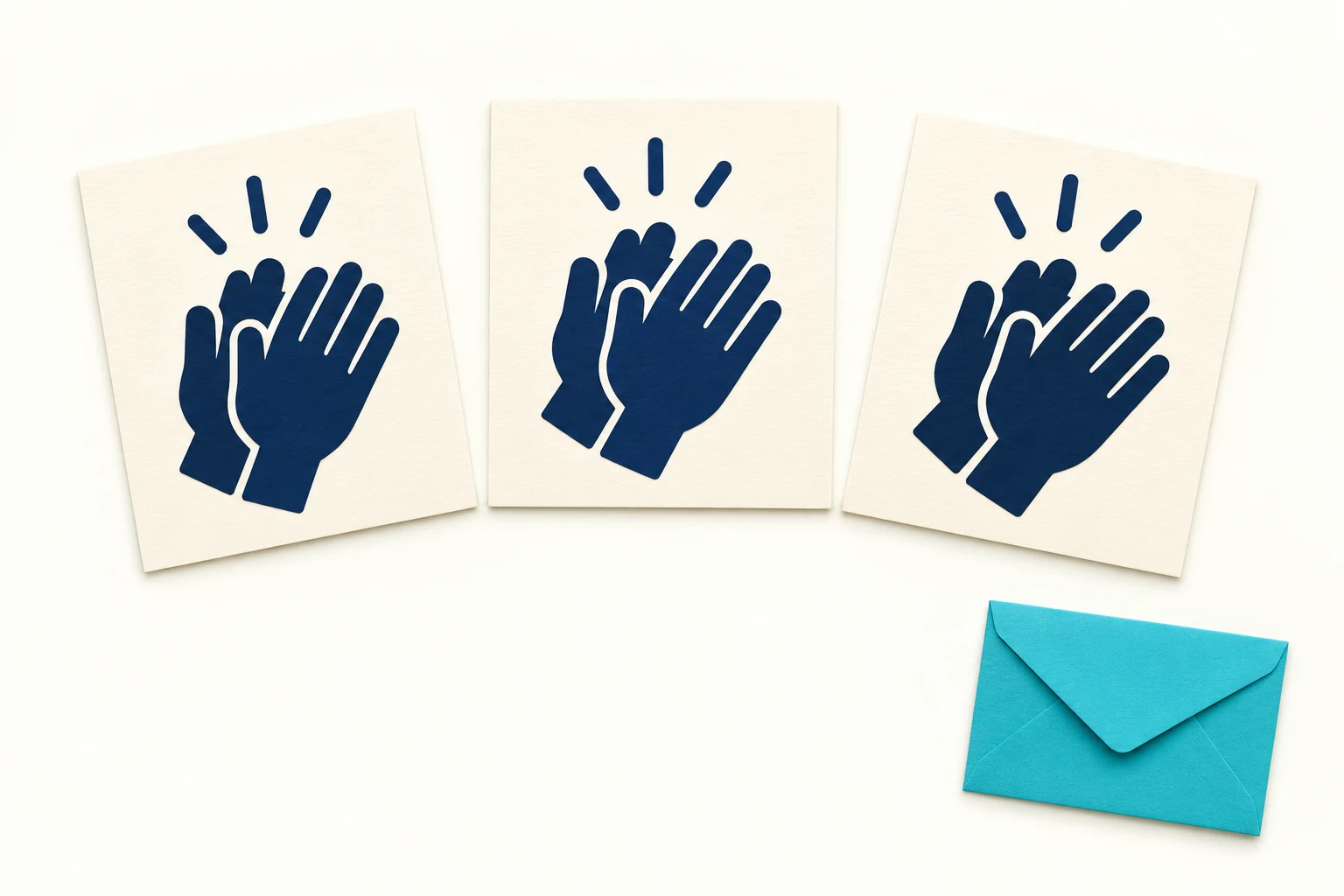
Three cards can request three claps when that meaning has been agreed. A quieter action can use the same coding idea.
Coding game 5: send a plan to another tester
Invite the child to arrange a tiny command sequence and let a partner try it without watching the original demonstration. Use the same card meanings, toy orientation and movement spaces. The coding plan should contain the information needed to reproduce the intended actions.
If the tester asks what a symbol means, treat that as a useful question about the shared language. If the toy starts in the wrong place, correct the setup before judging the instructions. A plan can be clear while the testing conditions are inconsistent. Return to a single command when several uncertainties appear at once.
Afterwards, the child can explain what they wanted to happen and compare it with what the tester did. Swap the coding roles so making a plan and following one are both available. A successful session may consist of one understandable message, one test and one thoughtful change.
What adults can notice during coding
- Breaking a job into actions. A child can identify that finding the start happens before following a line. Watch which part they make explicit.
- Representing an instruction. A card gives an action a visible symbol. Check that the child understands its agreed meaning rather than recognising only the picture.
- Predicting a result. Coding creates a reason to consider what will happen before moving the toy. A gesture towards the expected ending is a useful response.
- Comparing intention with outcome. Looking back at a plan can reveal where the performed actions diverged from the intended delivery.
- Testing a revision. Moving one card gives the next attempt a clear purpose. Notice whether the child uses information from the previous test.
- Communicating with a partner. A question or a clarification can keep coding cooperative. Fluent speech is not the only way to contribute.
These are possible observations, not a checklist every child must complete in one sitting. The University of Canterbury's CS Unplugged Kidbots resource separates planning, coding, testing and changing instructions through role-based activities. Its introductory lessons list ages five to seven; the smaller invitations here adapt the general idea for supported early-years play rather than claiming to reproduce those lessons.
A five-step setup for your first coding session
- Choose one visible goal. A toy can reach a parcel after two moves. Set up the route before introducing the command cards.
- Teach each command. Demonstrate one arrow and one stop symbol. Agree what happens to later cards after stop.
- Build the short plan. Let the child arrange or direct the arrangement of the cards. Keep the starting place and toy orientation clear.
- Test without rushing. Point to each instruction while the partner performs it. Pause when the plan or the setup needs clarification.
- Change and try. Revise one element, reset the toy and compare the new result with the first attempt.
Choose a coding adjustment that fits the difficulty
| What interrupted the test? | A smaller coding move | What you can observe next |
|---|---|---|
| Several card meanings are unfamiliar | Use one movement symbol and stop | Whether the agreed actions are understood |
| Counting takes all the attention | Show each move with a separate card | Whether one command produces one move |
| The route changes during play | Restore a visible starting arrangement | Whether the same plan gives the same result |
| A tiny prop is awkward to move | Let an adult handle the chosen toy | The child's plan and proposed revision |
| The mistake feels disappointing | Test an adult-made coding error together | How the group uses the new information |
Home coding: the parcel stops too soon
Imagine Dev arranging the cards while his grandmother moves a toy truck. He puts the palm between the arrows, then watches her stop after one move. He points to the waiting parcel and pushes the truck forward himself. She acknowledges his intended ending, then suggests checking what the cards asked her to do.
Together they move the palm to the end and reset the truck. Dev tests the revised coding plan with his grandmother reading the cards aloud. Their discovery concerns the position of stop; neither needs a timer or a score. This imagined exchange illustrates one possible adjustment rather than a report of a particular child's learning.
Classroom coding: the tester needs a starting place
In a separate hypothetical scene, two children exchange command strips, but one begins with the toy facing the opposite way. The teacher notices that the testing conditions have changed. She helps them mark the start with a plain paper square and place the toy consistently before another test.
The coding discussion can now focus on the cards. One learner points while the other moves; they exchange jobs afterwards. The teacher records which symbol was understood and which needed a model. A familiar setup leaves more room for noticing the children's actual decisions.
Four playful extensions after the first coding plan
Coding envelope exchange
Place a short known sequence in an envelope and send it to a partner at the same table. Keep the code key available. Compare the intended message with the actions the partner performs.
Puppet coding tester
A puppet can follow a misplaced stop literally and ask for help. Invite the child to change the coding plan. Keep the puppet's confusion light and avoid copying another learner's error.
Quiet action strip
Replace claps with gentle finger taps or visible hand movements. Repetition can be explored without a noisy group activity. Choose an action that participants can perform comfortably or direct an adult to demonstrate.
Code a familiar preparation
Draw two or three steps for preparing a drawing space, such as placing paper and selecting a crayon. Test whether another person can follow that order. Keep the coding task brief enough to remember its purpose.
Finish coding with something worth discussing
Ask which instruction mattered most in the last test. A child may point to stop, demonstrate the repeated action or explain why the start needed a marker. A useful change is an achievement worth noticing. The next invitation can begin with that discovery rather than a larger collection of commands.
Before printing, check the three linked pages' access panels. All are one-page PDFs with watermarked free samples and clean files requiring active membership. The tracing page lists ages three to five; the number pages list three to six. Coding uses selected features alongside separately prepared play materials. Leave time for the child to invent a different goal once the shared rules make sense.