
Number 2 Worksheet: 6 Powerful Games for Happy Sailors
Attached Premium Package
Bring the two-boat harbor into a complete number-practice folder. A $3 purchase provides the sailboat sheet plus nine other number pages, combined into one clean printable download.
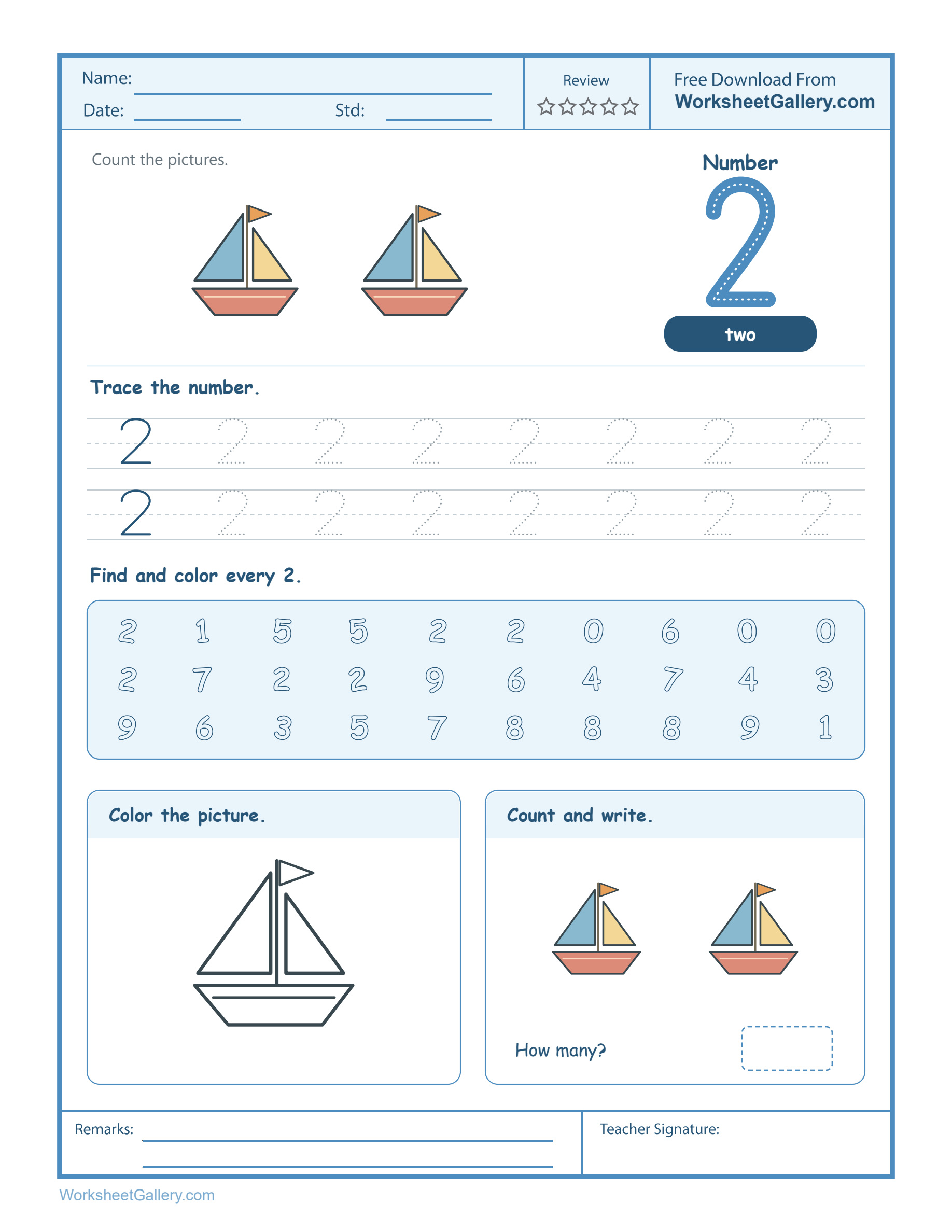
Two boats can make a useful partnership before anyone picks up a pencil. The Number 2 Worksheet turns that partnership into several kinds of evidence: count the sailboats, investigate the numeral's route, recognize matching symbols and record the boat amount. A large uncolored boat provides a quieter creative task between those demands. Imagine a small harbor with a place for each boat, then let the Number 2 Worksheet show whether the child is connecting the two pictured objects with the spoken word two and the written numeral 2.
Open the Number 2 Worksheet harbor with Arun
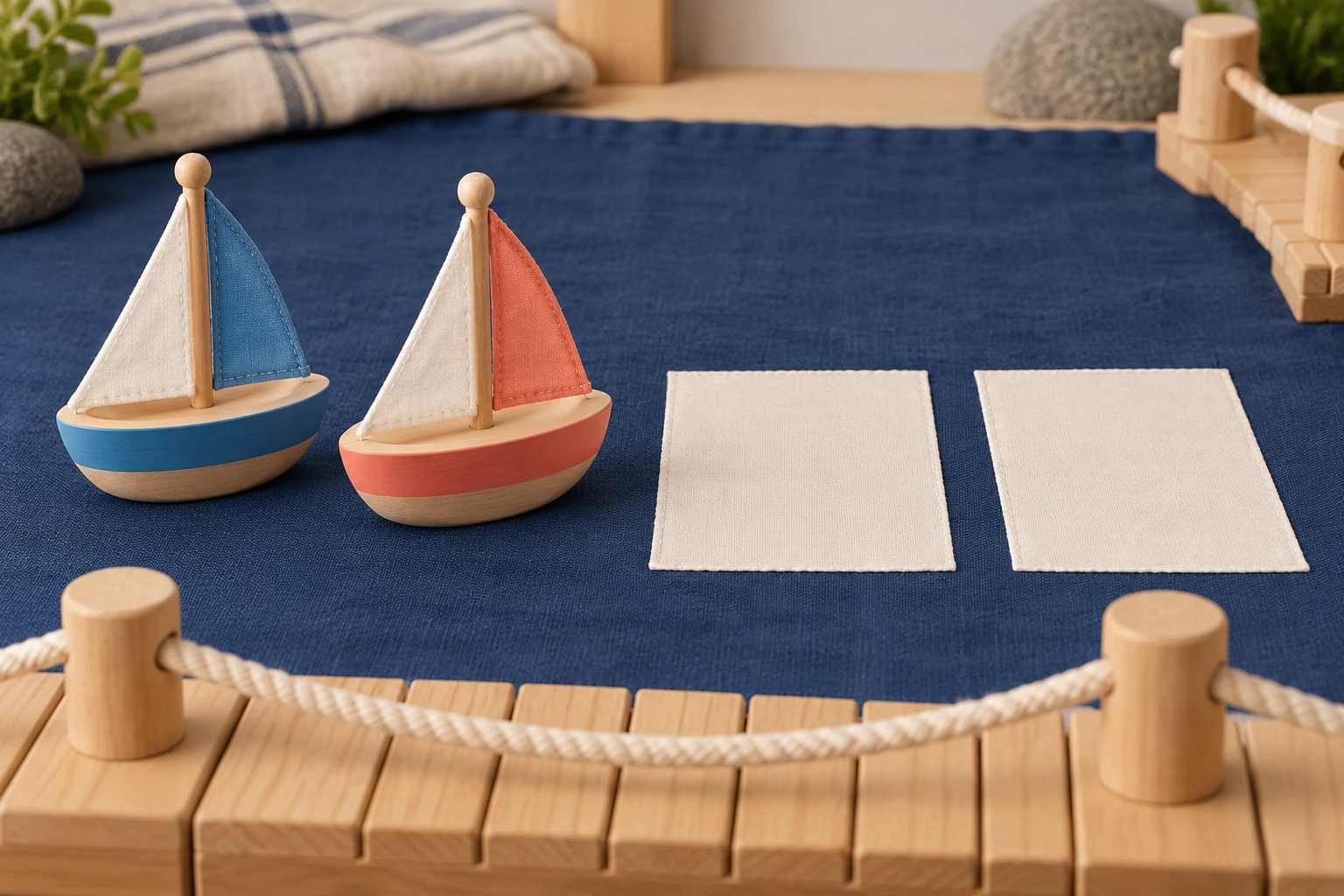
Arun's grandmother sets two blank paper rectangles on a cloth and calls them moorings. Arun brings a blue toy sailboat to one place and a coral boat to the other. They check that each boat has somewhere to stop, with neither an empty place nor an extra boat waiting.
Next they inspect the worksheet's upper picture. Two complete boats appear side by side. Arun points to each and reports two, then compares that amount with the toy harbor arrangement. The connection comes from matching objects, not from copying a numeral before understanding it.
In this Number 2 Worksheet conversation, the sailboats are the counted units. Each has a hull, mast and sails, but those features stay with its boat. Four sail shapes would answer a different question from how many sailboats are shown.
The generated harbor scene offers optional play materials. Paper shapes alone can stand for the boats if toys are unavailable. Let the Number 2 Worksheet supply the precise pictured amount and its numeral model rather than requiring a family to recreate the illustration.
Let the Number 2 Worksheet curve lead to its base
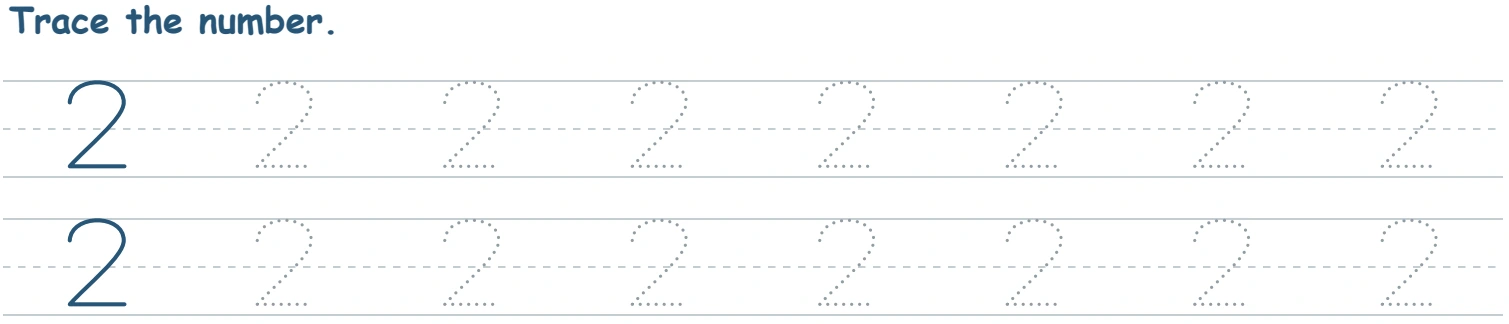
Inspect a solid 2 at the beginning of a writing row. Its upper bend flows into a sloping descent and reaches a short lower base. Point out where the movement changes rather than describing the shape as a collection of disconnected lines.
Try the Number 2 Worksheet route in the air or with a finger near the model. Then choose one dotted example on the writing guides. A slow attempt gives the learner time to notice the bend before reaching the straight lower section.
An adult can offer a brief cue while the child traces, stopping the cue when it is no longer helpful. If the descending section goes in an unexpected direction, compare that part with the model and rehearse it separately on another piece of paper.
Keep the mathematical and motor demands visible as separate observations. A child may know the harbor needs two places while still learning to form 2. Number 2 Worksheet tracing does not have to be fluent before the learner can explain the two-boat amount.
Six Number 2 Worksheet abilities with different evidence
- Number 2 Worksheet matching. Giving each boat one place makes correspondence visible, with an unmatched object or place available for discussion.
- Number 2 Worksheet counting. Pointing once to each complete boat links the spoken sequence with a collection that stops at two.
- Number 2 Worksheet recognition. Identifying the printed 2 among other shapes tests which symbol the child is attending to.
- Number 2 Worksheet direction. Following the bend, slope and base asks for a coordinated writing movement through changing directions.
- Number 2 Worksheet reporting. Writing an amount in the response box connects the counted collection with an independently recorded numeral.
- Number 2 Worksheet partner language. Explaining which boat has a place gives words such as each, both and another a practical setting.
These are opportunities for supported practice. Watch how the child responds rather than assuming that completing one area proves all six abilities. A pointed answer, spoken report and written response can provide different information about the same learner.
Put a Number 2 Worksheet report beside the lower boats
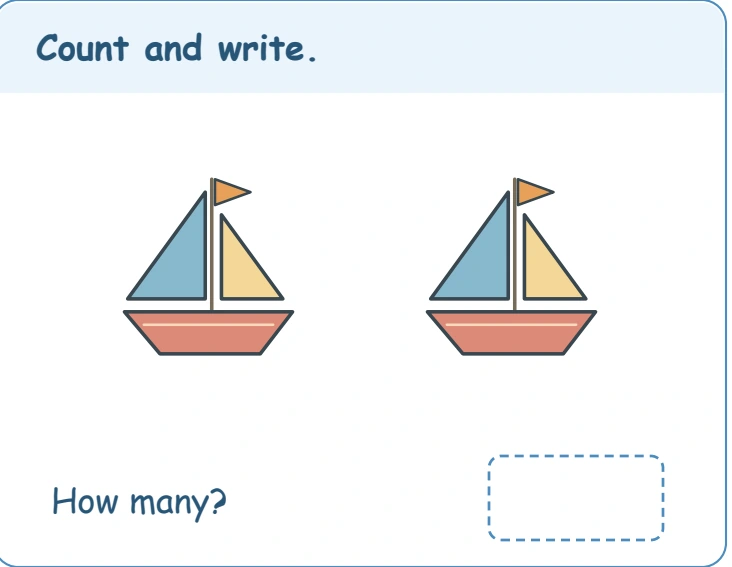
The lower-right task contains another pair of colored sailboats and a blank answer area. Count those two boats for that task, then record 2. Their smaller drawing size does not reduce the amount.
The Number 2 Worksheet upper and lower panels offer separate counts. They are not joined by an instruction to add the two sets. Ask the learner to point to the particular group described by the response box before writing an answer.
One boat may draw attention because of its sail color. Name both complete boats and assign a number to each. If the child says two immediately, ask for a simple demonstration showing what the reported amount includes.
| Harbor question | What the sheet shows | What belongs in the response |
|---|---|---|
| Upper boat amount | Two separate sailboats | Spoken two |
| Lower boat amount | A smaller pair of boat drawings | Written 2 |
| Matching-symbol hunt | Thirty numeral entries | Color six instances of 2 |
| Outline coloring | One large boat drawing | Chosen colors within its picture |
This Number 2 Worksheet reference keeps four different jobs from being reduced to one instruction. The answer depends on the task, not simply on how often the word two has been mentioned.
Give classroom Number 2 Worksheet partners a shared dock
Begin with two large paper boat shapes and two places on a table. One learner acts as skipper and moves a boat toward a place. A berth checker watches whether each place receives exactly one boat and describes what remains to be matched.
Bring out the Number 2 Worksheet after that short demonstration. Ask learners to locate the two printed boats and tell a partner how they know both are included. Then swap the skipper and checker responsibilities.
For preschool and kindergarten learners aged three to six, vary how much the adult supplies. Some children need shared pointing and number words; others can explain the correspondence and move to a dictated or written dock report.
Use Number 2 Worksheet talk to invite participation without a race. A quiet child can demonstrate the matching with gestures, while a child working on hand control can let a partner or adult record the agreed amount.
A Number 2 Worksheet search row may have no matches
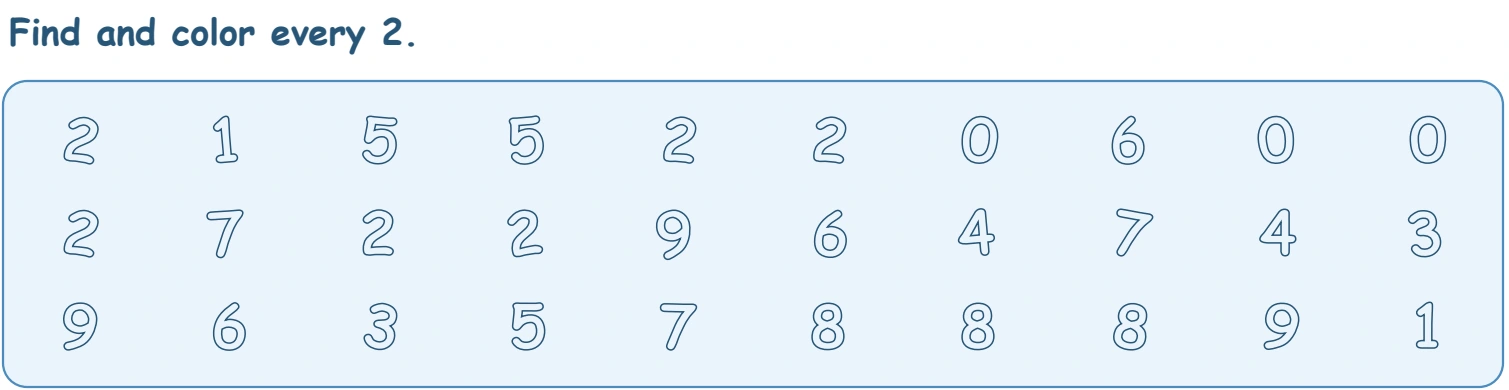
There are six target 2 entries in the numeral panel. Three occur in the top row at positions one, five and six. Another three occur in the middle row at positions one, three and four. The bottom row contains no 2.
That empty result still deserves a careful look. Number 2 Worksheet searching asks the learner to inspect each entry, not to assume that every row must contain a target. Read the target again if a child starts coloring an unrelated numeral merely to give the last row an answer.
An adult can follow the scan with a finger below the printed entries while leaving their shapes unobstructed. Afterward, ask which row had no matches and let the learner show how that conclusion was checked.
The six matching symbols do not mean the boat collection contains six boats. Number 2 Worksheet recognition and quantity counting are related activities with different results on this particular page.
Six Number 2 Worksheet jobs for a small harbor crew
1. Reserve Number 2 Worksheet places before arrival
Lay down two paper places and ask how many boats could receive a place if each takes one. Check the idea by matching the two pictured boats with two pointing gestures toward the places.
Keep the Number 2 Worksheet group visible throughout the explanation. The pretend spaces support correspondence without adding another collection to the printed count-writing question.
2. Ask a Number 2 Worksheet skipper to name both boats
Give each pictured boat an invented name, then ask the skipper to indicate both named boats while counting. Names can make a missed boat easier to discuss without replacing the number words.
Finish the Number 2 Worksheet report with the amount two. Color differences or invented names distinguish the boats, but neither creates additional objects within the group.
3. Follow a Number 2 Worksheet base with a finger
Choose a solid model and locate its lowest straight section. Follow the upper bend and descent before reaching that base. Compare the sequence with a dotted example immediately beside it.
This Number 2 Worksheet rehearsal can end after one attentive attempt. More repetitions are useful only when the learner has a specific movement to inspect and enough comfort to try it.
4. Investigate a Number 2 Worksheet nonmatch
Pick a printed 5 from the search area and place attention beside the target model. Ask what differs in their upper and lower parts. Let the learner use pointing instead of demanding technical shape vocabulary.
Return to the target before coloring. Number 2 Worksheet discrimination becomes a comparison of visible forms, not a guess about which numeral an adult expects next.
5. Repaint a Number 2 Worksheet harbor flag
Use the large outlined boat for a new color scheme and discuss its flag, mast, sails and hull. The activity can provide a brief creative pause after inspecting small numeral details.
Then locate the counted pair again. Number 2 Worksheet coloring has its own single outline; it does not ask the child to change the number of boats in either quantity panel.
6. Dictate a Number 2 Worksheet dock message
Have the child tell a listener how many boats are in the lower recording group. The listener writes the report on spare paper, and the child checks whether that symbol matches the large model.
An adult can transfer the agreed amount into the worksheet box when needed. The Number 2 Worksheet contribution remains the learner's count and explanation even if someone else helps with the pencil.
When Number 2 Worksheet harbor traffic becomes confusing
Counting sails instead of boats calls for naming a whole boat. Missing a smaller lower boat calls for locating that specific drawing. Coloring an unrelated digit in the final search row calls for checking the target rather than expecting an equal distribution of matches.
Notice a precise success as well: “You checked the last row even though it had no twos.” Number 2 Worksheet encouragement is more informative when it describes an action that the child can deliberately repeat.
For another visit, choose a different crew job instead of automatically demanding the unfinished tracing row. A short dock message or a careful symbol comparison can maintain interest while giving an adult a useful observation.
The five-object numeral exploration offers a later quantity to investigate. Try simple pencil-path preparation when movement needs attention, or the wider tracing-path challenge for more varied directions.
Print the Number 2 Worksheet and find its complete package
Use the branded original as the free sample, or obtain the clean Number 2 Worksheet PDF through an eligible active membership. The premium printable omits website-name and domain watermarks and includes no added advertisements within its pages.
Before printing, choose Letter paper with the page upright in portrait orientation. Confirm that the pale dotted 2 shapes remain visible and that the full numeral-search panel fits. Preserve the lower writing box rather than enlarging the boat picture until other tasks are clipped.
The Attached Premium Package card opens the $3 collection of all ten number worksheets in one clean PDF. Two boats can share a harbor while each keeps its own place. Let the learner show the partnership before recording its number.
Popular Worksheets
Printable resources families and teachers are downloading now.
 Free
 Free
 Free
 Free