
Number Bundle: 10 Brilliant Pages for Happy Counting
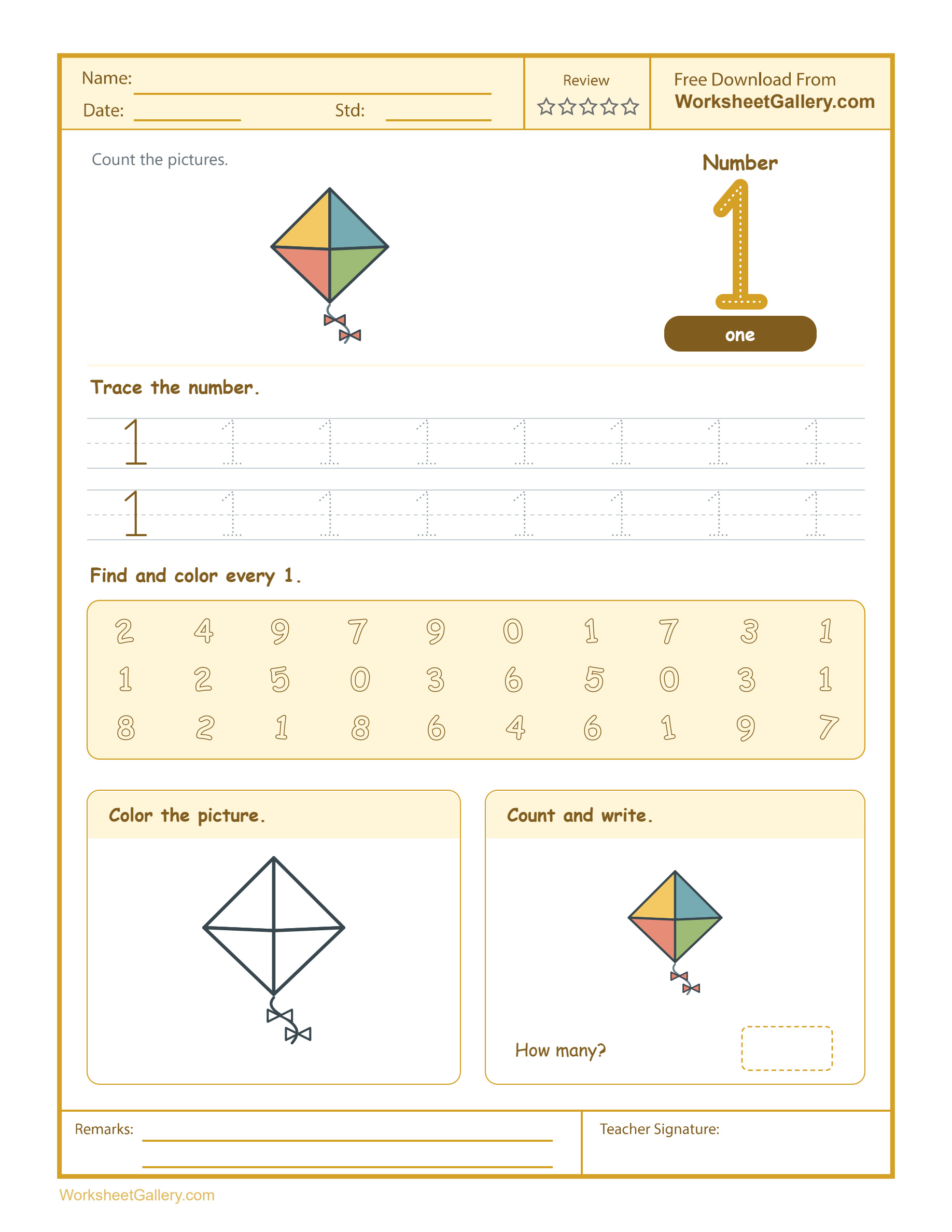
Ten pages can share a learning rhythm without asking for ten pages in one sitting. The Number Bundle gathers the supplied worksheets for one through ten into a single clean PDF, beginning with a kite and ending with balloons. Each number receives its own picture collection, tracing rows, numeral search, coloring space and count-writing task. Choose the part that answers today's learning question, then return when another question appears. This Number Bundle costs $3 as a one-time purchase and contains ten worksheet pages in numerical order, with no extra cover to print.
What the Number Bundle actually contains
| PDF page | Number and pictured objects | Collection arrangement |
|---|---|---|
| 1 | One kite | Single whole kite |
| 2 | Two sailboats | Side-by-side boats |
| 3 | Three rockets | Two above one |
| 4 | Four teddy bears | Two columns of two |
| 5 | Five turtles | Three above two |
| 6 | Six rubber ducks | Two rows of three |
| 7 | Seven umbrellas | Four above three |
| 8 | Eight ice cream cones | Two rows of four |
| 9 | Nine fish | Five above four |
| 10 | Ten balloons | Two rows of five |
The Number Bundle repeats the kinds of tasks while changing the quantity, object and numeral. That familiar organization can reduce the need to explain a new worksheet format every time, while still leaving useful differences to investigate.
These pages address counting, recognition and writing rather than printed addition equations. Let the visible Number Bundle activities guide the lesson: count the objects, trace the model, find matching numerals, color the outline and record the counted amount.
A Number Bundle picture is a whole object
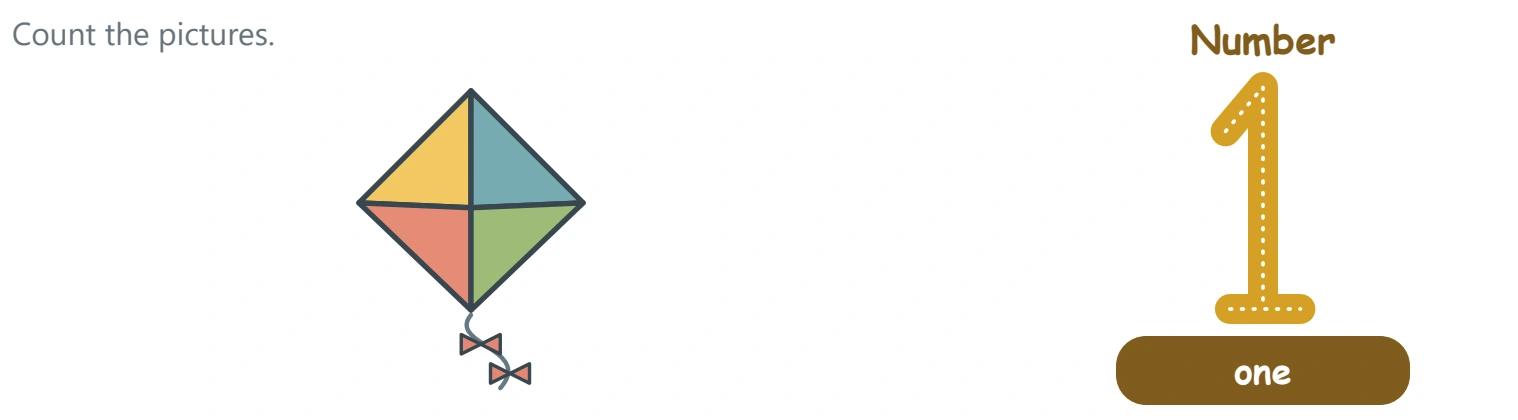
Start with the kite page when a learner needs a clear discussion of what receives a count. Its colored panels, string and bows belong to one kite. Saying “one kite” ties the number word to the complete drawing rather than its attractive details.
That distinction continues throughout the Number Bundle. Two sailboats are not four sails; five turtles are not the number of sections inside their shells. Ask the child to indicate a complete object before beginning a collection count.
The top pictures establish the page's quantity, and another pictured set appears in the lower count-writing panel. Treat those panels as separate opportunities to check the same number. Do not combine objects from every activity into a new total.
An adult using the Number Bundle can record a short observation: did the learner recognize the whole object, keep a number word with each drawing and report the amount after the last picture? Those are more useful details than a single label such as finished.
Give Number Bundle formation a separate look
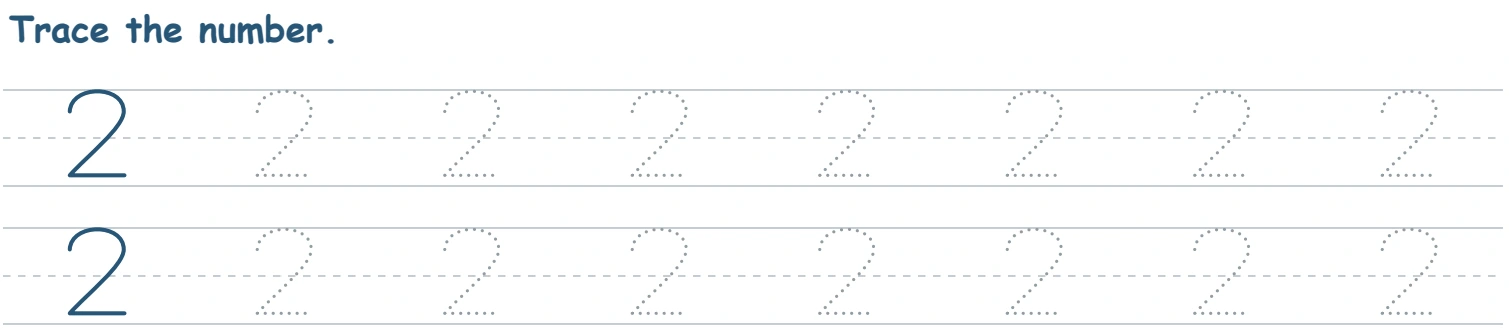
The sailboat page includes a solid example of 2 followed by dotted forms on writing guides. Inspect the curved top, descending direction and lower base with the learner. The guides invite a controlled movement through the printed shape.
Finger rehearsal can come before pencil tracing. Number Bundle writing practice need not be hurried simply because a child already knows how many boats are shown. Knowing a quantity and controlling the movement that writes its symbol are different accomplishments.
When a line wanders, compare a small portion with the model. Ask which part needs another attempt and try on spare paper if the worksheet space feels crowded. Offer a stable surface and a comfortable working position.
Later Number Bundle pages present different numeral demands. The shape of 8 has connected loops; 10 requires two adjacent digits. Follow the actual printed model for the selected page instead of applying one movement instruction to every number.
The Number Bundle search is a different counting question
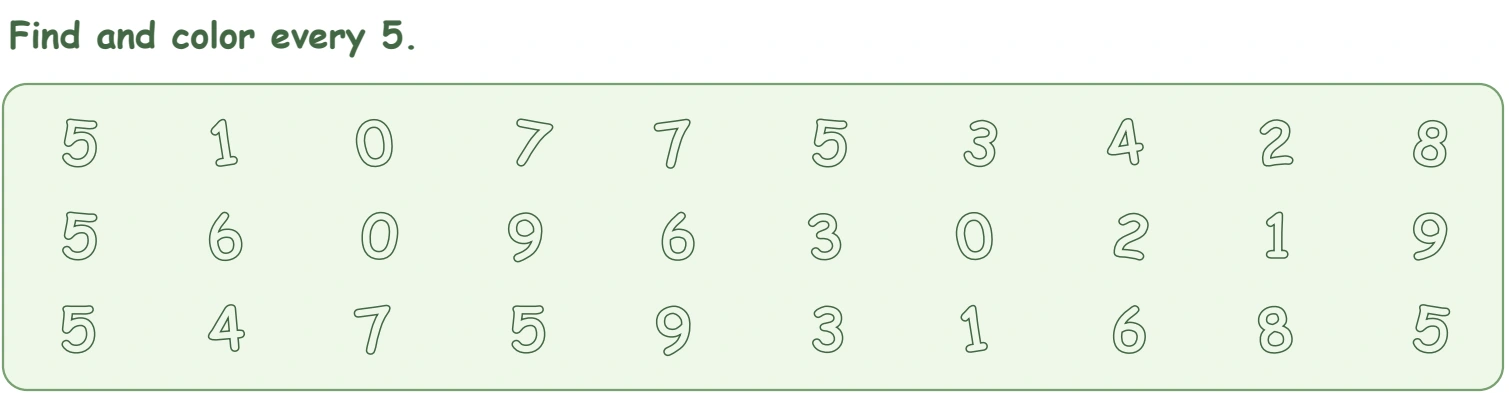
Each sheet contains a panel of thirty outlined numeral entries. Six entries match that sheet's target, including the page for 1 and the page for 10. The search quantity therefore does not change to match the pictured object quantity.
This Number Bundle distinction matters on the turtle page. There are five turtles in a quantity panel, but six instances of the numeral 5 in the search. A child who colors only five matching entries has left one target unmarked.
Scan the printed positions systematically, using a strip of spare paper below the working row if helpful. The strip should leave the selected row visible. Read the target together and compare each entry before coloring it.
For the final Number Bundle sheet, look for the entire printed entry 10. A lone 1 or 0 is a different entry. Keep the adjacent digits together when explaining the target, while still counting each complete balloon as one pictured object.
Nora's Number Bundle folder holds questions, not a race
Nora and her aunt place the printable collection in a folder. On their first visit they choose the teddy page because Nora wants a picnic story. They count the four bears and match each with a pretend place on scrap paper.
Her aunt notices that Nora can explain the amount but finds the tracing movement unfamiliar. They try one guided 4 and leave the remaining activities for another time. A note in the folder says which part to revisit, rather than declaring the whole number mastered.
On another day, Nora opens the Number Bundle at the turtle page and selects the coloring panel first. After a brief coloring pause, her aunt asks about the five smaller turtle pictures. The folder keeps materials available without requiring a fixed daily page quota.
The generated still life suggests simple storage and play materials. Actual Number Bundle answers come from the printed activities. A folder, pencil and a few scraps of paper are sufficient; the props pictured in the supporting scene are optional.
Six Number Bundle opportunities an adult can distinguish
- Number Bundle quantity sense. A child names the amount of a complete collection, linking the last count to how many objects are present.
- Number Bundle visual selection. Searching among other numerals requires inspecting a symbol rather than coloring every appealing outline.
- Number Bundle formation. Repeated dotted models offer supported movement through the particular shape used on that page.
- Number Bundle recording. The blank response box asks the learner to represent a counted amount without relying solely on a tracing guide.
- Number Bundle descriptive talk. Explaining a whole object, a search choice or a writing adjustment gives an adult evidence of the child's thinking.
- Number Bundle self-checking. Comparing a result with the actual pictures or printed model creates a specific reason to revise an answer.
These opportunities combine cognitive attention, spoken language and hand movement. Observe them separately so support can fit the task. An adult may write a dictated amount while the child develops pencil control, or name unfamiliar digits without supplying the picture count.
A classroom Number Bundle workshop with distinct jobs
Select one page for a small group and explain the available jobs. A picture counter establishes the amount, a model observer discusses the numeral, and a search observer checks matching entries. Learners can take turns rather than keeping a permanent role.
Begin with a shared demonstration of one activity, then ask each child to show a response. This Number Bundle routine is useful when a whole-class answer could conceal which learners counted the objects and which followed another voice.
Use the remarks area for a concrete observation, such as a skipped lower fish or a correctly identified complete 10. A teacher can choose the next task from that evidence instead of assigning a harder page automatically.
For ages three to six, offer adult support and a manageable number of demands. The Number Bundle suits preschool and kindergarten exploration, with easier collections available when coordinating a longer count or a complex writing shape is still difficult.
A Number Bundle coloring pause can have its own purpose
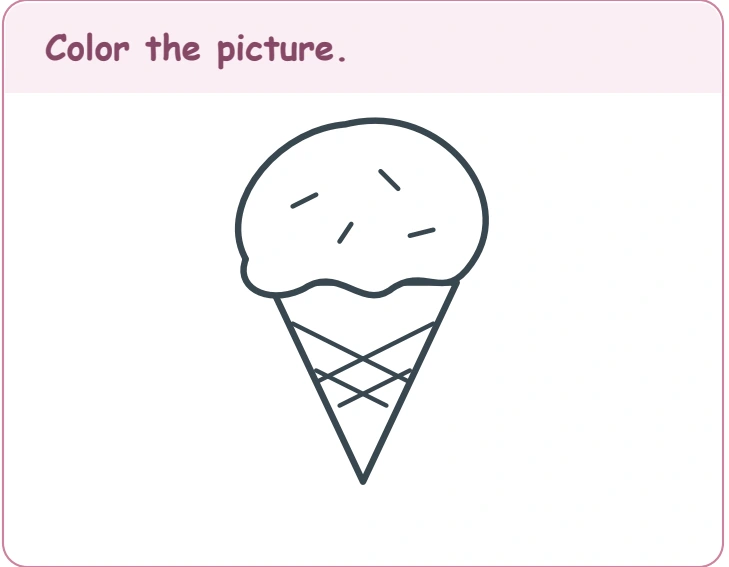
The large outline on the ice cream page is a coloring picture, not the eight-object collection. Its boundaries provide a different movement task and a natural opportunity to talk about curved edges, the scoop and the cone.
Let a learner choose colors without treating a particular color scheme as a mathematical answer. Return to the Number Bundle counting panel when the question concerns eight. Coloring enjoyment can support willingness to revisit the page while remaining distinct from the quantity task.
Five Number Bundle follow-ups without extra worksheets
1. Turn a Number Bundle picture into a spoken label
Choose an upper collection and ask for a report containing both its amount and object name. A partner points to the group being described, checking that the label refers to the selected panel.
Use a familiar collection first, then another when the learner is ready. The Number Bundle label needs evidence from the page; a longer sentence or a louder voice does not make it more accurate.
2. Compare two Number Bundle representations
Find the upper quantity picture and the lower count-writing picture on one sheet. Count them independently, noticing that the drawing sizes or spacing may differ while the intended amount stays the same.
Ask what remained unchanged. A Number Bundle comparison can focus on the number of whole objects without requiring formal addition or a written comparison sign.
3. Teach a Number Bundle numeral to a toy
Invite the learner to show a toy where the selected numeral's tracing route goes. Follow the model with a finger, discussing an obvious turn, loop or straight part.
The toy can ask for another demonstration when something is unclear. Keep Number Bundle teaching tied to the printed numeral so a playful explanation also supports an accurate movement.
4. Sort Number Bundle tasks by the help they need
Talk about whether an activity needs pointing, inspecting a model, coloring or writing an answer. Let the child choose a task and name the kind of help that would make it manageable.
This Number Bundle conversation can make requests more specific: help with the numeral name is different from help holding a page steady or reaching every picture in a collection.
5. Check a Number Bundle report before filing it
Before putting away a page, ask the learner to choose one result worth showing. It might be a complete count, an identified search entry or a tracing section that follows the guide more closely.
Record a brief observation if useful. The next Number Bundle visit can begin with that discovery, giving practice continuity without requiring the child to complete every remaining task immediately.
Finish a Number Bundle count with a written amount
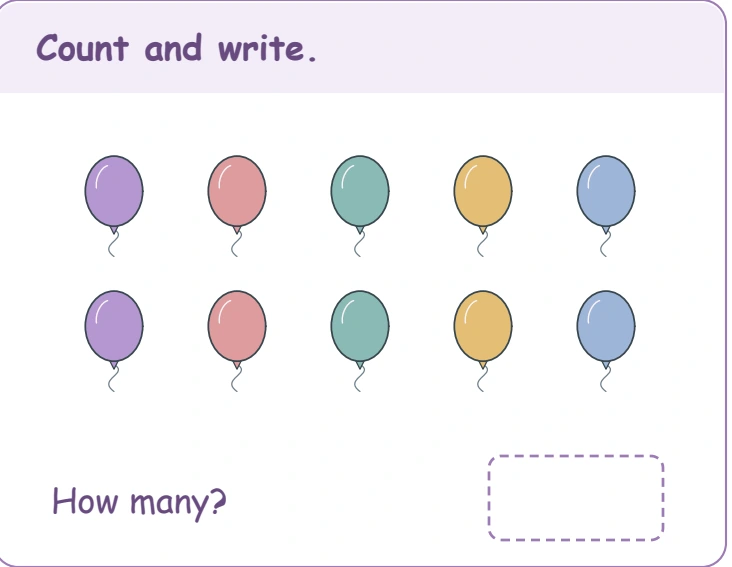
The tenth page provides ten balloons and a blank response box. Count all the whole balloons, then write 10 as adjacent digits. One curved balloon and its string belong to a single object; its colored fill does not change that unit.
If a child writes only 1, discuss the missing 0 with reference to the page's large numeral model. The Number Bundle separates this recording demand from tracing, so the adult can see whether the symbol is available when dotted guidance is absent.
Choose the next Number Bundle step from what happened
Common difficulties include adding the upper and lower collections together, coloring an expected number of search entries instead of every target, and judging the amount by picture size. Return to the task's actual instruction and identify the particular panel involved.
Use the existing number-five tracing and counting page for another focused quantity activity. The introductory five-line practice separates basic movement from numeral learning. The ten-path tracing collection offers more varied pencil routes when appropriate.
Keep Number Bundle returns short and purposeful. Choose the next activity because of an observed need. A child can feel successful through an understandable correction, even when a full page remains unfinished.
Purchase and print the Number Bundle for $3
The Number Bundle is a one-time purchase priced at USD 3.00. Use the bundle's purchase control and complete the website's checkout. After a successful purchase, the authorized account can retrieve the protected PDF through its worksheet download access.
The purchased Number Bundle contains all ten worksheets in one file. Website-name and domain watermarks have been removed from every worksheet page, and no advertisements have been added inside the printable PDF. This bundle has its own purchase access; membership alone does not replace that purchase.
Check the document's ten-page preview, choose US Letter and portrait printing, and keep each sheet inside the printer's available margins. Print selected page numbers when only one activity is needed. The collection stays together even when today's lesson uses a single page.
Popular Worksheets
Printable resources families and teachers are downloading now.
 Free
 Free
 Free
 Free