
Master 10 Tricky Lines for Tracing Practice: Fun for Ages 3-6

Building Foundational Skills: The Power of Tracing Lines
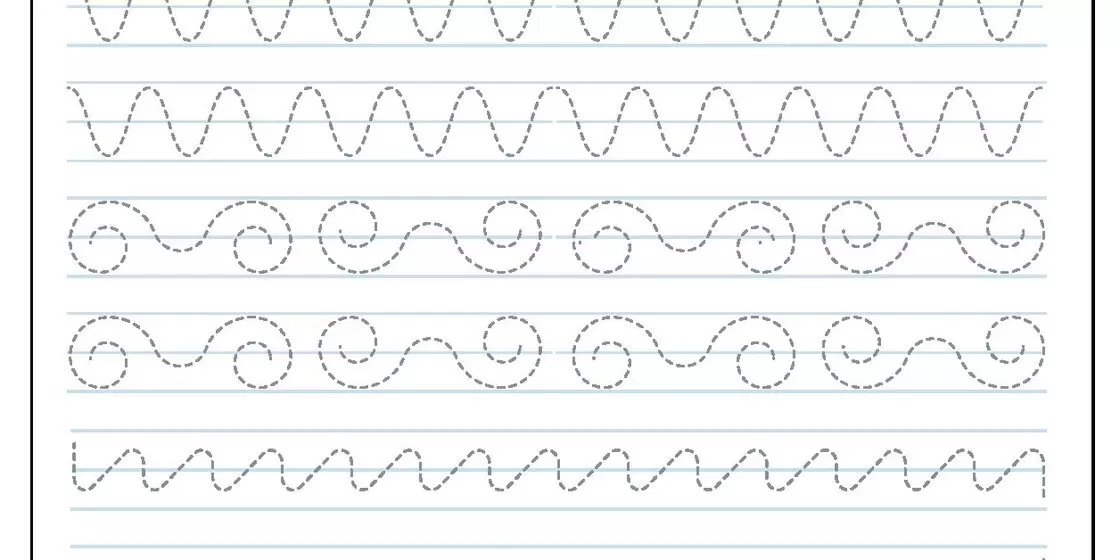
tricky lines gives learners focused practice. Getting a child ready for writing involves more than just holding a pencil. It’s about developing the fine motor skills and the control needed to make deliberate marks on paper. Our "Tricky Lines for Tracing" worksheet is a brilliant, no-fuss tool for exactly this purpose. It presents a series of dotted lines, each with a unique shape, inviting little hands to guide a writing utensil along the path. This simple yet effective activity is a cornerstone for early childhood education, laying the groundwork for future academic success. By focusing on the fundamental act of tracing lines, children begin to understand how to control their movements, build muscle memory, and prepare their hands for the more complex task of forming letters and numbers. This foundational work is crucial, and this worksheet makes it engaging and accessible.
tricky lines gives learners focused practice. The journey of learning to write is a gradual one, and tracing lines is often the very first step. It's a way for children to explore their ability to control a writing tool, to understand cause and effect (moving the pencil creates a line), and to build the physical stamina required for longer writing tasks. This worksheet offers a delightful variety of patterns, from simple waves to more intricate curves and zig-zags, ensuring that children are challenged and engaged as they progress. The repetition involved in tracing each line helps to solidify muscle memory, making the movements more automatic over time. This frees up cognitive resources for children to focus on other aspects of writing, such as letter formation and spacing, once they move beyond basic line tracing.
tricky lines gives learners focused practice. This printable resource is designed with young learners in mind, offering a clear and uncluttered layout that minimizes distractions. The dotted lines are prominent enough to be easily followed, and the spacing between lines provides ample room for children to practice without feeling cramped. The variety of line types ensures that children are exposed to different types of movements, from smooth, flowing curves to sharp, angular turns. This comprehensive approach to line tracing helps to develop a well-rounded set of fine motor skills, which are essential not only for writing but also for many other daily activities, such as cutting with scissors, buttoning clothes, and tying shoelaces. The act of carefully following a dotted line also cultivates a child's ability to concentrate, a skill that is invaluable across all areas of learning.
Why This Worksheet Stands Out
- Variety of Patterns: Offers a broad spectrum of line types, from simple curves to complex zig-zags, providing diverse practice.
- Clear Visuals: Dotted lines are easy to see and follow, with ample space for error correction and practice.
- Skill Development Focus: Specifically targets fine motor control, hand-eye coordination, and concentration.
- Engaging Design: Simple, uncluttered layout keeps young children focused on the task at hand.
The Crucial Role of Tracing Lines in Early Development
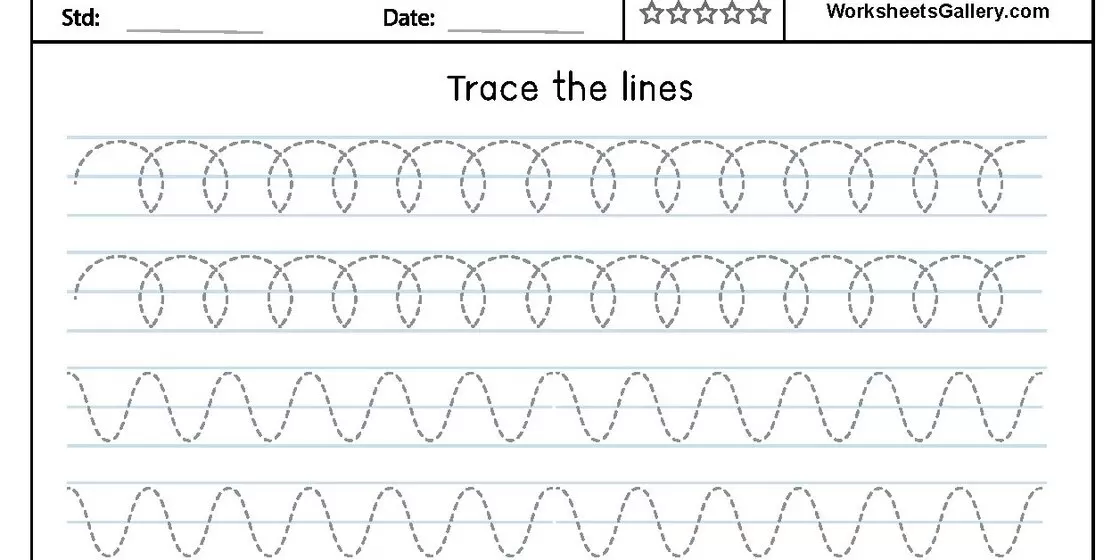
tricky lines gives learners focused practice. Tracing lines might seem like a simple activity, but its impact on a child's development is profound. It’s a foundational skill that underpins many areas of learning and everyday life. For young children, the act of tracing is a tactile and visual experience that helps them connect their physical movements with the marks they make on paper. This connection is vital for developing an understanding of cause and effect, which is a key concept in cognitive development. As children trace, they are not just drawing lines; they are actively learning to control the small muscles in their hands and fingers, a process known as fine motor skill development. This is the very same dexterity needed for tasks like holding a pencil correctly, which is a prerequisite for learning to write letters and numbers. The consistent practice of tracing lines helps to strengthen these muscles and improve the precision of movements. This improved control allows children to make more deliberate and accurate marks, which is essential for forming legible letters and numbers later on. The ability to smoothly follow a curve or a sharp angle requires a great deal of concentration and hand-eye coordination. Children must watch where their pencil is going and adjust their movements accordingly, a complex task that hones their visual-motor integration skills. This worksheet provides a structured and engaging way to nurture these essential abilities, setting children on a path toward confident and capable writing. The repetitive nature of tracing also helps to build muscle memory, making these movements more automatic and less effortful over time. This allows children to focus their mental energy on more complex aspects of writing, such as spelling and sentence construction, rather than struggling with basic pencil control. The consistent practice of **tracing lines** is therefore not just about making marks; it’s about building the physical and cognitive architecture for future learning.
Key Learning Benefits of Tracing Lines
tricky lines gives learners focused practice. Engaging with this "Trace the Lines" worksheet offers a multitude of benefits that extend far beyond simple penmanship. These advantages are crucial for a child's holistic development, preparing them for a wide range of academic and life skills. Here are some of the most significant advantages:
- Enhanced Fine Motor Skills: The precise movements required to follow dotted lines strengthen the small muscles in the hands, fingers, and wrists. This improved dexterity is vital for everyday tasks like dressing, eating, and manipulating small objects.
- Improved Hand-Eye Coordination: Children must visually track the line and coordinate their hand movements to stay within the dotted path. This constant feedback loop sharpens their ability to synchronize what they see with what they do.
- Boosted Concentration and Focus: Successfully completing a tracing activity requires sustained attention. Children learn to focus on the task, ignore distractions, and persevere until the line is finished, building valuable concentration skills.
- Pre-Writing Readiness: This worksheet is a direct precursor to handwriting. It familiarizes children with holding and controlling a writing instrument, preparing them for letter and number formation.
- Spatial Awareness Development: Following different line paths—curves, zig-zags, loops—helps children understand spatial relationships and develop an intuitive sense of direction and form.
- Increased Confidence: Each successfully traced line provides a sense of accomplishment, boosting a child's self-esteem and encouraging them to tackle more challenging tasks.
- Problem-Solving Skills: When a child makes a mistake, they learn to self-correct and try again, fostering a resilient approach to challenges.
Practical Application: Home and Classroom Scenarios
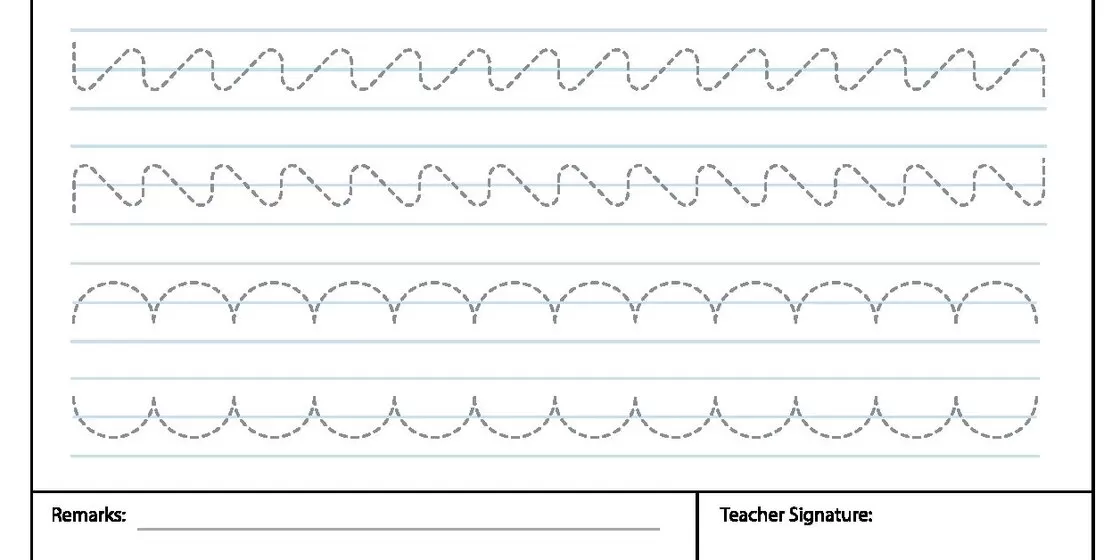
tricky lines gives learners focused practice. This versatile "Trace the Lines" worksheet can be seamlessly integrated into both home and classroom learning environments, offering consistent support for a child's development. Its simplicity makes it an ideal tool for quick, focused practice sessions.
At Home: Building Skills in a Familiar Setting
tricky lines gives learners focused practice. For parents, this worksheet is a fantastic resource for supplemental learning. It can be used during quiet time, after school, or as a fun activity on a rainy day.
Scenario 1: The Afternoon Skill-Builder
tricky lines gives learners focused practice. After a snack, Leo (age 4) sits at the kitchen table with his mom. She hands him the "Trace the Lines" worksheet and a set of chunky crayons. "Let's try tracing these wiggly lines, Leo," she says warmly. Leo carefully selects a blue crayon and slowly guides it along the first dotted wave. He concentrates, his tongue peeking out slightly. When he completes the line, he beams with pride. His mom praises his effort, "You did a wonderful job staying on the dots, Leo! That’s a beautiful wavy line." They continue, Leo tackling zig-zags and loops, each completed line a small victory. This routine not only reinforces his fine motor skills but also creates a positive association with learning activities.
tricky lines gives learners focused practice. Using the worksheet at home doesn't require elaborate setup. A simple table, a writing tool (pencil, crayon, or marker), and a few minutes of focused attention are all that’s needed. It's a great way to reinforce concepts learned at school or to introduce new skills in a relaxed, pressure-free environment. Parents can observe their child's progress, identify areas where they might need extra support, and celebrate their successes. This consistent practice at home can significantly accelerate a child's development in pre-writing skills.
In the Classroom: Supporting Diverse Learners
tricky lines gives learners focused practice. Teachers can utilize this worksheet in various ways to support their students' learning journey. It's perfect for small group activities, individual practice, or as a station in a learning center.
Scenario 2: The Learning Center Activity
tricky lines gives learners focused practice. In Ms. Davis's kindergarten class, the "Trace the Lines" worksheet is a popular choice at the fine motor skills center. Children can choose from a variety of writing tools like pencils, colored pencils, or thin markers. The worksheet is placed in a dry-erase sleeve, allowing for repeated use with a dry-erase marker. This reduces paper waste and provides immediate feedback. Children work independently or in pairs, quietly concentrating on their chosen line patterns. Ms. Davis circulates, offering gentle guidance, encouragement, and praise. She notes that some children naturally gravitate towards the more complex zig-zag lines, while others prefer the smoother curves, allowing for differentiated practice within the same activity. This center provides a valuable opportunity for children to develop essential skills in a self-directed manner.
tricky lines gives learners focused practice. In a classroom setting, this worksheet can be used as a warm-up activity before literacy or math lessons, or as a calming transition between more energetic activities. It’s also an excellent tool for children who may need extra support with their fine motor skills, providing targeted practice in a non-intimidating format. Teachers can integrate it into thematic units by having children trace lines that represent specific shapes or movements related to the theme. For instance, tracing wavy lines could be linked to a water or ocean theme.
Developing Essential Skills Through Line Tracing
tricky lines gives learners focused practice. The act of tracing lines is a surprisingly comprehensive developmental exercise, touching upon several key areas of a child's growth. It's a holistic activity that nurtures not just physical coordination but also cognitive and language development.
Cognitive Skill Development
tricky lines gives learners focused practice. Tracing lines requires children to process visual information and translate it into physical action. This process enhances their ability to follow instructions, understand sequences, and develop problem-solving skills when they encounter a difficult curve or a stray mark. The focused attention needed to stay on the dotted path also cultivates sustained concentration, a critical cognitive skill for all learning. Children learn to plan their movements, anticipate the path ahead, and make necessary adjustments, which are all forms of executive function development. This mental engagement is crucial for building a strong foundation for more complex academic tasks.
Motor Skill Development
This worksheet is a powerhouse for developing fine motor skills. The precise control needed to grip a writing tool and guide it along a specific path strengthens the intrinsic muscles of the hand and improves finger dexterity. This is essential for tasks like handwriting, cutting with scissors, and manipulating small objects. Furthermore, the shoulder and arm muscles are engaged to stabilize the hand and arm, contributing to overall gross motor control that supports fine motor actions. The development of pincer grasp and tripod grasp, crucial for pencil holding, is also significantly enhanced through repeated tracing activities. The smooth, controlled movements developed here are the building blocks for legible handwriting.
Language and Cognitive Connections
While seemingly a motor activity, tracing lines can also be linked to language development. Parents and teachers can use descriptive language while children trace: "See how this line curves like a snake?" or "This line goes up and down like a mountain!" This narration helps children associate the visual patterns with words, expanding their vocabulary and comprehension. Discussing the shapes and movements can also encourage children to describe their own actions and the patterns they are creating, thereby enhancing their verbal expression. The cognitive link is also strong; understanding that a specific set of movements creates a specific shape is a fundamental learning concept.
Beyond the Worksheet: Extended Activities and Fun
To further enrich the learning experience and keep children engaged, consider these extended activities that build upon the skills practiced in the "Trace the Lines" worksheet. These ideas transform simple tracing into imaginative play and creative exploration.
- Storytelling Adventures: Use the lines as inspiration for stories. For example, a wiggly line could be a river a character is crossing, a zig-zag line could be a mountain path, or a coiled line could be a sleeping snake. Encourage children to narrate the adventure as they trace.
- Sensory Tracing Tray: Fill a shallow tray with sand, salt, or rice. Children can use their finger to trace the patterns from the worksheet (or draw them in the tray) for a tactile sensory experience that reinforces the shapes and movements.
- Nature Line Walk: Head outdoors and find natural lines to follow. This could be a winding path, a fallen branch, or the edge of a leaf. Encourage children to trace the lines with their fingers or follow them with their feet.
- Playdough Paths: Provide playdough and ask children to roll it into long "snakes" and then form the different line patterns from the worksheet. This develops fine motor strength and spatial reasoning in a different medium.
- Building Block Mazes: Use building blocks to create simple mazes or pathways. Children can then use a small toy car or figure to navigate the path, mimicking the tracing action.
- Crafty Creations: Cut out the traced lines and use them as elements in a collage or a larger artwork. For instance, a traced spiral could become the center of a flower, or zig-zag lines could form a fence.
Why Children Absolutely Love Tracing Lines
The appeal of tracing lines for young children lies in its inherent simplicity and the immediate sense of accomplishment it provides. The dotted lines act as a clear guide, reducing the pressure of creating something from a blank page. Children often feel a sense of mastery as they successfully connect the dots, seeing a complete, neat line emerge from their efforts. This tangible result is incredibly rewarding. Furthermore, the repetitive nature of tracing can be soothing and meditative for some children, offering a calming focus. The opportunity to use colorful crayons or markers also adds an element of fun and creativity. When presented in a playful context, tracing becomes less of a task and more of an enjoyable exploration of their own capabilities. It’s a chance for them to experiment with their writing tools and see what they can create, fostering a positive attitude towards learning activities.
Navigating Common Challenges
While tracing lines is beneficial, some children may encounter difficulties. Recognizing these common issues can help parents and educators provide targeted support:
- Grip Issues: Some children may grip their writing tool too tightly (causing fatigue) or too loosely (lacking control). Ensure they are using age-appropriate tools, such as chunky crayons or pencils with triangular grips, which encourage a proper tripod grasp.
- Poor Hand-Eye Coordination: Children might struggle to keep the writing tool on the dotted line. Start with thicker lines and simpler patterns. Provide gentle physical guidance by placing your hand over theirs (hand-over-hand) to help them feel the correct movement.
- Lack of Focus: Some children may have short attention spans. Break down the worksheet into smaller sections. Offer frequent praise and short breaks. Make the activity more engaging by turning it into a game or story.
- Hesitation or Fear of Mistakes: A child might be hesitant to start or afraid of making errors. Reassure them that mistakes are part of learning and that the goal is practice, not perfection. Using a pencil with an eraser or placing the worksheet in a dry-erase sleeve can reduce this anxiety.
- Motor Fatigue: Children may tire easily. Ensure they are sitting comfortably with good posture and that the writing tool is not too heavy or difficult to hold. Keep practice sessions short and positive.
Encouraging Consistent Practice
To maximize the benefits of tracing, consistent and positive reinforcement is key. Here are some strategies to encourage regular practice:
- Make it Fun: Use colorful writing tools, play music, or turn tracing into a game. Connect tracing to themes your child enjoys, like animals or vehicles.
- Celebrate Small Wins: Acknowledge and praise every effort, no matter how small. Positive feedback builds confidence and motivation.
- Variety is Key: Offer different types of tracing activities, not just this worksheet. Explore tracing letters, numbers, or drawing simple shapes. You can find more resources in our Free worksheet library.
- Integrate into Daily Life: Point out lines and shapes in the environment and encourage children to trace them with their fingers.
- Set Realistic Goals: Don't expect perfection immediately. Focus on progress and effort. Short, frequent practice sessions are more effective than long, infrequent ones.
- Provide Choice: Allow children to choose which lines they want to trace first or which writing tool they want to use. This gives them a sense of ownership and control.

Download Instructions: Get Your Printable Worksheet
Ready to help your child build essential pre-writing skills? Downloading this "Trace the Lines" worksheet is simple and straightforward. It’s designed to be a completely free, no-fuss resource for parents and educators.
- Free Access: This worksheet is available for download at no cost.
- No Watermarks: We ensure a clean, professional look for your printing needs.
- Ad-Free Experience: Enjoy a distraction-free download process.
- Printable Format: The worksheet is provided in a standard printable format, ready to be used on any home or school printer.
Simply click the download button to get your copy. It’s a valuable tool to support your child's early learning journey, helping them develop the fundamental skills needed for writing and beyond. For more resources to support early learning, explore our collection of A to Z Alphabets Tracing Worksheets or practice specific letter formations with our Letter Z Tracing Secrets.
Popular Worksheets
Printable resources families and teachers are downloading now.
 Free
Free
 Free
Free