
Trace Number 3 Worksheet: Master 'Three' with Fun Practice!

Mastering the Number Three: A Fun Printable for Little Learners
Trace Number 3 Worksheet gives learners focused practice. Welcome to an exciting journey of number discovery! This Trace Number 3 Worksheet is designed to make learning the numeral '3' an enjoyable and effective experience for preschoolers and kindergarteners. Through a series of carefully crafted activities, your child will build confidence and foundational math skills, setting a strong base for future academic success. Let's dive into the world of the number three!
What's Inside This Engaging Worksheet?
This printable resource focuses on the number three, offering a multi-faceted approach to learning. It includes:
- Hand Counting Practice: Children will identify and match the numeral '3' with the correct number of fingers shown on illustrated hands.
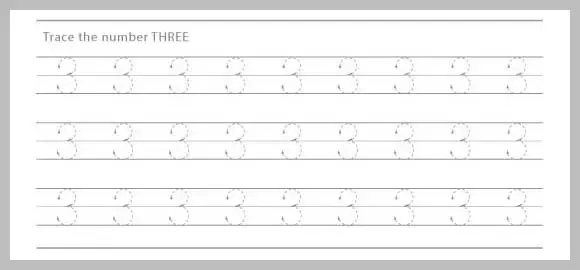
- Number Tracing: Multiple rows of dotted '3's provide ample opportunity for children to practice forming the number correctly, enhancing fine motor control.
- Coloring Activity: A fun section encourages children to color exactly three stars, reinforcing the quantity associated with the number three.
Why This Trace Number 3 Worksheet is Brilliant
This worksheet goes beyond simple rote memorization. It actively engages children by:
- Connecting Visuals to Quantity: The hand-counting exercise helps children grasp the concept of 'three' as a quantity.
- Developing Fine Motor Skills: Tracing the number '3' refines the precise movements needed for handwriting.
- Boosting Recognition: Repeated exposure through tracing and coloring solidifies the visual recognition of the numeral '3'.
- Encouraging Engagement: The combination of tracing and coloring keeps young learners motivated and interested.
Understanding the Number Three
The number three is a fundamental building block in mathematics. It's often one of the first numbers children learn to recognize and write after one and two. Understanding 'three' involves several cognitive processes: recognizing its unique symbol, associating it with the correct quantity, and being able to produce the symbol through writing. This worksheet supports all these aspects. For instance, the exercise showing hands with three fingers directly links the abstract symbol '3' to a concrete, visible quantity, making the concept tangible for young minds.

Practical Application: Home and Classroom
At Home:
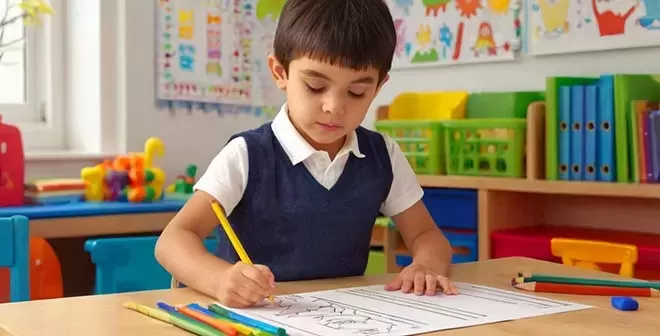
Parents can use this Trace Number 3 Worksheet as a delightful way to supplement early learning. Dedicate a few minutes each day to work through the activities together. You can make it more interactive by asking your child to count three objects around the house before they start tracing, or by having them clap three times. For example, after completing the hand-counting section, try finding three blue toys or three books to count together. This reinforces the learning in a real-world context and makes practice feel less like a chore and more like a game.
Scenario: Imagine it's a rainy afternoon. You sit down with your child and this worksheet. You first point to the hands and ask, "How many fingers are up on this hand? Let's count them: one, two, three! That's right, it's the number three!" Then, you guide their hand as they trace the dotted '3's, praising their effort. Finally, you encourage them to color three stars, perhaps letting them choose which three to color. This focused, playful interaction can significantly boost their confidence and understanding.
In the Classroom:
Teachers can integrate this worksheet into their math centers or use it for small group instruction. It's an excellent tool for introducing or reinforcing the number three. After a lesson on the number three, provide this worksheet for independent practice. You can also use the hand-counting images as a springboard for a discussion about counting fingers on both hands. For instance, ask students, "Can you show me three fingers? Now, can you show me three fingers on your other hand?" This active participation deepens comprehension.
Scenario: During circle time, the teacher introduces the number three using flashcards and real objects. Later, children visit the math station where this Trace Number 3 Worksheet is available. The teacher circulates, offering guidance, and points out the 'three chickens' illustration, asking children to count them. For children who need extra support, the teacher might use their own fingers to model tracing the number '3' on the worksheet, ensuring they grasp the correct stroke order. This structured yet supportive environment helps all learners progress.
Skills Developed Through Practice
Engaging with this Trace Number 3 Worksheet cultivates a range of essential skills crucial for early development:
Cognitive Skills
Number recognition, quantity association, one-to-one correspondence, understanding of numerical order.
Fine Motor Skills
Pencil grip, hand-eye coordination, controlled movements for tracing, pre-writing muscle development.
Language & Literacy
Learning the spoken word "three", associating the symbol with the word, verbalizing counts.
Common Pitfalls and How to Overcome Them
As children learn to trace the number three, they might encounter a few common challenges. Recognizing and addressing these early can prevent frustration and build confidence:
- Incorrect Stroke Order: Some children might start tracing from the bottom or in a circular motion instead of the standard top-to-bottom, curve approach. Gently guide their hand, demonstrating the correct starting point and direction. Use arrows on the dotted lines if needed, or draw the correct stroke order separately for them to mimic.
- Inconsistent Sizing: The traced numbers might be too large or too small, varying significantly from the guide dots. Encourage them to 'stay on the path' and try to make their number similar in size to the examples. Praise efforts to keep the size consistent.
- Difficulty with Curves: The curved part of the number three can be tricky. Break it down: practice making two separate curves first, then combine them. You can even use playdough to form the number '3' to help them feel the shape.
- Confusing '3' with other numbers: Occasionally, young children might mix up '3' with 'E' or other visually similar characters. Consistent practice and clear visual association with the quantity 'three' helps solidify recognition.
Extend the Learning: Fun Activities
Amplify the learning experience with these engaging activities:
Number Three Scavenger Hunt
Hide three identical objects (like toy cars or blocks) around a room and have your child find them. Once found, ask them to count the objects and trace the number '3' on the worksheet.
Three-Part Storytelling
Encourage your child to tell a short story that has three parts or characters. This helps them think in sequences and use the number three in a creative context.
Counting and Sorting
Gather a collection of small items (buttons, beads, small toys). Ask your child to sort them and then count out exactly three of a specific type. They can then practice tracing the number '3' again.
Ready to Master the Number Three?
Download your free Trace Number 3 Worksheet today and watch your child's confidence in math grow!
Download NowPopular Worksheets
Printable resources families and teachers are downloading now.
 Free
Free
 Free
Free
 Free
Free
 Free
Free