
Master Number 1 to 10 Tracing: Amazing Fun for Little Learners!

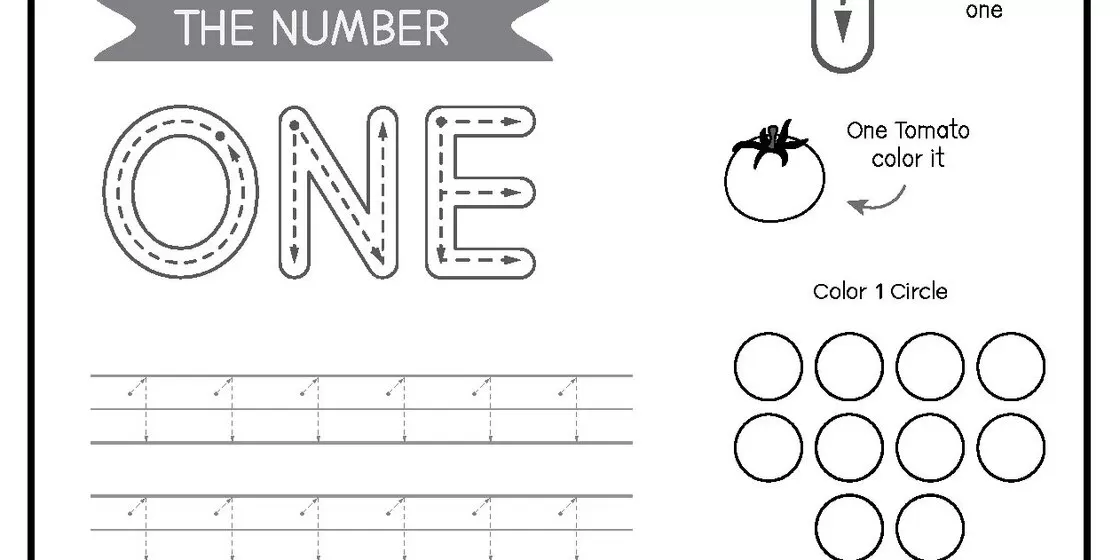
Introducing the Number 1 to 10 Tracing Adventure!
Embarking on the journey of learning numbers is a significant milestone for young children. This collection of Number 1 to 10 Tracing worksheets provides a structured yet playful approach to mastering numeral recognition and formation. Designed with preschoolers and early learners in mind, these printables offer a delightful way to introduce the sequence of numbers, from the solitary 'one' to the complete set of 'ten'. Each page is carefully crafted to engage a child's attention, combining the essential task of tracing with appealing visual elements and interactive exercises. Parents and educators will find this resource invaluable for building a strong foundation in early mathematics, making learning both effective and enjoyable.
Why Number Tracing is Crucial for Early Development
The act of tracing numbers is far more than just drawing shapes. It's a foundational activity that significantly contributes to a child's overall development. When children trace numbers, they are actively engaging their fine motor skills, the small muscles in their hands and fingers that are essential for writing, buttoning clothes, and countless other daily tasks. This repetitive motion helps to strengthen these muscles and improve hand-eye coordination, preparing them for more complex writing tasks later on. Furthermore, tracing numbers reinforces number recognition and sequencing, helping children understand the order and value of each numeral. The visual and kinesthetic feedback loop created during tracing solidifies their understanding of what each number looks like and how it is formed.
Enhanced Fine Motor Skills
Tracing requires precise movements, strengthening the small muscles in a child's hands and fingers. This is vital for developing dexterity needed for writing and other daily activities.
Improved Hand-Eye Coordination
Following the dotted lines to form numbers helps children coordinate what they see with the movements of their hands, a key skill for many learning tasks.
Number Recognition and Formation
Repeatedly tracing each number helps children learn to recognize its visual form and understand the correct strokes needed to write it independently.
Cognitive Development
Understanding number sequences, counting, and identifying numbers are crucial cognitive skills that tracing practice supports.
Increased Concentration and Focus
Completing tracing activities requires sustained attention, helping children develop focus and the ability to complete tasks.
Preparation for Writing
The muscle memory and control developed through tracing are direct precursors to forming letters and words, setting a strong base for literacy.
A Closer Look at the Number 1 to 10 Tracing Worksheets

This series of worksheets offers a comprehensive approach to teaching numbers 1 through 10. Each number is presented with multiple learning opportunities designed to reinforce understanding and practice. The core of each worksheet involves tracing the numeral itself, following clear dotted lines and directional arrows. This guided practice is essential for developing proper number formation. Beyond tracing, children are encouraged to engage with the number in various ways. For instance, they might color a specific number of objects (like tomatoes), color circles to match the numeral, or identify and circle all instances of the target number within a grid of mixed digits. These multi-faceted activities ensure that children not only learn to write the number but also recognize it and understand its quantity.
The visual design of each worksheet is clean and uncluttered, ensuring that the focus remains on the learning task. Large, clear numerals and ample spacing for tracing prevent frustration. The inclusion of thematic elements, such as tomatoes to color, adds an element of fun and relevance, making the learning process more enjoyable for young children. The progression from number 1 to 10 is logical, allowing children to build upon their knowledge sequentially. This systematic approach helps to prevent overwhelm and builds confidence with each successfully completed number.
Practical Application: Home and Classroom Scenarios
These Number 1 to 10 Tracing worksheets are incredibly versatile, fitting seamlessly into both home learning environments and busy classrooms. For parents, these printables offer a fantastic way to supplement early education, providing structured learning activities that can be done at the kitchen table or during quiet time. Imagine a parent sitting with their child, guiding them through tracing the number '3', then counting three red tomatoes on the page. This hands-on interaction not only teaches the number but also strengthens the parent-child bond.
In a classroom setting, these worksheets can be used in various ways. They are perfect for small group activities, allowing teachers to provide individual attention and support. A teacher might introduce the number '5' to a group, explaining its formation and quantity, then have the children work through the tracing and coloring activities. These worksheets can also serve as a valuable tool for early finishers or as part of a math center rotation. The clear instructions and engaging format mean that children can often work through them independently, fostering autonomy and self-directed learning. The inclusion of a 'Review' section at the top of each page also allows for quick assessments of understanding.
Scenario 1: Morning Math Warm-up at Home
Sarah, a kindergarten teacher, starts each day with a "Math Minute" activity. Today, her students are focusing on the number '7'. She distributes the Number 7 Tracing worksheet. The children first trace the large dotted '7' with their pencils, following the arrows. Then, they color the seven illustrated tomatoes. Finally, they scan the grid of numbers and circle all the '7's they can find. This routine takes about ten minutes and gets their brains ready for the day's lessons.
Scenario 2: Independent Practice in a Preschool Classroom
At home, young Leo is working with his mom on the Number 4 Tracing worksheet. After successfully tracing the numeral, he enthusiastically colors the four tomatoes. His mom then points to the "Color 4 Circle" section, and Leo carefully colors four of the circles. This focused activity not only reinforces the number four but also enhances his fine motor control and ability to follow multi-step instructions.
Developing Essential Skills Through Number 1 to 10 Tracing
These worksheets are thoughtfully designed to foster a range of crucial developmental skills beyond just number recognition. The primary focus is on developing fine motor control and precision. When children grip a pencil and carefully guide it along dotted lines, they are honing the intricate movements required for handwriting. This practice strengthens the small muscles in their hands and fingers, improving dexterity and control. The visual tracking required to follow the dotted lines also enhances their visual-motor integration – the ability to process visual information and translate it into physical action.
Cognitively, these activities build number sense. By tracing, coloring, and identifying numbers, children learn to associate the numeral with its quantity. The "Circle all of the number 10s" exercise, for example, requires them to not only recognize the numeral '10' but also to differentiate it from other numbers, improving their visual discrimination skills. Language development is also subtly supported as children learn to say the number names, count the objects, and follow instructions given by parents or teachers. This comprehensive skill development makes Number 1 to 10 Tracing worksheets a powerful tool for early childhood education.
Fine Motor Dexterity
Grasping a pencil, controlling its pressure, and making precise movements are all practiced, building a foundation for legible handwriting.
Visual-Motor Integration
Connecting the visual cue of the dotted line with the physical action of tracing strengthens this essential coordination.
Number Sense and Quantity
Activities like coloring a specific number of items or circling numerals reinforce the concept of quantity associated with each number.
Auditory and Language Skills
Saying number names, counting aloud, and following instructions enhance listening comprehension and verbal expression.
Making Learning Fun: Extended Activities and Games
To further enhance the learning experience and keep children engaged, consider incorporating these extended activities:
- Number Scavenger Hunt: After completing a worksheet, hide small objects around the room (e.g., 5 blocks, 3 crayons, 7 toy cars) and have your child find and count them.
- Storytelling with Numbers: Create simple stories that incorporate the numbers being learned. For example, for the number '4', you could tell a story about a family of four ducks going for a swim.
- Sensory Bin Play: Fill a bin with rice, beans, or sand and hide number cards or small objects. Have children find the numbers and match them to the corresponding worksheet activity.
- Number Crafts: After tracing, use craft materials to create the numbers. For instance, glue cotton balls onto the number '8' to make it fluffy, or use playdough to form the number '2'.
- Sing-Along Counting Songs: Integrate popular counting songs like "Five Little Monkeys" or "One, Two, Buckle My Shoe" to reinforce number order and counting skills in a musical way.
- Playdough Number Formation: Provide playdough and encourage children to roll out snakes and form the numbers they are practicing. This tactile activity is excellent for reinforcing shape and form.

Common Challenges and Encouragement Strategies
Addressing Common Mistakes
- Incorrect Formation: Children might reverse numbers (like '4' or '7') or form them incorrectly. Gently guide them to follow the dotted lines and arrows precisely. Use verbal cues like "Start at the top" or "Go down."
- Pressing Too Hard or Too Light: Some children press very hard, which can lead to fatigue, while others press too lightly, making their marks faint. Encourage a comfortable grip and consistent pressure.
- Losing Focus: Young children have short attention spans. If a child becomes restless, take a short break and return to the activity later. Keep sessions brief and positive.
- Difficulty with Fine Motor Control: For children struggling with pencil grip, offer thicker crayons or pencils, or use adaptive grips.
Strategies for Encouragement
- Praise Effort, Not Just Perfection: Celebrate their attempts and progress. Phrases like "You worked so hard on that!" or "I love how carefully you traced that number!" are very effective.
- Positive Reinforcement: Use stickers, small rewards, or verbal praise to acknowledge completed worksheets or milestones.
- Make it a Game: Turn tracing into a fun challenge. "Can you trace the number 5 before the timer runs out?" or "Let's see how many 9s you can find!"
- Connect to Real-World Numbers: Point out numbers in everyday life – on clocks, phones, signs, or house numbers – and ask your child to identify them.
- Celebrate Small Wins: Acknowledge every correctly traced number and completed activity. This builds confidence and motivation.
Why Children Adore Number Tracing Activities
Children are naturally drawn to activities that offer a sense of accomplishment and engagement. Number tracing worksheets provide this in several ways. Firstly, the tactile experience of tracing with a pencil or crayon is satisfying. The act of making marks on paper is inherently enjoyable for young children. Secondly, the clear, step-by-step nature of tracing provides a predictable and manageable task. They can see their progress as they complete each line or numeral, leading to a feeling of success. The visual appeal of the worksheets, with large numbers and fun illustrations like tomatoes, also captures their attention. Finally, the element of play, whether through coloring or number hunts, transforms a learning task into an enjoyable game. This blend of sensory input, clear goals, and playful elements makes number tracing a favorite activity for many preschoolers and kindergartners.
Recommended Age Group and File Format
These Number 1 to 10 Tracing worksheets are ideally suited for children aged 4-6 years old. At this age, children are typically developing the fine motor skills and cognitive readiness required for numeral recognition and formation. The activities are engaging enough for younger preschoolers (around 3-4) with adult guidance, and challenging enough to reinforce learning for older kindergarteners (up to 6).
The worksheets are provided in a standard PDF format, ensuring easy printing on any home or school printer. This format is universally accessible and requires no special software to open or print.
Download Your Number 1 to 10 Tracing Worksheets Today!
Ready to help your child build a strong foundation in numbers? Downloading these Number 1 to 10 Tracing worksheets is simple and provides immediate access to a wealth of learning opportunities. Each worksheet is designed to be engaging, educational, and frustration-free. You'll receive a collection of high-quality, printable PDFs that are completely free of watermarks and advertisements, ensuring a clean and focused learning experience for your child. Simply click the download link, print the pages, and you're ready to begin a fun-filled journey of number mastery!
Explore our Free worksheet library for more educational resources.
Download Instructions:
- Click on the download link provided.
- The PDF file will open in your browser or automatically download.
- Open the PDF and select your printer.
- Print the desired number of pages.
- Gather pencils, crayons, or markers, and let the learning begin!
Helpful worksheet links
Popular Worksheets
Printable resources families and teachers are downloading now.
 Free
Free
 Free
Free
 Free
Free
 Free
Free