
Clothes Counting Match: 6 Powerful Laundry Number Games
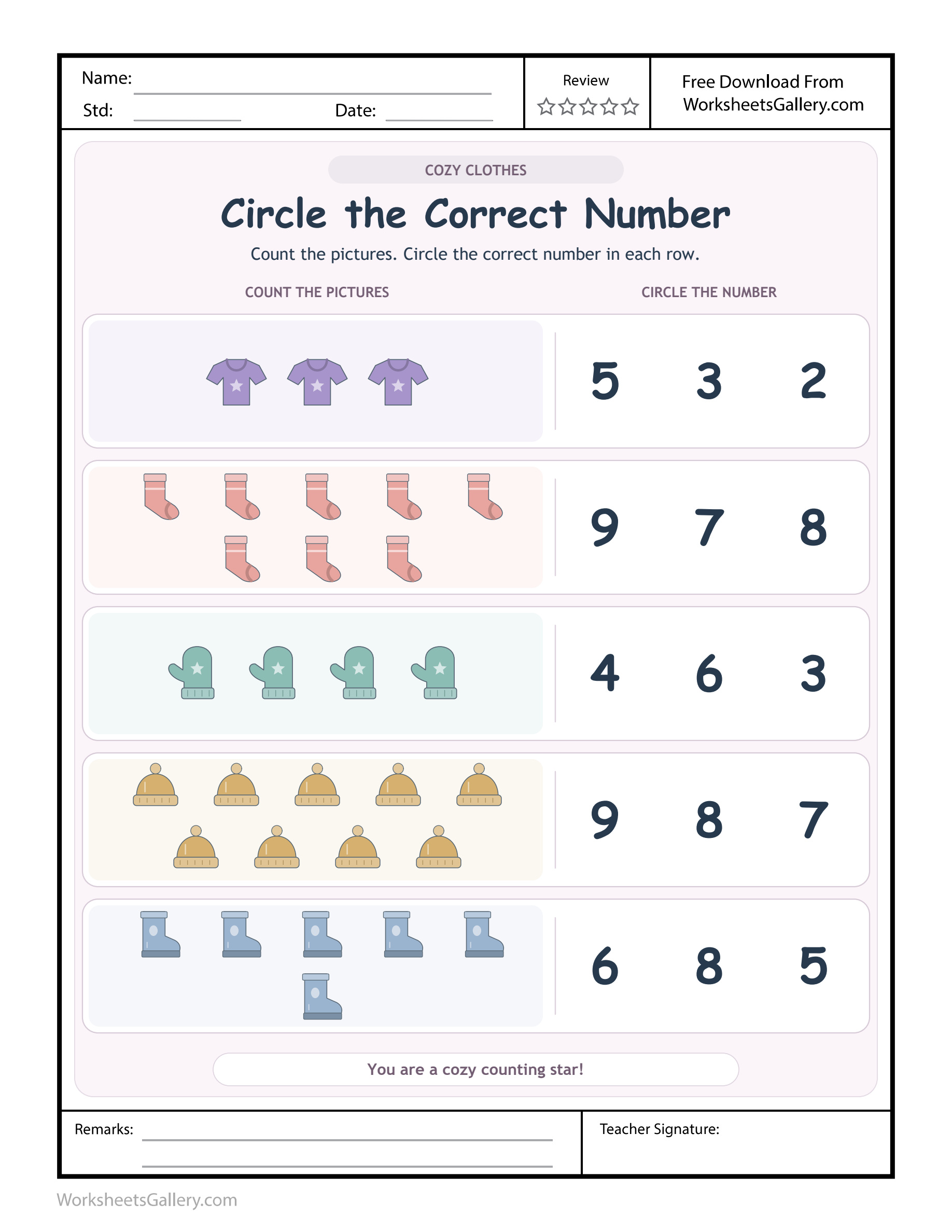
A pair of socks and two socks describe related things, but they answer different questions. Clothes Counting Match asks children to count individual garment pictures and circle the numeral for each group. Shirts, socks, mittens, hats and boots fill five separate problems, with three choices beside each. A familiar clothing theme can make the task inviting while also prompting a useful clarification about the counting unit. Point to one sock and call it one item before beginning the full group. The final quantity should describe the garments shown, whether or not they could be paired.
🧦 Clothes Counting Match counts socks individually

Eight socks occupy the second problem, arranged as five above three. Clothes Counting Match offers 9, 7 and 8. Each sock picture receives a count, so the answer is eight individual socks. The question does not ask how many pairs can be made from them. Clarifying that noun can resolve confusion before the learner starts the route.
If a child counts a pair as one, acknowledge that pairs are a useful everyday grouping. Then return to the current Clothes Counting Match instruction: count the pictures. Point separately to two socks while naming one sock and another sock. The explanation can remain concrete without becoming a lesson about multiplication or formal grouping notation.
Clothes Counting Match keeps the mitten question clear

Four mitten pictures appear beside 4, 6 and 3. Clothes Counting Match asks for four mittens, even though mittens are often worn in pairs. A thumb and cuff belong to their own mitten; neither is an additional garment. Invite the learner to describe the complete item that will receive each spoken number.
A learner can understand the unit yet still need help with the written numeral. In Clothes Counting Match, read the three choices without signaling which is correct when recognition is uncertain. The child can retain responsibility for the quantity while the adult supplies that limited support. Ask for a pointed selection before drawing the final circle.
Six Clothes Counting Match laundry games
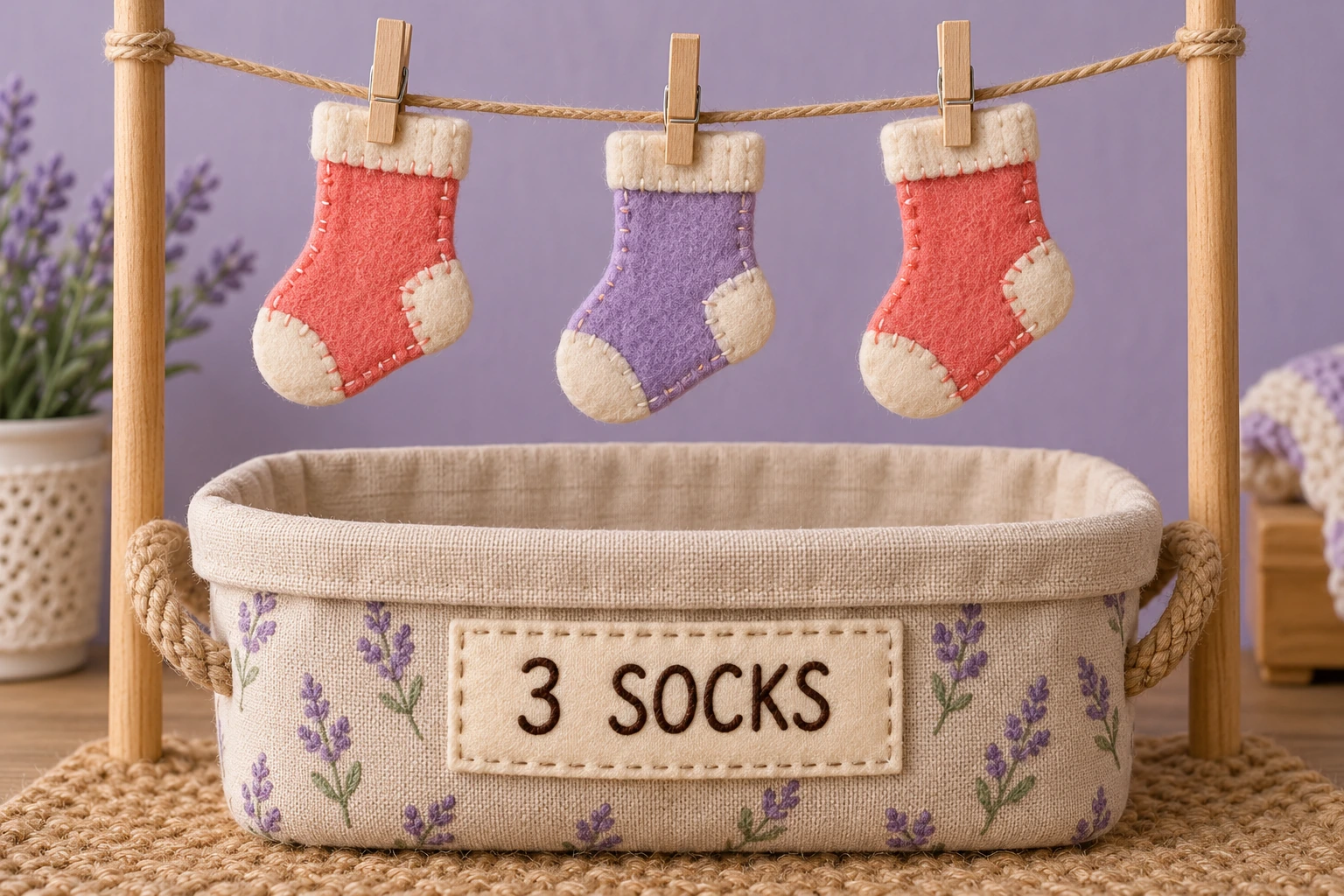
1. Clothes Counting Match hangs three socks
Clip three individual felt socks onto a short tabletop line and label the collection 3 SOCKS. Two may match while one differs. Count all three garments, including the unmatched one. The scene offers a small demonstration of individual counting; it is an additional play example, not a replacement for the worksheet's eight-sock group.
2. Clothes Counting Match asks two questions
Place two mittens together. Ask how many individual mittens there are, then explain that the two together form one pair. Ask the learner which question the worksheet uses. Keep the quantities small so the difference in the counting unit remains easier to discuss than a long number sequence.
3. Clothes Counting Match writes a hat ticket
Arrange nine hat drawings as five above four. The learner counts them and chooses a numeral card for a pretend laundry ticket. A partner checks that every whole hat was included. Bobbles stay attached to their hats, and the ticket names the complete garment quantity rather than the number of decorations.
4. Clothes Counting Match changes a boot shelf
Put six boot cards in a five-and-one layout, then rearrange the same six into a single line. Count after each arrangement and compare the reports. No card is added during the move. Let the child keep or revise the numeral label after inspecting the actual collection.
5. Clothes Counting Match names the shirt unit
Draw three shirts, each with a small star motif. Ask the child to point to one complete shirt before counting the collection. Then ask a separate question about the motifs if the learner is interested. Name what is being counted each time, making the two questions explicit instead of mixing their units.
6. Clothes Counting Match gives an order aloud
One partner requests a small quantity of individual sock cards. The other delivers them and states the total. Check the delivered group together before swapping roles. Specify individual socks in the request so the activity practices listening to the counting question rather than guessing whether a pair was intended.
A home Clothes Counting Match conversation
Anya helps her father look through a little basket of clothing props. She groups two socks together and calls them one. He agrees that they make a pair, then points separately while asking how many socks are in that pair. Clothes Counting Match gives them a familiar reason to state the unit before selecting a numeral.
At the table, they choose the mitten problem first. Anya touches each mitten, says four and finds 4 at the left. For Clothes Counting Match, her father waits to discuss pairs again until after the individual count is understood. A short clear question is enough for the current turn; extra explanations can wait when the child is ready to circle and move on.
- State the individual garment named in the selected problem.
- Touch each complete picture with one counting word.
- Include any lower pictures inside the same group area.
- Say the whole quantity, then inspect the numeral alternatives.
- Choose one symbol and mark it with a clear circle.
Clothes Counting Match at a classroom laundry table
Give partners a garment-namer role and a counter role. The namer identifies the individual item; the counter visits every picture and reports the total. Swap before another problem. Clothes Counting Match can show whether a learner counts individual garments consistently even when socks or mittens invite familiar pair language.
An observing adult can ask each child to point at the item that received the third count. Clothes Counting Match makes the intended unit visible through the response. Record whether help concerned pairs, lower-line scanning, numeral recognition or circling. A correct answer after a clear prompt is worthwhile, but it should not be confused with an unaided response when planning the next task.
Six useful Clothes Counting Match observations
Clothes Counting Match identifies a unit
The child links a question about socks with separate sock pictures. Pairing remains a different possible question. This clarification gives the adult a concrete way to respond when an answer seems smaller than the pictured garment count.
Clothes Counting Match coordinates one-to-one touches
One number word accompanies one garment. A deliberate route can prevent a return to a sock already counted. Slow the pointing movement when speech outruns it, keeping attention on the observable action rather than a vague request to work more carefully.
Clothes Counting Match keeps a total available
Saying “eight socks” after the count names the entire collection. That short phrase can support the glance toward the answer area. The learner may recount if needed; the pictures stay available as evidence rather than becoming a hidden memory challenge.
Clothes Counting Match makes numeral recognition practical
The symbol 6 labels six individual boots. A number reference can help the learner find that written symbol after deciding the quantity. Notice the difference between needing help with a numeral and needing help counting the garments it represents.
Clothes Counting Match supports controlled recording
An intended choice becomes visible through a circle. Accept an uneven but unambiguous loop, and offer pointing before writing when the hand movement is demanding. This keeps a motor challenge from erasing a correct explanation of the garment quantity.
Clothes Counting Match invites precise language
“Three socks, including the odd one” or “four individual mittens” tells a partner what was included. A child can point to communicate the same relationship. Model useful words while accepting the form of explanation the learner can manage comfortably.
Clothes Counting Match checks the shirt stars

Three shirts begin the page with 5, 3 and 2 as choices. Each shirt carries a star decoration. Clothes Counting Match counts the whole shirts, so the matching numeral is 3 in the middle. Ask the learner to indicate a complete garment if attention shifts between its sleeves and the motif.
The full adult reference for Clothes Counting Match is 3 shirts, 8 socks, 4 mittens, 9 hats and 6 boots. Every bordered area is an independent group. The child does not carry the shirt count forward into the socks or total all the clothes on the page together.
| Individual item | Options shown | Quantity named |
|---|---|---|
| Shirts | 5 / 3 / 2 | 3 shirts |
| Socks | 9 / 7 / 8 | 8 socks |
| Mittens | 4 / 6 / 3 | 4 mittens |
| Hats | 9 / 8 / 7 | 9 hats |
| Boots | 6 / 8 / 5 | 6 boots |
Clothes Counting Match includes nine hats

Five hats are above four more. Clothes Counting Match places the correct 9 at the left of 9, 8 and 7. An answer of five may indicate that the lower hats were missed. Ask the child to demonstrate where the pointing route ended before deciding that the number sequence itself is uncertain.
The bobble belongs to its hat and does not receive an extra count. Clothes Counting Match keeps whole garments as the unit across all five problems. A consistent touch near the middle of each hat can make the route clearer when a learner is attracted to the repeated bobbles or brim markings.
Clothes Counting Match checks the lower boot

The boot collection contains five upper pictures and one lower picture. Clothes Counting Match offers 6, 8 and 5. Six individual boots are shown. If a child says three because they are thinking of possible pairs, restate the individual-item question and let the learner touch the six separate pictures.
If a circle spans 6 and 8, ask which quantity was intended before changing anything. If the correct total is spoken but the symbol is unfamiliar, read the options neutrally. Clothes Counting Match can preserve the learner's mathematical contribution while offering support with recognition or marking. Clarify what the answer counts before judging whether it fits.
A comfortable Clothes Counting Match return
Preschool and kindergarten learners often explore this work between ages three and six, with wide differences in counting experience. A child ready for three shirts may need guidance through nine hats. Clothes Counting Match can be limited to a small group, with adult modeling or a number strip available for a more demanding one.
Revisit during a relaxed clothing-prop game rather than turning a household task into a long lesson. Let the learner choose a garment group and explain its unit. Clothes Counting Match need not be finished repeatedly to support a regular habit. Praise the clarity of a question or the inclusion of a lower picture, keeping attention on an action the child can use again.
When a pair explanation becomes tiring, return to one visible item and a small count. Clothes Counting Match can wait for another day if the learner is frustrated. One sock is a useful place to restart. A calm shared description can restore the question without requiring an immediate perfect page.
More number practice beside Clothes Counting Match
After counting shirts, a writing model for three offers another response type. The eight tracing activity and six formation resource can follow socks or boots when writing the numeral is the next need. These are separate tasks to choose thoughtfully, not extra rows required to finish this page.
Adults can explore NAEYC's family mathematics resources or the age-four maths area from PBS for wider ideas. Bring a suitable question back to Clothes Counting Match, with the individual garment named clearly and enough time for the learner to respond.
Download Clothes Counting Match for printing
The free original keeps the uploaded page's website branding. A clean premium Clothes Counting Match PDF is available when an eligible active member signs in and selects the premium edition. Its printed activities are free of website-name and watermark branding, with no added ads between the problems. Save the chosen version before opening the printer's preview.
The worksheet occupies one US Letter page. Confirm that Clothes Counting Match shows every garment and all three choices within your printer's available area, using page fitting if needed. Inspect an initial print before preparing further copies. The first useful question is small and specific: how many individual garments are in this group?
Popular Worksheets
Printable resources families and teachers are downloading now.
 Free
 Free
 Free
 Free