
Treat Counting Choices: 6 Brilliant Cookie Counter Games
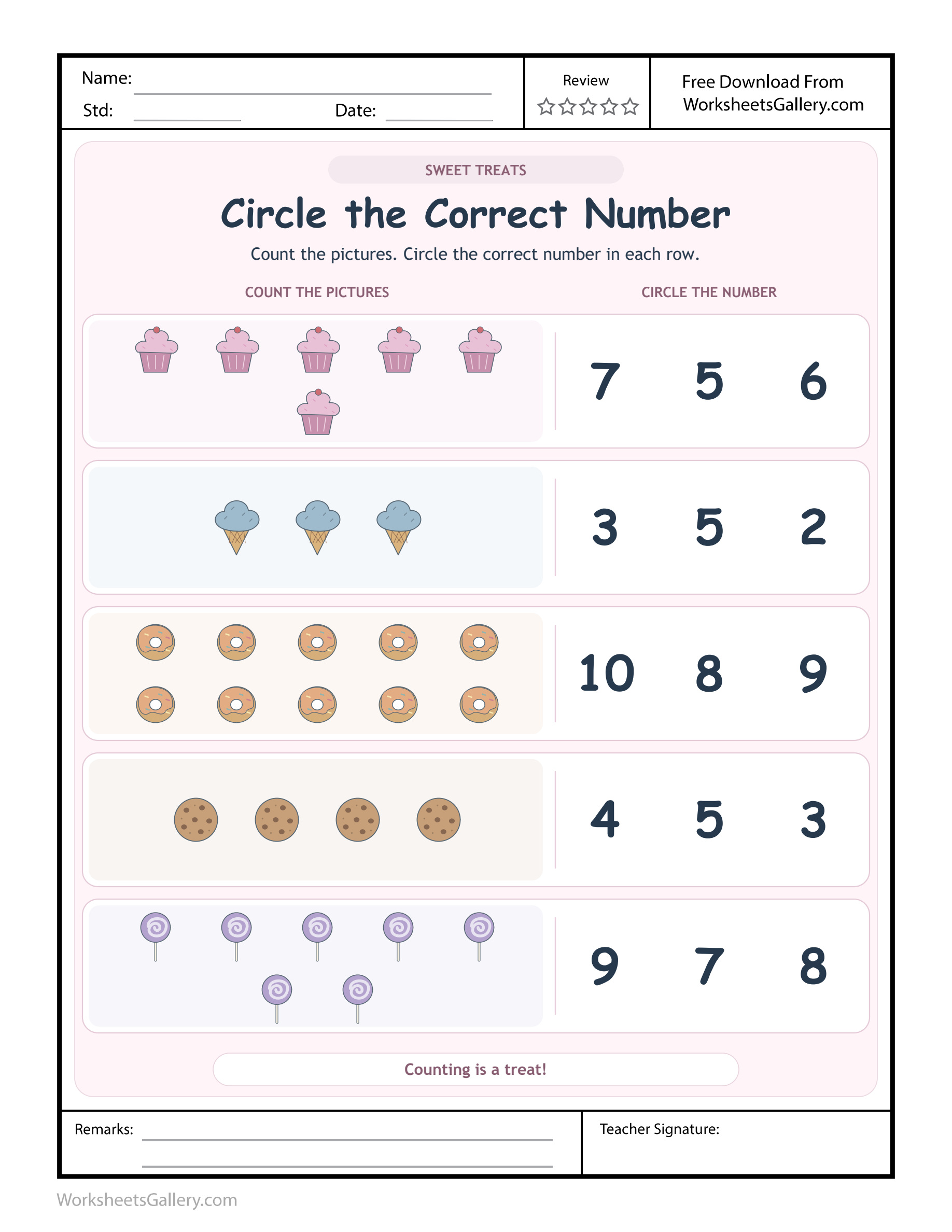
A cookie can hold many chocolate chips and still count as one cookie. Treat Counting Choices brings that distinction to a colorful pretend bakery, where children count complete treats and choose a numeral for each group. Five problems feature cupcakes, ice cream cones, doughnuts, cookies and lollipops. Some pictures continue onto a lower line, while small decorative details invite a closer look. Name the treat being counted before the finger begins its route. Then keep one number word with each complete picture, leaving chips, swirls and sprinkles inside the treat they decorate.
🍪 Treat Counting Choices looks for the cookie edge

Four cookies appear with 4, 5 and 3 offered as answers. A learner tapping every chocolate chip is solving a different counting question. Treat Counting Choices asks for cookies. Before recounting, invite the child to follow one cookie's outer edge in the air, noticing that all its chips belong inside that one object.
Otto tells his aunt there are “lots” because his finger is moving among the dots. She asks him to show one whole cookie and then another. Once they agree on the unit, he counts four. Treat Counting Choices makes the repair specific: change what receives each number word, rather than repeatedly requesting a more accurate version of the same chip count.
Treat Counting Choices separates three possible difficulties
A child may count the wrong unit, miss a lower picture or know the quantity without recognizing its numeral. Those situations can lead to an incorrect circle for different reasons. Treat Counting Choices lets an adult ask for the pointing route and spoken total before interpreting the final mark. Begin with the observed action rather than a general label about counting ability.
| Observed action | Possible question | Helpful next move |
|---|---|---|
| Finger taps chips. | What is one cookie? | Outline a complete treat together. |
| Only upper pictures are visited. | Which treats are below? | Continue the route through the whole area. |
| Total is correct, choice differs. | Which symbol names that total? | Read the three options without emphasis. |
| Circle encloses two choices. | Which answer did you intend? | Separate selecting from drawing the circle. |
Treat Counting Choices is a count-and-circle activity, without tracing guides or a requirement to write sums. The task resets for each row. Six cupcakes do not continue into the next cone as seven; the three cones form a new collection with their own numeral decision.
Seven practical gains from Treat Counting Choices
- Treat Counting Choices names a unit. Saying cookies rather than chips makes the question explicit and gives partners a shared meaning before counting begins.
- Treat Counting Choices directs visual attention. Looking for complete outer shapes keeps attractive frosting marks inside their treats while the learner scans for another item.
- Treat Counting Choices coordinates movement and speech. A finger visiting one treat per number word gives the adult a concrete route to observe and support.
- Treat Counting Choices uses the final count. Repeating the last number as the whole quantity connects the spoken sequence with the size of that collection.
- Treat Counting Choices makes numerals useful. The selected symbol records a known quantity, giving recognition a purpose beyond naming numbers on an isolated display.
- Treat Counting Choices offers a motor goal. One controlled loop around the intended option records the decision, with pointing available before the pencil movement.
- Treat Counting Choices supports an explanation. A learner can describe or point out a missed item, making a correction understandable rather than merely accepting an adult's verdict.
Treat Counting Choices at the home bakery counter
Set the page beside a few pretend cookies, then let the child inspect one toy treat before counting the printed ones. Move the props away from the worksheet's group so they do not become extra items in its total. Treat Counting Choices can begin with the small cone collection if the longer cupcake or doughnut route would feel demanding.
Otto's aunt gives him time to say “four cookies” and scan the numerals. If 4 is unfamiliar, she reads all three options in the same tone. Treat Counting Choices leaves Otto responsible for the quantity match while the adult supports recognition. Once he indicates the intended symbol, he can circle it or ask his aunt to record the choice.
- Choose one bakery group for a short turn.
- State the complete treat that receives each count.
- Point through all pictures within that group's boundary.
- Say the final quantity and inspect its numeral options.
- Record one choice, then invite the learner to explain it.
The aim of a home Treat Counting Choices session is an understood decision, not a long shift of repetitive pencil work. Let the child close the pretend bakery after a comfortable success. A brief return on another day offers a better chance to observe the same strategy when the learner is rested.
Treat Counting Choices checks ten doughnuts

The doughnut group contains two picture lines of five, with 10, 8 and 9 beside them. Treat Counting Choices asks for ten complete doughnuts. The central holes remain parts of the pictures, and the lower line belongs to the same collection as the upper line. Pointing near an outer edge can help keep the unit clear.
A child who selects 5 may have visited exactly the upper five and stopped. A much larger count might come from counting holes or decorative marks as well. Treat Counting Choices gives an adult reasons to ask “Show me what you counted” before deciding how to help. An inaccurate total does not by itself identify the source of the confusion.
An adult reference for Treat Counting Choices
Read the groups from top to bottom as 6 cupcakes, 3 cones, 10 doughnuts, 4 cookies and 7 lollipops. Treat Counting Choices offers these quantities in three-option rows: 7/5/6; 3/5/2; 10/8/9; 4/5/3; and 9/7/8. Save the reference for checking an attempt instead of announcing every answer beforehand.
The cupcake group has five upper pictures plus one lower picture. The lollipops have five above two. On Treat Counting Choices, a lollipop's stick belongs to that sweet and is not another treat. Its swirl also stays inside the same object. Keep each complete picture together while the finger moves between separate members of the collection.
Treat Counting Choices at a classroom order station
Give one learner the job of naming a bakery group and another the job of counting its complete items. Ask both to inspect the chosen numeral before circling. Reverse the roles for a second problem. Treat Counting Choices can support a short paired turn without letting one child provide every quantity while the other only holds the pencil.
For a teacher's observation, note the object named and the actual pointing route. Treat Counting Choices may show secure cookie counting with uncertain numeral recognition, or secure number naming with a tendency to tap chips. Keep that distinction in the notes. A useful follow-up addresses the specific demand rather than assigning more of every kind of number task.
Six Treat Counting Choices bakery games
1. Treat Counting Choices draws a cookie boundary
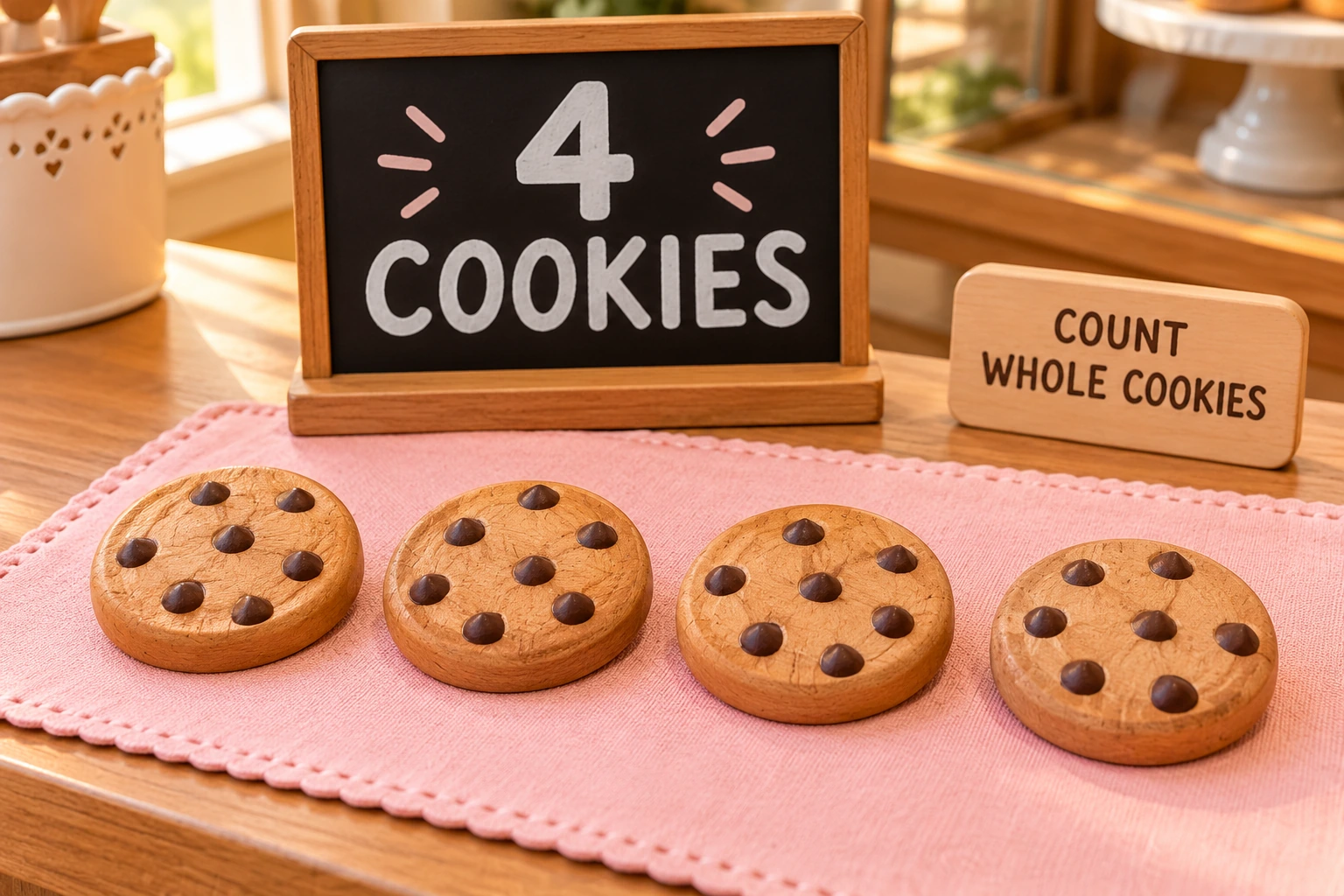
Place four pretend cookies on a mat with a sign reading 4 COOKIES. Ask the child to describe one whole cookie, then count the group. On a separate scrap, an adult can sketch a cookie and add several chips. Compare the questions “How many cookies?” and “How many chips?” without mixing their answers.
2. Treat Counting Choices serves three cones
Give a toy customer three paper cones. The learner touches each complete cone once and chooses a numeral card for the order. Change the colors of the scoops on another turn while keeping three cone pictures. Ask whether the quantity changed, giving the child a reason to inspect objects rather than color differences.
3. Treat Counting Choices packs a cupcake tray
Arrange six cupcake cards as five and one. Let a toy packer visit each card while the learner says the counting words. If the packer stops at five, invite the child to direct it toward the remaining card. The game focuses on including every member before producing a label for the tray.
4. Treat Counting Choices sorts bakery questions
An adult asks either for a complete-treat count or for a detail on one drawing. The child first repeats what is being counted, then answers. Keep the quantities small. This game makes the noun important and gives the learner permission to clarify an unclear request instead of guessing what an adult meant.
5. Treat Counting Choices sends a lollipop note
Make seven lollipop pictures with their sticks attached. The learner counts them and dictates “7 lollipops” for a pretend stock note. Place the note beside the group, then let a partner check it. The written total has a useful job, and each whole lollipop remains a single unit throughout the exchange.
6. Treat Counting Choices changes a doughnut display
Move ten doughnut cards from two equal lines into a single longer line. Ask whether any cards were added while you moved them. Count again to verify. The child can use the same 10 label after checking, exploring a changed arrangement without needing to write an equation or finish another worksheet.
Treat Counting Choices welcomes a careful restart
A child may feel disappointed when an interesting chip count answers the wrong question. Acknowledge the detailed looking before returning to cookies. Treat Counting Choices can make both observations true: the learner noticed many small marks, and the current task needs complete treats. Calmly restating the unit is more informative than dismissing the first effort.
If circling becomes tiring, let pointing carry the next decision. Treat Counting Choices offers practice with a purpose, so a rest can preserve attention for that purpose. “Tell me what each touch is counting” gives an adult and child a way back into the activity without a speed target or repeated demands for neatness.
Fit Treat Counting Choices into a short routine
Children around three to six may explore these groups with adult help that varies from row to row. The three cones provide a smaller task than ten doughnuts. Treat Counting Choices suits learners who are beginning to match counting words to pictures and connect totals with written numerals. Younger participation can remain a shared oral count.
For regular practice, open the pretend bakery for one selected order, then close it after a clear explanation. Treat Counting Choices does not need a full repeat every day. Ask which strategy helped: following outer shapes, checking below or repeating the total. Naming that strategy gives the learner something useful to bring to the next visit.
Extend a specific Treat Counting Choices skill
If writing a numeral is the next interest, try six numeral formation practice after the cupcakes, the three tracing activity after the cones, or the number-ten writing resource after the doughnuts. Select one related follow-up, keeping counting and formation as distinguishable tasks.
For adults, the family mathematics collection from NAEYC and PBS's maths ideas for families of four-year-olds offer other starting points. Bring one suitable idea back to Treat Counting Choices while keeping the child's chosen object and count central to the conversation.
Print a Treat Counting Choices edition
The original free PDF carries the website marks present in the uploaded file. For the clean premium Treat Counting Choices edition, use the member download controls after signing in with an eligible active membership. Its website-name lettering and watermark branding are removed, and no ads are embedded among the printed tasks. Save the selected edition before opening its print dialog.
Choose US Letter paper and inspect the preview for every complete treat group. Fit the page within your printer's margins if any border would disappear, then check one trial print. Treat Counting Choices needs a clear group and a clear question more than a large stack of copies. Count the cookie once; leave its chips inside.
Popular Worksheets
Printable resources families and teachers are downloading now.
 Free
 Free
 Free
 Free