
Farm Picture Totals: 5 Wonderful Animal Counting Tasks
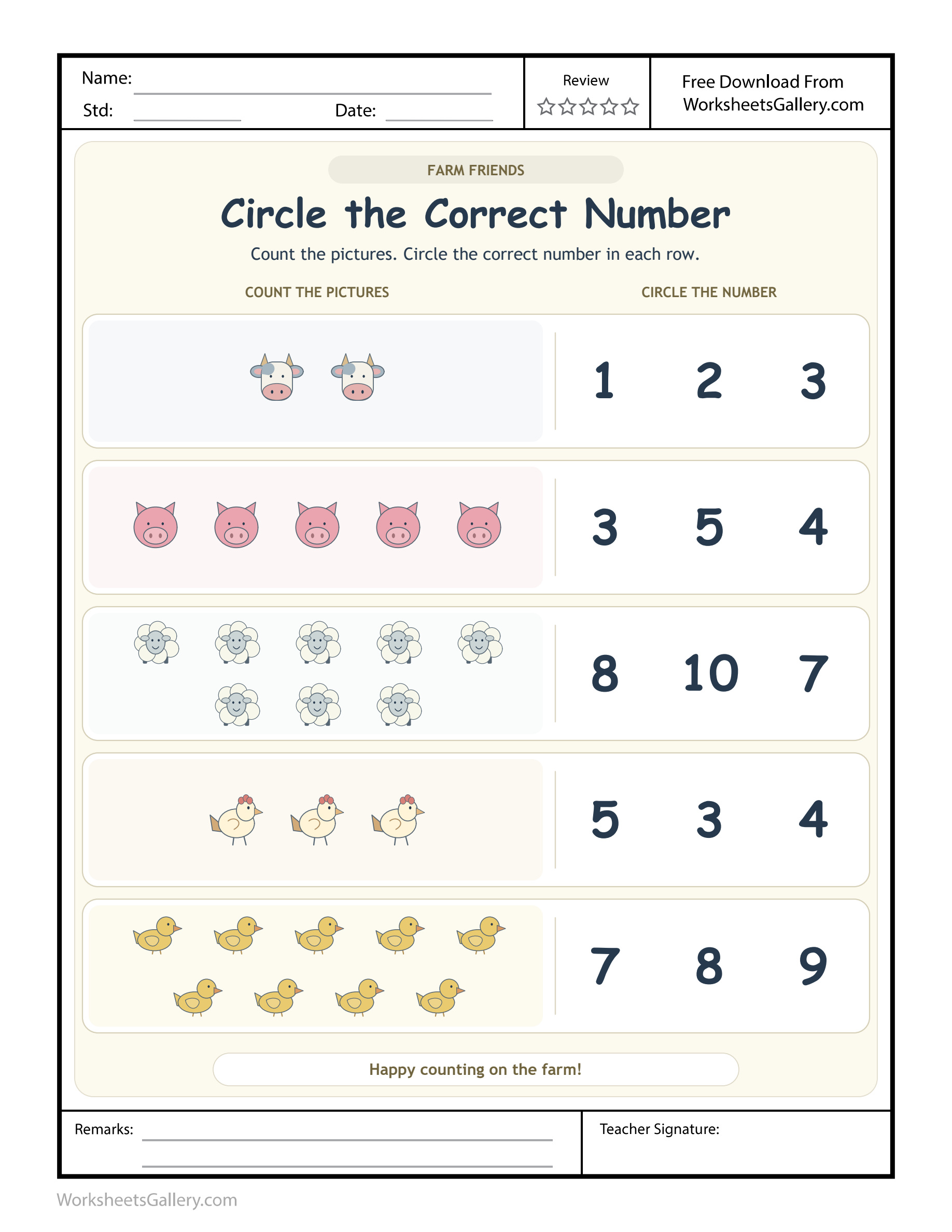
Two counters can look at the same farmyard and report different totals. Farm Picture Totals offers a friendly way to find out why: agree on the animal pictures being counted, follow each person's route, and check which numeral matches the complete group. The sheet includes cow faces, pig faces, sheep, hens and ducks. Each problem has three number options, with one answer to circle. Start with a shared description of what one picture represents. Then a disagreement can become an invitation to inspect the farm together rather than a contest over whose answer came first.
🐄 Farm Picture Totals gives a disagreement somewhere to go
Mira says five ducks; her grandfather says nine. Instead of choosing the older person's answer, they look at which pictures each counted. Mira visited the upper five and stopped, while her grandfather continued below. Farm Picture Totals gives them a fixed group to inspect. Once both follow the full route, they can agree on the quantity for a clear reason.
A different disagreement might come from counting ears or fleece shapes. Farm Picture Totals asks for the animal pictures, with one cow face representing one cow and one pig face representing one pig. The representations need not show every body part to stand for an animal. Name that shared meaning before asking a partner to count again.
Begin Farm Picture Totals with the two cows

Two cow-face pictures appear beside 1, 2 and 3. Touch the center of each face and say one count word. Farm Picture Totals requires 2, in the middle. The horns and ears are parts of those two representations, not extra cows waiting for separate number names.
Let the child show what counts as one picture rather than simply repeating an adult's description. Farm Picture Totals can be explored by naming, pointing and choosing before any pencil mark is made. If the learner recognizes the pair immediately, ask for a quick check and move on; a small quantity need not become a long recital.
A three-part Farm Picture Totals agreement
- Agree on the noun. “We are counting sheep pictures” establishes the unit.
- Compare the routes. Let each partner show which pictures received a count.
- Verify the report. State the complete quantity and locate its printed numeral.
Farm Picture Totals makes these steps concrete because the group stays visible. A child can return to an uncertain animal without remembering a hidden display. Keep the pace slow enough for one spoken number to accompany each picture, and allow the partners to revise their reports after checking.
The printed task is counting and circling, not animal-sound matching, tracing or adding every group together. Farm Picture Totals starts a fresh quantity with each new bordered problem. After the five pigs, the sheep receive their own count from one rather than continuing a whole-page animal inventory.
Farm Picture Totals visits the pig pen

Five pig faces occupy a single line with choices 3, 5 and 4. Farm Picture Totals again uses a middle answer, but the reason remains the five complete pictures. Ask a partner to demonstrate the count before accepting an explanation based only on where the earlier cow answer appeared.
Partners can divide useful roles: one points while another says the number words. On a second Farm Picture Totals turn, exchange those roles. This can reveal whether a mismatch comes from pointing twice at one face, skipping a picture or naming the next number before the pointing finger has moved.
Six gains to observe in Farm Picture Totals
Farm Picture Totals shares the counting question
An agreed noun gives both partners the same task. A learner counting ears may be answering a different question from an adult counting cows. Clarifying that question makes the next attempt more informative than repeating an unexplained instruction to try harder.
Farm Picture Totals uses pictures as representations
A cow face can stand for one cow in this activity. The learner connects a simple drawing with the intended animal unit. That understanding supports the mathematical task without requiring detailed animal vocabulary or a realistic illustration of an entire body.
Farm Picture Totals coordinates a route
Visiting each sheep once gives the number sequence a visible path. Partners can inspect that path when a total differs. A pointer or deliberate touch supports a learner who knows the number names but loses track of which pictures have already been counted.
Farm Picture Totals connects a result with a numeral
Choosing 9 records the complete duck group. A child can know the quantity before recognizing its symbol. Read all three alternatives aloud when needed, leaving the learner to decide which named numeral fits the report.
Farm Picture Totals gives language a practical role
“I counted the ducks underneath too” explains a difference between reports. A pointing gesture toward that line can communicate the same idea. Accept the explanation the child can give, while modeling useful words about location, groups and complete quantities.
Farm Picture Totals makes a calm correction possible
After partners agree on the quantity, one clear circle records it. The movement offers a small motor goal, while an altered choice shows a reasoned revision. Recognize the checking process as well as the finished mark, especially when an earlier answer needed repair.
Farm Picture Totals checks the farm ledger
The adult reference is 2 cows, 5 pigs, 8 sheep, 3 hens and 9 ducks. The first two groups use face pictures as their representations. Farm Picture Totals then shows complete stylized animal drawings. The counting unit is one represented animal in every group.
| Animal group | Available choices | Quantity to confirm |
|---|---|---|
| Cows | 1, 2, 3 | 2 |
| Pigs | 3, 5, 4 | 5 |
| Sheep | 8, 10, 7 | 8 |
| Hens | 5, 3, 4 | 3 |
| Ducks | 7, 8, 9 | 9 |
Use the ledger to inspect an attempt after the child has considered a group. Farm Picture Totals offers enough clues on the page for a shared recount. Announcing all five quantities at the start would replace the learner's investigation with an answer-following task.
Farm Picture Totals at home with Mira
Set out the page, a pencil and a small number reference within easy reach. Let the learner choose cows or hens for an opening turn. Farm Picture Totals can begin with a brief description of the animal unit, followed by a count, a spoken total and a numeral choice. Record the mark only after the intended value is clear.
Mira's grandfather can take the less confident role and ask her to show him a route. On Farm Picture Totals, this gives the child an opportunity to lead without needing to finish every problem independently. Keep a disagreement about the collection rather than about the people counting it. Either partner may need another look, and the pictures provide the check.
Farm Picture Totals at a classroom counting meeting
Give partners one short problem and invite two reports before revealing agreement or disagreement. Ask each learner to demonstrate the pictures included. Farm Picture Totals works best when the more vocal child does not answer for the other. Allow a quiet pointing response and enough time for an individual count.
Note whether support concerned the represented animal, the lower picture line, numeral recognition or marking. Farm Picture Totals can show progress within one of these demands while another still needs help. An adult record such as “counted eight sheep with a guided route” is more precise than assuming that a circled 8 proves independent performance in every part.
Farm Picture Totals includes eight sheep

Five sheep appear above three more, beside 8, 10 and 7. Farm Picture Totals counts each sheep once, with the fleece's little circular shapes remaining part of that animal. A touch near the face can help distinguish one complete representation from the decorative wool shapes around it.
If the child reports five, ask where the route ended. If a much larger count emerges, ask what each touch named. Farm Picture Totals can lead to different next cues from those demonstrations. Preserve a correct part of the attempt while showing the missing lower route or clarifying the animal unit.
Five Farm Picture Totals partner games
1. Farm Picture Totals agrees on three hens
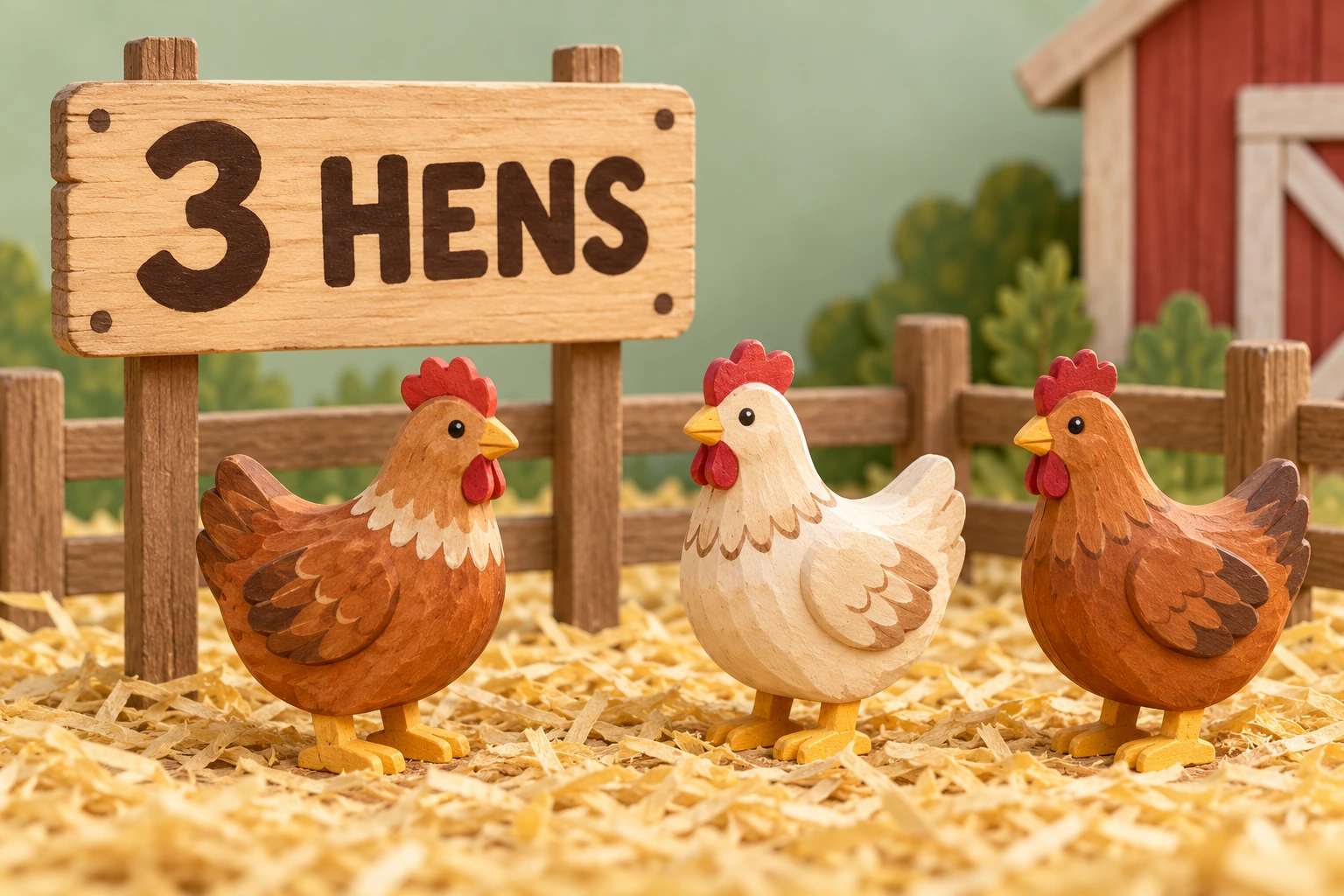
Place three hen figures beside a sign reading 3 HENS. One partner names the unit and another counts it. Ask both to point at the same complete hen when you say “one animal.” The little yard offers a concrete rehearsal before returning to the worksheet's three-hen problem.
2. Farm Picture Totals compares two routes
Arrange nine duck cards as five above four. Let one partner show a route aloud while the other watches for any card receiving a second visit. Swap jobs and compare totals. If the reports differ, locate the first difference in the routes rather than asking the louder person to defend an answer.
3. Farm Picture Totals matches a visitor
Give a toy farm visitor one large paper ticket for each of five pig pictures visited. Check that every picture has one ticket beside it. This makes one-to-one correspondence visible through matching. Remove the tickets afterward and ask whether the child can keep a similar route with a pointing finger.
4. Farm Picture Totals repairs a sheep sign
Put a 7 label beside eight sheep cards and invite partners to inspect the provisional sign. They can count, name the total and select an 8 replacement. Give the label a practical pretend purpose, such as telling a visitor how many sheep are in the picture yard, rather than treating it as a score.
5. Farm Picture Totals gives the child the question
The learner arranges two cow-face cards and tells an adult what to count. The adult deliberately asks whether ears or cows are intended. Let the child clarify the unit before the adult responds. Taking the question-setting role makes precise language useful without requiring a longer written task.
Farm Picture Totals reconciles the duck report

The final duck collection has five above four, with 7, 8 and 9 as options. Farm Picture Totals places 9 at the right. After checking all nine ducks, let the child explain why that numeral was chosen. There is no extra count for beaks, wings or the spaces between pictures.
If the intended numeral is correct but the circle overlaps a neighbor, separate the decision from the motor action. If a partner supplied the answer first, offer another private count rather than describing the result as independent. Farm Picture Totals stays more useful when adults describe exactly what was observed and leave room for another supported attempt.
A welcoming Farm Picture Totals routine
Children in the broad three-to-six range may participate with different levels of assistance. A learner ready for two cows may still need a guided route through nine ducks. Farm Picture Totals can be shortened to one appropriate group, with pointing or adult recording available before independent circling.
Return during a calm farm-play moment and invite a small report worth checking together. Farm Picture Totals need not become a repeated full-page test. Praise an action such as listening to a partner's route or noticing a lower duck. “We found why our reports differed” makes agreement something reached through looking rather than through giving in to an adult.
Related number work after Farm Picture Totals
For a different small-quantity setting, explore the dice counting resource. For numeral formation, use a model for writing eight or the nine tracing activity after the relevant animal count. Select according to what the learner needs next, keeping a new game distinct from this page's animal task.
Adults can visit the NAEYC family maths reading area and age-four mathematics resources at PBS. A relevant conversation or play idea can accompany Farm Picture Totals without adding another worksheet to the same sitting.
Save a Farm Picture Totals copy
The free sample is the uploaded original and includes its existing website marks. Members whose active plan provides eligibility can select the clean premium Farm Picture Totals PDF after signing in. The clean activity removes website-name and watermark branding, with no inserted ads on the printable page. Choose the intended edition and save it before checking printer settings.
Review the US Letter preview for complete animal groups and all numeral options. Fit Farm Picture Totals into the printable area when your printer's margins require it, then inspect one paper copy. Agree on the pictures, compare the routes, and check the total. That small routine can make the farm's first disagreement a useful place to begin.
Popular Worksheets
Printable resources families and teachers are downloading now.
 Free
 Free
 Free
 Free