
Toy Number Match: 5 Brilliant Big-and-Small Checks
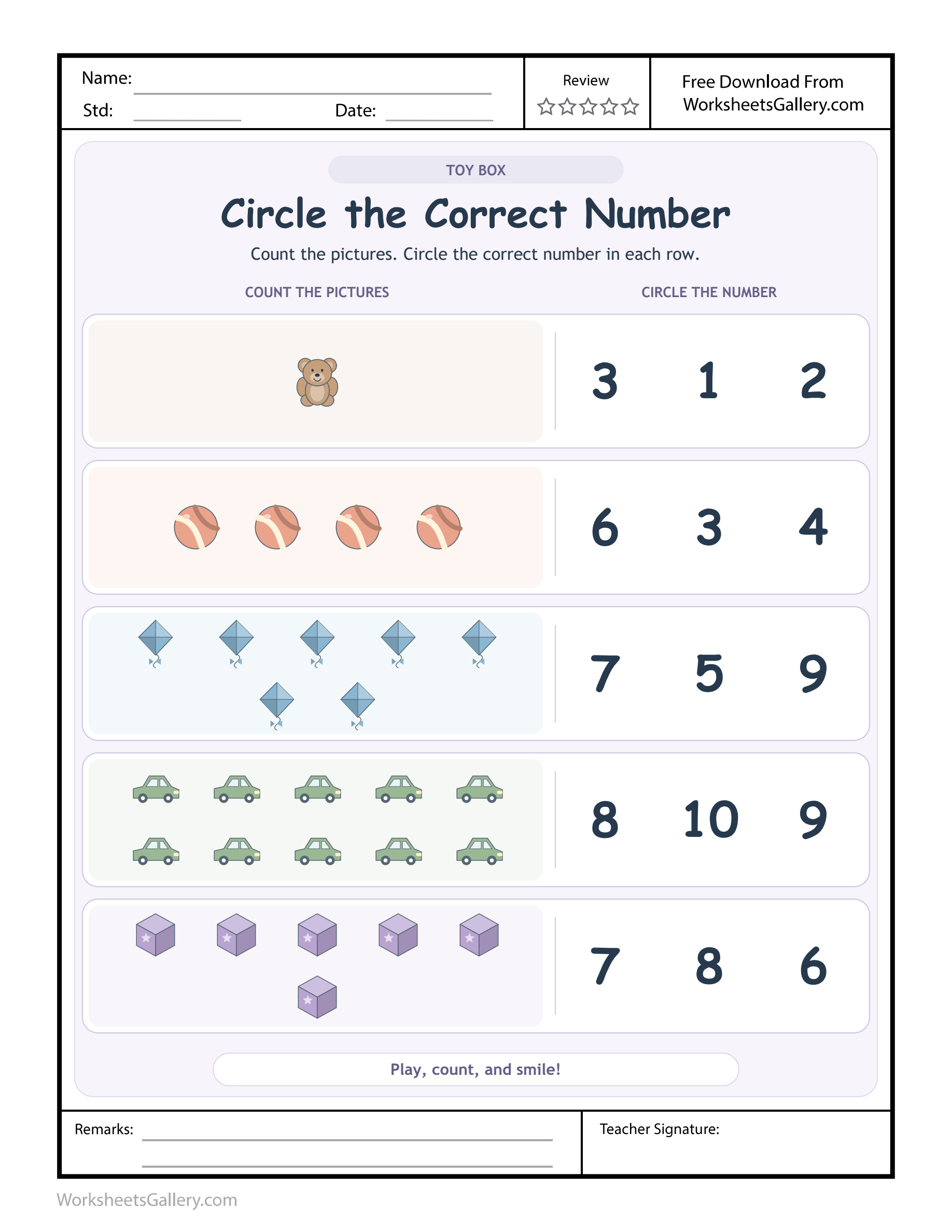
One teddy can take up a whole basket. Ten little cars can fit on a small shelf. Toy Number Match invites children to look past the space a collection occupies and count its separate members. The worksheet presents five toy groups with three numerals beside each. A single bear starts the page; balls, kites, cars and blocks provide further choices. Let the child describe what is visible, then count complete toys before circling. A large object, an empty patch of paper or a long row can prompt a useful conversation without deciding the answer.
🧸 Toy Number Match keeps one teddy as one

The first problem has one teddy bear and the choices 3, 1 and 2. Its roomy picture area does not imply a larger quantity. Toy Number Match asks how many separate bears are present. A learner can answer one through immediate recognition or a single deliberate touch; there is no need to insist on a long counting performance for a singleton.
The pictured bear has ears, paws and other details, but those parts belong to one toy. Toy Number Match provides a simple opening for agreeing on the complete object. Invite a small gesture toward the whole bear, then find 1 in the middle. If the child chooses another numeral, ask what the mark was intended to describe before supplying the answer.
A home comparison before Toy Number Match
Beni brings a large plush bear to the table while his older cousin sets down two small balls. Beni says the bear is “more” because it is bigger. His cousin agrees that it is the larger toy, then asks how many toys are in each collection. They connect one bear to the first Toy Number Match problem after counting the separate props.
Keep the language precise without turning the conversation into a correction of every everyday word. “Bigger” can describe size; “more toys” concerns the number of separate objects. Toy Number Match gives those descriptions a useful context. Move the props aside when counting the printed pictures, since real toys and worksheet toys are different collections for this task.
At home, select one row, name its toy and ask for the quantity. Let the child point through the group if needed, retain the total and inspect the numerals. Toy Number Match can end after the bear and balls if that is enough for today. The next session can begin with a short review rather than an insistence on immediate completion.
Toy Number Match checks the toy inventory
The five totals are 1 teddy bear, 4 balls, 7 kites, 10 cars and 6 blocks. Keep the inventory as an adult checking aid. Toy Number Match is not asking for an increasing number sequence: after ten cars, the block group starts a new count and reaches six.
| Toy group | Printed alternatives | Response location |
|---|---|---|
| One teddy | 3 / 1 / 2 | Middle: 1 |
| Four balls | 6 / 3 / 4 | Right: 4 |
| Seven kites | 7 / 5 / 9 | Left: 7 |
| Ten cars | 8 / 10 / 9 | Middle: 10 |
| Six blocks | 7 / 8 / 6 | Right: 6 |
Use the response-location column after a child has attempted the task, not as a set of directions to memorize. Toy Number Match needs a quantity decision for every row. A learner who circles all middle choices may recognize a location pattern without yet using the pictures; asking for a pointing explanation can make that visible.
Toy Number Match includes the lower kites

The kites occupy two lines, with five above two. A long upper line and a shorter lower line still form one seven-kite collection. Toy Number Match offers 7, 5 and 9, so stopping after the upper five leads to a plausible but incomplete answer. Invite the learner to show which kites were visited before suggesting another count.
Tails and little bows belong to their kites. On Toy Number Match, one touch near each kite body can help keep the object boundary clear. If a learner loses the route between lines, guide attention down to the first lower kite. There is no extra requirement to add written sums or complete tracing strokes on the page.
Six Toy Number Match habits worth noticing
Toy Number Match uses size words accurately
A learner can say that one bear is large while still identifying its quantity as one. This separates two descriptions that often appear together in everyday talk. Use a real comparison to clarify the words without claiming that every size judgment must involve counting.
Toy Number Match attends to separate objects
Counting whole cars rather than wheels establishes what one member of the collection is. Notice where the finger lands and whether it moves to another car after one word. If the unit is uncertain, demonstrate one complete toy before asking for its group total.
Toy Number Match connects a count with a symbol
Finding 6 beside six blocks gives a numeral a specific role. A child who can count six but does not recognize the symbol can hear the options read aloud. Keep the quantity decision with the learner while providing just the recognition support required.
Toy Number Match coordinates eyes and hand
The learner moves attention through a group and then circles a selected answer. These are purposeful visual and motor actions. An adult may separate them by accepting a pointed answer first, allowing a comfortable circle afterward rather than judging counting knowledge through pencil control alone.
Toy Number Match makes checking discussable
“I forgot the two underneath” can explain a changed kite answer. Give the learner room to identify the missed part. A successful check is worth acknowledging even when the first numeral chosen was different; revising a count can be useful work rather than evidence of a spoiled page.
Toy Number Match supports a short plan
The sequence is count, retain the total, inspect choices and record. One familiar routine can reduce uncertainty about what happens next. Ask the learner which step they are on if they begin circling before counting, keeping the prompt concrete rather than simply telling them to concentrate.
A classroom shelf for Toy Number Match
Bring a large single classroom toy and a small collection of miniature toys to a group table. Ask separate questions about size and quantity before introducing the page. Toy Number Match can then serve as a visual counting task without requiring every child to complete the whole sheet during the group discussion.
Offer a pointing role and a checking role to partners. One learner visits each toy picture while the other watches for a missed item; then they agree on a total and swap jobs. For Toy Number Match, record whether a child needed help scanning the lower line, naming a numeral or controlling the circle. Those notes preserve differences hidden by a tidy finished worksheet.
- Use a firm surface so the page does not slide during a circle.
- Ask for the toy noun before beginning a group.
- Let one count word accompany each complete picture.
- Leave enough time to locate the numeral after counting.
- Keep a number strip available when recognition is uncertain.
- Choose a stopping point while the learner is still engaged.
Toy Number Match parks ten cars

The car group contains two lines of five. Toy Number Match asks for ten cars altogether, with 10 located between 8 and 9. A child may count through every vehicle or recognize the arrangement and check it. Either route can lead to a useful explanation if the learner can indicate which objects the total includes.
The car windows and wheels make the picture group visually busy. Toy Number Match counts the cars, not those features. Point near the center of each vehicle to make the unit clear. When choosing 10, circle the whole two-digit numeral as one option; the neighboring gaps between choices show where one possible answer ends and another begins.
Five Toy Number Match play checks
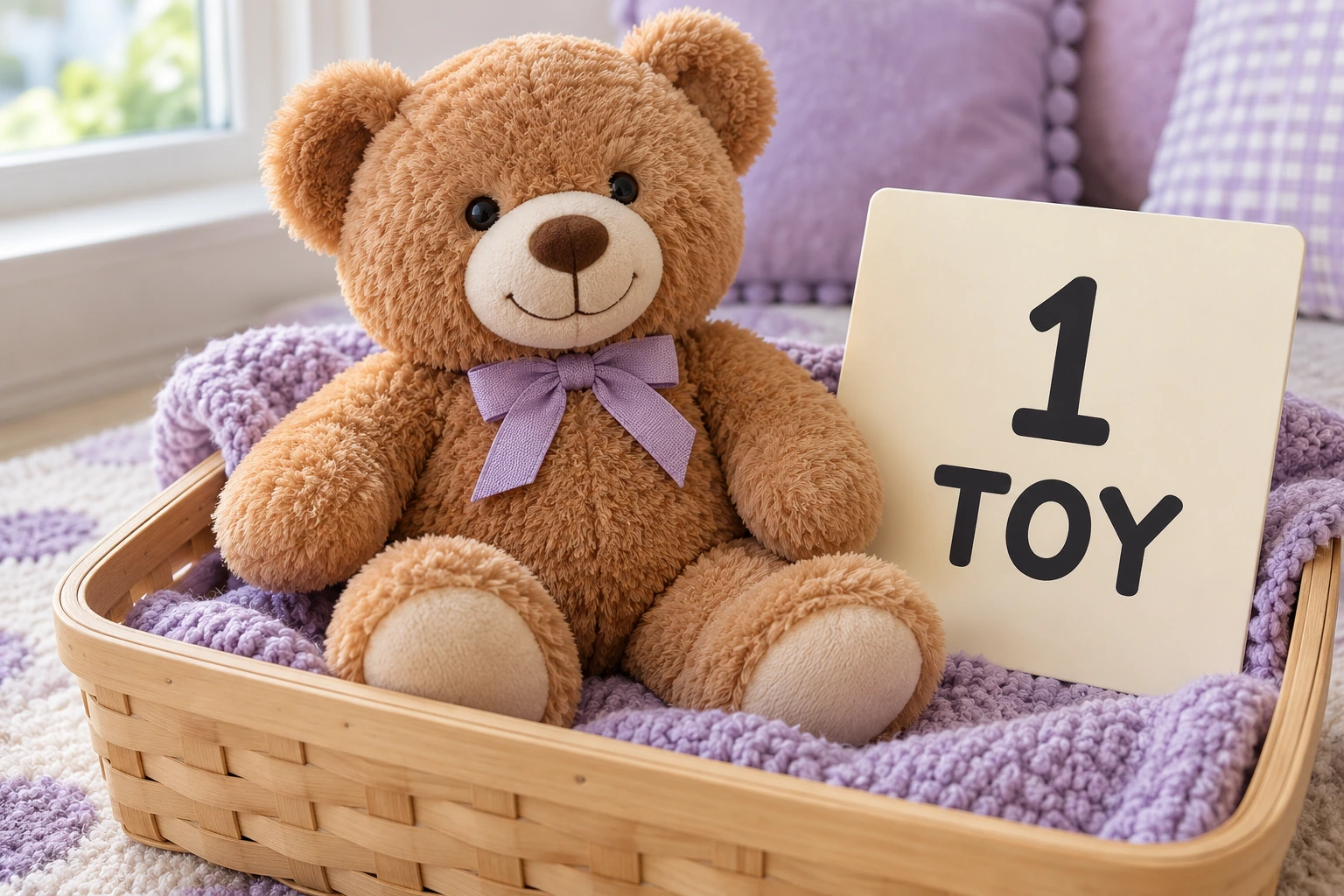
1. Toy Number Match labels a big bear
Seat one large teddy beside a card reading 1 TOY. Let the child explain what the numeral counts, then move the bear to a different seat. Ask the quantity again without adding another toy. This small change gives the learner a reason to distinguish the bear's location and size from the number of bears.
2. Toy Number Match spreads four balls
Arrange four ball pictures close together, then farther apart. Count the group after each arrangement. Ask whether a picture was added during the move. Use paper circles if rolling balls would interrupt the comparison, keeping attention on the same four members rather than on chasing a moving object.
3. Toy Number Match builds a six-block shelf
Set six blocks along a shelf and give a toy shopkeeper cards 6, 7 and 8. The learner counts the shelf before choosing a stock label. Rearrange the same blocks into a small cluster and check the label again. The written total serves as an inventory rather than a prize for a quick answer.
4. Toy Number Match sends a kite collector
Make seven kite cards in the worksheet's five-and-two layout. A toy collector must visit every card once while the child supplies the count words. Then let the child control the route while an adult names the sequence. Discuss any kite that received two visits before deciding whether the total needs repair.
5. Toy Number Match sorts two descriptions
Choose a large single toy and several smaller ones. Ask which toy is largest, then how many toys are in each selected collection. Let the child ask the next pair of questions. The game uses size and quantity side by side, with clear nouns and no need to compare weight, value or ownership.
Toy Number Match when an answer needs another look
If the child selects a large numeral because a picture area looks crowded, ask for a count of the actual toys. If only the upper five cars are included, follow the route to the lower five together. Toy Number Match can uncover different reasons for a wrong circle, so begin with a demonstration of what the learner did.
When a correct total is spoken but another numeral is chosen, read the options evenly. When the selected numeral is clear but the circle touches two choices, practice the marking action on scrap. Toy Number Match can preserve the mathematical success while addressing the recording need. A readable decision matters more than a perfectly round loop.
Return to Toy Number Match at the learner's pace
The page can suit supported counting across roughly ages three to six, with the bear and balls generally offering shorter tasks than the cars. Toy Number Match does not demand independent counting to ten before any participation is possible. Begin with a collection the child can explore comfortably, using adult modeling or a number strip where helpful.
Invite another short turn during a toy-shop game or before tidying a small shelf. Toy Number Match can be revisited through one group instead of a complete replay. Let the learner choose a familiar success and explain it. “That bear is big, and there is one bear” is a useful statement to hear, even without a finished page beside it.
Useful next tasks after Toy Number Match
For a model of the opening numeral, see the one-writing activity. The seven tracing resource or ten-writing practice page can follow a confident count when forming the numeral is a separate next goal. Choose according to the response observed rather than the order of links.
Adults looking for wider ideas can visit PBS's age-four maths starting page and family maths reading from NAEYC. Keep any added play invitation brief enough to leave time for the child's own explanation after Toy Number Match.
Prepare a Toy Number Match printout
Choose the original free sample to download the uploaded page with its website marks. The clean premium Toy Number Match file is available to eligible active members through the premium controls. That PDF provides a no-watermark worksheet with website-name branding removed and no advertisements inserted among the activities. Sign in for the member file and save your chosen edition locally.
Before printing Toy Number Match, select US Letter and look for complete toy groups in the preview. Adjust page fitting if an edge would be lost. Check one printed sheet before making multiple copies. A small collection, a clear counting question and a comfortable place to circle are enough to open the toy shop.
Popular Worksheets
Printable resources families and teachers are downloading now.
 Free
 Free
 Free
 Free