
Number 1 Worksheet: 5 Brilliant Kite Discovery Games
Attached Premium Package
Keep this kite lesson with the sailboats, rockets and seven later number activities. The complete clean collection contains ten pages in one PDF and costs $3.
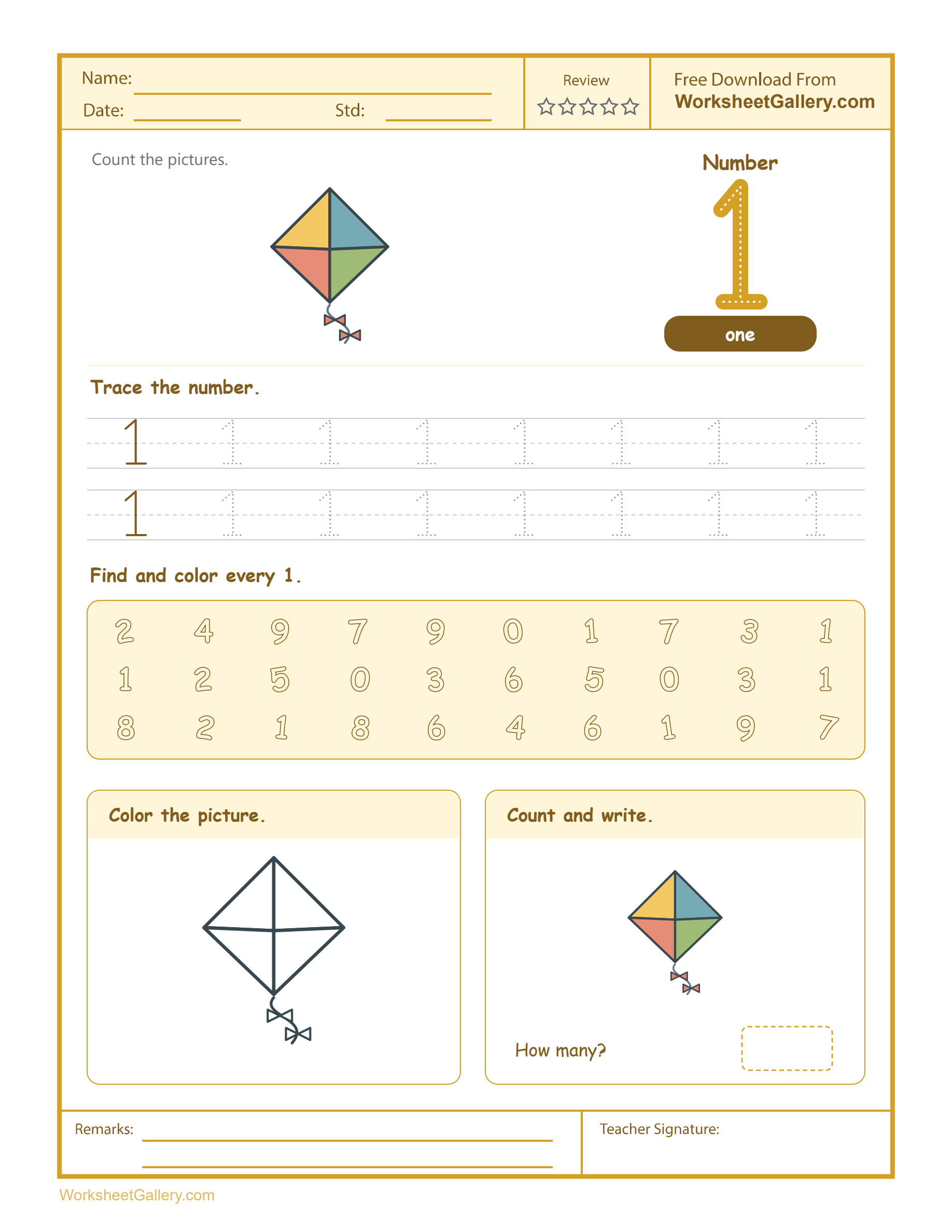
Admission for one kite sounds simple until a child starts counting its colorful panels. Number 1 Worksheet practice gives that small misunderstanding somewhere useful to go: name the complete kite, connect it with one, then inspect the written symbol 1. The page also includes guided tracing, a numeral-finding panel, a large coloring outline and a separate count-writing box. Treat the Number 1 Worksheet as a pretend ticket desk, where one whole kite receives one entry and its tail, bows and colors travel along as parts of the same object.
Issue a Number 1 Worksheet ticket for the entire kite

The upper-left picture shows a diamond-shaped kite divided into colored sections. Its string continues down to small bows. Invite the learner to indicate the outside of the whole kite picture before asking how many kites appear.
There is one. Number 1 Worksheet counting concerns complete objects, so the internal triangles do not create extra kites. Naming the object alongside the amount—“one kite”—keeps the answer connected to the thing being described.
Ask what would need to appear for there to be another kite. A different complete kite would change the collection; another color inside the existing kite would not. The question lets a child explain the unit without requiring a long count.
Keep the Number 1 Worksheet discussion focused on its selected panel. Other kite drawings appear elsewhere for different tasks. They are not additional arrivals at this pretend admission desk unless an adult deliberately sets up a separate counting question.
At Esme's Number 1 Worksheet entry desk
Esme and her father put a blank scrap-paper ticket beside the printed page. Esme points to the four colored kite panels and initially suggests several tickets. Her father follows the outside edge with his finger and asks what the panels belong to.
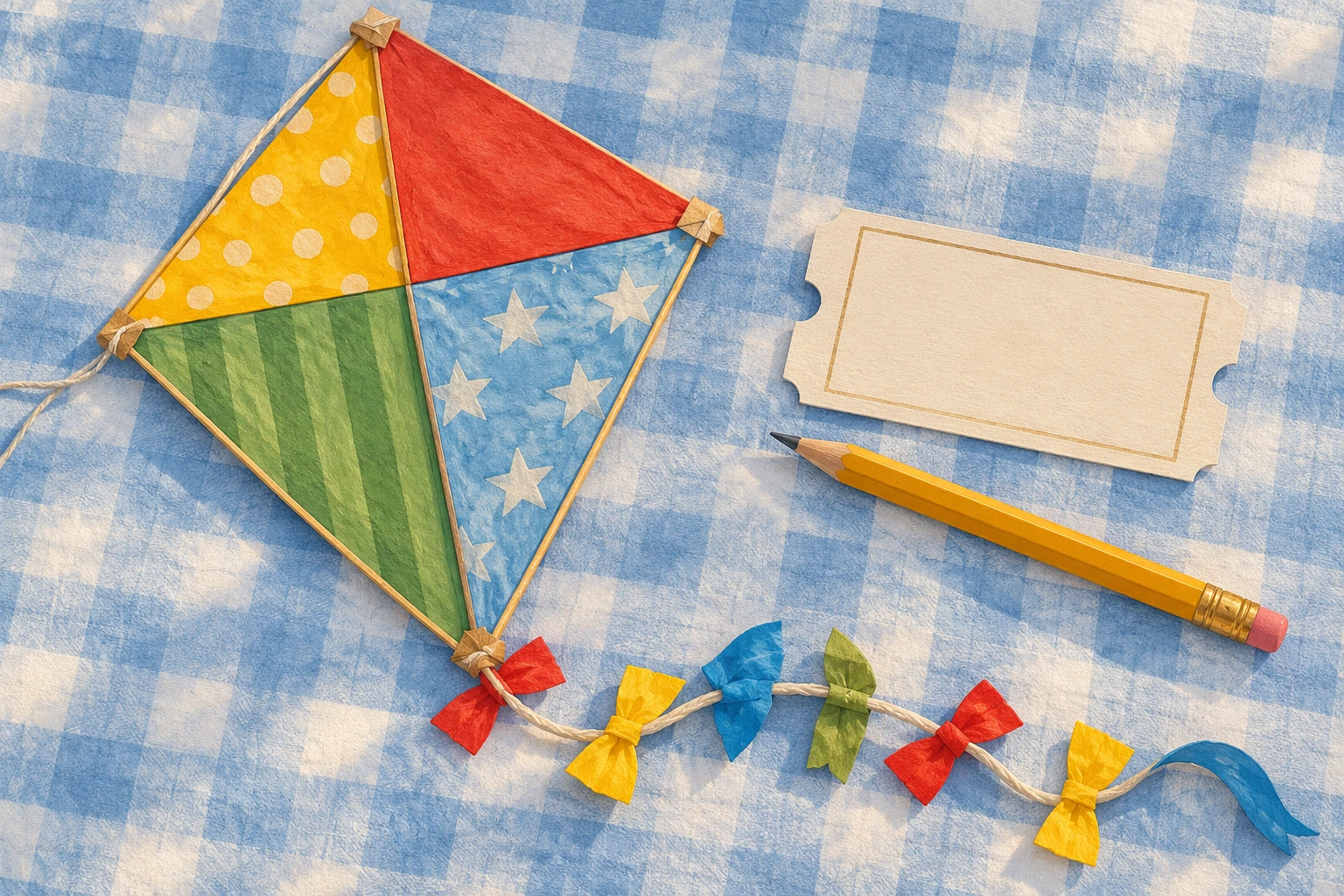
“The kite,” she says. They agree that its whole picture needs one ticket. Esme tells her father what amount to record, then compares the written 1 with the large numeral on the worksheet.
This Number 1 Worksheet story gives a reason to be precise. Esme can describe many features and still decide there is just one admitted object. Her explanation matters more than how quickly she gives the expected word.
The supporting scene is an invitation to pretend. Its ticket is blank, and its decorative kite is not a substitute answer key. Return to the actual Number 1 Worksheet picture whenever the family wants evidence for the ticket amount.
Trace the Number 1 Worksheet model beyond a plain stick
Look closely at the solid example at the beginning of each writing row. The printed 1 has a short slant at the top, a tall downward section and a small base. Those features distinguish the supplied model from a simple vertical stroke.
Rehearse the shape with a finger before taking up a pencil. Number 1 Worksheet tracing offers faint dotted examples on ruled guides; choose one and inspect where its parts meet rather than treating the entire row as a speed exercise.
If the top slant becomes very large, compare it directly with the solid example. If the base spreads across a neighboring space, try a smaller movement on spare paper. An adult can hold the sheet steady while the learner controls the mark.
Understanding one kite does not depend on already writing an accurate 1. Number 1 Worksheet participation can begin with pointing and a spoken amount, while the tracing task receives its own supported practice.
Five Number 1 Worksheet discoveries worth noticing
Recognizing that panels and bows belong together clarifies what receives a count in the first place.
The written 1 represents the established single amount rather than merely being a shape to copy.
Comparing a target with nearby digits calls for a deliberate look at its slant, stem and base.
Tracing and filling outlined symbols offer different ways to direct a pencil within a visible boundary.
A ticket report lets a child say which complete object the amount describes and why its details stay together.
Listen for an observable action behind each discovery. A learner may explain the complete kite clearly while still needing help finding 1 among distractors. Another may identify the digit immediately but be unsure which picture features should receive separate counts.
Six matches inside the Number 1 Worksheet numeral hunt
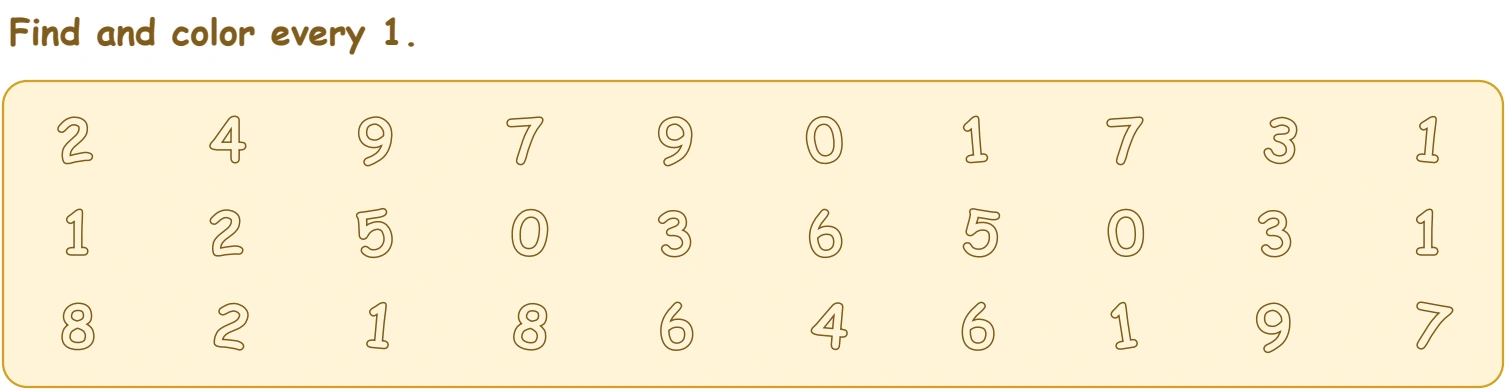
The search panel asks for every 1. It contains three rows of ten numeral entries, with six matching targets altogether. This is a different instruction from reporting the single kite in a picture panel.
In the Number 1 Worksheet top search row, the targets occupy positions seven and ten. In the middle row they are first and tenth; in the bottom row they are third and eighth. Count positions from the left when using this adult reference.
Do not tell the learner to stop coloring after a single target. The quantity one names the kite collection, whereas the search asks which entries match the numeral model. Both tasks use 1, but they ask different questions.
A paper edge below the working row can help keep a place. Number 1 Worksheet searching should leave every entry in that row visible, including the far-right target. Encourage a check of the whole row before moving downward.
A classroom Number 1 Worksheet ticket helper
Display the kite picture and ask a child to be the entry helper. Another learner names something interesting about the kite, such as a blue section or a bow. The helper explains whether that feature is a new kite or part of the current visitor.
Use the exchange to clarify the object boundary, then ask for the admitted amount. The Number 1 Worksheet large model supplies a symbol to compare with the report. One learner may point to it while another dictates the ticket entry.
For ages three to six, keep the language accessible. A preschool child can say “one kite” and gesture around it; a kindergarten learner might explain why changing its colors would not change the number of kites.
After a short demonstration, offer individual thinking time. Number 1 Worksheet success should not depend on echoing a group answer. Ask learners to show the object or symbol that supports their response before choosing the next task.
Five Number 1 Worksheet entry-desk games
1. Give a Number 1 Worksheet feature a home
Point to the kite's tail and ask what it belongs to. Trace the connection back to the diamond-shaped body, then name the complete object. Repeat with a colored section if the learner is interested.
Use the Number 1 Worksheet picture to explain why an interesting part can be discussed without receiving a separate kite ticket. A pointing demonstration is a perfectly useful explanation.
2. Dictate a Number 1 Worksheet admission amount
Let the child act as the ticket clerk while an adult holds the pencil. Ask the clerk to supply the amount for the upper kite, and write that amount on scrap paper.
Compare the result with the Number 1 Worksheet numeral model. This version separates deciding what one means from the physical task of writing its shape, making the child's mathematical contribution easy to hear.
3. Inspect a Number 1 Worksheet look-alike
Select a nearby 7 in the numeral panel and compare it with 1. Both can contain slanting or straight portions, but their complete printed shapes differ. Ask the learner to locate the actual target model again.
The Number 1 Worksheet comparison should remain concrete: look at these marks on this page. Avoid a complicated verbal rule when a direct side-by-side inspection answers the question.
4. Design a Number 1 Worksheet kite costume
Use the large outline panel for an invented color scheme. The learner might color each section differently, leave a section white or discuss a pattern while keeping the complete outline intact.
After coloring, ask how many kites the outline represents. Number 1 Worksheet quantity remains one even though the decoration has changed, providing a useful return to the lesson's central idea.
5. Check the Number 1 Worksheet lower arrival
Move to the lower-right count-writing picture. Establish its own amount and decide what belongs in the empty response box. This is another single kite, presented for a fresh recording task.
The Number 1 Worksheet upper picture and lower picture are not combined for this answer. Each activity has its own purpose, and the learner can point to the relevant panel before recording 1.
Keep Number 1 Worksheet tasks distinct on the page
| Printed area | What to inspect | Useful adult check |
|---|---|---|
| Upper picture | Complete kite | One object, despite its sections |
| Writing guides | Solid and dotted 1 | Compare with the supplied shape |
| Numeral panel | All entries matching 1 | Six targets across thirty positions |
| Outline activity | Large kite boundaries | Colors are the learner's choice |
| Lower response | Separate one-kite group | Record 1 in the blank box |
Use this reference after watching the learner attempt a task. It clarifies which question is being answered without turning the whole worksheet into a collection of adult-supplied responses.
A Number 1 Worksheet return can be very small
If the child counts sections, revisit the complete kite boundary. If the hunt ends after one match, reread the instruction to find every 1. If a correct spoken amount produces a difficult pencil mark, share the writing movement instead of reopening the counting question.
Choose one small action for another visit. The Number 1 Worksheet can reappear as a ticket story, a single tracing attempt or a check of an overlooked search position. Recognize the particular discovery the child made.
The early straight-and-curved line activities can support movement rehearsal. Explore the number-five picture-and-symbol page when a larger quantity is appropriate. For another picture-counting purpose, the fruit-group sum activity introduces combining with adult help.
Obtain a Number 1 Worksheet copy for the ticket desk
Download the original sample for the branded version. An active membership with suitable access provides the separate clean Number 1 Worksheet PDF; its worksheet website and domain watermarks are removed, and no ads are inserted into the printable file.
Select a portrait Letter-sized print layout and inspect the sheet before producing a copy. Keep the faint tracing marks, both right-edge search targets and the lower answer box inside the printable margins. Adjust the printer's fitting option if an edge is cut off.
The Attached Premium Package section leads to the complete ten-page collection, sold together for $3. Choose that package when you want the whole sequence in one PDF. A single kite is enough to begin a thoughtful number conversation.
Popular Worksheets
Printable resources families and teachers are downloading now.
 Free
 Free
 Free
 Free