Story Sequencing: 5 Creative Games for Confident Kids
A duck, a missing scarf, and an attentive listener open five ways to connect story events. Explore retelling through props, sounds, movable scenes, and a new ending.
“But how did the scarf get back?” A listener's question can turn three pictures into a real story. Story sequencing gives preschool children a way to connect events so another person can follow what happened. Around ages three to six, that work can begin with a spoken tale, a few props, and a simple page for drawing or arranging scenes. The five games below bring story sequencing into family conversations and classroom play, with room for home languages, gestures, unexpected ideas, and children who prefer a quiet audience to a stage.
Start with the listener's missing piece
A child announces, “The duck had its scarf again!” The ending sounds happy, but somebody who missed the beginning cannot understand the change. Try responding, “Tell me what happened before that.” Story sequencing begins to serve a real purpose: helping a listener catch up.
Use this short original tale as a shared starting point: Dot the duck wears a lilac scarf into the garden. A breeze lifts the scarf onto a low branch. Dot pulls it free and wears it again. Tell the complete version before asking for a retelling.
For story sequencing, agree whether you are recalling this shared tale or inventing a new one. Invention can change the events. A retelling should preserve the important events of the version everyone heard, while welcoming the child's own wording.
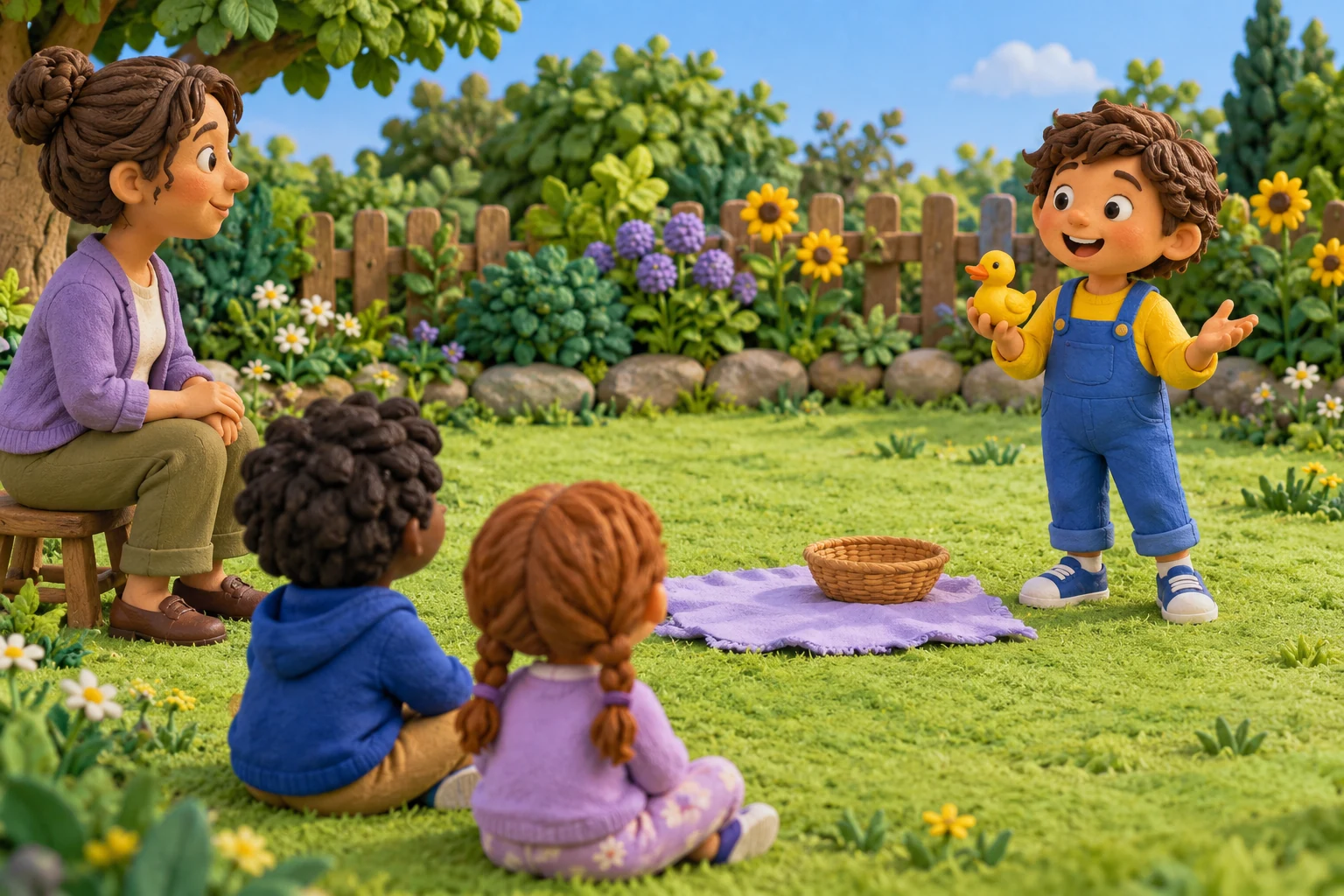
A garden storytelling circle leaves space for one child's explanation. The duck, cloth, and basket offer concrete props for exploring story sequencing with an attentive audience.
Story sequencing connects a change, not just three boxes
Story sequencing means working out the order of events within a narrative. Beginning, middle, and end offer a useful first frame. However, three boxes alone do not tell us whether a child understands why an ending makes sense.
In Dot's tale, the scarf starts around the duck's neck, becomes caught on a branch, and returns to the duck. The important link is the recovery. Ask, “What did Dot do before wearing it again?” A child may point to the branch and mime pulling. That response contributes to story sequencing even without a complete spoken sentence.
The Reading Rockets guide to story sequence explains how identifying and retelling events supports understanding narrative structure. Keep the first tale brief and familiar. Story sequencing should leave attention available for connecting events, rather than demanding recall of a long, unfamiliar plot.
Story sequencing in a tiny tale: three places to pause
Beginning
Dot enters the garden wearing a scarf. Who is here, and what does the duck have?
Middle
The scarf catches on a low branch. What has changed, and what might Dot need to do?
Ending
Dot has pulled the scarf free. How does this scene connect with the problem?
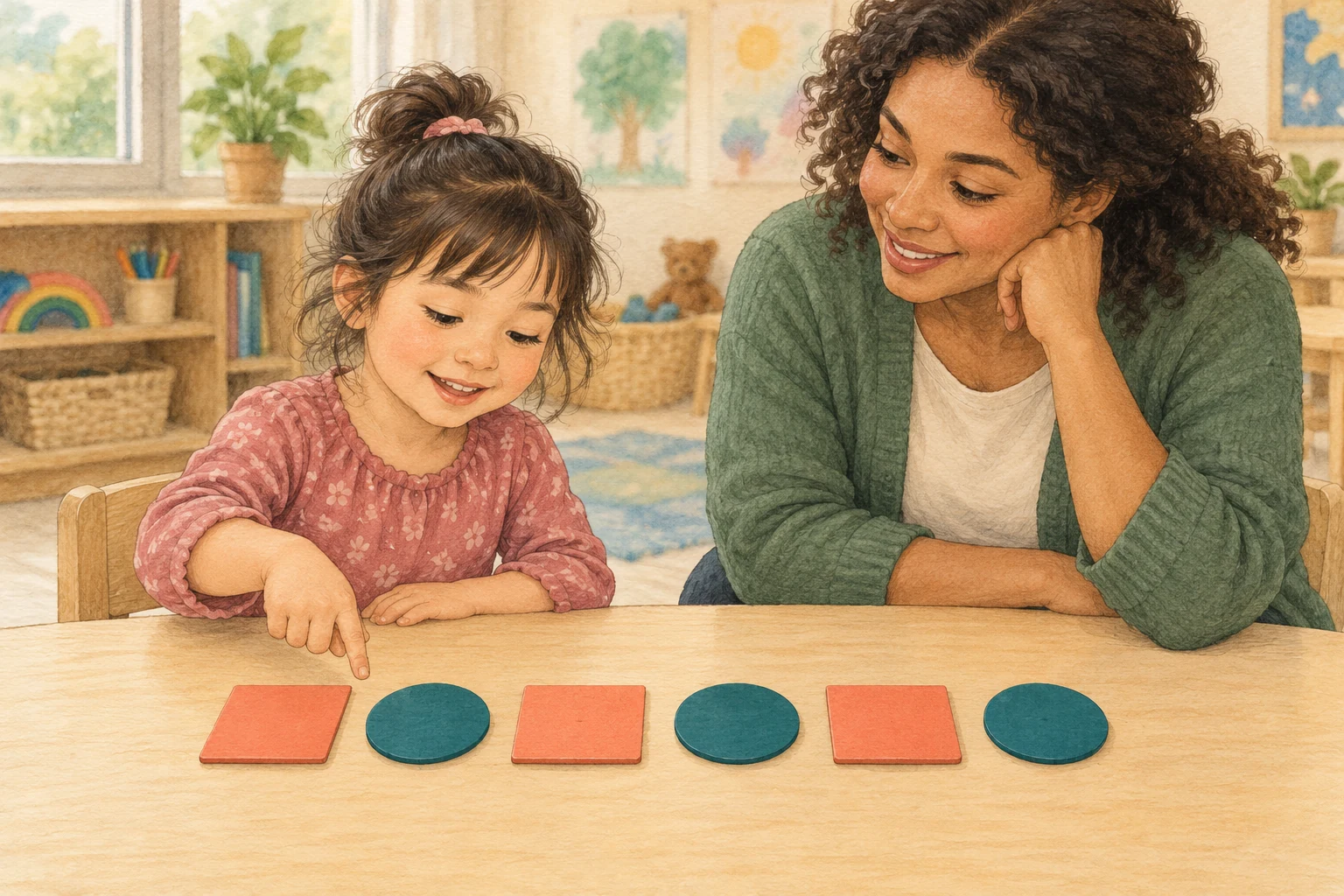
These prompts support story sequencing after the shared telling. The pictures show states within the tale; the adult's spoken version supplies the breeze and the pulling action between them.
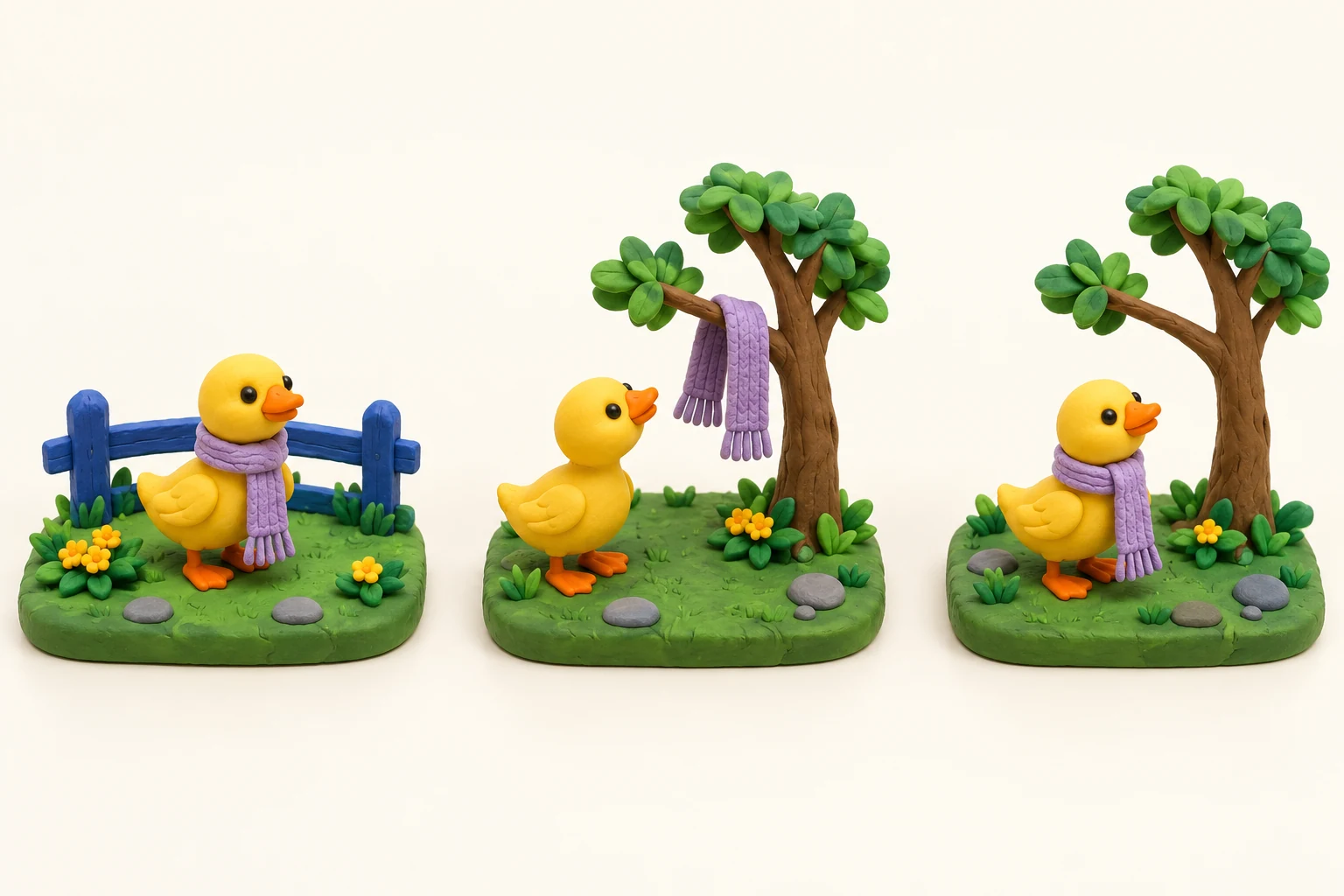
Three separate scenes keep the character and scarf recognisable. Point between the scenes while using story sequencing to connect the shared tale's events.
Prepare a retelling that belongs to the child
Try this sequence once before choosing a game. Story sequencing can happen on the floor, beside a reading corner, or during a quiet family moment. A child may watch the first round and join the next.
- Share the whole tale. Tell or read it for enjoyment before pulling it into parts.
- Choose a story sequencing focus. Use two events if three still feels crowded; add detail later.
- Make the events movable. Draw simple cards or use objects that represent particular moments.
- Offer a first arrangement. Let the learner place, point to, or direct someone to move the cards.
- Invite the connections. Ask what happened between two scenes, then listen without finishing the sentence.
- Check and revisit. Return to the book or retell the shared version when an event is uncertain.
For story sequencing, the page records thinking after there is something worth remembering. A fold of blank paper can do the job. Writing every sentence independently is not a prerequisite.
Five ways to make the next telling different
Choose the story sequencing game that suits today's audience. Keep the original tale available, use large suitable props, and leave space for the child to decide how to communicate.
1. Interview a character who arrived late
Begin this story sequencing interview with a sock puppet arriving just as Dot recovers the scarf. It politely asks why everyone was looking at the tree. The child can show a beginning card, move the duck, or explain the missing event.
This story sequencing game gives the listener a reason to need more information. Ask one question and allow an answer before the puppet speaks again. A string of adult questions can quietly take over the telling.
Afterward, exchange roles. Let the child ask the puppet a question about the tale. Notice which earlier event they choose; story sequencing becomes easier to discuss when both partners contribute to the conversation.
2. Give each event a sound cue
Give story sequencing a soundtrack: agree on a gentle sound for each moment, such as footsteps into the garden, a breathy wind sound, and a happy duck greeting. Point through the cards while the teller supplies the matching sounds. Add words only when the learner wants them.
In story sequencing, a sound can stand for an event without becoming a test of vocabulary. Ask a partner to play the cues in a different order, then let the teller decide whether that still matches Dot's shared tale.
Keep the volume comfortable and offer silent gestures as another choice. Finish with a complete telling that connects the sound cues to their events. Story sequencing gains meaning from those connections, rather than from producing a perfect performance.
3. Rescue a missing middle scene
Set up a story sequencing rescue with the beginning and ending visible. Place the middle scene in an envelope and explain that the storyteller's display has lost a card. Invite the child to describe what is missing before opening the envelope together.
For story sequencing, this is a chance to connect two known events. If the child invents a different explanation, hear it first. Then distinguish the new version from the tale you originally told, and check which event belongs to that version.
The child might draw a replacement card with only a scarf and branch. That can be enough. Story sequencing does not require a polished picture when the teller can explain what the marks represent.
4. Send the story to a new audience
For a fresh story sequencing audience, invite a family member or another classroom pair who did not hear the first telling. The narrator chooses three cards and uses them to share the tale. Ask the listener to describe one part they understood.
Story sequencing now has an audience beyond the adult who knows every intended answer. If the listener cannot follow an event, return to that connection together. Avoid turning the listener into a judge who awards points.
A small drawing from the colouring resources may inspire a new character for a later original tale. Keep that new story separate from Dot's retelling so the story sequencing purpose stays clear.
5. Make a second ending that still connects
Extend story sequencing into invention once the shared tale feels familiar. Announce a new job: making a different version. Perhaps Dot asks a friend to help retrieve the scarf, or decides to carry it home in a basket. Keep the first events and create a new final scene.
Here, story sequencing supports invention. Ask what must happen between the caught scarf and the chosen ending. A child may need to add a fourth scene to explain the friend's arrival or the decision to use the basket.
Label the paper in the child's words, such as “Our basket version.” Comparing two versions shows that story sequencing can accommodate imagination while still asking events to connect.
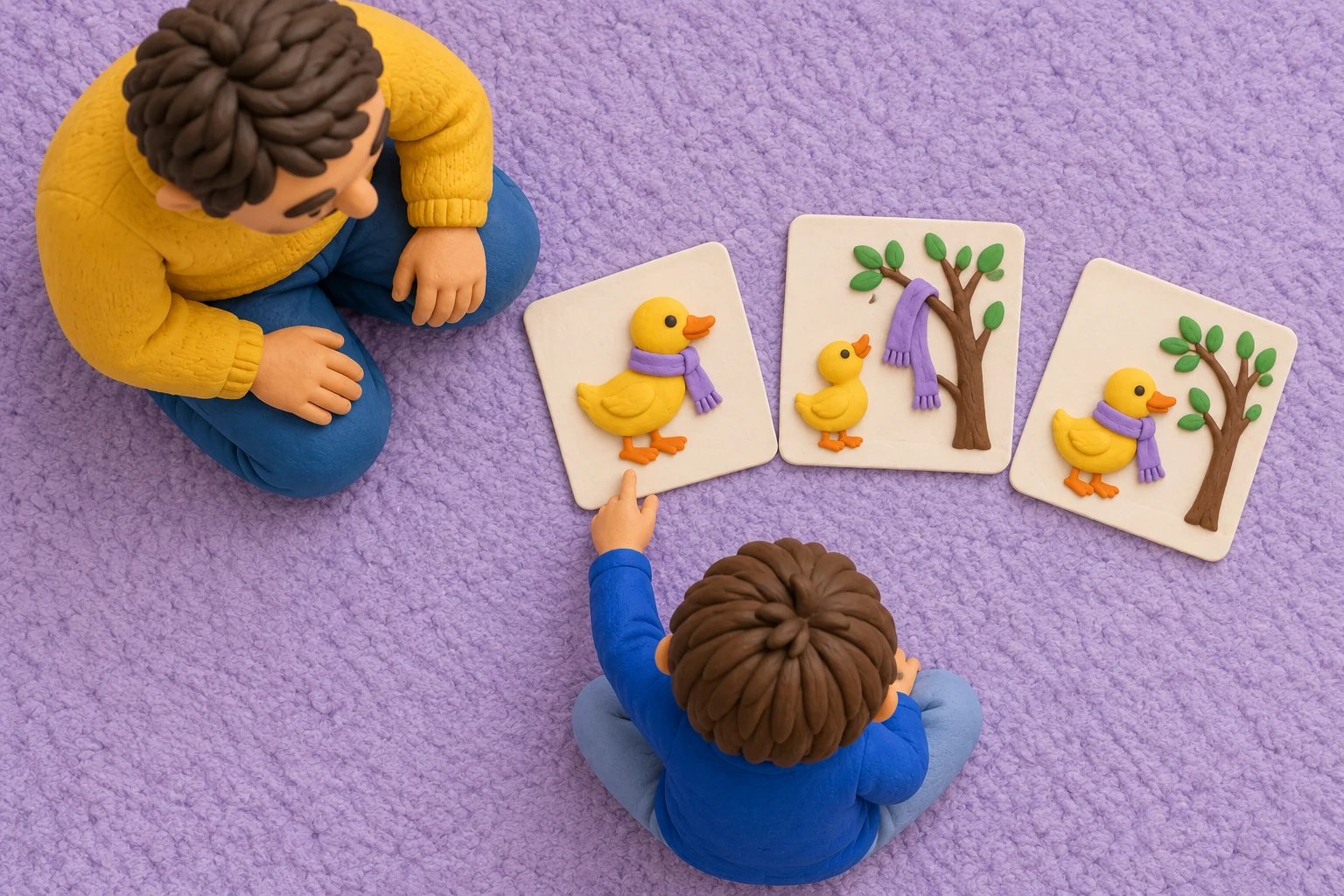
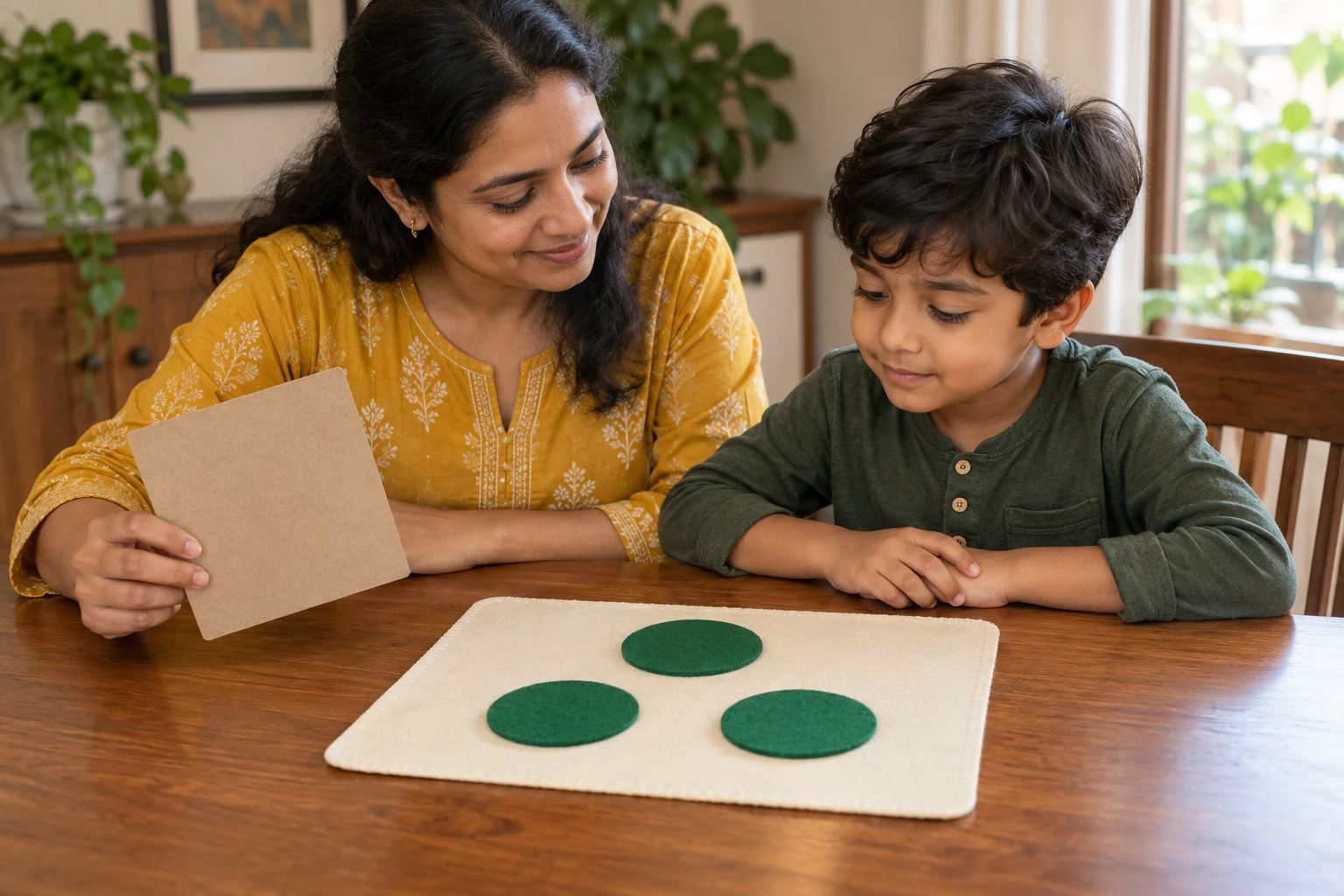
Three large cards lie between a child and a listening parent. Their floor arrangement gives the child room to point and rearrange while practising story sequencing.
Six useful gains beyond getting the cards right
Look for the work happening around the arrangement. Story sequencing can give adults opportunities to notice these developing habits:
- Keeping an event in view: A picture or prop helps the child return to the part they want to explain.
- Using time language: Words such as before, afterward, and finally connect with something that actually happened in the tale.
- Explaining a change: A gesture or phrase fills the gap between the problem and its resolution.
- Checking a memory: Returning to the book becomes a sensible response to uncertainty.
- Considering a listener: The teller notices when someone needs an earlier event or a clearer connection.
- Revising an idea: Moving a card lets a learner adjust a story sequencing explanation without erasing a whole page.
These are invitations for observation during story sequencing, not promised outcomes from a single game. The child's response and the help you offered matter more than a completed display.
At home, listen for the part hidden inside a gesture
Consider this family example. Nila tells her uncle, “Scarf, tree, back.” She points to the cards in order, then reaches upward and pulls her hand toward her chest. Her uncle says, “You showed Dot pulling it down,” and waits for her to continue.
That story sequencing response contains more than three isolated nouns. The action provides a link. Her uncle writes her exact words beneath her drawing and adds a separate note about the gesture, rather than rewriting everything as though she spoke a longer sentence.
Later, Nila tells her grandmother using familiar home-language words. The adult can ask her to point to the scene being described. Story sequencing remains accessible while everyone finds shared meaning. A family story about a lost mitten could become tomorrow's tale without needing another elaborate set of materials.
At school, separate joining in from telling the whole tale
In a possible preschool small-group session, one child holds the character, another chooses the scene, and a third tells what happens. The teacher rotates those roles instead of assuming that every participant has independently retold the story.
For story sequencing, a useful observation might be, “Selected the branch scene after hearing the beginning; explained the recovery with a pulling gesture.” The note names the actual contribution and keeps the adult's prompt visible.
NAEYC's 2026 ideas for collaborative storytelling include children contributing to stories, dramatic play, and family retellings. This blog's story sequencing games give those shared experiences a specific focus: making the order and connections understandable. Offer a quiet partner telling before inviting a child to address a whole group.
Let the printable fit the explanation
For story sequencing, choose a page with distinct events and enough space to move or draw. Browse the puzzle collection by inspecting the actual previews; a matching or number game is not automatically a narrative sequence.
| Page feature | Useful when | Check before printing |
|---|---|---|
| Movable scenes | The learner wants to try an order and change it. | Events are distinguishable without relying only on colour. |
| Empty frames | A child wants to record a tale they already know. | Frames are large enough for comfortable marks or adult scribing. |
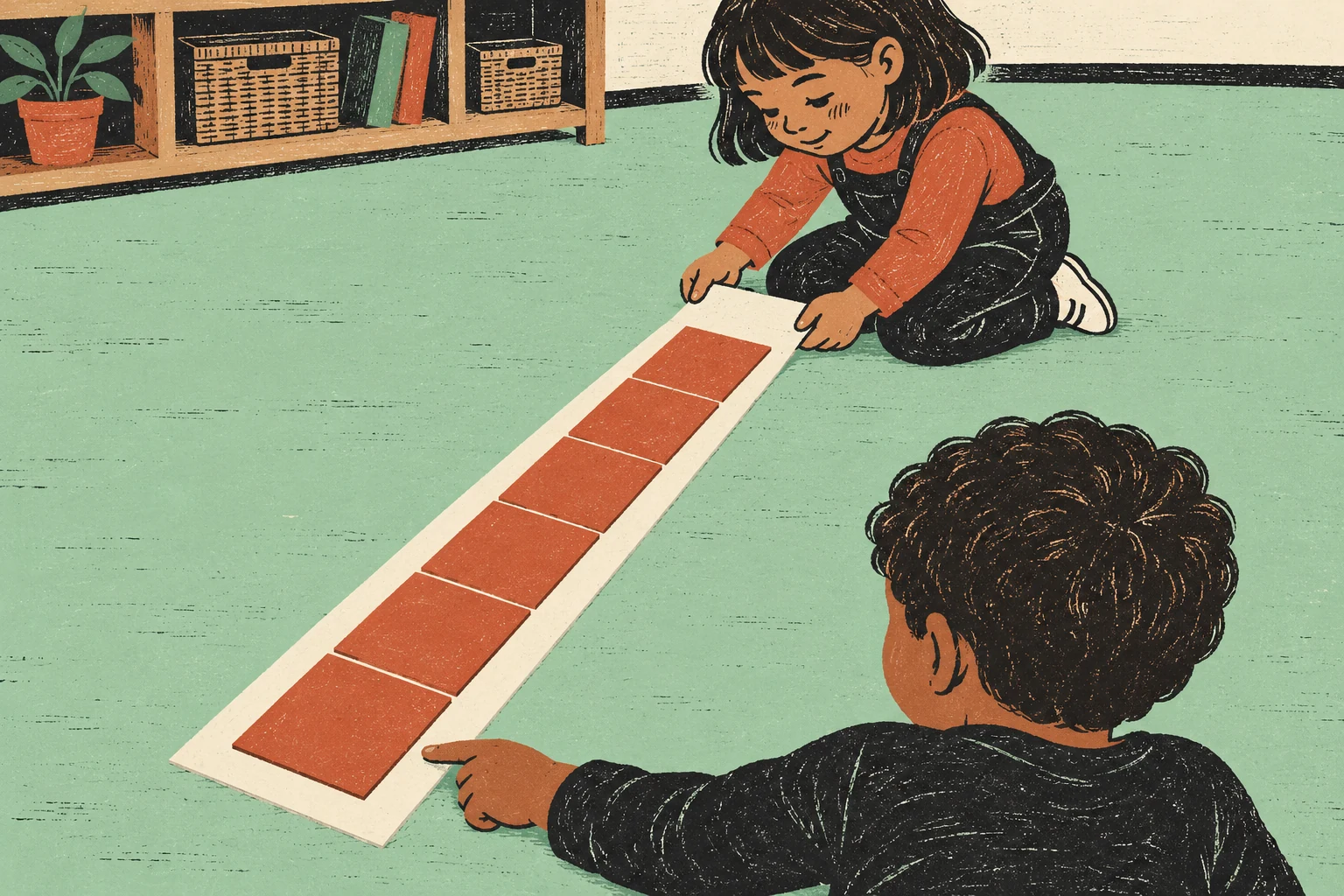
| A shared strip | A group needs one visible reference during the telling. | Each scene can be seen clearly from the group's position. |
Print a single copy first and check its size. This article supplies ideas and an original spoken tale; it does not include a separate downloadable card pack. Story sequencing also works with your own large drawings on scrap paper.
What if the child chooses a different order?
Ask for the telling before moving anything. A different arrangement might support a coherent invented story, or it might show that two pictures are hard to distinguish. For story sequencing after a specific read-aloud, reopen the source and compare the important events together.
Make the story sequencing task clear before deciding the answer is wrong. A child may be inventing when the adult expects recall. Say which version you are working with, and give the learner a chance to revise their arrangement.
Letter formation is a separate demand. The writing and tracing activities can support pencil practice another time. During story sequencing, accept pointing, acting, spoken words, or an adult recording the child's message.
Leave the final voice with the storyteller
A satisfying story sequencing session might end with one clear connection: “It came off the branch, so Dot could wear it.” It might also end with a silent demonstration that the adult finally understands. Confidence does not have to sound loud.
Ask whether the child wants to keep the cards, tell someone else, or leave the story for later. If they stop, preserve the arrangement rather than requiring a final performance. Story sequencing can resume when there is a willing teller and a listener with time.
One thoughtful story sequencing question is often enough: “What does your listener need to know next?” Follow the answer. The child is making a story travel from their own understanding into somebody else's, one connected event at a time.