Vocabulary: 5 Essential Routines for Confident Talk
A familiar word can open into a bigger idea. Follow five practical routines for explaining meanings, changing examples, and giving children a reason to use new language.
“Gather” may sound familiar to an adult, yet a child might know it only as a tidy-up instruction. Can the same word describe leaves brought together or people meeting for a story? Vocabulary grows through those connections. For learners around four to seven, a worksheet picture can open a useful conversation about meaning before reading or writing takes over. The five routines below give teachers and parents practical ways to introduce, explore, and revisit a word, while making room for gestures, home languages, and children who prefer to listen first.
Vocabulary starts with a meaning worth sharing
Vocabulary knowledge includes understanding a word when someone uses it and finding occasions to use it yourself. Those abilities need not appear together. During vocabulary practice, a child may respond appropriately to “gather the blocks” before choosing the word in conversation.
Reading a printed label introduces another task. In vocabulary work, an adult can say the word while the learner points, acts, or explains. Separate sound-and-letter practice from understanding a meaning; the phonics activity collection provides examples of the different reading tasks a page might ask.
The Education Endowment Foundation's guidance on teaching and modelling vocabulary describes purposeful explanations alongside language used naturally in activities. It also notes that evidence for the overall approach does not establish which individual practices work best. The routines here are adaptable teaching ideas, with the child's response guiding the next choice.
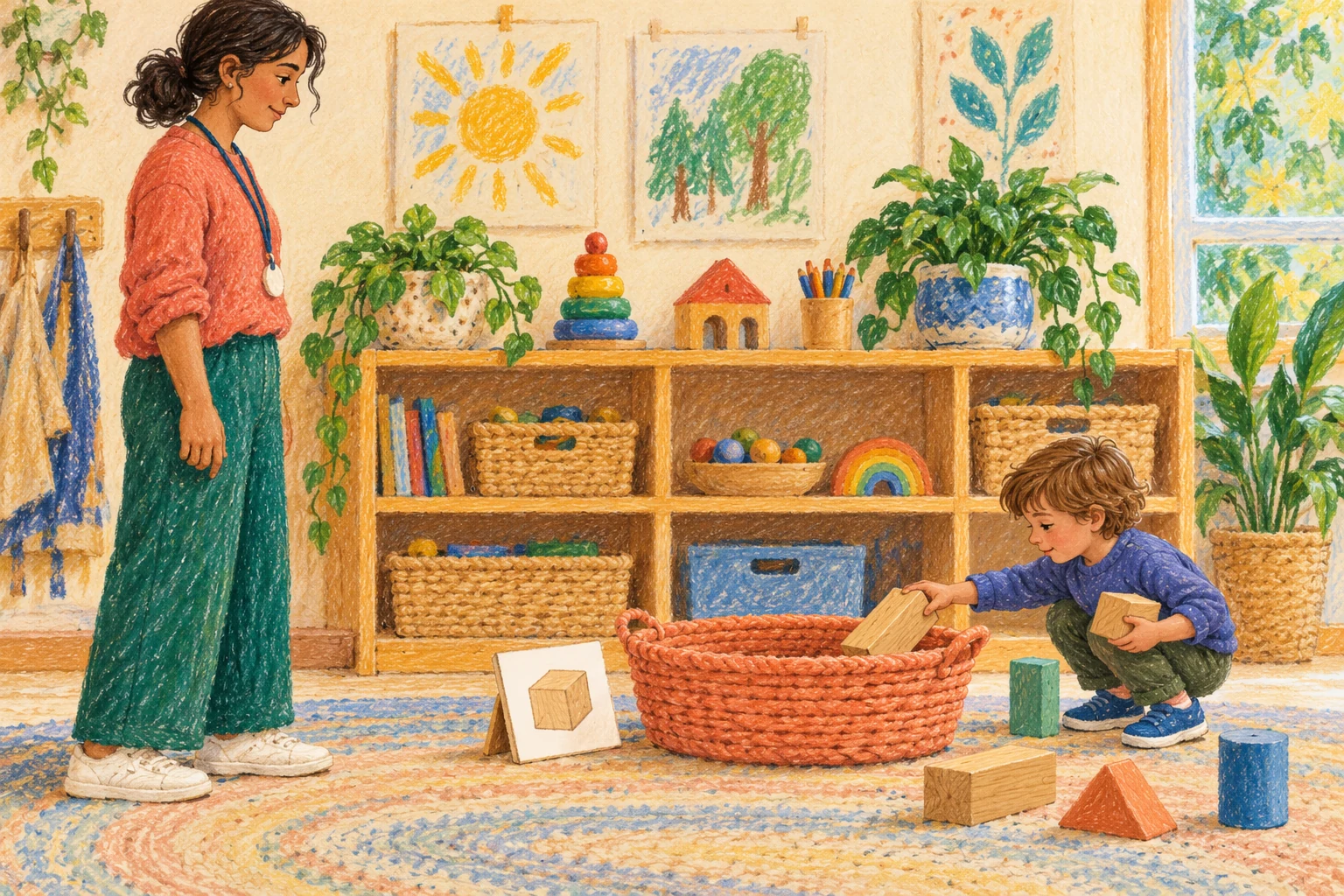
The child brings blocks toward one basket while the adult watches. A nearby picture card connects an object with its representation, leaving room for vocabulary in the shared activity.
A label can name something
“Basket” gives an object a name. Vocabulary can become more useful when the learner meets different baskets and hears what people do with them.
A word can connect situations
“Gather” connects blocks, leaves, and people coming together. Vocabulary exploration can follow an action across changing materials, rather than staying attached to one picture.
Choose useful vocabulary from the activity
Look at the page and the experience around it. Which word would help a child describe something, understand a direction, or contribute an idea? Choose vocabulary with a meaning you can explain plainly and opportunities to use it again.
A familiar picture may supply an unfamiliar action or describing word. A child who knows “bird” might be interested in “perch.” Another learner may need the everyday object name first. Find out what the learner already understands before choosing the next addition.
Try a short preview from the colouring picture collection as a conversation starting point. Check what the actual image depicts. You can also sketch an example yourself, especially when a printed picture would leave the target meaning unclear.
Keep the vocabulary purpose small. Working with one useful word in several situations can offer more to discuss than introducing a long list during a single page. This is a planning choice, not a fixed daily quota.
Five vocabulary routines, followed through one word
The examples follow “gather” so the connections stay visible. Apply the same thinking to suitable vocabulary from your own activity. Use the routines across several short encounters if that fits the learner.
Explain it while something happens
Bring a few large blocks together and say, “I am gathering the blocks. I am bringing them together in this basket.” Keep the explanation close to the action. The learner sees what changed while hearing the new vocabulary.
Next, invite the child to gather another set, or watch while you repeat the demonstration. Ask what they noticed rather than immediately requesting a definition. Their action or gesture may show which part of the explanation made sense.
If a worksheet uses the word in a direction, read that direction aloud and demonstrate separately. Then return to the page. Vocabulary teaching need not depend on the learner decoding an unfamiliar instruction.
Change the objects, keep the idea
Gather large paper leaves onto a tray after using blocks. Name what stays the same: the separate items come together. This vocabulary encounter helps detach the word from one particular basket or kind of toy.
Also show something different, such as leaving the paper leaves spread apart. Invite the learner to choose which arrangement could follow gathering, then ask them to show the action that would connect the two.
A comparison works best when the difference is clear. Avoid a nearly identical pair that turns vocabulary into a guessing game about the adult's preferred answer.
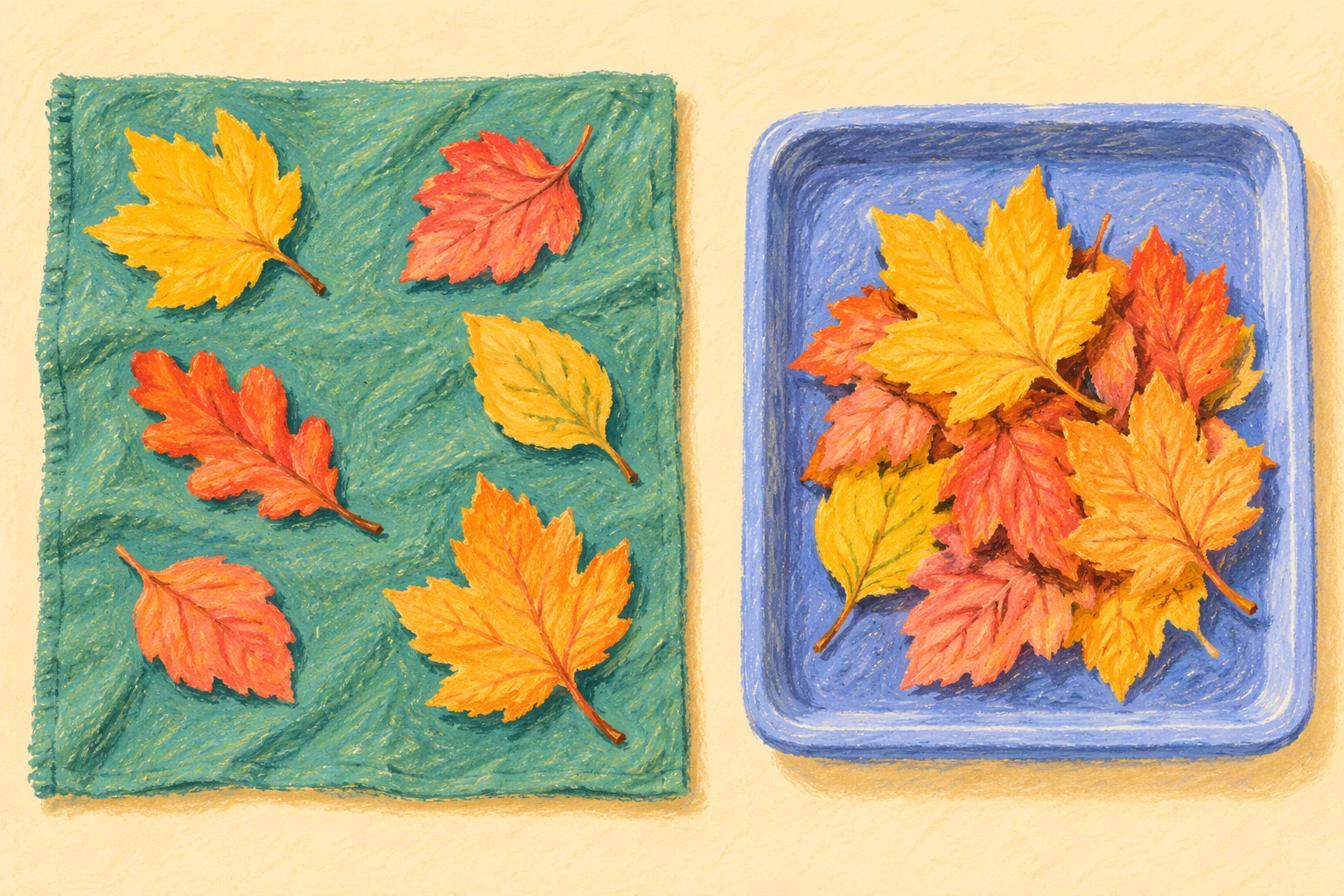
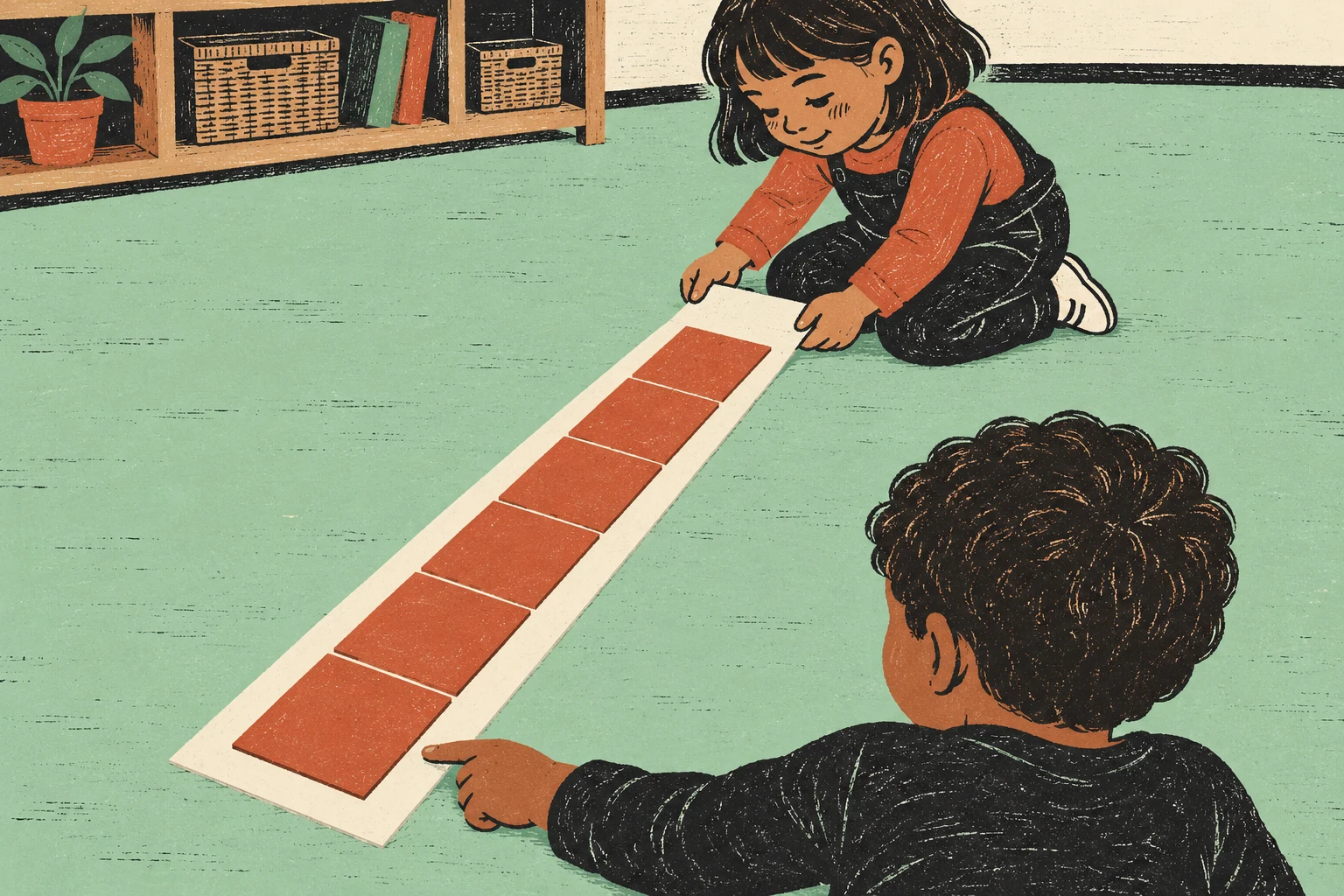
The two arrangements offer a vocabulary comparison: leaves spread apart and leaves collected on a tray. Discuss the idea of gathering rather than treating the pictures as a counting task.
Give the word a job in the child's plan
Suppose a pretend delivery needs several parcels. Offer, “We can gather the parcels before loading them.” Then let the learner decide what belongs in the delivery. Vocabulary now serves a purpose within the play.
A child might answer, “These ones together.” Acknowledge the meaning and model the word in a natural reply: “Yes, you are gathering those parcels.” Leave room for the conversation to continue, without requiring an exact repeated sentence.
When children choose the vocabulary themselves, respond to what they are trying to communicate. A useful word should help an idea travel between people. The child's contribution can remain central even when the adult supplies a fuller phrase.
Revisit it when the context changes
Later, invite a few people to gather for a story. Explain that people are coming together, just as the objects came together earlier. Ask whether the learner has heard the vocabulary used that way before.
Keep the return connected to something worth doing. EEF's February 2026 reflection on vocabulary teaching discusses joyful encounters with words and the risk of repetition losing its context. A short, relevant reuse can preserve the activity's flow.
There is no need to interrupt every game to check the word. Vocabulary can return through an adult's comment, a child's request, or another image, with space between encounters.
Listen for meaning, then choose the next invitation
Offer a fresh situation: “Our picture cards are all over the mat. What could we do before packing them?” The child may use the target vocabulary, suggest another accurate word, or demonstrate an action.
Notice what the response tells you. Using “gather” appropriately with new materials offers a different clue from repeating it immediately after an adult. Neither response needs a public score or a comparison with classmates.
If the meaning remains uncertain, show another concrete example. For help keeping the adult's response specific, the guide to useful learning prompts offers related ideas. Vocabulary understanding can continue developing through further encounters.
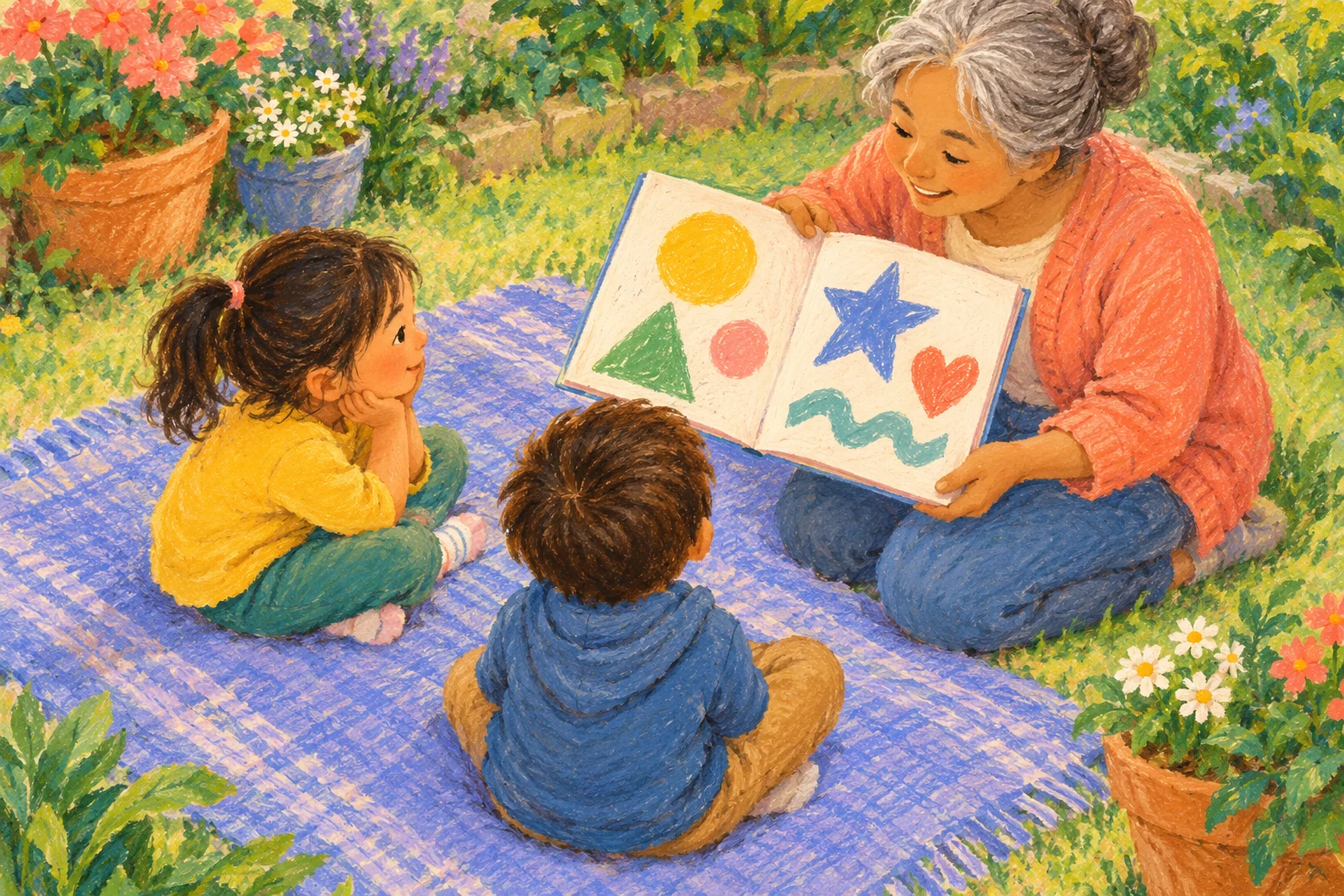
A child seen from behind sits near another child and an adult at the upper right. Their story gathering offers another context for vocabulary first explored with objects.
Make a small vocabulary plan that fits the day
- Select. Choose vocabulary related to an actual activity and check what the learner already knows.
- Prepare. Find an object, gesture, or picture that makes its meaning clear, plus one different example.
- Introduce. Explain briefly in everyday language while showing the meaning.
- Invite. Give the learner a reason to act on the idea, contribute, or use the word.
- Return. Notice another suitable context and decide whether further explanation would help.
Share the vocabulary plan with another adult using the word, its intended meaning, and an example the child experienced. Avoid a list that gives a family unfamiliar words without showing how those words connect to their child's activity.
Two vocabulary encounters that reveal different knowledge
A family basket: the meaning already has another name
Imagine Sana gathering toy animals while her uncle uses the English word. She names the action in a familiar home language and brings the animals together. He recognises the connection and adds the English word alongside what she already knows.
The vocabulary opportunity concerns a new label for an understood idea. Her response gives the adult a useful starting point. They can share both words during play, without treating knowledge in one language as something to replace.
A classroom mat: the word needs a broader example
Consider a learner who says “gather” whenever a basket appears, even when someone is taking things out. The teacher places picture cards together on a mat with no basket nearby, explaining the action as it happens.
The next vocabulary encounter compares bringing cards together with spreading them apart. The new materials help the teacher explore whether the child has connected the word with the action or mainly with the container.
Six useful possibilities within vocabulary work
- Clearer directions: A child can connect an instruction with the action being requested.
- More precise ideas: New vocabulary offers another way to describe what the learner intends.
- Connections across contexts: Changing the materials invites comparison of the underlying meaning.
- Active listening: An appropriate response can reveal understanding before a spoken explanation appears.
- Shared participation: Objects, pictures, gestures, and familiar languages provide ways into the same conversation.
- Thoughtful planning: The adult can choose the next example from what the learner actually shows.
These are opportunities to look for during vocabulary activities. One completed sheet or correctly repeated word cannot show everything a child understands.
Record the encounter rather than a quick verdict
| You noticed | A useful note | Possible next invitation |
|---|---|---|
| An action after hearing the word. | Brought cards together after a spoken request. | Try another familiar set of materials. |
| An immediate spoken repetition. | Repeated “gather” after the adult's model. | Offer a meaningful use later. |
| A word used in a different activity. | Suggested gathering people for a song. | Invite the learner to explain the connection. |
Keep vocabulary notes descriptive and brief. Record the setting and any help that mattered. A new context or another day may reveal something the first encounter did not show.
Four playful reasons to meet the word again
- A puppet's packing problem. Give a puppet scattered pretend parcels and invite the learner to help it prepare.
- A new picture pair. Draw two arrangements and ask which could follow the action you have discussed.
- A family message. Dictate a short invitation asking people to gather for a song, game, or story.
- A word detective moment. Notice the target word in a familiar book, then discuss whether its meaning fits the current scene.
Choose one vocabulary return when it belongs naturally in the day. The play remains interesting because the word helps someone do or express something.
Let the learner lead the next vocabulary discovery
Make curiosity welcome: “Could we use that word here?” A child may suggest a surprising example, ask for another demonstration, or offer a word from another language. Explore the connection together.
Children can participate by pointing, showing, selecting, or speaking. Allow time for a response and follow the communication supports already familiar to the learner. A word becomes useful when it helps someone share a meaning.
Leave room for vocabulary to travel beyond the worksheet. The basket, mat, picnic blanket, and next conversation can each offer a fresh place for the same idea to become clearer.