
Amazing Even Number Dice Game: 7 Brilliant Steps for Fun Math!

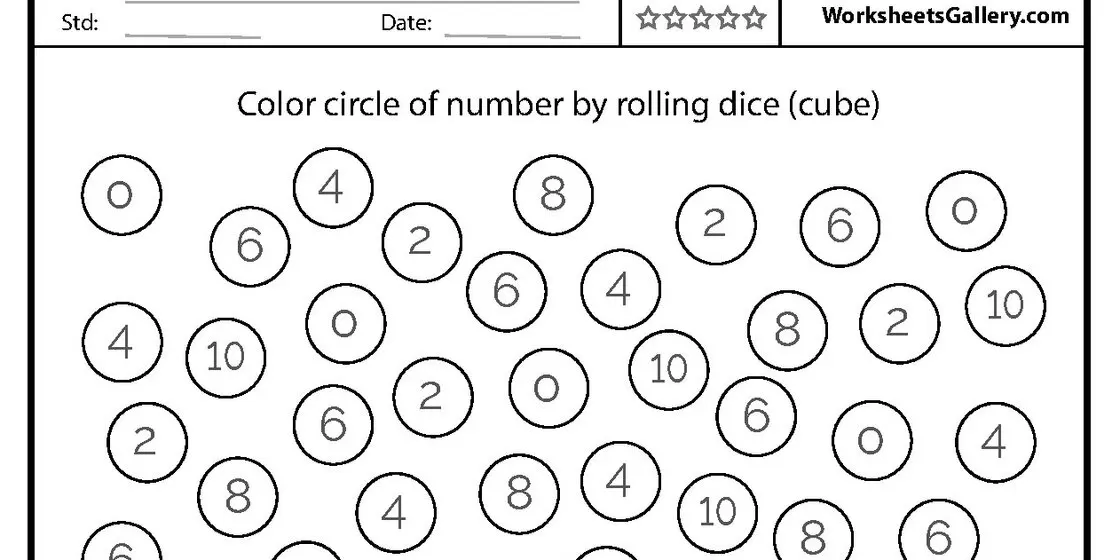
Discover the Joy of Numbers with an Even Number Dice Game
Even Number Dice Game gives learners focused practice. Turn learning into an exciting adventure with this "Color circle of number by rolling dice (cube)" worksheet! This engaging activity transforms simple dice rolls into a vibrant exploration of numbers, making it a perfect addition to your math lessons. It's more than just a game; it's a hands-on way to build foundational skills in a way that children find naturally captivating. Get ready to see your child's eyes light up as they roll the dice and color their way to mathematical understanding.
Even Number Dice Game gives learners focused practice. This worksheet introduces a playful approach to number recognition and basic arithmetic. Children roll a custom-made cube featuring numbers (0, 2, 4, 6, 8, 10) and then find and color corresponding numbers within a circle on the page. This interactive process not only reinforces number identification but also subtly introduces the concept of even numbers, as all the numbers on the dice are even. It’s a fantastic way to foster a positive attitude towards math from an early age.
Even Number Dice Game gives learners focused practice. Worksheet Focus:
Even Number Dice Game gives learners focused practice. This printable activity is designed to help children practice identifying and coloring numbers based on a dice roll. It encourages the use of a custom-made cube, promoting fine motor skills through cutting and assembly, and cognitive skills through number matching and recognition.
Why Children Love This Even Number Dice Game
Even Number Dice Game gives learners focused practice. Children are naturally drawn to games and activities that involve hands-on manipulation and a sense of discovery. The "Color circle of number by rolling dice" worksheet taps into this by incorporating several elements that make learning irresistible:
- Tactile Engagement: Cutting out and assembling the dice provides a satisfying sensory experience.
- Element of Surprise: Rolling a dice introduces an unpredictable and exciting element, keeping children engaged.
- Visual Reward: Coloring the circles offers an immediate visual reward and a sense of accomplishment.
- Simple Rules: The game is easy to understand and play, reducing frustration and increasing enjoyment.
- Active Participation: Instead of passively receiving information, children are actively involved in the learning process.
Building Essential Skills Through Play
This worksheet is a powerful tool for developing a range of crucial skills. It’s a multi-faceted learning experience disguised as a fun game. The benefits extend beyond simple number recognition:
Cognitive Development
- Number Recognition: Children identify and match the numbers rolled on the dice to those on the worksheet.
- Even Number Identification: By consistently rolling and interacting with 0, 2, 4, 6, 8, and 10, children begin to grasp the concept of even numbers.
- Counting Skills: While not explicit counting, the act of matching and coloring reinforces quantity association.
- Problem-Solving: Figuring out which circle to color after rolling the dice involves simple logical steps.
- Attention and Focus: The game requires concentration to roll the dice, find the number, and color accurately.
Fine Motor Skills
- Cutting: Carefully cutting out the dice template hones scissor skills and hand-eye coordination.
- Folding and Gluing: Assembling the dice requires precise folding and gluing, strengthening pincer grasp and dexterity.
- Coloring: Filling in the circles with crayons or markers refines the grasp on writing tools and improves control.
Language and Social Skills
- Vocabulary: Children learn and use terms like 'roll,' 'color,' 'match,' 'even,' and the names of the numbers.
- Following Instructions: The activity requires listening to and following directions, both for making the dice and playing the game.
- Turn-Taking: If played with others, it provides opportunities to practice sharing and waiting for turns.
Creativity and Imagination
- Color Choices: Children can choose any colors they like, fostering artistic expression.
- Dice Design: Older children might enjoy decorating their dice before assembly.
How to Implement the Even Number Dice Game
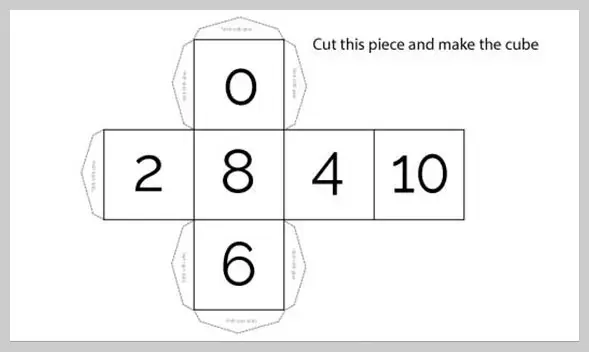
This worksheet can be seamlessly integrated into both home and classroom settings. The process involves two main stages: creating the dice and playing the game.
Creating the Dice: A Hands-On Craft
The first step is to prepare the custom dice. This part is excellent for developing fine motor skills and following multi-step instructions.
- Print the Template: Download and print the worksheet. For durability, consider printing on cardstock.
- Cut Out Carefully: Guide your child to carefully cut along the solid lines of the dice template. Ensure they cut out the entire net, including the tabs.
- Fold Precisely: Encourage precise folding along all the dotted lines. Folding away from you often helps create cleaner creases.
- Apply Adhesive: Use glue or tape on the designated tabs to assemble the cube. Press firmly to ensure the tabs stick well.
- Allow Drying Time: If using glue, allow sufficient time for it to dry completely before proceeding.
This construction phase is a valuable learning experience in itself. It teaches patience, precision, and the satisfaction of creating something functional.
Playing the Game: Rolling and Coloring
Once the dice is ready, the real fun begins!
- Explain the Goal: Show your child the circle on the worksheet filled with numbers. Explain that they will roll the dice and color the number that appears on top.
- First Roll: Have the child roll the dice.
- Identify the Number: Help them identify the number showing on the top face of the dice.
- Locate and Color: Guide them to find that number within the circle on the worksheet and color it in.
- Continue Rolling: Repeat the process until a desired number of circles are colored or the child loses interest.
Home Scenario: A Rainy Afternoon Activity
Imagine a rainy Saturday afternoon. Your child is getting restless. Pull out this worksheet! First, spend some time together constructing the dice – it’s a great bonding activity. Once the dice is ready, sit down with some crayons or colored pencils. Let your child roll the dice. “Wow, you rolled a 6! Can you find the 6 in the circle and color it?” The excitement of the roll and the satisfaction of coloring make this a perfect way to spend an hour productively, turning a potentially dull afternoon into a fun learning session.
Classroom Scenario: Small Group Math Center
In a kindergarten or first-grade classroom, this activity is ideal for a math center. Prepare a few pre-assembled dice to save time. Children can work in small groups of two or three. They take turns rolling the dice and coloring. This not only reinforces number recognition and the concept of even numbers but also encourages social interaction, turn-taking, and communication as they discuss their rolls and coloring choices. It’s a low-prep, high-engagement station that keeps little mathematicians busy and learning.
Understanding the Numbers: Focus on Even Numbers
The numbers featured on the dice (0, 2, 4, 6, 8, 10) are all even numbers. While the worksheet doesn't explicitly define 'even,' repeated exposure to these numbers in a game context helps children unconsciously absorb the pattern. As you play, you can subtly introduce the concept:
“Look, all the numbers on our dice are even numbers! That means we can share them equally with two friends.” Or, “Even numbers are special because they can be divided into two equal groups with nothing left over.” This gentle introduction can lay the groundwork for more formal learning about even and odd numbers later on.
Common Pitfalls and How to Avoid Them
Even with a fun activity like this, some challenges might arise. Being aware of them can help ensure a smoother learning experience:
- Cutting Difficulties: Very young children might struggle with precise cutting. Provide assistance or pre-cut the dice for them. Consider using safety scissors.
- Folding Issues: Creasing the paper incorrectly can make assembling the dice difficult. Demonstrate clear folding techniques.
- Number Confusion: Some children might confuse similar-looking numbers (like 6 and 9 if they were present, though not on this dice). Ensure they can clearly identify each number.
- Overwhelm: If the circle of numbers seems too busy, you can have the child focus on coloring just one or two numbers per turn, or use a smaller set of numbers on the worksheet if you adapt it.
- Lack of Engagement: If a child loses interest, don't force it. Take a break and return to the activity later, or try a different approach.
Encouraging Consistent Practice
Regular practice is key to reinforcing learning. Here are some ways to keep the momentum going:
- Make it a Routine: Incorporate the game into your weekly schedule, perhaps as a Friday math fun activity.
- Vary the Tools: Use different coloring tools – crayons, markers, colored pencils, or even small stickers to cover the numbers.
- Introduce Variations: Once they master this, you could create dice with different sets of numbers (e.g., odd numbers only, or numbers 1-6).
- Celebrate Success: Offer praise and encouragement for effort and completion. A simple “Great job coloring all the even numbers!” goes a long way.
- Connect to Real Life: Point out even numbers in everyday situations – pairs of shoes, two cookies, four wheels on a car.
Extended Play and Learning Activities
Take the learning even further with these engaging extensions:
- Odd Number Dice: Create a second dice with odd numbers (1, 3, 5, 7, 9, 11 – or adjust to age appropriateness) and play a game where they color odd numbers.
- Number Bonds: If playing with two dice (one even, one odd), ask children to add the numbers together and color the sum. This introduces addition concepts.
- Storytelling: Create a story around the numbers rolled. “The number 8 was feeling lonely, so it decided to go for a colorful walk around the number circle!”
- Sorting Game: After coloring, have children cut out the colored circles and sort them into groups (e.g., numbers less than 5, numbers greater than 5).
- Pattern Creation: Use the colored circles to create patterns on a separate sheet of paper.
Clear Download Instructions
Getting this fun learning tool is simple! To download the "Color circle of number by rolling dice (cube)" worksheet:
- Click on the download link provided on the website.
- The file will typically download as a PDF.
- Ensure your printer is ready. Select the "print" option.
- For best results and durability, print on heavier paper or cardstock.
You'll receive a high-quality, printable PDF that is completely free of watermarks and advertisements, ready for immediate use in your home or classroom. It’s an accessible way to bring engaging math practice to your children.
This Even Number Dice Game worksheet offers a delightful blend of craft, game, and learning. It’s a testament to how simple materials can foster significant development in young minds. Enjoy the process of rolling, coloring, and discovering numbers together!
For more engaging educational resources, explore our free worksheet library, which features a wide array of activities for various skill levels.
Helpful worksheet links
Popular Worksheets
Printable resources families and teachers are downloading now.
 Free
Free
 Free
Free