
Amazing Number 4 to 9 Dice Game: Fun & Skill Building!

Ignite Learning with a Number 4 to 9 Dice Game Adventure!
Welcome to an engaging educational experience designed to make learning numbers a thrilling pursuit! This printable worksheet introduces a unique Number 4 to 9 Dice Game, blending the excitement of dice rolling with essential number practice. It’s more than just a game; it’s a pathway to developing critical early math skills, enhancing fine motor control, and fostering a positive attitude towards learning. Prepare to see your child’s confidence grow as they roll, count, and color their way to mathematical understanding.
This resource is thoughtfully crafted to provide a hands-on, interactive approach to number mastery. By combining a visual number circle with a customizable dice net, children are actively involved in the learning process. This active participation is key to deeper comprehension and long-term retention. Let’s explore how this simple yet powerful tool can become a favorite in your learning toolkit, whether at home or in the classroom.
What's Inside This Engaging Activity?
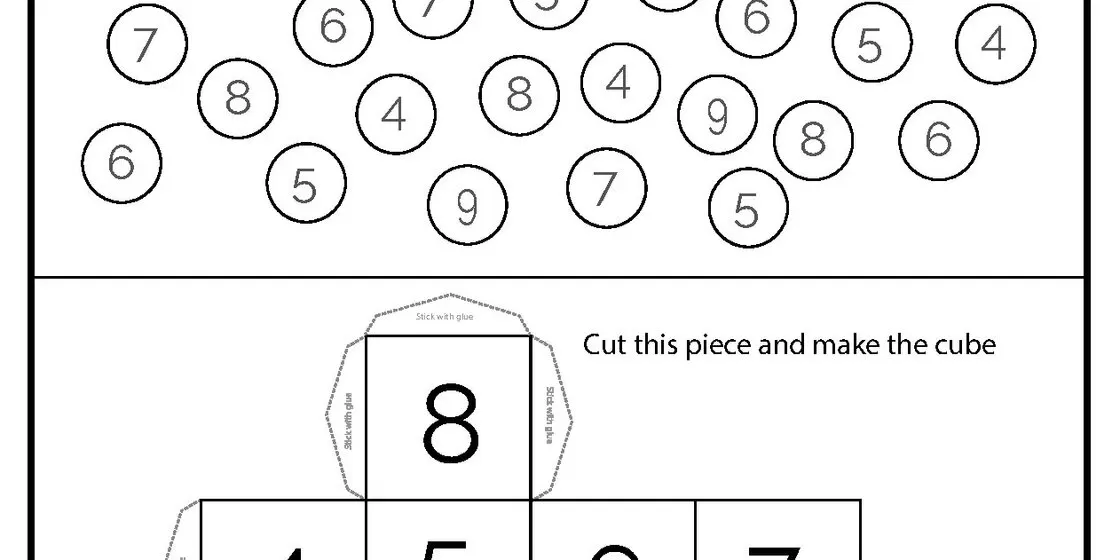
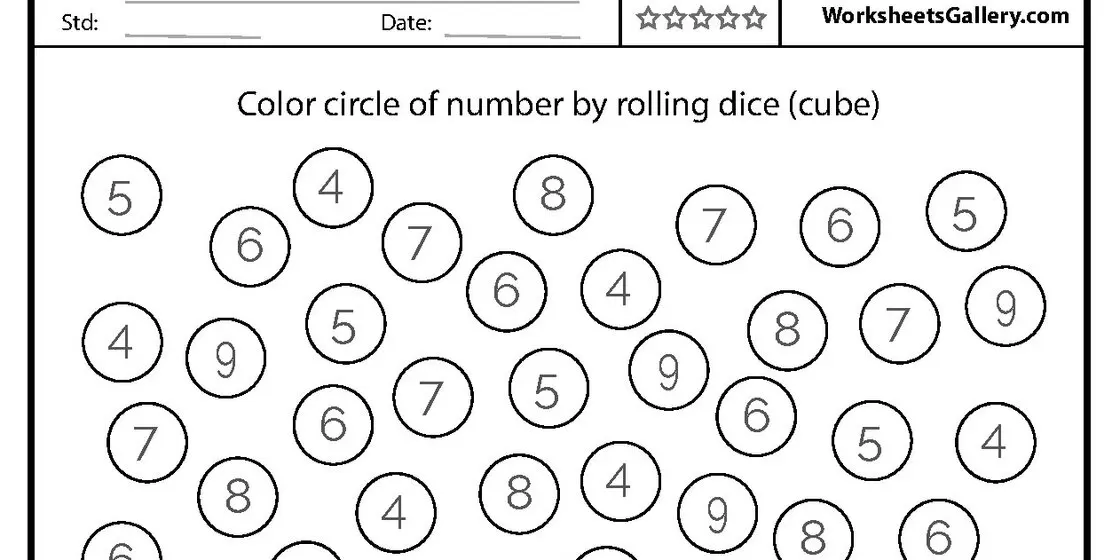
- A vibrant circle filled with numbers 4 through 9, ready for coloring.
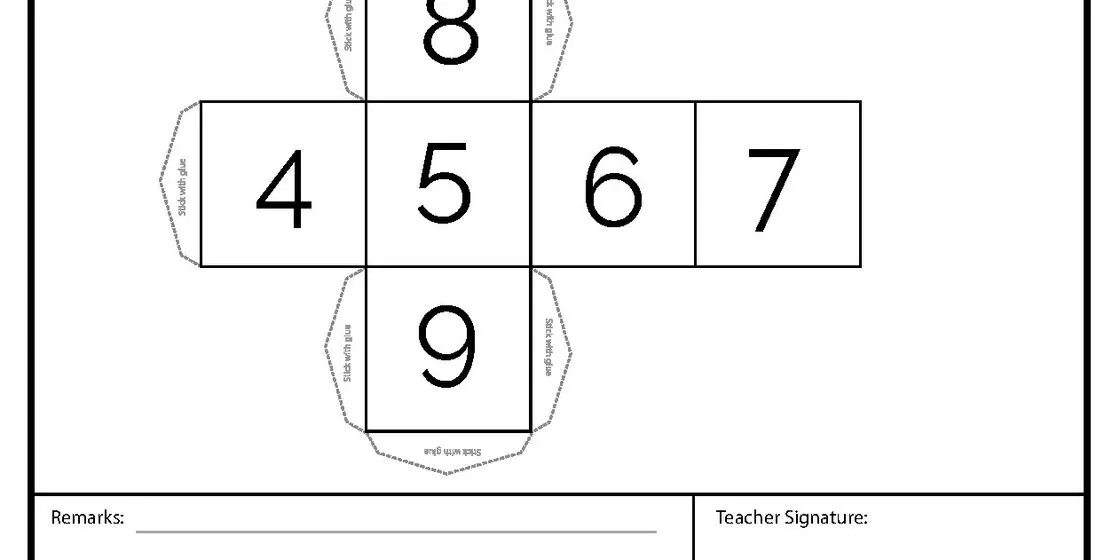
- A printable net for constructing a custom dice featuring numbers 4 through 9.
- Clear instructions to guide the play and learning process.
Why This Game is a Winner
This game offers a delightful blend of chance and skill, making it highly appealing to young children. The tactile experience of cutting, folding, and assembling the dice, followed by the anticipation of rolling it, creates a multi-sensory learning environment that captures attention and promotes active engagement.
Mastering Numbers 4 to 9: A Deeper Look
The core of this worksheet lies in its ability to reinforce the recognition and understanding of numbers 4 through 9. These numbers are crucial building blocks in a child's mathematical journey, forming the foundation for more complex concepts like addition, subtraction, and place value. By engaging with these specific numbers through a fun game, children develop a solid grasp of their quantity, sequence, and visual representation.
The game encourages children to connect the abstract concept of a number with a concrete action – rolling the dice. When a child rolls a '6', for instance, they then locate and color the circles marked with '6' in the main activity area. This direct link between the number rolled and the subsequent action solidifies their understanding and makes the learning process intuitive and memorable. The repetition inherent in playing the game further strengthens recall and fluency.
Key Learning Benefits Your Child Will Gain
Number Recognition & Counting
Children will become proficient in identifying and differentiating numbers 4 through 9. Each roll of the dice and subsequent coloring action reinforces counting skills and number sequence.
Fine Motor Skill Development
The act of cutting out the dice net, folding it precisely, and applying glue or tape requires and develops fine motor control. Coloring within the circles also hones hand-eye coordination and dexterity.
Hand-Eye Coordination
Precisely coloring within the designated circles after rolling the dice significantly improves a child's ability to coordinate visual information with physical movements.
Following Instructions
The game requires children to follow a sequence of steps: cut, fold, assemble, roll, identify, and color. This builds their ability to understand and adhere to instructions, a vital skill for academic success.
Problem-Solving & Critical Thinking
Deciding where to cut, how to fold, and which numbers to color based on the dice roll involves basic problem-solving and decision-making processes.
Patience and Turn-Taking
Playing this game, especially with others, naturally teaches patience as children wait for their turn to roll the dice and encourages cooperation.
Setting Up and Playing: A Step-by-Step Guide
Getting started with the Number 4 to 9 Dice Game is straightforward and can be adapted for both individual and group play.
Preparation Steps:
- Download and Print: Access the worksheet from the provided link. Ensure you print it on standard paper. For a sturdier dice, consider cardstock.
- Cut Out the Dice Net: Carefully cut along the solid lines of the dice net provided on the worksheet. Adult supervision may be needed for younger children.
- Assemble the Dice: Fold along the dotted lines and use glue or tape to secure the tabs, forming a complete cube. Ensure all sides are securely attached.
- Prepare the Game Area: Have crayons, colored pencils, or markers ready. The worksheet features a circle of numbers 4 through 9.
How to Play:
- The first player rolls the assembled dice.
- Identify the number that lands face-up on the dice.
- Find all the circles with that corresponding number in the main activity area of the worksheet.
- Color in all the identified circles. For instance, if a '7' is rolled, color all the '7' circles.
- The next player takes their turn.
- Continue playing until all numbers have been rolled and colored, or until a set time limit is reached. The goal is participation and practice, not necessarily completion.
Scenarios for Home and Classroom Success
This versatile worksheet can be seamlessly integrated into various learning environments.
Home Learning Fun
Imagine a rainy afternoon. Instead of screen time, spread out the worksheet, scissors, glue, and crayons. Your child can independently cut and assemble the dice, a rewarding task in itself. Then, the fun begins with rolling and coloring. This activity provides a wonderful opportunity for one-on-one interaction, where you can ask questions like, “What number did you roll? How many circles will you color now?” It's a perfect way to reinforce learning in a relaxed, playful setting. You can even extend the game by having them count how many circles of each number they colored at the end.
Consider using this game as a reward for completing other tasks, or as a quiet activity during designated learning times. It's also a great way to keep little hands busy and minds engaged while you prepare meals or manage other household chores.
Classroom Engagement
In a classroom setting, this worksheet is ideal for small group activities or as a station during math centers. Divide students into groups of 2-4, each with a dice to assemble and a worksheet. This fosters collaboration and peer learning. The teacher can circulate, offering support, observing skill development, and facilitating discussions about the numbers. For larger classes, consider pre-assembling a few dice to save time. You could also use this as a transition activity or a fun way to practice number recognition at the beginning of a math lesson. It’s a low-prep, high-impact activity that can be used repeatedly throughout the week.
This game can also be a great tool for differentiated instruction. For students who need more practice with specific numbers, you can focus the game on those numbers. For those ready for a challenge, you could introduce a second dice with different numbers or have them add the numbers from two rolls.
Developing Essential Skills Beyond Numbers
While the primary focus is on numbers 4-9, the Number 4 to 9 Dice Game actively cultivates a range of crucial developmental skills.
Cognitive Development
- Number Sense: Deepens understanding of quantity, numeral identification, and the sequence of numbers.
- Memory: Recalling which numbers have been rolled and colored.
- Attention Span: Maintaining focus during the dice rolling and coloring process.
- Logical Reasoning: Understanding the cause-and-effect of rolling the dice and coloring corresponding numbers.
Motor and Language Skills
- Fine Motor Skills: Essential for cutting, folding, gluing, and precise coloring. These skills are foundational for handwriting.
- Gross Motor Skills: While less emphasized, the act of rolling the dice involves larger arm movements.
- Language Development: Encourages the use of number names, descriptive words (e.g., "I rolled a six!"), and following verbal instructions.
- Spatial Awareness: Understanding how to assemble the 3D cube from a 2D net.
Common Pitfalls and How to Navigate Them
Even with simple activities, challenges can arise. Being aware of common issues can help ensure a smooth and productive learning experience.
Potential Challenges & Solutions:
- Difficulty cutting the dice net: Younger children may struggle with precise cutting. Provide child-safe scissors and offer assistance, or pre-cut the nets for them.
- Trouble folding or gluing the dice: Reinforce the folding lines with a ruler before folding. Demonstrate the gluing process, emphasizing where to apply the adhesive for a secure hold. Alternatively, use tape for easier assembly.
- Confusing similar numbers (e.g., 6 and 9): This is a common challenge. Gently point out the difference, perhaps by drawing a small dot above the '9' to remind them of its orientation. Consistent practice with these numbers will help.
- Losing focus or getting distracted: Keep game sessions short and engaging. Break down the activity into smaller steps if needed. Positive reinforcement and enthusiastic participation from the adult can also help maintain focus.
- Frustration with dice rolls: If a child rolls a number they have already colored extensively, frame it positively: “Great! You’re a master at coloring those numbers!” or suggest they try to count how many more of that number they need to color.
Encouraging Continued Practice
Consistency is key to mastering any skill. Here are ways to encourage your child to revisit this fun dice game:
Make it a Routine
Integrate the game into your daily or weekly schedule, perhaps as a “Math Game Friday” or a “Quiet Time Activity.”
Celebrate Progress
Acknowledge and praise their efforts and achievements, no matter how small. A simple “Great job coloring those sevens!” can go a long way.
Vary the Play
Once they’ve mastered the basic game, introduce variations. Use different colored markers for each number, or time their coloring. This keeps the activity fresh and exciting.
Connect to Real Life
Point out numbers 4-9 in everyday situations – on clocks, signs, or during shopping trips. This reinforces the relevance of their learning.
Extend the Learning: Fun Activities and Games
Take the learning from this worksheet even further with these creative extensions:
Creative Play Ideas:
- Number Scavenger Hunt: Hide small objects (like blocks or buttons) around the room. Call out a number (4-9) and have the child find that many objects.
- Dice Tower Building: After assembling the dice, challenge children to build a tower using blocks, stacking them according to the number rolled.
- Storytelling with Dice: Use the dice to create a story. Roll the dice and assign a story element to each number (e.g., 4 = character, 5 = setting, 6 = problem).
- Number Matching Game: Write numbers 4-9 on separate cards. Have the child roll the dice and match the rolled number to the corresponding card.
- DIY Dice Variations: Create additional dice with different number combinations or even simple math equations (e.g., 2+2, 5-1) for older children. This builds on the foundational skills learned from the initial worksheet. Explore more dice games like the Number 1 to 6 Dice Game or the Amazing Even Number Dice Game for further practice.
Why Children Adore This Activity
Children are naturally drawn to games that involve chance, hands-on creation, and vibrant visuals. The Number 4 to 9 Dice Game delivers on all fronts:
- Element of Surprise: The unpredictability of the dice roll keeps them engaged and excited.
- Hands-On Creation: Building their own dice provides a sense of ownership and accomplishment.
- Visual Appeal: The colorful number circle and the process of coloring are visually stimulating.
- Sense of Achievement: Successfully completing the steps, from assembly to coloring, provides positive reinforcement.
- Playful Learning: It feels like play, not work, making learning enjoyable and less intimidating.
Age Appropriateness
This worksheet is ideally suited for children aged 4-6 years old. At this stage, children are typically developing their number sense, fine motor skills, and ability to follow multi-step instructions. Younger children (3-4) might require more assistance with cutting and assembly, while older children (5-6) can engage with the game more independently and may benefit from the extended activities.
Download Instructions
Ready to bring this exciting learning game into your home or classroom? Simply click the download link below. You'll receive a high-quality, printable PDF file. This download is completely free, contains no watermarks, and is free from advertisements, ensuring a clean and uninterrupted learning experience for your child. Print it on standard paper or cardstock for best results.
No ads, no watermarks, just pure learning fun!
Related Resources
- Master Number 1 to 10 Tracing
- Trace 5 Essential Lines and Curves
- A to Z Alphabets Tracing Worksheets
- Explore our full Free worksheet library for more educational activities.
Popular Worksheets
Printable resources families and teachers are downloading now.
 Free
Free
 Free
Free