
Music Picture Routes: 5 Delightful Instrument Journeys
Add the musical key to a 25-sheet collection at $3. The combined clean PDF preserves the note symbol alongside the instrument pictures and includes the remaining supplied code-line themes in numbered page order.
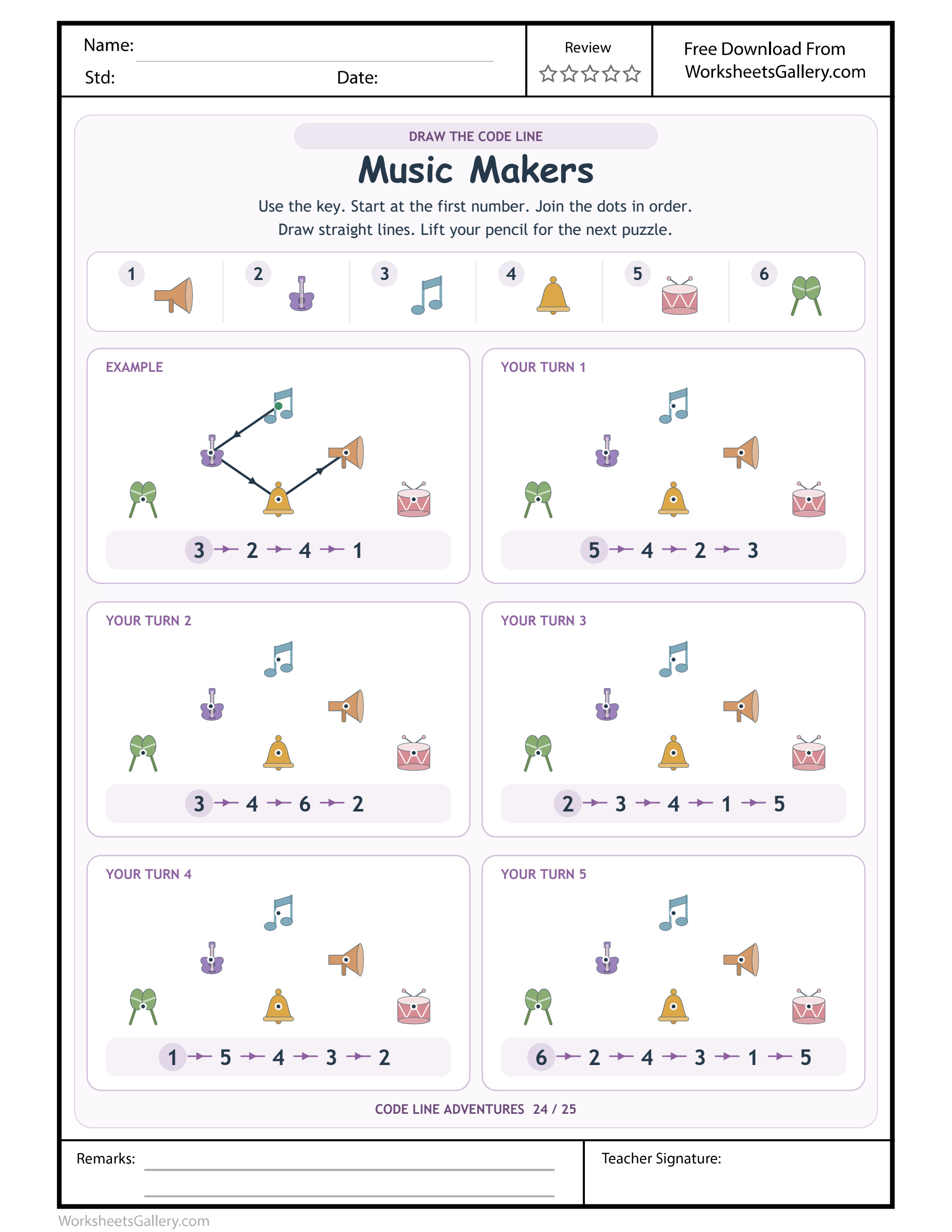
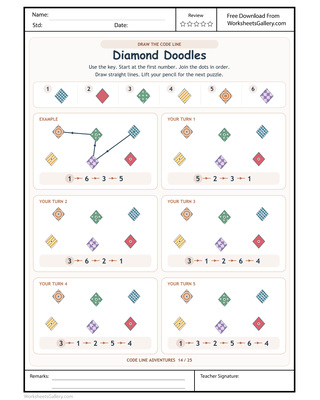
A musical note can be a route stop even though it is not an instrument to hold. Music Picture Routes combines horn, guitar, note, bell, drum and maracas in a six-entry number legend. Children translate five short practice codes and join the matching centre dots with straight lines, guided by a compact worked example. The music theme supplies familiar words and imaginative sounds, but the drawing task does not ask for rhythm notation or a performance. Each printed strip decides the visiting order, including where the note belongs among the pictured instruments in that particular journey.
Name the note as one legitimate picture choice — Music Picture Routes
The third Music Picture Routes entry is a note symbol. Introduce it alongside the instrument pictures and show its centre dot. A child may correctly notice that it differs from the objects, while still using it as a destination selected by three. The key defines the available route choices.
In Music Picture Routes, the numeral beside drum does not request five drum beats. It identifies that picture for lookup. Read the code as destinations rather than a rhythm to perform. Optional sound play can happen afterwards, with its own separate invitation.
Music Makers legend at a glance
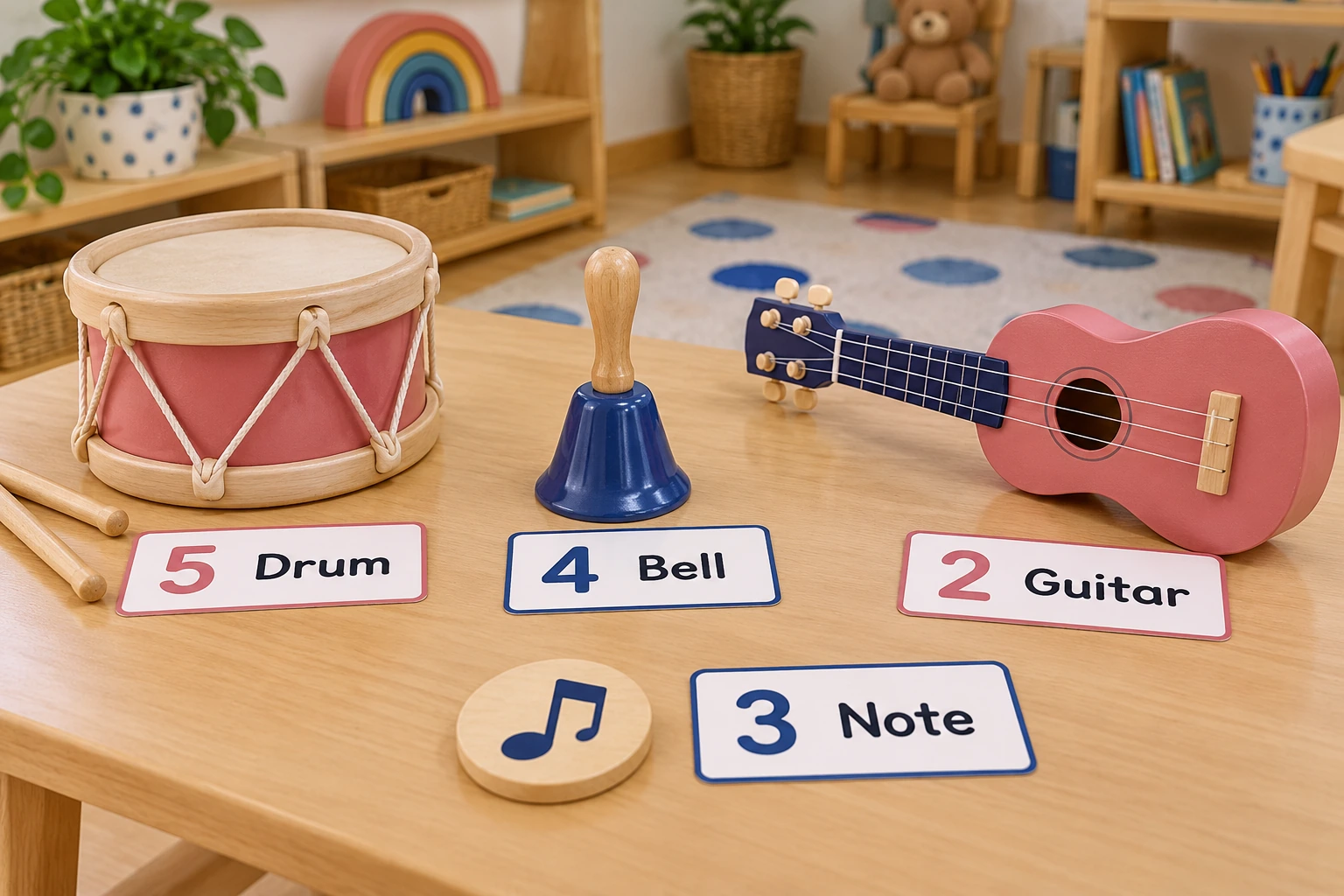
| Music Makers numeral | Keyed picture |
|---|---|
| 1 | horn |
| 2 | guitar |
| 3 | note |
| 4 | bell |
| 5 | drum |
| 6 | maracas |

Music Makers example before independent drawing
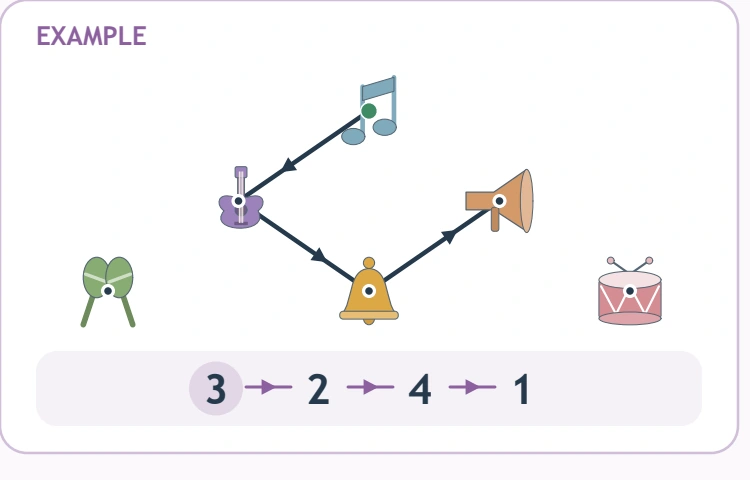
Music Makers demonstrates 3 → 2 → 4 → 1. The Music Makers itinerary is note → guitar → bell → horn. In Music Makers, the green start selects note. Music Makers arrows lead to horn. Music Makers has 3 worked segments. The Music Picture Routes example supports finger rehearsal. Inspect the Music Makers practice strip separately.
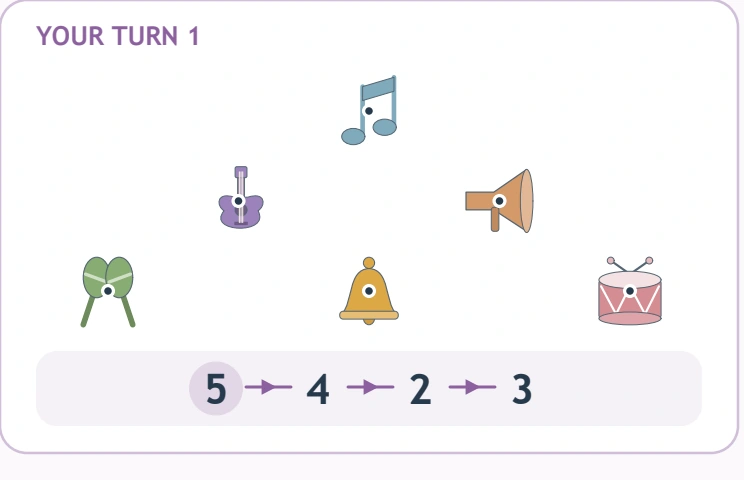
Music Makers — practice 1
Practice 1 on Music Makers: 5 → 4 → 2 → 3. Translate those Music Picture Routes destinations as drum → bell → guitar → note. Begin on drum for Music Makers; next locate bell. The Music Makers centre-to-centre connections are drum then bell; bell then guitar; guitar then note. Segment count for Music Picture Routes: 3, from 4 listed stops. The Music Makers endpoint is note. Against the Music Makers strip, verify final 3.
Music Picture Routes leaves horn, maracas outside practice 1. Leave these Music Makers alternatives unvisited. Practice 1 for Music Makers requests 5 → 4 → 2 → 3.
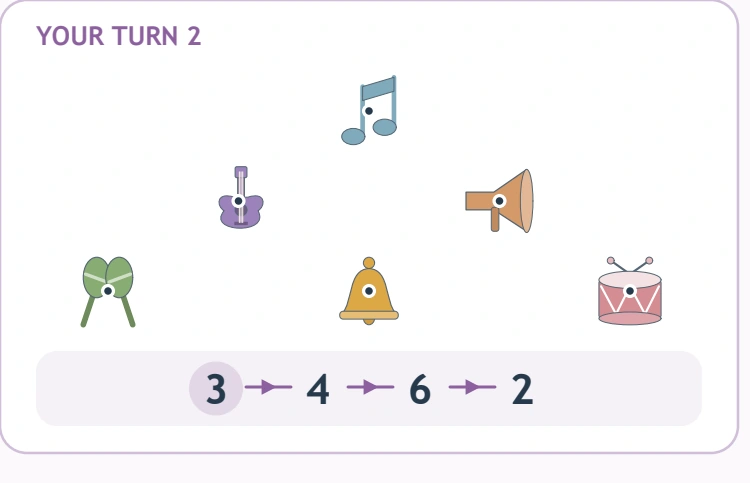
Music Makers — practice 2
Practice 2 on Music Makers: 3 → 4 → 6 → 2. Translate those Music Picture Routes destinations as note → bell → maracas → guitar. Begin on note for Music Makers; next locate bell. The Music Makers centre-to-centre connections are note then bell; bell then maracas; maracas then guitar. Segment count for Music Picture Routes: 3, from 4 listed stops. The Music Makers endpoint is guitar. Against the Music Makers strip, verify final 2.
Music Picture Routes leaves horn, drum outside practice 2. Leave these Music Makers alternatives unvisited. Practice 2 for Music Makers requests 3 → 4 → 6 → 2.
Music Makers — practice 3
Practice 3 on Music Makers: 2 → 3 → 4 → 1 → 5. Translate those Music Picture Routes destinations as guitar → note → bell → horn → drum. Begin on guitar for Music Makers; next locate note. The Music Makers centre-to-centre connections are guitar then note; note then bell; bell then horn; horn then drum. Segment count for Music Picture Routes: 4, from 5 listed stops. The Music Makers endpoint is drum. Against the Music Makers strip, verify final 5.
Music Picture Routes leaves maracas outside practice 3. Leave these Music Makers alternatives unvisited. Practice 3 for Music Makers requests 2 → 3 → 4 → 1 → 5.
Music Makers — practice 4
Practice 4 on Music Makers: 1 → 5 → 4 → 3 → 2. Translate those Music Picture Routes destinations as horn → drum → bell → note → guitar. Begin on horn for Music Makers; next locate drum. The Music Makers centre-to-centre connections are horn then drum; drum then bell; bell then note; note then guitar. Segment count for Music Picture Routes: 4, from 5 listed stops. The Music Makers endpoint is guitar. Against the Music Makers strip, verify final 2.
Music Picture Routes leaves maracas outside practice 4. Leave these Music Makers alternatives unvisited. Practice 4 for Music Makers requests 1 → 5 → 4 → 3 → 2.
Music Makers — practice 5
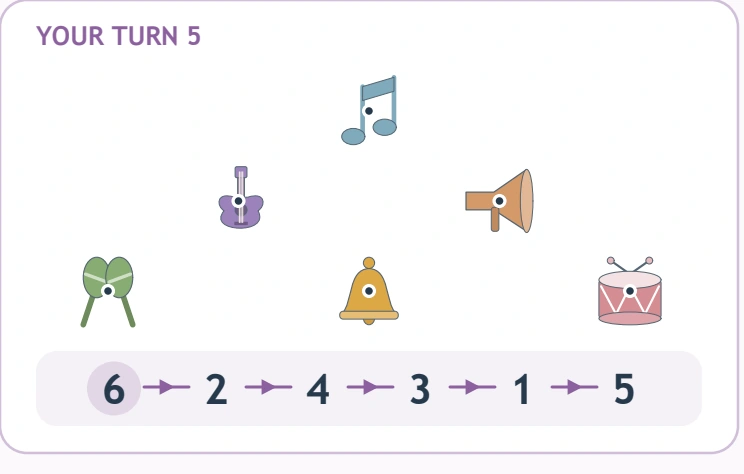
Practice 5 on Music Makers: 6 → 2 → 4 → 3 → 1 → 5. Translate those Music Picture Routes destinations as maracas → guitar → bell → note → horn → drum. Begin on maracas for Music Makers; next locate guitar. The Music Makers centre-to-centre connections are maracas then guitar; guitar then bell; bell then note; note then horn; horn then drum. Segment count for Music Picture Routes: 5, from 6 listed stops. The Music Makers endpoint is drum. Against the Music Makers strip, verify final 5.
Music Makers uses every Music Picture Routes entry in practice 5 of Music Makers: 6 → 2 → 4 → 3 → 1 → 5. First Music Makers selection: maracas; final selection: drum.
Six skills to listen and look for
- Accepting the supplied symbol set. Music Picture Routes includes note alongside instruments. A child can identify that difference and still follow the legend, using the rule actually supplied rather than rejecting a valid picture choice.
- Purposeful vocabulary. During Music Picture Routes, naming bell or maracas helps another person locate a stop. Add unfamiliar words naturally while accepting a precise point or a familiar home-language description.
- Ordered interpretation. The Music Picture Routes strip can rearrange the same musical pictures across panels. Following its actual order gives each journey a different set of connections, even though the key remains available.
- Visual place-keeping. A finger beneath the Music Makers code can identify the current numeral. This supports returning after a glance at the legend without demanding full-sequence memorisation.
- Controlled movement. Each pictured centre provides a landing target. Locate the destination first, then draw comfortably toward it, recognising a correct itinerary even when a segment is slightly uneven.
- Evidence-based checking. Compare a drawn music segment with its two adjacent numerals. A local mismatch can be explained and repaired without treating every successful connection as part of the error.
Amir's imagined music-table visit
Imagine Amir studying Music Picture Routes at home and asking what sound the note makes. His caregiver explains that here it is a picture label for a destination, then points to three in the legend. They can imagine a sound later; first Amir finds the note's central target in the selected field.
Amir reads a Music Picture Routes pair using drum and bell and finger-rehearses the connection. The caregiver supplies a word when needed but leaves the matching and movement to him. They finish one route, identify its endpoint and choose whether another panel would still feel enjoyable.
Readiness and a quiet first setup
Children roughly four to seven can explore Music Picture Routes with flexible support for numeral names, musical vocabulary and hand comfort. Knowing how to play an instrument is unnecessary. A child can show a correct match by pointing, even when the precise object word or small pencil movement is still developing.
Prepare Music Picture Routes with the upper key visible and the sheet steady. Finger-follow the Music Makers worked path before selecting an independent panel and locate its first pair. Draw between centres, inspect the next numeral and lift before another box. Keep the remaining routes for later if attention or comfortable grip begins to fade.
A classroom picture orchestra, imagined
Picture a teacher introducing Music Picture Routes to a small group by asking what differs about the note entry. Children name that it is a symbol, then show why it still belongs in the code. The teacher points to the legend rather than changing the picture set to contain only instruments.
Each child then draws on an individual Music Picture Routes sheet while a partner listens to a short itinerary. The teacher distinguishes unfamiliar vocabulary from an incorrect number match or an aiming difficulty. A specific clue addresses the observed need, and children can share one successful check without completing every route together.
Four musical extensions with different instructions
Give a toy conductor a picture itinerary
Use large labelled music cards inspired by Music Picture Routes. Ask a toy to visit two named destinations and stop, then let the child direct the adult. Include note as a valid station so the separate game reflects the actual symbol set.
Compare a route with a sound game
After Music Picture Routes, invite a short clap or pretend-instrument response as a different activity. Discuss how that sound instruction differs from joining pictured centres. Keep numeral labels from automatically becoming beat counts unless your separate game explicitly says so.
Describe a musical picture through a clue
Offer a visible clue for a Music Picture Routes entry, such as strings, a handle or paired shakers. A partner finds its key numeral. Supply precise vocabulary afterwards, using the game to support communication without requiring musical expertise.
Help a puppet omit the note
A puppet skips note during a Music Picture Routes route because it wants instruments only. The child checks whether three appears and shows the relevant legend entry. The puppet restores that stop, giving the category difference a playful explanation rather than treating the page as inconsistent.
Keep the music theme from obscuring the task
Common Music Picture Routes slips include interpreting numerals as beat counts, skipping the note or outlining instrument edges. Return to the current key entry and centre target. If the requested picture is already selected correctly, rehearse the movement instead of explaining every numeral again.
Offer short Music Picture Routes returns after a music story or quiet pretend-orchestra game. Let the child choose a field, request a word and stop comfortably. A clear picture instruction is worth celebrating. Praise the specific lookup or correction, leaving room for sound play as an optional activity afterwards.
Download the musical-picture printable
Choose the original Music Picture Routes sample through its sample option. Eligible members obtain the clean Music Makers PDF through sign-in; its printable page removes website domain branding and watermarks and contains no ads. The separate $3 collection brings all twenty-five supplied themes together in one file.
Save Music Picture Routes, inspect portrait print preview and preserve the full outer border and legend. Colour supports clear picture identification. Check a trial Music Makers print and change its scale if the frame is trimmed before preparing more pages for a group.
Further play with a visible instruction
Compare Music Picture Routes with Exact Path Detective. After Music Makers, try Castle Color Codes. For Music Makers, consider Number Letter Switching.
For broader shared activities around Music Picture Routes, adults may consult NAEYC's family resource library and PBS Parents' wider play resources. Use those optional ideas for conversation or pretend performance while this worksheet's own key continues to decide the drawn musical itinerary.
Popular Worksheets
Printable resources families and teachers are downloading now.
 Free
 Free
 Free
 Free