
Code Line Collection: 25 Brilliant Picture-Key Journeys
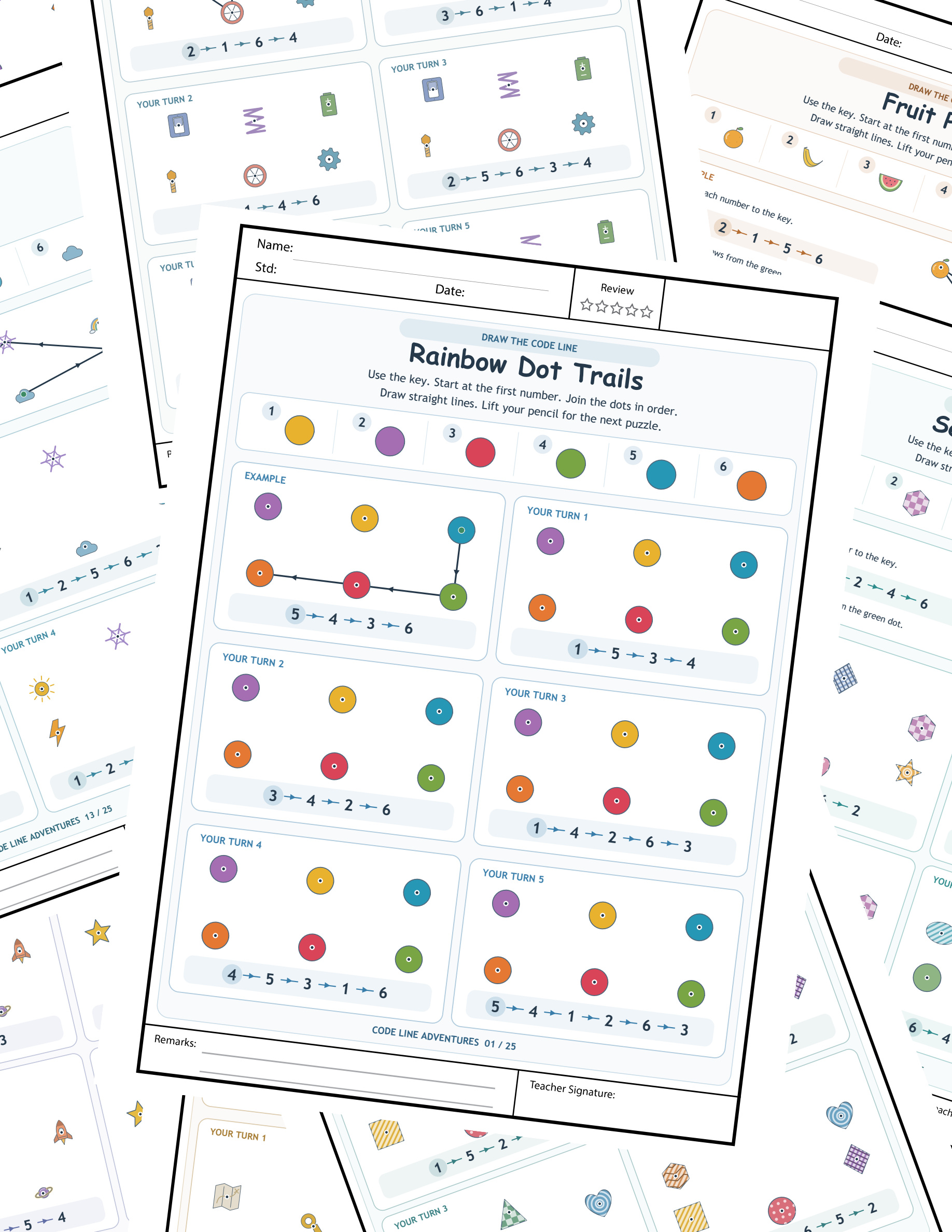
A green dot offers a beginning; a little number strip decides the journey. The Code Line Collection gathers twenty-five picture-key drawing sheets into one clean printable PDF, giving families and teachers a varied supply of short routes rather than one enormous sitting. Children translate numerals into colours, objects or patterned shapes, then connect the indicated centres with straight lines. A worked example accompanies every theme. From a rainbow tray to a robot workshop, the scenery changes while the useful habit remains: consult the current key before choosing the next stop.
A $3 library of small drawing decisions — Code Line Collection
One purchase provides the complete twenty-five-page Code Line Collection, ordered from Rainbow Dot Trails to Pattern Parade. It is a single PDF containing the supplied activity pages, with website branding and domain text removed. There are no additional worksheets hidden behind the collage, and the supporting illustrations on this page are discussion pictures rather than extra printable exercises.
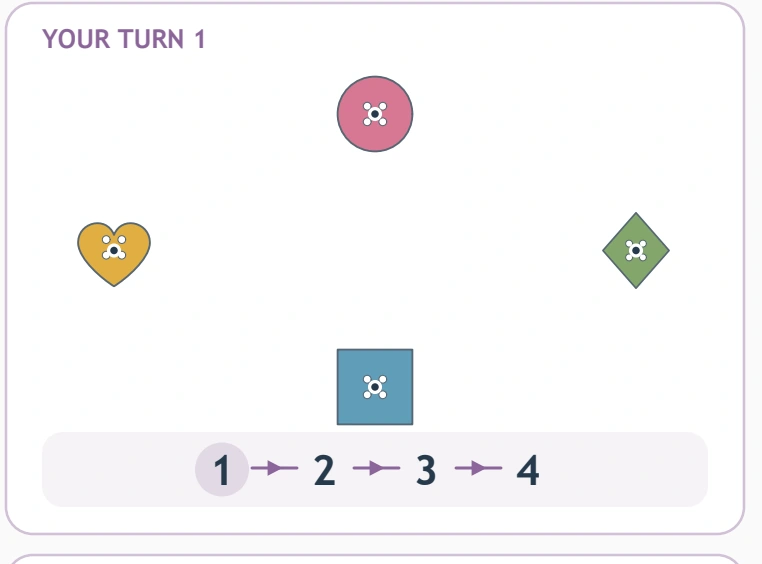
Within Code Line Collection, most keys assign six numbers to six pictures. Three deliberate variations matter: Starry Path Party and Rainbow Ribbon Roads each have five entries; Button Box Trails has four. Counting every key as six would change those tasks. The page number identifies the sheet, not a difficulty score, and the themes need not be attempted in numerical order.
What stays consistent across the changing scenes: Code Line Collection
The central routine in Code Line Collection is a lookup: find a numeral in the instruction, match it to the key, locate that picture inside the current panel, then join its centre to the next indicated centre. Practice dots are picture centres; they are not all individually numbered. Numbers belong to the legend and the route strip.
Some Code Line Collection codes descend, skip values or change direction. Reading 5 → 4 → 3 → 6 as 1 → 2 → 3 → 4 would produce a different path. Each boxed puzzle also starts afresh. Lift the pencil between puzzles, and leave any unlisted pictures unconnected in that particular route.

Choose a theme by the attention it asks for
| Collection choice | What to notice | Useful opening invitation |
|---|---|---|
| Rainbow Dot Trails | Six colour-to-number matches | Locate teal without counting across the panel. |
| Fruit Picnic and Garden Friends | Recognisable objects in a wide example | Name the pictured destination before drawing. |
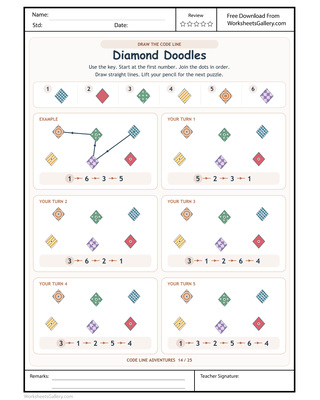
| Diamond Doodles | Different interiors within one shape family | Find a pattern detail that distinguishes two diamonds. |
| Starry Path Party | Five textured stars | Check which star the numeral identifies. |
| Button Box Trails | Four button shapes | Separate a four-stop route from four drawn segments. |
| Music Makers | Instruments together with a note symbol | Use the key even when a picture has another familiar name. |
The Code Line Collection includes both compact examples with five practice fields and wide examples with four. A smaller panel count does not automatically mean easier work: a five-entry patterned key may demand closer looking than a six-object legend. Choose using the child's response to the pictures, numeral lookup and pencil movement together.
The full selection, without invented extras
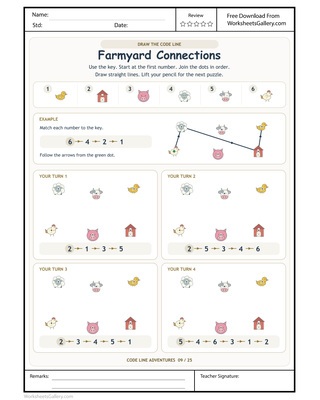
Early Code Line Collection choices include Rainbow Dot Trails, Shape Playground, Fruit Picnic, Ocean Adventure, Garden Friends, Toy Box Trails, Space Signals and Sweet Shop Paths. Farmyard Connections, Travel Tracks, School Supply Quest and Cozy Closet Codes bring familiar everyday pictures into the same instruction-following format.
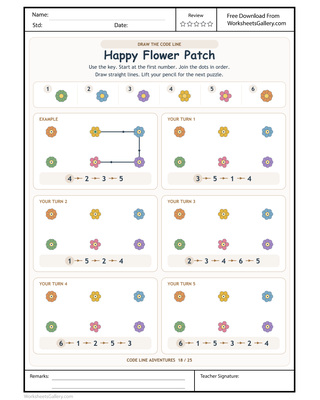
Weather Wonders introduces another symbol set. Diamond Doodles, Starry Path Party, Balloon Festival and Seashell Shape Codes invite closer visual discrimination; despite its title, Seashell Shape Codes contains patterned geometric figures. Happy Flower Patch uses flower pictures. Button Box Trails, Robot Repair Routes, Rainbow Ribbon Roads, Woodland Wander, Treasure Island Codes, Music Makers and Pattern Parade complete Code Line Collection.
Watch the example explain a route
Fruit Picnic offers a useful Code Line Collection demonstration: 2 → 1 → 5 → 6 becomes banana, orange, apple and pear. Four picture stops produce three connecting segments. The green starting point and the printed arrowheads make that order visible. Ask the child to trace the existing route with a finger before beginning an unanswered panel.
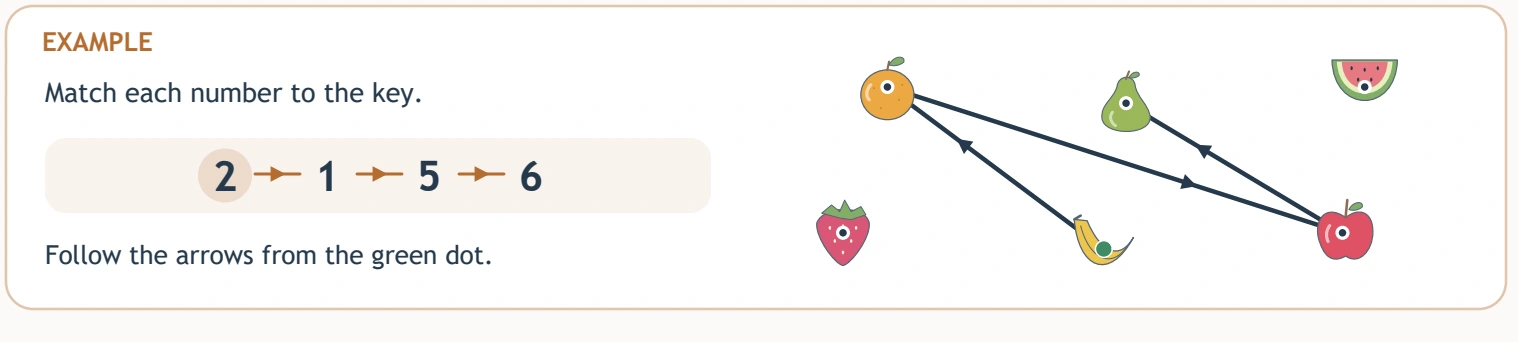
For a first Code Line Collection session, resist explaining all twenty-five legends. Pick one page, place it flat, and compare just two adjacent entries from its code. The adult can hold a finger under the relevant numeral while the child finds the corresponding picture. This divides remembering the route from controlling a pencil without changing the requested destinations.
Six kinds of useful practice
Symbol reference instead of guessing
Looking back at a Code Line Collection legend gives a concrete reason to use a reference. A child who returns to the key before selecting a picture is making an informed choice. Gradually reduce pointing help, but keep the legend available throughout the activity.
Ordered thinking that survives a tempting shortcut: Code Line Collection
The Code Line Collection makes order consequential. Visiting the same objects in a different sequence changes the drawing. Talking about the first destination, the next pair and the final stop provides manageable opportunities to follow instructions without introducing arithmetic the pages do not ask for.
Visual discrimination with meaningful details
On textured Code Line Collection pages, dots, rings, stripes and checks help distinguish otherwise similar silhouettes. Describe the detail actually printed instead of relying only on colour. A child can point or use their own words; formal pattern terminology is not a prerequisite.

Controlled starts and purposeful finishes
Each Code Line Collection segment supplies a visible target for the hand. The aim is a deliberate centre-to-centre movement, not ruler-perfect artwork. Notice whether the child looks toward the destination before moving and slows near the target. Avoid pressing the pencil into the paper to obtain a darker line.
Spoken reasoning attached to visible evidence: Code Line Collection
Picture names make Code Line Collection explanations concrete: “I chose the pear because the next numeral is six.” Such remarks reveal more than a finished page alone. Adults can model one explanation, then accept a gesture, a short phrase or a home-language response as a valid way to participate.
Review as a recoverable habit: Code Line Collection
A wrong turn in Code Line Collection can be inspected one pair at a time. Compare the route strip with the drawn connections, identify the first disagreement and repair that part. Treating the mistake as a local decision keeps one misplaced line from becoming a judgement about the whole learner.
Readiness, comfort and sensible stopping places: Code Line Collection
An approximate age range for Code Line Collection is four to seven, with adult support adjusted to the individual. More useful than age alone are three observations: can the child match some small numerals, locate a repeated picture, and move a pencil between visible targets? If one part is unfamiliar, an adult can supply it while the child practises another.
For Code Line Collection, a finger route can come before a drawn route. Cover unused lower panels with scrap paper if the full sheet feels crowded, leaving the current legend accessible. Stop when the child loses interest or hand comfort. Completing one panel with a clear explanation is a reasonable session; the remaining pages are options, not a completion deadline.
Two imagined ways the collection could be used: Code Line Collection
Remi chooses a home-library page
In this imagined home scene, Remi selects the button sheet from Code Line Collection because the four shapes are easy to name. A learning partner checks the key with Remi and asks for the first two destinations. After one route, Remi starts drawing toward the next box. The adult points out its separate code, and Remi lifts the pencil to begin again. They keep the sheet for another day instead of finishing every field immediately.
A classroom keeps selection separate from speed: Code Line Collection
Picture a teacher offering three Code Line Collection themes at a small table: fruit, weather and diamonds. Children choose a scene, inspect its own legend and explain one next stop to a partner. The teacher watches whether difficulty comes from naming, number lookup or hand movement. A child who needs spoken numeral support receives it privately. Finished panels are discussed for their instruction order, with no race to complete the stack.
Five off-page invitations for another day: Code Line Collection
Make a tiny route library
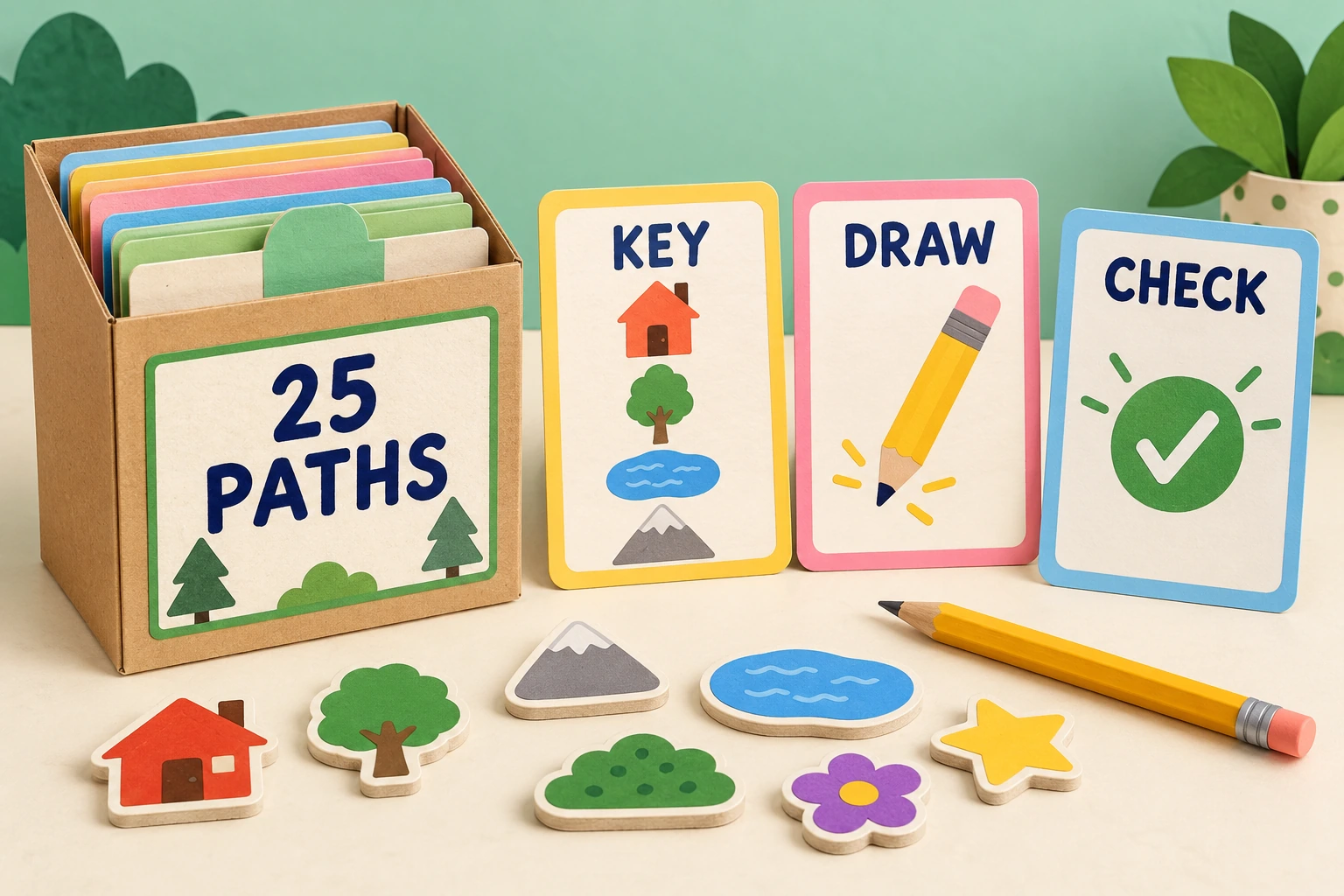
After Code Line Collection, set out three labelled picture cards and a short spoken itinerary. Let a child arrange them in the requested order, then describe the journey back. This is a separate tabletop game; do not imply the printable includes movable pieces or additional card sheets.
Give a puppet one confused destination: Code Line Collection
Choose a completed Code Line Collection field and let a puppet point to an incorrect next picture. The child uses the legend to explain the disagreement. Keep the puppet's mistake small enough to inspect, and let the child choose whether to give a clue or show the correct pair.
Compare two ways to describe one symbol
A patterned Code Line Collection figure might be called a purple checked shape or a checked hexagon. Discuss how both descriptions can identify the same printed entry. Then test whether a shorter description still singles it out. The point is precise communication, not memorising specialist vocabulary.
Build a large floor itinerary: Code Line Collection
Use safely spaced, clearly labelled cards to echo a Code Line Collection route with steps instead of pencil lines. An adult secures the cards and keeps the space clear. Walking the destinations can reveal whether route order is understood before the smaller motor demand returns.
Review yesterday's endpoint: Code Line Collection
Return to an already finished Code Line Collection panel and ask only where the route ends and why. Reopening familiar work can be less demanding than printing another sheet. Praise the reference to the final numeral, then offer a different theme if the child wants a fresh challenge.
Keep choice inviting and expectations clear
The variety in Code Line Collection can support interest without turning the pages into rewards for speed. Allow a preferred theme to start the session, accept a pause, and describe a specific decision that went well. “You checked the star's pattern” is more informative than comparing one child's line quality with a sibling's.
Regular Code Line Collection use can be brief and flexible: one panel after a story, a weekend theme choice, or a return to a partly completed sheet. If the routine creates resistance, offer pointing, a larger print or an unrelated play activity. The collection is a resource to adapt, not a test of perseverance.
Download the complete printable edition
Select the $3 purchase option for Code Line Collection, complete checkout, and use the account's authorised download control to obtain the single twenty-five-page PDF. This collection is a separate purchase; membership access to individual clean worksheets does not by itself unlock this paid bundle. Save the file before sending selected pages to a printer.
The premium Code Line Collection PDF is free of watermarks and domain branding; its printable pages contain no ads. Choose portrait orientation and check the print preview for the complete outer frame; use a fit setting if your printer cannot preserve the margins at actual size. A colour print keeps subtle legend differences clearer. Print one representative page before preparing a larger set.
Further places to explore careful directions: Code Line Collection
Compare Code Line Collection with Exact Path Detective. After Code Line Collection, try Castle Color Codes. For Code Line Collection, consider Number Letter Switching.
For adult reading alongside Code Line Collection, the NAEYC family resources offer broader early-learning ideas. The PBS Parents learning activities provide another place to find shared play and conversation prompts. These organisations supply general resources; they do not endorse this collection or provide answers for its routes.
Popular Worksheets
Printable resources families and teachers are downloading now.
 Free
 Free
 Free
 Free