
Acorn Colour Matching: 5 Brilliant Cap-and-Base Clues
Follow the acorn clues into a larger puzzle collection. For $5, gather the 25 supplied activity sheets in one clean PDF. Move from cap-and-base colour decisions to hidden pictures, word banks and small logic grids.
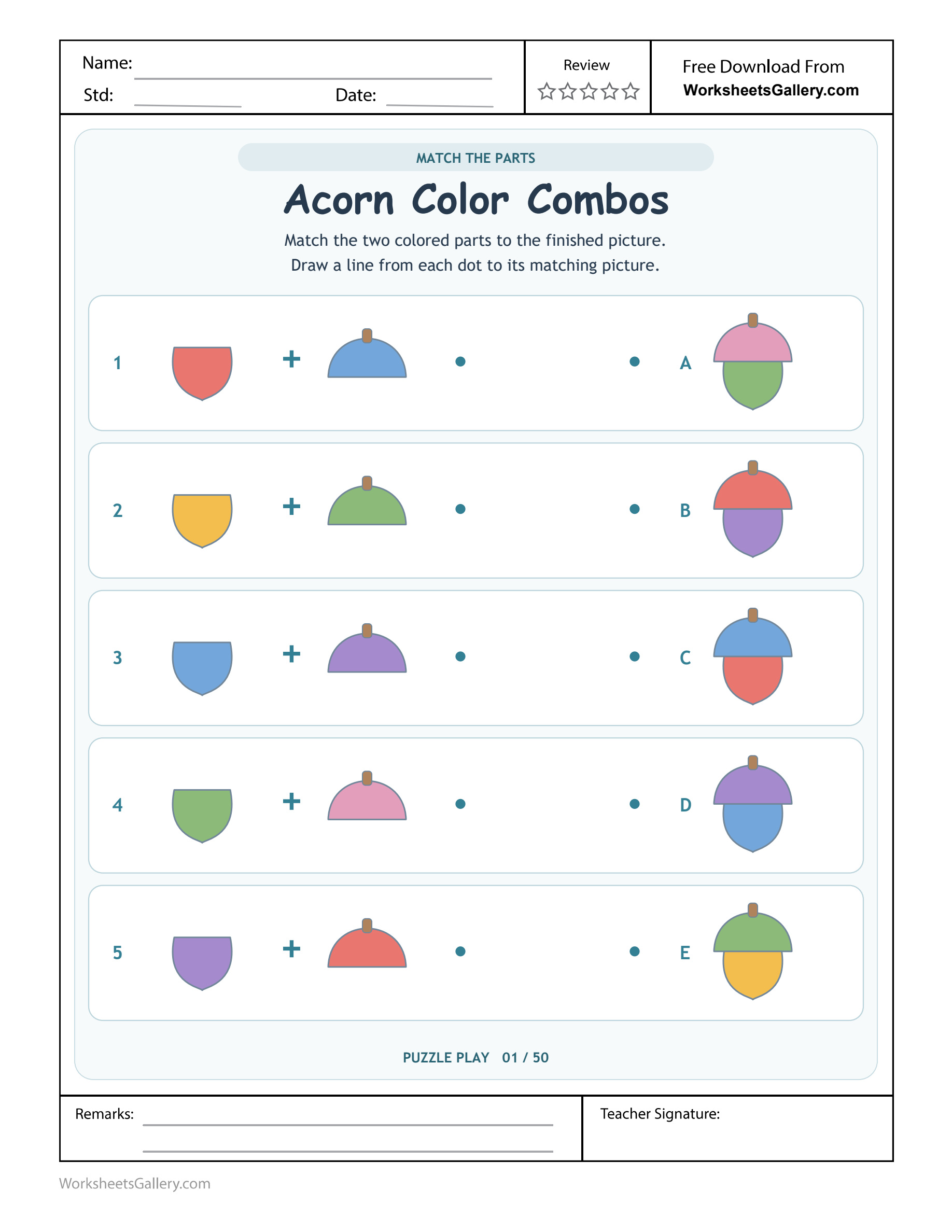
A blue cap can look convincing until you notice the colour underneath it. In Acorn Colour Matching, children inspect two separate acorn parts, then connect them to a finished picture that preserves both clues. Five numbered pairs face five lettered choices, giving a small woodland puzzle a clear purpose. Talk about the cap and base before reaching for a pencil, and allow time to compare a tempting near match. The useful discovery is that two familiar colours must also occupy the correct places.
Acorn Colour Matching: two colours with two different jobs
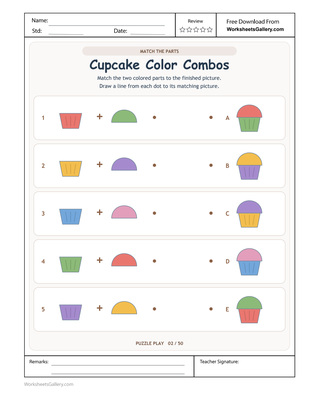
The left side shows a base, a plus sign and a cap. The right side shows complete acorns. Acorn Colour Matching asks children to combine visual information: which whole picture has this base colour underneath this cap colour? It does not ask what colour two paints would make when stirred together.
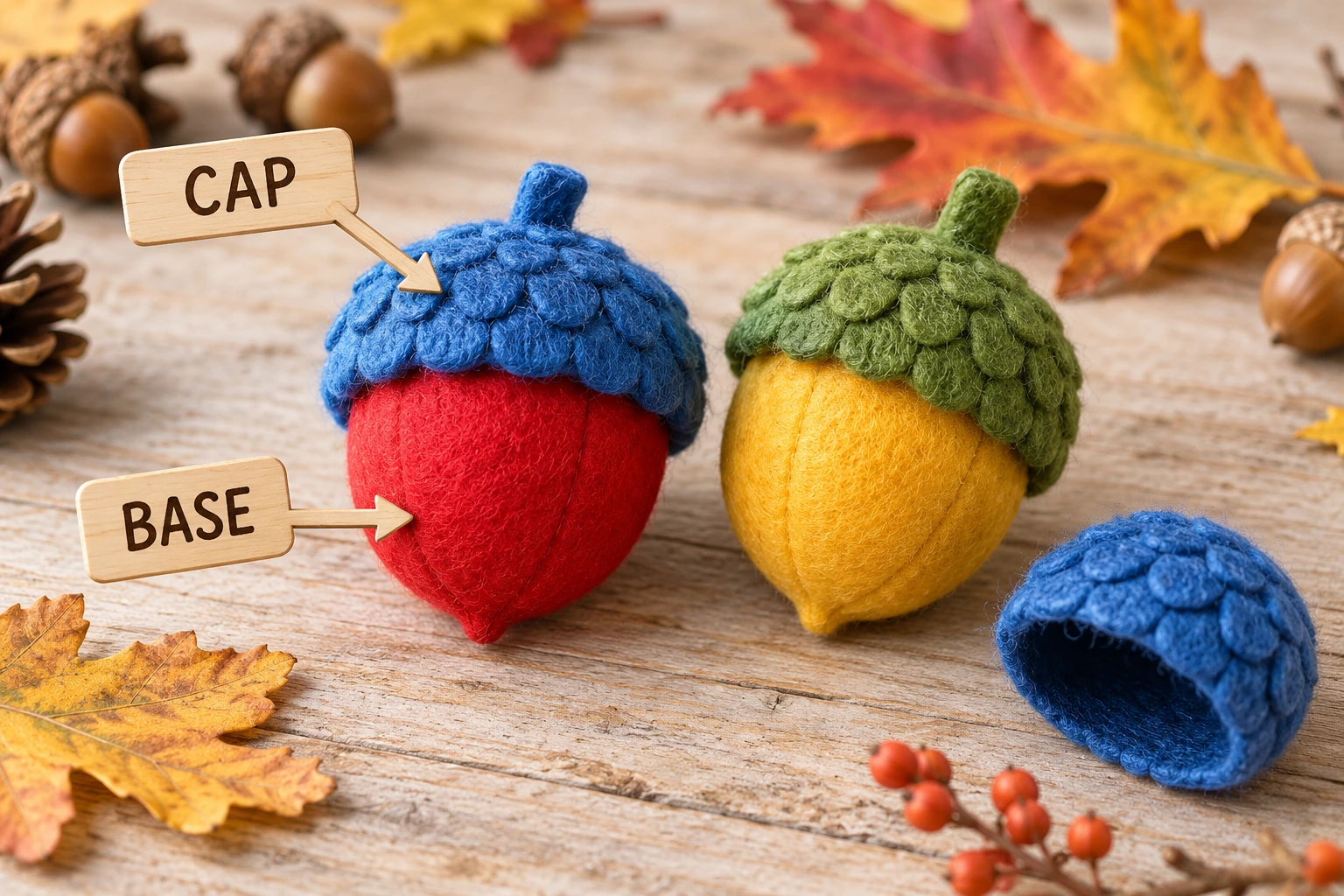
Point to the join where a cap rests on its base. This seam makes the part names concrete. With Acorn Colour Matching, saying “blue on top, red below” can be a perfectly useful first explanation. The adult can add “blue cap, red base” without turning a matching decision into a vocabulary test.

Begin with the cap, then refuse a half-correct answer
In the first numbered pair, the base is red and the cap is blue. A child may locate every blue cap before checking the body underneath. Acorn Colour Matching rewards that second inspection: the relevant finished acorn is choice C. Ask for the reason before confirming the letter, since pointing accurately matters more than naming C.
The second pair uses a yellow base and green cap, matching E. This time, invite the child to start with the base rather than repeat the first search mechanically. Acorn Colour Matching permits different search strategies as long as both component colours are checked before a connection is accepted.
| Numbered clue | Base and cap | Finished partner |
|---|---|---|
| 1 | Red base, blue cap | C |
| 2 | Yellow base, green cap | E |
| 3 | Blue base, purple cap | D |
| 4 | Green base, pink cap | A |
| 5 | Purple base, red cap | B |
Use the adult reference above after the child's attempt, or cover it while discussing the sheet. The answer letters alone cannot explain Acorn Colour Matching; the paired colours provide the evidence. If a line reaches the wrong letter, compare the pictured cap and base instead of merely announcing that the answer is incorrect.
A manageable first visit with five choices
Place the sheet upright on a clear surface and name its two columns. Read the printed matching instruction together. For Acorn Colour Matching, one adult demonstration can be a spoken comparison without drawing the child's first line: “This one has the cap colour I need; now I must inspect its base.”
Next, let the child point from a numbered dot to a candidate. Pause for a cap-and-base check, then draw the joining line. Crossing another line is possible because the partners are reordered. In Acorn Colour Matching, a crossing does not by itself show a mistake; inspect the endpoints and the colour evidence.

If five candidates feel visually busy, cover some choices with plain scrap paper during the search, then reveal the whole choice column before committing. Acorn Colour Matching still needs its original rule. Removing visual clutter temporarily should support finding the partner, rather than change which answer is available or silently supply the correct one.
Six developments in Acorn Colour Matching
- Attention to a particular feature. Acorn Colour Matching encourages a child to inspect a cap deliberately, rather than respond to the whole acorn as one undifferentiated coloured object.
- Holding a second clue. Remembering the base while searching for the cap makes both parts relevant. Saying the pair aloud can keep that information available during a longer visual search.
- Position language. Top, underneath, cap and base describe visible relationships. Their meaning is supported by the illustration, so an adult can model the words without requesting a memorised definition.
- A reasoned rejection. Acorn Colour Matching gives a child grounds for saying that a nearly right acorn will not do: its body or its cap fails one specific clue.
- Intentional joining marks. Moving between two selected dots provides a simple pencil response. A shaky connection can still represent accurate thinking when its intended endpoints are clear.
- Checking after a choice. Returning from the finished picture to the original parts lets the child confirm both colours. That final comparison makes checking a concrete action rather than an adult's general reminder.
Iris notices an acorn at the kitchen table
Iris calls the first picture “the blue one.” Her grandfather points to the red base and asks whether the whole acorn has only one colour. The description changes to “blue hat, red bottom.” During Acorn Colour Matching, he accepts that useful explanation, supplies the word cap and lets Iris decide where her line should finish.
At home, set out two coloured paper pieces after the worksheet and describe a pretend acorn for another person to assemble. This keeps Acorn Colour Matching connected to a real exchange of information: an incomplete description may produce the wrong combination, giving the child a reason to mention both parts next time.
Acorn Colour Matching with a classroom colour checker
One child names a numbered pair while a partner inspects the finished choices. Before either child draws, the partner repeats the two colours and their locations. Acorn Colour Matching becomes a shared comparison without requiring one confident child to take over the other's pencil or dictate every answer letter.
An adult watching this exchange can note whether a child tracks the cap, the base or both. Record the actual observation, such as “checked the base after a prompt,” rather than a broad judgement about ability. Acorn Colour Matching provides a small visible situation in which the next helpful prompt can be specific.
Five woodland Acorn Colour Matching games
Deliver a two-part acorn order
Make a few large paper caps and bases in familiar colours. One player describes an order, and another assembles it. Relate the result to Acorn Colour Matching by checking the base and cap separately. Switch speaker and builder roles so the same child experiences both giving a clear clue and interpreting one.
Find the almost-right woodland visitor
Build two pretend acorns that share a blue cap but have different bases. Ask which fits a spoken red-base order. This extension of Acorn Colour Matching makes a near match useful: the child explains the single feature that rules out the tempting alternative, rather than relying on a guessed yes-or-no answer.
Run a cap-only listening round
Give a cap clue and deliberately leave out the base. Ask whether the listener has enough information to finish the order. The point is to request another clue, not choose randomly. After Acorn Colour Matching, children can enjoy discovering that a careful question sometimes solves a problem faster than a quick guess.
Photograph a finished colour pair
An adult can photograph two assembled paper acorns, then invite the child to describe one for someone who cannot see the picture. Acorn Colour Matching supplies the part vocabulary, while the new listener makes precise language worthwhile. Keep the task small enough that the child can check the photograph afterward.
Swap one base in the pretend forest
Arrange three completed paper acorns and quietly exchange two bases. Invite the child to identify what changed. This is a separate memory game inspired by Acorn Colour Matching, not another requirement printed on the sheet. Return to visible comparison if remembering the earlier arrangement becomes frustrating.
Colour names, pencil comfort and a sensible age range
Preschoolers roughly four to six may try Acorn Colour Matching with an adult, but colour familiarity and visual comparison matter more than a birthday. A child who cannot name purple may still point to the correct purple part. Accept pointing, a home-language colour word or a descriptive phrase before modelling the printed activity's vocabulary.
If colours are difficult to distinguish, compare the actual printed copies together and provide descriptive help for the particular parts. Avoid treating a colour-vision difference as inattention. For Acorn Colour Matching, a verbal or pointed answer can also separate a thoughtful match from the effort required to draw a longer joining line.
Common detours and a reason to return
Reversing the cap and base, choosing by one colour alone and joining straight across to the nearest row are understandable errors. Each needs a different prompt. During Acorn Colour Matching, ask “Which part is blue?” for a reversal, “What about the base?” for a partial match, or “Does this row really contain your partner?” for a location guess.
On another day, revisit a different numbered pair rather than automatically repeat the first. Invite a new description before revealing the earlier line. Acorn Colour Matching can remain inviting when the child is asked for a better clue, not simply a faster or neater performance. A useful correction deserves calm recognition: the second inspection changed the decision.

Save the acorn sheet and choose your download
Open the original sample when you want to inspect the supplied printable. For the clean edition of Acorn Colour Matching, use an eligible active membership to sign in, then choose the premium acorn file. That PDF removes the website watermark and domain branding; it contains no embedded ads and preserves the same five matching rows and printed instructions.
After downloading, use your PDF viewer's print preview to check the full portrait page and its margins. Colour printing preserves the essential clues in Acorn Colour Matching; a monochrome copy may make combinations harder to distinguish. The separate $5 puzzle collection includes this sheet alongside twenty-four other supplied activities in one clean file.
Give careful looking another purpose
The road-width pencil challenge turns observation towards two boundaries. Try small picture-detail tracing when a child wants to complete an illustration, or a car-and-flag maze when choosing a route sounds appealing. These cached related activities offer different actions after the acorn comparison.
For broader family ideas, visit NAEYC's writing-at-home guidance or PBS Parents' early literacy collection. During Acorn Colour Matching, keep the invitation concrete: describe both parts, inspect the candidate and explain the match. A coloured acorn is enough material for a satisfying conversation.
Popular Worksheets
Printable resources families and teachers are downloading now.
 Free
 Free
 Free
 Free