
Picture Group Clues: 6 Wonderful Reasons to Choose
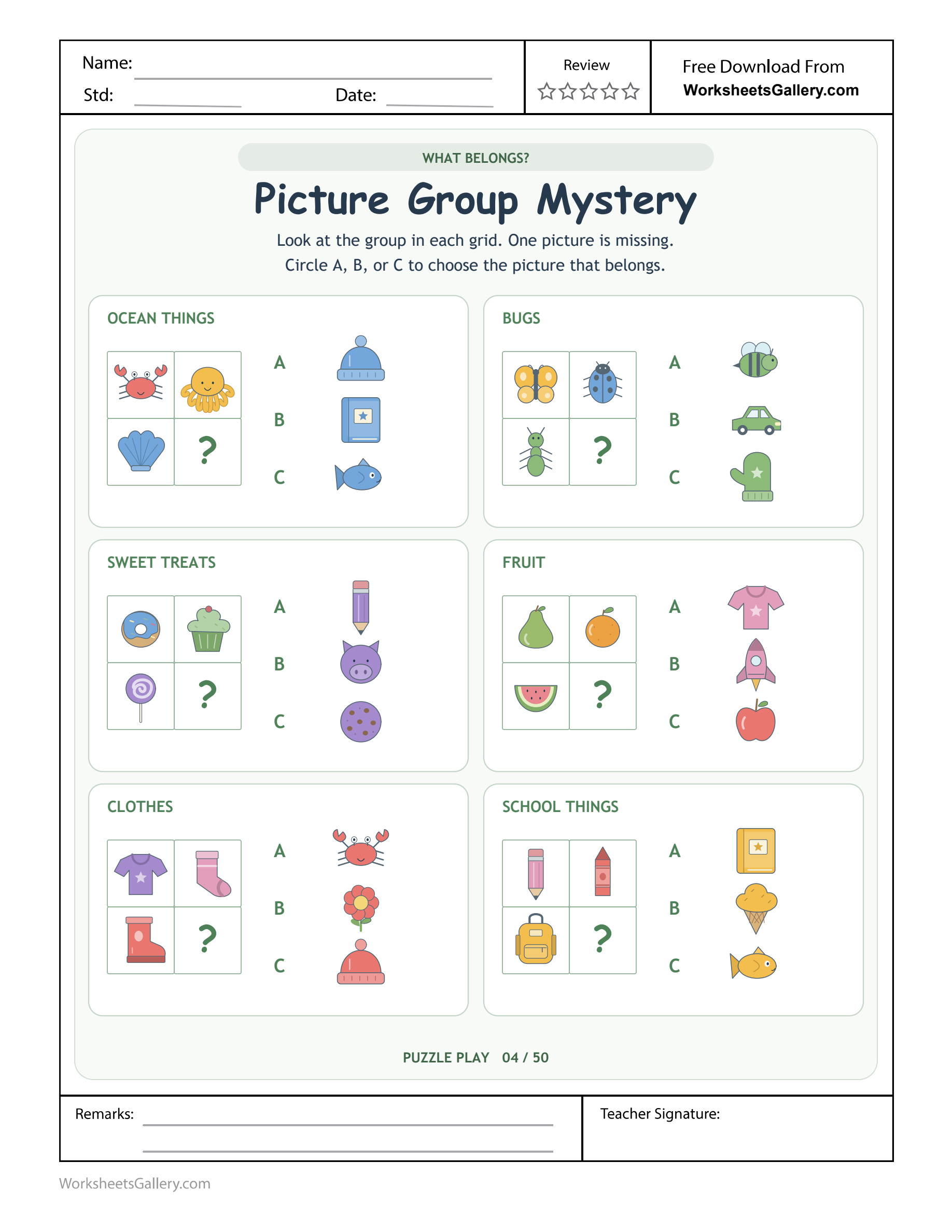
Turn picture-group evidence into a varied tabletop session. A $5 purchase unlocks the clean combined edition of the 25 uploaded sheets. Follow this category page with a maze or a fruit pattern when your child wants another sort of clue.
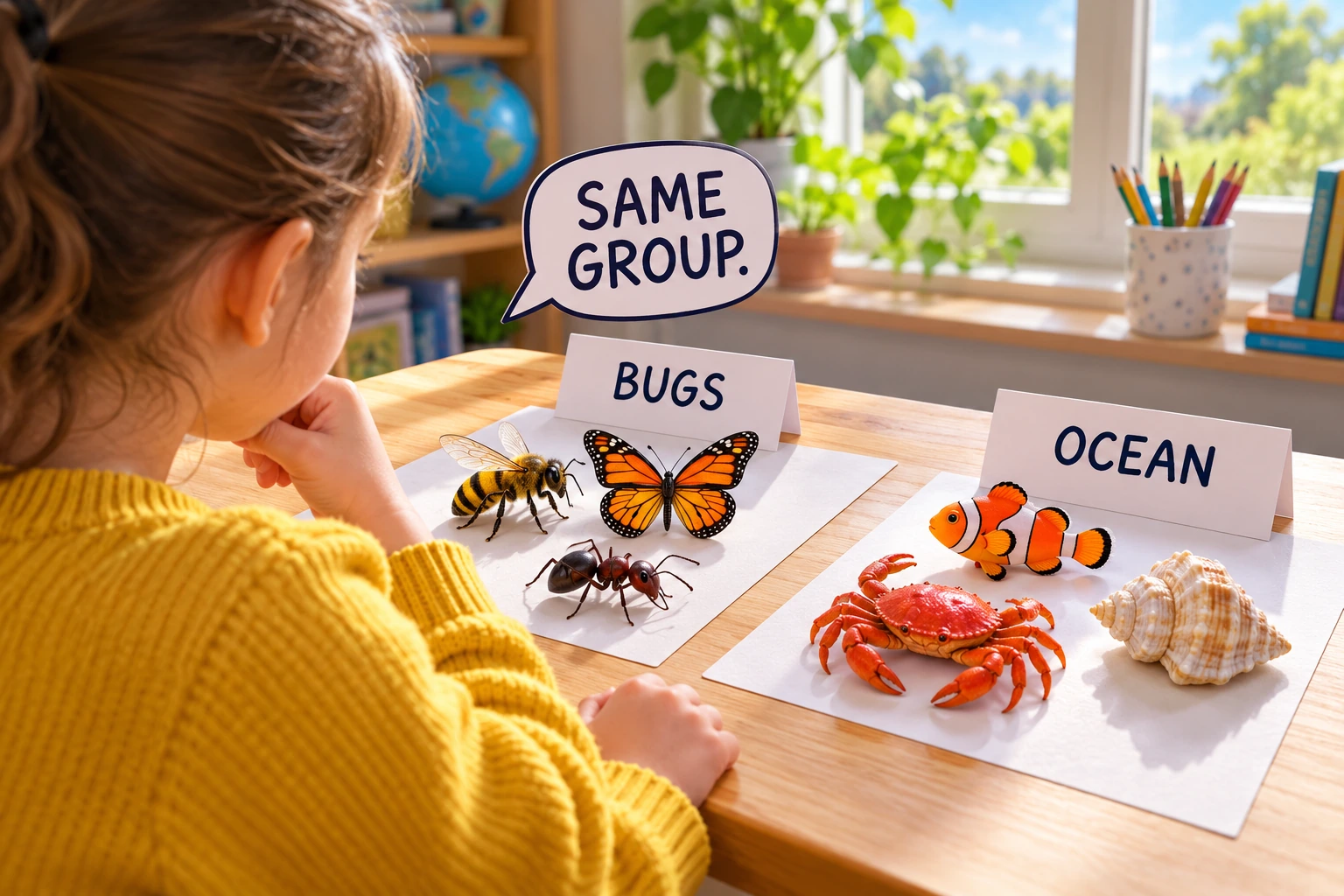
Would a favourite cupcake belong with an ocean group? Enjoying the picture is a good starting conversation, but the three given examples provide stronger evidence. Picture Group Clues makes six category decisions visible, from bugs and sweet treats to clothing and school equipment. Children inspect a group, consider three candidates and circle the letter beside the object that belongs. Invite a reason that fits every example, then allow a changed choice when another picture reveals a weakness in the first explanation.
Picture Group Clues: the rule on this particular sheet
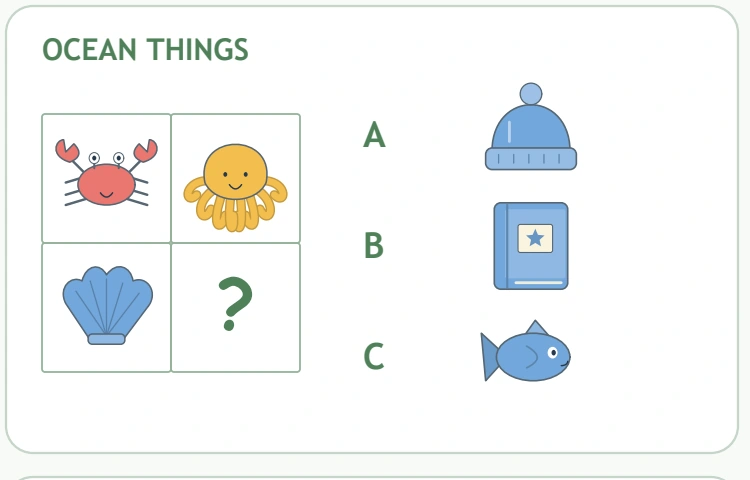
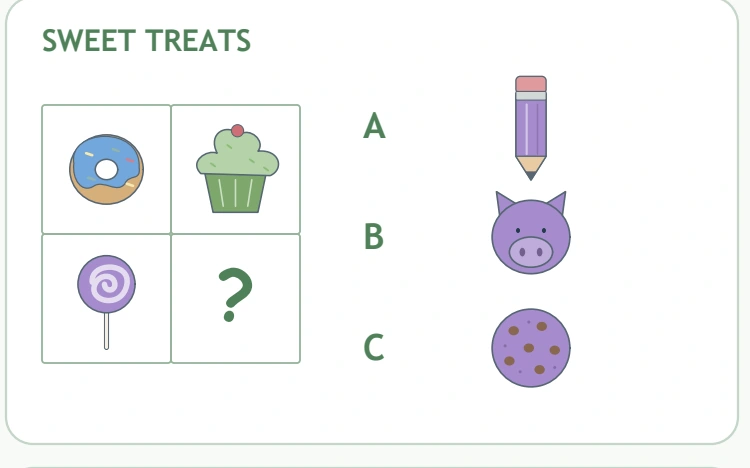
Ocean things, bugs, sweet treats, fruit, clothes and school things each have their own three-example group. The missing position invites an object that satisfies the local category, with three lettered candidates available.
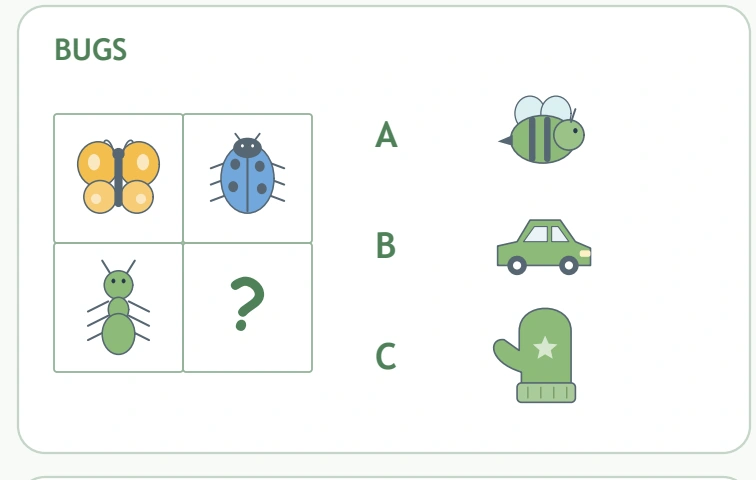
The ocean panel needs the fish at C, while the bugs panel needs the bee at A. Looking for a shared habitat in one panel and a familiar creature category in another prevents one superficial colour rule from taking over.
What three c choices reveals
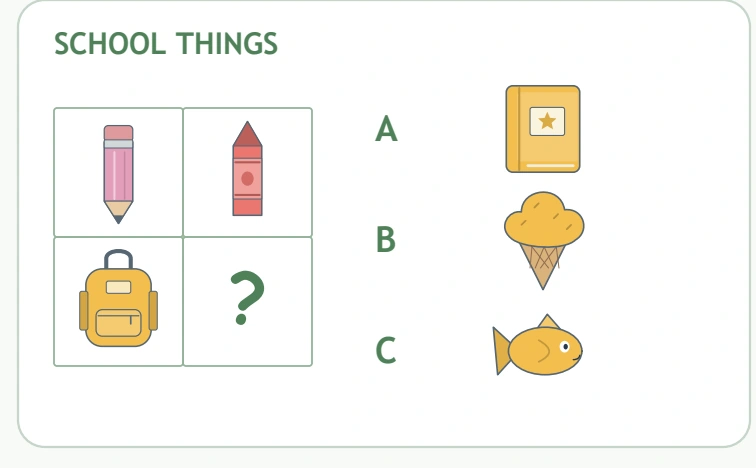
A cookie at C joins the sweet treats. An apple at C joins the fruits, a beanie at C joins the clothes and a book at A joins the school things. Similar answer letters across panels do not supply the reasoning.
The adult answer sequence is C, A, C, C, C, A in reading order. Use it to check the candidate pictures, not as a letter pattern for the child to continue. Every panel is an independent membership question.
Evidence can outweigh an attractive picture
Offer the child time to admire a favourite candidate before returning to the three examples. An adult can say that a cupcake looks appealing and still ask whether it belongs with ocean things. This separates enjoyment from the logical choice. The child need not stop liking the picture in order to reject it as the answer to the current panel.
Imagine Omar at a home puzzle table
Omar wants the cupcake because it looks delicious. His aunt asks him to describe the three ocean pictures before considering that choice. He notices that liking a picture and having evidence that it belongs are different reasons. Here, Picture Group Clues gives Omar a reason to discuss giving a reason using the Picture Group Mystery clues.
A practical Picture Group Clues sequence
Ocean evidence with Omar
Begin Picture Group Clues: ocean evidence. A fish belongs with the ocean examples; choose C. Ask Omar, “What evidence connects this picture?” The aunt and Omar can inspect ocean evidence together.
Creature evidence with Omar
Next inspect Picture Group Clues: creature evidence. The bee at A joins the bug group. Ask Omar, “Would liking it make it belong?” The aunt and Omar can inspect creature evidence together.
Three C choices with Omar
Then confirm Picture Group Clues: three c choices. Cookie, apple and beanie each fit a different local rule. Ask Omar, “Does your reason fit this one too?” The aunt and Omar can inspect three c choices together.
School conclusion with Omar
Finally record Picture Group Clues: school conclusion. Book A belongs with the visible school objects. Ask Omar, “What kind of connection matters here?” The aunt and Omar can inspect school conclusion together.
Picture Group Clues adult reference
| Printed clue | Source check |
|---|---|
| Ocean evidence | A fish belongs with the ocean examples; choose C. |
| Creature evidence | The bee at A joins the bug group. |
| Three C choices | Cookie, apple and beanie each fit a different local rule. |
| School conclusion | Book A belongs with the visible school objects. |
Repeated letters do not create a new rule
Several correct selections happen to be C in this particular sheet. That coincidence is not the property the puzzle asks children to find. Ask for the selected object name and a category explanation each time. An adult checking completed circles should inspect the pictured candidates as well as the letters, so a repeated mark does not conceal a series of unsupported guesses.
5 observations in Picture Group Clues
Giving a reason: What evidence connects this picture
Here, a choice is supported by a shared category. The prompt “What evidence connects this picture?” gives Omar a way to explain giving a reason to the aunt.
Ignoring preference: Would liking it make it belong
Here, a favourite object can still fail the panel rule. The prompt “Would liking it make it belong?” gives Omar a way to explain ignoring preference to the aunt.
Checking all examples: Does your reason fit this one too
Here, one convenient similarity is tested against three givens. The prompt “Does your reason fit this one too?” gives Omar a way to explain checking all examples to the aunt.
Changing criteria: What kind of connection matters here
In Picture Group Clues, habitat, use and familiar object groups require different descriptions. The prompt “What kind of connection matters here?” gives Omar a way to explain changing criteria to the aunt.
Object naming: Which picture are you defending
In Picture Group Clues, spoken names help a partner understand the proposed candidate. The prompt “Which picture are you defending?” gives Omar a way to explain object naming to the aunt.
Picture Group Clues: three c choices mistakes
Do not turn the six answer letters into a pattern-completion exercise. A run of C answers can tempt a child to repeat C automatically. Ask for the object name and the common property within each panel, including the final school group where A is required. Invite Omar to discuss three c choices with the aunt.
A useful reason includes the quiet example
Children may build a rule around the most noticeable picture and overlook a smaller one. Point to the less discussed member and ask whether the explanation covers it too. In the bug panel, the ant deserves as much attention as the colourful butterfly. A rule that survives that quieter example is stronger than one supported only by the most attractive object.
Five play invitations after Picture Group Clues
Host an evidence meeting
Place a shell, fish picture and crab model together. A candidate visitor must be introduced with a reason based on the collection, not a declaration that it is attractive. After this Picture Group Clues play round, ask the aunt which clue Omar chose to explain.
Give the favourite a different home
When a child loves an unsuitable option, invent a separate group where it genuinely belongs. Then return to the printed problem and keep its original category intact. Let Omar demonstrate this example before another Picture Group Clues visit; ask the aunt to listen for Omar’s reasoning.
Try the one-picture trap
An adult gives a rule that fits only one example, such as red things. The child tests the other two pictures and explains why more evidence is needed. On a later Picture Group Clues visit, ask Omar what changed; the aunt can discuss Omar’s evidence.
Make a wearable parade
Gather a hat, scarf and sock, then offer a book or mitten as the next member. Ask the parade organiser to state the clothing rule before welcoming the mitten. Ask Omar how this example relates to Picture Group Clues; the aunt can follow the clue that Omar identifies.
Swap the spokesperson
One child chooses a candidate and a partner explains it without hearing the first explanation. Compare the two reasons against the same three examples, allowing different sensible wording. Keep Omar’s own explanation central in this Picture Group Clues game. Let the aunt hear what Omar observed.
Classroom partners inspect creature evidence
A classroom partner proposes a rule and another child tries it against all three examples. If the rule fits only one, the pair revises the explanation before selecting an option. The adult records the quality of the comparison rather than how loudly the children defend a favourite. For a Picture Group Clues partner visit, ignoring preference is this picture group clues partnership focus.
Let partners disagree about a testable claim
A partner can respond to a proposed category by pointing to one given picture that does or does not fit. Keep the discussion about visible examples, not who spoke first or who usually finishes fastest. If two explanations use different words but include the same intended group, acknowledge both. The value lies in a defensible relationship rather than matching one adult sentence.
Readiness for Picture Group Clues at ages 4–6
Keep the local category heading visible and read it if needed. A child can use a home-language word or gesture to describe an object; the category relationship matters more than supplying an unfamiliar English label unaided. Suggested range for Picture Group Clues: ages 4–6. Begin with giving a reason and adult support.
For a comfortable Picture Group Clues visit, let Omar show ocean evidence before the aunt requests another response. Discuss object naming using the printed Picture Group Mystery example.
A fresh Picture Group Clues reason to return
Choose a previously solved panel and ask for two different ways to describe its connection. Rewording the evidence gives a fresh purpose without inventing a different official answer. Omar can show the aunt a new school conclusion observation during that short picture group clues visit.
Save a printable Picture Group Clues copy
To save Picture Group Clues without website watermark or domain branding, open its premium PDF while signed in with suitable active membership access. The original upload remains available as a distinct sample, and the clean file contains no embedded advertisements. Check the ocean-through-school panel layout in print preview before sending the portrait page to your printer. A separate $5 purchase provides this sheet together with the other twenty-four supplied puzzle activities.
Picture Group Clues: another printable to explore
Extend the giving a reason conversation beyond Picture Group Clues with Ocean evidence before a road-width task; Checking all examples and picture-detail tracing; Changing criteria beside a car-and-flag maze.
Explore Picture Group Clues alongside NAEYC family-writing ideas and Picture Group Clues with PBS Parents literacy activities. Keep ocean evidence, changing criteria and reconsidering calmly connected to the pictured puzzle.
Popular Worksheets
Printable resources families and teachers are downloading now.
 Free
 Free
 Free
 Free