
Garden Hidden Pictures: 6 Clever Finds Among Flowers
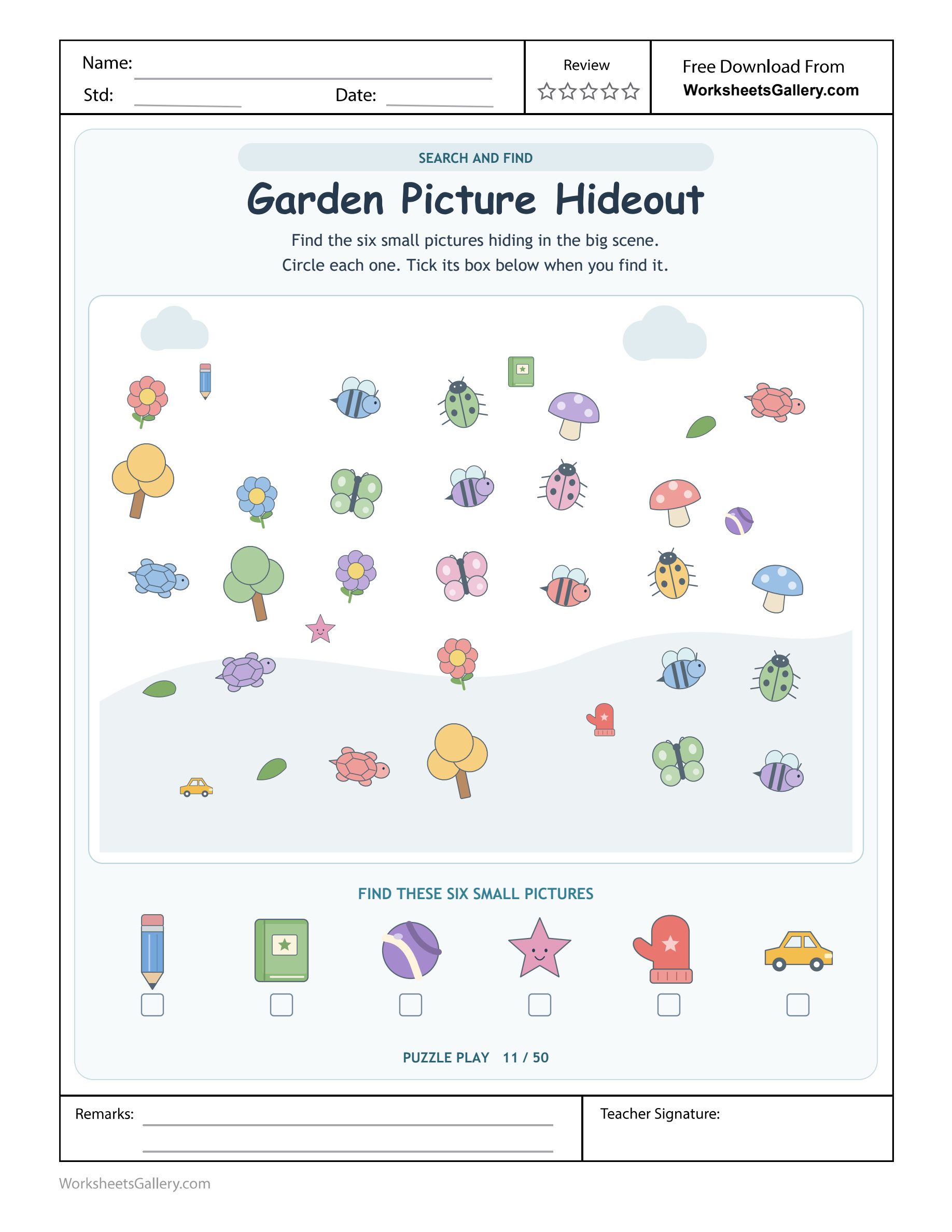
Take the garden search into a mixed puzzle afternoon. This hidden-picture sheet is part of the $5 collection of 25 clean printables. One combined file lets you move from checking the target list to counting objects or comparing coloured parts.
Someone has left a mitten among the garden pictures, and a small car is hiding there too. Garden Hidden Pictures sends children after six specified everyday objects rather than every flower or insect in the scene. The target strip shows what to find; the large picture provides the search area. Circle a verified discovery, then tick its matching checklist box. Naming the mission first can prevent an attractive garden detail from becoming the wrong target, while a short search region gives an uncertain child somewhere practical to begin.
Garden Hidden Pictures: the rule on this particular sheet
The garden setting contains many attractive pictures, but the six targets are pencil, book, ball, star, mitten and car. Those small target pictures appear in the reference strip below the scene.
Circle each located target in the large picture and tick its corresponding box. Finding and recording are separate actions: a tick should follow a visible find, not replace the search.
What circle the evidence reveals
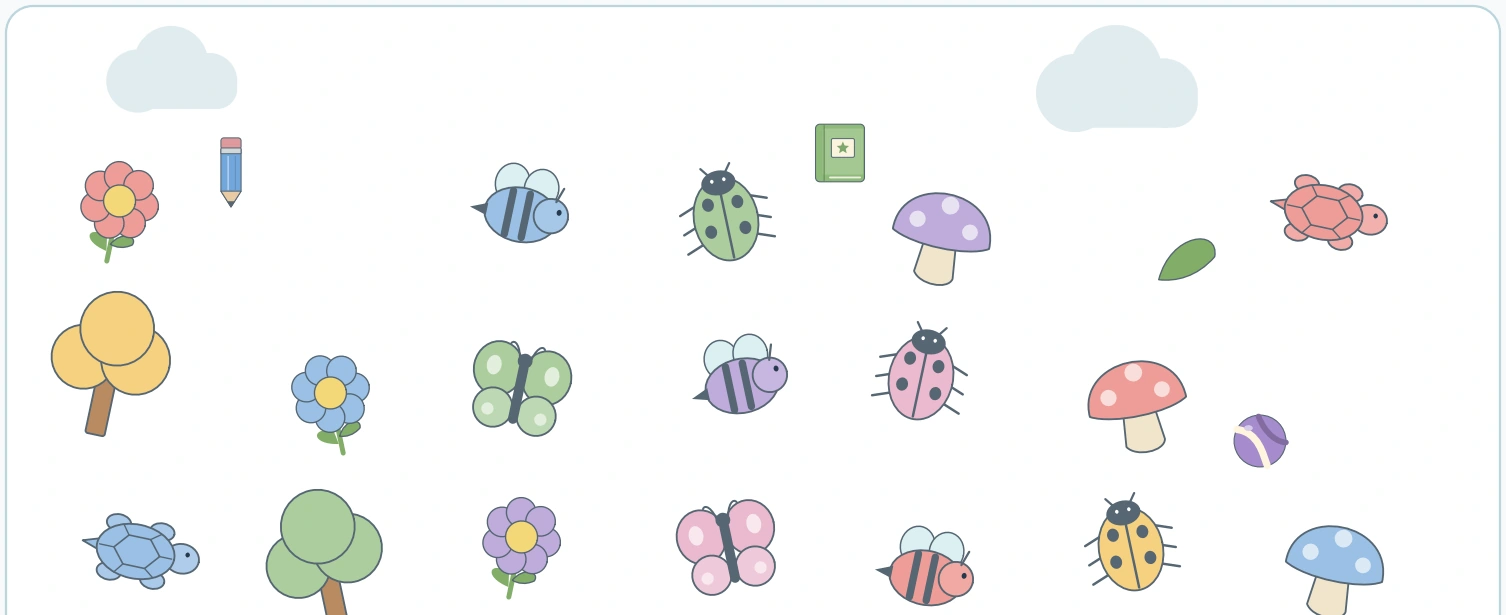
The garden theme can mislead a child into hunting only for flowers or insects. Read the target strip first so the actual six-object mission remains clear, then return to it when deciding what is still missing.
A target may appear among similarly sized or differently oriented surrounding objects. Compare the object’s identifying shape and parts rather than expecting every picture in the scene to share the garden theme.
Garden Hidden Pictures: circle the evidence mistakes
Do not count every object or tick all boxes because six targets are shown below. Each tick records a matching object located in the main scene. If a child circles a flower, compare it with the actual target strip before asking for another search. Invite Milo to discuss circle the evidence with the nanny.
The reference strip defines the mission
Garden scenery can attract attention towards flowers and insects, but the six target pictures ask for something else. Name the pencil, book, ball, star, mitten and car before searching. A child who knows the mission can decide which attractive details are relevant and which can be passed over. The reference strip remains available, so uncertainty can be resolved by looking back rather than remembering a hidden list.
A practical Garden Hidden Pictures sequence
Read the mission with Milo
Begin Garden Hidden Pictures: read the mission. Name pencil, book, ball, star, mitten and car. Ask Milo, “Which object are we finding now?” The nanny and Milo can inspect read the mission together.
Locate the object with Milo
Next inspect Garden Hidden Pictures: locate the object. Point to the corresponding item inside the large garden picture. Ask Milo, “What part tells you it is a mitten?” The nanny and Milo can inspect locate the object together.
Circle the evidence with Milo
Then confirm Garden Hidden Pictures: circle the evidence. Mark the found target rather than its reference picture. Ask Milo, “Which area have you already checked?” The nanny and Milo can inspect circle the evidence together.
Tick the record with Milo
Finally record Garden Hidden Pictures: tick the record. Check only the box for the object just located. Ask Milo, “Show me the item behind this tick.” The nanny and Milo can inspect tick the record together.
Garden Hidden Pictures adult reference
| Printed clue | Source check |
|---|---|
| Read the mission | Name pencil, book, ball, star, mitten and car. |
| Locate the object | Point to the corresponding item inside the large garden picture. |
| Circle the evidence | Mark the found target rather than its reference picture. |
| Tick the record | Check only the box for the object just located. |

Classroom partners inspect locate the object
A teacher gives partners different jobs: one searches a small region and one checks the target strip. A tick is added only after both can point to the same found object in the scene, keeping the checklist connected to evidence. For a Garden Hidden Pictures partner visit, visual discrimination is this garden hidden pictures partnership focus.
Finding and recording are separate actions
A circled mitten in the scene and a tick beside the mitten reference should agree. If one is missing, reconstruct what happened: was the object found but not recorded, or was a box ticked without a verified location? That distinction gives the adult a precise next prompt. The checklist is useful because it reflects evidence, not because every box eventually contains a mark.
Five play invitations after Garden Hidden Pictures
Build a six-object garden tray
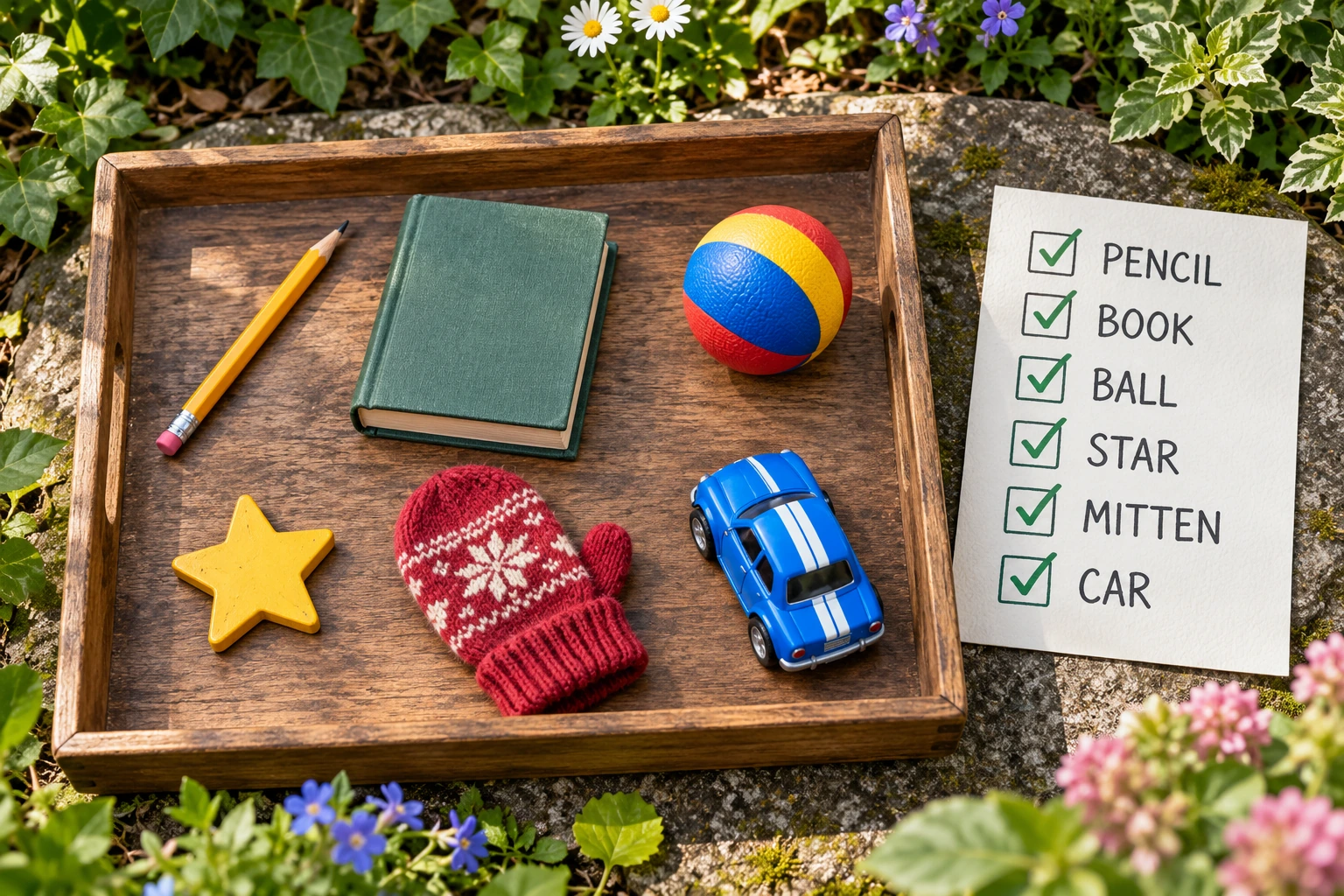
Gather safe models or pictures of the six targets and place them on a leafy mat. Name each before an adult hides one partly behind a large paper leaf. After this Garden Hidden Pictures play round, ask the nanny which clue Milo chose to explain.
Become the checklist witness
One player announces a find and another verifies its location before ticking a fully labelled home-made checklist. Swap roles after a single target. Let Milo demonstrate this example before another Garden Hidden Pictures visit; ask the nanny to listen for Milo’s reasoning.
Tell a mitten visitor story
Invent a reason a mitten reached the garden, then search for that one object. The brief story gives the target identity without supplying its printed location. On a later Garden Hidden Pictures visit, ask Milo what changed; the nanny can discuss Milo’s evidence.
Search one flowerbed at a time
Divide a separate play mat into small regions and inspect them in order. Discuss how returning to an already checked patch differs from exploring a new one. Ask Milo how this example relates to Garden Hidden Pictures; the nanny can follow the clue that Milo identifies.
Catch the wrong tick
An adult ticks CAR while pointing to a book model. The child repairs the record by comparing the marked word with the actual found object. Keep Milo’s own explanation central in this Garden Hidden Pictures game. Let the nanny hear what Milo observed.
6 observations in Garden Hidden Pictures
Target selection: Which object are we finding now
In Garden Hidden Pictures, the reference strip defines what is relevant. The prompt “Which object are we finding now?” gives Milo a way to explain target selection to the nanny.
Visual discrimination: What part tells you it is a mitten
In Garden Hidden Pictures, an everyday object can stand out within garden clutter. The prompt “What part tells you it is a mitten?” gives Milo a way to explain visual discrimination to the nanny.
Search organisation: Which area have you already checked
In Garden Hidden Pictures, a small region can be inspected deliberately. The prompt “Which area have you already checked?” gives Milo a way to explain search organisation to the nanny.
Evidence recording: Show me the item behind this tick.
In Garden Hidden Pictures, a tick refers to an object actually found. The prompt “Show me the item behind this tick.” gives Milo a way to explain evidence recording to the nanny.
Task vocabulary: Where does each kind of mark belong
In Garden Hidden Pictures, circle and tick describe different responses. The prompt “Where does each kind of mark belong?” gives Milo a way to explain task vocabulary to the nanny.
Attention control: Is that picture on our mission strip
In Garden Hidden Pictures, interesting flowers need not become the search target. The prompt “Is that picture on our mission strip?” gives Milo a way to explain attention control to the nanny.
Use position words for a partner report
Ask a finder to tell a partner where the object sits before pointing directly at it. Words such as above, near and beside can make the report more useful. The listener then verifies the same target and checks its identity against the strip. Keep the exchange brief so describing a location supports the visual discovery rather than becoming an unrelated language test.
Imagine Milo at a home puzzle table
Milo spots a flower immediately and prepares to tick a box. His nanny invites him to inspect the six target pictures. Discovering the mitten changes his search goal: this garden contains unexpected everyday visitors, not simply more plants to count. Here, Garden Hidden Pictures gives Milo a reason to discuss target selection using the Garden Picture Hideout clues.
An unfinished search can still show a method
A child may locate three targets and have a sensible plan for the next region without finishing all six. Discuss which areas have been inspected and which object remains on the mission. That account preserves progress and supplies a starting point for another day. A short return to one remaining target can be more inviting than repeating the whole garden search from the beginning.
A fresh Garden Hidden Pictures reason to return
On another visit, let the child choose the starting target and explain a search area. A new inspection route can refresh the task without inventing additional hidden objects. Milo can show the nanny a new tick the record observation during that short garden hidden pictures visit.
Readiness for Garden Hidden Pictures at ages 4–6
Name unfamiliar targets and search one object at a time. A child may point to a find while an adult circles it; the search decision can remain the child’s even when marking the small picture is difficult. Suggested range for Garden Hidden Pictures: ages 4–6. Begin with target selection and adult support.
For a comfortable Garden Hidden Pictures visit, let Milo show read the mission before the nanny requests another response. Discuss task vocabulary using the printed Garden Picture Hideout example.
Save a printable Garden Hidden Pictures copy
Eligible active membership unlocks the clean Garden Hidden Pictures download. The PDF retains the garden scene and six-object checklist while removing the website watermark and domain; it contains no embedded ads. An original sample remains distinct from that premium file. Use printer preview to keep the scene, target strip and tick boxes together on the complete portrait page. A $5 collection purchase supplies this garden search with twenty-four further included worksheets.
Garden Hidden Pictures: another printable to explore
Extend the target selection conversation beyond Garden Hidden Pictures with Read the mission before a road-width task; Search organisation and picture-detail tracing; Evidence recording beside a car-and-flag maze.
Explore Garden Hidden Pictures alongside NAEYC family-writing ideas and Garden Hidden Pictures with PBS Parents literacy activities. Keep read the mission, evidence recording and attention control connected to the pictured puzzle.
Popular Worksheets
Printable resources families and teachers are downloading now.
 Free
 Free
 Free
 Free