
Puzzle Discovery Collection: 25 Brilliant Thinking Tasks
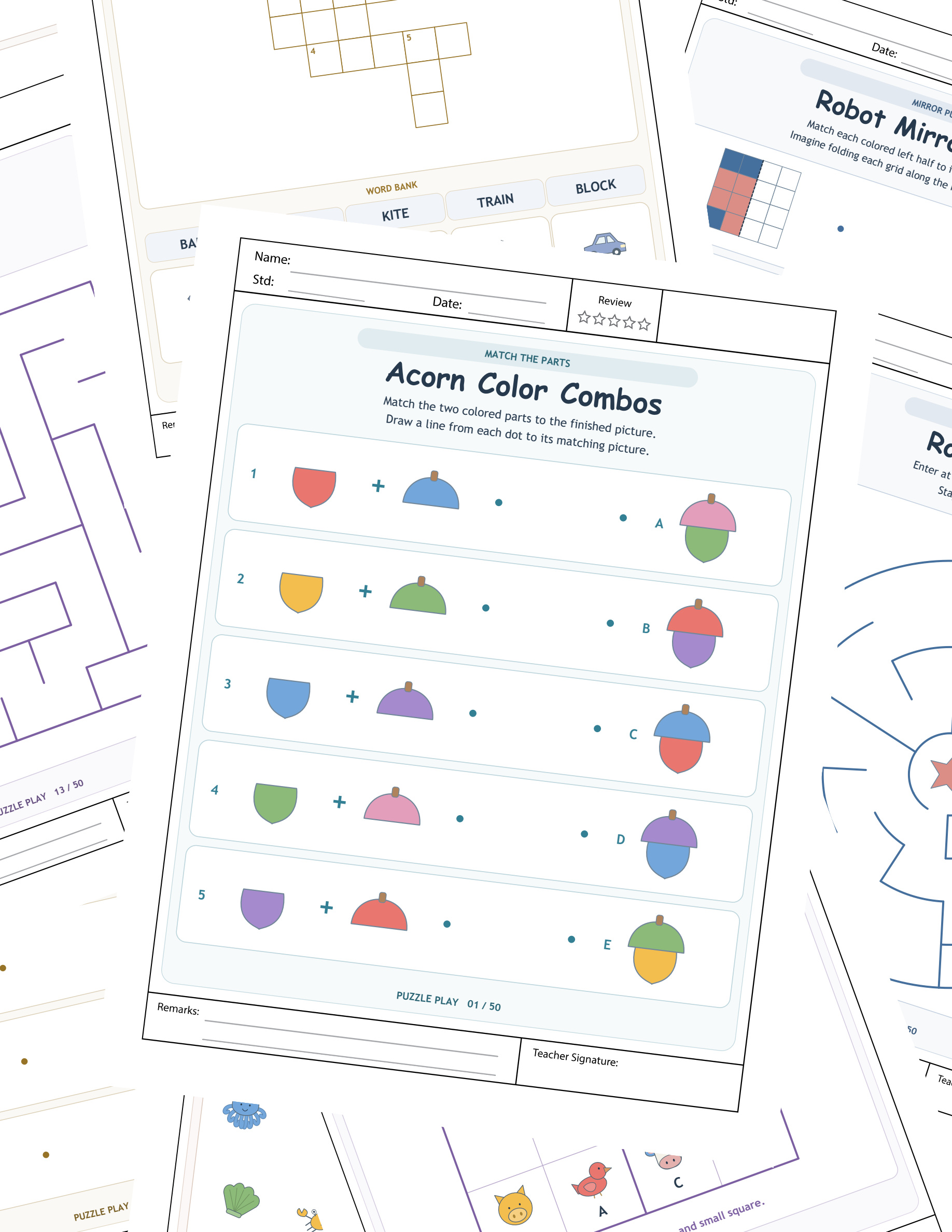
One child wants to search for a hidden mitten; another would rather steer through a circular maze. Puzzle Discovery Collection makes room for both choices. Its twenty-five printable sheets ask children to compare parts, explain groups, follow passages, use picture words and check small logic grids. The clean combined PDF costs $5 and contains the supplied worksheets numbered 01–25. An adult can select a suitable challenge without following the printed order, then return to a different kind of thinking when the child's interest changes.
Puzzle Discovery Collection: choose the decision before the theme
A picture theme catches attention, but the response rule determines the challenge. Acorns ask for two component colours; a bee asks for an open route; an animal grid asks for a letter that satisfies three constraints. Puzzle Discovery Collection puts these different decisions together without pretending they require identical skills or equal adult support.
Start by asking what your child enjoys doing with a picture. Looking for an object, joining two halves and spelling a five-letter word are substantially different invitations. With Puzzle Discovery Collection, choosing an approachable task can be as simple as offering one matching page beside one maze and explaining each action before the child chooses.
Exactly twenty-five sheets inside the purchase
Puzzle Discovery Collection covers the first twenty-five supplied files from a larger numbered series. The footer on those sheets retains its original “/50” series reference. That label identifies the source series; this purchase contains twenty-five pages, not fifty. Every activity stays on its own page within the combined PDF, with its instructions and working spaces intact.
The selection moves from component matching through categories, reflections, corner pieces and halves. Hidden-picture searches come next, followed by four mazes, two picture crosswords, four counting sheets, two code Sudoku puzzles and a fruit-pattern page. Puzzle Discovery Collection can therefore support several small puzzle visits rather than one long sitting intended to finish a workbook.
| Included numbers | Printed activity family | Child's response |
|---|---|---|
| 01–02 | Acorn and cupcake colour parts | Connect components to a finished picture |
| 03–04 | Picture category mysteries | Choose the object that belongs |
| 05–08 | Mirror grids and corner rescue | Match position and colour evidence |
| 09–12 | Picture halves and hidden targets | Join partners or locate named targets |
| 13–18 | Rectangular mazes, round mazes and crosswords | Plan a passage or place capital letters |
| 19–25 | Counts, Sudoku codes and patterns | Record a quantity or justify a next choice |
Colour clues that belong to particular parts
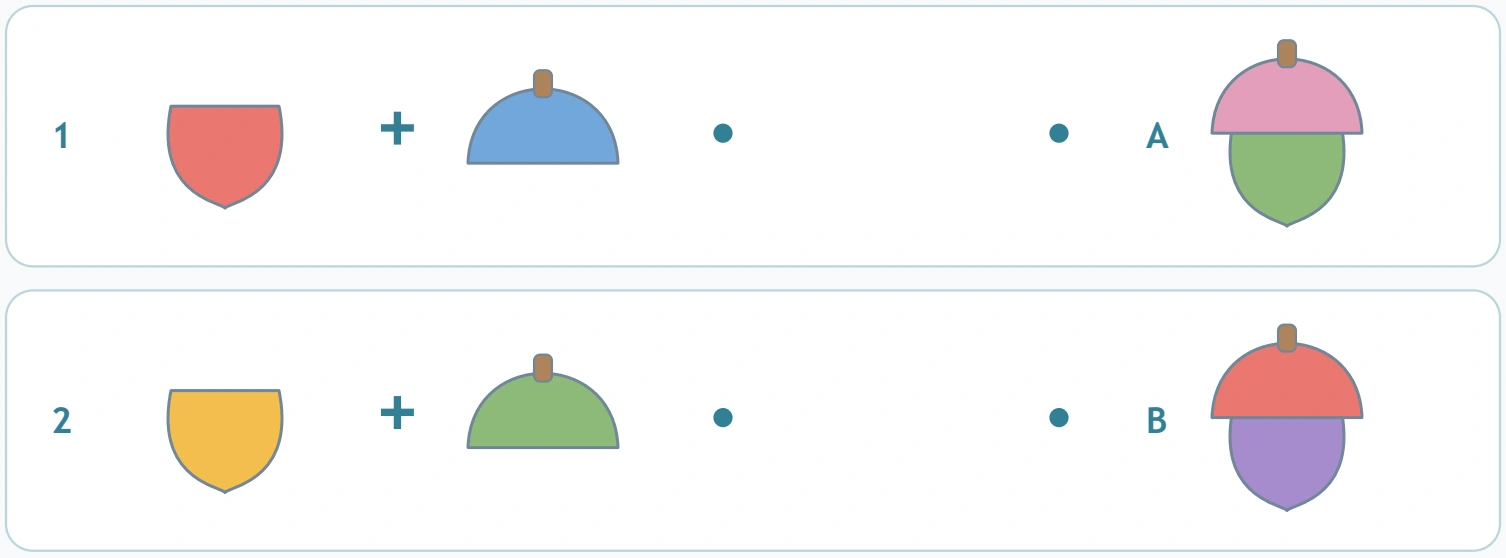
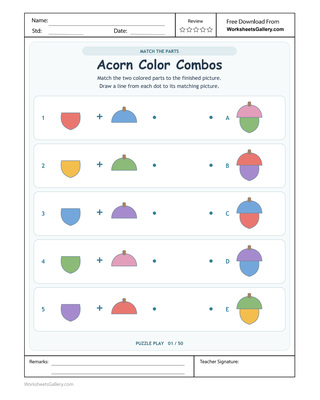
An acorn with a red base and blue cap is different from an acorn with those colours exchanged. Puzzle Discovery Collection begins with this useful distinction between noticing two colours and assigning them correctly. Encourage a two-part description before the connecting line, so the child has a reason to compare a candidate more carefully.
Cupcakes bring the same broad idea into wrapper and frosting language, but their actual combinations and answer order differ. In Puzzle Discovery Collection, the plus sign on these sheets means that pictured parts combine into a whole. It does not request addition, paint mixing or a new blended colour, and the page need not become a baking lesson.
A reflection, a corner and a half ask different questions
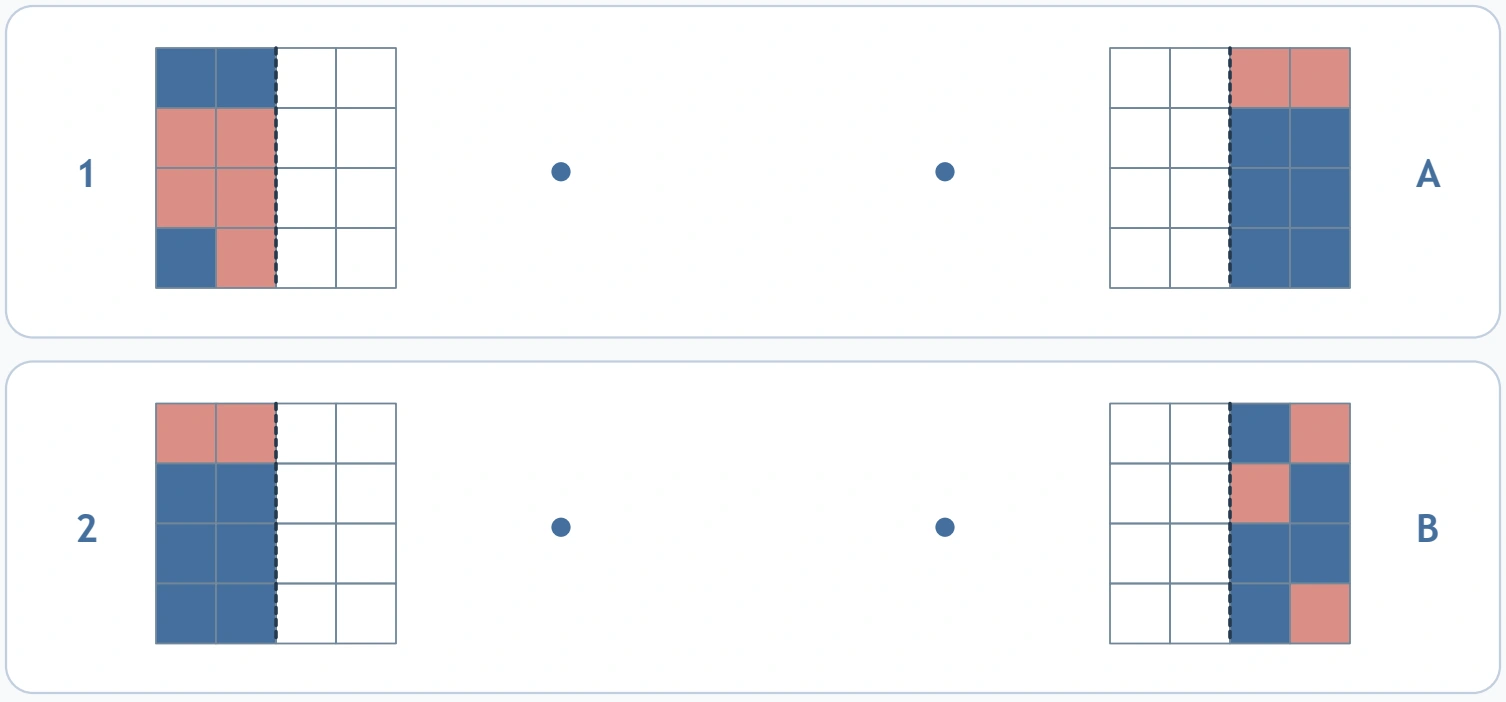
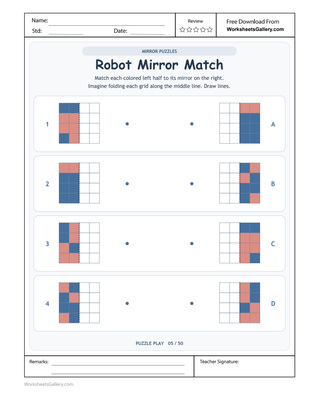
The mirror activities use coloured grids with a vertical middle reference. Compare row height and distance from that middle, rather than copying the left pattern sideways. Puzzle Discovery Collection includes two versions, allowing an adult to revisit the reflection idea with a different colour arrangement after the first rule becomes familiar.
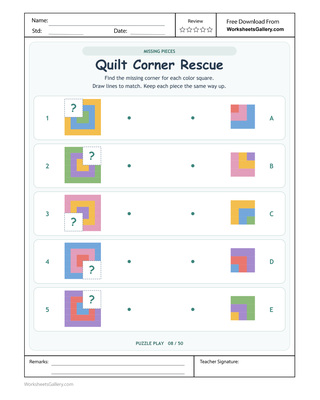
Corner rescue instead asks which small piece continues the surrounding colour patches. Keep each candidate the same way up, as the source instruction specifies. Fruit and toy halves ask for object identity across reordered choices. Puzzle Discovery Collection preserves these separate rules; a child should not have to rotate a corner, cut a toy or draw a missing half unless an adult proposes a separate extension.
Follow the opening rather than the shortest-looking distance
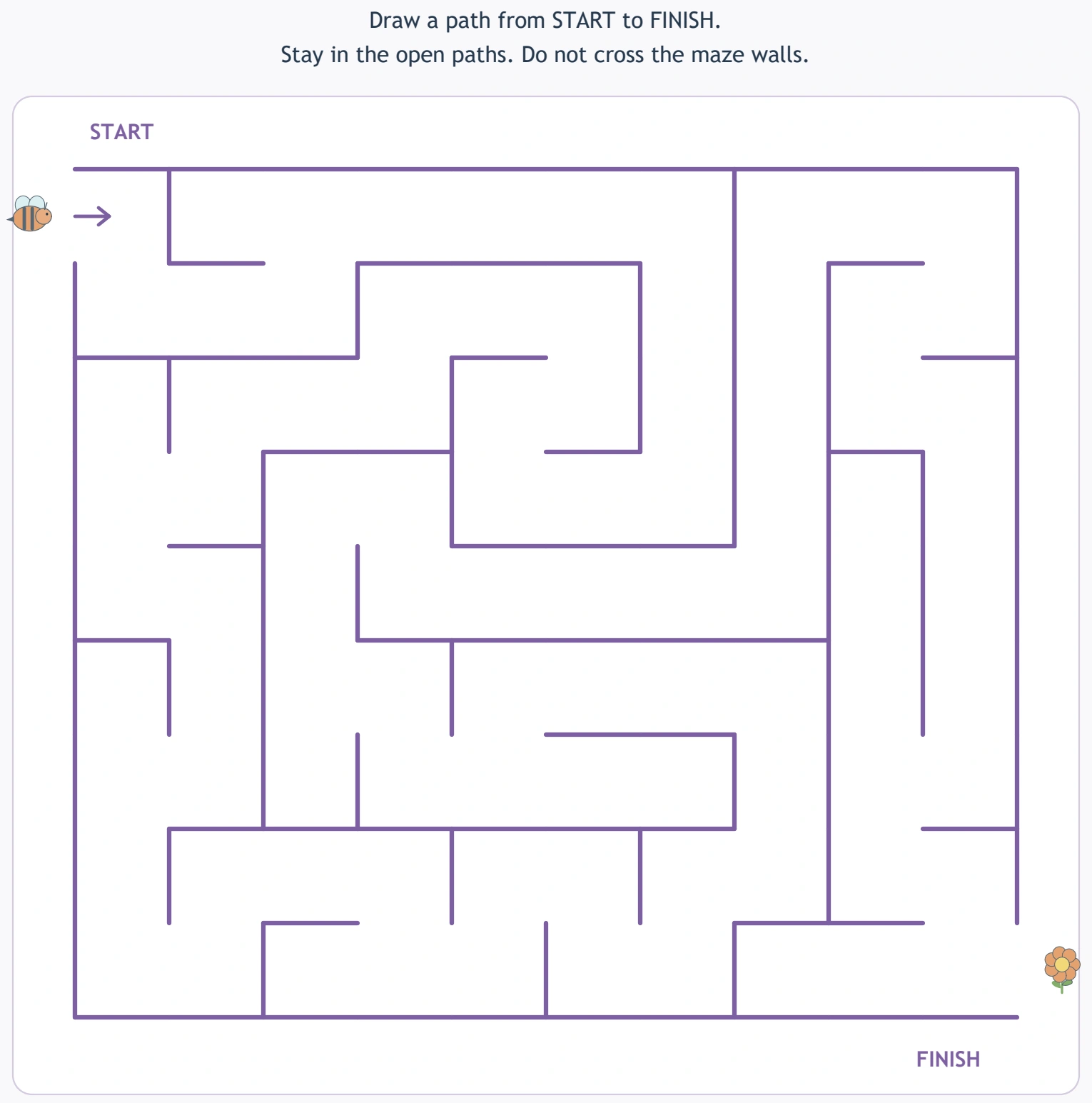
The rectangular bee and turtle mazes place START and FINISH at opposite regions. Their walls make a straight diagonal unsuitable. Puzzle Discovery Collection invites children to look at a junction, test an open branch with a fingertip and then draw the chosen path. A blocked branch supplies information about the next attempt.
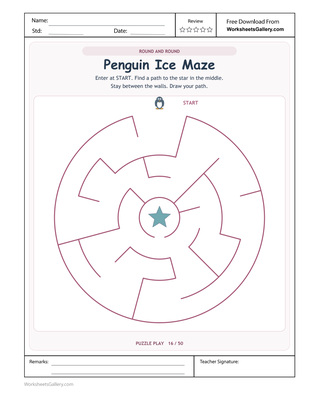
The rocket and penguin mazes use circular corridors and a central star. Moving inward depends on finding gaps between curved walls, not on tracing a single unbroken spiral. During Puzzle Discovery Collection, ask the child to point to the next opening before moving into another ring; the star remains the goal even when the route initially turns away from it.
Five picture words can become a shared reading task
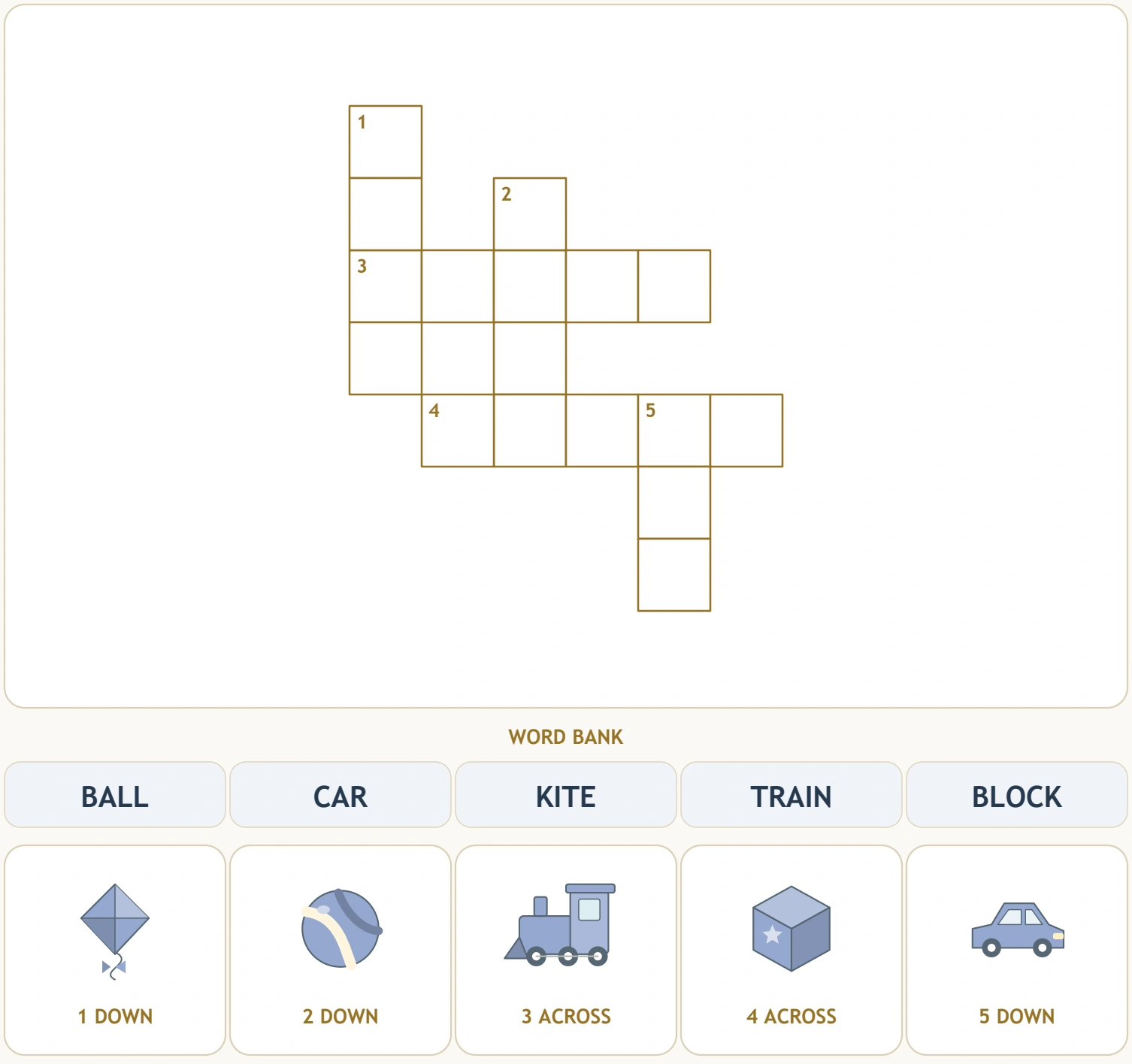
Toy and garden crosswords provide visible word banks. A child can name the picture while an adult helps locate its spelling, direction and starting square. Puzzle Discovery Collection asks for one capital letter per crossword cell. Knowing a toy's name does not automatically mean a child can spell it independently, so shared participation is entirely appropriate.
Check an intersecting letter from both directions after placing a word. That gives the child a concrete reason to reread rather than copy hurriedly. Puzzle Discovery Collection offers BALL, CAR, KITE, TRAIN and BLOCK on one page, and BEE, TREE, FLOWER, LEAF and ANT on the other; those banks belong to their own puzzles.
Counting and code grids: keep the reference outside the answer
Search-and-count sheets display target pictures above the field to count. Counting-zone sheets separate two collections inside boundaries. Puzzle Discovery Collection gives adults opportunities to discuss what belongs in the count before asking for a numeral. A reference icon beside an answer box names the target; it is not another object inside the collection.
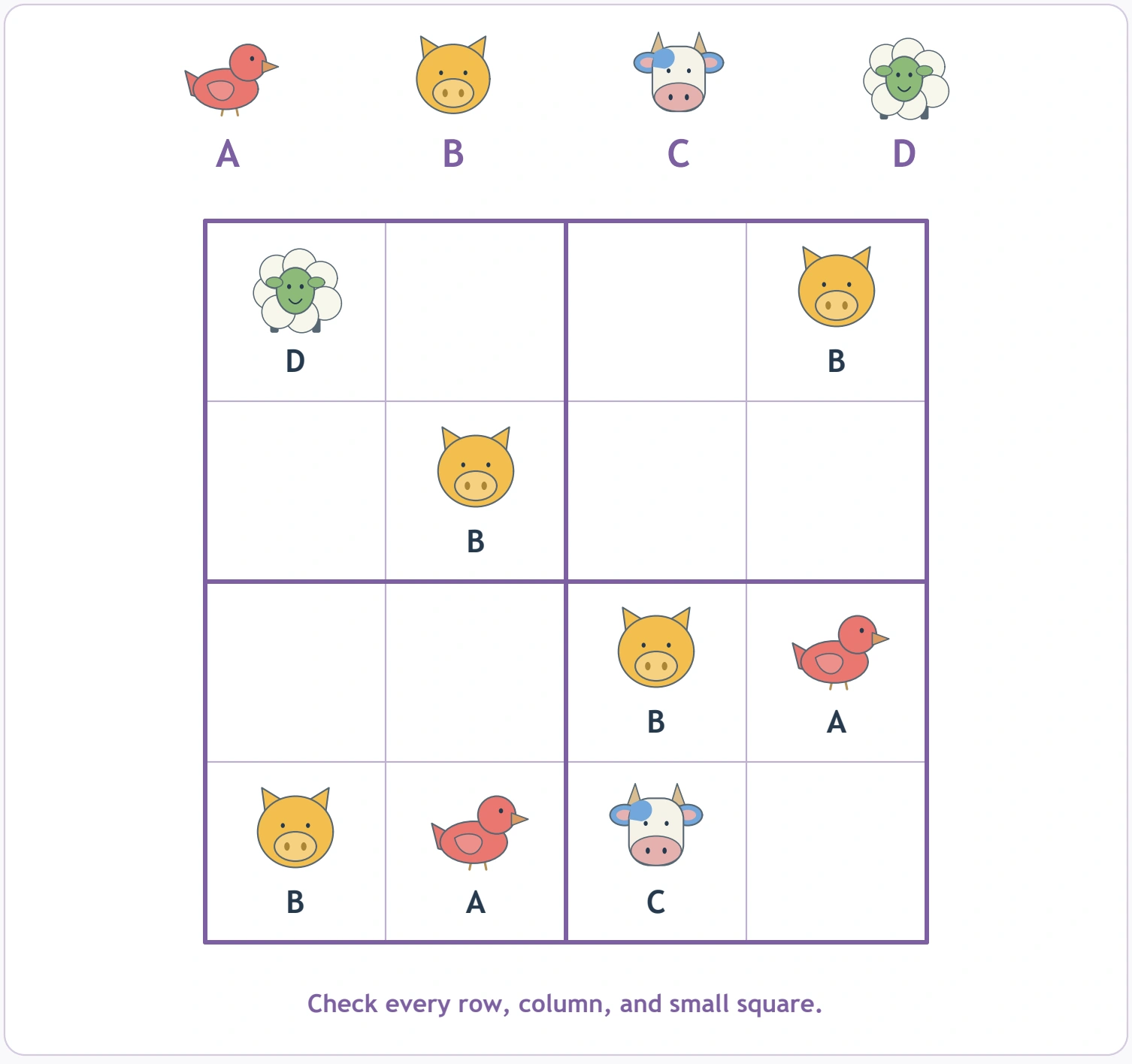
The two miniature Sudoku sheets use A, B, C and D as picture codes. Each code appears once per row, column and small two-by-two square. Puzzle Discovery Collection retains eight open cells on each grid for written codes. The printed animal or shape key supports identification, while checking several crossing constraints creates the reasoning challenge.
Six useful gains adults can notice
- Purposeful visual comparison. Puzzle Discovery Collection gives a child a reason to inspect a cap, seam, row or silhouette instead of settling for a generally similar picture.
- Rule language. Explaining why a boot belongs with clothing or why a code cannot repeat makes words such as same, beside, inside and missing useful during play.
- Controlled pencil responses. A joining line, circled answer and capital in a square each call for a different movement. Adults can separate the thinking decision from the accuracy of its mark.
- Checking habits. Counting a category again or reading a crossword intersection provides a specific check, rather than a vague request to look more carefully at everything.
- Flexible attempts. Puzzle Discovery Collection contains routes and choices worth reconsidering. Changing an answer after finding stronger evidence can be recognised as thoughtful work.
- Choice with a clear purpose. Selecting one puzzle family lets a child express an interest while the adult keeps the task understandable, manageable and connected to the supplied sheet.
Puzzle Discovery Collection in two everyday settings
At home, Elodie chooses the fruit-half sheet while an adult prepares a snack nearby. They compare the curved edge of a pear before any line is drawn. Later, Puzzle Discovery Collection offers a counting visit using a different fruit page, with the adult explicitly explaining that the new job is finding quantities rather than pairing halves.
In a classroom, a teacher places one mirror sheet at a quiet comparison station and one maze at a planning station. Children can explain their selected rule to a partner before marking. Puzzle Discovery Collection need not become a race between stations; a teacher can record whether a child identified a useful clue, requested help or independently checked a decision.
Five small games beyond the printed activities
Build a three-tray puzzle menu
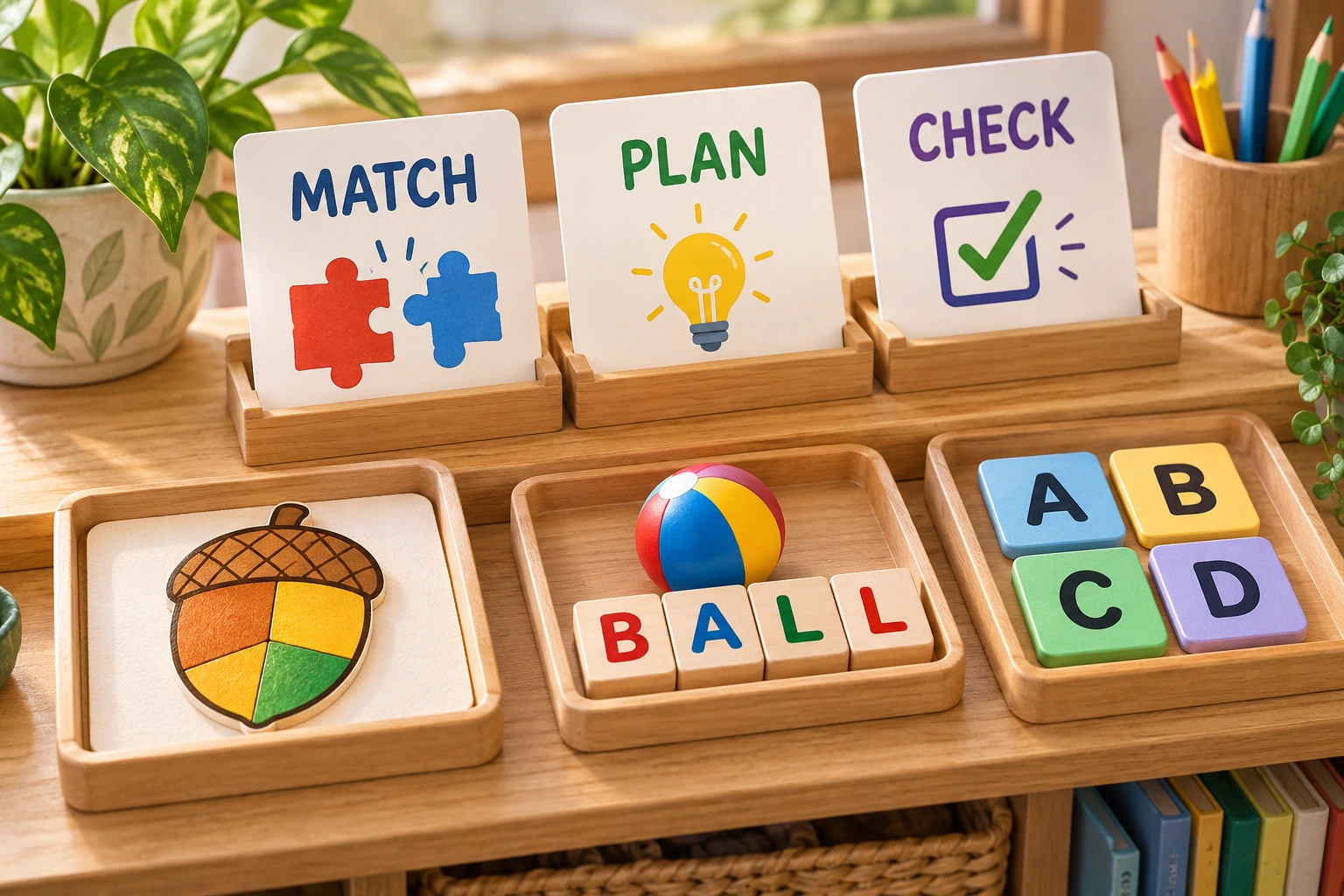
Label three trays MATCH, PLAN and CHECK, then place a relevant sheet beside each. The child explains a choice before beginning. Puzzle Discovery Collection becomes a conversation about what the task asks, with an option to change trays after a short attempt rather than an expectation to complete three worksheets consecutively.
Give an adult one misleading clue
Describe a colour match using only its cap, or name a category using only one favourite example. Invite the child to explain what information is missing. This extension to Puzzle Discovery Collection lets the child improve an adult's explanation and distinguish a helpful clue from one that leaves several candidates possible.
Stage a tiny route inspection
Arrange a few blocks as walls around a toy and a destination. Ask the child to inspect the gaps before moving it. Relate the experience to a maze in Puzzle Discovery Collection, then remove the blocks so the paper problem remains its own challenge rather than a route already demonstrated in full.
Make a picture-word delivery
Write one completed toy or garden word on a card and ask a partner to deliver it to the matching object. Change roles after one delivery. Puzzle Discovery Collection supplies familiar vocabulary, but the extension uses a complete readable model rather than asking a beginner to recall every spelling without support.
Invite a rule inspector
Build a short fruit pattern with objects or picture cards and make one deliberate error. The inspector identifies the repeating unit and explains the mismatch. Afterward, return to the final sheet in Puzzle Discovery Collection, where AB, AAB, ABC, ABB and AABB structures require more than guessing the last fruit seen.
Readiness, reassurance and another visit
Puzzle Discovery Collection suits many adult-supported learners around ages four to seven, with readiness varying by activity. Picture matching may be approachable before crossword spelling or Sudoku constraints. Offer fewer choices, read the instruction aloud or accept a pointed answer while the adult records it; those supports keep the puzzle rule visible without demanding every response independently.
If a child becomes frustrated, name the precise obstacle: an unfamiliar picture, a missed wall opening or a word that needs reading together. Puzzle Discovery Collection works best when interest can survive an unfinished page. Celebrate an explanation or a useful correction, leave a note about the next possible step and return on another day when the child wants a fresh decision.
Choose, purchase and print the clean collection
Use the collection's $5 purchase option, complete checkout and obtain the authorised PDF download through your account. Puzzle Discovery Collection is one paid twenty-five-page file. Its printable pages have no website watermark, domain text or embedded ads. Keep the downloaded file locally, select only the Puzzle Discovery Collection pages you need and inspect their margins in print preview.
An individual worksheet also has its own page, original sample and clean member download. That individual access route is separate from purchasing Puzzle Discovery Collection. The layered preview shows actual included sheets, while the clean PDF keeps each sheet flat on a separate page; overlapping preview pictures are not part of the printable exercises.
Nearby pencil work and family reading ideas
For a quieter movement task after puzzle discussion, consider the between-the-edges road activity. The car-to-flag pencil mazes offer a separate route-planning format, while unfinished picture details make observation lead to a small drawing action.
Adults using Puzzle Discovery Collection can also consult NAEYC's home-writing suggestions and PBS Parents' age-four literacy area for broader family activities. These outside resources are optional companions, not requirements for completing a puzzle. Let one well-explained choice, a considered retry and a child's own reason shape the next visit.
Popular Worksheets
Printable resources families and teachers are downloading now.
 Free
 Free
 Free
 Free