
Penguin Round Maze: 6 Cool Turns Towards the Star
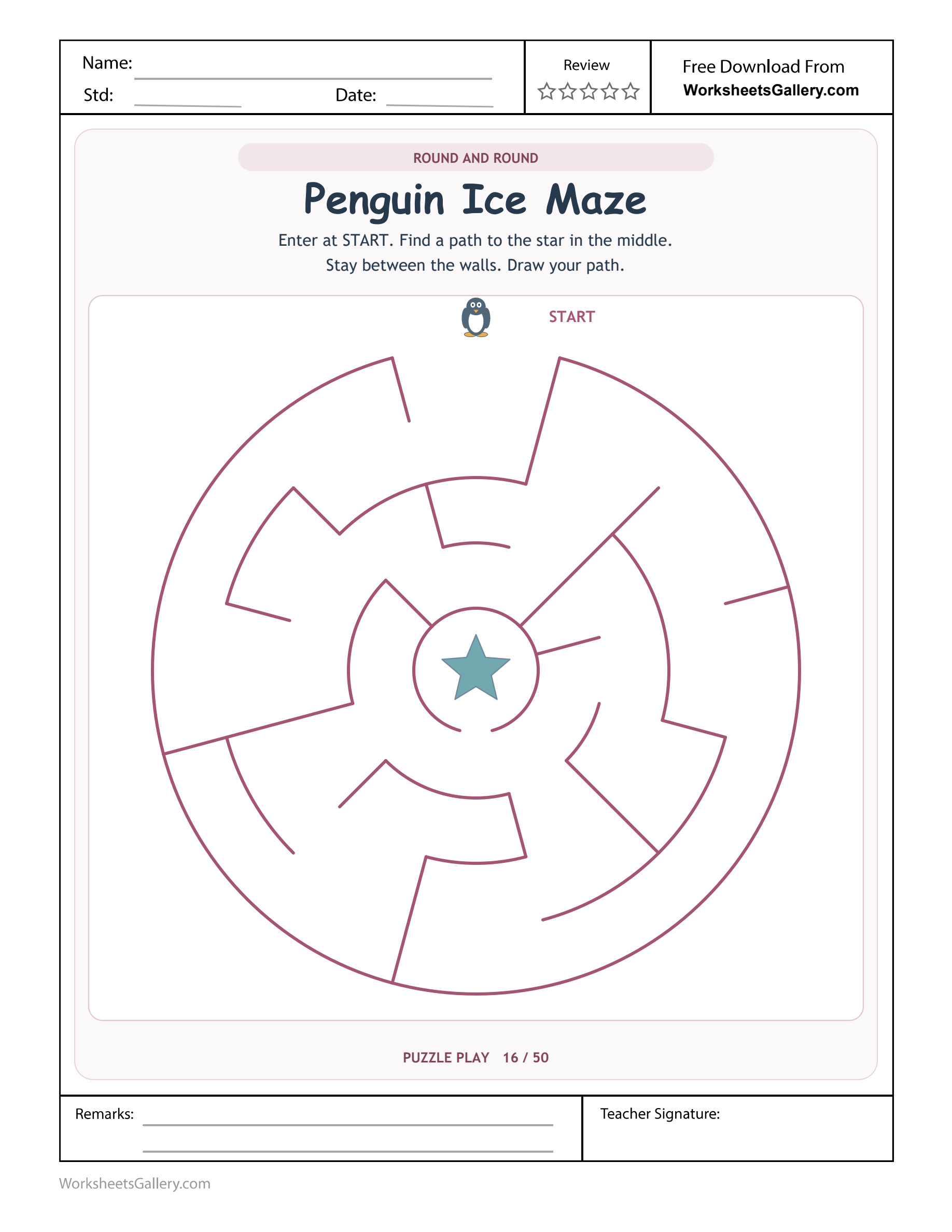
Keep the penguin route ready for another cool puzzle day. The $5 premium collection brings the supplied 25 pages into one clean file. This central-star maze appears with its companion activities, offering several ways to change the pace after tracing.
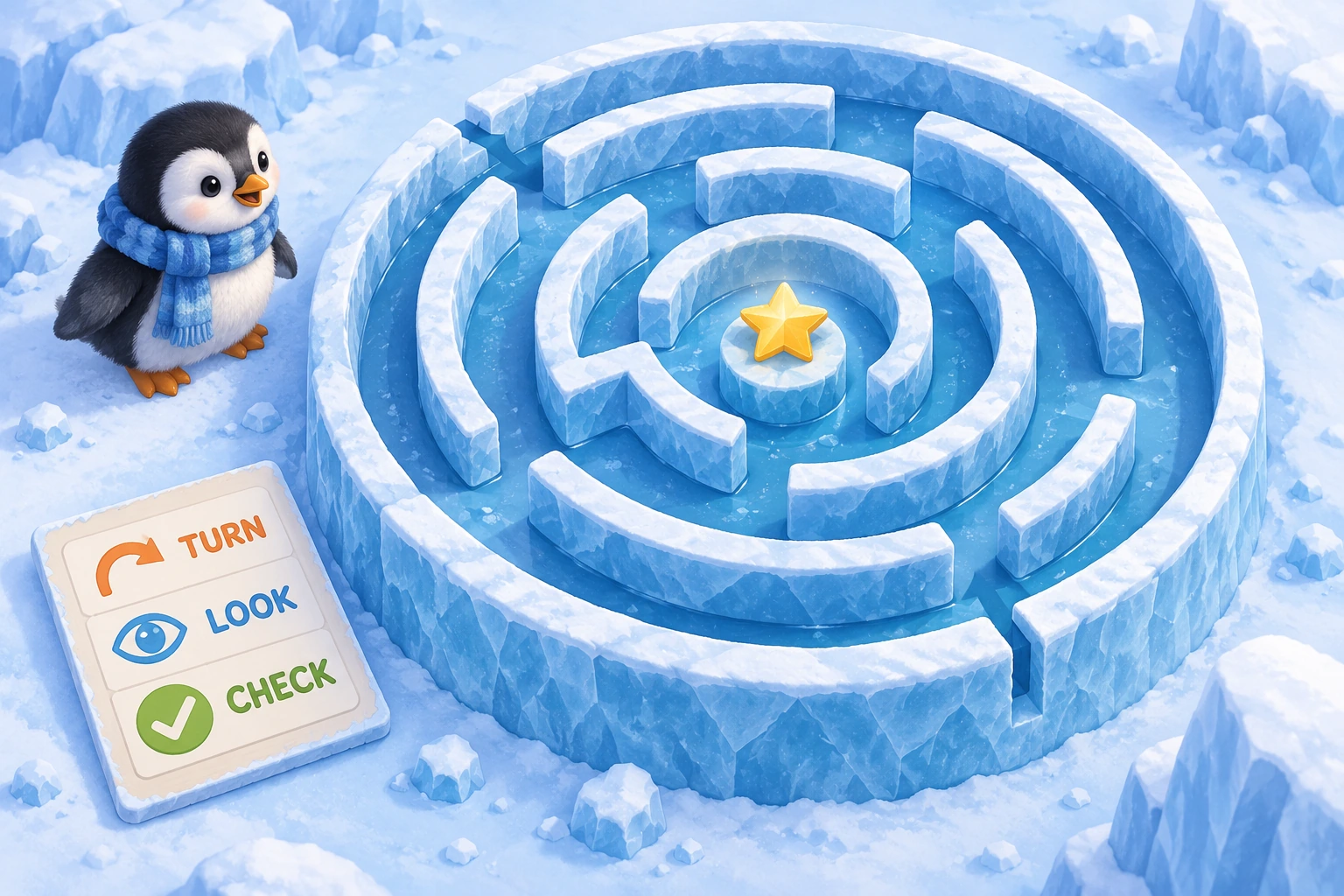
The five-pointed star in the middle gives the penguin a clear destination, but the curved passages decide the journey. Penguin Round Maze invites children to keep track of their current corridor, inspect the next opening and draw a connected route from the top START. A nearby space may look reachable while a short wall still separates it. Slow the conversation at those transitions and ask what remains connected. The penguin adds interest; the printed star, rather than an invented fish or home, remains the actual goal.
Penguin Round Maze: the rule on this particular sheet
This circular maze places START at the top near a penguin, with a star at the centre as the goal. The destination is not a fish, an igloo or a second penguin; the actual printed star determines the finish.
Track the open corridor you occupy before considering another inward move. Curved passages can make neighbouring spaces look connected even when a short wall separates them. A visible gap is needed to cross into the next corridor.
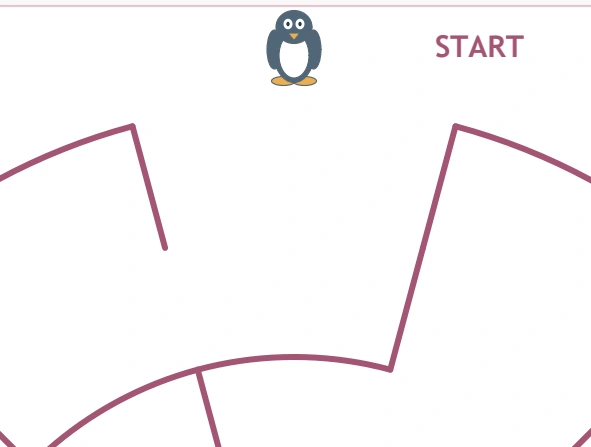
What next transition reveals
Turning away from the centre temporarily can be part of a sensible route. The relevant check is whether the passage remains open and leads to another useful choice, rather than whether every pencil movement points directly at the star.
The sheet supplies walls, not a dotted answer path. Children choose and draw a route. The penguin theme can make the journey playful, but it does not change the rule about staying between barriers.
Re-establish the current curved passage
When the route becomes confusing, point to the two walls immediately beside the child’s fingertip. Those boundaries identify the corridor currently being followed. Then ask where that corridor remains open. This local inspection can be more useful than repeatedly staring at the central star, because it gives the next decision a stable starting place and makes an apparent shortcut easier to test.
Imagine Rory at a home puzzle table
Rory loses track of which curved passage she was following. Her mother points to the two walls beside her fingertip and asks her to name the next opening. Re-establishing the current corridor makes the next choice less confusing. Here, Penguin Round Maze gives Rory a reason to discuss keeping a place using the Penguin Ice Maze clues.
A practical Penguin Round Maze sequence
Penguin entrance with Rory
Begin Penguin Round Maze: penguin entrance. Locate the top START and its open passage. Ask Rory, “Which passage are we in now?” The mother and Rory can inspect penguin entrance together.
Current corridor with Rory
Next inspect Penguin Round Maze: current corridor. Identify the walls on either side of the route. Ask Rory, “Is there really a gap here?” The mother and Rory can inspect current corridor together.
Next transition with Rory
Then confirm Penguin Round Maze: next transition. Move between corridors only at a visible gap. Ask Rory, “Can this turn lead to another opening?” The mother and Rory can inspect next transition together.
Star destination with Rory
Finally record Penguin Round Maze: star destination. Finish at the central star after a continuous open journey. Ask Rory, “Where is the bend becoming narrow?” The mother and Rory can inspect star destination together.
Penguin Round Maze adult reference
| Printed clue | Source check |
|---|---|
| Penguin entrance | Locate the top START and its open passage. |
| Current corridor | Identify the walls on either side of the route. |
| Next transition | Move between corridors only at a visible gap. |
| Star destination | Finish at the central star after a continuous open journey. |
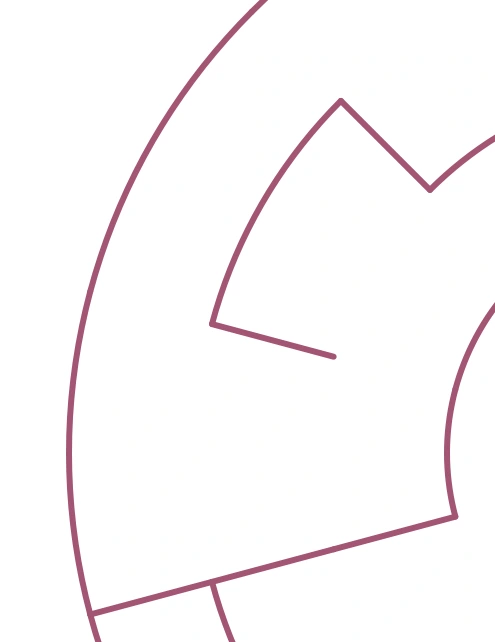
A small wall still changes the answer
Short barriers between neighbouring curved spaces can be easy to overlook. Ask whether the proposed move passes through open space all the way, even when the destination lies only a little distance away. The size of the movement does not cancel the wall rule. An adult can highlight the relevant boundary while leaving the child to locate an alternative gap.
5 observations in Penguin Round Maze
Keeping a place: Which passage are we in now
Here, the current curved corridor provides a stable reference. The prompt “Which passage are we in now?” gives Rory a way to explain keeping a place to the mother.
Local inspection: Is there really a gap here
Here, nearby walls need checking before a short move. The prompt “Is there really a gap here?” gives Rory a way to explain local inspection to the mother.
Direction flexibility: Can this turn lead to another opening
Here, a useful route may turn away before moving inward. The prompt “Can this turn lead to another opening?” gives Rory a way to explain direction flexibility to the mother.
Slow curved drawing: Where is the bend becoming narrow
In Penguin Round Maze, pencil movement follows a selected corridor. The prompt “Where is the bend becoming narrow?” gives Rory a way to explain slow curved drawing to the mother.
Partner communication: What should your partner check next
In Penguin Round Maze, a route report makes an invisible plan discussable. The prompt “What should your partner check next?” gives Rory a way to explain partner communication to the mother.
Penguin Round Maze: next transition mistakes
Jumping across neighbouring curved walls can look like a tiny move but breaks the maze rule. Also avoid treating any attractive space near the penguin as the entrance; locate the printed top START before drawing. Invite Rory to discuss next transition with the mother.
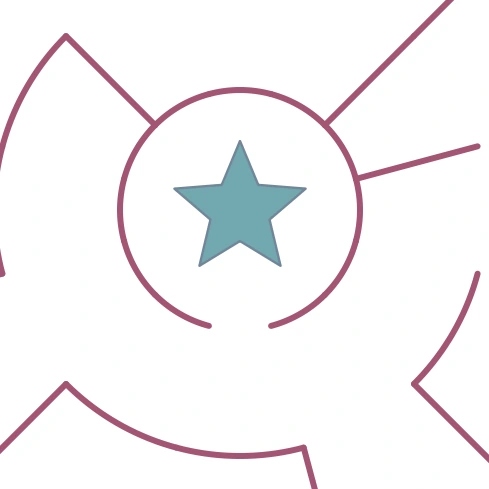
Let an outward turn have a reason
A route may move away from the star before finding a passage towards it. Avoid judging a turn only by whether it points inward at that instant. Instead, inspect the corridor and its next opening. The child can explain how a detour remains connected to the overall goal, making the journey an exercise in route reasoning rather than a demand to draw the shortest-looking line.
Five play invitations after Penguin Round Maze
Make an icy arc model
Use broad pale-blue paper arcs around a gold star. A penguin toy travels through the gaps while a child describes which corridor it occupies. After this Penguin Round Maze play round, ask the mother which clue Rory chose to explain.
Use turn-look-check cards
Arrange completed TURN, LOOK and CHECK cards beside a tabletop route. Point to a card when its action is useful, keeping the words linked to visible decisions. Let Rory demonstrate this example before another Penguin Round Maze visit; ask the mother to listen for Rory’s reasoning.
Pause at a narrow bend
Create a short curved channel with two string edges. Move a finger slowly around its bend and discuss why speed is less useful than staying within the channel. On a later Penguin Round Maze visit, ask Rory what changed; the mother can discuss Rory’s evidence.
Explain a permitted detour
Build a route that goes outward briefly before an inward opening. Let a navigator explain why that turn still serves the central-star goal. Ask Rory how this example relates to Penguin Round Maze; the mother can follow the clue that Rory identifies.
Repair a mistaken entrance
An adult starts a toy from an arbitrary gap. The child locates a clearly labelled START on the separate model and resets the journey to the intended entry. Keep Rory’s own explanation central in this Penguin Round Maze game. Let the mother hear what Rory observed.
Classroom partners inspect current corridor
Partners use a short spoken routine at each turn: identify the corridor, locate its opening and check the next space. The adult encourages a clear route report rather than a fast sweep towards the centre. For a Penguin Round Maze partner visit, local inspection is this penguin round maze partnership focus.
The penguin story should follow the page
It is easy to invent a fish or igloo destination in a penguin tale, but this printed puzzle ends at a star. Keep the story aligned with that actual goal when introducing the activity. The child can enjoy being a guide through icy passages while still knowing precisely which symbol counts as arrival. Extra story details need not replace the worksheet’s visible endpoint.
Readiness for Penguin Round Maze at ages 4–6
Let the child point to the current corridor while an adult helps steady the page. A spoken decision or finger route can reveal understanding before the pencil can negotiate every curve comfortably. Suggested range for Penguin Round Maze: ages 4–6. Begin with keeping a place and adult support.
For a comfortable Penguin Round Maze visit, let Rory show penguin entrance before the mother requests another response. Discuss partner communication using the printed Penguin Ice Maze example.
A fresh Penguin Round Maze reason to return
Choose a tricky corridor transition for a short return visit. Ask the child to explain what remains connected and what is separated by a wall, without requiring the entire maze again. Rory can show the mother a new star destination observation during that short penguin round maze visit.
Save a printable Penguin Round Maze copy
Use active eligible member access to select the clean Penguin Round Maze premium PDF. Its penguin entrance, curved passages and central star remain unchanged after the website watermark and domain branding are removed. The file is free of embedded ads, while the original sample is retained separately. Check the full outer circle and START label in portrait printing preview. A $5 purchase of the combined collection includes this maze among twenty-five supplied activities.
Penguin Round Maze: another printable to explore
Extend the keeping a place conversation beyond Penguin Round Maze with Penguin entrance before a road-width task; Direction flexibility and picture-detail tracing; Slow curved drawing beside a car-and-flag maze.
Explore Penguin Round Maze alongside NAEYC family-writing ideas and Penguin Round Maze with PBS Parents literacy activities. Keep penguin entrance, slow curved drawing and destination accuracy connected to the pictured puzzle.
Popular Worksheets
Printable resources families and teachers are downloading now.
 Free
 Free
 Free
 Free