
Rocket Circular Maze: 5 Exciting Gap-Finding Missions
Make the rocket rings one part of a varied puzzle menu. Get the combined clean edition of all 25 provided sheets for $5. Its printable pages let you alternate circular navigation with category choices, target searches and simple picture-based reasoning.
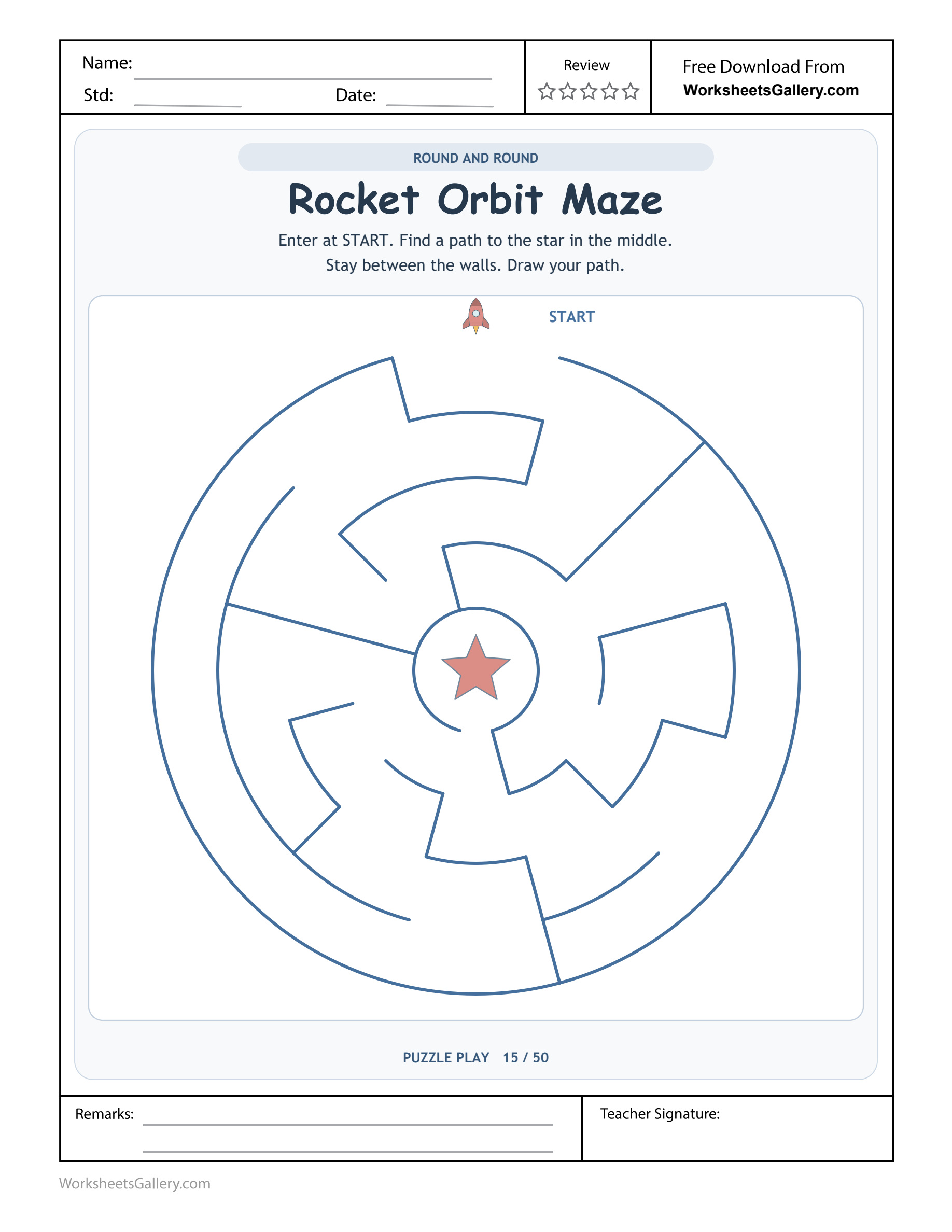
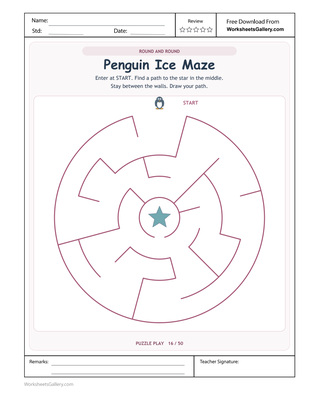
Moving around a ring does not automatically move a rocket towards its star. Rocket Circular Maze asks children to enter at the top START and find openings between curved walls until they reach the centre. The circular layout invites a different kind of route inspection from a rectangular maze: identify the current corridor, look for a genuine gap and decide whether it permits an inward transition. A fingertip can explore the next move before the pencil follows, keeping the central destination visible while respecting each printed barrier.
Rocket Circular Maze: the rule on this particular sheet
The rocket-themed circular maze begins at START at the top and ends at the star in the centre. Curved walls form separate corridors, with openings that allow movement between them.
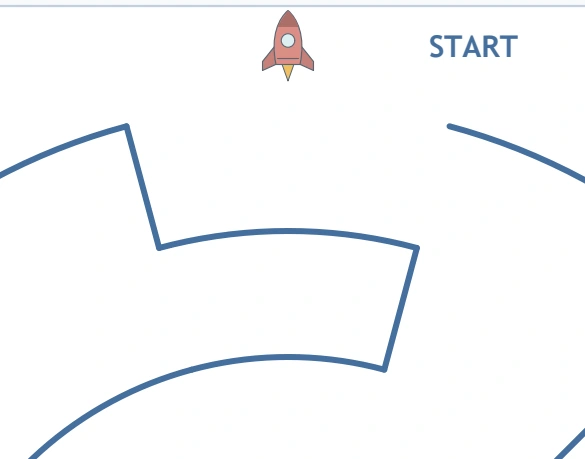
An inward-looking direction is not enough if a curved wall blocks it. Search for an actual gap before changing corridors. At some points the usable route may require travelling around a ring before moving closer to the centre.
What inward gap reveals
This is not a spiral-tracing worksheet or a task to draw a rocket orbit freely. The route must remain inside the supplied open passages, respecting every wall between the entrance and the central star.
The central star is the destination. Decorative space imagery does not create extra stopping points, and the START label identifies the intended entrance rather than an invitation to begin from any outer gap.
Rocket Circular Maze: inward gap mistakes
Drawing directly towards the star can cross several walls. Following one ring indefinitely can also miss a useful opening. Separate travelling within a corridor from finding a gap that allows entry to another corridor. Invite Eli to discuss inward gap with the father.
Identify a corridor before changing rings
Two curved walls can frame one open passage. Follow that passage far enough to identify a genuine break in the next wall before moving inward. The circular shape can tempt a child to treat neighbouring spaces as connected simply because they sit close together. Ask where the opening occurs, keeping the proposed transition tied to visible geometry rather than the wish to reach the star quickly.
A practical Rocket Circular Maze sequence
Top entrance with Eli
Begin Rocket Circular Maze: top entrance. Begin at the printed START at the top. Ask Eli, “Which open ring are we following?” The father and Eli can inspect top entrance together.
Curved corridor with Eli
Next inspect Rocket Circular Maze: curved corridor. Follow the open space between neighbouring walls. Ask Eli, “Where can we move inward?” The father and Eli can inspect curved corridor together.
Inward gap with Eli
Then confirm Rocket Circular Maze: inward gap. Find a real opening before changing rings. Ask Eli, “Does this opening help us reach the middle?” The father and Eli can inspect inward gap together.
Central goal with Eli
Finally record Rocket Circular Maze: central goal. Confirm the route reaches the star without crossing a barrier. Ask Eli, “Where should the hand slow down?” The father and Eli can inspect central goal together.
Rocket Circular Maze adult reference
| Printed clue | Source check |
|---|---|
| Top entrance | Begin at the printed START at the top. |
| Curved corridor | Follow the open space between neighbouring walls. |
| Inward gap | Find a real opening before changing rings. |
| Central goal | Confirm the route reaches the star without crossing a barrier. |

Classroom partners inspect curved corridor
A teacher asks a navigator to point to the next inward opening before drawing. A partner checks the proposed transition against the curved wall, giving each corridor change a brief evidence-based pause. For a Rocket Circular Maze partner visit, gap detection is this rocket circular maze partnership focus.

A circle is not a complete route plan
A child may enjoy travelling around an outer ring, but continuing around by itself does not guarantee progress to the centre. Look for the point where a gap offers another corridor. This distinguishes the maze from freely drawing an orbit or tracing a supplied spiral. The rocket theme gives the task energy, while the printed openings decide whether the next movement is possible.
Five play invitations after Rocket Circular Maze
Build broken cardboard rings
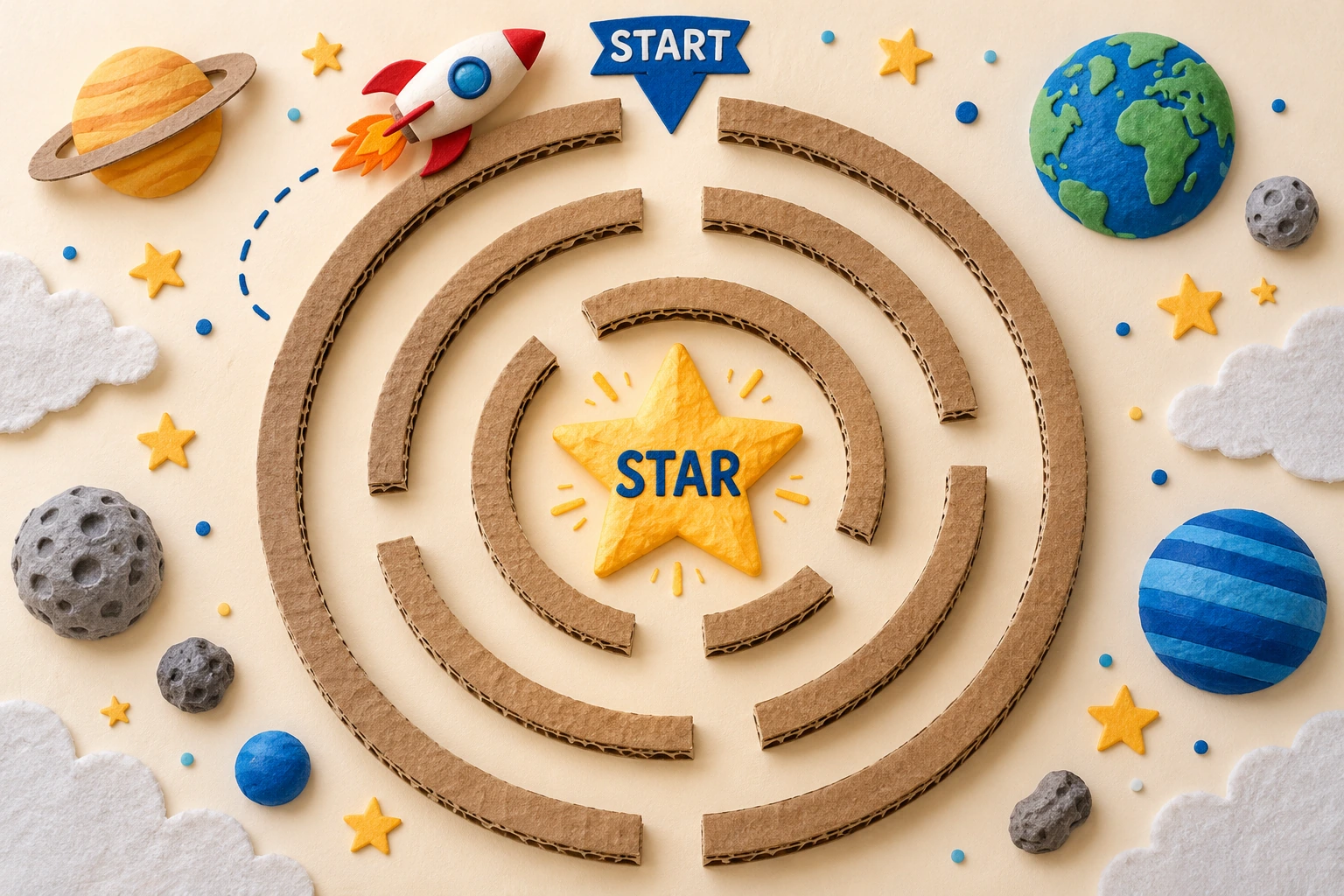
Arrange three broad cardboard arcs around a star token, leaving visible gaps. Move a toy rocket between corridors only through those openings. After this Rocket Circular Maze play round, ask the father which clue Eli chose to explain.
Call the inward gate
A navigator names the next gap on a simple ring model before a partner moves the rocket. Check whether the indicated wall actually has an opening. Let Eli demonstrate this example before another Rocket Circular Maze visit; ask the father to listen for Eli’s reasoning.
Compare orbit and maze
Trace a free circle on separate paper, then inspect a ring maze model. Discuss why following a circular shape alone does not solve the printed route problem. On a later Rocket Circular Maze visit, ask Eli what changed; the father can discuss Eli’s evidence.
Put a star at the centre
Move a star token into the middle of a tabletop arrangement and describe the goal before entering. The destination remains stable while the route changes direction. Ask Eli how this example relates to Rocket Circular Maze; the father can follow the clue that Eli identifies.
Catch a wall-crossing shortcut
An adult moves a toy straight across a cardboard arc. The child identifies the broken rule and finds an opening that permits a legitimate transition. Keep Eli’s own explanation central in this Rocket Circular Maze game. Let the father hear what Eli observed.
6 observations in Rocket Circular Maze
Curved spatial tracking: Which open ring are we following
Here, a route can bend while remaining in one corridor. The prompt “Which open ring are we following?” gives Eli a way to explain curved spatial tracking to the father.
Gap detection: Where can we move inward
Here, a wall break permits a change of corridor. The prompt “Where can we move inward?” gives Eli a way to explain gap detection to the father.
Goal planning: Does this opening help us reach the middle
Here, the central star guides a journey with detours. The prompt “Does this opening help us reach the middle?” gives Eli a way to explain goal planning to the father.
Movement control: Where should the hand slow down
In Rocket Circular Maze, curved turns call for considered pencil direction. The prompt “Where should the hand slow down?” gives Eli a way to explain movement control to the father.
Rule distinction: Is this move inside a printed passage
In Rocket Circular Maze, an open maze differs from a free orbit drawing. The prompt “Is this move inside a printed passage?” gives Eli a way to explain rule distinction to the father.
Verbal navigation: Which opening should I inspect
In Rocket Circular Maze, a partner needs the location of the next gap. The prompt “Which opening should I inspect?” gives Eli a way to explain verbal navigation to the father.
Use the star to judge the destination
The central star is a goal, not permission to draw directly through every wall between it and START. Ask the child to show the final opening into its surrounding space. That last transition deserves the same inspection as the outer entrance. A connected route can then be checked from beginning to end, with every corridor change justified by an actual gap.
Imagine Eli at a home puzzle table
Eli follows an outer curve and asks why the star is not getting closer. His father invites him to look for a break in the next wall. The search changes from simply going around to finding a permitted transition between corridors. Here, Rocket Circular Maze gives Eli a reason to discuss curved spatial tracking using the Rocket Orbit Maze clues.
Make one inward move discussable
An adult can ask a child to explain a single transition rather than recite the entire journey. Which wall ends, which opening becomes available and which corridor receives the rocket? A short answer supported by pointing can reveal the spatial relationship clearly. Return to the rest of the route when the child is interested, keeping the first discussion focused enough to be manageable.
A fresh Rocket Circular Maze reason to return
On another attempt, explain one corridor change rather than memorising the whole journey. Naming the actual gap gives a fresh purpose to a familiar central-star destination. Eli can show the father a new central goal observation during that short rocket circular maze visit.
Readiness for Rocket Circular Maze at ages 4–6
Use a large physical ring example before the smaller printed maze if curved corridors are difficult to track. Point along the passage with a fingertip while an adult helps maintain the page orientation. Suggested range for Rocket Circular Maze: ages 4–6. Begin with curved spatial tracking and adult support.
For a comfortable Rocket Circular Maze visit, let Eli show top entrance before the father requests another response. Discuss rule distinction using the printed Rocket Orbit Maze example.
Save a printable Rocket Circular Maze copy
The clean Rocket Circular Maze download uses the premium route for eligible active memberships. It removes website-domain text and watermark graphics, keeps the circular corridors intact and contains no embedded ads. The original sample remains a different option. Inspect the full circular outline, top entrance and centre star in printer preview before producing a copy. This rocket puzzle is also included in the separately sold $5 collection of twenty-five clean supplied worksheets.
Rocket Circular Maze: another printable to explore
Extend the curved spatial tracking conversation beyond Rocket Circular Maze with Top entrance before a road-width task; Goal planning and picture-detail tracing; Movement control beside a car-and-flag maze.
Explore Rocket Circular Maze alongside NAEYC family-writing ideas and Rocket Circular Maze with PBS Parents literacy activities. Keep top entrance, movement control and verbal navigation connected to the pictured puzzle.
Popular Worksheets
Printable resources families and teachers are downloading now.
 Free
 Free
 Free
 Free