
Ocean Picture Counting: 4 Brilliant Search-and-Record Tasks
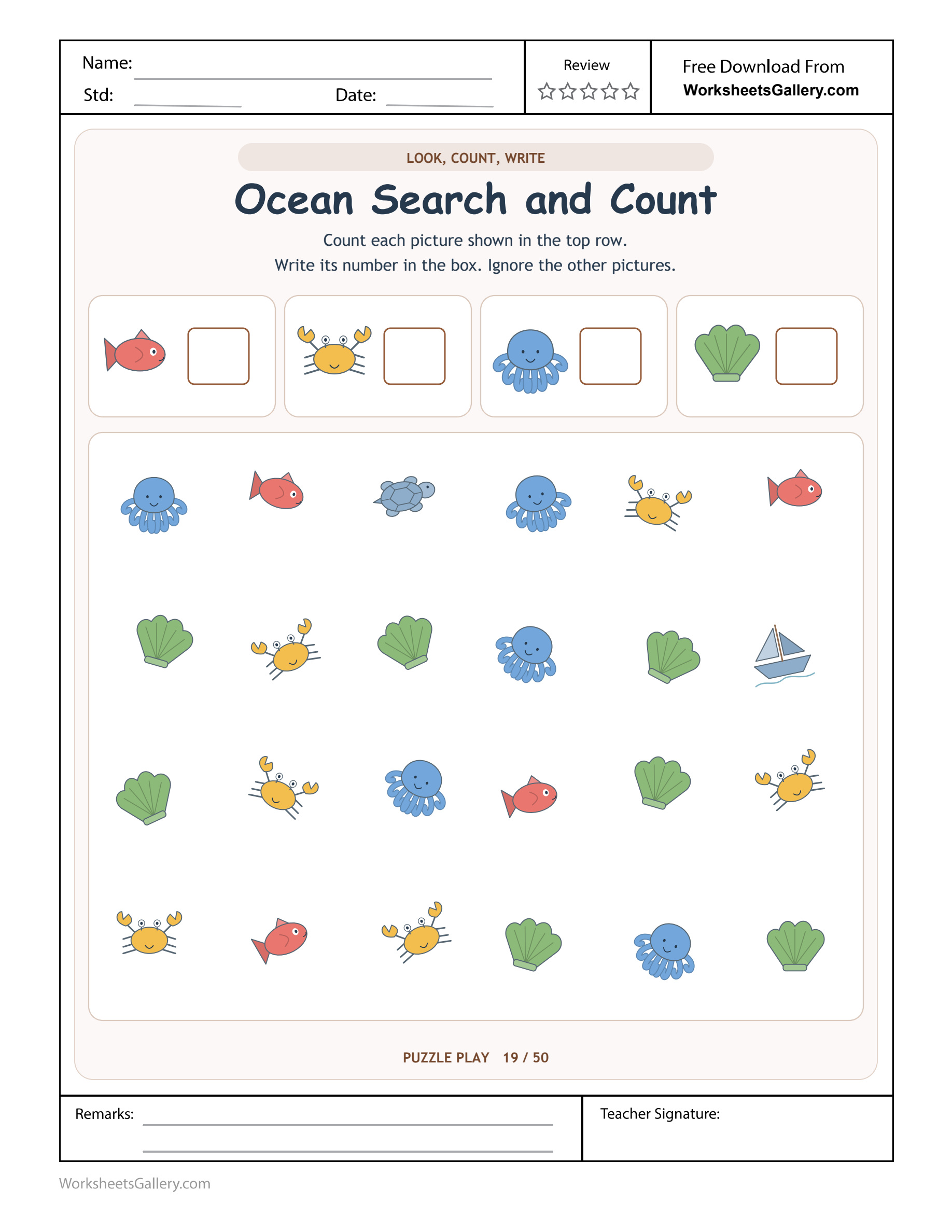
Keep the ocean totals with a broader counting-and-clue selection. Buy the clean combined set for $5 to receive the 25 provided pages in one PDF. This search-and-record sheet joins category puzzles, routes, reflections and other distinct thinking tasks.
A fish picture above the counting field identifies a target; it does not add another fish to the collection. Ocean Picture Counting makes that distinction useful across four sea-picture totals. Children search the mixed field for fish, crabs, octopuses and shells, ignoring a turtle and sailboat that belong outside the requested categories. Choose one target for an organised row sweep, then place its verified numeral beside the matching key. A partner can help track the current row while the child supplies the counting words and final quantity.
Ocean Picture Counting: the rule on this particular sheet
Four reference targets—fish, crab, octopus and shell—sit above a field of twenty-four pictures. Write each quantity in its matching answer box after counting only the objects inside the main field.
The field contains five fish, six crabs, five octopuses and six shells. A turtle and sailboat are distractors. These twenty-two target pictures plus two outsiders account for the twenty-four objects in the field.

What octopus reveals
Choose one category and scan systematically, such as following each row from one side to the other. A small pointing movement can help distinguish a counted target from the next picture without marking every object permanently.
The top reference icons are not additional members of the counted collection. Including one would inflate every total. Match the final numeral to the correct reference picture after the count is complete.
Ocean Picture Counting: octopus mistakes
A scattered scan can count an octopus twice or skip a shell. Return to an organised row sweep. Also ignore the turtle and sailboat when counting the four requested categories, and keep the reference icons outside the totals. Invite Cleo to discuss octopus with the teacher.
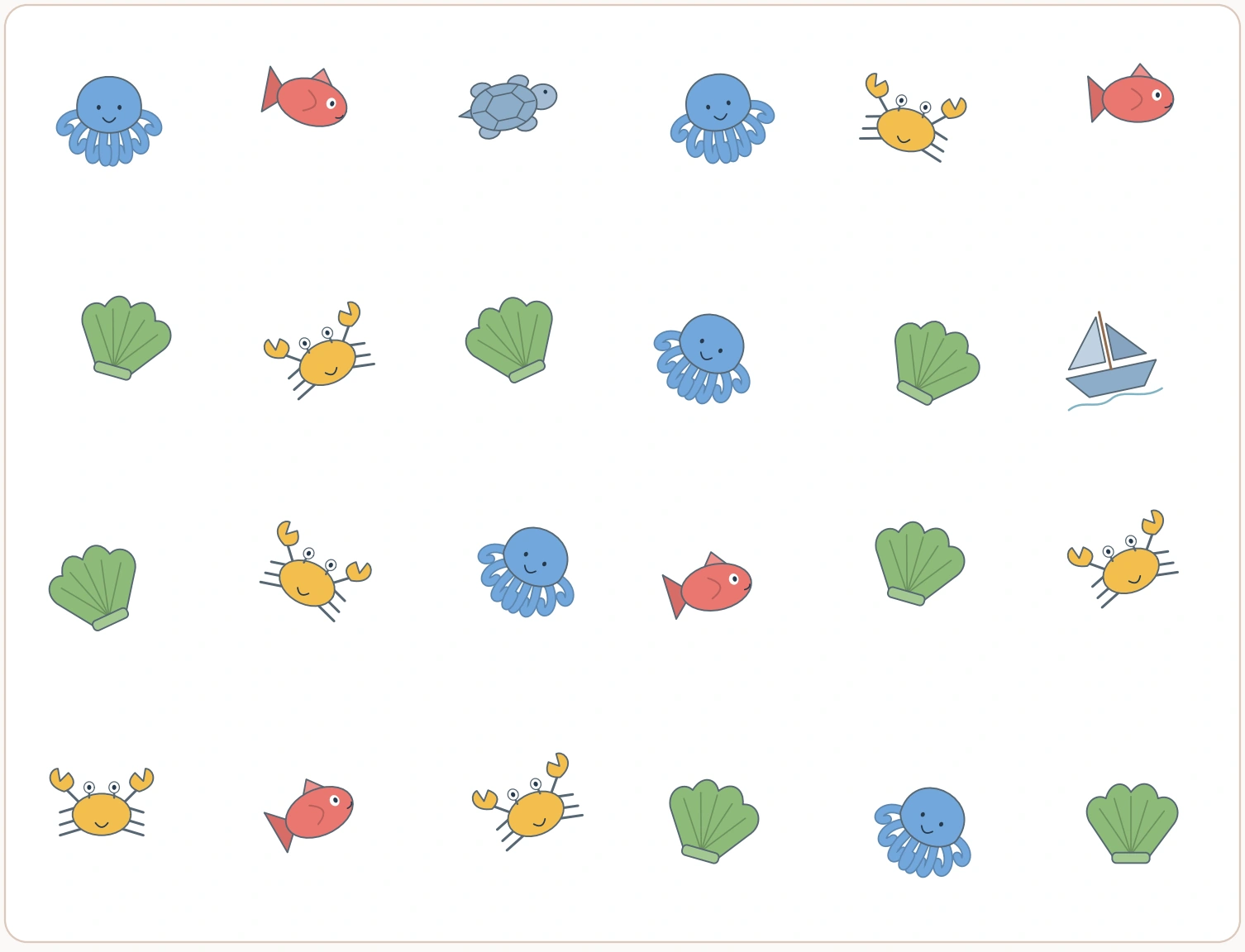
Count the field, not its reference pictures
The top row names fish, crab, octopus and shell, but those four key images sit outside the main collection. Point to the large field boundary before beginning. A child can return to a reference whenever the target identity is uncertain without adding it to the total. This distinction prevents a consistent one-too-many error across otherwise careful counting passes.
A practical Ocean Picture Counting sequence
Fish with Cleo
Begin Ocean Picture Counting: fish. The main field contains 5 fish. Ask Cleo, “Have we counted this fish already?” The teacher and Cleo can inspect fish together.
Crab with Cleo
Next inspect Ocean Picture Counting: crab. Count 6 crabs inside the picture field. Ask Cleo, “Is this one of our four targets?” The teacher and Cleo can inspect crab together.
Octopus with Cleo
Then confirm Ocean Picture Counting: octopus. There are 5 octopus pictures to record. Ask Cleo, “Does the key picture belong in the field total?” The teacher and Cleo can inspect octopus together.
Shell with Cleo
Finally record Ocean Picture Counting: shell. The 6 shells exclude the top reference icon. Ask Cleo, “Which box needs this total?” The teacher and Cleo can inspect shell together.
Ocean Picture Counting adult reference
| Printed clue | Source check |
|---|---|
| Fish | The main field contains 5 fish. |
| Crab | Count 6 crabs inside the picture field. |
| Octopus | There are 5 octopus pictures to record. |
| Shell | The 6 shells exclude the top reference icon. |
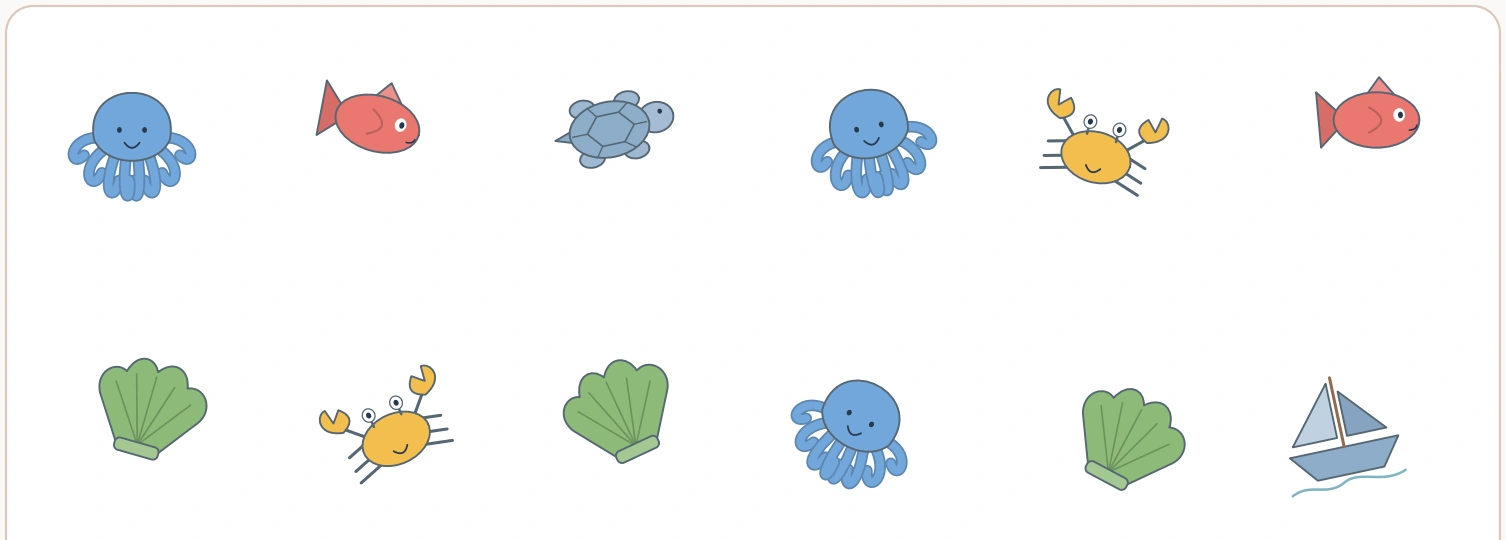
Classroom partners inspect crab
Partners assign one child to scan for crabs and another to watch the current row. After recording the total, they recount independently and compare evidence if their answers differ, rather than simply accepting the larger number. For a Ocean Picture Counting partner visit, category filtering is this ocean picture counting partnership focus.
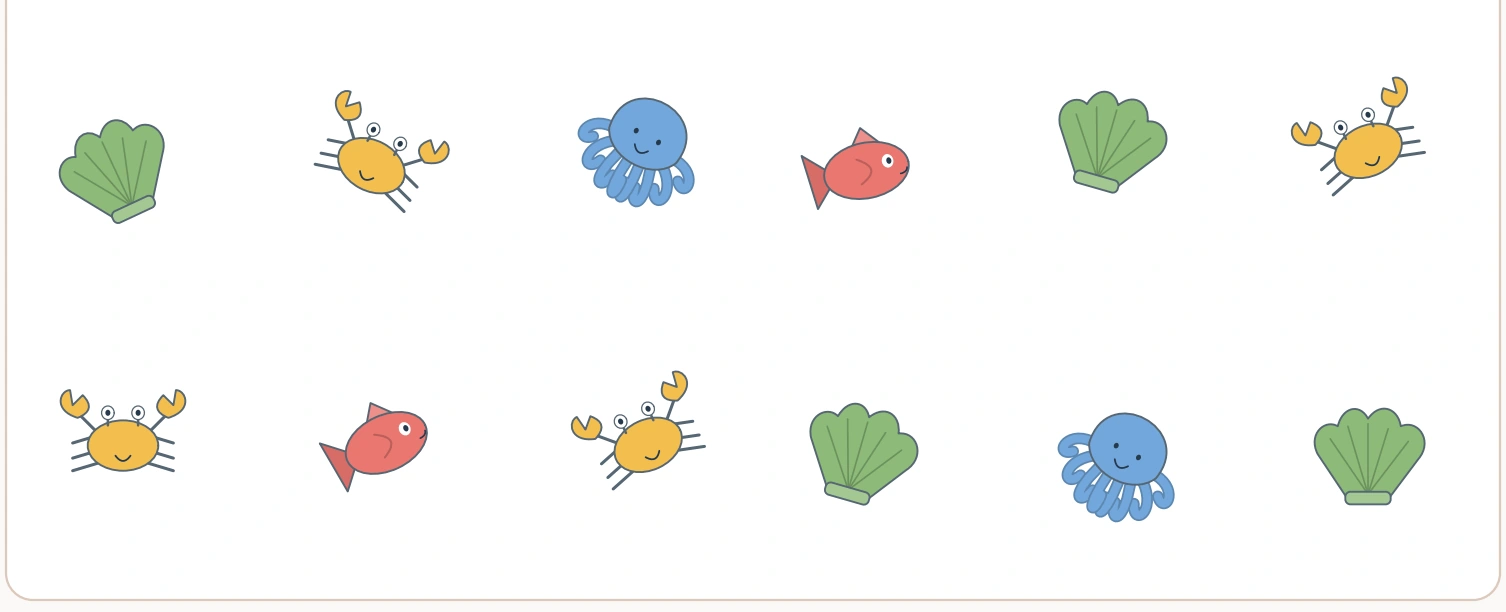
One target deserves one complete sweep
Choose fish, then follow the field rows in an agreed direction until every fish has been considered. Leave crabs and shells for their own passes. Switching categories mid-scan can make it difficult to remember which quantity the spoken number describes. A partner who watches the current row can support tracking while the child remains responsible for identifying and counting the selected target.
Five play invitations after Ocean Picture Counting
Count a small tidal tray
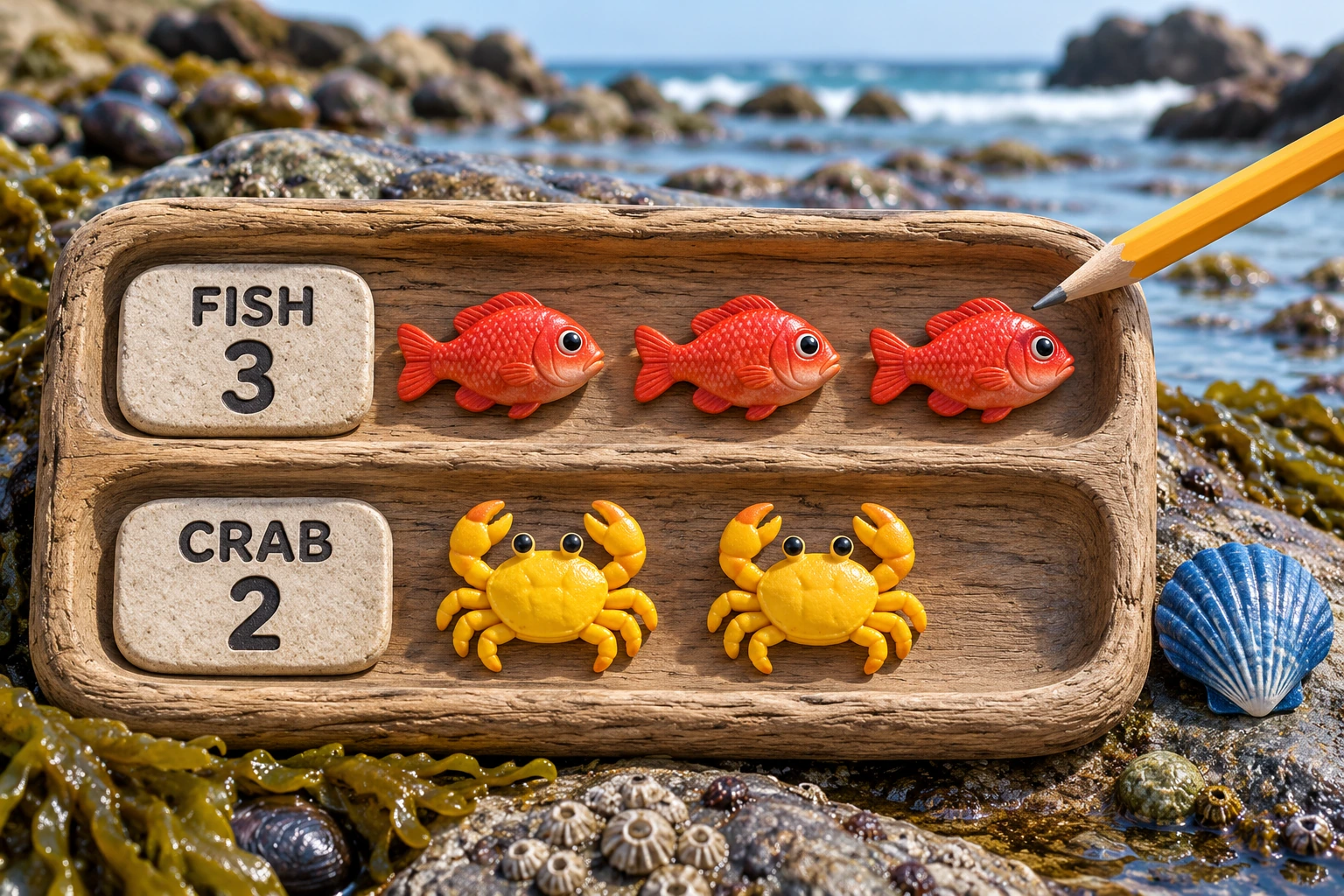
Arrange exactly three fish models and two crab models, then use filled labels FISH 3 and CRAB 2. Explain that this separate example has different quantities from the worksheet. After this Ocean Picture Counting play round, ask the teacher which clue Cleo chose to explain.
Make a reference outside the pool
Place a fish key card above a bounded mat containing a few fish counters. Count only counters inside, leaving the key where it can identify the category. Let Cleo demonstrate this example before another Ocean Picture Counting visit; ask the teacher to listen for Cleo’s reasoning.
Sweep a shell row
Arrange shell pictures among other sea objects in short rows. A finger follows one row at a time while the child says a count only for shells. On a later Ocean Picture Counting visit, ask Cleo what changed; the teacher can discuss Cleo’s evidence.
Invite an outsider boat
Put a toy sailboat beside crab counters. Ask whether the boat changes the crab total and request a reason based on the selected category. Ask Cleo how this example relates to Ocean Picture Counting; the teacher can follow the clue that Cleo identifies.
Audit a recorded sea number
An adult writes a deliberately incorrect total beside a small separate fish group. The child recounts systematically and replaces the numeral using visible evidence. Keep Cleo’s own explanation central in this Ocean Picture Counting game. Let the teacher hear what Cleo observed.
6 observations in Ocean Picture Counting
One-to-one tracking: Have we counted this fish already
Here, each selected sea picture receives one counting word. The prompt “Have we counted this fish already?” gives Cleo a way to explain one-to-one tracking to the teacher.
Category filtering: Is this one of our four targets
Here, turtle and sailboat are outside the requested target set. The prompt “Is this one of our four targets?” gives Cleo a way to explain category filtering to the teacher.
Reference interpretation: Does the key picture belong in the field total
Here, the top icon names a category rather than enlarging it. The prompt “Does the key picture belong in the field total?” gives Cleo a way to explain reference interpretation to the teacher.
Quantity recording: Which box needs this total
Here, a numeral belongs beside the matching target. The prompt “Which box needs this total?” gives Cleo a way to explain quantity recording to the teacher.
Systematic scanning: Where does the next row begin
In Ocean Picture Counting, row order reduces repeated or missed objects. The prompt “Where does the next row begin?” gives Cleo a way to explain systematic scanning to the teacher.
Checking through recounting: Can we show how we reached six
In Ocean Picture Counting, a second organised pass can test a disputed answer. The prompt “Can we show how we reached six?” gives Cleo a way to explain checking through recounting to the teacher.
Distractors explain why totals need a rule
The turtle and sailboat are present in the field but do not belong to any of the four requested counts. Their presence makes selection matter. Ask why each is being passed over during a crab scan, then return to the actual crab pictures. Excluding an object is part of following the current category, not a claim that the object is uninteresting or does not belong in an ocean story.
Imagine Cleo at a home puzzle table
Cleo counts a fish in the key before entering the field. Her teacher asks which pictures lie inside the large counting area. They restart with the field boundary clear and use the top fish only to remember the selected category. Here, Ocean Picture Counting gives Cleo a reason to discuss one-to-one tracking using the Ocean Search and Count clues.
Verify a disputed quantity by showing it
If partners record different shell totals, ask each to demonstrate an organised count rather than vote for one numeral. Following the rows can reveal a skipped or repeated picture. Once the quantity is agreed, locate the shell answer box and record it. The check links evidence to the numeral and provides a practical reason to count again.
A fresh Ocean Picture Counting reason to return
Choose a new starting target or compare the two equal totals on another visit. Ask how a different arrangement could still contain the same number, using the printed quantities as evidence. Cleo can show the teacher a new shell observation during that short ocean picture counting visit.
Readiness for Ocean Picture Counting at ages 4–6
Reduce the search to one target category and use pointing while counting. If numeral formation is the difficulty, an adult can record the child’s spoken total without changing who performed the count. Suggested range for Ocean Picture Counting: ages 4–6. Begin with one-to-one tracking and adult support.
For a comfortable Ocean Picture Counting visit, let Cleo show fish before the teacher requests another response. Discuss systematic scanning using the printed Ocean Search and Count example.
Save a printable Ocean Picture Counting copy
The clean Ocean Picture Counting premium download is protected by eligible active member access. It removes website watermark and domain branding, contains no embedded ads and preserves the reference row and twenty-four-picture field. The original sample remains independently available. Check the four answer boxes and all field rows in printer preview before printing the portrait page. The $5 combined collection includes this ocean-counting activity with the other twenty-four supplied puzzle sheets.
Ocean Picture Counting: another printable to explore
Extend the one-to-one tracking conversation beyond Ocean Picture Counting with Fish before a road-width task; Reference interpretation and picture-detail tracing; Quantity recording beside a car-and-flag maze.
Explore Ocean Picture Counting alongside NAEYC family-writing ideas and Ocean Picture Counting with PBS Parents literacy activities. Keep fish, quantity recording and checking through recounting connected to the pictured puzzle.
Popular Worksheets
Printable resources families and teachers are downloading now.
 Free
 Free
 Free
 Free