
Road Edge Control: 5 Brilliant Between-the-Lines Games
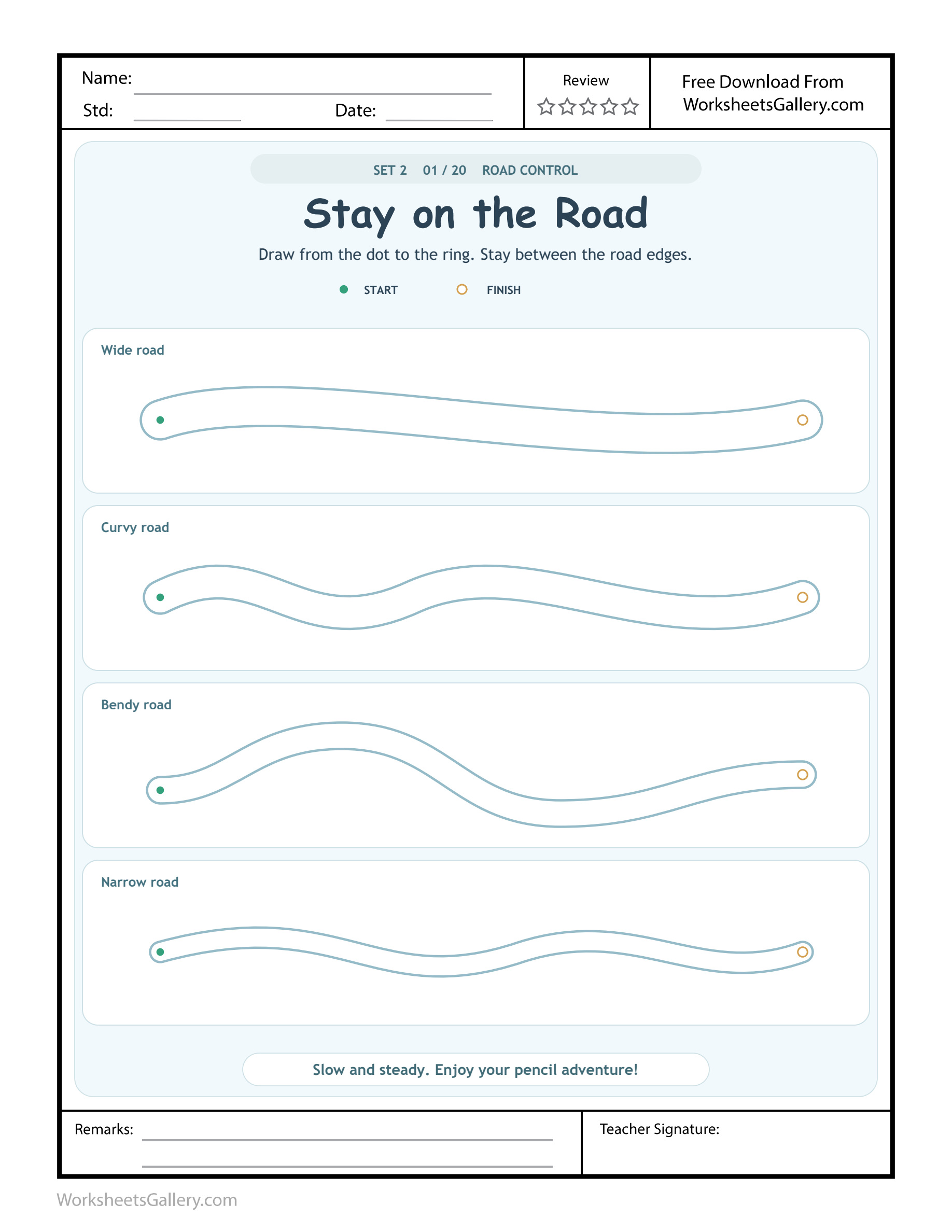
Road width is one of twenty pencil decisions. Find this corridor activity with nineteen different prewriting concepts in the $4 clean collection. One merged PDF keeps the supplied sheets together.
Two blue edges can turn an ordinary pencil line into a tiny driving decision. Road Edge Control uses the four roads on Stay on the Road to invite steady steering from a green dot to a gold ring. There is room to choose a route, because the worksheet supplies boundaries rather than a dotted centreline. For preschool children around three to six, Road Edge Control offers a practical way to notice space, adjust a movement and arrive deliberately. A wide journey can come first; the narrow road can wait until curiosity brings it forward.
What Road Edge Control asks the pencil to watch
The task has two references at once. A line can be inside the upper edge but still cross the lower one, especially around a curve. Road Edge Control asks a child to watch the changing channel and make small adjustments while moving toward the finish. An exact mathematical centre is unnecessary; a sensible route anywhere between the edges meets the printed intention.
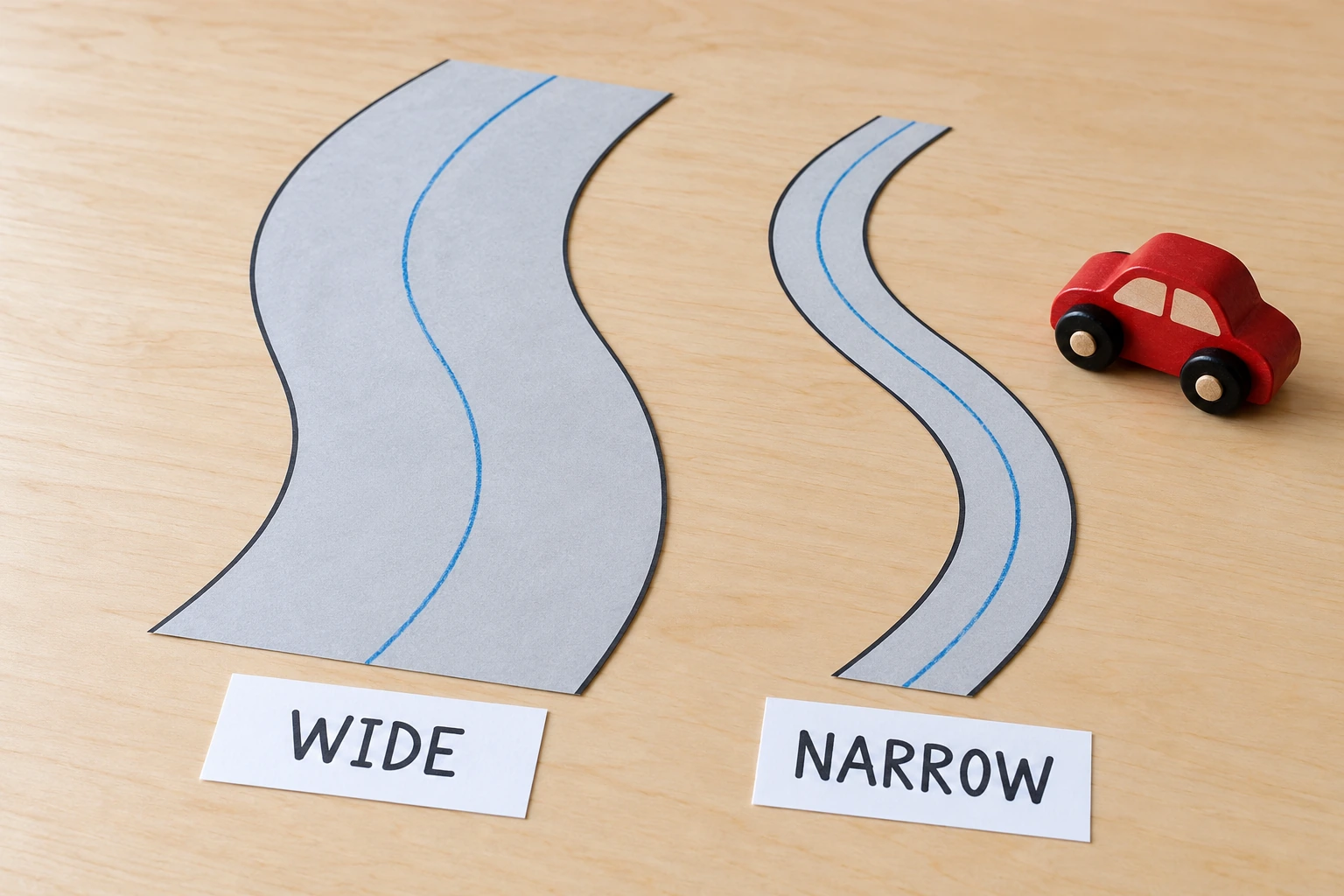
There are four labelled rows: wide road, curvy road, bendy road and narrow road. Road Edge Control changes the available space and the direction of travel across those rows. None requires tracing a preselected dotted answer. Let the child examine the entire road before making the first mark, then talk about the bend that looks most interesting.
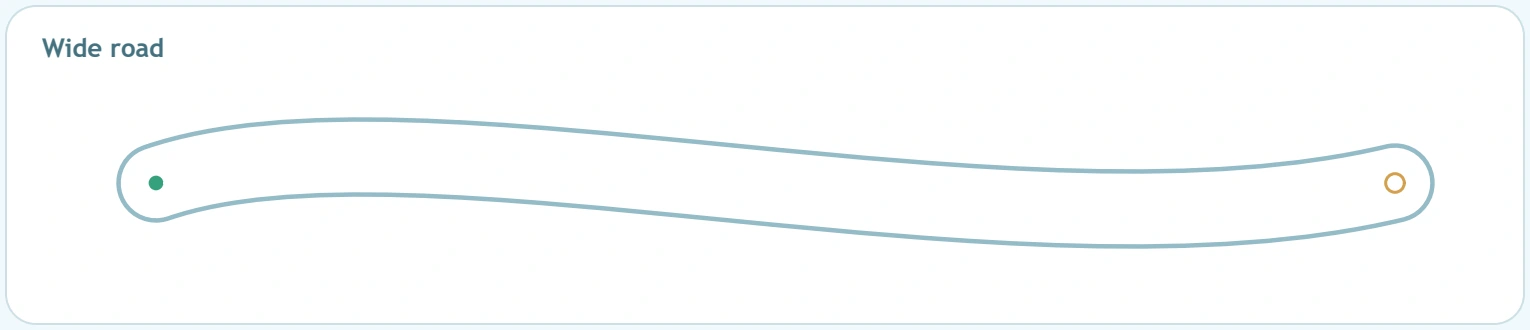
A broad road gives room to experiment
Begin with the wide row if the child wants a generous starting space. Point to the green dot, then ask them to find the ring with their eyes. Road Edge Control starts with that simple visual connection. The adult can name both edges without drawing a route through the middle for the child to follow.
Try a finger journey above the paper before using a pencil. Moving slowly through the curve lets the child notice where the channel changes direction. Road Edge Control need not begin with a flawless line. A mark that stays comfortably inside for part of the road already gives you a useful place to describe what happened.
Five gains worth watching beside the page
- Boundary awareness: Road Edge Control gives a visible inside and outside, making the effect of a movement easy to discuss.
- Looking ahead: noticing an approaching bend encourages a child to prepare a turn before reaching the edge.
- Movement adjustment: Road Edge Control offers broad and narrow spaces, so the same large sweep may need to become smaller.
- Direction language: curve, bend, near, between and finish describe features the child can point to immediately.
- Checking an attempt: comparing a drawn route with its two edges invites a specific observation rather than a vague judgement about neatness.
These opportunities belong to this particular task. They do not make the sheet a handwriting test or establish a required level for every child of the same age. Observe the decisions, including sensible pauses, alongside the finished mark.
Curves change the view ahead
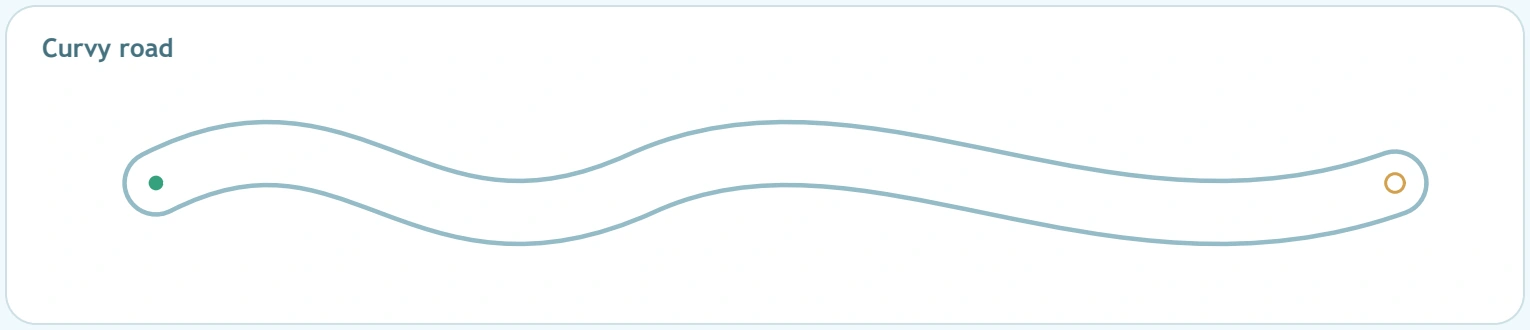
The curvy road rises and falls across the page. A child may follow the first turn successfully and then continue in the old direction after the road has changed. Road Edge Control makes that moment visible: the moving pencil must respond to the next part of the channel, not merely repeat the previous gesture.
Ask, “Where does this road go after the hill?” Wait for a point or a spoken answer. Road Edge Control can include a short pause to inspect that next section. A related smooth ocean-wave activity offers a different way to explore changing curves when a printed tracing guide would be useful.
Mila's kitchen-table delivery
Mila brings a toy car to the table and tells her aunt it has a parcel. Her aunt places the Road Edge Control sheet beside the car and asks which road the driver should try. Mila chooses the wide road. First she tells the parcel where it is going; then she draws her own pencil journey from dot to ring.
At the rising bend, her line touches an edge. They look at that spot together without erasing the whole journey. Mila notices that her hand kept moving down while the road went up. Road Edge Control has supplied a concrete discovery. Her aunt offers another turn later, after the pretend parcel has been delivered to a cushion house.
Set up a short steering visit
- Place the sheet on a surface where it stays still, leaving comfortable space for the drawing arm.
- Let the child select a row and identify its two endpoints before offering an explanation.
- Introduce Road Edge Control with the words “between these edges,” pointing to the actual channel.
- Allow one finger rehearsal if wanted, then give the pencil journey time to happen.
- Discuss a particular turn or arrival, and decide together whether another road would be welcome.
Keep extra instructions for later. Road Edge Control already asks the child to coordinate looking and moving; a stream of adult commentary can compete with that work. A short cue near a tricky bend is usually easier to use than several corrections delivered after it.
In the classroom, compare choices without racing
A teacher can offer Road Edge Control to two children at a writing table, each with their own copy. One chooses the curvy road while the other prefers the wide row. After drawing, they point to a place where the route changed. They can describe different choices without deciding whose pencil was faster.
If a child is searching for a line to trace, explain that this sheet leaves the route open. The earlier road sheet with visible guides and independent practice may provide a useful comparison. Road Edge Control has a different emphasis: steering inside an area whose edges remain visible throughout.
The narrow row makes space more noticeable
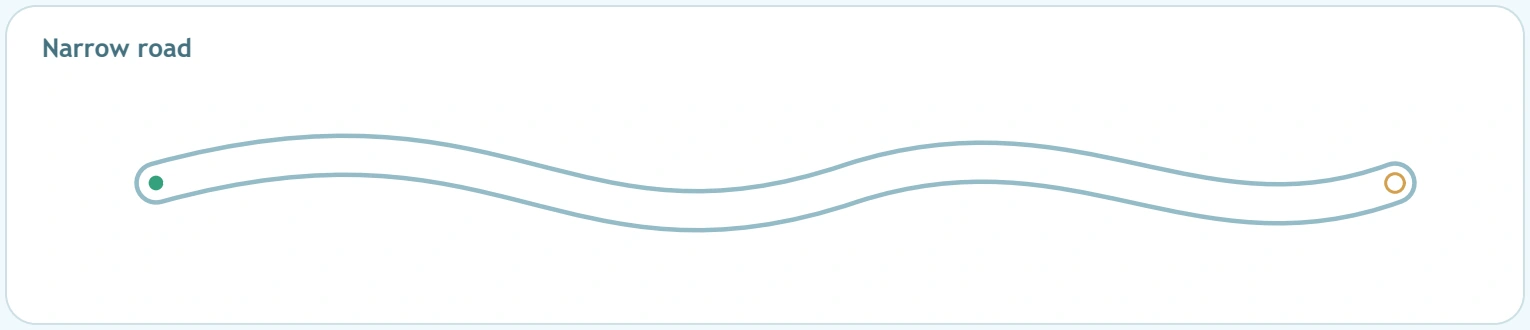
The final road leaves less room around a pencil route. Road Edge Control can therefore feel different even when the general movement is familiar. Start only when the child wants to try it. An adult can help identify the tighter sections without insisting that the pencil must stay perfectly centred.
Compare the wide and narrow channels using two fingers held apart, then closer together. This makes the difference tangible before drawing. Road Edge Control is about adapting to the available space. Enlarging a print can be useful if the original small gap makes it hard for the child to see both boundaries clearly.
Comparing the four Road Edge Control invitations
| Printed road | A useful observation |
|---|---|
| Wide | Road Edge Control leaves a generous gap around a possible route. |
| Curvy | Road Edge Control asks the hand to respond as the channel rises and falls. |
| Bendy | Road Edge Control invites a look ahead before a broader change of direction. |
| Narrow | Road Edge Control makes smaller adjustments relevant within a slimmer space. |
✎ A few road words with a real job
Use between while pointing to the channel, toward while looking at the ring, and bend where the direction changes. Road Edge Control gives these words an immediate example. A child may explain the route with a gesture before using the word themselves.
The thinking involves comparing current position with two nearby edges. The movement involves guiding the tool through changing directions. The conversation involves explaining a choice. Road Edge Control joins those experiences on one page, but a child's drawing need not look adult-made for the explanation to be worthwhile.
Five road games that leave the worksheet optional
A ribbon lane for a small delivery
Place two long ribbons on a table as road edges, leaving a clear channel. Move a toy parcel between them without pushing either ribbon aside. Bring the Road Edge Control sheet back only if the child wants to compare the large route with a pencil-sized one. Keep the parcel small enough to fit comfortably.
Tell the driver about the next bend
An adult moves a finger along a homemade road while the child describes what lies ahead. Swap roles after one turn. Road Edge Control offers four examples to discuss, but the game can happen in the air or on a broad strip of paper. Give directions before the pretend driver reaches the curve.
Wide garage, narrow garage
Build two entrances from blocks and label them WIDE and NARROW. Choose a toy that fits each opening without knocking the sides. Road Edge Control uses a related comparison on the page. Discuss the space around the toy rather than treating the tighter entrance as automatically the better choice.
A bend designer's explanation
Draw a separate finished road with two edges and ask the child to describe the route a visitor could take. They may add a hill or a gentle turn. Road Edge Control can inspire the design without requiring a copy of its rows. The designer decides how much room a visitor should have.
The arrival reporter
After a toy journey, invite a short report: where it started, which bend mattered and where it stopped. Road Edge Control provides similar endpoints for a later paper attempt. Record the child's explanation in their own words if they want a memory of the trip; the report can be spoken rather than written.
Separate an edge touch from the whole experience
Calling an entire road “wrong” because of one crossing hides the useful information. Road Edge Control makes it possible to identify exactly where a line moved outside and what the road did there. Ask the child what they notice before proposing a change. They may already have an explanation that you would otherwise miss.
Other common problems include drawing over the child's route, using a very thick marker in the narrow channel, and demanding all four rows during one sitting. Road Edge Control offers choices; it does not require a fixed completion quota. A comfortable tool and one clearly chosen road can produce a more informative attempt than a crowded, hurried page.
Keep a reason to come back
Save the sheet with a small note about one observed decision, such as “looked ahead at the second bend.” On another day, offer a different road or a new parcel story. Road Edge Control can become familiar without becoming a repeated demand for a neater version of the same mark.
Some children enjoy giving the journey a destination; others simply like the shape of a curve. Follow that interest. Road Edge Control can sit beside the long flower-watering routes when attention over a longer journey is the next useful question. Choose according to the task, rather than a presumed ladder of difficulty.
Support the child who watches before drawing
For ages three to six, participation may range from pointing out the ring to drawing several routes independently. Road Edge Control can be explored without insisting on an immediate pencil response. Let a child explain where a car would go, rehearse a broad movement, or watch an adult demonstrate on separate paper.
Family reading can broaden the invitation: NAEYC describes ways to support writing at home, while PBS Parents gathers literacy ideas for age four. Road Edge Control is one possible drawing experience among ordinary play, pretend signs and meaningful marks made during the day.
Choose the right download before printing
The free sample shows the original worksheet. The clean Road Edge Control edition uses the premium membership option. Log into the account holding your eligible membership, check its access is active, and request the clean file here. Save the PDF, open it in a PDF viewer and inspect the print preview before sending it to the printer.
The premium Road Edge Control file has no watermark, domain, website name or printed ads; its four roads, instructions and response areas remain intact. Print the complete page with its border visible, using a suitable fit setting if your printer requires it. The related twenty-page collection is available through the package card on this page for families wanting the other pencil challenges together.
Popular Worksheets
Printable resources families and teachers are downloading now.
 Free
 Free
 Free
 Free