
Continuous Picture Lines: 6 Powerful Pencil Journey Games
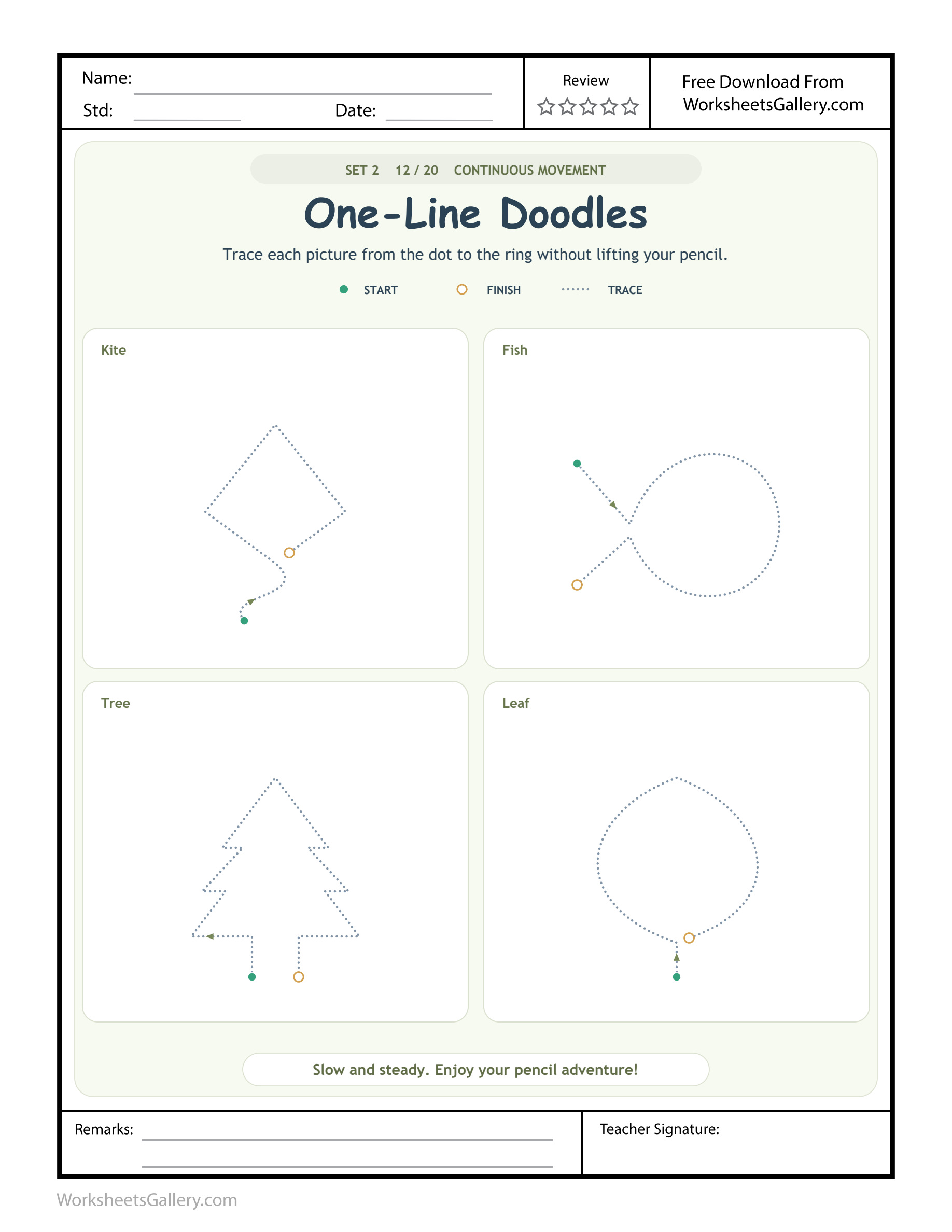
A continuous picture stroke is one collection option. The premium pack includes these four doodles among its twenty prewriting sheets. A $4 purchase provides the merged PDF with website marks removed.
A picture can be a journey rather than a collection of separate strokes. Continuous Picture Lines explores that idea through a kite, fish, tree and leaf on the One-Line Doodles worksheet. Each dotted route begins at a green dot and ends at a gold ring, with the instruction to trace without lifting the pencil. Children around three to six can inspect the whole path before moving. Continuous Picture Lines gives changing directions a shared purpose: keep the journey connected until its particular finish, even when the outline bends, narrows or changes character.
Continuous Picture Lines keeps one route together
Look at the beginning and finish of a selected panel before tracing any detail. Continuous Picture Lines asks for the printed path between those two markers. It is not an instruction to draw every familiar part of the object separately, and it does not require inventing extra details inside the picture.
The four pictures offer different changes along a continuous route. Continuous Picture Lines combines curves with corners in recognisable forms, giving the child something to anticipate. Ask what lies ahead on the path rather than asking for a fast complete picture. A short looking pause can happen while the pencil remains resting on its current place.
A kite's tail belongs to its journey
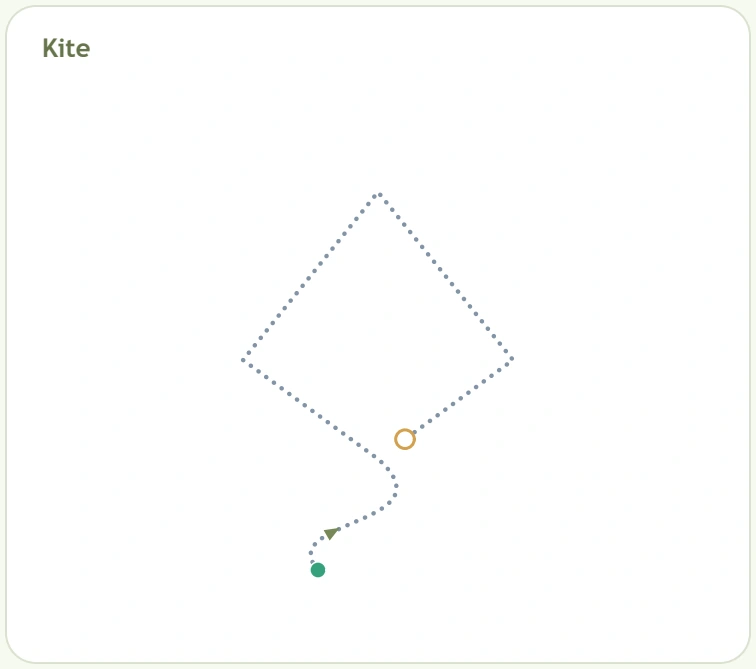
The kite panel includes a route through its tail and diamond-shaped body. Continuous Picture Lines invites the child to follow the supplied order instead of drawing a diamond first and attaching a separate tail afterward. The start, dotted guide and direction cue make the particular journey visible.
Trace the route above the paper with a finger if the child wants to inspect it first. Continuous Picture Lines can then become a pencil attempt with fewer surprises at the transition between tail and body. A child who draws kites freely in another way can still explore this specific tracing invitation as a separate game.
Iris finds a Continuous Picture Lines checkpoint
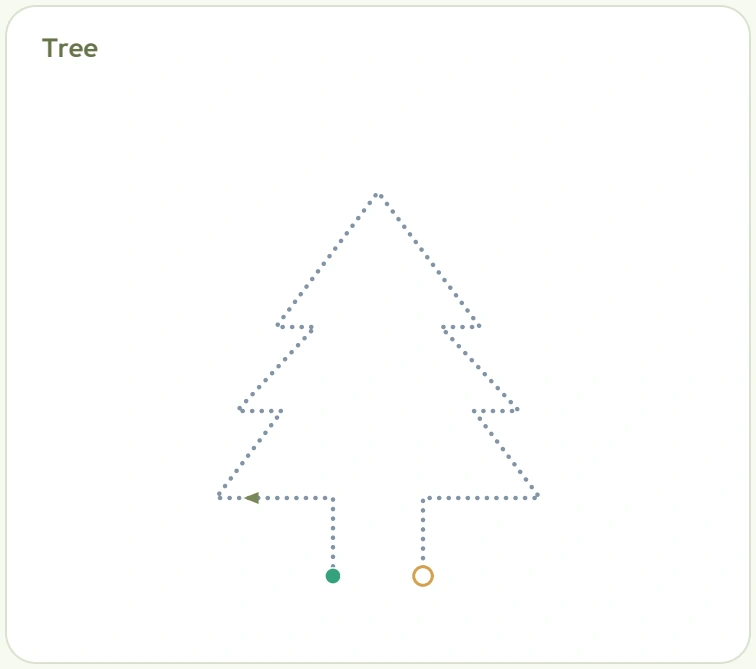
Iris notices the fish and wants to begin immediately. Her father asks her to point to its gold ring first. They follow the guide with their eyes and inspect where the route changes near the tail. Continuous Picture Lines has given them a useful question before the pencil moves: which part comes next at that turn?
Iris pauses there during her drawing, leaving the tip on the paper while she checks the guide. Her father waits. Continuous Picture Lines allows that moment of looking; the rule concerns keeping the stroke connected, not rushing the hand. When Iris arrives at the ring, she tells a story about the fish's journey through a pond.
Six useful observations in one connected stroke
- Route attention: Continuous Picture Lines gives the child a path to maintain from one marked beginning to one finish.
- Looking ahead: an approaching corner or curve can be inspected before the hand reaches it.
- Movement changes: a connected journey can still include different directions and speeds.
- Endpoint awareness: Continuous Picture Lines makes the finish ring a reason to stop rather than continue adding marks.
- Descriptive speech: tail, point, bend and edge can name places on the actual route.
- Purposeful persistence: a child can continue after a useful pause without treating the whole attempt as spoiled.
These are opportunities to notice, rather than a requirement to complete all four pictures. One considered route can offer plenty to discuss. A child who is interested only in pointing along the guide can participate in that way before attempting the pencil rule.
Four Continuous Picture Lines journeys with different changes
| Picture | Feature to inspect | Shared instruction |
|---|---|---|
| Kite | The transition from tail to body | Keep the traced route connected. |
| Fish | The changing tail and rounded body | Travel from its dot to its ring. |
| Tree | The sequence of pointed side changes | Follow the supplied route without lifting. |
| Leaf | The long curve returning toward the stem | Stop at the printed finish. |
Continuous Picture Lines keeps the rule consistent while the path changes. Read the selected panel's markers afresh so a familiar-looking object does not tempt the child to skip part of its particular route.
Prepare a continuous attempt without holding the child's hand
Choose one picture and place the sheet securely. Find its green dot, inspect the guide and locate the ring. Continuous Picture Lines can start with an air rehearsal, followed by the child's own pencil movement. Keep adult arms clear of the drawing so the next part remains visible.
Avoid moving the child's hand around the whole picture. Continuous Picture Lines is most informative when the adult can see how the child responds to a bend or corner. A brief verbal cue or a separate demonstration may help, but the route on the worksheet should remain available for their own attempt.
The Continuous Picture Lines tree changes direction repeatedly
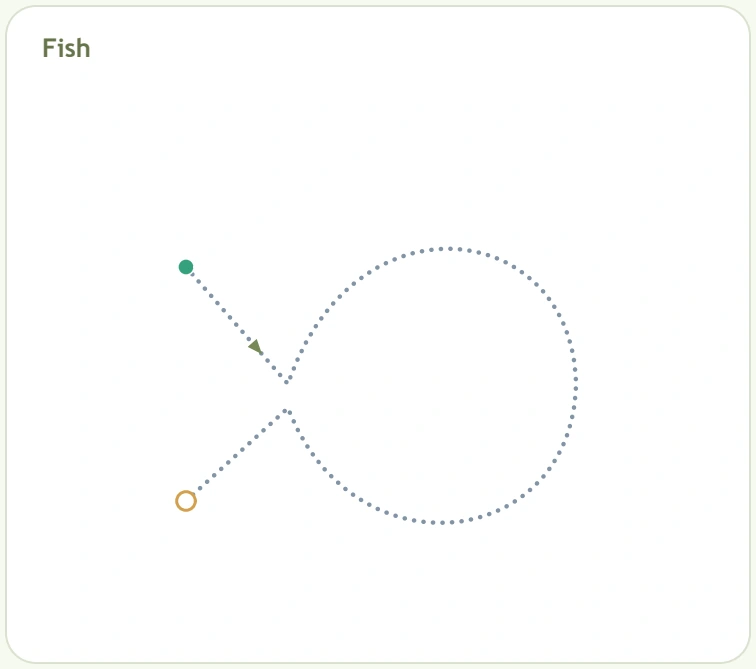
The tree's side moves through several points before returning toward its lower area. Continuous Picture Lines asks the child to respond to those changes without replacing the guide with a single broad triangle. Point to one direction change and ask what the route does there before drawing begins.
For a separate look at pointed turns, the star contour activity offers another context. Continuous Picture Lines adds a whole recognisable picture travelled in one stroke. Comparing the two resources can clarify whether today's interest concerns a particular corner or maintaining a longer connected journey.
A classroom route tour before pencil time
A teacher invites children to choose a picture and give a short pointing tour from dot to ring. Continuous Picture Lines begins as shared observation: a child names a corner, a partner notices a curve, and both see where the journey ends. Each child then uses an individual sheet for any pencil attempt.
The teacher can ask which feature was worth checking during the drawing. Continuous Picture Lines may prompt a pause near a tail, a tree point or the leaf's return. Discussing that feature avoids comparing children by completion speed. A thoughtful looking tour can remain a valid turn even when the child does not want to draw afterward.
Six connected-journey games outside the printable
Follow a finished cord silhouette
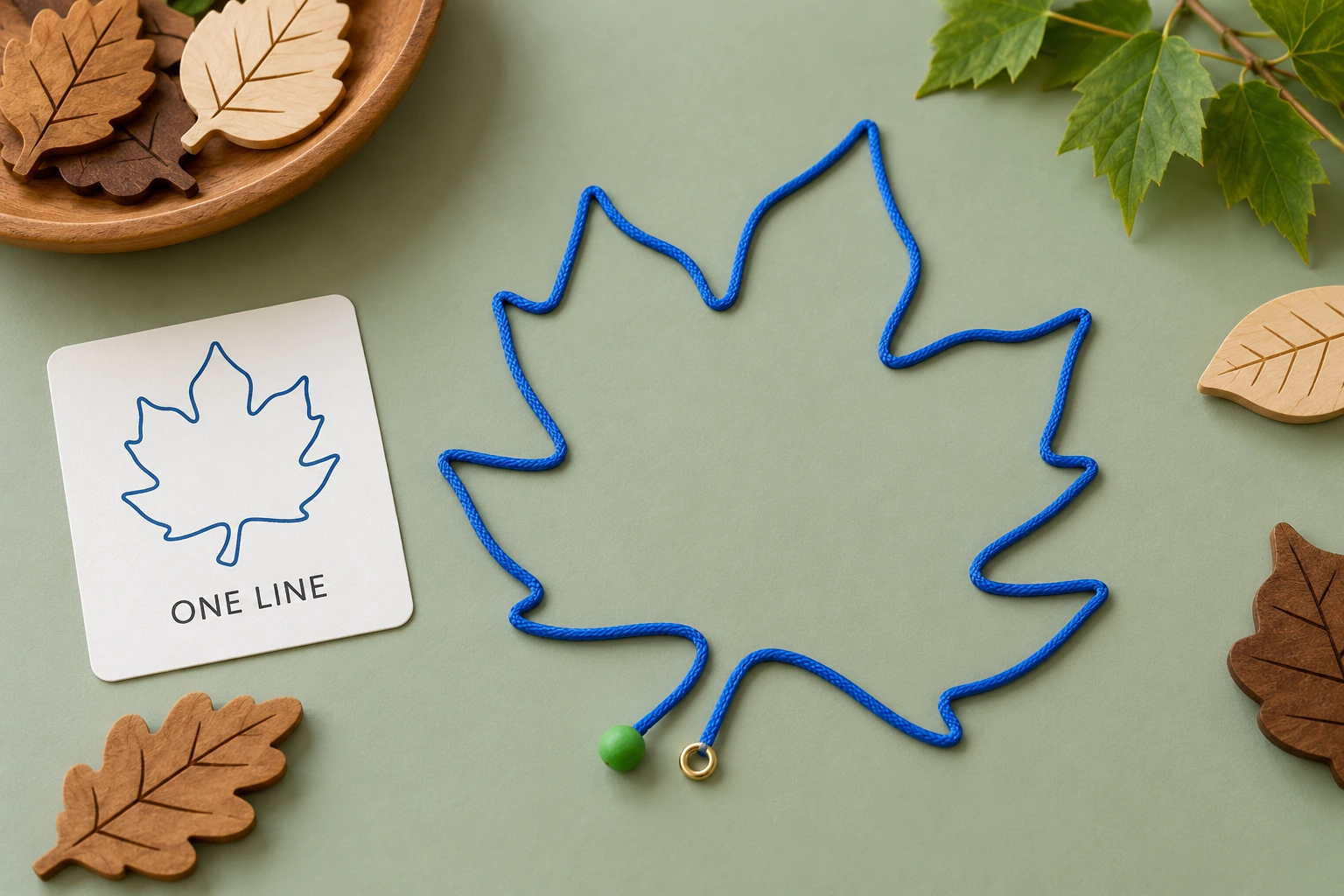
Lay one cord as a simple complete picture route on a mat, with a named beginning and ending. Ask the child to follow it with a finger. Continuous Picture Lines supplies more detailed printed routes later, but the cord makes the idea of one connected journey tangible before a pencil is needed.
Give a toy a route commentary
Move a toy beside a separate finished path while the child describes the next bend. Swap roles after one journey. Continuous Picture Lines can inspire the vocabulary, while the physical route remains a play prop. Keep the commentary slow enough that looking and moving can work together.
Make a waiting-place story
Imagine a traveller pausing beside an interesting feature without leaving the route. The child chooses what the traveller notices. Continuous Picture Lines can borrow that story when a looking pause occurs during drawing. Pausing need not mean abandoning the task, and the story should not pressure the child to continue after they want to stop.
Build a continuous picture exhibition
Display a few completed single-cord pictures and invite a visitor to find their beginnings and endings. Continuous Picture Lines provides a paper comparison if the child wants one. The point of the exhibition is to inspect connected routes, not to claim that every familiar object must always be drawn with one stroke.
Describe a change with two gestures
Use one broad gesture for a curve and another for a corner, then connect them in the air. Continuous Picture Lines combines such changes on its routes. Let the child choose which feature to act out and ask the adult to follow, creating a shared movement game rather than another tracing demand.
Tell the finished traveller's report
After a toy or pencil journey, ask where it began, what changed along the way and where it stopped. Continuous Picture Lines can give that report a visible reference. The child may point instead of speak, or invent a story about the picture after explaining only one part of the actual route.
A leaf's finish is a ring, not a guessed closing rule
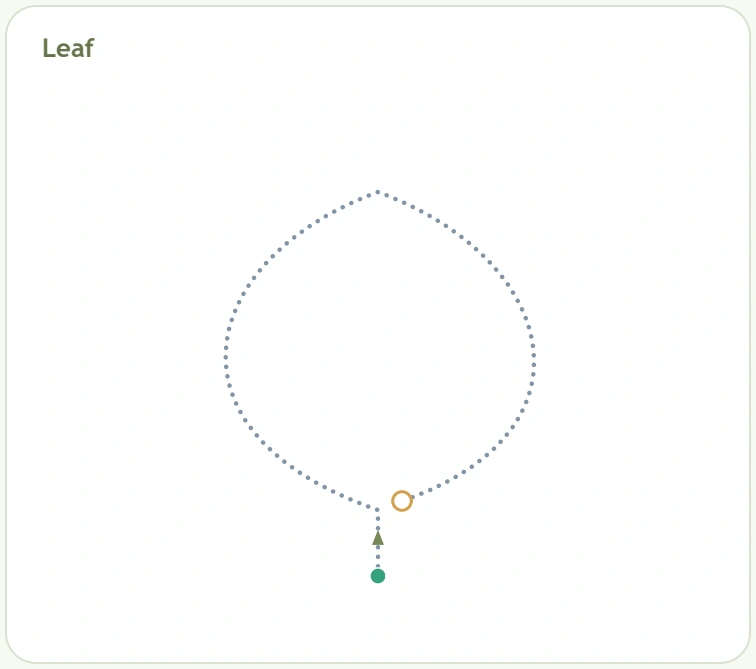
The leaf path curves around its outline and returns toward the stem area. Continuous Picture Lines directs the child to its marked finish. Do not add a requirement to continue beyond that ring until the line touches the green start; another worksheet's closure instruction does not automatically apply here.
The bubble-circle closure sheet offers a useful contrast, while the smooth ocean-wave routes provide another continuous movement experience. Continuous Picture Lines keeps its own endpoints visible. Name the selected task's rule before borrowing a comparison from elsewhere.
✎ Common breaks can be understood without judgement
Lifting to start a familiar object part, skipping a difficult turn, or continuing after the finish can all change the printed invitation. Continuous Picture Lines gives the adult a specific route to discuss. Ask where the child thought the journey should go next before offering another cue.
Use stay with this path to its ring when that is helpful. Continuous Picture Lines does not need repeated erasing after every wobble. If the child lifts, notice the point where it happened and decide together whether to try again later. The attempt still shows which part of the route was understood.
Support three-to-six-year-old route explorers
A younger child may enjoy a broad finger tour or a cord example. Older preschoolers may want to attempt a whole printed picture and describe its changes. Continuous Picture Lines accommodates those entry points without making one complete stroke a condition for joining the play.
Choose a comfortable drawing tool and keep the sheet stable. Enlarge the complete page if the dotted route is difficult to inspect. Continuous Picture Lines is a particular game about connected movement, not a universal rule for drawing or a test of whether a child should already write independently.
Keep another journey worth choosing
Remember the feature that interested the child: a kite tail, a fish turn or a tree point. Offer a later visit around that interest, perhaps with another picture or a larger cord route. Continuous Picture Lines can stay inviting without a daily requirement to reproduce the same outline more neatly.
For family inspiration, NAEYC shares ways to support writing at home. PBS Parents has literacy resources grouped for age four. Continuous Picture Lines can accompany ordinary drawings and pretend messages, where a child's chosen meaning remains worth listening to.
Save the Continuous Picture Lines PDF
The free sample contains the original branded worksheet. Access the clean Continuous Picture Lines version through the premium membership option on this page, using the account with a current qualifying plan. The website verifies permission before issuing the protected download. Save the PDF and check all four pictures in the print preview.
Continuous Picture Lines retains its dotted guides and endpoint markers in the premium file. No watermark or printed advertising remains, and the website credit and domain are removed. Print with the complete page border visible. For the wider twenty-concept set, use the collection card's separate $4 purchase link. One connected journey can be the whole activity today.
Popular Worksheets
Printable resources families and teachers are downloading now.
 Free
 Free
 Free
 Free