
Bubble Circle Marks: 4 Brilliant Close-the-Curve Games
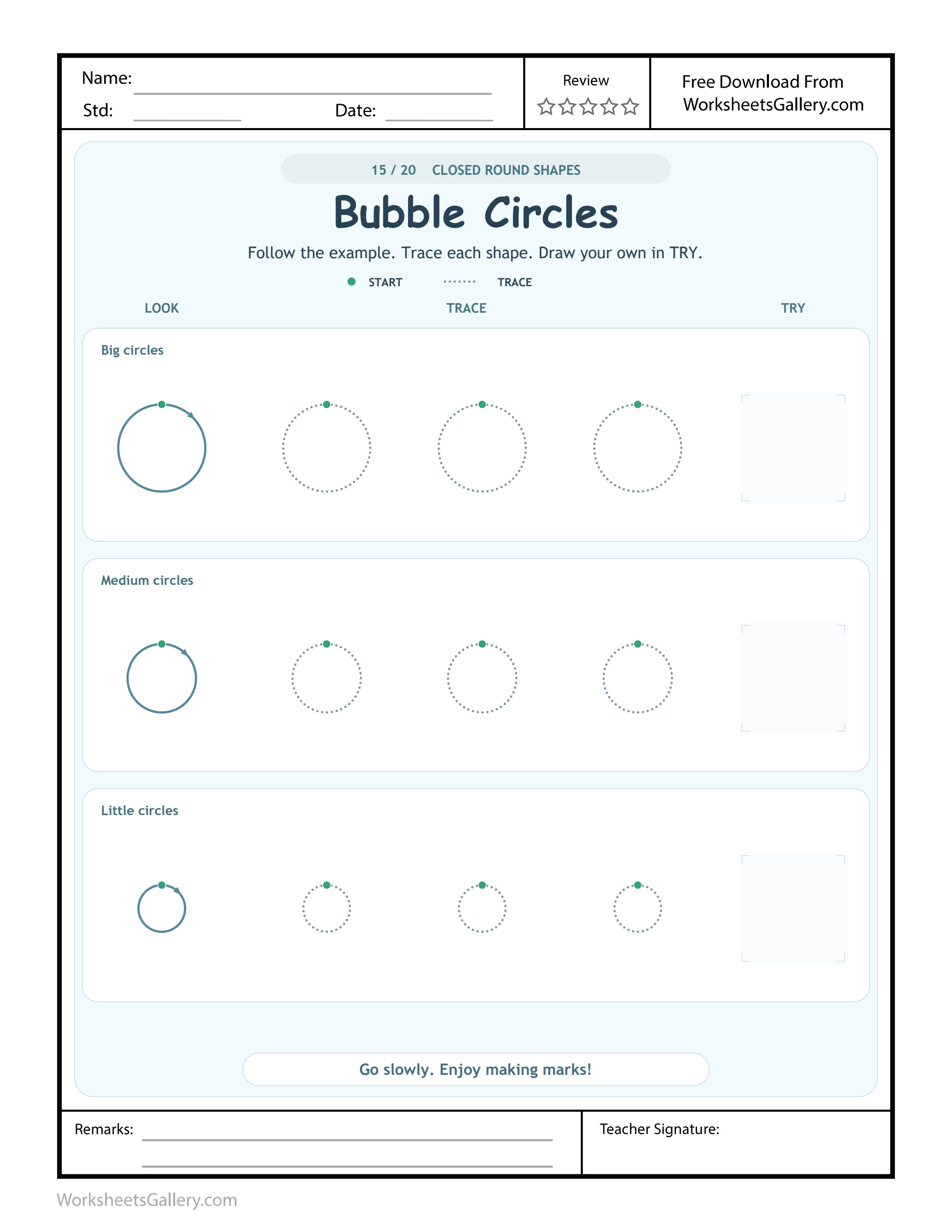
One trip around can be enough. Bubble Circle Marks invites a learner to follow a round route, meet the starting region and stop, leaving one closed outline. The Bubble Circles sheet offers big, medium and little examples, with dotted circles and separate windows for independent drawing. An adult can begin by asking what makes a bubble outline closed rather than open. Look at the top starting dots and the model's clockwise arrow before moving. The useful decision comes near the end of the circuit, when the line returns toward the place it began.
Bubble Circle Marks has a beginning and a finish together
The Bubble Circle Marks green dot sits at the top of the source circle. Follow its arrow clockwise, travelling around before returning to the starting region. A closed circle is not a spiral growing inward or outward. Repeatedly circling over the same outline also changes the task from one planned circuit into continuous revolving.
Bubble Circle Marks makes stopping part of the drawing idea. The Bubble Circle Marks learner can show the finishing region with a finger before making the mark. Let the adult read the directions while the learner inspects where the route goes and where the single circuit ends.
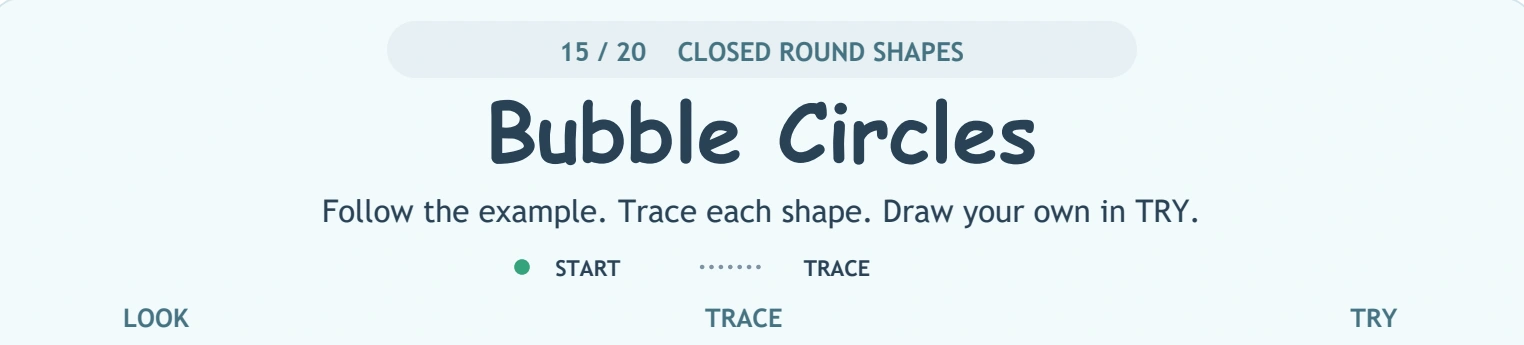
A Bubble Circle Marks home visit, arranged before the pencil
Choose a stable surface with room for the whole page. Offer a familiar tool and a separate piece of scrap paper. Ask whether the learner would like to inspect a big, medium or little circle, then locate that row's solid LOOK example.
For Bubble Circle Marks, begin with a finger journey from the top, around the outline and back. Invite one dotted attempt when the child is ready. Compare whether the route closes, rather than immediately commenting on every bump or uneven part.
An independent Bubble Circle Marks version can go in the TRY window or on the larger spare paper. Keep the model visible. Finish by asking the child where their line came home; that explanation can close the visit even when only a small part of the sheet has been used.
Omar turns Bubble Circle Marks into a pretend label
Omar and his father are making labels for imaginary jars of bubble mixture. Omar draws an almost-round shape with a small gap. His father asks whether the outline is meant to stay open, then points to the closed model on the worksheet.
Their Bubble Circle Marks conversation focuses on the return. Omar follows a large dotted circle and draws a new jar-label outline on scrap paper. He points to where its ending meets the beginning. His father describes that join, leaving the earlier open drawing available as a different mark rather than erasing it away.
Bubble Circle Marks has a concrete purpose in this scenario: a child chooses a closed boundary for a label. The design can include invented writing or a dictated word beside it. Perfect roundness is not required for the choice about closure to be meaningful.
Three Bubble Circle Marks sizes retain one route idea
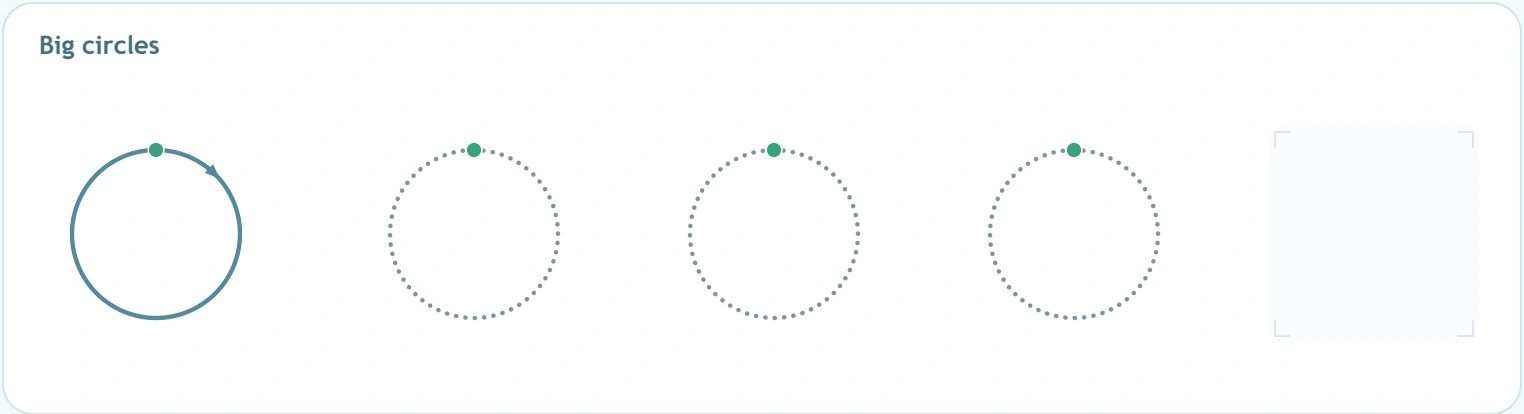
Big circles, Medium circles and Little circles are the source row labels. Each row contains one solid model, three dotted outlines and a TRY window. That makes nine dotted circles and three spaces for independent versions. The blank windows intentionally belong to the learner.
Bubble Circle Marks changes scale without changing the returning relationship. A smaller outline still travels around once and closes. Avoid treating little circles as an automatic reward level or assuming that smaller must be easier simply because the pencil travels a shorter distance.
| Size choice | Keep in view |
|---|---|
| Big | Room to inspect the whole return. |
| Medium | The same closure in a shorter circuit. |
| Little | A compact join without extra revolutions. |
Six Bubble Circle Marks choices worth noticing
- Starting deliberately: the learner locates the top dot instead of beginning at an arbitrary place.
- Following direction: the model's arrow informs the journey around the outline.
- Planning closure: the end approaches the starting region purposefully.
- Stopping after a circuit: the mark remains one outline rather than repeated rings.
- Comparing scale: different-sized circles retain a similar closed relationship.
- Explaining a choice: around, closed, beginning and meet describe something visible.
Bubble Circle Marks combines spatial understanding, visual planning, language and motor control. A child may understand closure while finding the compact join demanding. Support the physical movement with a larger drawing area rather than treating that difference as a failure to grasp the idea.
Four Bubble Circle Marks games about coming home
Use these optional Bubble Circle Marks games on separate paper. They invite a clear drawing decision instead of simply adding more dotted circles. Let the child select one game and take an explaining role, with an adult available to write meaningful labels.
1. Bubble Circle Marks opens a gap detective bureau
Draw one closed round outline and one with a visible opening. The detective locates the gap and explains which outline makes a closed boundary. Bubble Circle Marks detection can be done through pointing before any fine pencil work is requested.
Invite the learner to draw a pair for the adult to inspect. A closed but uneven shape still communicates closure. Describe that feature first, and keep smoothness as a separate question for another occasion.
2. Give Bubble Circle Marks a homecoming card
On large paper, place a starting dot at the top of a round route. The child follows around once with a finger and says HOME when returning. Bubble Circle Marks homecoming cards make the finishing decision audible without turning the movement into a speed competition.
Offer a drawing attempt if wanted. The adult can write HOME beside the meeting region, leaving the route visible. Stop after the planned circuit rather than continuing to strengthen the outline through many revolutions.
3. Make Bubble Circle Marks a size-family display
Partners each draw a large, medium or small closed outline on separate cards. Arrange them by relative size and ask what relationship they share. Bubble Circle Marks displays can show three different scales while every shape retains a returning boundary.
Do not require matching measurements. The learner can move cards, point and explain before drawing another example. This turns size vocabulary into a comparison between visible objects rather than a demand for identical circles.
4. Send Bubble Circle Marks a label-design request
Pretend a toy shop needs a round label for a jar. The child designs an outline and dictates a word for its middle or beside it. Bubble Circle Marks requests give closure a communication purpose, while allowing the designer to choose the label's size.
A receiver points to where the boundary closes and asks about the chosen word. If the shape has a gap, discuss whether the designer intended it. The conversation can lead to a new version without requiring the first drawing to disappear.
Bubble Circle Marks can close without looking perfectly round
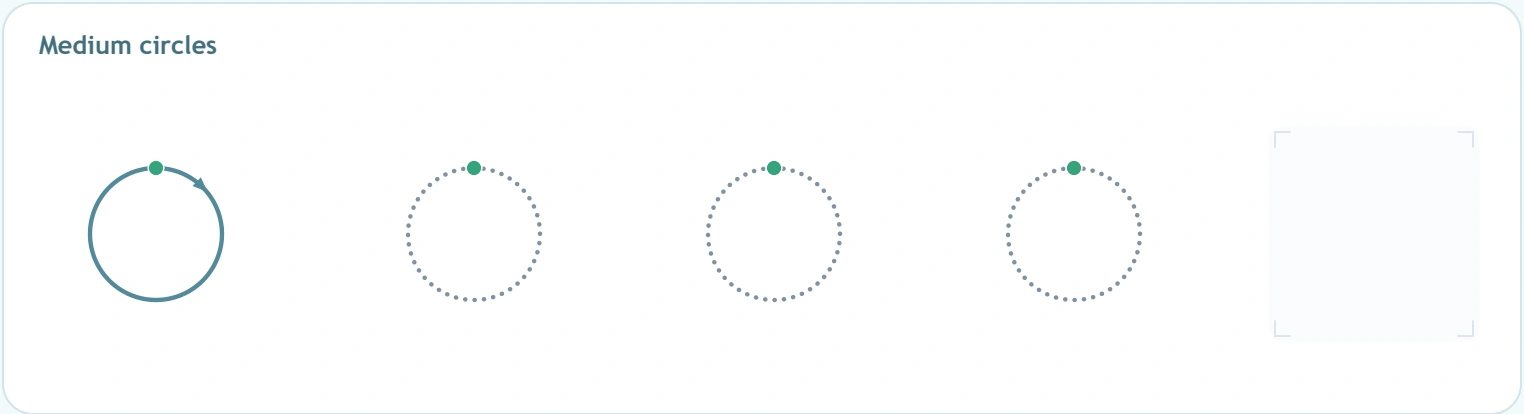
The medium row offers another scale for the same route. Its compactness may change how a child manages the tool, even when the plan is clear. Ask about the return rather than assuming that every uneven curve means they lost their place.
Bubble Circle Marks feedback can say “Your ending met the place you began.” That is a specific observation the child can inspect. If the join overshoots, compare just that region and offer a fresh larger attempt instead of repeated rubbing at a crowded mark.
Bubble Circle Marks in a classroom label workshop
A teacher prepares individual cards for pretend shop labels. Children choose a round size, inspect the corresponding model and draw a closed outline. They dictate a label word while a partner points to its boundary and asks where the route began.
Bubble Circle Marks classroom notes might record an intended join, a chosen size or a clear explanation of an opening. Give children room for different drawing scales and accept gestures. Avoid ranking labels by circular perfection, completion speed or the number produced.
Little Bubble Circle Marks still need room for a decision
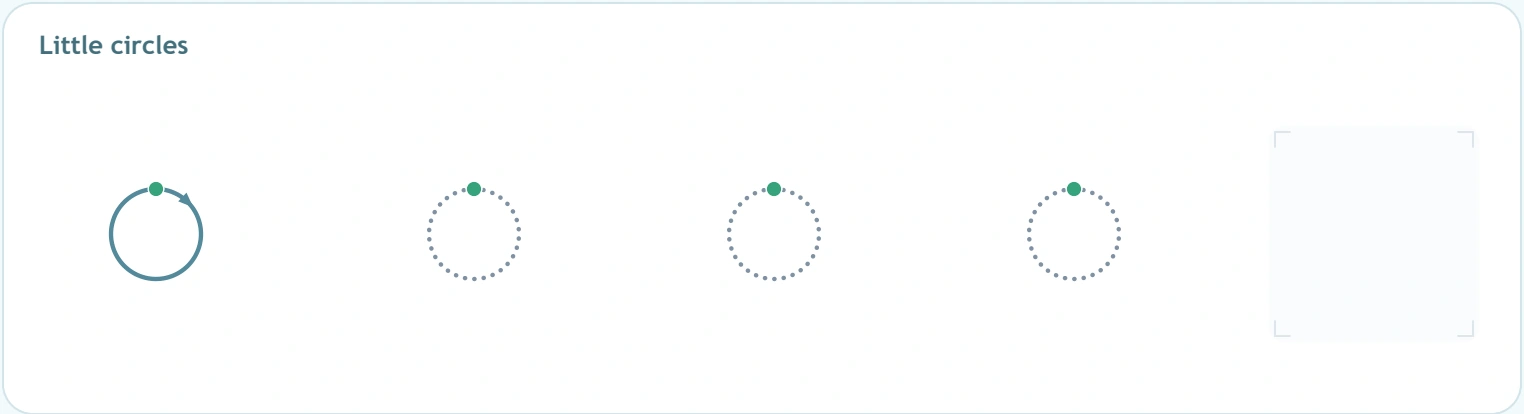
The last row makes closure more compact. A learner who managed a larger outline may want to look closely before trying this one. It is acceptable to return to a broader separate version if the small join becomes physically frustrating.
A Bubble Circle Marks visit can suit preschool or kindergarten drawing time with adult guidance, commonly for children aged three through six. Experience and comfort vary within that range. An adult can read the words and offer a large finger route before a small tracing attempt.
Avoid turning Bubble Circle Marks into endless revolving
Common changes include an unclosed gap, a long overlapping tail, repeated rings or a spiral moving toward the middle. Inspect which change occurred before offering help. A reminder to stop after one return addresses a different problem from a reminder to close an opening.
Bubble Circle Marks should leave the learner a manageable problem. One visible return is enough to discuss. Hand-over-hand steering, demands for speed and correcting every wobble can distract from that goal. Pause when fatigue or frustration replaces interest.
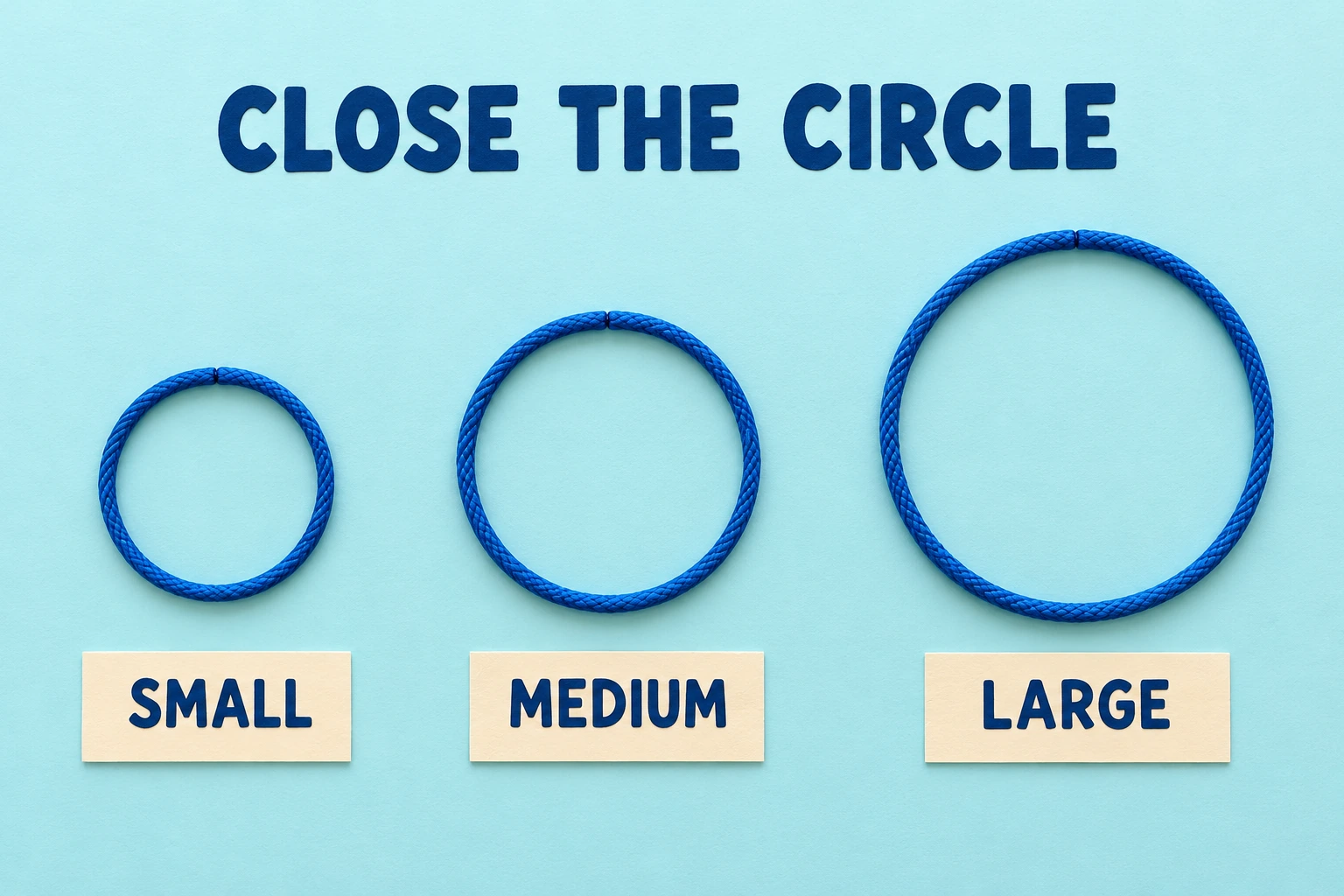
For regular Bubble Circle Marks visits, use a new label request, a different size or a gap-detective card. Keep the remembered idea of returning home, while changing the drawing purpose. The cord-circle scene can support a no-pencil conversation on a tired-hand day.
Bubble Circle Marks files and optional next interests
Select the clean premium PDF after logging in and checking that your active membership includes this download. Keep that Bubble Circle Marks file separate from the original sample. The printable edition has no watermark, promotional domain or embedded advertisements. Preview its complete US Letter page in your print dialog and adjust scaling so the border, models and TRY windows remain visible. Any site advertisements are outside the worksheet file.
Later closed-outline interests can lead to letter-O practice, letter-Q details or the open letter-C curve, using each specific formation guide. Adults can also explore NAEYC's family writing activities and the literacy area at PBS Parents for wider reasons to draw and write.
Popular Worksheets
Printable resources families and teachers are downloading now.
 Free
 Free
 Free
 Free