
Egg Oval Tracing: 5 Powerful Tall-and-Wide Shape Games
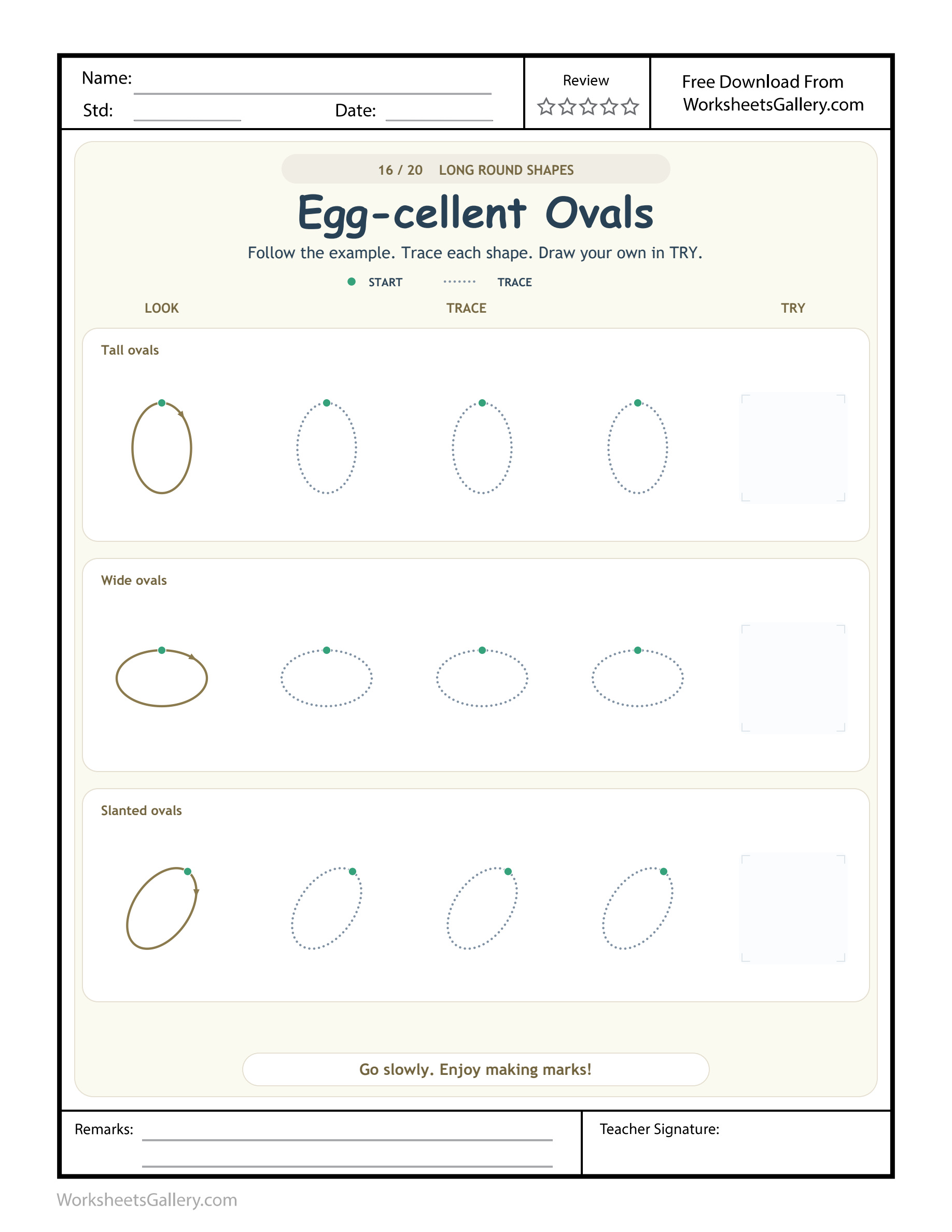
Stand it up, lay it across, then let it lean. Egg Oval Tracing explores a rounded, elongated outline in three orientations without turning it into three unrelated shapes. The Egg-cellent Ovals worksheet includes tall, wide and slanted models, dotted outlines and windows for independent attempts. A child can first show which way an oval stretches, then inspect the green start and its route. The theme suggests eggs, but the printed models are smooth ovals rather than pointed egg drawings. Keep that visible shape at the centre of the conversation before reaching for a pencil.
Suri gives Egg Oval Tracing a display question
Suri and her grandmother are designing a pretend bakery display. Suri draws an oval label upright, then wants a wider label for another tray. Her grandmother turns a separate oval card sideways and asks what changed: the rounded outline or the direction it stretches?
Their Egg Oval Tracing conversation leads to the tall and wide source models. Suri points across one and up the other. She follows a dotted outline, then designs her own display label. Her grandmother describes the orientation she chose, without requiring every curve to match a shop-bought sticker.
Egg Oval Tracing becomes a reference for a real drawing decision within their pretend setting. The label may contain Suri's invented writing or a dictated word. Neither partner needs to transform the worksheet into an egg-colouring page or add points to its rounded ends.
Egg Oval Tracing changes orientation, not the need for closure
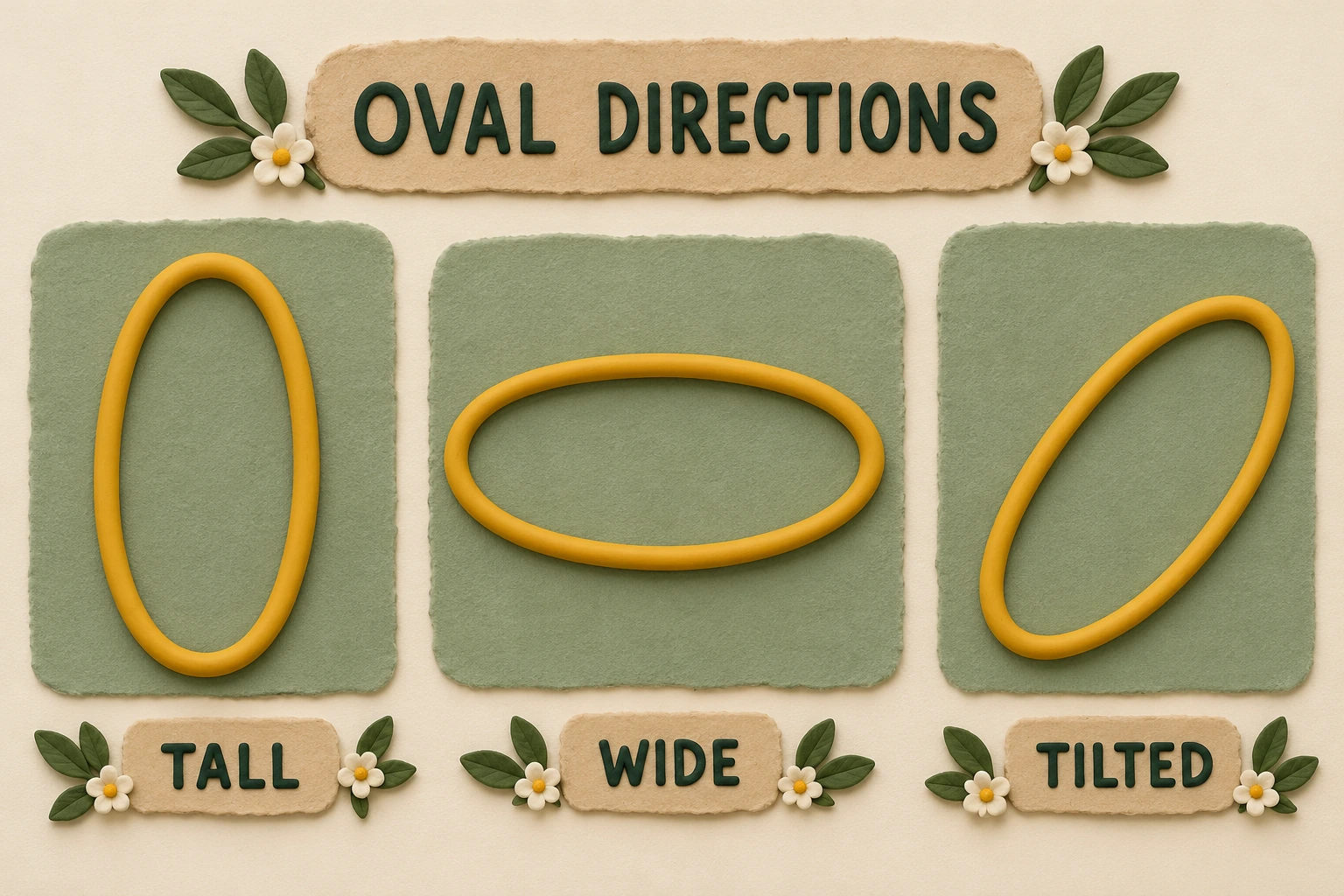
An Egg Oval Tracing model is elongated and rounded. On this sheet, its outline returns to its starting region. Tall ovals stretch vertically, Wide ovals stretch horizontally, and Slanted ovals tilt across the page. Inspect the chosen model's green marker rather than transferring a remembered start without looking.
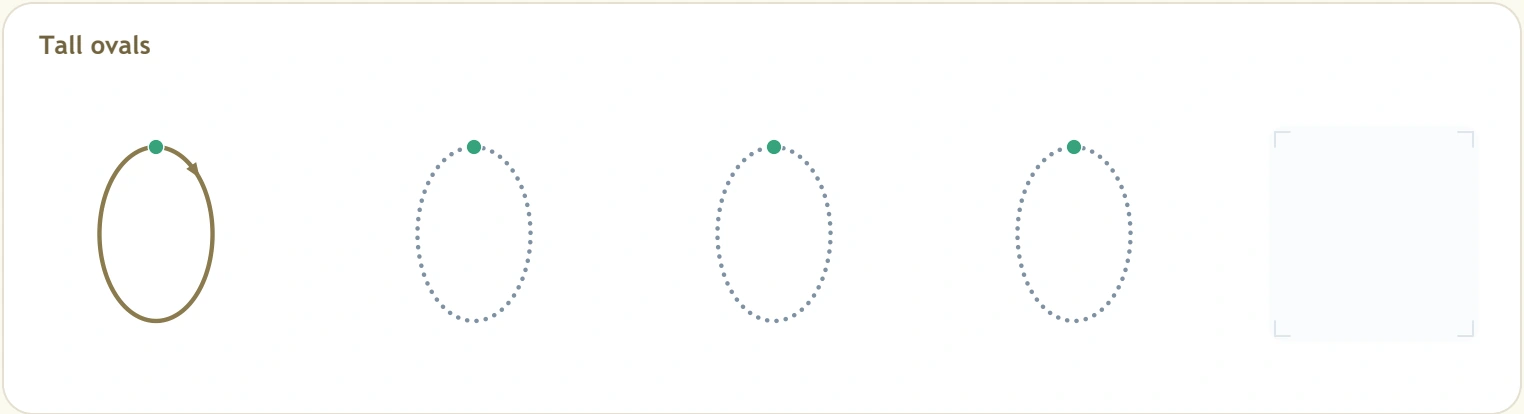
Egg Oval Tracing does not ask for a circle with every direction equal. Nor does it ask for corners at the ends of a stretched outline. The child can point to the longer extent and follow the rounded turn at either end before trying a small traced version.
Three Egg Oval Tracing rows make room for comparison
Each row begins with a solid LOOK model, continues through three dotted examples and ends with one TRY window. Altogether the sheet supplies nine dotted ovals and three independent windows. Those windows are intentionally open for the learner's own marks.
| Printed model | Point along | Retain |
|---|---|---|
| Tall ovals | The longer upright extent | Rounded ends |
| Wide ovals | The longer sideways extent | A closed outline |
| Slanted ovals | The tilted stretch | Elongation |
Egg Oval Tracing comparison can happen before drawing. An adult reads the labels and the child indicates a direction with a finger. That separates the spatial idea from the physical demand of producing a compact curved line.
Egg Oval Tracing at home: choose, point, follow, explain
Prepare the page on a stable table with a familiar tool and larger spare paper. Ask the learner to choose an orientation. Locate the solid example, then point along the direction in which it stretches before following its route from the start.
For Egg Oval Tracing, invite a dotted outline when the learner is comfortable. Discuss one feature afterward: perhaps a rounded end, a closed return or a tilt. Offer a TRY version while keeping the model visible, or choose a larger separate drawing if the small turn feels difficult.
Finish Egg Oval Tracing with an explanation of the choice. “Mine lies across” can be shown by pointing rather than spoken in a complete sentence. The point is a meaningful relationship between the model and the child's mark, not a required amount of page completion.
Six Egg Oval Tracing observations for an adult
- Elongation: notice that the outline extends farther in one direction.
- Orientation: distinguish upright, horizontal and tilted positions.
- Rounded turns: retain curved ends instead of pointed or squared ones.
- Closure: bring the route back toward its beginning.
- Coordination: manage the drawing tool while keeping the page steady.
- Spatial explanation: use tall, wide, slanted and around for visible features.
Egg Oval Tracing joins comparison and visual attention with language and motor planning. These are opportunities for exploration, not guarantees of handwriting progress from one sheet. A learner can understand orientation while needing more room to carry it out with a pencil.
Wide Egg Oval Tracing turns the longer direction sideways
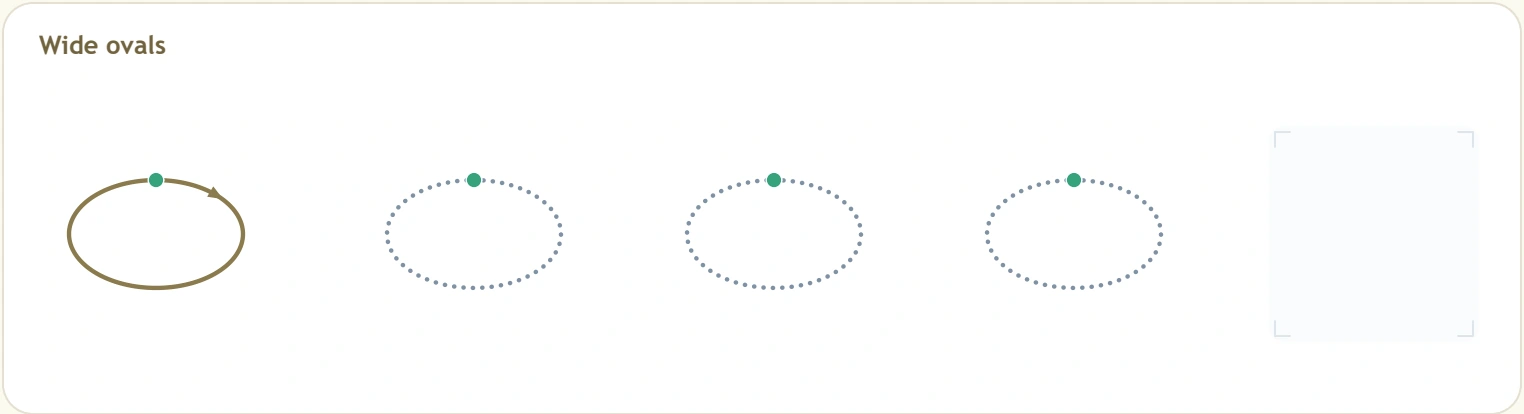
The second source row stretches across rather than upward. Compare it with the first before tracing. Turning the entire page may make the hand movement feel familiar, but it can hide the spatial contrast the row is meant to show in its normal orientation.
Egg Oval Tracing can still allow a slight comfortable paper adjustment. The adult can discuss how the printed oval sits on the upright page without insisting that the sheet remain fixed in one exact position. Comfort and observation can both remain part of the activity.
Five Egg Oval Tracing design games beyond the page
The following games use separate cards. Each offers a reason to compare orientation or preserve an oval feature. Pick one that interests the learner, leaving the source models and intentional practice windows unchanged.
1. Egg Oval Tracing opens a turning-card studio
Draw one oval on a card and turn the card slowly between upright, sideways and tilted positions. Ask what stays rounded and what changes direction. Egg Oval Tracing card turns let the learner discuss orientation without making three new pencil attempts first.
Offer another card for a chosen version. The child's drawing can differ in size while retaining its intended tilt or longer direction. Ask them to show that intention before offering a correction.
2. Give Egg Oval Tracing a bakery-label commission
Pretend a long tray needs a wide label and a tall jar needs an upright label. The designer chooses an oval orientation and dictates a meaningful word for it. Egg Oval Tracing commissions connect a spatial decision with a recipient who can use the mark.
An adult writes the dictated word if needed. Compare the chosen outline with the source afterward, discussing its rounded ends rather than demanding a decorative finished picture.
3. Egg Oval Tracing runs a tilt detective desk
Place three drawn oval cards in different orientations. A partner describes the tilted one without touching it, and the learner identifies the card. Egg Oval Tracing detectives can also use pointing or gestures when verbal descriptions are demanding.
Exchange roles and let the child arrange a new set. The adult can ask for clarification, giving the younger designer a chance to explain a visible relationship instead of simply responding to adult questions.
4. Make Egg Oval Tracing a rounded-end comparison
Draw one elongated rounded outline and one stretched shape with sharp ends. Ask which resembles the printed oval. Egg Oval Tracing comparisons make the end treatment noticeable, without labelling the pointed drawing useless or bad.
The child can invent a rounded version at a larger scale. Identify a particular turn that stayed curved, keeping that observation separate from whether the whole outline closes neatly.
5. Send Egg Oval Tracing an orientation postcard
Each partner draws an oval and dictates TALL, WIDE or TILTED beside it. Exchange postcards and explain the longer direction before making a fresh version. Egg Oval Tracing postcards give a simple label a communication job.
If the receiver interprets the card differently, the designer can point along the intended stretch or redraw it elsewhere. The exchange is about making a choice understandable, rather than ranking the partners by accuracy.
Slanted Egg Oval Tracing keeps a rounded identity
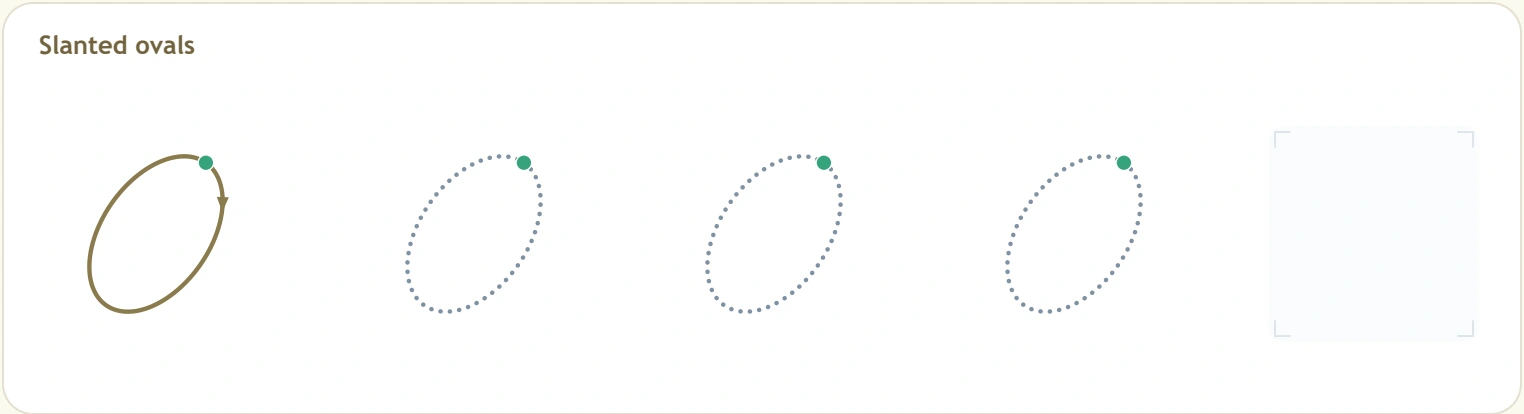
The final row tilts the longer extent while retaining a closed, curved outline. Inspect its green start and direction before trying the dotted example. A child may automatically return to a familiar upright oval unless the tilt is noticed first.
Egg Oval Tracing feedback can say “Your longer stretch leans across the card.” If the learner instead draws upright, ask them to point along the slanted model. Their closed rounded outline may already preserve useful features; the orientation can become the next separate decision.
Egg Oval Tracing in a classroom display workshop
A teacher offers individual display cards and pretend objects needing labels. Children choose a tall, wide or tilted outline, point to the source that inspired it and draw a label. They dictate a word or short description for a partner to read aloud.
Egg Oval Tracing observation can record the child's choice of orientation, their explanation of a rounded end or their plan for closure. Offer larger paper and accept gestures. Avoid assigning every child the same quantity of tracing as proof that they understood the spatial comparison.
Keep Egg Oval Tracing useful when a mark surprises you
A circle-like attempt may show closure without much elongation. A pointed oval may preserve orientation while changing the ends. An unclosed outline may retain its tilt. Inspect which feature changed before deciding what support to offer next.
Egg Oval Tracing works with one visible decision at a time. Keep the learner's intention in the conversation. Repeated erasing, speed demands or adult steering can obscure what the child was trying to do. Ask for an explanation and offer another comfortable attempt rather than correcting every feature together.
Egg Oval Tracing returns through purposeful drawing
Preschool and kindergarten families can offer Egg Oval Tracing with help matched to the learner; ages three through six provide a broad suggestion, not a readiness rule. Adults can read labels; independent reading is unnecessary. Large finger routes and broad tools can precede compact tracing when hand control is still developing.
Regular Egg Oval Tracing can return through a bakery label, a tilted postcard or a turning-card conversation. Keep visits brief enough for curiosity to remain. Stop when hands tire or frustration grows, and let a successful explanation be a reasonable ending.
Egg Oval Tracing editions and later symbols
The original sample remains separate from the member's clean printable. For the unbranded Egg Oval Tracing PDF, log into an account with an eligible membership in force and choose the premium attachment. Save and open the single US Letter page; before printing, inspect its edges and TRY windows and select scaling that keeps them intact. The clean file carries no watermark, website domain or embedded ads. Web-page advertising is not part of that PDF.
Later symbol interests can lead to letter-O formation, letter-Q details or letter-C curves, respecting each model's directions. Adults can browse NAEYC's writing-at-home ideas and PBS Parents' collection of literacy activities for other drawing purposes.
Popular Worksheets
Printable resources families and teachers are downloading now.
 Free
 Free
 Free
 Free