
Diamond Pattern Paths: 5 Clever Texture-Code Journeys
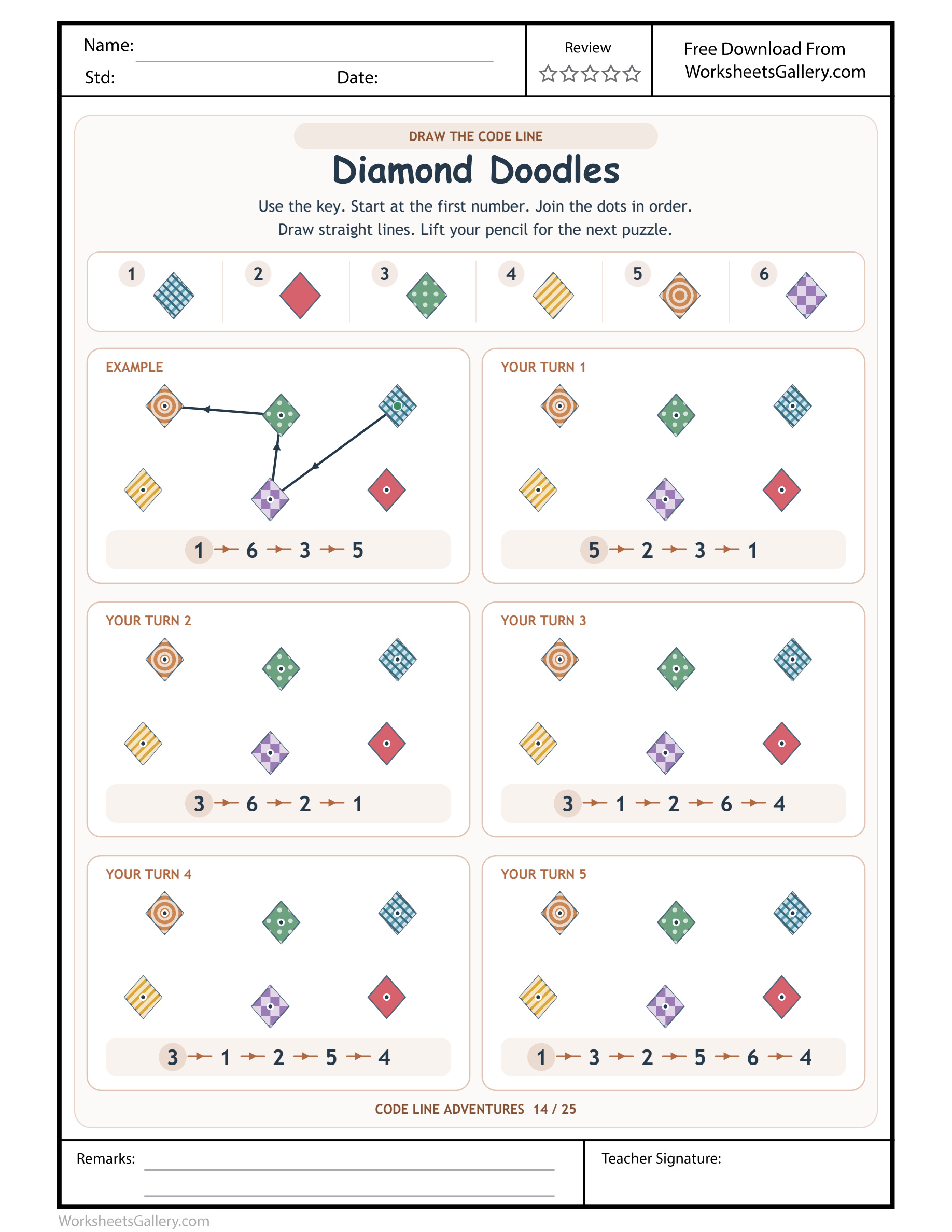
Carry the diamond textures into the $3 collection. The combined clean PDF keeps these five diamond-code fields and 24 further themed worksheets, with each page retaining its own numbered legend.
Six diamonds can look alike until you inspect what is inside them. Diamond Pattern Paths gives children a number key whose similar outlines contain different colours and patterns, then asks them to connect selected centres in a printed order. Five independent practice routes follow a compact demonstration. Dots, stripes, rings, checks and crossing lines provide useful visual clues, while one diamond has a plain fill. The activity is not about continuing a decorative pattern: it is about choosing the particular diamond that a numeral identifies before drawing the next straight connection.
Look inside the shared outline — Diamond Pattern Paths
The repeated silhouette makes Diamond Pattern Paths different from an object key where every shape is immediately distinct. Invite the child to compare two diamonds and name an interior difference. Their own words, such as circles inside or lines crossing, can be enough to identify a symbol accurately.
Colour is useful in Diamond Pattern Paths, but pattern gives another clue. Use a clear print so those interiors remain visible, and compare against the actual key rather than a remembered colour assignment from another worksheet. The diamond's whole appearance identifies its entry. Counting decorative marks is not required to decode a route.
Diamond Pattern Paths legend at a glance
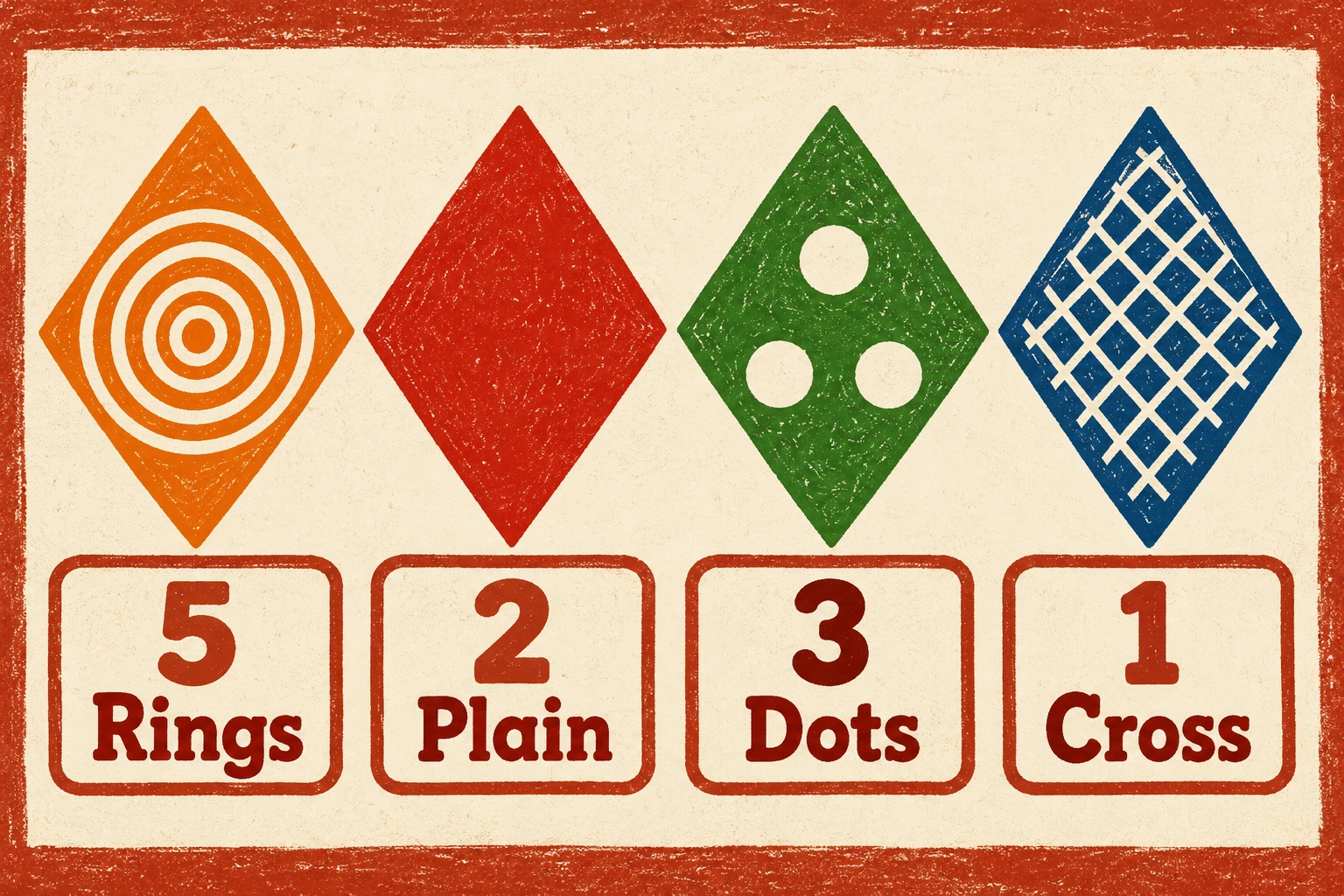
| Diamond Doodles numeral | Keyed picture |
|---|---|
| 1 | diamond (cross) |
| 2 | diamond |
| 3 | diamond (dots) |
| 4 | diamond (stripes) |
| 5 | diamond (rings) |
| 6 | diamond (checker) |

Diamond Pattern Paths example before independent drawing
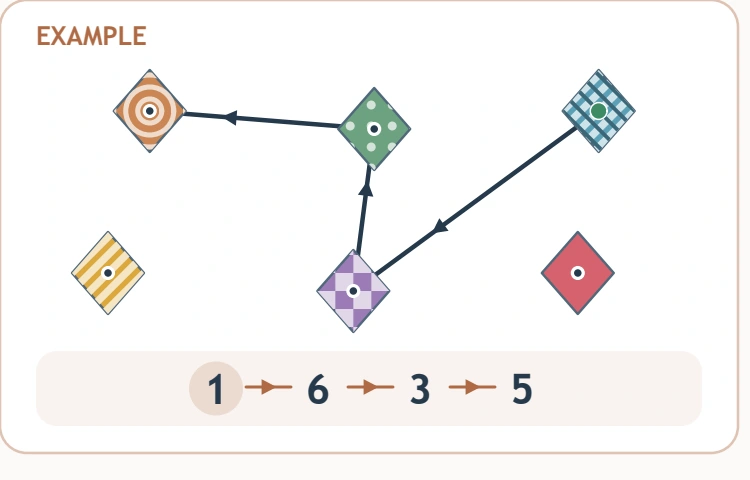
Diamond Doodles demonstrates 1 → 6 → 3 → 5. The Diamond Doodles itinerary is diamond (cross) → diamond (checker) → diamond (dots) → diamond (rings). In Diamond Doodles, the green start selects diamond (cross). Diamond Doodles arrows lead to diamond (rings). Diamond Doodles has 3 worked segments. The Diamond Pattern Paths example supports finger rehearsal. Inspect the Diamond Doodles practice strip separately.
Diamond Doodles — practice 1
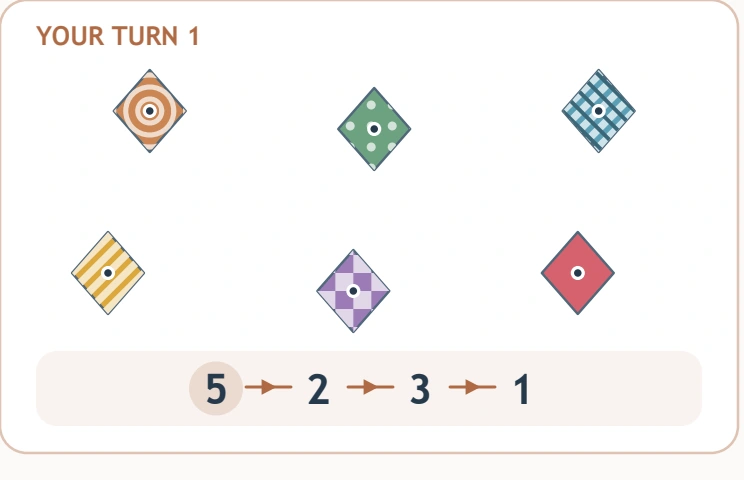
Practice 1 on Diamond Doodles: 5 → 2 → 3 → 1. Translate those Diamond Pattern Paths destinations as diamond (rings) → diamond → diamond (dots) → diamond (cross). Begin on diamond (rings) for Diamond Doodles; next locate diamond. The Diamond Doodles centre-to-centre connections are diamond (rings) then diamond; diamond then diamond (dots); diamond (dots) then diamond (cross). Segment count for Diamond Pattern Paths: 3, from 4 listed stops. The Diamond Doodles endpoint is diamond (cross). Against the Diamond Doodles strip, verify final 1.
Diamond Pattern Paths leaves diamond (stripes), diamond (checker) outside practice 1. Leave these Diamond Doodles alternatives unvisited. Practice 1 for Diamond Doodles requests 5 → 2 → 3 → 1.
Diamond Doodles — practice 2
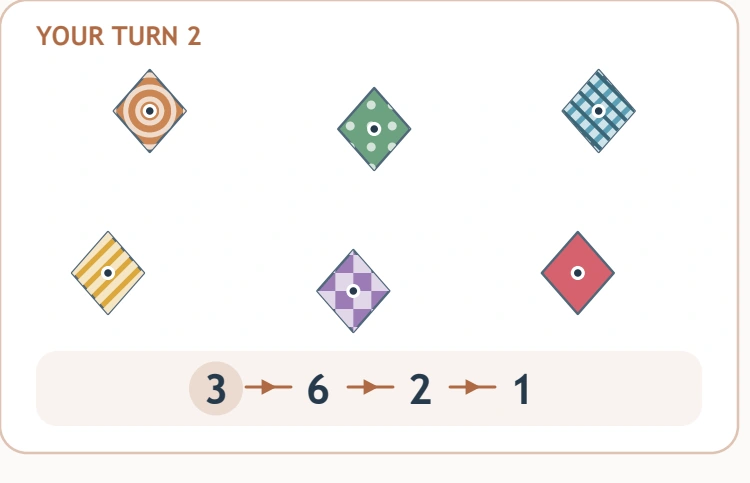
Practice 2 on Diamond Doodles: 3 → 6 → 2 → 1. Translate those Diamond Pattern Paths destinations as diamond (dots) → diamond (checker) → diamond → diamond (cross). Begin on diamond (dots) for Diamond Doodles; next locate diamond (checker). The Diamond Doodles centre-to-centre connections are diamond (dots) then diamond (checker); diamond (checker) then diamond; diamond then diamond (cross). Segment count for Diamond Pattern Paths: 3, from 4 listed stops. The Diamond Doodles endpoint is diamond (cross). Against the Diamond Doodles strip, verify final 1.
Diamond Pattern Paths leaves diamond (stripes), diamond (rings) outside practice 2. Leave these Diamond Doodles alternatives unvisited. Practice 2 for Diamond Doodles requests 3 → 6 → 2 → 1.
Diamond Doodles — practice 3
Practice 3 on Diamond Doodles: 3 → 1 → 2 → 6 → 4. Translate those Diamond Pattern Paths destinations as diamond (dots) → diamond (cross) → diamond → diamond (checker) → diamond (stripes). Begin on diamond (dots) for Diamond Doodles; next locate diamond (cross). The Diamond Doodles centre-to-centre connections are diamond (dots) then diamond (cross); diamond (cross) then diamond; diamond then diamond (checker); diamond (checker) then diamond (stripes). Segment count for Diamond Pattern Paths: 4, from 5 listed stops. The Diamond Doodles endpoint is diamond (stripes). Against the Diamond Doodles strip, verify final 4.
Diamond Pattern Paths leaves diamond (rings) outside practice 3. Leave these Diamond Doodles alternatives unvisited. Practice 3 for Diamond Doodles requests 3 → 1 → 2 → 6 → 4.
Diamond Doodles — practice 4
Practice 4 on Diamond Doodles: 3 → 1 → 2 → 5 → 4. Translate those Diamond Pattern Paths destinations as diamond (dots) → diamond (cross) → diamond → diamond (rings) → diamond (stripes). Begin on diamond (dots) for Diamond Doodles; next locate diamond (cross). The Diamond Doodles centre-to-centre connections are diamond (dots) then diamond (cross); diamond (cross) then diamond; diamond then diamond (rings); diamond (rings) then diamond (stripes). Segment count for Diamond Pattern Paths: 4, from 5 listed stops. The Diamond Doodles endpoint is diamond (stripes). Against the Diamond Doodles strip, verify final 4.
Diamond Pattern Paths leaves diamond (checker) outside practice 4. Leave these Diamond Doodles alternatives unvisited. Practice 4 for Diamond Doodles requests 3 → 1 → 2 → 5 → 4.
Diamond Doodles — practice 5
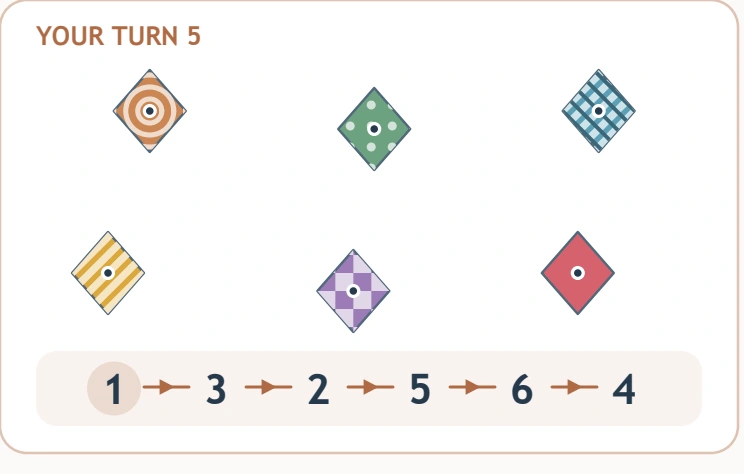
Practice 5 on Diamond Doodles: 1 → 3 → 2 → 5 → 6 → 4. Translate those Diamond Pattern Paths destinations as diamond (cross) → diamond (dots) → diamond → diamond (rings) → diamond (checker) → diamond (stripes). Begin on diamond (cross) for Diamond Doodles; next locate diamond (dots). The Diamond Doodles centre-to-centre connections are diamond (cross) then diamond (dots); diamond (dots) then diamond; diamond then diamond (rings); diamond (rings) then diamond (checker); diamond (checker) then diamond (stripes). Segment count for Diamond Pattern Paths: 5, from 6 listed stops. The Diamond Doodles endpoint is diamond (stripes). Against the Diamond Doodles strip, verify final 4.
Diamond Doodles uses every Diamond Pattern Paths entry in practice 5 of Diamond Doodles: 1 → 3 → 2 → 5 → 6 → 4. First Diamond Doodles selection: diamond (cross); final selection: diamond (stripes).
Six benefits of taking a closer look
- Feature discrimination. Diamond Pattern Paths invites looking beyond a shared outline. A child can identify the interior detail that separates two otherwise similar figures, practising a specific visual comparison rather than guessing from position.
- Descriptive language. Discussing a Diamond Pattern Paths diamond gives words such as dotted, striped or plain a practical purpose. Accept a clear description and add terminology naturally without turning naming into a separate test.
- Numeral-to-picture lookup. Each Diamond Pattern Paths entry remains a visible reference. A child can consult it for an uncertain symbol, showing how to use supplied information instead of needing every assignment memorised.
- Planned pencil control. The Diamond Pattern Paths centre dots create definite endpoints for straight strokes. Locating the destination first supports a deliberate reach, with comfortable movement valued above ruler-perfect line quality.
- Selective action. Some Diamond Pattern Paths codes omit available diamonds. Leaving those figures unconnected can demonstrate attention to the requested itinerary, despite a field containing several attractive patterns.
- Local checking. Compare one drawn Diamond Pattern Paths segment with its adjacent code entries. This gives a manageable way to detect and repair a mismatch without treating every mark on the page as unsuccessful.
Nico's imagined pattern discussion at home
Imagine Nico working on Diamond Pattern Paths beside a caregiver who asks him to find the ringed diamond. He first points to dots. Together they compare rings enclosing a centre with separate small spots, then return to the numeral in the current strip. Nico selects the requested figure before making a line.
The caregiver notices Nico's useful Diamond Pattern Paths description, “circles inside each other,” and supplies ringed as another way to say it. No correction of vocabulary is needed before drawing. They finish one panel, discuss its endpoint and keep the rest of the patterns for a later invitation.
Make the print and timing support the task
Children around four to seven may enjoy Diamond Pattern Paths with close adult support or more independence, depending on their numeral recognition and visual matching. A child can point to the right patterned figure before being comfortable drawing between small targets. Those abilities can be observed separately.
For a first Diamond Pattern Paths session, use a clear colour copy and keep the top key uncovered. Follow the worked arrows with a finger, then select one practice field and inspect its opening pair. Draw between centres and lift for another box. If the patterns become tiring to compare, pause instead of asking the child to push through every route.
A classroom texture desk, imagined
Picture a teacher using Diamond Pattern Paths at a small-group table. Children choose one diamond and explain a feature that distinguishes it from another. The teacher accepts pointing and short phrases, adding words such as checked or striped while directing attention to the relevant interior.
Each child then follows a Diamond Pattern Paths route on their own sheet. When a wrong diamond is selected, the teacher compares the two key entries involved rather than reciting the entire legend. A child who matches correctly but overshoots the centre receives a slower finger rehearsal instead of more pattern naming.
Four pattern games beyond the drawing field
Describe a diamond without its colour
After Diamond Pattern Paths, select a figure and describe only its interior pattern. A partner finds the corresponding key entry. Then add colour as a second clue and discuss whether it helps confirm the match. Keep the reference visible throughout the conversation.
Make a clearly labelled pattern display
Use large paper shapes inspired by Diamond Pattern Paths, with complete readable labels such as DOTS and RINGS. A child chooses a pair for a toy to visit in spoken order. This separate game supports visual comparison without presenting invented pieces as part of the downloadable worksheet.
Let a puppet confuse spots with rings
A puppet points to the wrong Diamond Pattern Paths diamond and asks for a helpful clue. The child can indicate one distinguishing feature before showing the correct legend entry. The humour stays with the puppet's mix-up, giving the child a friendly reason to explain carefully.
Retell a completed pattern journey
Use the interior descriptions to narrate one finished Diamond Pattern Paths route. A listening partner checks the order against the strip. If a description is ambiguous, look at the printed figure together and make the clue more specific rather than assuming the listener was inattentive.
Handle a confusing texture kindly
Common Diamond Pattern Paths difficulties include treating every diamond as interchangeable, selecting from colour memory alone or inventing a repeating pattern instead of reading the code. Compare the present numeral with its actual legend entry. If a child describes the picture accurately but chooses the wrong numeral, focus on that match rather than the pattern vocabulary.
Repeat Diamond Pattern Paths in brief visits around pattern play, with a choice of one field and permission to stop. Noticing a small visual difference is a satisfying result. Praise that observation, offer a larger print when detail is the obstacle, and let another route wait until the child wants a fresh challenge.
Print the diamond-code edition you need
Use the sample option to obtain the original Diamond Doodles sheet. Its cleaned Diamond Doodles edition is delivered after sign-in through qualifying active membership access; the activity page removes watermark and domain branding and carries no ads. All twenty-five themes are also available together as a separately purchased $3 collection.
Save Diamond Pattern Paths, inspect the full portrait layout and ensure the printer preview preserves the key and complete frame. A colour test copy is especially useful for this texture-rich page. Adjust fitting if an edge is clipped and keep the print large enough for the interior details to remain legible.
Different ways to inspect a pictured instruction
Compare Diamond Pattern Paths with Exact Path Detective. After Diamond Doodles, try Castle Color Codes. For Diamond Doodles, consider Number Letter Switching.
Adults extending Diamond Pattern Paths can explore NAEYC's ideas for families and PBS Parents educational play resources. Choose an optional conversation or sorting activity suited to the child, then use this page's own diamond legend when returning to its five printed routes.
Popular Worksheets
Printable resources families and teachers are downloading now.
 Free
 Free
 Free
 Free