
Farmyard Route Key: 4 Wonderful Barn-to-Duck Puzzles
The barn joins the complete 25-sheet collection at $3. Choose the clean combined PDF to keep this animal-and-building key together with the remaining supplied code-line activity themes.
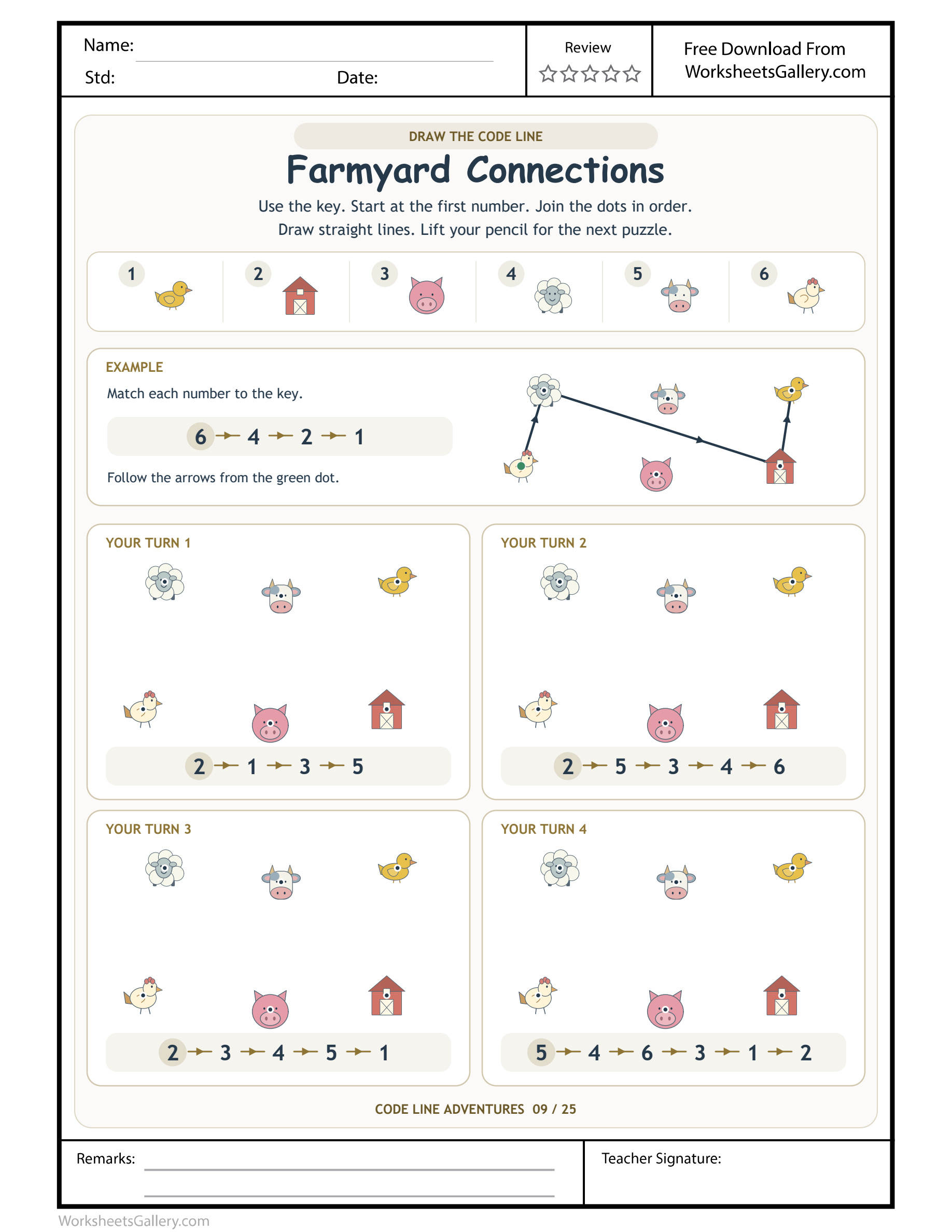
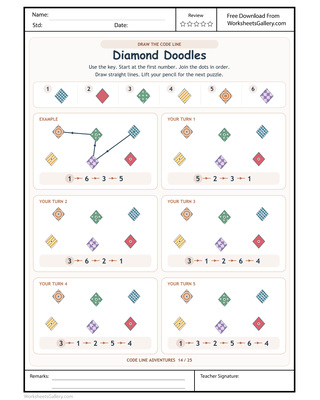
There is a building among the animals, and it belongs in the code. Farmyard Route Key uses duck, barn, pig, sheep, cow and chicken as six pictured destinations for ordered drawing. Children match a numeral to the legend, locate the corresponding centre and draw toward the next stop. Four practice routes sit below a wide worked example. The barn makes a useful talking point: following a key means accepting the symbols actually printed, even when one differs from the others. This farm journey follows instructions rather than asking children to choose only animals.
Why the barn matters — Farmyard Route Key
The second Farmyard Route Key legend entry is barn, with a visible central target just like the animal pictures. Omitting it because it is not a creature would change a requested route. Name the building at the outset and point to its numeral before beginning the first practice field, which starts there.
A quick conversation around Farmyard Route Key can distinguish naming from sorting. Children may correctly observe that a barn is a building and still use it as a coded destination. The legend defines the choices for this drawing task. A category observation need not become a reason to reject a valid stop.
Farmyard Route Key legend at a glance
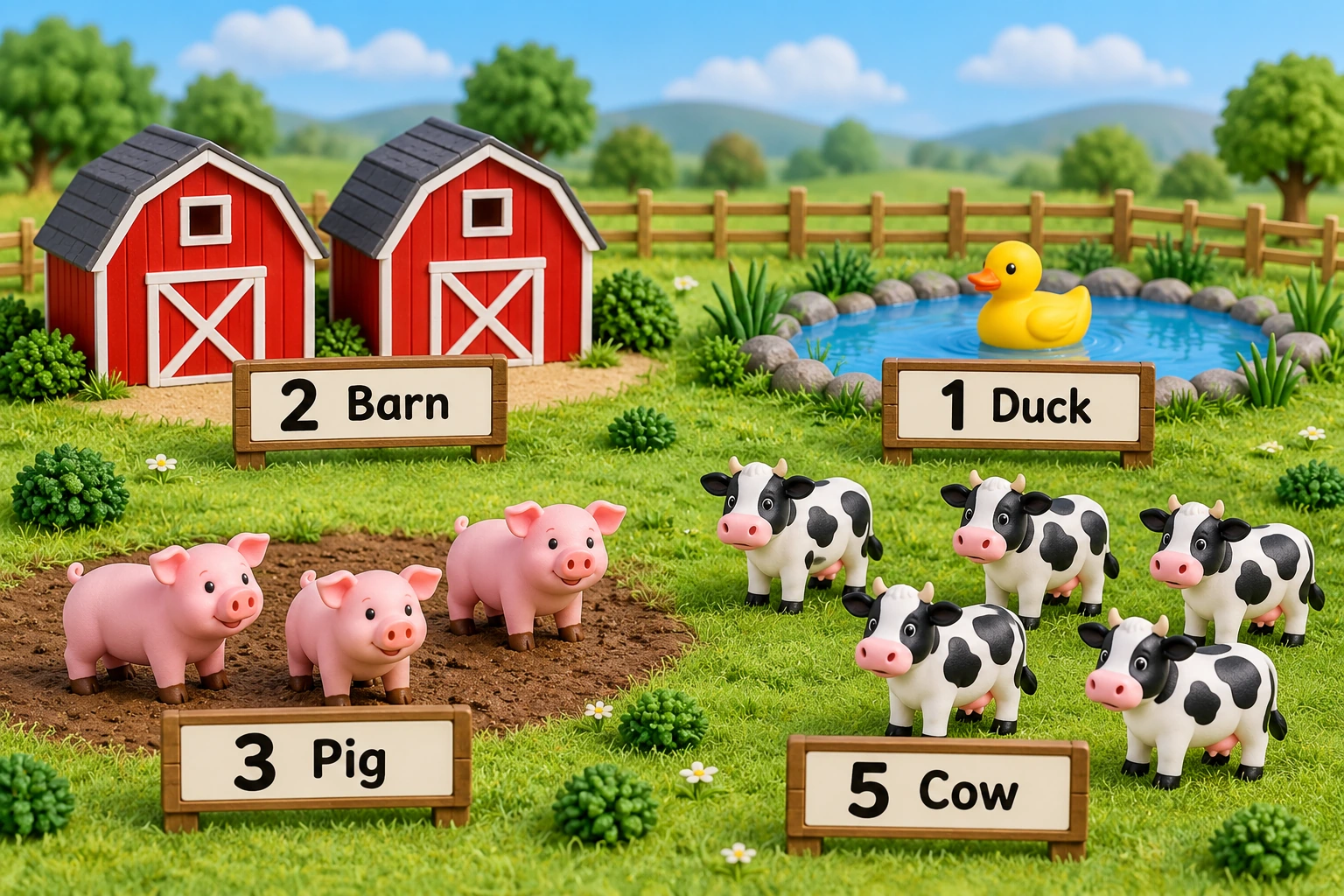
| Farmyard Connections numeral | Keyed picture |
|---|---|
| 1 | duck |
| 2 | barn |
| 3 | pig |
| 4 | sheep |
| 5 | cow |
| 6 | chicken |

Farmyard Connections example before independent drawing
Farmyard Connections demonstrates 6 → 4 → 2 → 1. The Farmyard Connections itinerary is chicken → sheep → barn → duck. In Farmyard Connections, the green start selects chicken. Farmyard Connections arrows lead to duck. Farmyard Connections has 3 worked segments. The Farmyard Route Key example supports finger rehearsal. Inspect the Farmyard Connections practice strip separately.
Farmyard Connections — practice 1
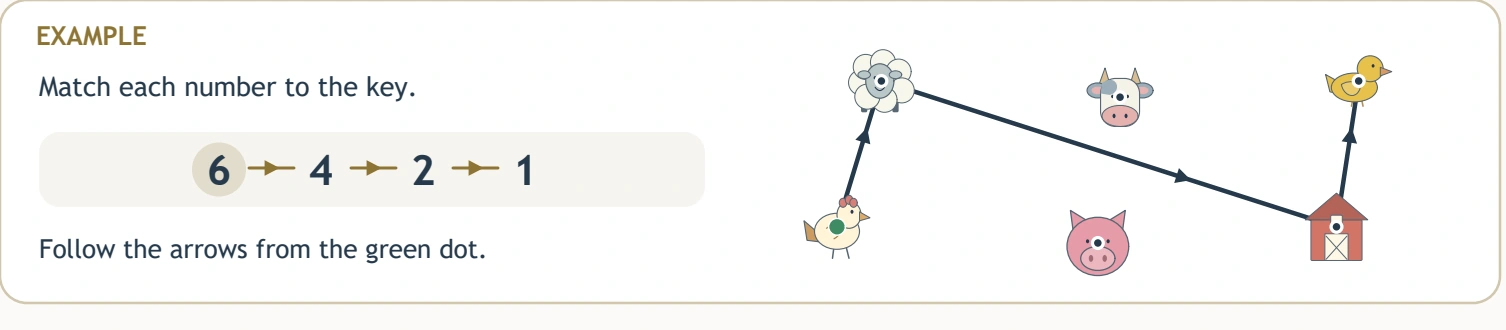
Practice 1 on Farmyard Connections: 2 → 1 → 3 → 5. Translate those Farmyard Route Key destinations as barn → duck → pig → cow. Begin on barn for Farmyard Connections; next locate duck. The Farmyard Connections centre-to-centre connections are barn then duck; duck then pig; pig then cow. Segment count for Farmyard Route Key: 3, from 4 listed stops. The Farmyard Connections endpoint is cow. Against the Farmyard Connections strip, verify final 5.
Farmyard Route Key leaves sheep, chicken outside practice 1. Leave these Farmyard Connections alternatives unvisited. Practice 1 for Farmyard Connections requests 2 → 1 → 3 → 5.
Farmyard Connections — practice 2
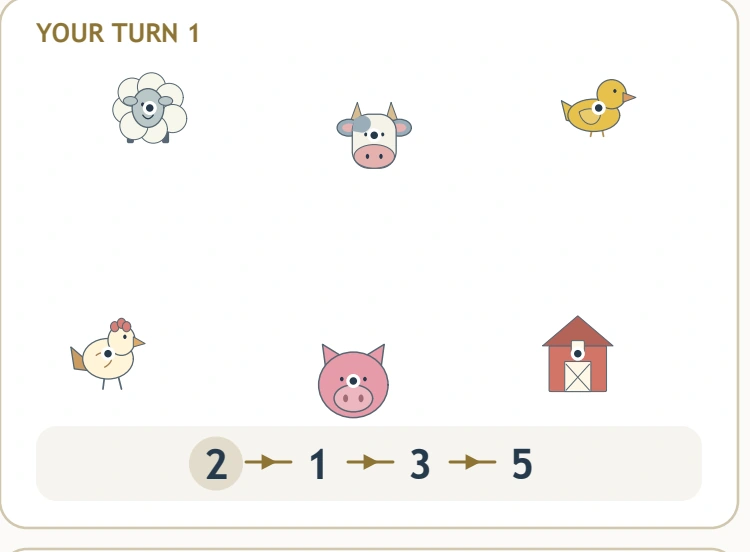
Practice 2 on Farmyard Connections: 2 → 5 → 3 → 4 → 6. Translate those Farmyard Route Key destinations as barn → cow → pig → sheep → chicken. Begin on barn for Farmyard Connections; next locate cow. The Farmyard Connections centre-to-centre connections are barn then cow; cow then pig; pig then sheep; sheep then chicken. Segment count for Farmyard Route Key: 4, from 5 listed stops. The Farmyard Connections endpoint is chicken. Against the Farmyard Connections strip, verify final 6.
Farmyard Route Key leaves duck outside practice 2. Leave these Farmyard Connections alternatives unvisited. Practice 2 for Farmyard Connections requests 2 → 5 → 3 → 4 → 6.
Farmyard Connections — practice 3
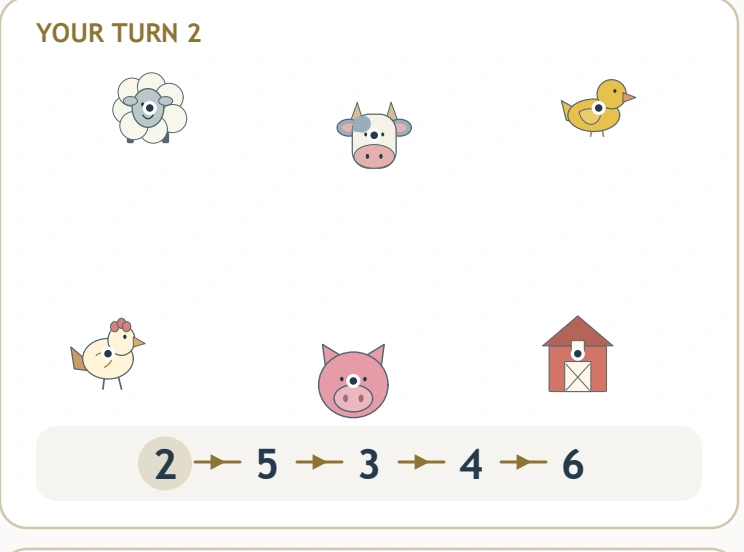
Practice 3 on Farmyard Connections: 2 → 3 → 4 → 5 → 1. Translate those Farmyard Route Key destinations as barn → pig → sheep → cow → duck. Begin on barn for Farmyard Connections; next locate pig. The Farmyard Connections centre-to-centre connections are barn then pig; pig then sheep; sheep then cow; cow then duck. Segment count for Farmyard Route Key: 4, from 5 listed stops. The Farmyard Connections endpoint is duck. Against the Farmyard Connections strip, verify final 1.
Farmyard Route Key leaves chicken outside practice 3. Leave these Farmyard Connections alternatives unvisited. Practice 3 for Farmyard Connections requests 2 → 3 → 4 → 5 → 1.
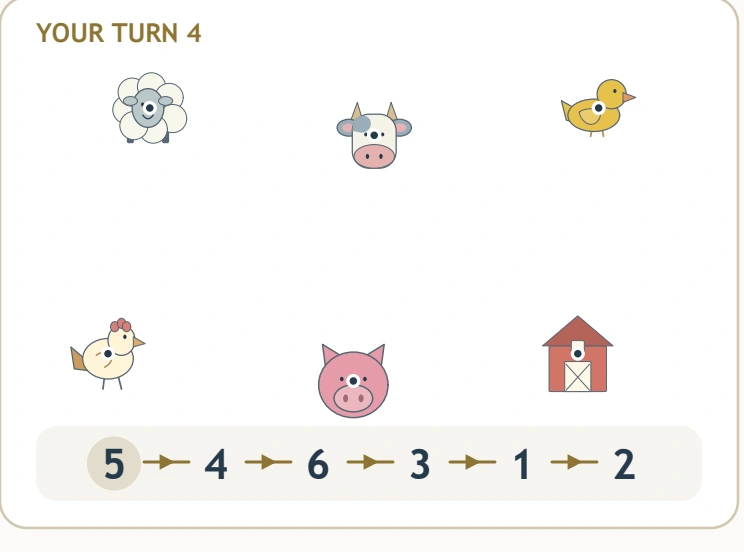
Farmyard Connections — practice 4
Practice 4 on Farmyard Connections: 5 → 4 → 6 → 3 → 1 → 2. Translate those Farmyard Route Key destinations as cow → sheep → chicken → pig → duck → barn. Begin on cow for Farmyard Connections; next locate sheep. The Farmyard Connections centre-to-centre connections are cow then sheep; sheep then chicken; chicken then pig; pig then duck; duck then barn. Segment count for Farmyard Route Key: 5, from 6 listed stops. The Farmyard Connections endpoint is barn. Against the Farmyard Connections strip, verify final 2.
Farmyard Connections uses every Farmyard Route Key entry in practice 4 of Farmyard Connections: 5 → 4 → 6 → 3 → 1 → 2. First Farmyard Connections selection: cow; final selection: barn.
Imani's imagined farm visit at home
Imagine Imani studying Farmyard Route Key with a parent. She names the animals easily but calls the barn “the red house.” The parent supplies barn while pointing to two, accepting that she has located the correct picture. Imani begins the route there and explains which creature the next numeral selects.
When Imani later skips the Farmyard Route Key barn because she wants to visit animals only, the parent returns to the code. They separate a pretend farm preference from the printed instruction. Imani can invent an animal-only story afterwards; for this panel, she follows the barn entry that the strip requests.
Six kinds of learning to notice on the farm
Follow the definition supplied by a key
The Farmyard Route Key legend gives the barn the same status as each animal destination. Accepting that assignment practises using a stated rule. An adult can ask which printed evidence selects the building, keeping the discussion concrete rather than insisting the child memorise a general rule about farms.
Use vocabulary flexibly
During Farmyard Route Key, familiar descriptions such as red building can lead naturally to barn. Add precise words while accepting a clear point or home-language name. Naming support should make the route easier to discuss, not prevent a child from demonstrating a correct lookup.
Translate numerals independently of picture position
The first numeral in a Farmyard Route Key strip may correspond to a picture near the bottom of the panel. The child must locate the keyed symbol rather than read the field like a row of numbers. Watch for that purposeful search before the pencil begins.
Coordinate a planned reach
The small Farmyard Route Key targets invite a line aimed at a specific centre. Locate the next destination together, then let the child control the motion. Straightness can improve with experience; the immediate goal is a comfortable, intentional connection between the correct symbols.
Keep an itinerary separate from a story
Farm stories around Farmyard Route Key can be lively, but the numeral strip still selects the path. A child can describe why a cow might visit the barn after checking whether that pair is requested. This keeps imaginative language connected with, rather than substituted for, the exercise.
Review a meaningful pair of stops
When a Farmyard Route Key line omits barn, inspect the relevant numeral and adjacent destination. Repairing that pair explains the error more clearly than asking for a complete redraw. The child can point to the corrected choice before drawing again.
Choose assistance by the task, not by speed
An approximate four-to-seven age guide suits Farmyard Route Key with flexible adult help. Some children recognise numerals before knowing every farm word; others can name the pictures but need numbers read aloud. Either child can participate meaningfully when the unfamiliar part is supported.
Set up Farmyard Route Key with a visible key, stable paper and a pencil that moves comfortably. Explore the wide example first. Read a practice code in short pairs, draw between centres and lift before entering another box. Stop after a panel if attention or hand comfort fades, leaving the remaining journeys available rather than compulsory.
A classroom farm guide, imagined
Picture a teacher presenting Farmyard Route Key during a small-group farm discussion. Children identify something that is not an animal, then explain why it can still be a route stop. The teacher points to the key rather than correcting their category observation. Both statements can be true: the barn is a building, and two selects it.
Each child then works on a Farmyard Route Key copy while a partner listens to one spoken itinerary. The teacher offers picture naming or numeral reading where needed and watches whether the pencil follows the correct centres. The activity provides different observations without making verbal fluency the only route to success.
Four farm extensions with useful contrasts
Describe a farm destination
After Farmyard Route Key, give a clue for one picture using its visible features. A partner looks up Farmyard Connections and confirms the matching numeral. Include the barn among the clues so the game reflects the supplied symbol set rather than quietly replacing it with animals alone.
Sort first, follow later
Use large labelled farm cards inspired by Farmyard Route Key. Sort animals and buildings as a separate game, then mix them and follow a short spoken route. Discuss how sorting and following instructions are different activities, each with its own clear request.
Let the barn explain its invitation
Invent a tiny conversation in which the Farmyard Route Key barn tells a traveller why it is included. The child can show numeral two as the invitation. Keep the story playful while checking the actual strip before deciding whether barn appears in the current route.
Review the farmer's changed order
An adult finger-follows a finished Farmyard Route Key route but swaps two neighbouring stops in the spoken account. The child compares the account with the code and identifies the change. Trade roles if desired, allowing pointing instead of a long correction speech.
Keep a farm detour recoverable
Common Farmyard Route Key mistakes include leaving out the building, counting numerals upward or copying the sample route. Return to one uncertain entry and show its legend picture. If the child selected the correct picture but outlined it, redirect attention to the centre dot instead of reteaching the numeral.
For regular Farmyard Route Key use, attach a short route to a farm story or pretend-play session. Allow the child to choose a panel and ask for a clue. A careful check is more useful than a fast page. Praise an observed decision and save another field for a later visit if the activity has reached a natural end.
Download and prepare the farm printable
Choose the original sample of Farmyard Route Key or sign in as an eligible active member for the clean premium PDF. The premium activity page contains no watermark or advertising, and its website domain branding has been removed. A separate $3 purchase offers all twenty-five themes together in one collection file.
Inspect Farmyard Route Key in a portrait print preview, keeping the legend and full outer frame inside the printable area. Colour can clarify the farm pictures. Try a single copy first and adjust fitting if your printer trims the edge, then use a stable tabletop for drawing.
Other activities that ask for evidence
Compare Farmyard Route Key with Castle Color Codes. After Farmyard Connections, try Number Letter Switching. For Farmyard Connections, consider Exact Path Detective.
Around Farmyard Route Key, adults can draw broader play ideas from NAEYC's family learning resources and PBS Parents' collection of activities. Use the suggestions for optional conversation, while retaining this worksheet's own six-picture key for its farm itineraries.
Popular Worksheets
Printable resources families and teachers are downloading now.
 Free
 Free
 Free
 Free