
Treasure Code Navigator: 4 Brilliant Map-to-Crown Trips
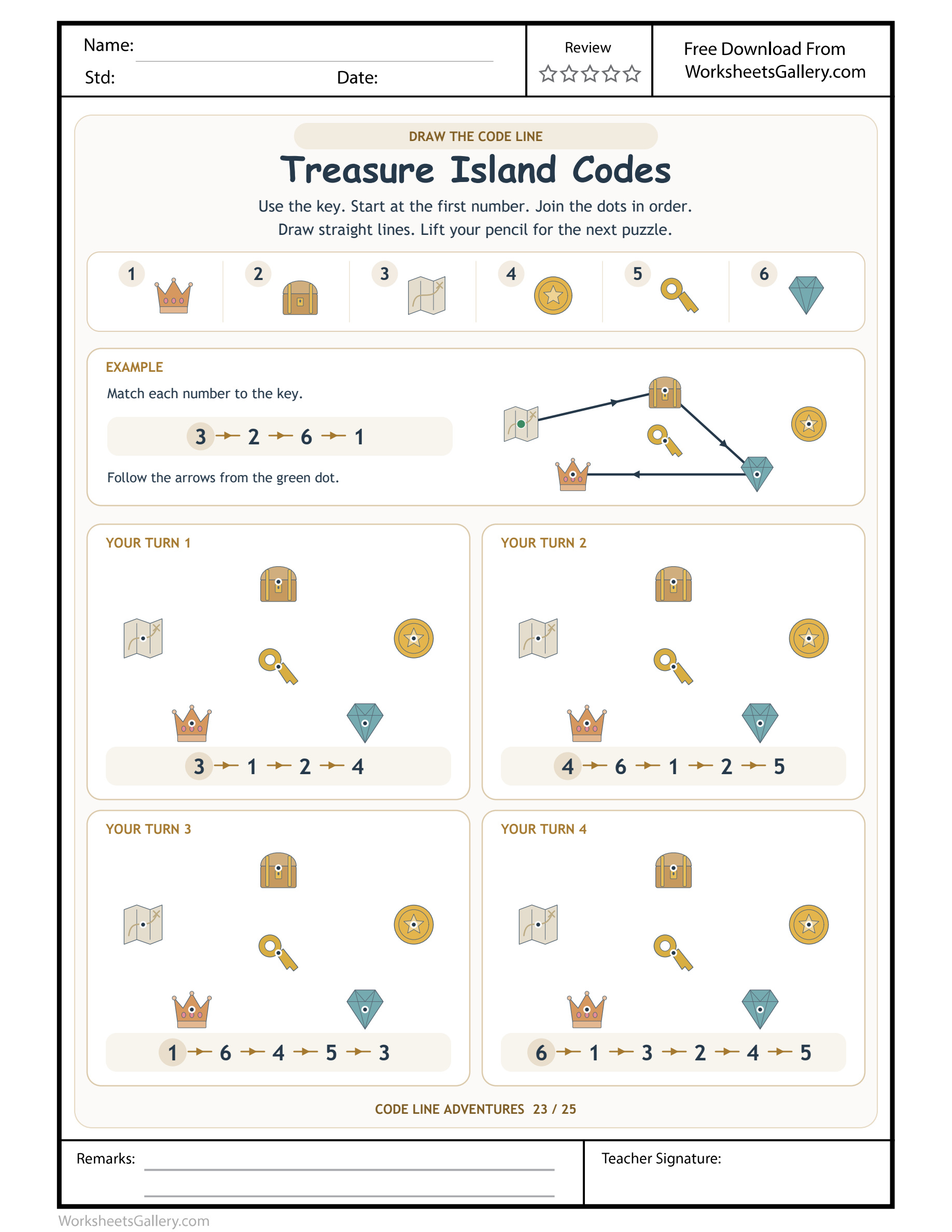
Keep the treasure itinerary with the full $3 collection. The clean 25-page file includes the map, crown and chest routes as printed, plus the other supplied settings for number-to-picture instruction practice.
A treasure chest is not always the final destination. Treasure Code Navigator assigns numerals to crown, chest, map, coin, key and gem, then uses short codes to select four independent drawing journeys. Children consult the legend and connect the requested centre dots with straight segments. A wide worked example introduces the method, while the unanswered panels change the visiting order. The treasure setting makes storytelling tempting, but the printed instruction provides a useful boundary: a traveller goes where the code directs, even when an imagined adventure would prefer a different start or ending today.
A map picture is a stop, not a hidden set of directions — Treasure Code Navigator
In Treasure Code Navigator, map is the third key entry. It functions as a pictured destination just like crown or gem. The child is not asked to inspect tiny geography inside the map illustration or invent a compass route. The numeral strip below the panel supplies the order to draw.
The first Treasure Code Navigator practice itinerary begins at map and visits crown, chest and coin. Knowing a familiar treasure-story sequence would not establish that route. Let the code guide the pencil and the story supply the atmosphere. This keeps pretend play enjoyable without changing the exercise.
Treasure Code Navigator legend at a glance
| Treasure Island Codes numeral | Keyed picture |
|---|---|
| 1 | crown |
| 2 | chest |
| 3 | map |
| 4 | coin |
| 5 | key |
| 6 | gem |

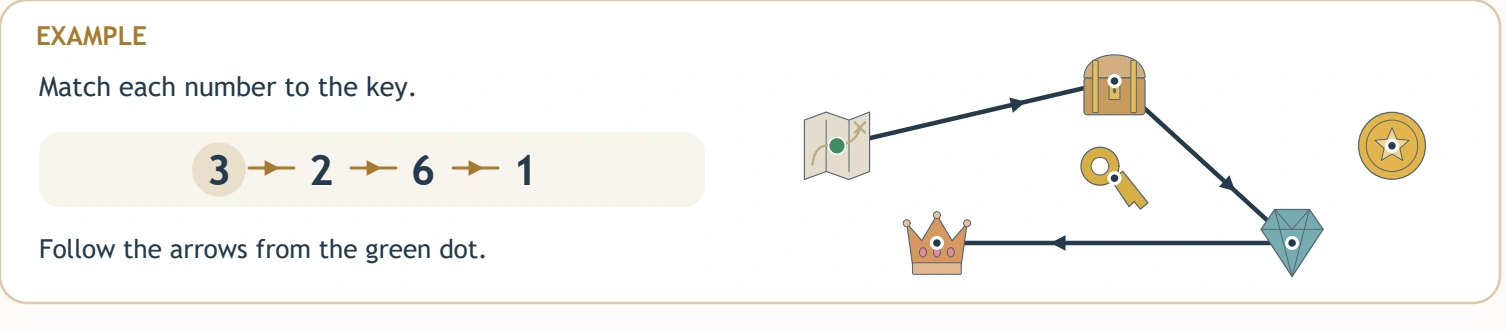
Treasure Code Navigator example before independent drawing
Treasure Island Codes demonstrates 3 → 2 → 6 → 1. The Treasure Island Codes itinerary is map → chest → gem → crown. In Treasure Island Codes, the green start selects map. Treasure Island Codes arrows lead to crown. Treasure Island Codes has 3 worked segments. The Treasure Code Navigator example supports finger rehearsal. Inspect the Treasure Island Codes practice strip separately.
Treasure Island Codes — practice 1
Practice 1 on Treasure Island Codes: 3 → 1 → 2 → 4. Translate those Treasure Code Navigator destinations as map → crown → chest → coin. Begin on map for Treasure Island Codes; next locate crown. The Treasure Island Codes centre-to-centre connections are map followed by crown; crown followed by chest; chest followed by coin. Segment count for Treasure Code Navigator: 3, from 4 listed stops. The Treasure Island Codes endpoint is coin. Against the Treasure Island Codes strip, verify final 4.
Treasure Code Navigator leaves key, gem outside practice 1. Leave these Treasure Island Codes alternatives unvisited. Practice 1 for Treasure Island Codes requests 3 → 1 → 2 → 4.
Treasure Island Codes — practice 2
Practice 2 on Treasure Island Codes: 4 → 6 → 1 → 2 → 5. Translate those Treasure Code Navigator destinations as coin → gem → crown → chest → key. Begin on coin for Treasure Island Codes; next locate gem. The Treasure Island Codes centre-to-centre connections are coin followed by gem; gem followed by crown; crown followed by chest; chest followed by key. Segment count for Treasure Code Navigator: 4, from 5 listed stops. The Treasure Island Codes endpoint is key. Against the Treasure Island Codes strip, verify final 5.
Treasure Code Navigator leaves map outside practice 2. Leave these Treasure Island Codes alternatives unvisited. Practice 2 for Treasure Island Codes requests 4 → 6 → 1 → 2 → 5.
Treasure Island Codes — practice 3
Practice 3 on Treasure Island Codes: 1 → 6 → 4 → 5 → 3. Translate those Treasure Code Navigator destinations as crown → gem → coin → key → map. Begin on crown for Treasure Island Codes; next locate gem. The Treasure Island Codes centre-to-centre connections are crown followed by gem; gem followed by coin; coin followed by key; key followed by map. Segment count for Treasure Code Navigator: 4, from 5 listed stops. The Treasure Island Codes endpoint is map. Against the Treasure Island Codes strip, verify final 3.
Treasure Code Navigator leaves chest outside practice 3. Leave these Treasure Island Codes alternatives unvisited. Practice 3 for Treasure Island Codes requests 1 → 6 → 4 → 5 → 3.
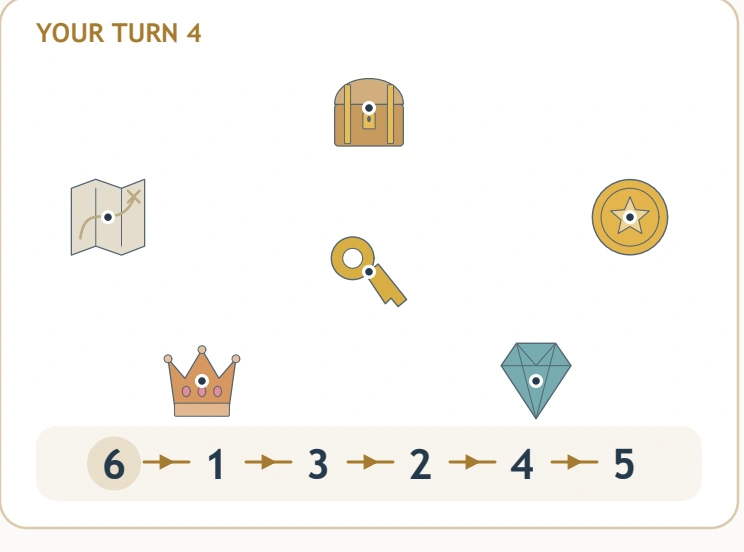
Treasure Island Codes — practice 4
Practice 4 on Treasure Island Codes: 6 → 1 → 3 → 2 → 4 → 5. Translate those Treasure Code Navigator destinations as gem → crown → map → chest → coin → key. Begin on gem for Treasure Island Codes; next locate crown. The Treasure Island Codes centre-to-centre connections are gem followed by crown; crown followed by map; map followed by chest; chest followed by coin; coin followed by key. Segment count for Treasure Code Navigator: 5, from 6 listed stops. The Treasure Island Codes endpoint is key. Against the Treasure Island Codes strip, verify final 5.
Treasure Island Codes uses every Treasure Code Navigator entry in practice 4 of Treasure Island Codes: 6 → 1 → 3 → 2 → 4 → 5. First Treasure Island Codes selection: gem; final selection: key.
Zoya's imagined treasure-table discovery
Imagine Zoya exploring Treasure Code Navigator at home. She wants every trip to end at chest because that is where treasure belongs in her story. Her caregiver asks her to inspect the current strip's last numeral. Zoya finds coin for four and identifies the actual endpoint before drawing.
They tell a tiny Treasure Code Navigator story that arrives at coin instead, allowing the adventure to adapt around the printed instruction. When Zoya loses her place midway through the route, a finger under the present numeral helps her resume. They finish one journey and save another for a later treasure invitation.
Six habits for a careful treasure navigator
Use an explicit rule before a familiar narrative
The Treasure Code Navigator strip can disagree with a conventional treasure-story ending. Following its actual entries gives a concrete reason to check evidence. A child can enjoy the adventure while explaining which numeral selects the next object.
Distinguish a symbol from its real-world use
The key picture in Treasure Code Navigator is a destination, not a tool the child must use to open the chest. Discuss that role through a direct legend comparison. The supplied assignment makes the drawing request clear without requiring extra story logic.
Name a route for a listener
During Treasure Code Navigator, map to crown communicates a specific first connection. A child can point, use a familiar word or speak briefly while the adult adds vocabulary. Precise selection matters more than producing a long narrative before drawing.
Plan a centre-to-centre movement
Each Treasure Code Navigator object contains a small target. Locate the next one before moving the pencil, then aim for a controlled arrival. Slightly uneven strokes can retain the correct itinerary, so recognise the chosen destinations independently of perfect straightness.
Keep track while consulting a reference
A finger under the Treasure Code Navigator strip can preserve the present step as the eyes return to the legend. This reduces memory demand without giving the answer. Let the child manage that aid as they become comfortable with the lookup routine.
Repair a detour using one pair
When a Treasure Code Navigator line follows a story preference instead of the code, inspect its two adjacent numerals. The child can identify the first disagreement and correct that connection. A local repair keeps the rest of the successful journey available.
Readiness and a practical home arrangement
Children approximately four to seven may use Treasure Code Navigator with support for numerals, object names or pencil comfort. A child can understand the itinerary through pointing before being ready to draw every small connection. Adults can read a code aloud while leaving the picture matching to the learner.
Set Treasure Code Navigator flat and keep the legend visible. Follow the worked arrows, choose an independent panel and identify its opening pair. Draw one link, inspect the following numeral and begin a fresh Treasure Island Codes box only after lifting. Pause after a short journey when interest or comfortable hand control starts to diminish.
A classroom treasure briefing, imagined
Picture a teacher using Treasure Code Navigator at a small-group table. Children announce a selected route's endpoint and show the final numeral supporting their claim. The teacher then asks for the initial pair, ensuring that the endpoint discussion does not replace the intermediate instructions.
Each child draws on an individual Treasure Code Navigator copy while a partner listens to one short spoken itinerary. The teacher watches for story-driven guesses, numeral confusion or aiming difficulty and offers the appropriate cue. Children can share a checked choice without racing to complete all four treasure journeys.
Four treasure games with clear rules
Give a toy explorer a brief itinerary
Use large labelled treasure cards inspired by Treasure Code Navigator. Ask a toy to visit two named objects and stop, then swap roles. Keep the instruction visible or repeatable, allowing the child to check instead of relying on a long memorised list.
Tell two stories with the same ending
After Treasure Code Navigator, invent two short spoken journeys that end at coin but visit different objects first. Discuss how matching endings do not make the routes identical. Use only a few stops so the difference remains easy to demonstrate with pointing.
Describe an object through a visible clue
Give a clue for a Treasure Code Navigator picture, such as the crown's points or the chest's lid. A partner checks the relevant Treasure Island Codes entry. Add the precise name naturally, making vocabulary useful without testing knowledge of pirates or map reading.
Help a puppet finish at its favourite chest
A puppet stops at chest during a Treasure Code Navigator route that requests another endpoint. The child checks the remaining strip and supplies a clue. The puppet follows the actual instruction, with the story adapting happily around that correction.
Preserve the adventure when a code is misread
Common Treasure Code Navigator slips include choosing a story-based endpoint, treating the map illustration as extra directions or copying the example. Return to the specific numeral and legend entry involved. If the lookup is accurate but the stroke misses a centre, rehearse the movement rather than retelling the whole decoding process.
Offer brief Treasure Code Navigator sessions after a story or pretend treasure hunt. Let one panel be enough, welcome clue requests and notice a careful comparison. A thoughtful navigator can change a decision. Specific encouragement and comfortable pauses make a later visit more inviting than a demand for a perfectly finished sheet.
Obtain the printable treasure route
Download the original Treasure Code Navigator sample through its sample option, or sign in through eligible active membership access for the cleaned premium PDF. The premium printable removes watermark and domain branding and contains no ads. The twenty-five-theme collection is separately available for $3.
Save Treasure Code Navigator and inspect portrait printing for the complete frame, upper legend and all route strips. A clear colour copy supports object identification. Test one page and change the scale if Treasure Island Codes is trimmed at the margin before preparing further copies.
Other ways to inspect the stated instruction
Compare Treasure Code Navigator with Castle Color Codes. After Treasure Island Codes, try Number Letter Switching. For Treasure Island Codes, consider Exact Path Detective.
Adults planning play around Treasure Code Navigator can explore NAEYC's family learning suggestions and PBS Parents' resources for activities. Use those optional ideas for conversation while this worksheet's own six-object legend supplies the actual treasure itinerary.
Popular Worksheets
Printable resources families and teachers are downloading now.
 Free
 Free
 Free
 Free