
Woodland Symbol Walk: 5 Wonderful Acorn-Key Trails
The woodland clearing connects to 25 themes for $3. Use the clean collection PDF to keep these forest-picture destinations and the other supplied code-line sheets together for later short printing sessions.
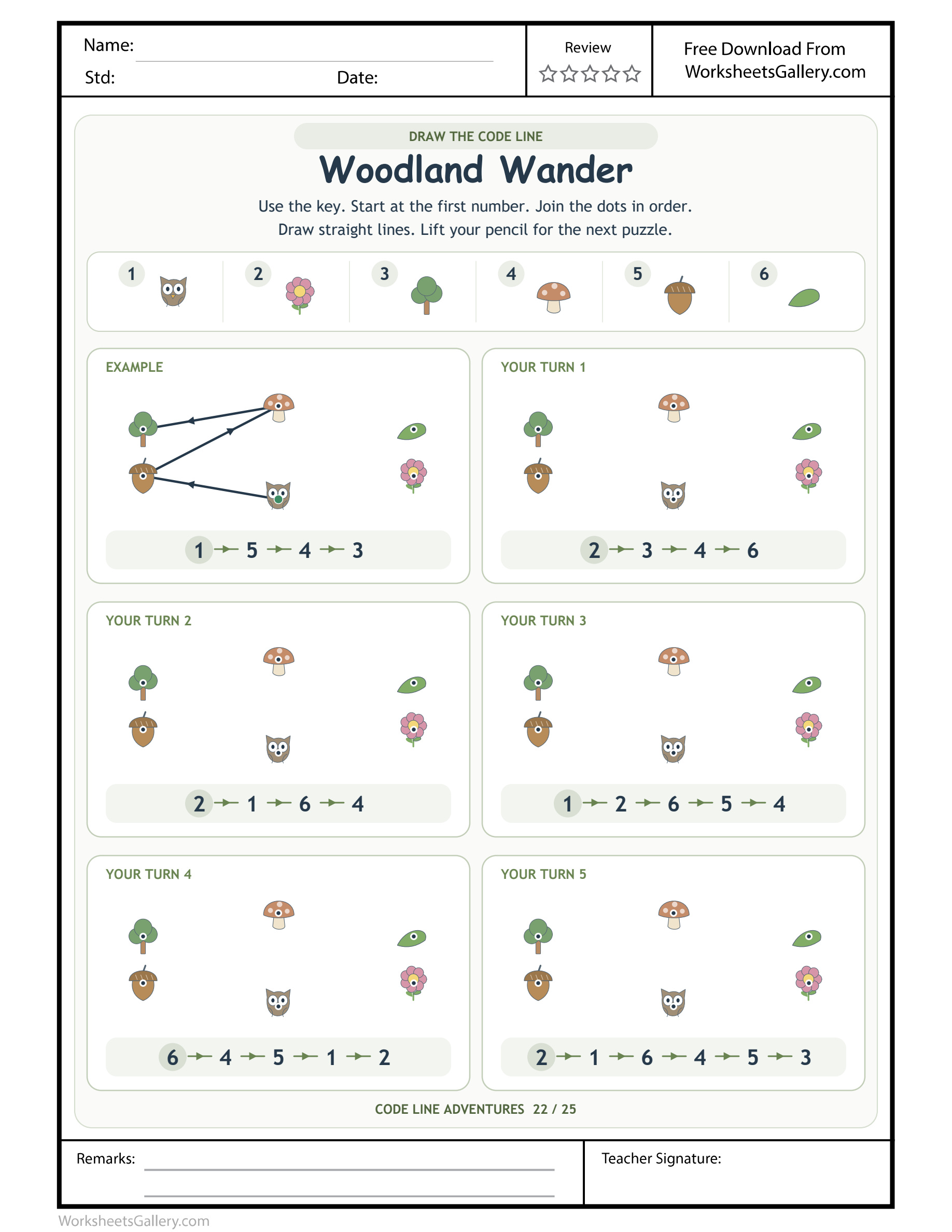
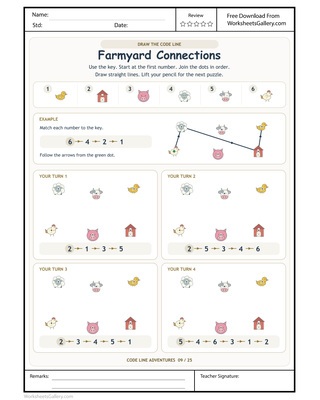
A woodland picture field is not a reading row. Woodland Symbol Walk asks children to move between owl, flower, tree, mushroom, acorn and leaf according to a number code, even when those choices travel across the panel in an unexpected direction. A compact example demonstrates the method before five independent routes. Children consult the legend, locate the requested symbol and join its centre to the next selected centre with a straight line. The forest setting makes a friendly imaginary walk, while the printed strip, rather than picture position or a guessed trail, determines the itinerary.
Let the code cross the clearing — Woodland Symbol Walk
Within Woodland Symbol Walk, the symbols occupy stable places across the repeated fields. Their arrangement makes some connections look more convenient than others, but convenience does not choose the next stop. Locate the numeral in the key and then search the entire selected panel for its picture.
An adult can introduce Woodland Symbol Walk by asking for tree, acorn and leaf in different orders before drawing. This shows that naming a picture and deciding where to travel are related but separate actions. Read the strip from its beginning; search the panel where the symbol actually sits.
Woodland Wander legend at a glance
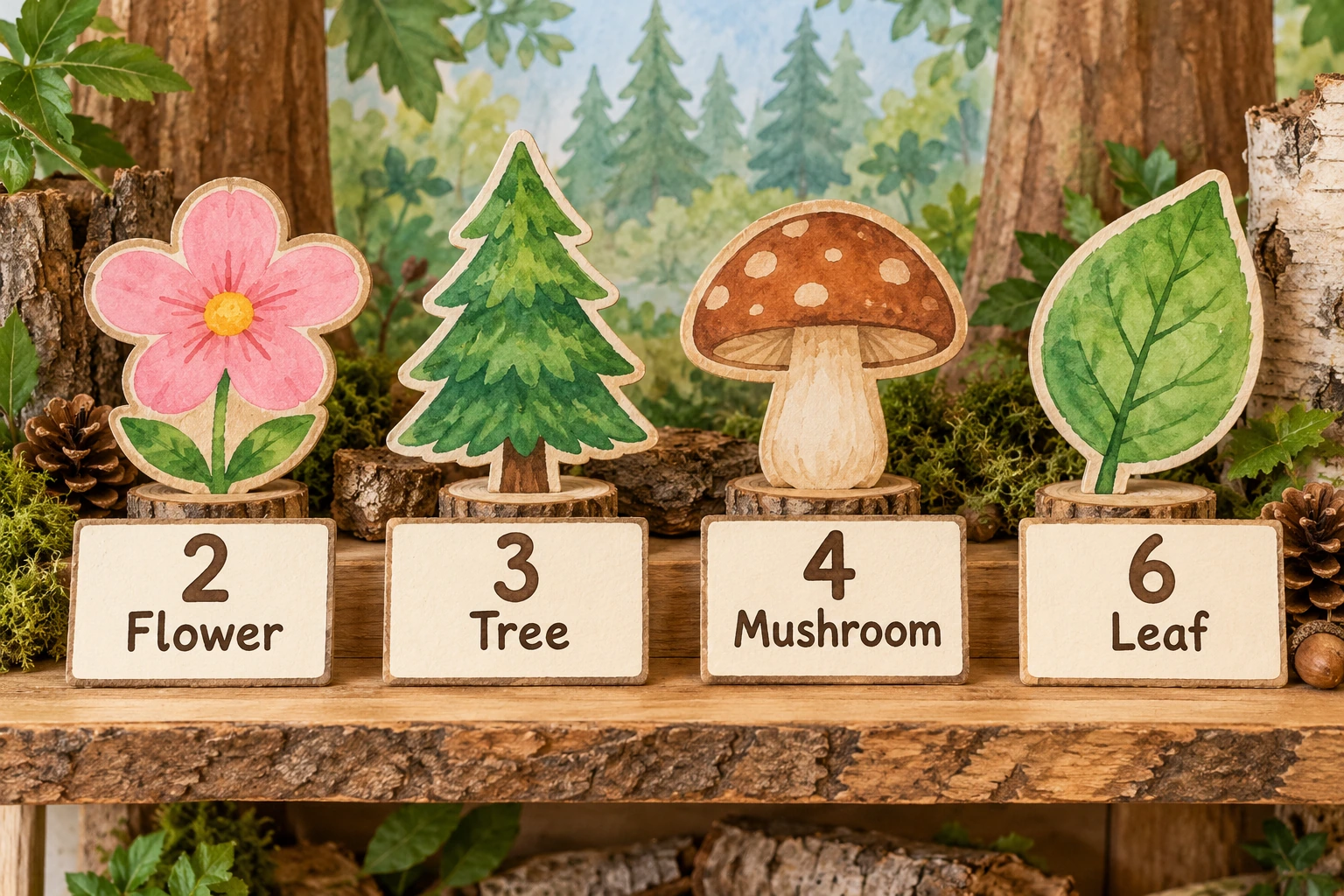
| Woodland Wander numeral | Keyed picture |
|---|---|
| 1 | owl |
| 2 | flower |
| 3 | tree |
| 4 | mushroom |
| 5 | acorn |
| 6 | leaf |

Woodland Wander example before independent drawing
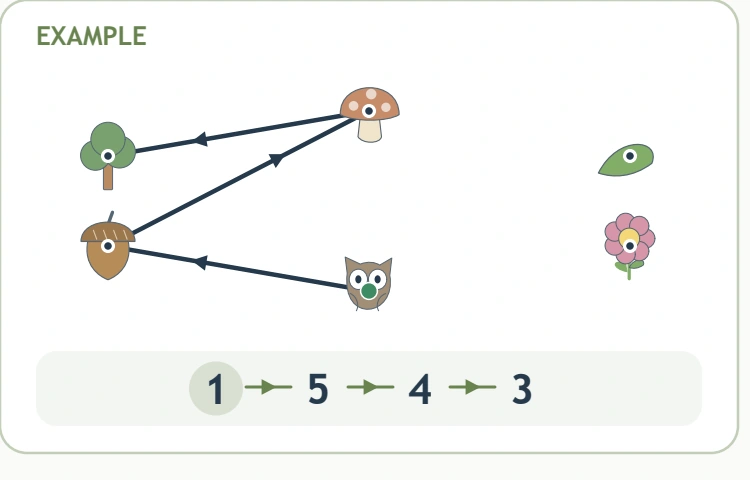
Woodland Wander demonstrates 1 → 5 → 4 → 3. The Woodland Wander itinerary is owl → acorn → mushroom → tree. In Woodland Wander, the green start selects owl. Woodland Wander arrows lead to tree. Woodland Wander has 3 worked segments. The Woodland Symbol Walk example supports finger rehearsal. Inspect the Woodland Wander practice strip separately.
Woodland Wander — practice 1
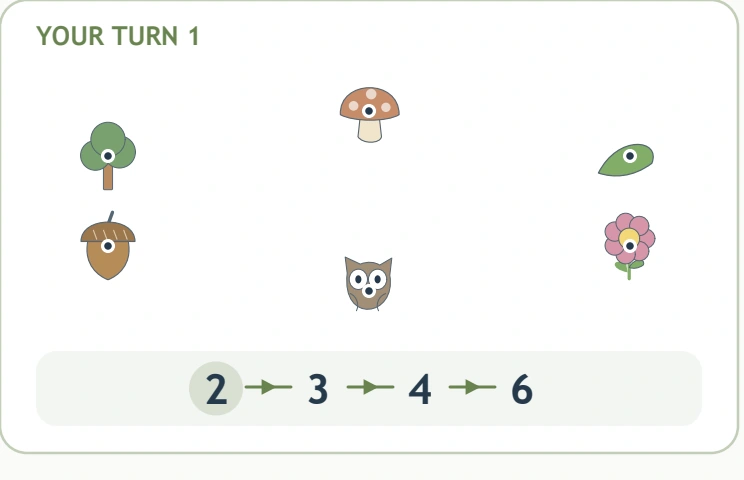
Practice 1 on Woodland Wander: 2 → 3 → 4 → 6. Translate those Woodland Symbol Walk destinations as flower → tree → mushroom → leaf. Begin on flower for Woodland Wander; next locate tree. The Woodland Wander centre-to-centre connections are flower onward to tree; tree onward to mushroom; mushroom onward to leaf. Segment count for Woodland Symbol Walk: 3, from 4 listed stops. The Woodland Wander endpoint is leaf. Against the Woodland Wander strip, verify final 6.
Woodland Symbol Walk leaves owl, acorn outside practice 1. Leave these Woodland Wander alternatives unvisited. Practice 1 for Woodland Wander requests 2 → 3 → 4 → 6.
Woodland Wander — practice 2
Practice 2 on Woodland Wander: 2 → 1 → 6 → 4. Translate those Woodland Symbol Walk destinations as flower → owl → leaf → mushroom. Begin on flower for Woodland Wander; next locate owl. The Woodland Wander centre-to-centre connections are flower onward to owl; owl onward to leaf; leaf onward to mushroom. Segment count for Woodland Symbol Walk: 3, from 4 listed stops. The Woodland Wander endpoint is mushroom. Against the Woodland Wander strip, verify final 4.
Woodland Symbol Walk leaves tree, acorn outside practice 2. Leave these Woodland Wander alternatives unvisited. Practice 2 for Woodland Wander requests 2 → 1 → 6 → 4.
Woodland Wander — practice 3
Practice 3 on Woodland Wander: 1 → 2 → 6 → 5 → 4. Translate those Woodland Symbol Walk destinations as owl → flower → leaf → acorn → mushroom. Begin on owl for Woodland Wander; next locate flower. The Woodland Wander centre-to-centre connections are owl onward to flower; flower onward to leaf; leaf onward to acorn; acorn onward to mushroom. Segment count for Woodland Symbol Walk: 4, from 5 listed stops. The Woodland Wander endpoint is mushroom. Against the Woodland Wander strip, verify final 4.
Woodland Symbol Walk leaves tree outside practice 3. Leave these Woodland Wander alternatives unvisited. Practice 3 for Woodland Wander requests 1 → 2 → 6 → 5 → 4.
Woodland Wander — practice 4
Practice 4 on Woodland Wander: 6 → 4 → 5 → 1 → 2. Translate those Woodland Symbol Walk destinations as leaf → mushroom → acorn → owl → flower. Begin on leaf for Woodland Wander; next locate mushroom. The Woodland Wander centre-to-centre connections are leaf onward to mushroom; mushroom onward to acorn; acorn onward to owl; owl onward to flower. Segment count for Woodland Symbol Walk: 4, from 5 listed stops. The Woodland Wander endpoint is flower. Against the Woodland Wander strip, verify final 2.
Woodland Symbol Walk leaves tree outside practice 4. Leave these Woodland Wander alternatives unvisited. Practice 4 for Woodland Wander requests 6 → 4 → 5 → 1 → 2.
Woodland Wander — practice 5
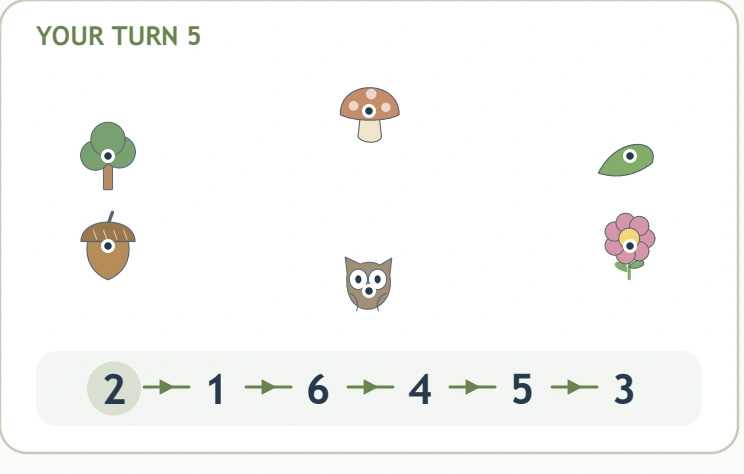
Practice 5 on Woodland Wander: 2 → 1 → 6 → 4 → 5 → 3. Translate those Woodland Symbol Walk destinations as flower → owl → leaf → mushroom → acorn → tree. Begin on flower for Woodland Wander; next locate owl. The Woodland Wander centre-to-centre connections are flower onward to owl; owl onward to leaf; leaf onward to mushroom; mushroom onward to acorn; acorn onward to tree. Segment count for Woodland Symbol Walk: 5, from 6 listed stops. The Woodland Wander endpoint is tree. Against the Woodland Wander strip, verify final 3.
Woodland Wander uses every Woodland Symbol Walk entry in practice 5 of Woodland Wander: 2 → 1 → 6 → 4 → 5 → 3. First Woodland Wander selection: flower; final selection: tree.
Six useful forest-navigation habits
Search beyond the next reading position
The Woodland Symbol Walk route can move across or back through a field. A child practises locating the requested picture rather than taking the next one in a left-to-right scan. Notice a purposeful search before the hand begins its stroke.
Use the legend as a local map
Each Woodland Symbol Walk numeral has a printed woodland assignment. Returning to that reference is sensible, especially when another worksheet uses similar pictures differently. An adult can read a numeral aloud while leaving the symbol lookup to the child.
Describe a destination clearly
During Woodland Symbol Walk, naming mushroom rather than saying over there helps another person follow the itinerary. Accept pointing or familiar home-language words, adding precise names naturally. Spoken fluency is not the only way to demonstrate a sound picture match.
Prepare the next reach
The Woodland Symbol Walk centre dots create intended landing places. Find the next target first, then draw toward it comfortably. A slightly wavering line may still preserve the correct route; recognise the selection separately from the neatness of the movement.
Keep a place while looking elsewhere
A finger beneath the Woodland Symbol Walk strip can retain the current step while the eyes search the Woodland Wander reference and drawing field. This finger marker retains a position without changing the itinerary. Let the child manage that reference aid independently when it becomes useful.
Explain an untouched woodland picture
Some Woodland Symbol Walk strips omit available symbols. Leaving a picture outside the route can be a careful decision. Ask which numeral would have selected it, then check whether that entry appears in the present instruction before adding any visit.
A woodland story at home, imagined
Imagine Wren trying Woodland Symbol Walk after looking through a forest book. She reads the practice strip correctly but connects to a nearby symbol out of habit. Her caregiver asks her to find the numeral's picture in the legend, then search the full panel. Wren spots the requested destination farther away.
They rehearse that Woodland Symbol Walk pair with a finger before drawing again. The adult praises Wren's deliberate search rather than telling her simply to be more careful. They finish one short woodland trip and save other routes for another day, keeping the story setting inviting.
A classroom forest guide, imagined
Picture a teacher introducing Woodland Symbol Walk through a silent pointing task. Children locate a requested picture without drawing, then explain how its numeral appears in the key. The teacher accepts a correct point from children who prefer a brief spoken response, supplying vocabulary where needed.
Children then follow individual Woodland Symbol Walk strips on separate copies. Partners compare one pair of destinations without moving each other's pencils. The teacher observes whether a difficulty concerns numeral matching, searching across the field or aiming, and offers a focused cue for that particular action.
Readiness and a comfortable clearing
Children roughly four to seven can explore Woodland Symbol Walk with varying support. A child may know every woodland word while needing number names read aloud. Another may understand the code but prefer larger Woodland Wander targets or finger rehearsal before several small drawn connections.
Prepare Woodland Symbol Walk with the key visible, paper steady and a clear space for the supporting hand. Follow the sample's arrows, select one practice panel and inspect its initial pair. Draw between centres, check each following entry and lift before a new field. A single well-understood walk is enough when attention or hand comfort begins to fade.
Four woodland games beyond the paper
Place signposts around a tabletop
Use large labelled woodland cards inspired by Woodland Symbol Walk, arranged in a non-row layout. A toy follows two named destinations. Trade roles so the child gives directions and the adult searches, keeping the route short enough for easy checking.
Describe a woodland picture without its usual name
After Woodland Symbol Walk, offer a visible clue such as the acorn's cap or the mushroom's stem. A partner consults the Woodland Wander legend for its number. Add the precise word after identification, using the game to support communication rather than test nature knowledge.
Retell a walk through the printed stops
Choose a completed Woodland Symbol Walk itinerary and invent a tiny forest tale using its destinations in order. The child can add a traveller and a reason for moving. Keep the printed sequence intact, with imaginative details growing around rather than replacing it.
Help a puppet follow the nearest picture
A puppet moves to the closest Woodland Symbol Walk symbol instead of consulting the strip. The child can show the next numeral and locate the correct destination. The puppet resumes at the previous correct Woodland Wander stop, modelling a small recoverable mistake.
Keep the forest walk relaxed
Common Woodland Symbol Walk slips include reading the drawing field like a row, following a favourite picture or copying the model's line. Return to the relevant numeral and key entry. If the symbol was selected correctly but the line strayed, rehearse the movement rather than repeating the whole code explanation.
Invite short Woodland Symbol Walk returns after a woodland story or picture game. Let the child choose a panel, request help and stop comfortably. Searching thoughtfully is a useful success. Describe a specific checked destination instead of comparing the child's speed or line quality with another learner's page.
Download a woodland-route printable
The original Woodland Symbol Walk worksheet is offered as a sample. Through eligible active membership access, signed-in users can obtain its cleaned premium PDF, without a watermark, domain branding or activity-page advertisements. The separately priced $3 collection contains all twenty-five supplied code-line themes.
Save Woodland Symbol Walk and review portrait print preview for the entire frame and upper legend. Colour can clarify Woodland Wander's pictures. Inspect a trial copy and change the scaling if the Woodland Wander frame is trimmed, then place the page on a stable surface for a short woodland trip.
Follow another kind of reference
Compare Woodland Symbol Walk with Exact Path Detective. After Woodland Wander, try Castle Color Codes. For Woodland Wander, consider Number Letter Switching.
Adults seeking play around Woodland Symbol Walk can browse NAEYC's resources for family learning and PBS Parents' activity suggestions. These general sources offer optional conversation and pretend-play ideas, while the woodland key remains the reference for the worksheet's five routes.
Popular Worksheets
Printable resources families and teachers are downloading now.
 Free
 Free
 Free
 Free