
Ribbon Road Signals: 4 Joyful Five-Shape Journeys
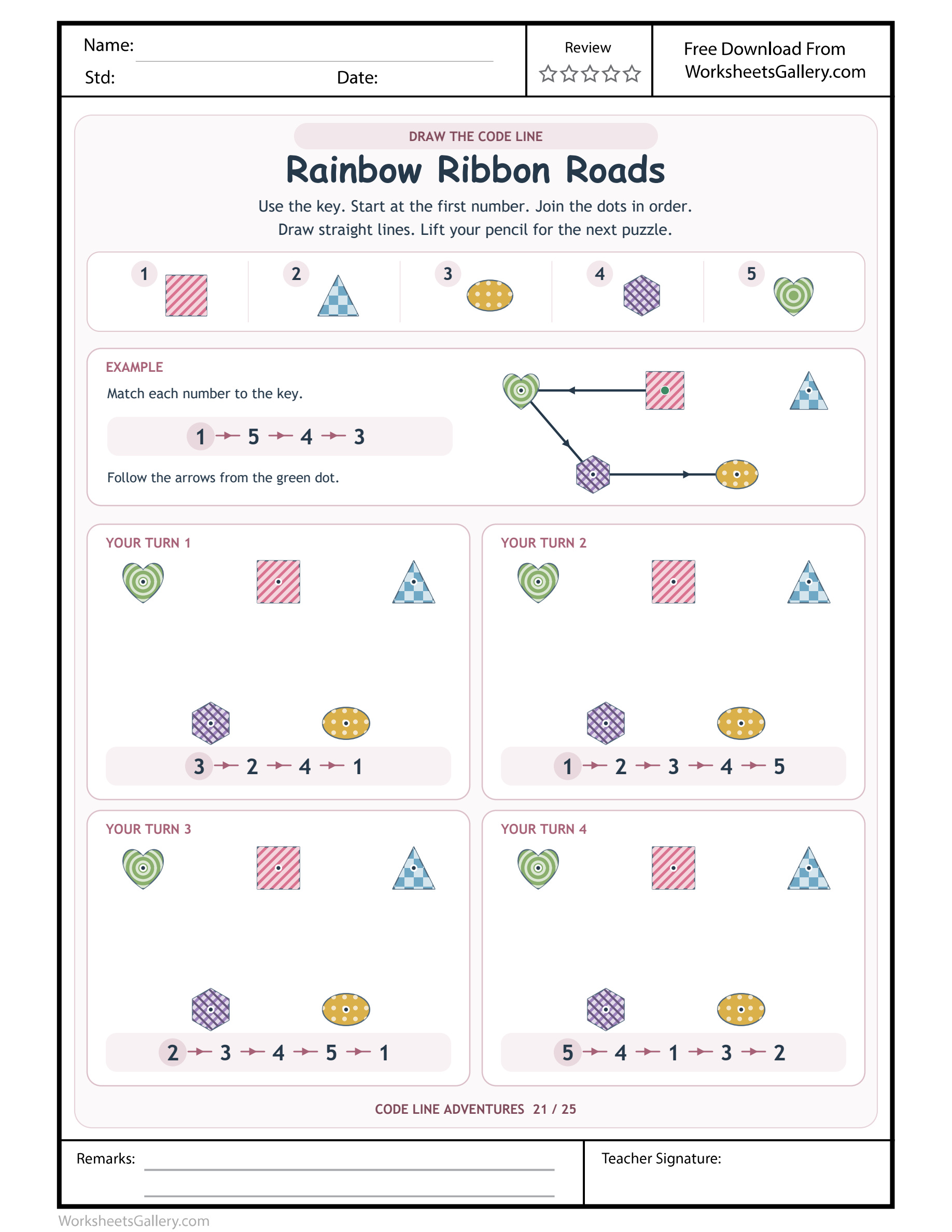
Follow the ribbon signs into the $3 complete collection. The 25 clean pages include this five-symbol geometric key, keeping its actual entries and independent routes beside the rest of the supplied set.
A striped square and a checked triangle can act as signposts on an imaginary ribbon road. Ribbon Road Signals uses five patterned shapes in a numbered legend, followed by a worked example and four independent drawing routes. Children translate each strip into pictured destinations and connect their centre dots with straight lines. The theme invites a winding story, but the requested pencil movements remain straight between the selected targets. Looking at both outline and interior detail helps identify a signpost, while reading the current code decides which one comes next and where this particular journey should stop.
Five signposts, not an unfinished six-entry key — Ribbon Road Signals
The Ribbon Road Signals legend contains square, triangle, oval, hexagon and heart. Their interiors provide stripes, checks, dots, crossing lines and rings as additional clues. Inspect the actual five entries before beginning; a child used to another worksheet should not search for a sixth symbol that this page does not supply.
The first Ribbon Road Signals practice route leaves heart out, while later strips include all five entries in different orders. A visible signpost is a choice, not an automatic destination. Count neither decoration nor sides to obtain the key label; the numeral-to-picture assignment is already printed.
Ribbon Road Signals legend at a glance
| Rainbow Ribbon Roads numeral | Keyed picture |
|---|---|
| 1 | square (stripes) |
| 2 | triangle (checker) |
| 3 | oval (dots) |
| 4 | hexagon (cross) |
| 5 | heart (rings) |

Ribbon Road Signals example before independent drawing
Rainbow Ribbon Roads demonstrates 1 → 5 → 4 → 3. The Rainbow Ribbon Roads itinerary is square (stripes) → heart (rings) → hexagon (cross) → oval (dots). In Rainbow Ribbon Roads, the green start selects square (stripes). Rainbow Ribbon Roads arrows lead to oval (dots). Rainbow Ribbon Roads has 3 worked segments. The Ribbon Road Signals example supports finger rehearsal. Inspect the Rainbow Ribbon Roads practice strip separately.
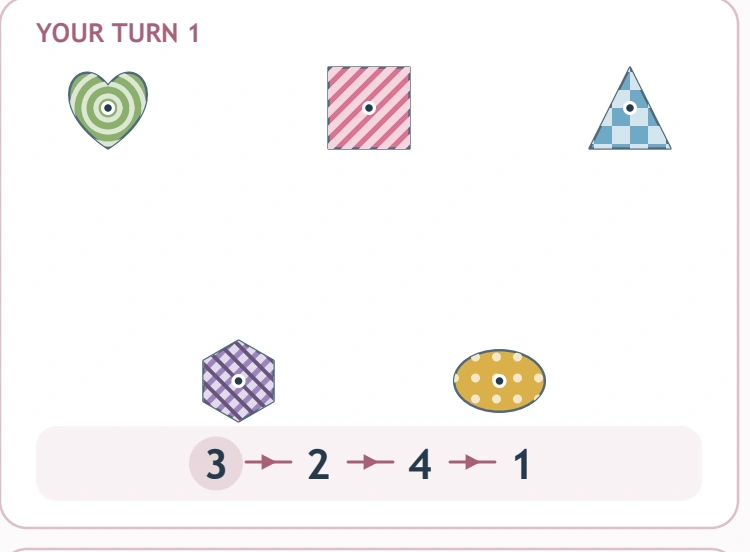
Rainbow Ribbon Roads — practice 1
Practice 1 on Rainbow Ribbon Roads: 3 → 2 → 4 → 1. Translate those Ribbon Road Signals destinations as oval (dots) → triangle (checker) → hexagon (cross) → square (stripes). Begin on oval (dots) for Rainbow Ribbon Roads; next locate triangle (checker). The Rainbow Ribbon Roads centre-to-centre connections are oval (dots) to triangle (checker); triangle (checker) to hexagon (cross); hexagon (cross) to square (stripes). Segment count for Ribbon Road Signals: 3, from 4 listed stops. The Rainbow Ribbon Roads endpoint is square (stripes). Against the Rainbow Ribbon Roads strip, verify final 1.
Ribbon Road Signals leaves heart (rings) outside practice 1. Leave these Rainbow Ribbon Roads alternatives unvisited. Practice 1 for Rainbow Ribbon Roads requests 3 → 2 → 4 → 1.
Rainbow Ribbon Roads — practice 2
Practice 2 on Rainbow Ribbon Roads: 1 → 2 → 3 → 4 → 5. Translate those Ribbon Road Signals destinations as square (stripes) → triangle (checker) → oval (dots) → hexagon (cross) → heart (rings). Begin on square (stripes) for Rainbow Ribbon Roads; next locate triangle (checker). The Rainbow Ribbon Roads centre-to-centre connections are square (stripes) to triangle (checker); triangle (checker) to oval (dots); oval (dots) to hexagon (cross); hexagon (cross) to heart (rings). Segment count for Ribbon Road Signals: 4, from 5 listed stops. The Rainbow Ribbon Roads endpoint is heart (rings). Against the Rainbow Ribbon Roads strip, verify final 5.
Rainbow Ribbon Roads uses every Ribbon Road Signals entry in practice 2 of Rainbow Ribbon Roads: 1 → 2 → 3 → 4 → 5. First Rainbow Ribbon Roads selection: square (stripes); final selection: heart (rings).
Rainbow Ribbon Roads — practice 3
Practice 3 on Rainbow Ribbon Roads: 2 → 3 → 4 → 5 → 1. Translate those Ribbon Road Signals destinations as triangle (checker) → oval (dots) → hexagon (cross) → heart (rings) → square (stripes). Begin on triangle (checker) for Rainbow Ribbon Roads; next locate oval (dots). The Rainbow Ribbon Roads centre-to-centre connections are triangle (checker) to oval (dots); oval (dots) to hexagon (cross); hexagon (cross) to heart (rings); heart (rings) to square (stripes). Segment count for Ribbon Road Signals: 4, from 5 listed stops. The Rainbow Ribbon Roads endpoint is square (stripes). Against the Rainbow Ribbon Roads strip, verify final 1.
Rainbow Ribbon Roads uses every Ribbon Road Signals entry in practice 3 of Rainbow Ribbon Roads: 2 → 3 → 4 → 5 → 1. First Rainbow Ribbon Roads selection: triangle (checker); final selection: square (stripes).
Rainbow Ribbon Roads — practice 4
Practice 4 on Rainbow Ribbon Roads: 5 → 4 → 1 → 3 → 2. Translate those Ribbon Road Signals destinations as heart (rings) → hexagon (cross) → square (stripes) → oval (dots) → triangle (checker). Begin on heart (rings) for Rainbow Ribbon Roads; next locate hexagon (cross). The Rainbow Ribbon Roads centre-to-centre connections are heart (rings) to hexagon (cross); hexagon (cross) to square (stripes); square (stripes) to oval (dots); oval (dots) to triangle (checker). Segment count for Ribbon Road Signals: 4, from 5 listed stops. The Rainbow Ribbon Roads endpoint is triangle (checker). Against the Rainbow Ribbon Roads strip, verify final 2.
Rainbow Ribbon Roads uses every Ribbon Road Signals entry in practice 4 of Rainbow Ribbon Roads: 5 → 4 → 1 → 3 → 2. First Rainbow Ribbon Roads selection: heart (rings); final selection: triangle (checker).
Veda's imagined ribbon display at home
Imagine Veda exploring Ribbon Road Signals with a caregiver after making a paper decoration. She wants to draw a curved ribbon between the shapes. The adult points to the worked straight segments and invites a finger rehearsal from one centre to the next. They keep decorative ribbon drawing as a different activity on separate paper.
When Veda reaches the end of a Ribbon Road Signals strip, she checks the last numeral before adding another line. Her caregiver praises the planned stop. They complete just one journey and save the remaining signposts for a later invitation, letting the theme stay playful rather than becoming a long drawing demand.
Six ways the signposts support careful work
- Two visual clues. Ribbon Road Signals allows a shape outline and its patterned interior to confirm the same entry. A child can say checked triangle or point to it, with precise vocabulary added naturally.
- A local reference. The Ribbon Road Signals assignments belong to this page. Returning to its visible legend is useful checking, even when a child remembers a similar shape from another worksheet with different labels.
- Ordered attention. The Ribbon Road Signals code chooses a sequence rather than a repeating decoration. A tracking finger can retain the present numeral while the eyes find the next signpost.
- Controlled connections. Each Ribbon Road Signals centre gives the pencil a specific target. Locate that goal before moving and encourage a comfortable arrival instead of demanding ruler-perfect segments.
- Selective visiting. An omitted Ribbon Road Signals heart can remain untouched when five is absent from a strip. That choice can demonstrate attention, rather than incomplete work requiring an added line.
- Clear endings. Stopping at the final Ribbon Road Signals entry follows the instruction. A return to the start is unnecessary unless another requested stop appears, so an open route can be complete.
Choose support for a comfortable first road
For children approximately four to seven, Ribbon Road Signals can be adapted to numeral familiarity, visual comparison and pencil readiness. An adult can read the code while the child finds the symbols. A finger route can show sound decoding even when small drawn strokes remain demanding.
Place Ribbon Road Signals on a stable surface and keep its legend uncovered. Follow the sample arrows, choose a practice field and inspect the opening pair. Draw that link, check the next Rainbow Ribbon Roads entry before lifting for a different panel. Stop when interest or hand comfort calls for a pause; four panels are available, not compulsory in one sitting.
A classroom signpost conversation, imagined
Picture a teacher using Ribbon Road Signals with a small group. Children describe a signpost without its colour, then identify its numeral through the key. The teacher adds words such as oval or ringed while accepting clear everyday descriptions. No child must master formal geometry terms before making a correct selection.
Each child draws a Ribbon Road Signals route on an individual copy. A partner listens to one short itinerary and checks its first pair. The teacher distinguishes a pattern-match difficulty from a movement difficulty, offering a focused clue or finger rehearsal instead of taking over the whole journey.
Four ribbon-road games for another day
Make a large signpost journey
Use clearly labelled shape cards inspired by Ribbon Road Signals, with each writing surface completed. Give a toy a brief spoken route, then swap roles. Keep the game separate from the printed sheet, which provides fixed panels rather than movable road pieces.
Compare one clue with two
After Ribbon Road Signals, describe a signpost first by outline alone, then by outline and interior together. Ask a partner whether the second clue helps confirm the choice. This develops useful descriptions without requiring spelling or written answers.
Tell the heart why it is waiting
Look at a Ribbon Road Signals strip that omits five and invent a friendly explanation for the waiting heart. Then point to the evidence: that numeral is not requested here. The story supports selective visiting while preserving the printed itinerary.
Let a puppet curl a straight connection
A puppet wants to make a wavy ribbon during Ribbon Road Signals. The child compares that proposal with the worked example and explains the centre-to-centre straight movement. The puppet can enjoy decorative curves on separate paper after following the actual route.
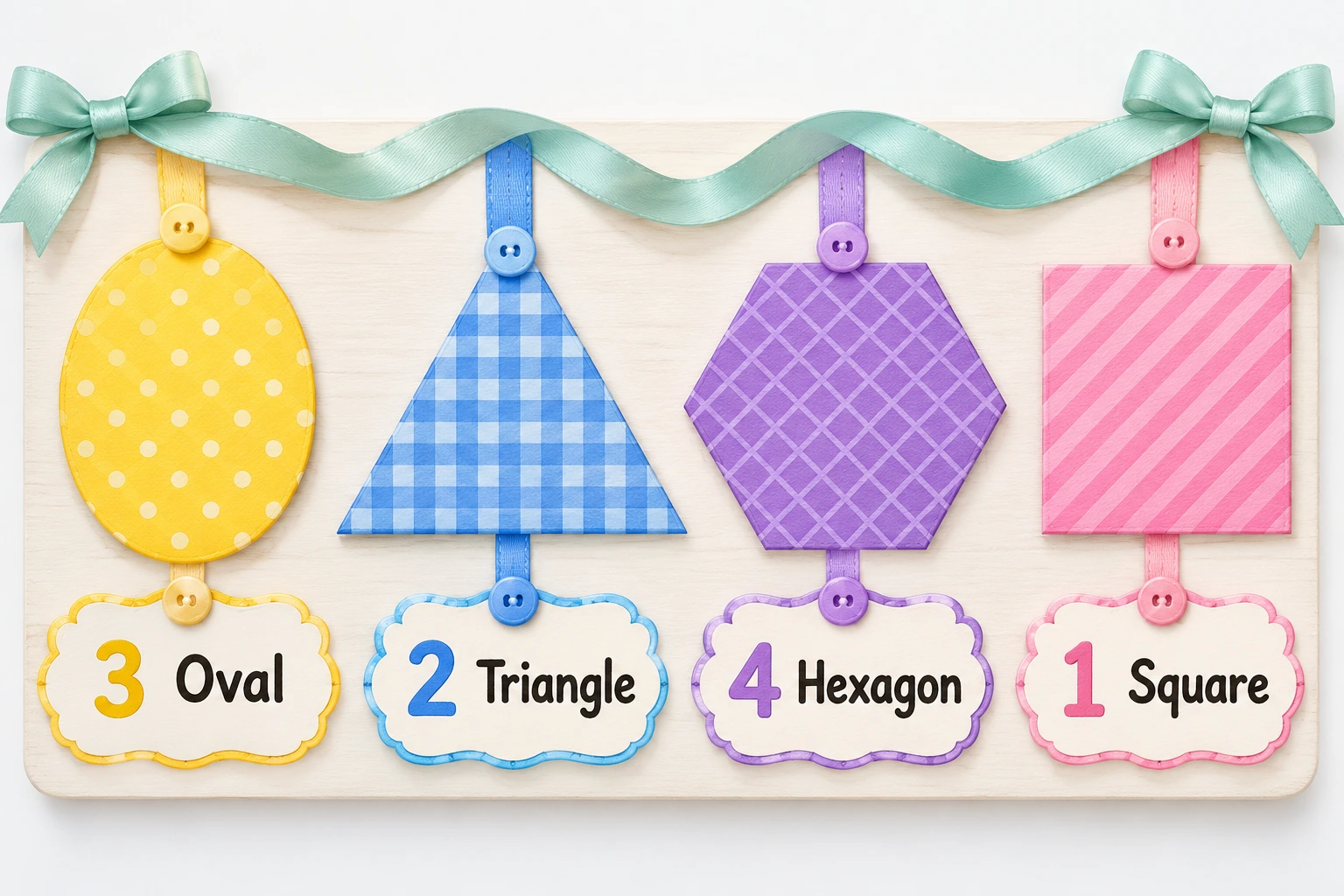
Keep pattern play distinct from code reading
Typical Ribbon Road Signals mistakes include inventing a sixth entry, continuing a guessed decorative repeat or joining outlines with curves. Return to the current numeral and matching centre. If the correct signpost was selected, rehearse the movement rather than repeating every key assignment.
Offer Ribbon Road Signals in brief returns after a shape story or paper-craft conversation. Invite the child to choose a Rainbow Ribbon Roads field and ask for a clue. Checking the supplied signposts is a useful accomplishment. Praise the specific comparison or stopping decision, leaving another route for when the child wants a fresh invitation.
Download a five-signpost printable
The original Ribbon Road Signals sample is available through the page's sample control. Eligible active membership access provides the cleaned premium PDF after sign-in, with the domain and watermark removed and no ads on the printable. The $3 Rainbow Ribbon Roads collection option brings together the supplied set of twenty-five sheets.
Save Ribbon Road Signals, inspect its portrait print preview and retain every legend entry and outer edge. A clear colour copy supports the small pattern details. Check one test page and adjust fitting if a printer margin clips the frame before preparing more copies.
Continue with another visible rule
Compare Ribbon Road Signals with Castle Color Codes. After Rainbow Ribbon Roads, try Number Letter Switching. For Rainbow Ribbon Roads, consider Exact Path Detective.
For broader shared activities around Ribbon Road Signals, adults may explore NAEYC's family play resources or PBS Parents' wider learning activities. Use those optional ideas alongside the specific five-entry legend that supplies this worksheet's actual routes.
Popular Worksheets
Printable resources families and teachers are downloading now.
 Free
 Free
 Free
 Free