Home Language Labels: 5 Brilliant Family Literacy Ideas
Build a few picture labels with the words your family actually uses, then give each label a job in an ordinary routine.
At one family's shelf, a picture of a cup makes sense to everyone. The words people use for that cup may differ by language, region or the person who is asking. Home language labels make those familiar words visible during a real activity, like putting away clean cups or finding the drawing pouch. This guide shows how to make a few useful labels with children without covering the house in signs. Three existing worksheets can offer pictures and optional literacy practice. The household supplies the words, the intended meaning and the decision about where a sign belongs.
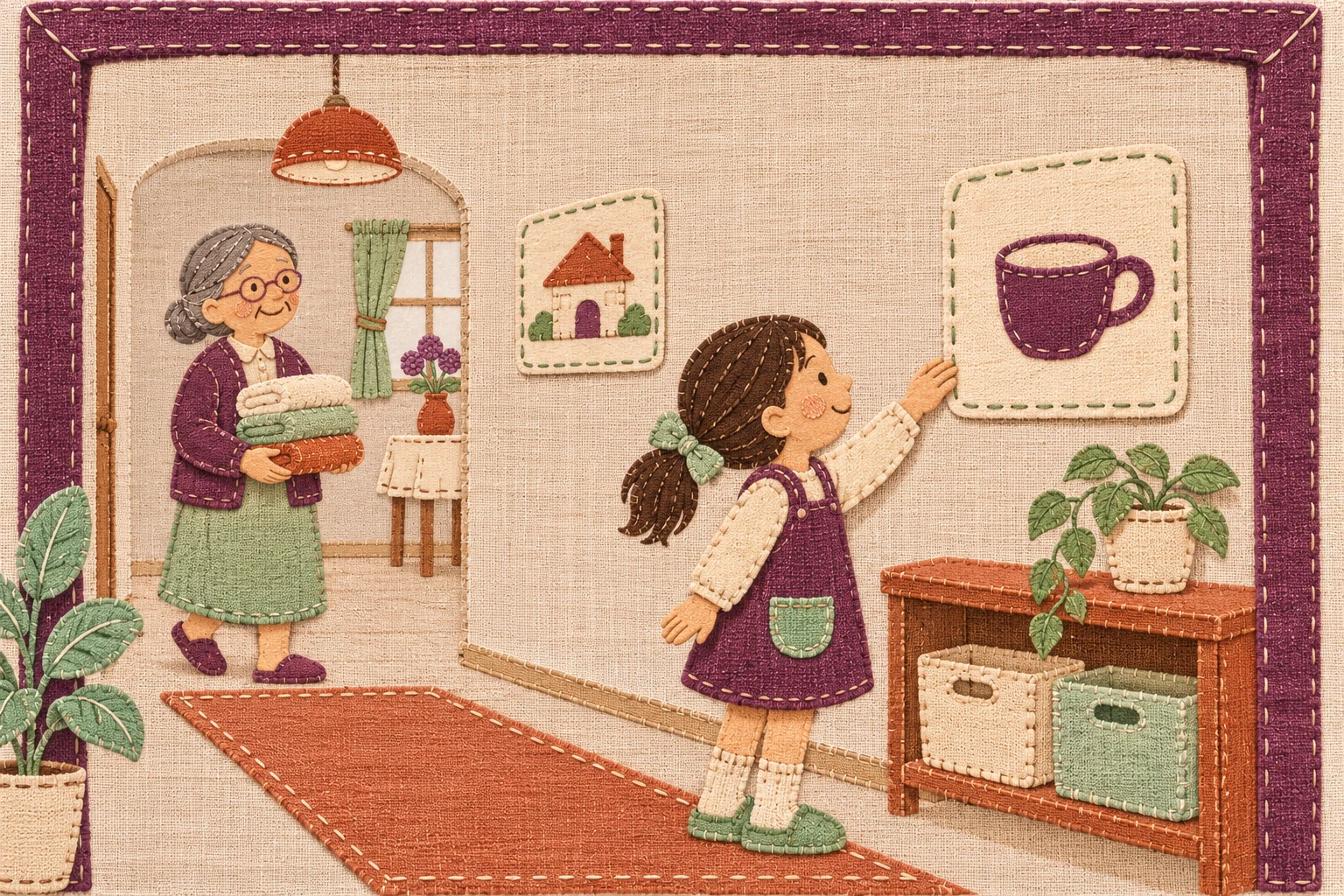
The cup and house pictures show how a child might locate a familiar idea before anyone adds a written label.
Start with the words people want to use
A label should tell someone something worth knowing. The word beside a basket might name what belongs inside or who is welcome to use it. These are separate purposes. “Crayons” can help a visitor find a material. “Everyone” communicates a sharing rule. A clear picture is particularly useful while children are working out which kind of word they see. Ask family members which everyday words they actually use and whether they want those words recorded at all.
Home language may mean several languages or several varieties of the same language in one household. A family may use one word with a grandparent and another with a sibling. Respect those choices and spellings. If nobody present can confirm the written form, start with a picture and use the word aloud with a trusted speaker. An adult can learn alongside the child. There is no special requirement to produce translations for an activity to count as learning. A family who uses sign language can pair the picture with a familiar sign and decide together whether a written form is useful as well.
Put home language labels to a real test
| What the label should help someone do | A useful design | What to observe |
|---|---|---|
| Find a familiar item | A clear picture near its actual location | Can someone find the item using that clue? |
| Return shared supplies | One visible category picture and words the users recognize | Do visitors return the intended things there? |
| Name part of a picture | A simple pointer and one separate word card | Is it clear that the word refers to one part? |
| Share a household word with a school group | A family-approved word, picture and model pronunciation if invited | Can the learner decide how to participate? |
Two labels on the same shelf may be perfectly reasonable. Use enough space to keep scripts legible. For a script that is read right to left, follow that direction when writing and using the card. Never squeeze the letters into an English-only design that makes them difficult to read. A picture without writing is a good interim choice on any shelf where the words are still being chosen.
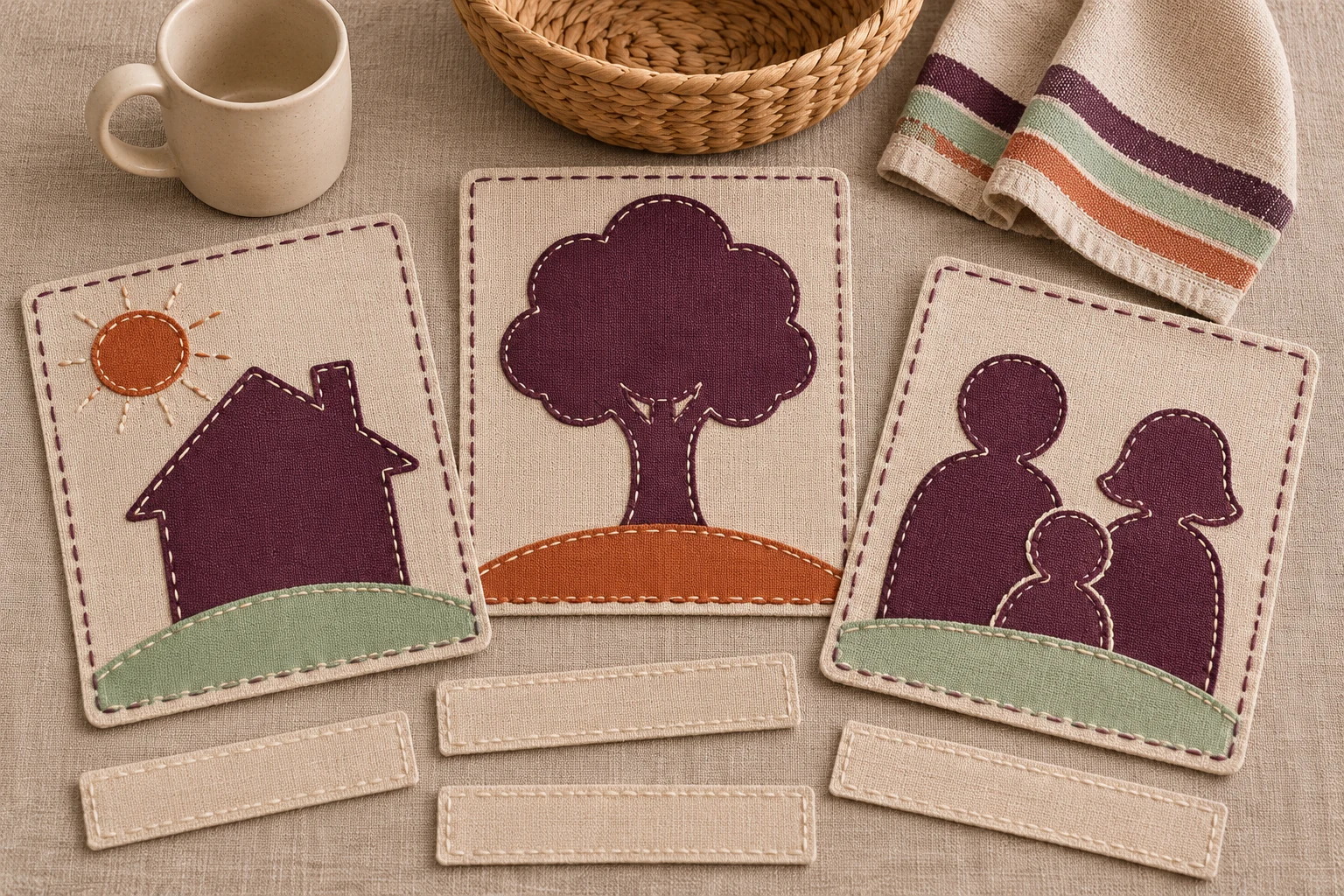
Compare the picture symbols with the objects beside them. The blank strips leave space for families to add their own words.
Make your first label in five moves
- Pick a job. Identify one harmless, frequently used object that someone might need to find. Keep medicine and other controlled items in their usual secure storage.
- Match a picture. Draw, photograph or point to a recognizable version of the object. Ask what someone else would call it. If the answer differs, check whether the image is too general.
- Choose and check the words. Invite a willing family speaker to say the preferred word, and ask how they want it written if they use a written form. A child can dictate to a grown-up or add a mark of their own.
- Put the label where its job happens. Try it beside the actual storage location, within sight and reach. If the label is for a picture, place it near the part it points to.
- Use it in a real moment. Ask for the item during a natural activity or show where it goes when you are finished. Change the card when it sends people to the wrong place.
Head Start's Planned Language Approach includes guidance for educators and families on supporting children's home languages. A few choices made with a family can be more workable than a wall full of words borrowed from a list. Home labels are one option within a much larger world of conversation, stories, songs, reading and everyday experience.
Six things a useful sign can invite
- A reason to speak, sign or point. A child can ask for an object, show where it belongs or comment that a sign has moved.
- A connection between meaning and print. Placing a known word on a real sign lets a child experience what writing can do.
- Recognition of different names. Household speakers can tell one another which word they use and when they use it.
- More precise reference. A little pointer can tell a visitor whether the word means the whole house or just its door.
- Early authorship. Children can dictate, draw, assemble or place a card that other people genuinely use.
- Useful family knowledge. An invited description of a household routine can help teachers choose a familiar example without asking the child to represent an entire community.
Use one worksheet feature as a starting point
Give a house picture one clear referent
Color the house: 5 Amazing Steps for Creative Learning! contains a large house outline and a smaller coloured reference. Pick an obvious part that matters to the child's story, such as the door. Locate it in the big picture together and compare it with an actual door if convenient. Let someone say the word they would use at home. Add it to a separate large card or keep it spoken. A child who wants to can design a sign for the pretend entrance without copying the colours of the sample.
Do not expect the entire drawing to work as an unambiguous picture of a door. Show where the label points and try the sign with a willing listener. If the listener thinks the card says house, repeat the connection using the separate door shape or another clear clue. This is a useful moment for clarifying the referent.
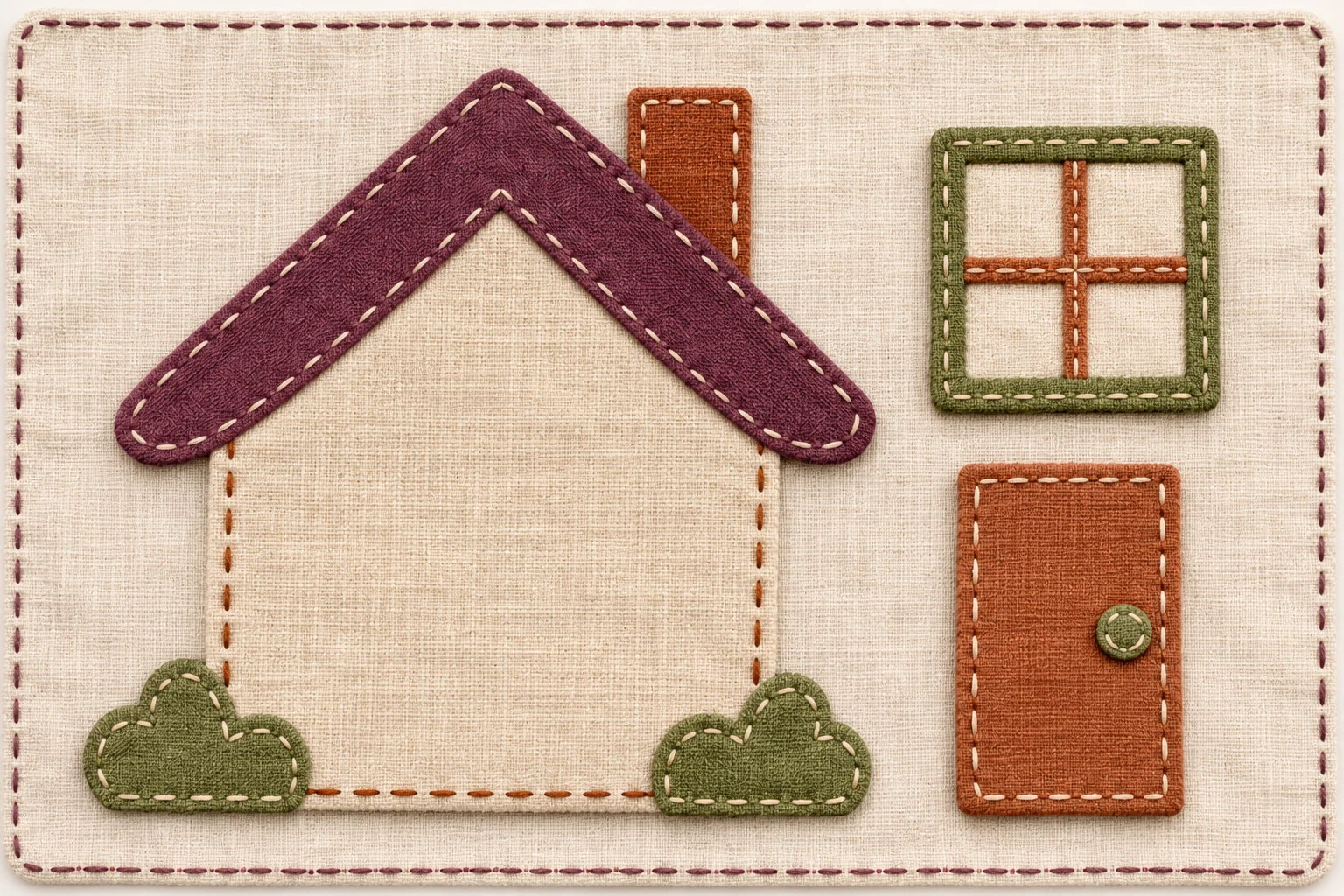
The fabric pieces suggest an optional hands-on conversation with a picture, apart from the printable itself.
Separate the English letter task from the family label
Hh Worksheet: 6 Powerful House Sign Successes includes English H/h formation practice and a house-themed end task. If the learner has been introduced to the letter, use the English model in its own turn. Then make a separate family card or tell a short story about home. A family word for the pictured object may begin with a different sound. It may use a different script. Neither word needs to be changed for the worksheet to accept it. Name which task you are working on before bringing out the next piece of paper.
For a learner who already reads words in two scripts, invite comparison only if they want it. Children with less print experience may simply match the picture to a familiar object. A small enjoyable connection is a suitable end point for this activity.
Give an older learner an authentic art-folder use
Crayon Label and Sight Word Worksheet Write: Cheerful Name Writing is aimed at ages seven to eight and provides guidance around the English word write and labelling. An older child who is ready for that English spelling work can examine a selected model before making a separate sign for an art pouch. At home, the family decides the label language. For younger children, the picture pouch and adult scribing are enough. Preview the current download panel for each resource. The linked PDFs provide the pictured or printed tasks; make any household-language cards separately.
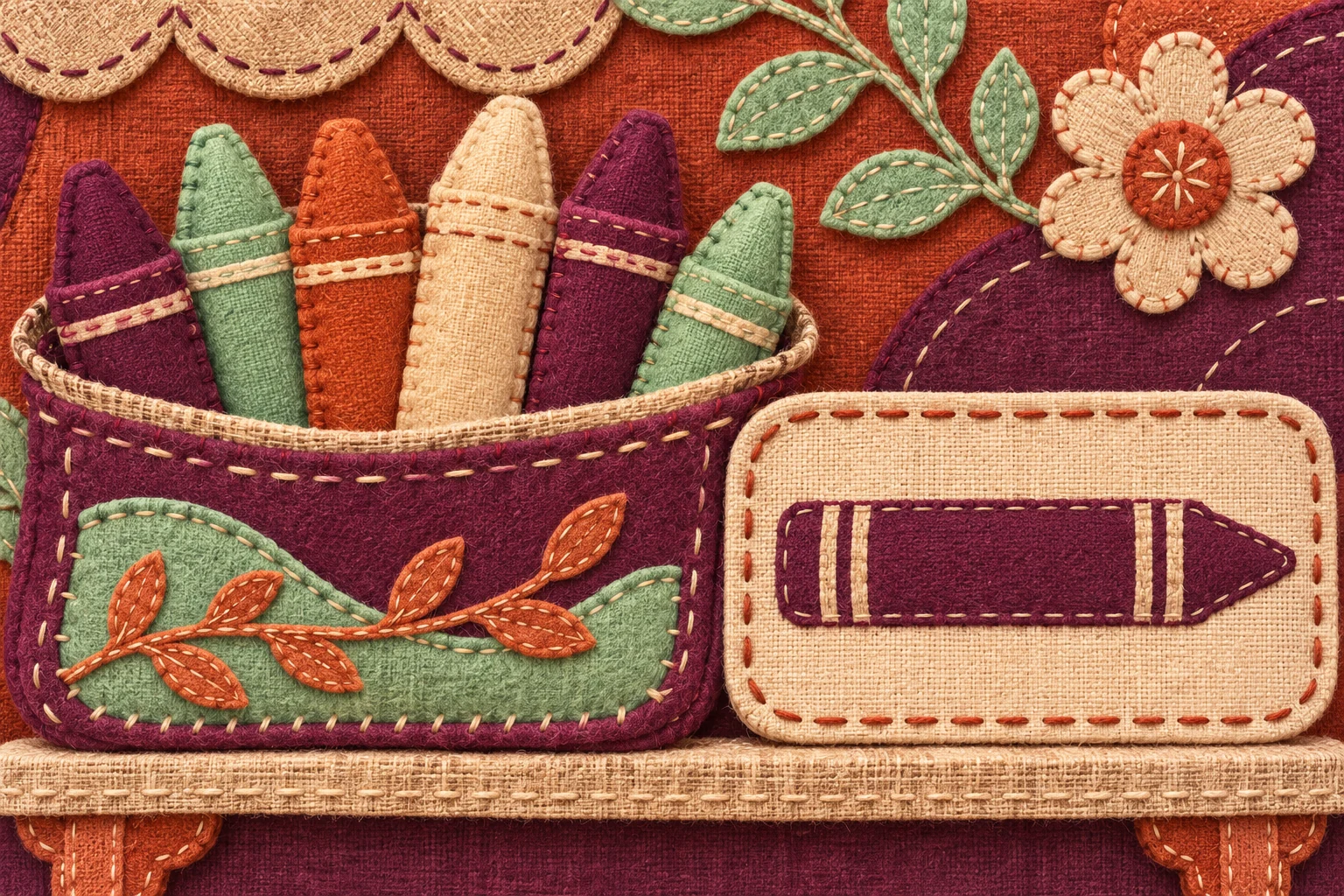
The illustration leaves the written field open so families can decide which words are useful.
Two imagined moments where the picture does real work
At home, the towel basket gets a better image
Imagine a child naming a picture “cloth” when their adult was trying to label a basket for towels. The adult brings a folded towel beside the card and invites the family to choose a more recognizable image. A willing speaker says the word in the language used during laundry. The child can help choose the picture or hand it to the adult. Later, when a visitor wants to return a clean towel, they use the sign. In this hypothetical scene, the card has a real audience and the first version needed a useful correction.
At school, a drawing prompts a private invitation
Picture a teacher preparing a dolls' house area. A child has mentioned a family word for door, so the teacher asks the family privately whether they want to share it and what form to use. They agree to a picture and a written card. At the centre, the child points to the door and chooses whether to say the word. The teacher models the routine using the checked word and invites every child to open or close the pretend door. In this hypothetical setting, the learner contributes knowledge without being expected to translate for classmates.
If a family declines, keep using an accessible illustration and whatever confirmed language support is already available. A family can want familiar language at school and still prefer to keep personal examples private.
Four ways to use the sign again
A visitor follows one picture
Play host with a soft toy. Give the toy a plain cup and let it ask where it goes. The child shows the location or gives a familiar spoken or signed instruction. If the picture is confusing, revise it together. A confused toy can keep the rehearsal playful.
Turn over a drawing to find one message
Place a picture on the front of a wide card and invite someone to write the household word on the back. Use it together. Children who want more detail can add one short phrase about the item, such as where they found it. Letters do not have to be sorted into a quiz.
Give two names a place at the same shelf
When two family members use different words, ask whether they want both on the card. Let each person say the one they normally use. Make sure you can hear the context. The two words may differ slightly in meaning. A family speaker can help decide whether they both suit the particular object.
Follow a picture list for one routine
Use two large picture cards for choosing materials before a drawing session. Start with things the child recognizes. Ask which will be needed first and where the items belong at the end. Put the cards away after use so that other signs keep their meaning.
Let daily use decide which labels stay
A well-intended sign can become wallpaper. Notice whether someone consults it, asks about it or recognizes it in an ordinary moment. Change the picture or wording if the label does not serve its job. Give the people who use a word a genuine say in what appears. Keep the meaning, familiar voice and actual object connected.
A family can stop after one card and have a worthwhile conversation. “This is the word we use when we put the cups away” connects a familiar voice with a practical task. Tomorrow that card might help someone find the right shelf. Its value comes from the people using it.