Screen-Free Learning: 20 Brilliant Printable Activities
Have an inviting alternative ready when a programme ends. Twenty paper-based ideas connect existing resources with stories, movement, observation and shared play.
The difficult moment is often the gap after a video ends: a child wants another episode, while the adult is trying to start dinner or get everyone ready. A screen-free invitation works better when it is already easy to see and begin. These twenty printable and paper-based activities offer practical choices for preschool and kindergarten families, using existing worksheets alongside simple homemade props. Pick one that fits the moment, join the first few actions, and allow room to refuse or change direction. The aim is an appealing alternative, without a promise that one page will transform a family’s media habits.
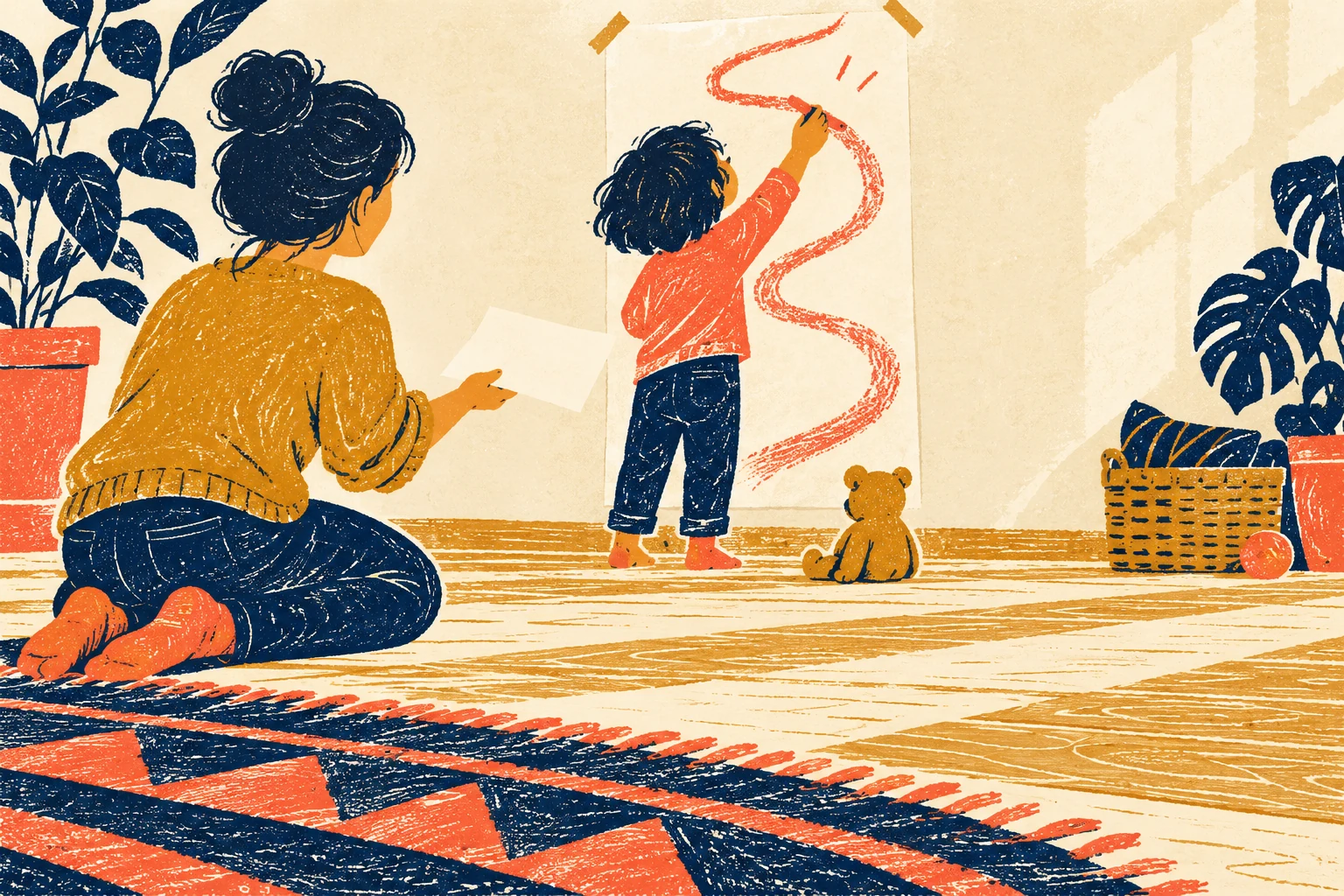
The open floor and large paper offer space for a broad movement before smaller marks.
🌿 Give screen-free time something to grow into
Paper is a starting surface. A child can use it to make a route, record an observation, organise pretend orders or tell a story. Screen-free learning becomes more inviting when the page leads to doing and talking, rather than replacing one stretch of sitting with another. Keep books, outdoor play and ordinary toys available alongside the printable choices.
The American Academy of Pediatrics’ age-specific media questions for toddlers and preschoolers ask adults to consider the child, content, calming, crowding out and communication. For these activities, the practical question is what your family wants more room for. It might be shared conversation, movement or a small project. The guidance does not establish that worksheets alone reduce screen use.
Its family media plan advice, updated in January 2026, also recommends making space for other activities and including adults in the plan. Choose a predictable screen-free opportunity together. Device rules belong to the family’s wider routine; a worksheet is not a punishment for wanting a programme.
Three resources behind these screen-free ideas
Use Trace 5 Essential Lines and Curves: Fun Paths for Little Hands (Ages 3-5) for broad pointing and crayon routes. Its varied line and curve paths suit trying one movement before drawing a route of your own. It lists ages three to five. The page offers a free watermarked single-page PDF; a clean file requires active membership.
Number 4 Worksheet: 5 Wonderful Teddy Picnic Tasks supplies four whole bear pictures, numeral practice and a separate count-and-write panel. Choose a single collection for a screen-free pretend picnic rather than combining every bear illustration across the sheet. The age label is three to six, with free watermarked sample and membership clean PDF options.
For a letter-and-story starting point, Ss Worksheet: 5 Brilliant Sun Bend Activities shows S/s models, tracing and a sun picture word. Its three-to-six audience label and sample access are similar. The twenty ideas below combine these existing resources with blank paper props you can draw yourself. They are activity suggestions, not twenty newly supplied PDF downloads. Check each page’s current access panel before printing.
Begin a screen-free invitation in four small steps
- Prepare one visible choice. Put a single sheet and a broad crayon on a reachable surface. Keep the rest in a shallow box so the invitation is not buried under materials.
- Agree on the transition. Explain the family’s plan before the current media activity ends. Offer two realistic screen-free choices, without promising that every child will immediately welcome the change.
- Join the beginning. Take a turn, demonstrate a movement or ask about a picture. Stay available rather than presenting the page as a test of independent behaviour.
- Notice when to change. A child may need a drink, movement, company or rest. A printable does not have to solve every transition. Set it aside if another need deserves attention.
Four screen-free ways to make an ordinary collection useful
1. A screen-free picnic register
Count one four-bear collection from the worksheet, then draw four large picnic places on scrap paper. Let blocks stand for guests. This screen-free pretend register gives counting a purpose; the child can decide whether the guests sit together or separately.
2. Screen-free picture deliveries
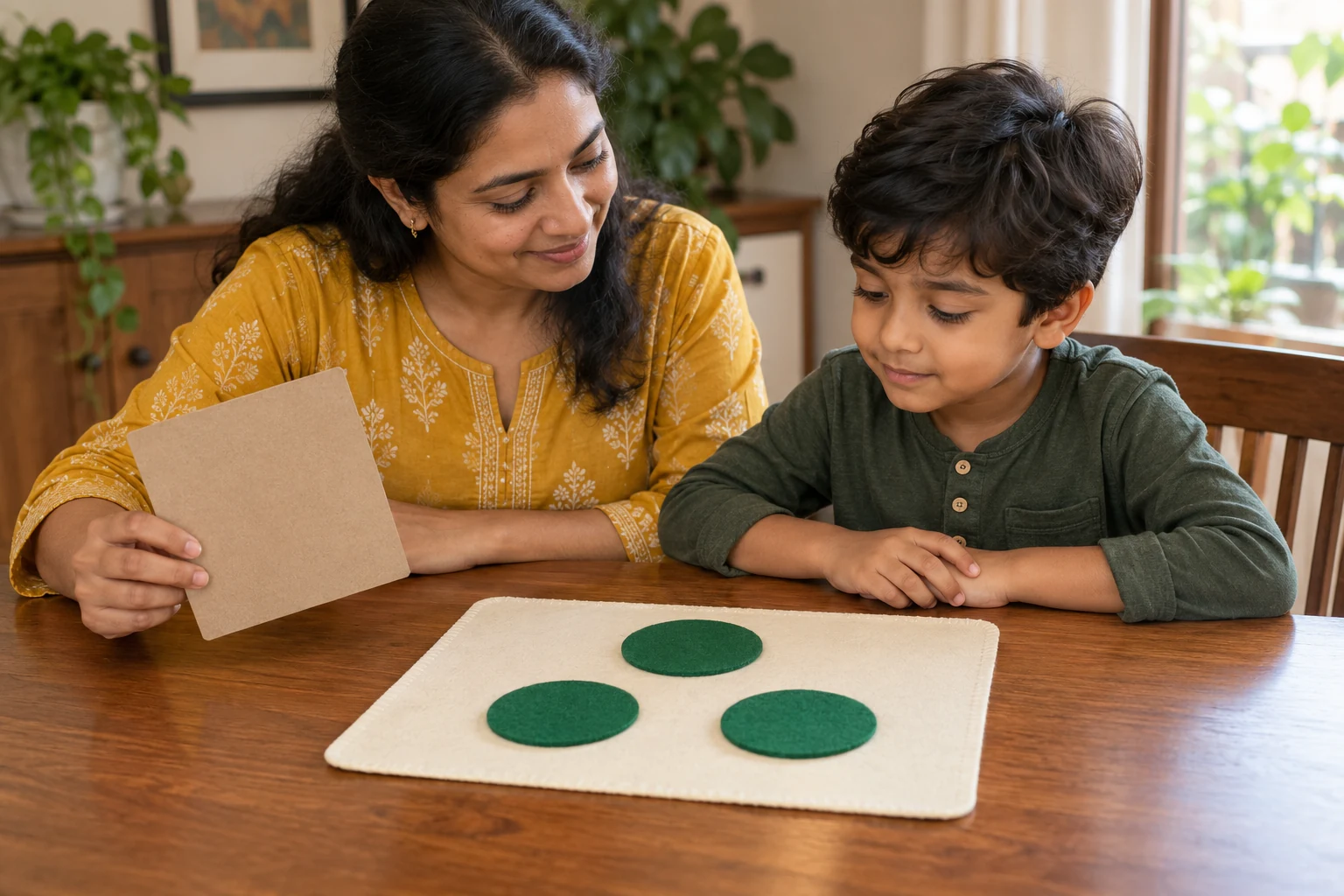
Draw three large object cards using safe toys you already own. Match each real toy to its card and deliver it to a tray. Keep this screen-free challenge easy to inspect, with visibly different objects and no small loose pieces around children who mouth materials.
3. A shop with paper orders
An adult draws one item on each of two or three order cards. The child collects matching large toys and checks the orders together. Swap roles for another screen-free round. There is no need for money, price calculations or a correctly formed written numeral.
4. A home museum label
Choose a favourite large object, draw it and dictate a label to an adult. Display the label beside the object. A screen-free museum can contain just one exhibit; let the child decide what a visitor should notice before adding more labels.
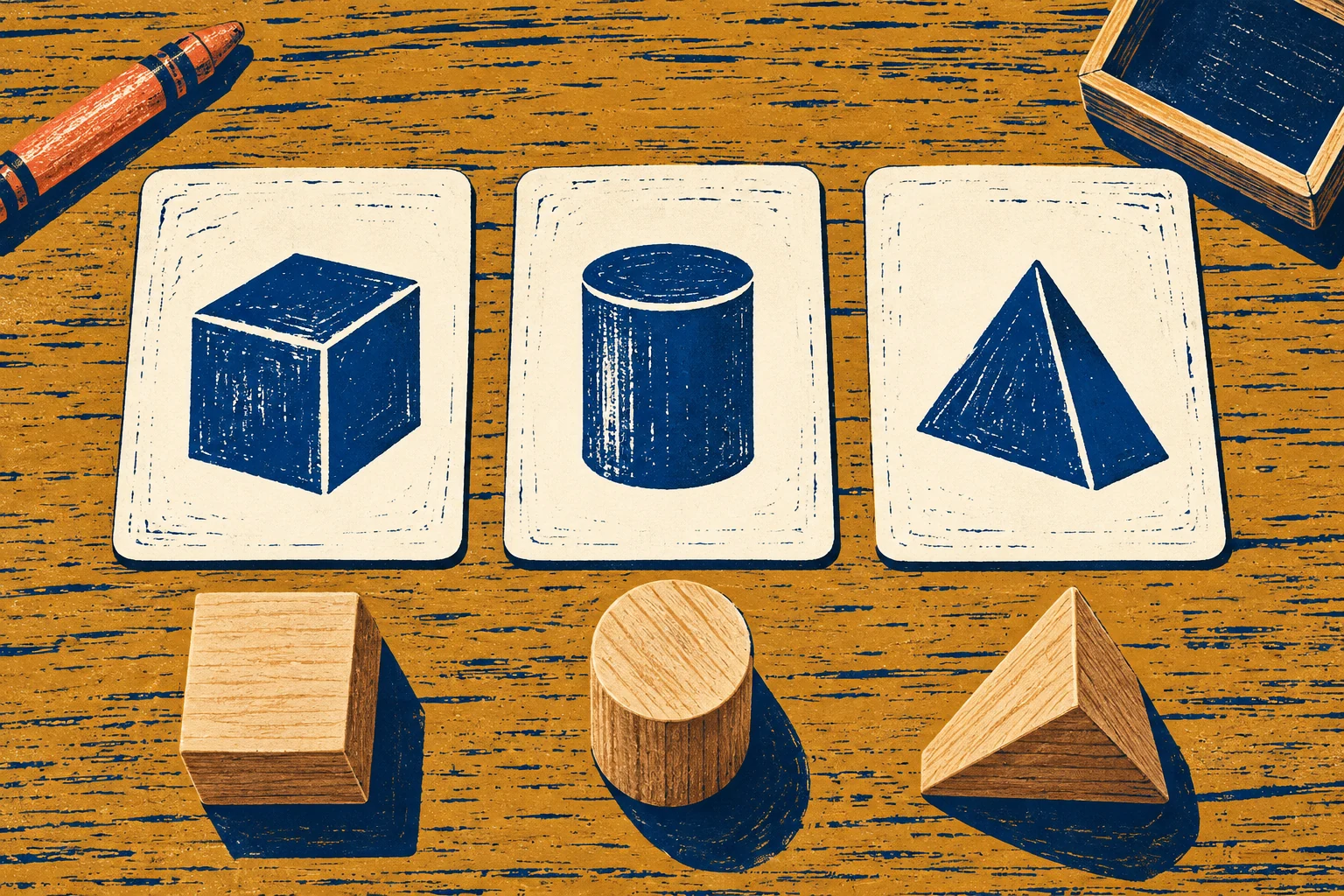
Distinct large forms provide a simple matching invitation with clear space between choices.
Four screen-free invitations for moving a mark
5. Invent a screen-free road
Trace one chosen curve with a finger, then draw a broad road on blank paper. Move a large toy along it while describing bends. The screen-free route belongs to the child; there is no requirement to reproduce the worksheet’s exact shape.
6. The upright drawing station
Fix a large sheet securely at a comfortable height with adult help. Try broad up-and-down or side-to-side marks. This screen-free change of position offers a different movement experience; stop before reaching or standing becomes uncomfortable, and keep the area clear.
7. A toy’s message trail
Draw a short path between a large toy and a folded paper message. The child follows it with a finger, then dictates what the toy wants to say. Keep the screen-free message playful, with an adult handling any writing the child does not want to attempt.
8. A turn-taking curve
On spare paper, one person starts a broad line and the other continues from its end. Ask before extending another person’s drawing. This screen-free collaboration can become a river, a route or an abstract mark; finishing an identifiable picture is optional.

The imagined road offers a continuous route for a toy and a reason to talk about where it travels.
Four screen-free ways to put a story on paper
9. A screen-free sunny-day postcard
Use the sun cue as a reason to describe an imagined day, then draw on blank paper. An adult records the child’s chosen message. Screen-free storytelling can connect a familiar letter with meaningful writing without requiring every word to begin with S.
10. Three moments in a tiny story
Fold paper into three broad spaces and draw something beginning, changing and ending. A growing plant is one possible subject, not a required sequence. Let the child explain the order during a screen-free retelling, and move or redraw a picture if the story changes.
11. The picture interview
An adult asks a drawn character one question; the child supplies its answer. Swap interview roles. This screen-free exchange supports listening and invented dialogue without judging whether a character’s answer is realistic. Keep the drawing available as a conversational cue.
12. A puppet without a complicated craft
Draw a large face on a folded sheet and stand it upright. Give it a voice, a problem or a greeting. A simple screen-free character is enough; adults should manage any cutting, and the child can choose to tell the story without making a puppet.
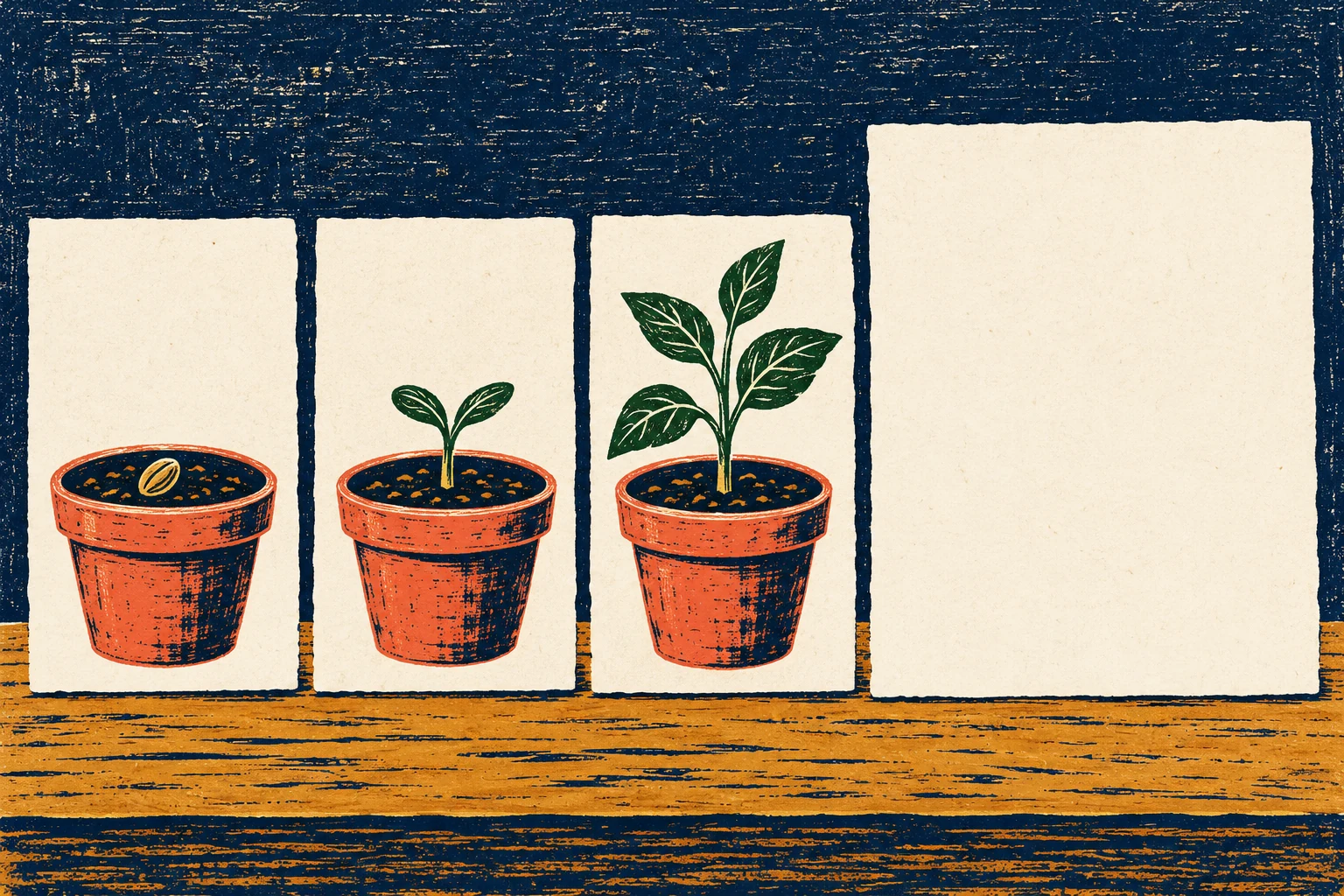
The simple sequence is one possible story prompt; the blank card leaves space for a new moment.
Four screen-free ways to notice the nearby world
13. Screen-free leaf detectives
During a supervised walk, look for two safe, familiar leaves. Sketch their outlines on blank paper and compare edges or overall shape. Screen-free observation does not require naming the plant or touching an unknown species; looking closely can be the whole investigation.
14. A weather mark rather than a forecast
Draw one mark for today’s observed weather and dictate a short description. Repeat on another day if the child wants. This screen-free record concerns what you noticed locally; a sun drawn on paper does not establish what the weather will do next.
15. Find a route in the room
Draw a simple plan from a chair to a bookshelf, then walk the route together. Clear obstacles first and let an adult check safety. A screen-free map can be one line and two pictures, rather than a demanding drawing of every item in the room.
16. A colour noticeboard
Choose one crayon colour and draw something nearby that reminds the child of it. Talk about different shades instead of insisting on an exact match. The screen-free noticeboard might contain one object or several; household paint and fabric colours rarely match a crayon perfectly.

Contrasting edges invite observation without requiring plant identification or contact with an unfamiliar specimen.
Four screen-free routines that make returning easier
17. A screen-free unfinished-work pocket
Fold a large sheet into a pocket with adult help and use it to hold one unfinished page. Add a simple picture showing what the child wants to try next. This screen-free stopping place protects an idea without requiring its completion before another activity.
18. The small activity menu
Draw two picture options, such as a road and a story face. Let the child select one or ask for something else. A screen-free menu offers a manageable choice; it is not a reward chart recording whether a child resisted a device successfully.
19. A family invitation card
Dictate a short invitation for someone at home to join a drawing or counting game. The child can add marks and choose when to offer it. This screen-free activity values connection; the recipient may suggest another suitable time rather than being expected to stop immediately.
20. The ready-for-next-time box
Together, return broad crayons, a few blank sheets and one selected printable to a shallow box. Let the child arrange the contents. Preparing the next screen-free invitation is an activity in itself, especially when the learner can explain what should be easy to reach.
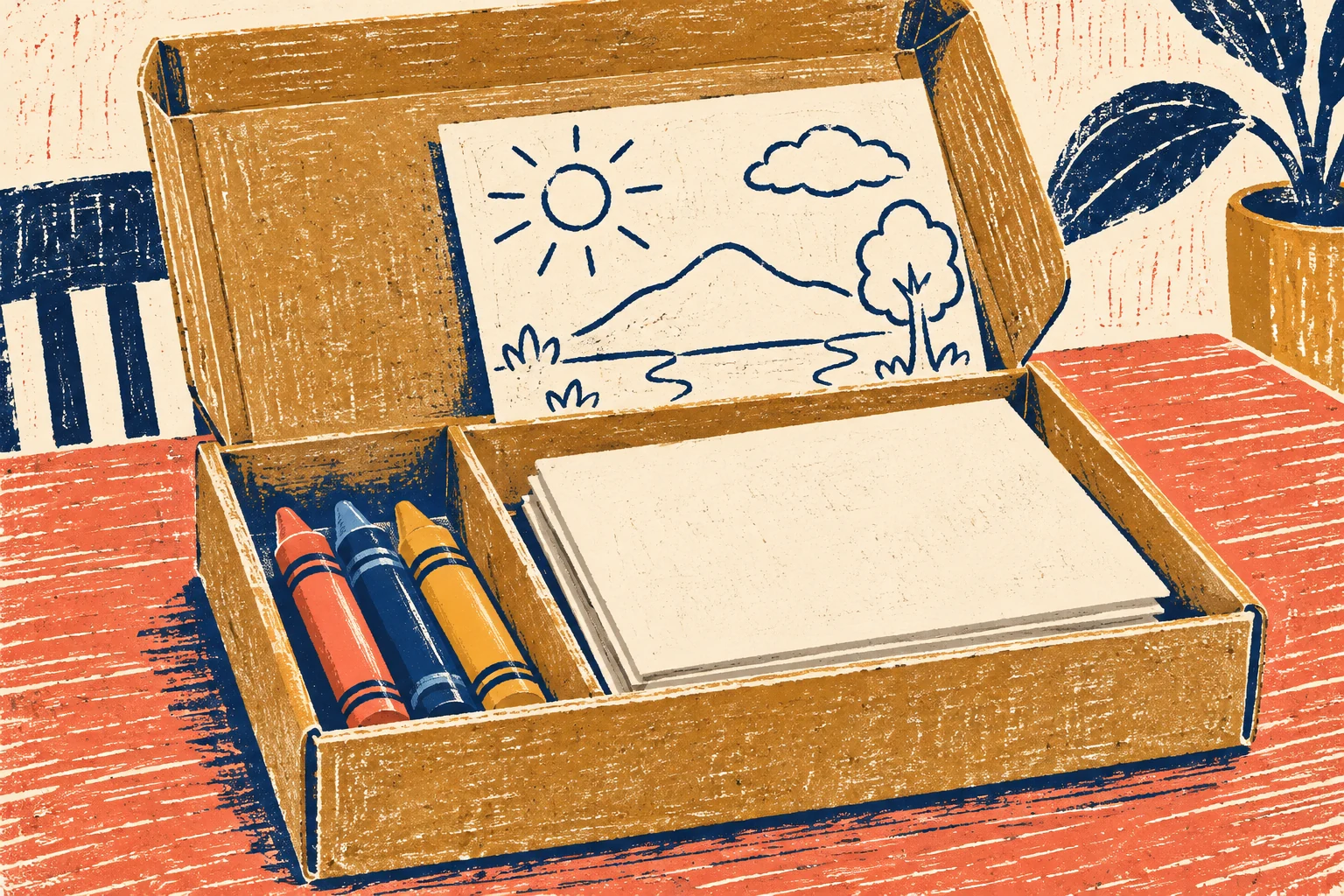
Separate spaces hold a few useful materials and one saved drawing, keeping the choice manageable.
Six things to notice besides a completed page
- Initiative. The child chooses a starting action or suggests a variation. That tells you which part of the screen-free invitation caught their attention.
- Conversation. A picture gives family members something shared to discuss. Listen for an idea rather than insisting on a full sentence.
- Tracking. Moving one object to each order or pointing to each bear makes a checking strategy visible.
- Movement choices. Finger paths, broad marks and walking routes offer ways to join without demanding tiny handwriting.
- Negotiation. Taking turns on a shared drawing gives children a reason to ask, listen and decide together.
- Return plans. Choosing where an unfinished page belongs can make the next screen-free start easier to understand.
Two transitions with different needs
At home: company before the crayon
Imagine a parent offering a road drawing after a programme ends. The child pushes the crayon away and asks the parent to sit nearby. The adult joins the toy’s first journey, then waits. The useful adjustment is company, not a more complicated printable. In this hypothetical screen-free moment, an adult notices what would make participation possible without claiming the activity prevents future protests.
In class: a choice after a shared video
Picture a teacher ending a planned group video and offering either a drawn story or a supervised movement route. Children choose how to respond to the subject they watched. One child dictates while another draws. A screen-free follow-up can make room for different responses; it does not require the teacher to treat all educational media as interchangeable or unsuitable.
Adjust the screen-free invitation to the situation
| If the child needs | Try | Keep in mind |
|---|---|---|
| More movement | A room route or upright paper | Clear space and stay within comfortable reach |
| Less visual clutter | One picture and one broad tool | Put extra materials away |
| Adult connection | A shared interview or toy journey | Join before expecting independence |
| An easier ending | An unfinished-work pocket | The page can remain incomplete |
Four ways to vary these twenty screen-free ideas
- Change the scale. Make a finger route larger or reduce an order collection. Keep the original purpose visible while changing the physical demand.
- Invite another language. A child can dictate, name objects or invent dialogue in a familiar home language. An adult can help preserve the message.
- Trade roles. Let the learner demonstrate and the adult follow. Ask for help when a direction is unclear rather than turning the reversal into a trick.
- Revisit one favourite. Return to a chosen story or route with one new detail. Familiarity can supply a starting point without printing a fresh stack.
End with a routine your family can use
Keep the invitation modest: one page, one useful material and an adult who can help begin. Broad crayons and large toys suit supervised early learning; avoid small loose props for children who mouth objects. Screen-free time is room for an activity and a relationship. Acknowledge disappointment about an ending, offer a realistic choice, and revise the plan when needed. “We can save this road for tomorrow” leaves an idea open without making the paper responsible for every difficult feeling.