
Ss Worksheet: 5 Brilliant Sun Bend Activities
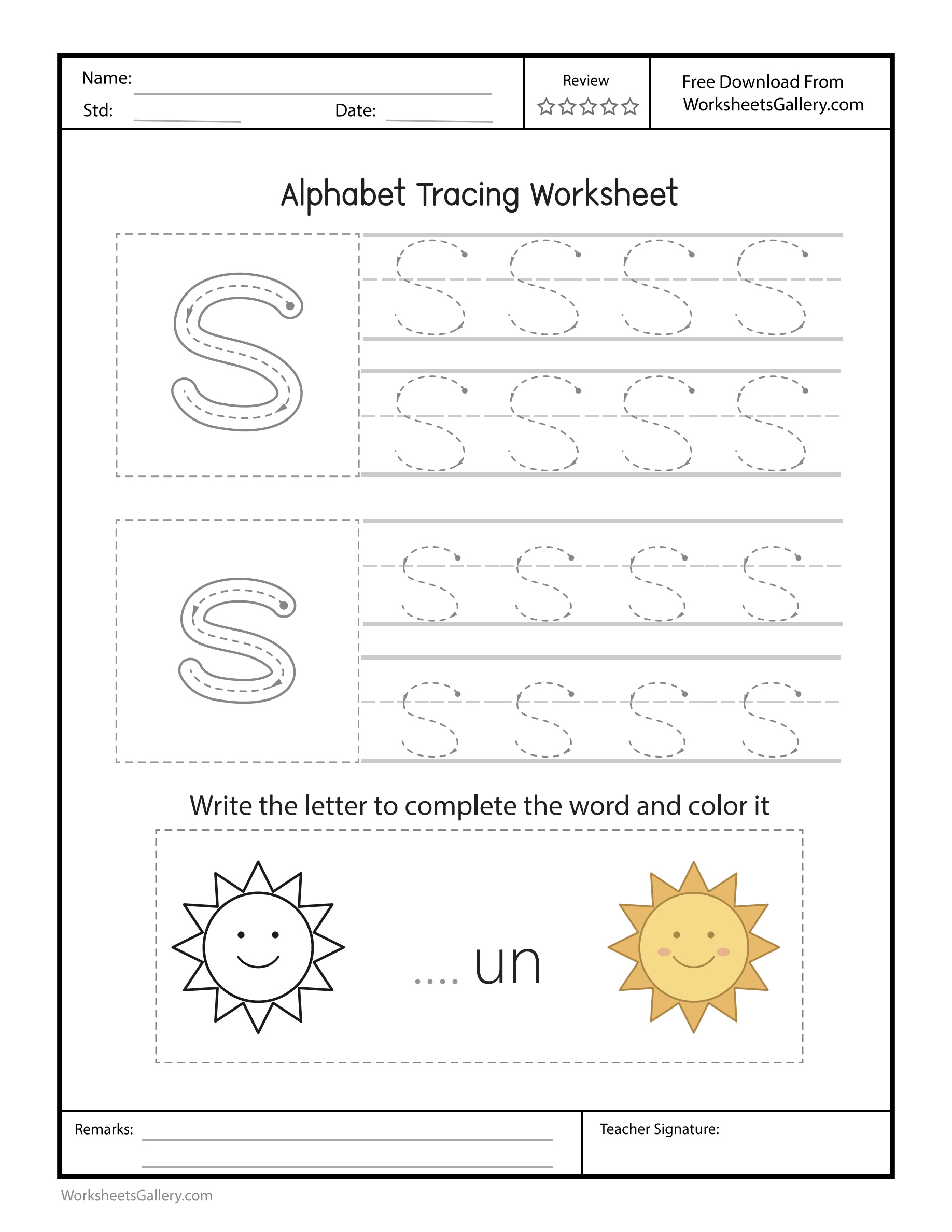
The Ss sun activity belongs to the complete A–Z letter-pair collection. One $4 purchase supplies all 26 clean tracing pages in a single alphabetically ordered PDF, including this sun bend bulletin lesson.
A small morning bulletin can begin with a sun picture and one missing letter. The Ss Worksheet gives that initial a clear route: two connected bends that change direction without closing into a loop. Capital S and lowercase s share the basic pattern while using different heights. A learner can inspect the guides, try a broad movement and add s to sun before choosing colors for the outline. The pretend bulletin supplies a reason to communicate, while an adult reads the complete word and keeps the child's independent writing job manageable and clearly defined.
The Ss Worksheet bulletin needs its beginning
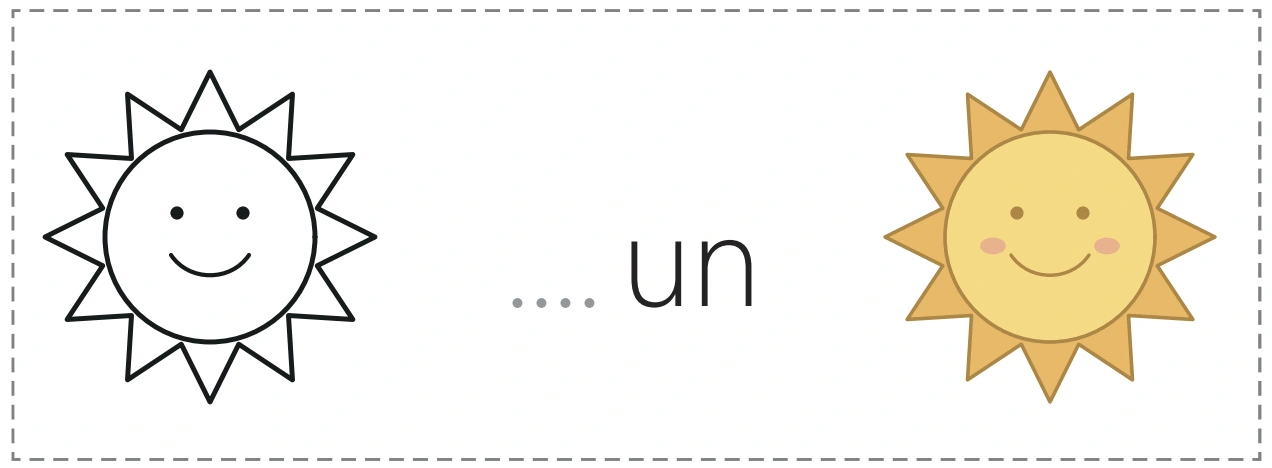
Name the sun illustration on the Ss Worksheet, then locate the space before the already printed un. A lowercase s completes the word's initial. Read sun together after the child supplies that contribution. A recognizable picture gives context, but the adult still brings attention to the written beginning rather than assuming the learner has independently read the whole label.
Listen to the /s/ at the start of sun during Ss Worksheet talk and distinguish that from naming the letter S. A clear spoken model can help without turning the conversation into a test of every sound. The pictured face and rays belong to the illustration. They can support a playful bulletin story without adding extra letter parts inside the word gap.
The Ss Worksheet colored sun supports recognition while the outline leaves room for a child's own choices. A learner may color it after one initial or case comparison rather than after finishing every row. The page's purpose is not to produce identical artwork. Keep the intended s visible and let the picture task provide another way to stay engaged with the subject.
Inspect the Ss Worksheet change between bends
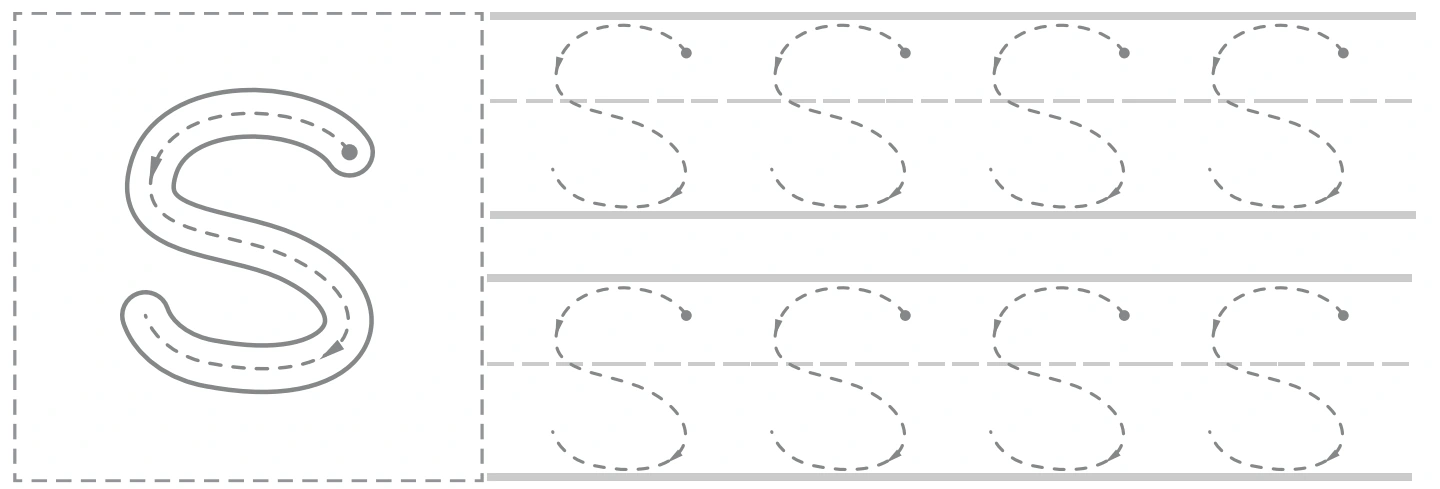
Capital S on the Ss Worksheet uses a curved route that bends one way and then the other. Locate its starting cue and follow the supplied arrows before choosing a small guide. A learner can show the change with a broad finger movement. That gesture may make the intended route clearer than an early pencil attempt that becomes angular or closes into an oval.
The Ss Worksheet capital rows contain eight smaller models. Try one, notice the middle transition and compare the ending with the source. If a writer repeatedly circles around, pause and inspect the open endpoints. A completed S does not need a closed loop or an added straight cap. The useful cue concerns the actual bends, not a general request for prettier handwriting.
Smaller Ss Worksheet bends keep the same idea
Look at lowercase s on the complete Ss Worksheet. Its pattern is related to the capital, but the small guide occupies a lower writing space. Compare their heights without treating recognition and size control as the same task. A child can identify the two partners confidently while still needing a large surface to coordinate the change between curves.
The two lower rows add eight small s examples to the Ss Worksheet. They offer choices across visits rather than a fixed amount to finish today. A broad crayon route can be useful when the movement is understood but difficult to maintain at the printed size. Return to one small guide only if another attempt would help the learner inspect that same feature.
Jude prepares an Ss Worksheet morning notice

Jude and his aunt place a felt sun beside an unprinted bulletin strip. For Ss Worksheet play, the strip names their pretend morning scene. Jude points to the source initial and makes a broad s on a loose card. His aunt reads sun naturally and asks him to show the change between its two bends before deciding whether to try a smaller letter.
When Jude closes a curve, the Ss Worksheet provides a reference for the open route. His aunt compares the endpoints with his loose-card example, then lets him follow the guide with a finger. They make a fresh broad version instead of darkening the same uncertain mark repeatedly. The story can continue through spoken weather make-believe or coloring even when the pencil is put aside.
At home, an Ss Worksheet visit can begin with a paper sun and a blank strip. An adult may record a longer dictated notice, while the beginner contributes an optional s or identifies the small case. The imagined bulletin is a writing context, not a claim about an actual day's weather. One clear letter job is enough to give the session a meaningful finish.
Six Ss Worksheet observations for a bulletin planner
Ss Worksheet curves change direction deliberately
The middle transition gives an adult a specific place to inspect. A learner can describe it with a gesture before fine control produces a smooth small version. That explanation helps distinguish uncertainty about the route from difficulty managing its printed size.
An Ss Worksheet route stays open
The endpoints do not meet to create an oval. Pointing to them can clarify the form before another pencil attempt. The aim is a recognizable pair of bends, not repeated circling that makes a dark shape while hiding where the intended movement should stop.
Ss Worksheet cases connect shape with scale
S and s keep a related pattern but use different heights. Match the partners first, then compare their actual ruled spaces. A correct identification can remain a useful success even when changing the physical size of the route still needs support.
Ss Worksheet words give the mark a purpose
Adding s completes the supplied beginning of sun. Adult reading connects that small contribution with the pictured subject and pretend bulletin. The child can participate meaningfully without being expected to independently spell a complete morning announcement.
Ss Worksheet language can explain a next action
Around, change and stop can describe visible parts of the source. Tie each word to a gesture or model rather than asking for a memorized explanation. The learner's plan can then guide the hand instead of adding another verbal demand to the writing turn.
Ss Worksheet practice can preserve a useful comparison
Save a broad attempt and revisit its middle transition or endpoints later. A specific remembered bend gives the next visit a practical goal. Comparing such features is more informative than treating every filled tracing space as equal evidence of progress.
Five sun-bulletin games after the Ss Worksheet
1. An Ss Worksheet curve made with a cord
Arrange a broad loose cord into two connected bends while looking at the source. The learner can move the middle and keep the ends apart, explaining what changes. The cord is an inspection tool, not a new worksheet answer. Its reversible route gives another way to explore the form before a pencil makes a smaller permanent mark.
2. Guide a partner through an Ss Worksheet bend
One person follows a large finger route while another points to the guide's direction change and ending. Swap the moving and observing roles. There is no speed contest. The observer can explain an Ss Worksheet movement clearly even when a pencil still struggles to convey that understanding. Keep the source arrows beside this partner experiment.
3. An Ss Worksheet sound bulletin
Say familiar words such as sun, sock and soup with adult support, then listen to their shared beginning sound. Point to s after the spoken comparison. Add a clearly different beginning on another turn so the learner attends to the actual word. The activity does not require reading new spellings independently or claiming that every written s behaves identically.
4. Put an Ss Worksheet label beside a drawing
Let a child make an imagined morning scene on blank paper and choose an adult-read sun label to place nearby. Find its initial and compare it with the small source model. An optional written s can be added at the child's chosen size. The artwork may be creative; its message does not depend on copying the colored example exactly.
5. Two sizes of an Ss Worksheet route
Try one broad S and one smaller s on separate cards, keeping the case guides visible. Compare whether both retain their open connected bends. The job is not making one a mathematically perfect reduction of the other. It is recognizing a shared letter pattern while noticing how available space changes the hand's movement.
A short Ss Worksheet station in class
At an Ss Worksheet bulletin desk, partners can alternate between locating the change of direction and making a broad or small attempt. Another participant may prefer the initial in sun. Note which reference helped each learner instead of ranking completed-row totals. Children approximately three to six years old can participate at different levels through pointing, speech, coloring or supported writing.
| A route to examine | Return to this feature |
|---|---|
| The curve closes into an oval. | The printed S has separate open endpoints. |
| The middle becomes a sharp unrelated angle. | Follow the source's curved direction change. |
| The small form fills the capital height. | Compare the lowercase ruled space. |
Ss Worksheet feedback can stay focused on one bend. Inspect the change before adding another copy. A wide card or finger route can make the feature easier to explore. If the hand becomes tense, leave the pencil aside and return through a picture conversation. An adult can still recognize a successful observation without requiring another small mark immediately.
Revisit the Ss Worksheet with a new pretend bulletin, a cord experiment or one selected guide. Notice what the learner remembered and offer a choice about continuing. A sun notice can be finished with a single thoughtful initial. Regular use is more purposeful when the child knows which feature is being explored than when the task becomes simply filling every available space.
Choose a printable Ss Worksheet edition
Choose the original Ss Worksheet for a free sample. A separate clean premium edition is available through eligible active membership: its website identity, domain and watermark lettering have been removed, and its pages contain no adverts. The related complete alphabet package is priced at $4 and combines the 26 clean worksheets into one purchased PDF, providing a distinct collection option.
Inspect the Ss Worksheet print preview: use portrait US Letter paper and retain the border with its pale tracing paths. Keep one broad practice card beside the printed sheet. Other options include a brief introduction to controlled line paths, more changes between pencil directions and a number connected with a picture label. Adult ideas can be found at PBS KIDS for Parents' playful reading pages and NAEYC's suggestions for everyday family writing.
Popular Worksheets
Printable resources families and teachers are downloading now.
 Free
 Free
 Free
 Free