
Kk Worksheet: 6 Brilliant Key Junction Desk Games
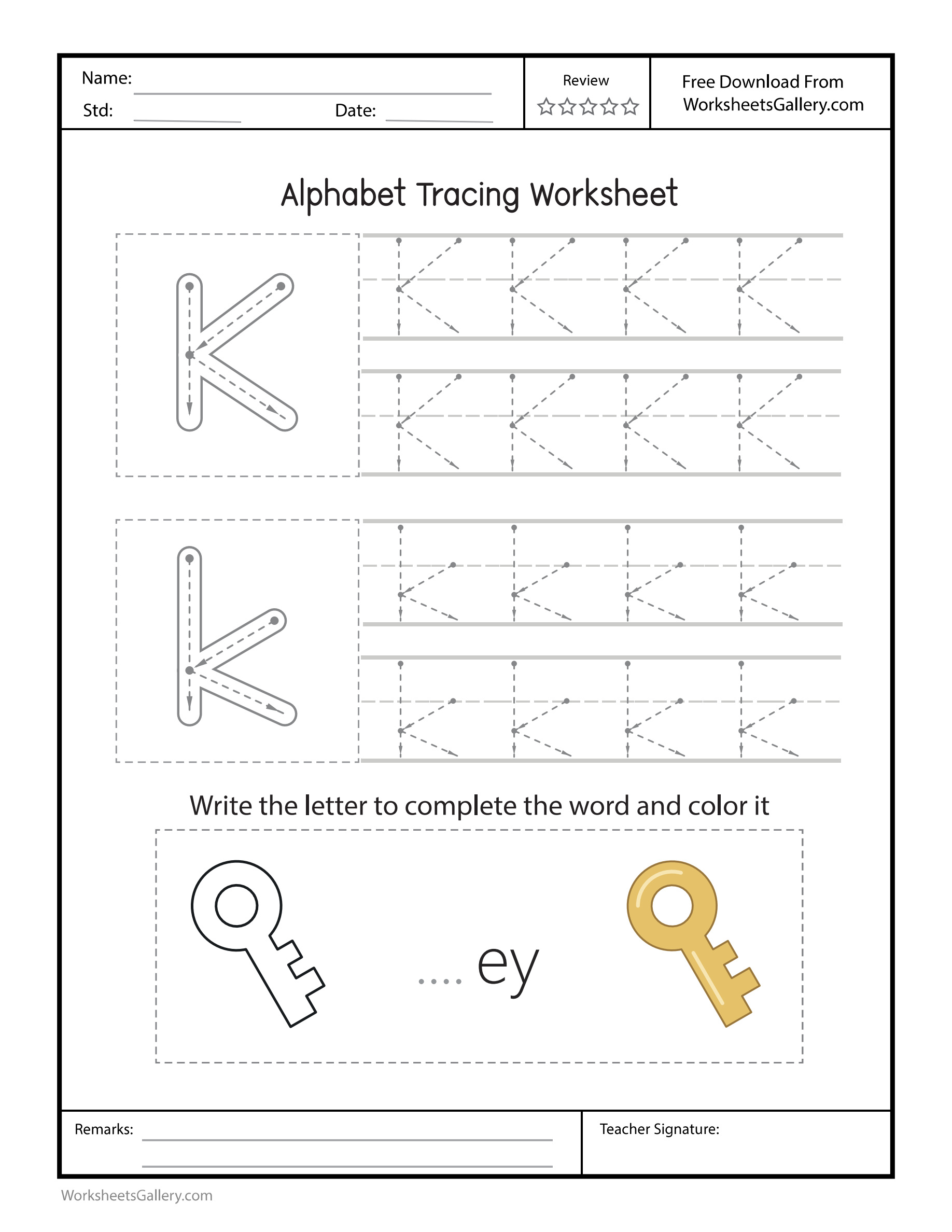
The Kk key activity belongs to the complete A–Z letter-pair collection. One $4 purchase supplies all 26 clean tracing pages in a single alphabetically ordered PDF, including this key junction desk lesson.
A key desk needs labels that make sense to its pretend visitors. The Kk Worksheet gives one such label a beginning while drawing attention to a small meeting place inside K and k. Their diagonal arms join a long upright, making the junction a useful feature to inspect before repeating a row. Children aged three to six can name the key picture, compare the two cases and supply the missing initial with adult support. The lesson can move between paper pieces, finger routes and pencil marks, giving one clear writing job a practical purpose.
Find the Kk Worksheet meeting place first
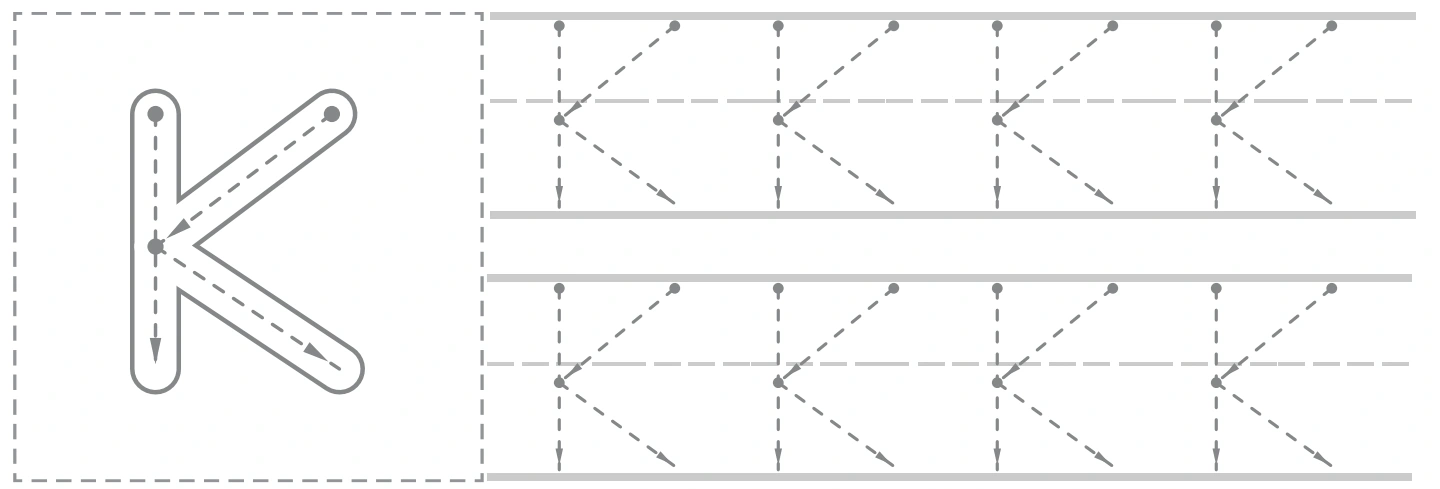
Locate the upright on the Kk Worksheet capital and follow its two diagonal arms toward their joining area. The large model gives a visible reference for where those parts belong. Ask a child to point to the meeting place before attempting a small version. A correctly identified junction is a useful observation even when the pencil still leaves a gap between the strokes.
The Kk Worksheet direction marks show the source's intended routes. Follow them rather than guessing that every part must be drawn as one uninterrupted movement. A learner may need to lift and reposition the pencil between portions. Keep the model visible and compare a single joining point before discussing small differences in angle, pressure or the overall width of the result.
Capital practice on the Kk Worksheet includes two rows of four smaller examples. Their availability does not require eight attempts in one sitting. Try one, inspect its junction and decide on the next useful action. If a diagonal floats away from the upright, a broad loose-paper model can make the gap easier to see than another small guided copy.
Smaller Kk Worksheet arms still need a connection
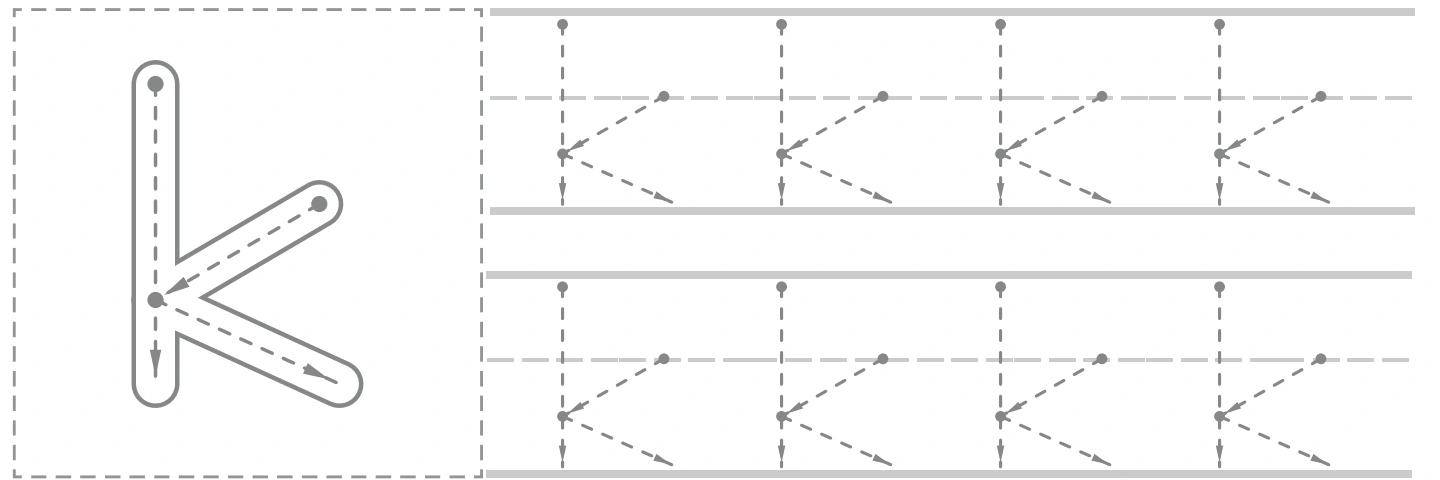
Lowercase k on the Kk Worksheet keeps a tall stem, while the diagonal activity sits lower beside it. Compare the small form with its own ruled space instead of treating it as a capital that happens to be shorter. A finger can locate the stem and the lower joining area before the child follows the small-letter arrows.
The Kk Worksheet provides eight lowercase examples as well as the eight capitals. A learner who finds both cases accurately but struggles to join their parts is showing a movement need, not necessarily a recognition problem. Offer a larger card or movable paper strips. Then return to one printed guide if the child wants to test the same relationship at a smaller size.
A Kk Worksheet key label has one empty beginning
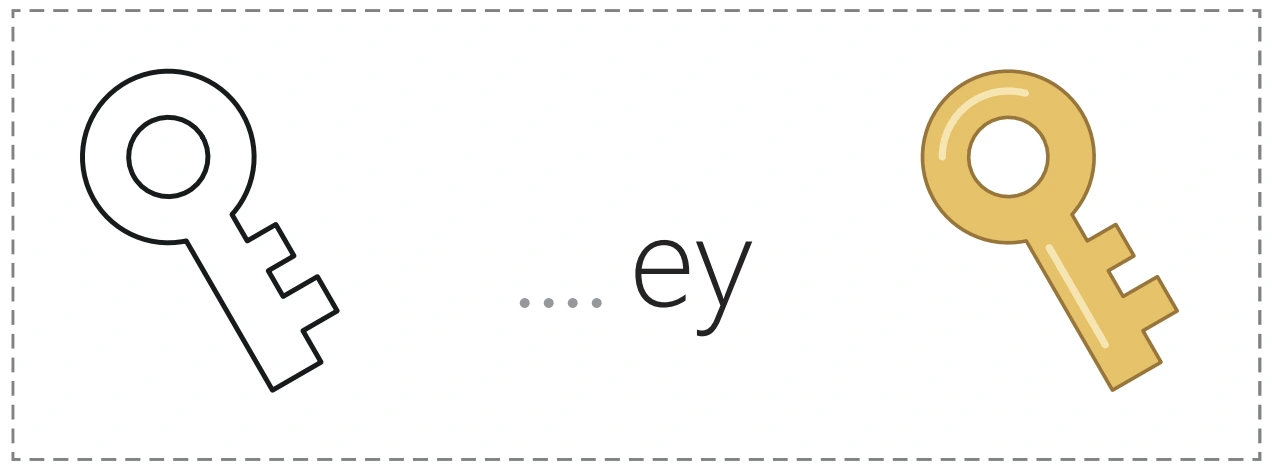
Name the key on the Kk Worksheet and look for the unwritten first letter of its word. The remaining spelling is already present. A lowercase k supplies the beginning, after which an adult reads key as a complete label. The teeth and round hole in the picture can be discussed without becoming extra marks to add inside the written initial.
Key begins with /k/, which is also heard in some words written with c. The Kk Worksheet therefore gives a specific spelling example rather than proving that hearing /k/ always tells a learner which letter to choose. Use the visible key label and its supplied model. An adult can carry the remaining word reading while the child contributes its initial.
Rosa checks a tag at the Kk Worksheet desk

Rosa and her uncle place a cardboard key beside an unprinted tag during Kk Worksheet play. The tag will identify the object at their pretend desk. Rosa names key and points to the small k guide. Her uncle reads the picture word, then waits while she rehearses a large stem and two joining arms on a separate card before deciding whether to use the printed gap.
One diagonal stops away from Rosa's upright. The Kk Worksheet lets them inspect that specific space without dismissing the rest of her work. Her uncle moves a loose strip until it meets a paper stem and asks what changed. Rosa points to the connection, then chooses another large attempt. The repair remains about a visible relationship rather than an adult's demand for perfect penmanship.
At home, a Kk Worksheet turn can begin with the key tag and finish after one useful comparison. An adult may write a longer storeroom message dictated by the child. The learner's k contribution stays separate and achievable. There is no need to copy an entire sentence just because the pretend desk has acquired a more elaborate story.
Five Kk Worksheet skills visible in one junction
A Kk Worksheet connection has a location
Finding where the arms meet the upright gives the eye a concrete task. The child can point to a gap or a join before controlling it with a pencil. That observation helps an adult choose a relevant cue instead of simply requesting more effort.
Kk Worksheet direction changes need a plan
The diagonal portions travel differently from the long stem. A broad finger rehearsal can clarify those changes before small writing begins. Compare the same source guide at both sizes, keeping the intended route consistent while adjusting the physical demand.
Kk Worksheet cases share a recognizable structure
Capital and lowercase partners both involve an upright and diagonal arms, but their proportions differ. Matching the pair without a writing tool allows recognition to stand on its own. The next pencil task can then focus on the part that is actually difficult.
A Kk Worksheet label supports spoken meaning
Adding k gives key its written beginning. The adult's complete reading connects the mark with the pictured object and pretend tag. Longer messages can be dictated, giving a beginner a communication role without requiring every word to be written independently.
Kk Worksheet explanations can guide a revision
Ask what needs to meet or which part stands tall. A gesture toward the model may be enough to explain the next change. Accepting that explanation keeps the conversation useful when formal direction words or fine hand movements are still developing.
Six key-desk games after the Kk Worksheet
1. Kk Worksheet partners on a tag
Put capital K on one side of a loose card and ask a child to select its small partner from two clear alternatives. Check the source, name both forms and attach the pair beside a pretend key. Exchange who selects and who finds the model, so each participant contributes a visual decision.
2. A movable Kk Worksheet junction
Use one long strip and two shorter diagonal strips on blank paper. Arrange them to match the large guide's meeting place. Let the child move a floating arm into contact, then explain the change by pointing. Paper construction makes the connection reversible before another permanent pencil mark is requested.
3. A broad Kk Worksheet route rehearsal
Ask a learner to guide an adult's finger along the capital's parts on a large spare card. Keep the Kk Worksheet arrows available for checking. Change who gives the directions afterward. This can reveal whether the route is understood even when producing a small junction remains difficult for the hand.
4. Finish the Kk Worksheet object's name
Prepare a loose key label with its initial missing. Offer k as a card choice or let a child write it after inspecting the guide. Read the completed word and put it beside the toy key. Keep the remaining letters visible so the job concerns its beginning, not recalling the entire spelling.
5. Inspect a Kk Worksheet-style mixed-up example
An adult builds a large model with one diagonal detached from the upright. Invite the child to identify what differs from the source. Repair it using a moved strip or a new drawing, then inspect a correctly connected version. The learner must look at the actual arrangement instead of expecting every adult card to contain an error.
6. Dictate the Kk Worksheet desk notice
Ask what visitors should know about the pretend key desk. An adult writes the child's chosen sentence, then offers a separate k contribution using the model. Read the notice back exactly as dictated. A clear idea can belong to a beginning writer even when most of the sentence is recorded by a more experienced hand.
A Kk Worksheet inspection station in class
Let a writer and model-finder trade roles at a small-group Kk Worksheet desk. The model-finder points to the junction or tall stem before the writer chooses a short attempt. An adult records which cue helped. A note about joining a diagonal is more useful for the next visit than comparing children by how many tracing spaces they filled.
| A part needs checking | Look for this reference |
|---|---|
| A diagonal floats away. | The source arm meets the upright. |
| The small arms sit too high. | Lowercase k has its own proportion beside the tall stem. |
| A key picture replaces the initial. | The writing space needs the letter, not its object drawing. |
Kk Worksheet feedback can name a small visible change: an arm now meets the stem, or the small form follows its own height. Check one junction before adding another row. Children from three to six may need different tools or spaces, and a successful broad explanation should not be overlooked because a fine pencil mark is still uneven.
Return to the Kk Worksheet through another tag, a new pretend visitor or a choice of key-outline colors. Familiar materials can support a short repeat while the purpose changes. Pause if the hand tightens or attention turns away from the model. The key desk can reopen for another careful connection later. More writing is optional after one meaningful job is finished.
Save a Kk Worksheet for the next desk opening
The Kk Worksheet original sample is free, while eligible active membership provides its separate clean premium PDF. That clean printable excludes the website's domain and watermark branding, with no embedded advertisements. The related complete alphabet PDF costs $4 and contains the clean twenty-six-page collection as a purchased option alongside this individual membership download.
For Kk Worksheet output, choose portrait US Letter paper and check the border plus light guide paths on one trial copy. A blank card should stay nearby for a larger junction. Other practice choices include simple line routes before joining letters, additional directional path practice and a picture-and-numeral writing change. Families can also read Reading Rockets' alphabet recognition resources and NAEYC's home writing activities.
Popular Worksheets
Printable resources families and teachers are downloading now.
 Free
 Free
 Free
 Free