
Jj Worksheet: 5 Wonderful Jug Hook Activities
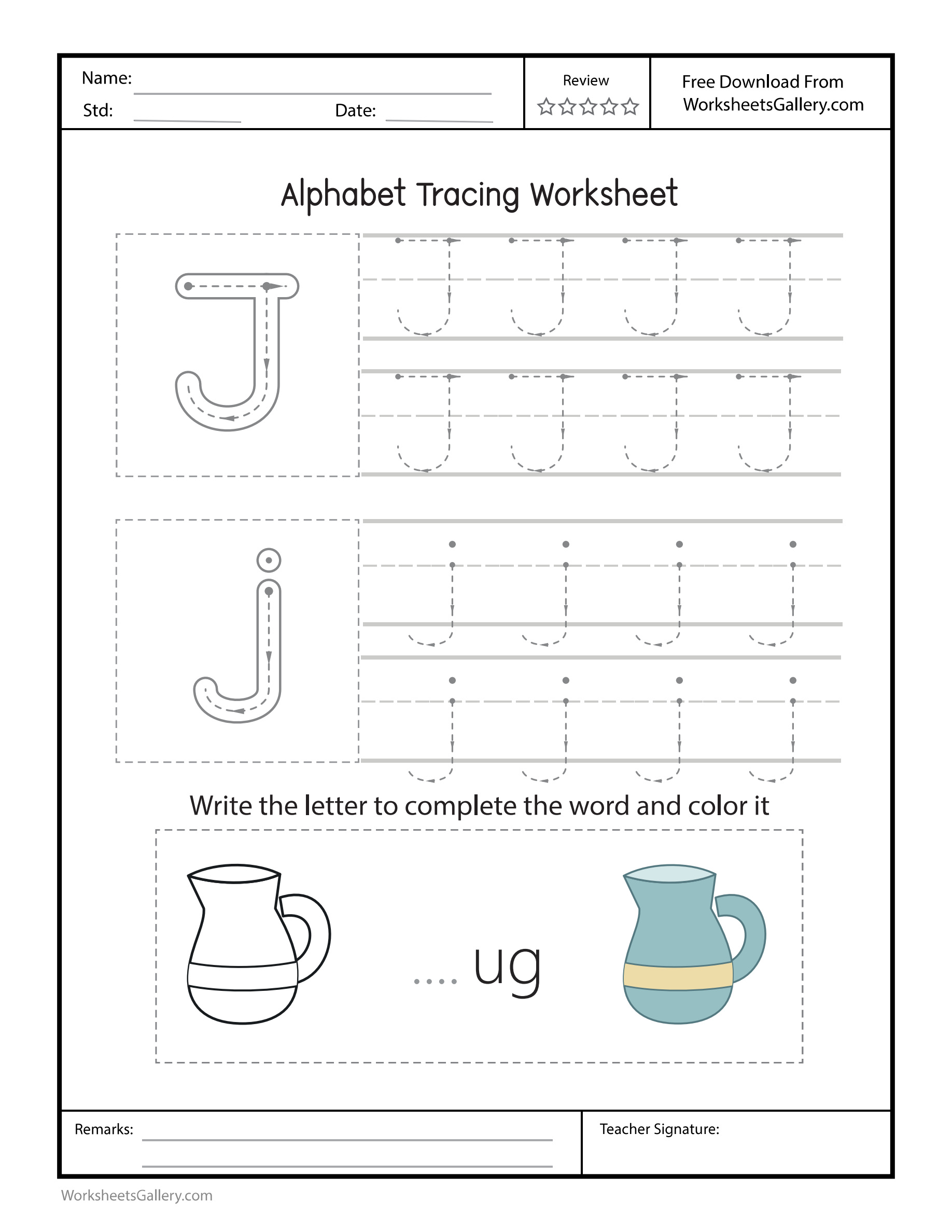
The Jj jug activity belongs to the complete A–Z letter-pair collection. One $4 purchase supplies all 26 clean tracing pages in a single alphabetically ordered PDF, including this jug hook workshop lesson.
A jug's handle can inspire a story, but the printed letter guide decides how its name begins. The Jj Worksheet pairs a hooked capital J with a dotted lowercase j, then leaves that small initial missing from jug. Children can inspect the two forms, trace a few examples and give a pretend order card its beginning. The lower hook needs space, and the detached dot needs remembering. For learners aged three to six, those are useful observations to explore through gestures, conversation and supported writing before asking for a neatly completed practice row.
A Jj Worksheet order card has a missing beginning
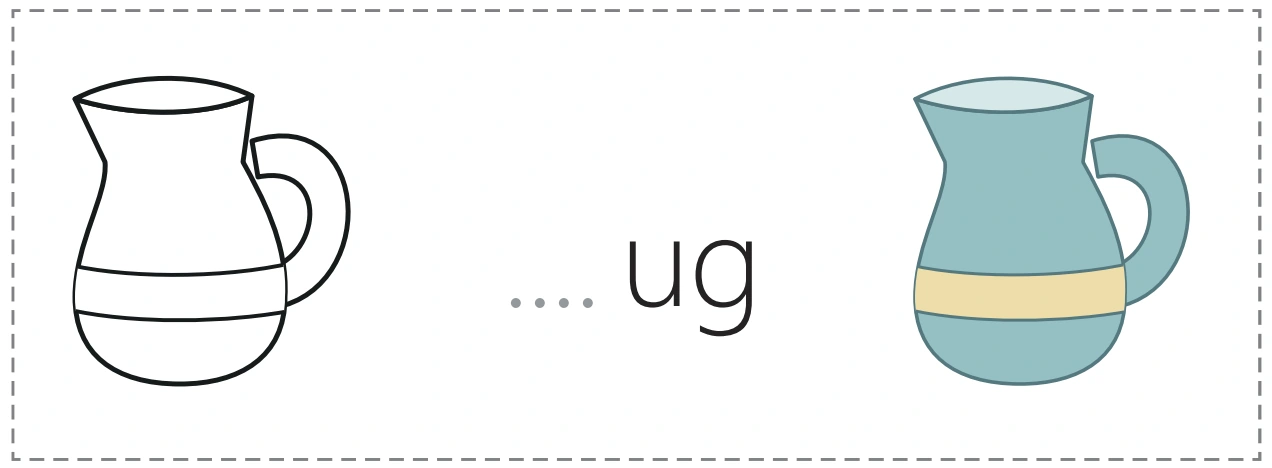
The Jj Worksheet already supplies ug between an outlined jug and a colored example. Read jug naturally while pointing to the whole picture word, then locate the initial space. A lowercase j belongs there. An adult can read the remaining spelling and the completed result, allowing the learner to contribute one meaningful letter without pretending that the whole word has been decoded independently.

The Jj Worksheet close-up makes the writing responsibility especially clear: the beginning is unwritten, while the rest of jug is present. Show the small-letter model before the learner starts. Its dot and hooked lower portion both belong to j. A handle, rim or other detail in the jug picture can be named, but it does not replace looking at the letter's actual guide.
Give the Jj Worksheet hook room below its line
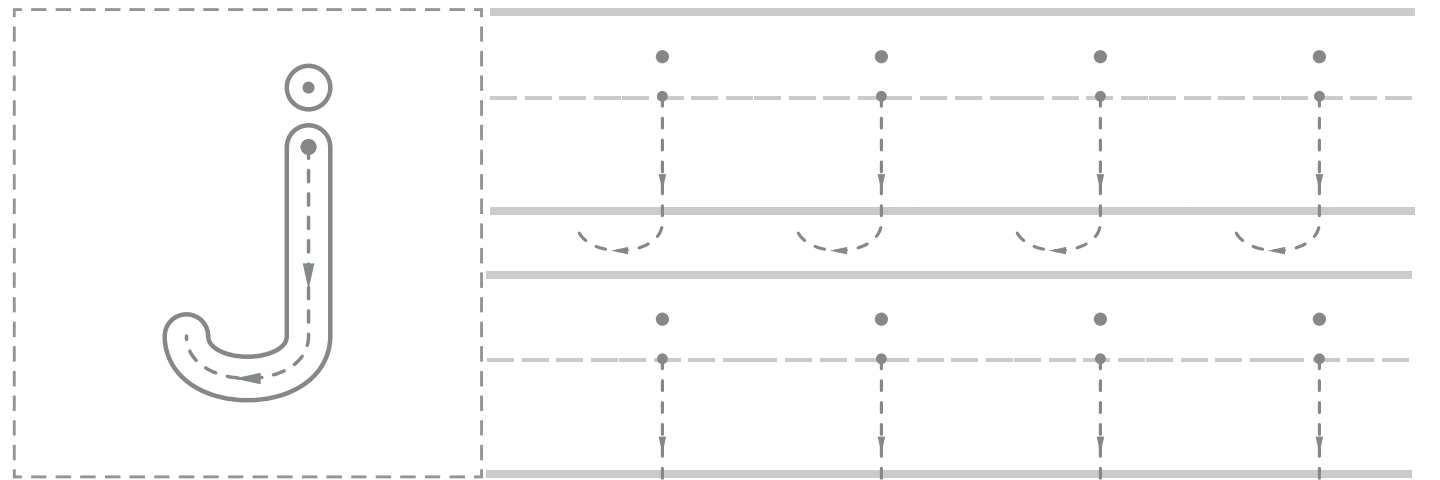
The lowercase Jj Worksheet model extends downward into its descender area. That continuation is part of the supplied form, not a mark to squeeze back into the small body's height. Point to the baseline and inspect where the hook travels. A larger loose card can provide more room to rehearse the route before the child tries the printed-size version.
Follow the Jj Worksheet arrows with a finger and notice the separate dot. A learner may remember the lower hook while forgetting what sits above it, or place the dot accurately while stopping the stem too soon. Those observations suggest different next cues. Address the missing feature after a complete attempt rather than interrupting every movement with several instructions.
Compare both Jj Worksheet models before a smaller row
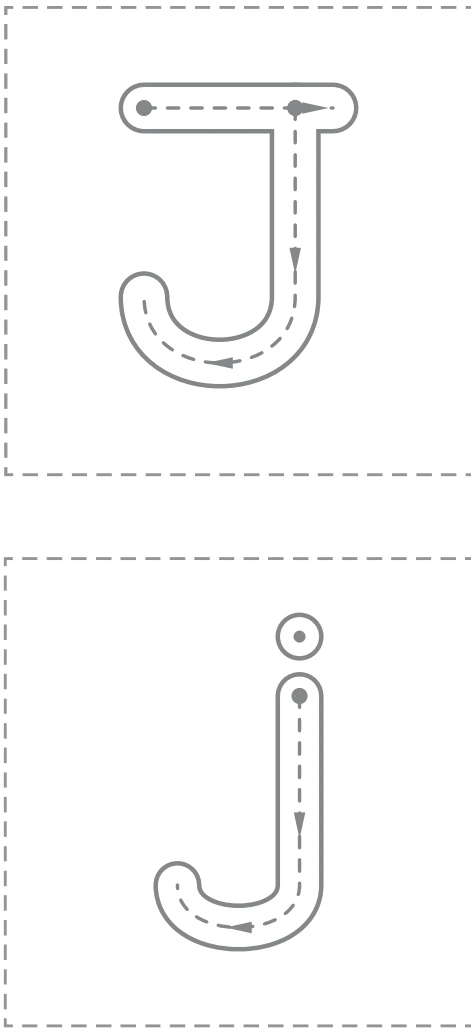
Capital and small Jj Worksheet forms share a hooked idea but differ in their details and line positions. The capital has its upper horizontal part; the small j has its detached dot. Match them by name before comparing the routes. Recognition can be shown with two cards, leaving the more demanding task of producing each shape for a separate short turn.
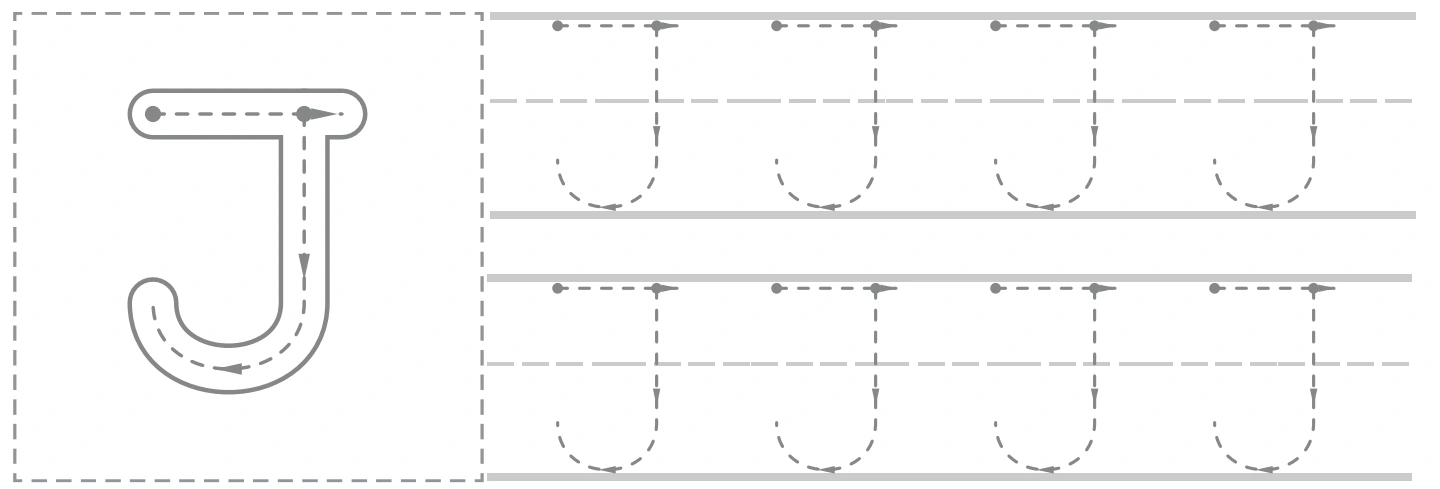
Capital J on the Jj Worksheet curves at its lower end. Use the printed start and direction marks rather than guessing from the shape of a jug handle. The object supplies a familiar word; it is not a handwriting diagram. Try one large guided movement, then look at a small capital example and decide whether another attempt would clarify the same feature.
The Jj Worksheet contains sixteen small models in total, split into two rows per case. Their number provides choices across visits. A child may compare one capital with one lowercase example and finish with the picture word, while another enjoys a short row. Continuing is useful only while attention remains with the letter's parts and the hand is comfortable enough to explore them.
Omar's Jj Worksheet jug-order workshop
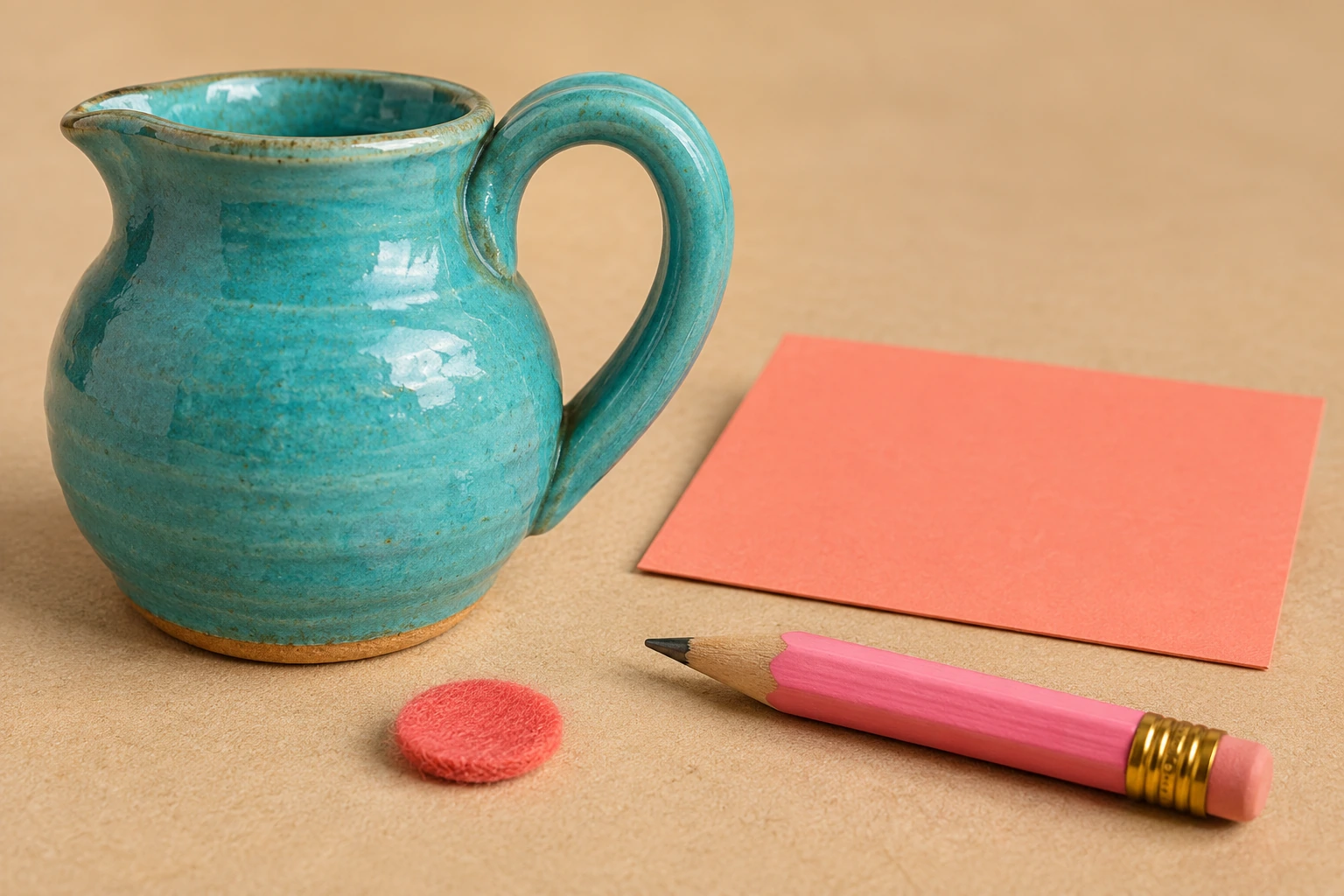
Omar and his grandmother set a small jug beside a blank order card. For Jj Worksheet play, the card names the object they are pretending to send to a picnic table. His grandmother records a longer message he dictates, leaving the initial-letter job separate. Omar locates j, rehearses its lower turn on a large card and then chooses whether to place it in the printed gap.
When Omar stops above the lower guide space, the Jj Worksheet gives them a reference for what remains. His grandmother traces the continuation with her finger and asks him to show the same part. They do not need to erase every earlier mark. One new large attempt can make the route clearer, after which coloring the jug outline may be a welcome change of action.
At home, let the Jj Worksheet order story stay small. A picture discussion, one model comparison and one written initial can be a complete visit. Read jug aloud with its beginning sound, then name J when identifying the case pair. Those spoken tasks differ, and a child benefits from knowing which one is being requested rather than guessing what an adult meant.
Seven Jj Worksheet observations for an adult's notes
Jj Worksheet writing uses more than one height
The small j dot and lower hook occupy different areas around the line. A learner can point to those positions before drawing them. That spatial explanation is valuable when fine control has not yet made the same relationship obvious in a small written attempt.
A Jj Worksheet hook needs a deliberate ending
Following the lower turn gives a pencil a route and stopping place. Compare that part with the printed model, rather than treating a longer straight stem as automatically complete. A broad finger rehearsal may reveal the intended turn more clearly than repeated small copies.
The Jj Worksheet dot is a separate remembered action
The dot belongs to the letter without touching its long portion. Ask what remains after the hook is finished, then let the child inspect the model. The response may be a point or a short explanation before another pencil mark is added.
Jj Worksheet cases share a name, not every detail
A capital top bar and a small-letter dot are not interchangeable decorations. Matching the two models by name, then noticing their differences, supports a clearer comparison. Use the specific source forms even when another familiar book prints J in a slightly different style.
A Jj Worksheet initial can complete a useful label
The missing j gives a beginning writer a small role inside jug. Adult reading can connect the completed word with the pictured object. A longer order note can remain shared writing, keeping the child's independent contribution at a level they can attempt thoughtfully.
Jj Worksheet language can identify the next cue
Words such as below, curve, dot and finish become useful when attached to visible parts. A learner who says which feature needs another look gives an adult better information than a silent row count. Accept a gesture whenever the direction words are still developing.
Jj Worksheet returns can compare one changed feature
Save a loose-card attempt and revisit it after another short session. Notice a remembered dot or a clearer lower turn. Those specific changes can guide the next job without making claims that a set amount of tracing will guarantee later literacy progress.
Five jug-order games beyond the Jj Worksheet
1. A Jj Worksheet hook that has not arrived yet
Make an adult example with a long stroke but no completed lower turn. The Jj Worksheet supplies the reference while the learner points to what is missing. Add a movable curved piece or draw a fresh version together. Then inspect a complete example so the child is not merely assuming that every card contains an error.
2. Give the Jj Worksheet dot its delivery space
Offer a broad paper dot beside a large lowercase model on a blank card. Use the Jj Worksheet to find where the dot belongs after the hook is complete. Let the learner place it and name the whole letter. A detached dot can be moved and compared before a fine pencil mark is expected in that position.
3. Two Jj Worksheet signatures for one jug
Place capital J on a loose order card and ask a child to bring its lowercase companion from a small choice. Check the pair against the Jj Worksheet, then exchange the selecting and model-finding roles. This gives recognition its own turn, allowing a participant to succeed at matching even when the descending movement still needs adult support.
4. Restore the Jj Worksheet order's initial
Leave j absent on a separate jug label, keeping the rest of the word visible. A learner supplies the beginning with Jj Worksheet support; the adult then reads jug as a finished label. Place the label near the toy jug. The child may choose a card response before a written one, preserving the meaning while adjusting the motor demand.
5. Dictate a picnic request
Ask what a pretend customer wants the jug for. An adult writes the child's request and reads it back, while an optional j contribution can be made using the Jj Worksheet. The request can be imaginative. Its communication purpose does not depend on a preschooler independently spelling every word in the sentence or copying it into a small space.
A Jj Worksheet classroom check before another row
| Inspect this attempt | Return to this feature |
|---|---|
| The lowercase stem stops too high. | The source hook continues into its lower space. |
| The small letter has no dot. | A separate dot sits above the long portion. |
| A dot is added to the capital model. | The printed capital uses its own upper bar. |
At a classroom Jj Worksheet station, partners can take turns locating a feature and trying a short route. An adult notes which cue was useful: the lower space, the turn or the missing dot. Keep the guide visible rather than asking children to remember a new explanation without a reference. A model-finder's accurate point is meaningful participation even when another learner takes the writing role.
Jj Worksheet feedback works best when one action is clear. Leave enough room for the lower hook. Some children aged three to six will need an enlarged surface, while others enjoy a small-row challenge. Pause when writing becomes tense and return through picture talk, coloring or a later order-card story. The jug workshop can take another request tomorrow.
Save and print a Jj Worksheet visit
Use the Jj Worksheet original sample as the free edition, or access its clean premium PDF with an eligible active membership. The clean printable has the page's website, domain and watermark branding removed, and it contains no embedded adverts. The related $4 alphabet bundle offers the complete set of 26 clean letter-pair worksheets as a single purchased file, separate from the individual membership route.
Check the Jj Worksheet on portrait US Letter output before printing extra sheets. Preserve the outside frame and inspect the faint guide dots, especially the lower j route. Keep blank cards ready for larger practice. Companions include a small set of controlled pencil routes, more turns and direction changes or picture-linked number writing. Adults can also visit PBS KIDS for Parents' literacy-play ideas and NAEYC's guidance for family writing opportunities.
Popular Worksheets
Printable resources families and teachers are downloading now.
 Free
 Free
 Free
 Free