
Ee Worksheet: 6 Brilliant Elephant Note Games
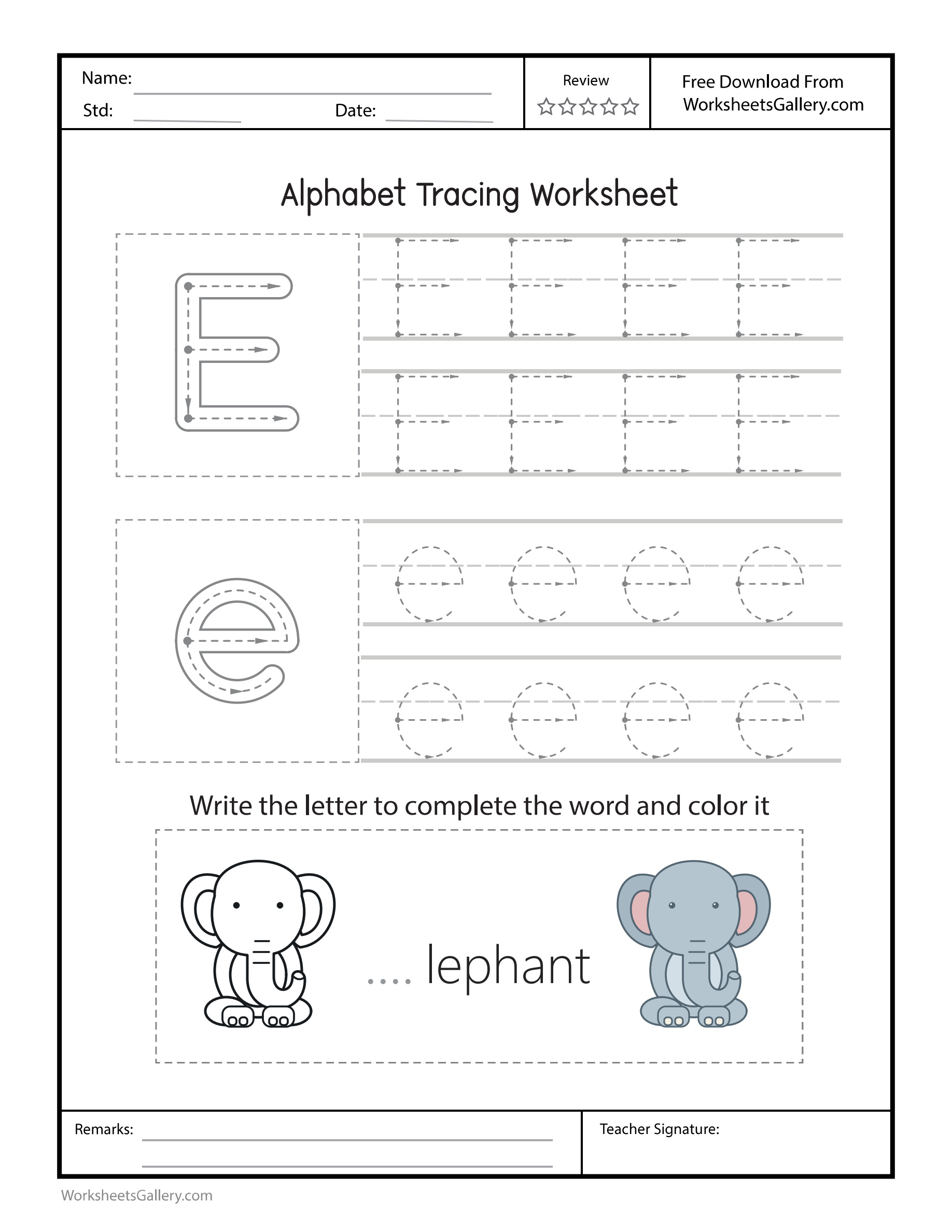
The Ee elephant activity belongs to the complete A–Z letter-pair collection. One $4 purchase supplies all 26 clean tracing pages in a single alphabetically ordered PDF, including this trunk and crossbars lesson.
Three straight bars and one rounded small letter can belong to the same alphabet partnership. The Ee Worksheet makes that contrast visible beside an elephant picture whose written name is missing its beginning. Children can inspect the models, test a few guided movements and add e to the waiting word. The elephant provides a friendly topic for conversation, while the actual writing remains a small, achievable job. Suitable for roughly ages three to six, this page welcomes an adult's spoken support and leaves room for coloring, pointing or a larger practice mark before another small tracing attempt.
An Ee Worksheet note for the elephant

Leah and her father open a blank notebook beside the Ee Worksheet. A toy elephant sits on their pretend message desk. Leah says that the elephant needs a note about tomorrow's picnic, and her father writes the sentence she dictates. Then they inspect the picture word together. Leah's contribution will be its missing initial, giving her a clear role inside a longer shared message.
The Ee Worksheet keeps that role manageable. Her father does not ask Leah to spell elephant from memory or copy every letter in the note. He reads the remaining printed spelling, helps her locate small e and waits for her decision about trying it. If the small shape is awkward, a larger notebook version becomes the rehearsal before they return to the supplied space.
Count the bars, then inspect the Ee Worksheet route
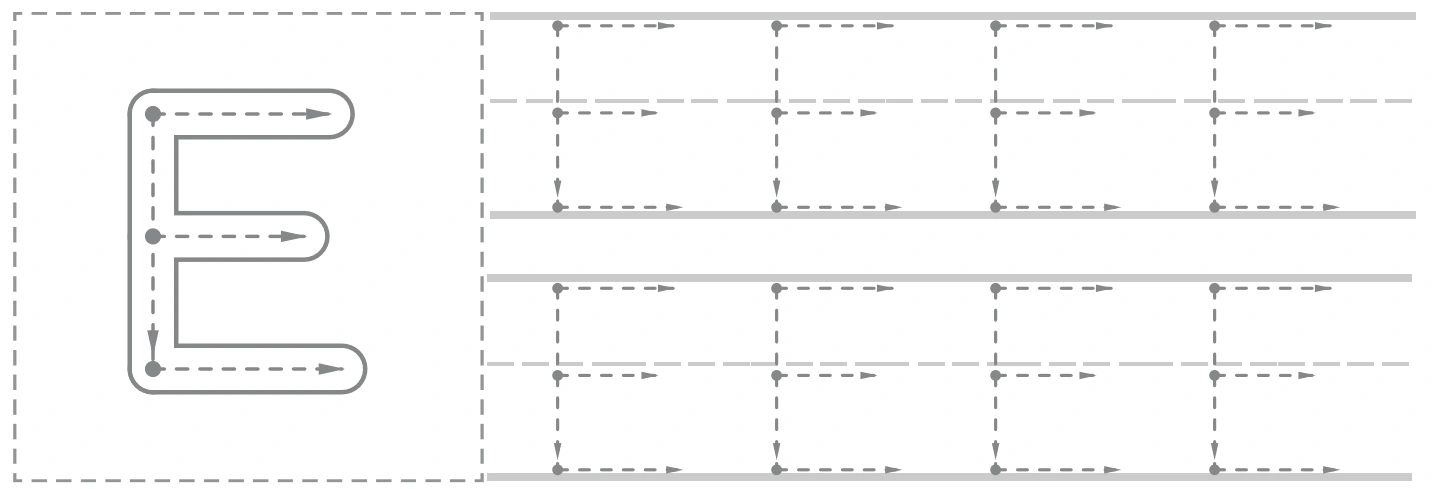
Capital E on the Ee Worksheet has a left upright and three horizontal bars. Name the top, middle and bottom parts while pointing at the large guide. The point is not a separate counting test; it is noticing the features needed for this letter. Compare the bottom bar carefully, because leaving it out would change the visible structure into a different familiar form.
Trace one Ee Worksheet capital by following the printed direction cues. Look at where each horizontal portion joins the upright before continuing to another example. The bars may be uneven while still making a recognizable E. Offer a cue about a missing join or missing bar instead of demanding equal lengths and perfect spacing at the same time.
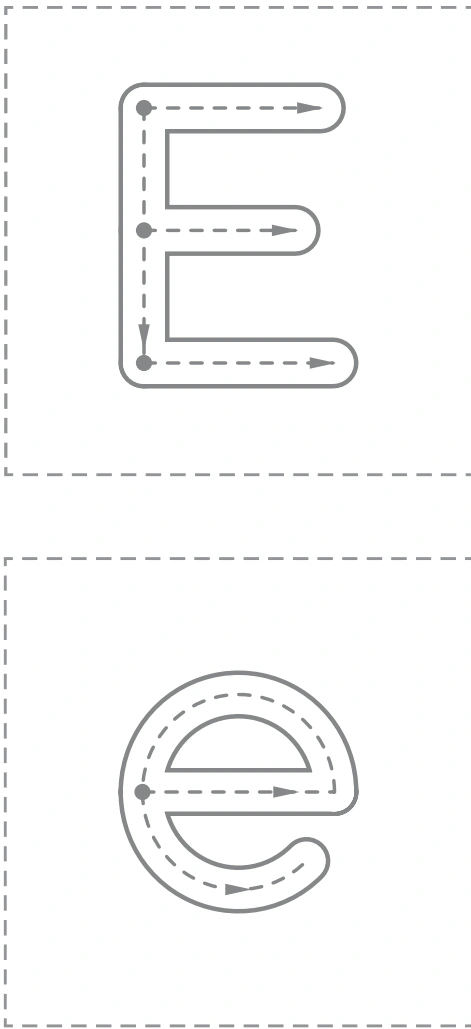
The Ee Worksheet large models show why shrinking a capital does not produce its small partner. E keeps the straight-bar arrangement; e has a rounded path with an internal stroke and opening. Ask the learner to identify the pair with cards or pointing. Recognizing their shared letter name can be practiced separately from controlling both movements with a pencil.
Keep the small Ee Worksheet opening visible
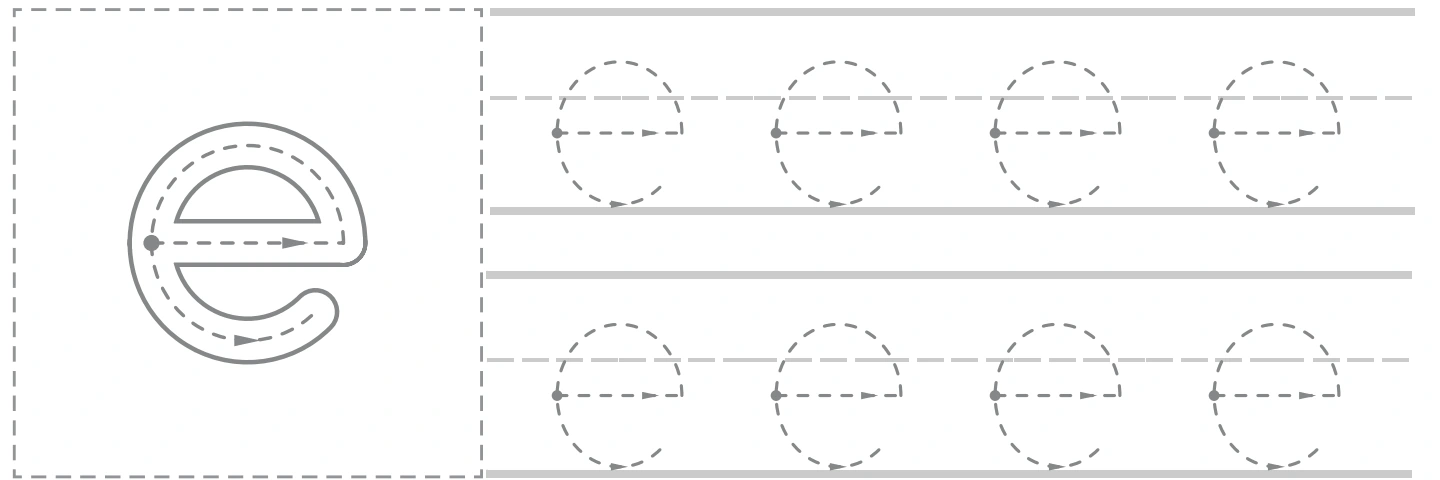
The lowercase Ee Worksheet guide deserves its own close look. Follow the actual starting mark and arrow route, noticing the internal stroke and the space where the curve remains open. Avoid turning the rounded portion into a completely closed oval. A child may first show the opening by placing a fingertip beside it, which is a useful observation before a more precise writing attempt.
Two lowercase rows and two uppercase rows give the Ee Worksheet sixteen small models altogether. Choose a few rather than treating every space as required in one sitting. A learner who remembers the small opening but struggles to maintain it can use a broader crayon mark on spare paper. The larger route provides another way to see whether the idea is understood.
The Ee Worksheet needs one initial, not a spelling test
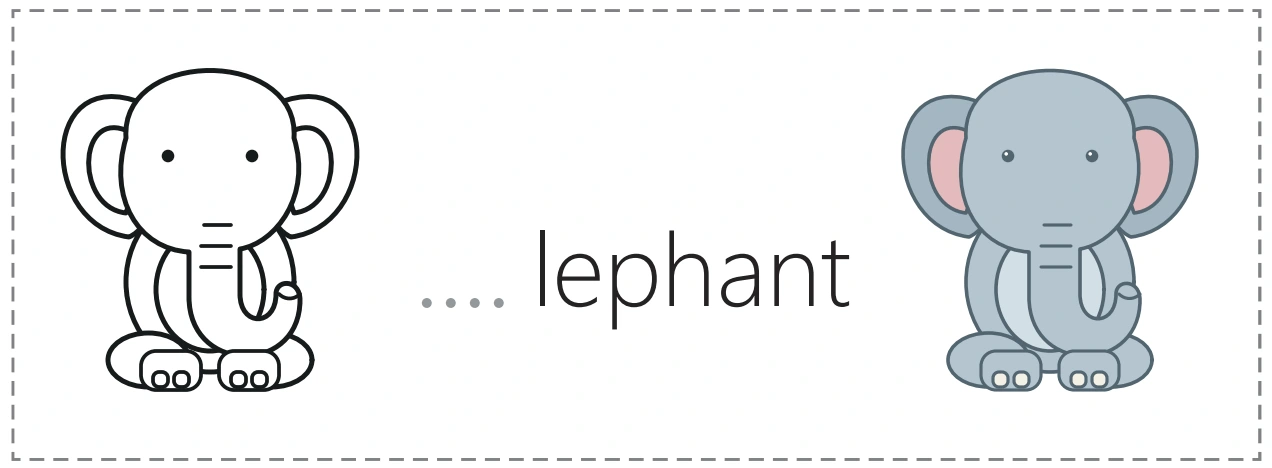
The Ee Worksheet picture word already contains lephant. The child needs to place e at the beginning, then hear an adult read elephant as a complete word. An outline elephant and its colored companion support the connection. Ears, trunk and feet can be named in conversation without becoming additional writing requirements inside the initial-letter gap.
Use the Ee Worksheet close-up to locate exactly what remains unwritten. If a learner starts copying the entire word into the gap, point to the printed letters that are already doing their job. For this example, elephant begins with the short e sound also heard in egg. That differs from saying the letter name E, and both can be discussed without stretching the animal's name unnaturally.
Six Ee Worksheet observations for a small notebook
The Ee Worksheet bars invite a check for an omitted part. Finding the lower horizontal stroke is more specific than being told that an otherwise recognizable capital is simply wrong.
Ee Worksheet matching links an angular capital with a curved small form. A learner can demonstrate that relationship using cards even while the lowercase movement remains difficult to produce.
The Ee Worksheet small letter contains a gap worth preserving. Pointing to it gives an adult a way to assess visual recognition before asking for another precise pencil route.
Completing the Ee Worksheet initial gives a beginner a useful task inside a longer animal word. The adult can carry the remaining reading and spelling without taking away the child's contribution.
Ee Worksheet talk can include across, middle, around and stop. Tie each direction to the guide so the words describe an action the child can actually inspect.
A note for the Ee Worksheet elephant gives the initial a small narrative purpose. Returning to that message on another day can invite practice without relying on a reward for filling rows.
Six elephant-note games beyond the Ee Worksheet
1. Three Ee Worksheet bars on a message sign
Lay a long strip beside three shorter strips and compare them with E on the Ee Worksheet. A child arranges the pieces into a large sign before trying a pencil version. Remove the bottom bar briefly and ask what changed. Restore it together, keeping the discussion about an observable letter feature instead of speed or neatness.
2. Deliver the rounded partner
An uppercase E waits beside the toy elephant. The learner selects its lowercase partner from two cards, using the Ee Worksheet when a reminder is useful. Read both letter names, then place the pair by the notebook. Choose clearly different alternatives initially so the match reflects recognition rather than a crowded set of unfamiliar forms.
3. An unfinished Ee Worksheet animal label
Leave a space before lephant on a loose label. Invite an Ee Worksheet learner to supply a lowercase e by card choice or writing. An adult reads the repaired label and attaches it to the pretend message desk. Keep the rest of the spelling visible; the task concerns the initial, not recalling all the letters in a long animal word.
4. Explain the gap without drawing
Ask a child to show an adult where the small Ee Worksheet model remains open. Use a pointing finger or a loose paper marker rather than immediately requesting handwriting. The adult then makes an intentionally closed example on a spare card. Let the learner explain how it differs and decide whether a fresh open version would match the reference better.
5. Dictate tomorrow's elephant news
The toy elephant has one thing to tell a friend. An adult records the child's dictated news, leaving space for an optional e contribution guided by the Ee Worksheet. Read the sentence exactly as given. The child may add an elephant drawing or color the printed outline afterward, making the note meaningful without expanding the required handwriting.
6. Name or beginning sound?
Take turns asking for the Ee Worksheet letter's name or the beginning sound in elephant. State which one is wanted and supply a model when needed. Switch who asks the question. This playful distinction prevents a child from being corrected for giving a valid letter name when the adult had silently expected a sound instead.
An Ee Worksheet classroom note and correction guide
At a classroom Ee Worksheet station, a writer can choose one case while a partner points to its large model. The listener watches for a previously discussed feature, such as the lower capital bar or small opening. Exchange roles after a short turn. Adults can record which reference was helpful, providing more useful information than a simple count of completed examples.
| A feature needs attention | Offer this reference |
|---|---|
| The capital has only two bars. | Locate E's bottom stroke on the large guide. |
| The small form becomes closed. | Show where the supplied e leaves an opening. |
| The whole word is copied into its initial space. | Point to the lephant that is already printed. |
Ee Worksheet feedback can remain encouraging without being vague. Notice the feature that became clearer. A remembered bottom bar or a deliberately preserved opening is worth naming. If a hand tires, return to a spoken message or a large finger route. Age three to six is a broad suitability range, and learners within it do not all need the same small-writing demand.
Reopen the Ee Worksheet notebook another day
An Ee Worksheet return can begin with a fresh elephant note, one loose-letter match or a choice of outline colors. Change the purpose while retaining a familiar guide. Short, comfortable visits leave an unfinished activity available without making incompletion feel like failure. A single thoughtful initial can finish today's message. Another row is optional when interest and control are fading.
The Ee Worksheet free sample preserves the uploaded original. Eligible members can obtain its separate clean premium PDF, which has the page's domain, website branding and watermark text removed and contains no embedded ads. A related $4 purchase offers the whole alphabet collection in one clean twenty-six-page file. These are distinct website download choices, with access determined by the selected option.
Inspect Ee Worksheet printing on US Letter portrait paper before making extra copies. The frame and light guide paths should remain inside the printable area and easy to see. A spare notebook page provides room for larger e movements when the printed size is demanding. Keep coloring away from the fine guides until the learner has finished the chosen tracing turn.
Useful companions include mixed-direction line rehearsal, a shorter pencil-movement visit and number writing beside familiar pictures. For additional adult reading, choose Reading Rockets' alphabet-learning overview or NAEYC on writing in family routines.
Popular Worksheets
Printable resources families and teachers are downloading now.
 Free
 Free
 Free
 Free