
Dd Worksheet: 5 Powerful Dog Door Discoveries
The Dd dog activity belongs to the complete A–Z letter-pair collection. One $4 purchase supplies all 26 clean tracing pages in a single alphabetically ordered PDF, including this doorway nameplate lesson.
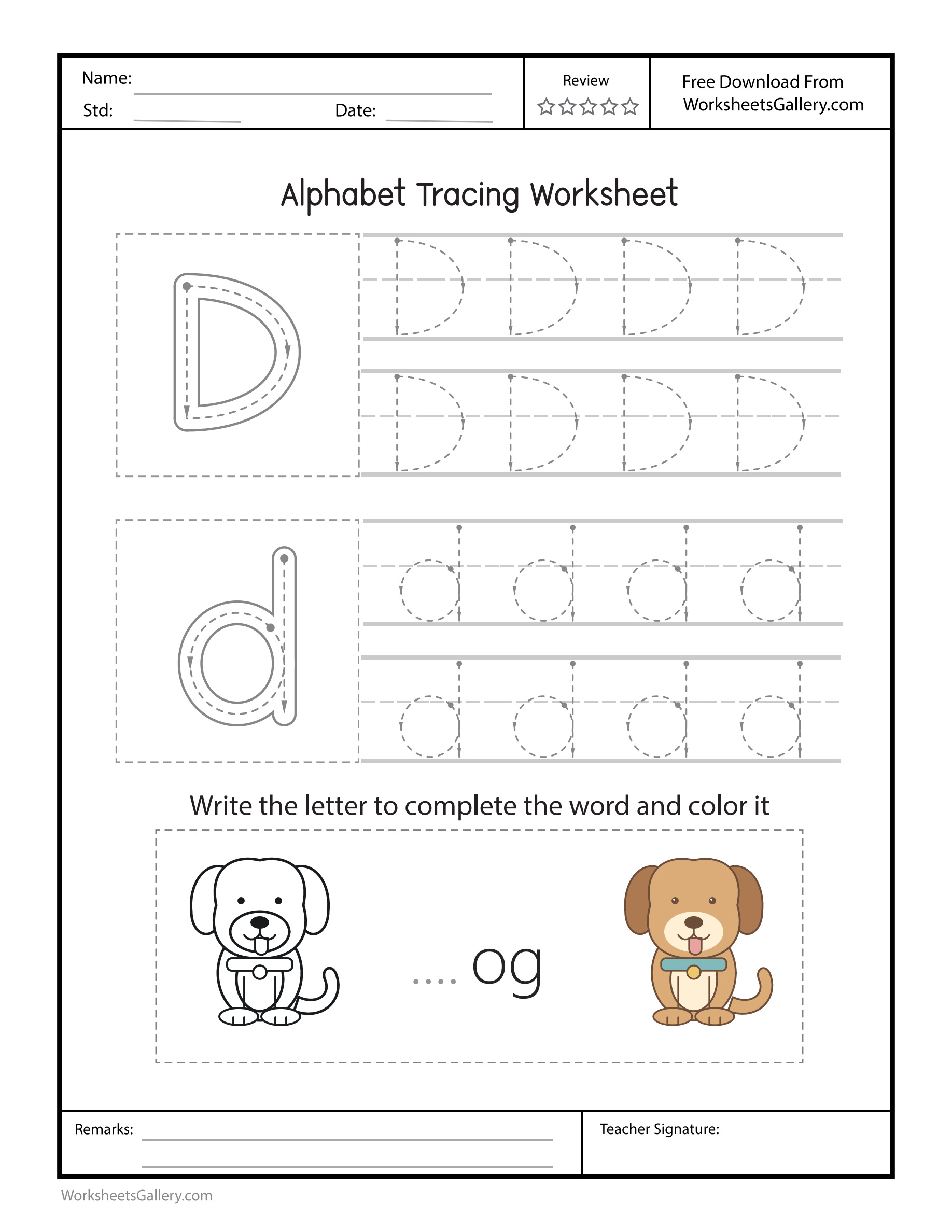
A pretend dog door looks welcoming, but its little nameplate has a space where the first letter should be. The Dd Worksheet invites a child to supply that beginning after exploring a large D and a smaller d. Their rounded portions look related, yet their tall strokes sit differently within the shapes. That contrast gives tracing a useful question to answer. Designed for children aged three to six, the page combines guided movements, a dog picture word and coloring, with room for an adult to support the message without taking over every mark.
Arun opens the Dd Worksheet doorway desk
Arun and his aunt place a small toy dog outside a cardboard doorway during Dd Worksheet play. The doorway has a blank sign. “What should the visitor read here?” his aunt asks. Arun names the dog, then looks at the unfinished word on the printed page. She reads og for him and waits while he searches for the letter that can give the label its beginning.
The Dd Worksheet provides a lowercase model for that job. Arun points to its rounded body and the long stroke rising on the right. His first loose-paper attempt places the tall stroke elsewhere. Instead of supplying a finished answer, his aunt puts the card beside the model and asks him to show where each long stroke stands. He decides to try a larger d on another card.
At home, a Dd Worksheet visit can use a toy or paper dog without requiring a real pet. Begin with the pretend sign, rehearse one large lowercase route and choose a manageable writing turn. The adult may read the rest of the label and scribe any longer message. A beginner can contribute the initial while the shared story gives that one letter an understandable purpose.
Read the Dd Worksheet label before tracing a row
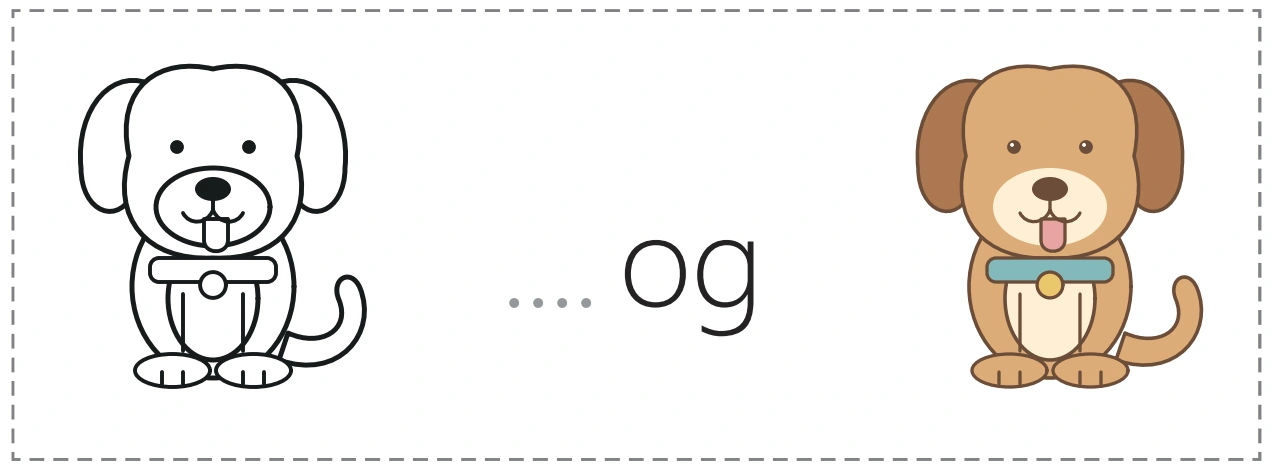
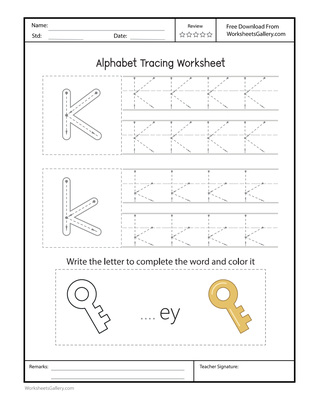
The Dd Worksheet already supplies og between an outlined dog and a colored dog. The missing initial is d. Read the completed word as dog and keep the written target distinct from the dog's spots, ears and collar. Those picture details can support conversation, but none is an extra letter required in the response space. Let the child color the outline after deciding on the initial.
During Dd Worksheet sound talk, use a brief /d/ at the beginning of dog rather than a long added “duh.” Then use the letter name D when comparing the two case forms. The page does not require an independent reading of an unfamiliar word. An adult's spoken model can connect a child's chosen initial with the complete printed label.
If a learner puts capital D in the Dd Worksheet gap, compare it with the small letters already printed in dog. The reason for choosing lowercase d is visible in this particular word, not a rule that capitals are bad. Capital D remains a valid letter form elsewhere, including the large guide and a person's name. Keep the discussion about the label's actual writing context.
Which side is tall on the Dd Worksheet?
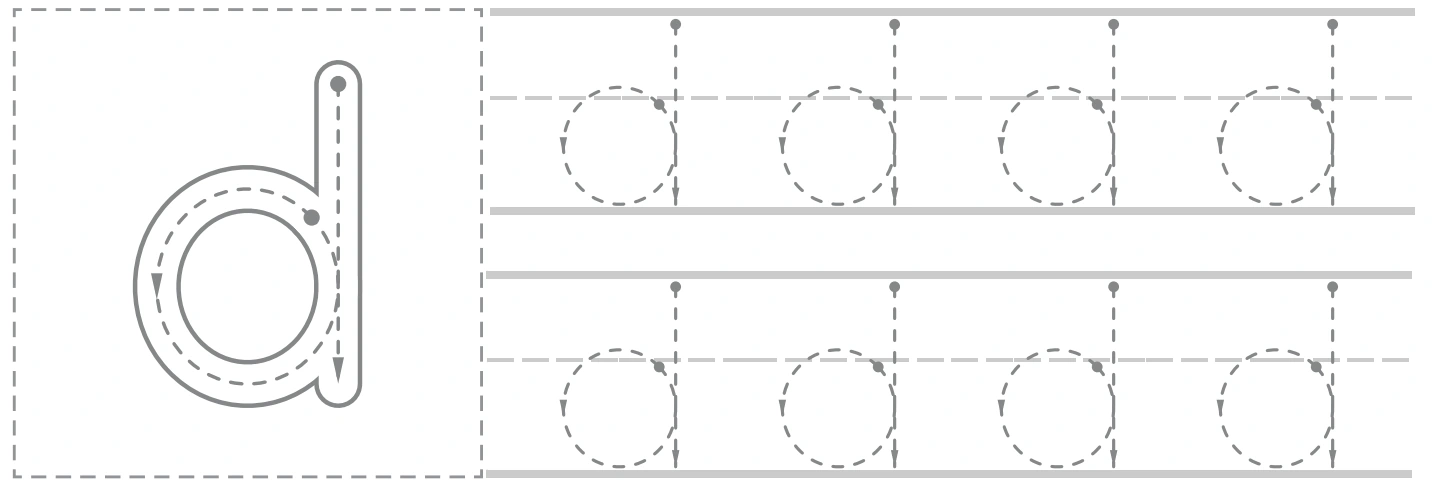
Lowercase d on the Dd Worksheet has a rounded body with its ascender on the right. Locate this ascender while looking at the large guide, then follow the supplied starting marks and arrows. The side relationship is a useful visual anchor when another stem-and-bowl letter comes to mind. Avoid relying on a vague command to “turn it the other way” without showing the reference.
One Dd Worksheet attempt can be compared with its model before a second is started. Ask whether the rounded part and tall stroke meet, and whether the long portion reaches above the small body. If joining the parts is difficult, use an enlarged spare-paper version. A larger movement lets the child inspect the meeting place without needing to control the printed size immediately.
Capital Dd Worksheet paths keep another arrangement
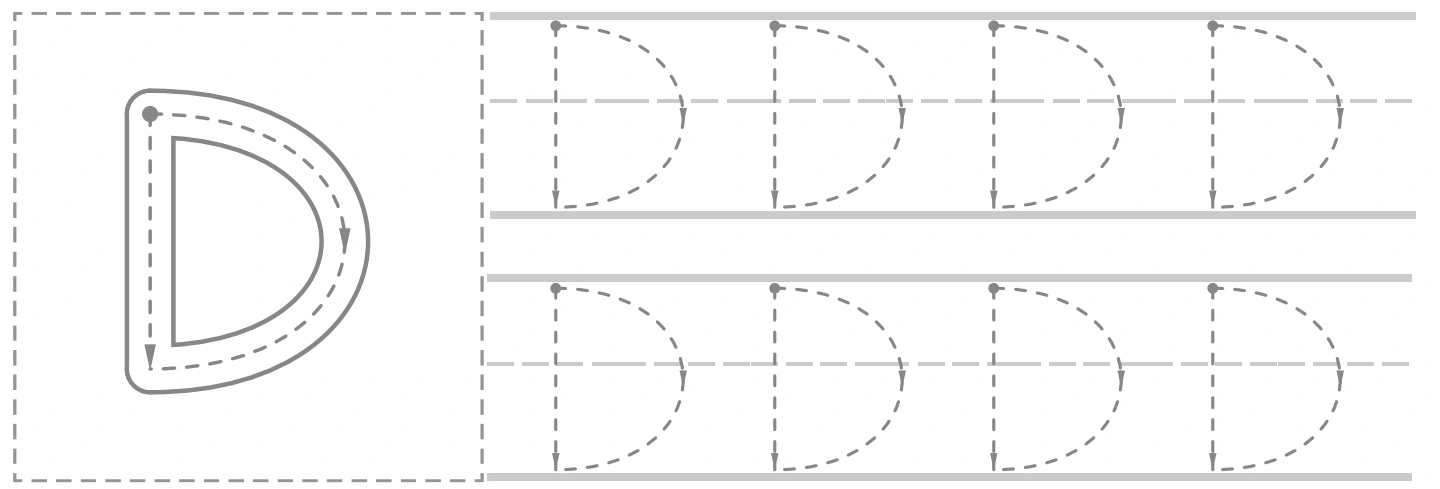
The Dd Worksheet capital D uses a tall upright on the left with a broad curve returning to it. It is not formed by enlarging lowercase d. Locate that upright, trace the curve with a finger and compare where the two parts join. A learner can notice the different arrangement while still recognizing that both versions share the same letter name.
There are eight small capital forms and eight small lowercase forms on the Dd Worksheet. Use those examples selectively. One child may need a single capital comparison followed by the picture word; another may enjoy an entire short row. The number of available spaces does not determine how much practice is useful when attention, comfort and control are changing within a session.
A Dd Worksheet side-by-side inspection
| Form to inspect | Visible reference |
|---|---|
| Capital D | The long upright stands on the left of its broad curve. |
| Lowercase d | The tall ascender sits to the right of the rounded body. |
| Dog label | A small d completes the already printed og. |
A Dd Worksheet comparison should keep its purpose narrow. Knowing which side is tall does not mean a child will control every movement on the first try. Likewise, a copied shape does not prove that the learner remembers its name without support. Ask for a point, a name or a route in separate turns so the adult can see which connection is already secure.
Six Dd Worksheet gains to notice in small actions
Finding a dependable Dd Worksheet reference
The Dd Worksheet long stroke provides an obvious feature to locate. A child can return to that feature when a rounded form becomes confusing. The cue is more concrete than being told to try harder, because the learner can compare a particular part of the model with a particular part of the attempt.
Coordinating two Dd Worksheet movements
A Dd Worksheet path combines a straight portion with a curved portion. Finger rehearsal can make the change between them visible before pencil precision is expected. Notice whether the learner plans the change deliberately, and offer a larger space if the intended route is clearer than the small marks produced.
Connecting distinct Dd Worksheet case partners
The Dd Worksheet makes a useful contrast between related letter identities and different visual arrangements. A correct D-to-d match may be shown with cards rather than writing. That distinction gives a child a way to demonstrate recognition while their hand is still learning how the two forms travel across a page.
Completing a Dd Worksheet doorway message
Supplying d on the Dd Worksheet gives the pretend dog sign a readable beginning. An adult can read that small finished contribution in context, showing why a single letter matters. There is no need to extend the demand into spelling a sentence about the dog unless the learner chooses a shared dictation activity.
Talking about parts and positions
Dd Worksheet discussion can use tall, round, beside and meet alongside the familiar dog vocabulary. Ask for a gesture when a description is hard to say. A spoken explanation can then grow from the visible action rather than becoming another test layered over the already demanding movement task.
Reviewing one useful change
Save an early Dd Worksheet-style card and compare a later attempt with it. Perhaps the parts join more clearly or the ascender is remembered without a cue. That specific observation supports a sensible next step. Avoid promising that a certain number of repeated rows will prevent all future letter confusions.
Five dog-door activities beyond the Dd Worksheet
1. A nameplate with one missing piece
Put og on a spare sign and offer a separate d card. A Dd Worksheet model stays nearby while the child chooses where the missing initial belongs. Read the repaired sign, then set it at the pretend doorway. Move the sign to another location on a later turn so the learner follows the word's beginning rather than a memorized place on the table.
2. Locate the tall neighbor
Draw a large rounded body and place a loose upright strip beside it. Compare the arrangement with lowercase d on the Dd Worksheet. Let the child move the strip to match the reference and explain the choice by pointing. The movable pieces make a side relationship reversible, which can be useful before another pencil attempt is requested.
3. Deliver both versions of D
A toy dog carries a small blank pocket. Place a capital D card in it and ask a learner to bring the lowercase partner, checking the Dd Worksheet when necessary. Open the pocket and name both forms together. Another learner can take over the matching role, keeping the activity about the pair rather than making handwriting speed decide who participates.
4. A doorway message dictated aloud
Invite a child to tell the toy dog one sentence about where to wait or play. An adult writes that message while the child adds an optional d with Dd Worksheet support. Read it back without changing the child's chosen meaning. The adult's scribing makes a longer communication possible while the beginner keeps a small, achievable written responsibility.
5. Inspect the adult's mixed-up sign
Make a deliberately mismatched lowercase example on a loose card. Use the Dd Worksheet to ask whether its long stroke stands where the printed d puts it. Let the learner repair the card with paper parts or a fresh larger drawing. Because the example belongs to the adult, the child can investigate an error without feeling that every personal mark is being judged.
Keep Dd Worksheet practice comfortable and specific
In class, partners can take turns as writer and model-finder during a Dd Worksheet station. The model-finder points to one useful feature, then waits while the writer chooses whether to try it. Rotate those jobs so a child who needs motor support also gets to make a confident visual observation. Record the cue that helped, rather than simply noting whether a row was finished.
Common Dd Worksheet difficulties include a short ascender, a detached rounded body or a stem placed away from the source relationship. Address one at a time. Compare a feature before requesting another row. If the whole hand becomes tense, stop writing and return to pointing or picture conversation. A child's willingness to revisit the page is worth preserving.
For ages three to six, Dd Worksheet expectations should stay flexible. An older beginner may still benefit from a large movement, while a younger learner may enjoy finding d confidently without forming it independently. Reopen the pretend doorway on another day with a fresh note or label. The dog's next message can wait until the writer is ready.
Choose a Dd Worksheet download for the next visit
The Dd Worksheet original sample remains the free option. Its clean premium PDF is delivered through eligible active membership, with website branding and watermark text removed from the printable. No advertisements are embedded in that clean file. The complete A–Z collection, offered through the related package card, costs $4 for one PDF containing all twenty-six clean letter sheets.
Before printing the Dd Worksheet, select portrait US Letter output and inspect the whole frame in the preview. Pale guide lines should still be visible on a test sheet. Keep a spare card beside the page for enlarged d attempts, and allow coloring tools to be used on the dog outline after a chosen writing job. A readable single copy is enough to begin the doorway story.
Try early straight-and-curved movement paths, another picture label with a number or a wider tracing-route selection when a different task would be welcome. For adult ideas, visit NAEYC's home-writing suggestions and PBS KIDS for Parents' literacy activities.
Popular Worksheets
Printable resources families and teachers are downloading now.
 Free
 Free
 Free
 Free