
Ww Worksheet: 6 Brilliant Whale Valley Mapping Tasks
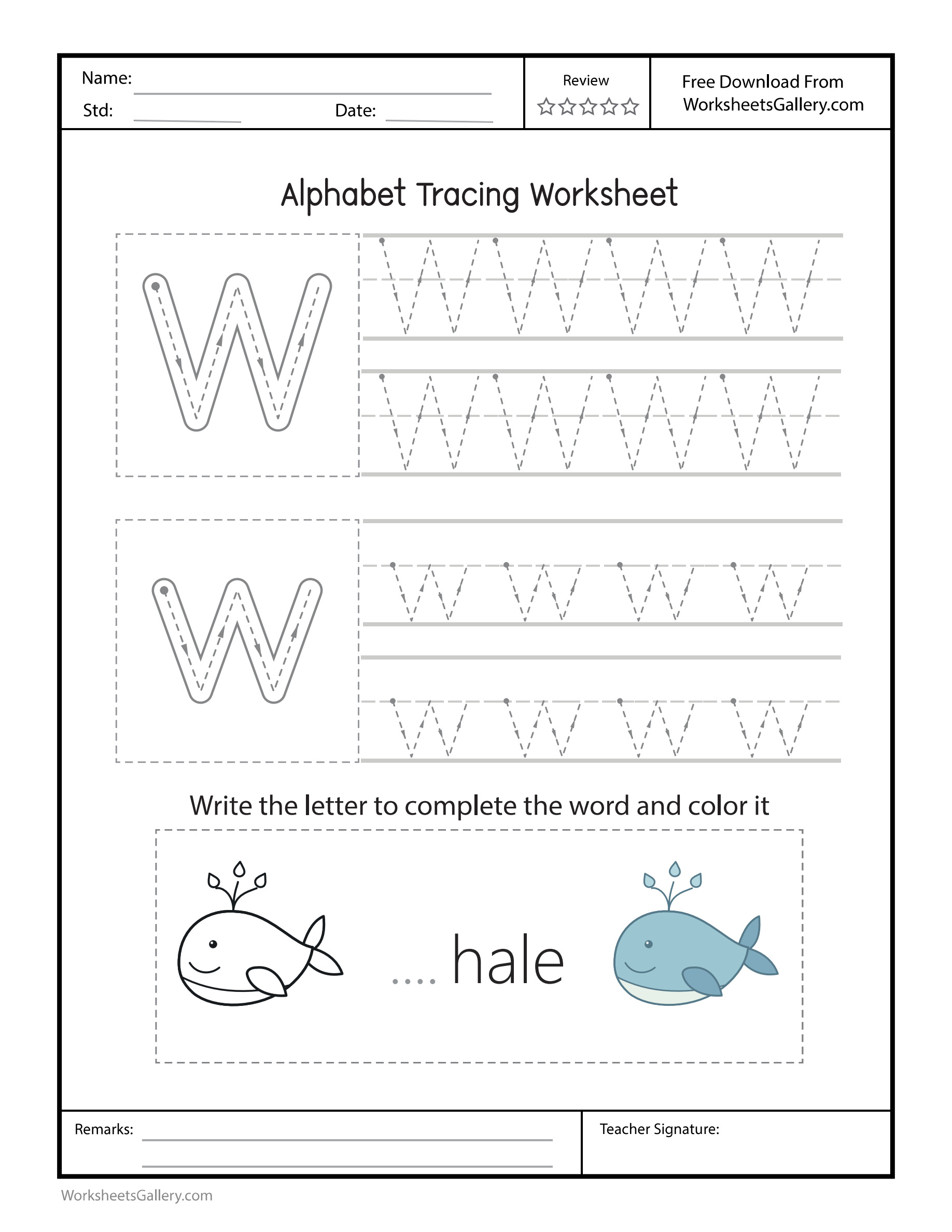
The Ww whale activity belongs to the complete A–Z letter-pair collection. One $4 purchase supplies all 26 clean tracing pages in a single alphabetically ordered PDF, including this whale valley map lesson.
A paper whale can carry a route through two valleys. The Ww Worksheet brings that changing path into a letter task: joined diagonals descend and rise twice, then help complete a whale label. Aiden and his grandmother use a blank blue card to plan their pretend sea map before choosing a small tracing attempt. Their story gives the mark a purpose while keeping the source model close. A learner can explain the low points with a gesture, compare the two cases and decide when to trade the pencil for a coloring turn.
What the Ww Worksheet puts on the map
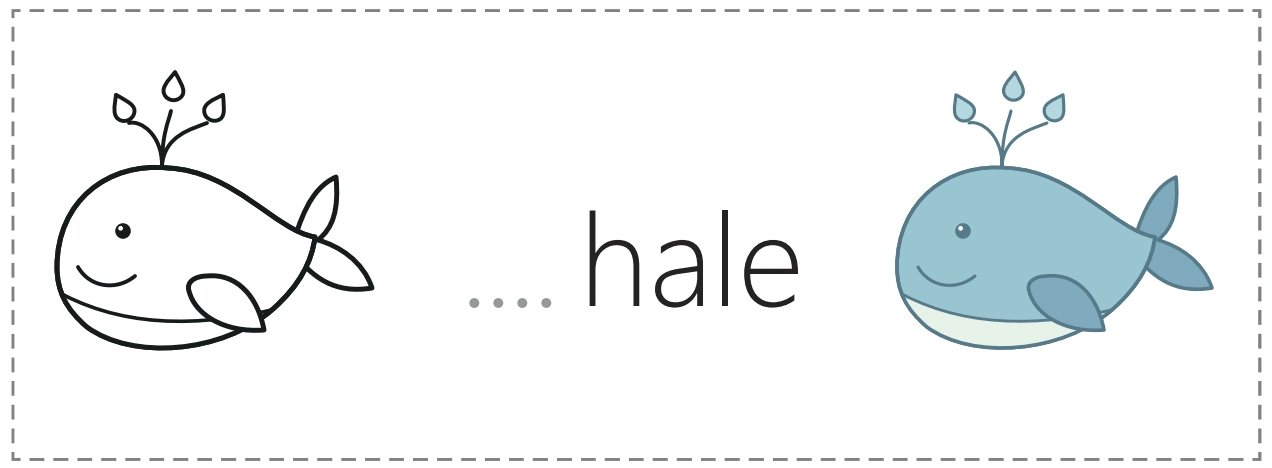
The Ww Worksheet includes an outlined whale with a colored companion and an unfinished picture word. Locate the gap before the existing hale. Only lowercase w belongs in that initial space. Read whale with the child after the addition, showing how one written contribution helps identify the subject. The illustration provides context, while an adult supplies the reading support for the complete label.
Whale is written with w followed by h. In many English varieties its beginning is pronounced /w/; some speakers preserve a different wh pronunciation. Ww Worksheet talk can acknowledge the family's natural speech without turning it into an error. The writing assignment remains one w before the printed h, so a child should not add an extra h or rewrite the supplied remainder.
An imaginative sea map is an extension to the Ww Worksheet, rather than an additional printed exercise. The sheet itself provides tracing, the initial gap and a coloring outline. A child may color the whale in a new way or describe where an imaginary whale travels. Keep that artistic freedom separate from the model's actual four connected sloping strokes.
Read the Ww Worksheet route as two low points
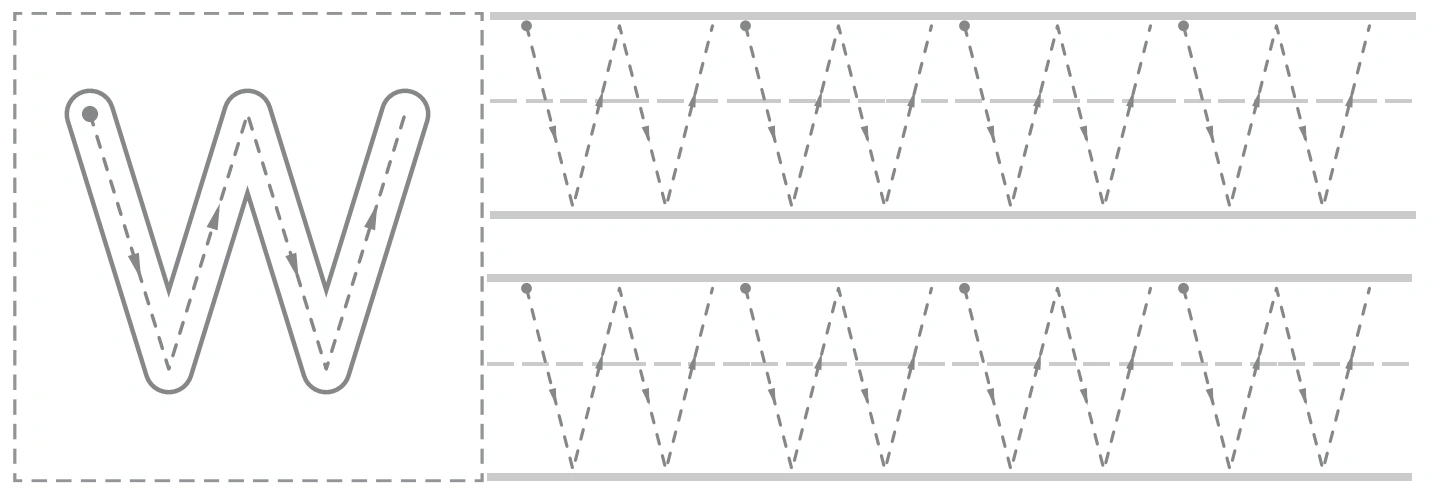
Follow capital W on the Ww Worksheet from its printed cue through the changing diagonals. Locate each low meeting and the higher middle turn. A broad finger route lets a learner notice the sequence before controlling it with a pencil. Do not let a story about valleys replace the actual guide: its arrows and proportions remain the reference for forming the letter.
Eight small capital forms sit in two Ww Worksheet rows. A single selected trace can reveal whether the child remembers both low points. If one is missing, compare a new large card with the source rather than covering the first attempt with more strokes. The specific question is where the route changes direction, not how many copies the learner can complete in a minute.
Small Ww Worksheet routes need room for both valleys
Lowercase w has its own large model and eight smaller examples on the complete Ww Worksheet. Compare the case partners, then inspect their different ruled heights. A learner may match W and w while still needing a broad surface to coordinate the changing slopes. Recognition and pencil scale do not have to reach the same level during one visit.
The Ww Worksheet route can become cramped if the child tries to squeeze both low points into a tiny space. Return to a wide blank card and inspect where the first rise ends before beginning the next descent. Leave the source visible throughout. A deliberate broad route can provide clearer evidence of understanding than a narrow shape whose crossings obscure the intended sequence.
Aiden's Ww Worksheet map desk at home
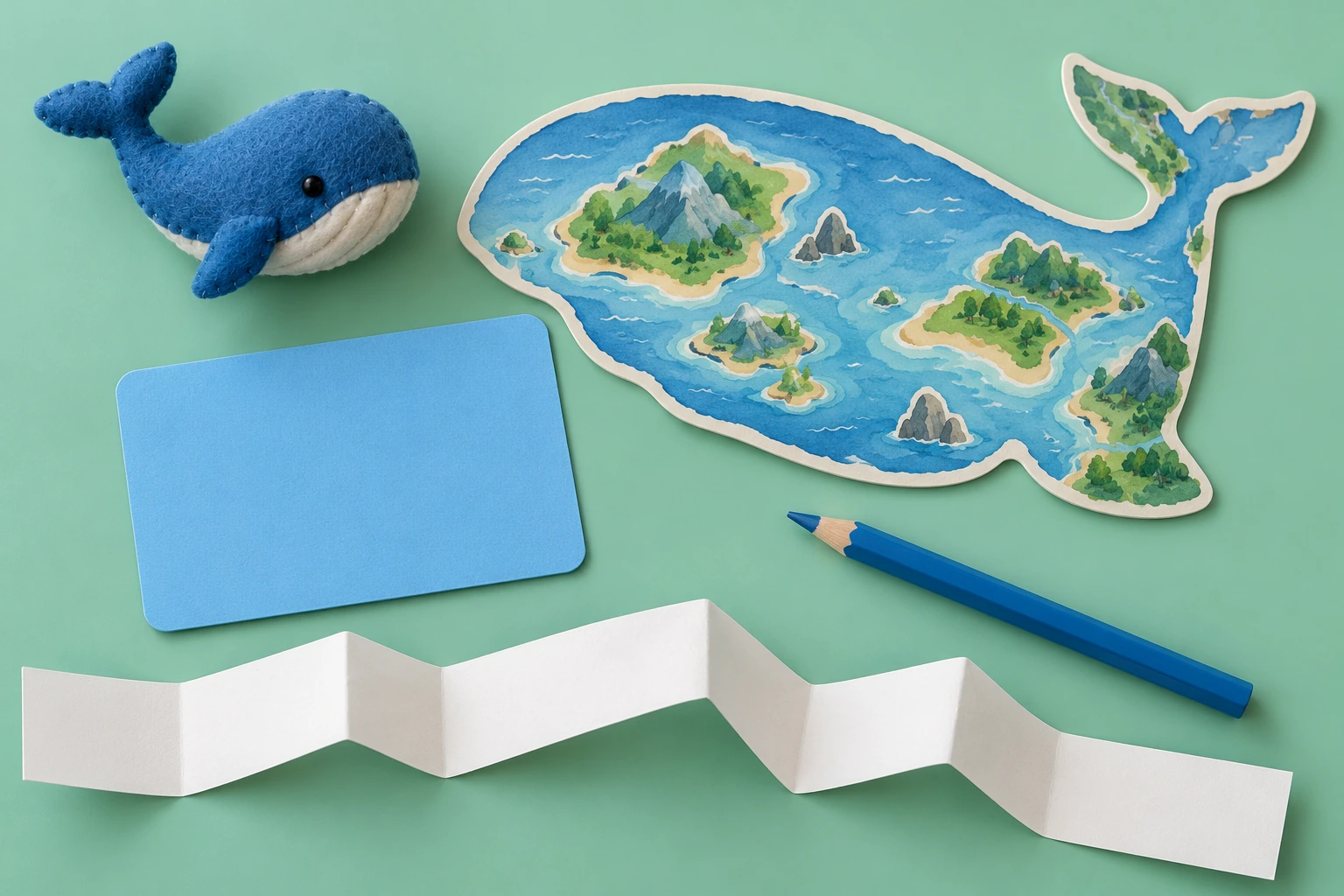
Aiden places a felt whale near an unprinted blue card. His grandmother uses the Ww Worksheet as their letter reference while they imagine a route for the whale. Aiden follows a large W with his finger, naming its two low places in his own words. She writes the longer map description separately, leaving him to choose an initial for a short picture label.
Their Ww Worksheet visit changes direction when the second valley disappears from a pencil attempt. They fold a broad paper zigzag, compare its turns with the model and decide which parts correspond. The folded prop is a way to discuss the route, not an answer to a new worksheet question. Aiden then chooses whether to try another letter or describe the whale's next imaginary stop.
At home, Ww Worksheet play can use a simple drawn whale and any blank card. An adult reads the complete word, checks which initial is missing and invites a manageable contribution. The learner can dictate a sea journey without independently spelling its places. This shared authorship makes the mark useful while protecting room for talk, imagination and a break from fine movements.
Six Ww Worksheet developments an adult can recognize
Ww Worksheet sequencing becomes visible in a gesture
Two low turns and an intermediate rise give the child several related decisions to plan. A finger can show their order while the printed model stays available. An accurate gesture may reveal understanding that a first cramped pencil version does not yet communicate clearly.
A Ww Worksheet comparison links cases through shape
W and w use similar connected diagonals at different heights. Matching their models connects letter identity with a visible route. Inspect size afterward so that a child who recognizes the pair still receives credit for that knowledge when smaller copying requires support.
Ww Worksheet endings give the route a stopping place
A learner can locate where the final rise ends instead of adding another valley. That deliberate stop matters as much as finding the beginning. Pointing to the source endpoint can turn an expanding zigzag into an inspection of a particular letter form.
The Ww Worksheet initial carries a written message
One lowercase w finishes the provided whale label. Reading it back shows what that contribution accomplishes. The beginner takes part in meaningful writing while an adult supports the remaining letters and any longer story about the pictured subject.
Ww Worksheet listening respects a written partnership
The existing h stays beside the supplied w in whale. A brief adult explanation can connect the spelling with the family's pronunciation without pretending that h is another missing answer. This is a useful distinction between identifying a written initial and describing a whole spoken beginning.
A Ww Worksheet record can guide another visit
Save one broad attempt and note which turn needed a cue. Returning to that observation gives regular practice a concrete purpose. The learner can compare a remembered route with the source rather than facing the undifferentiated instruction to finish every small model.
Six sea-map games beyond the Ww Worksheet
1. Make Ww Worksheet valleys with folded paper
Fold a wide paper strip into a simple zigzag and place it beside the capital model. Ask the learner to locate two low points and compare their connecting rise with the letter. Adjust the fold together. The paper does not need to match the exact printed proportions; its job is making direction changes easy to discuss before a finer drawing attempt.
2. A Ww Worksheet route told to a partner
One participant traces a broad W with a finger while another watches its sequence and endpoint. Change roles before deciding whether to use a pencil. The observer can point rather than recite formal stroke terms. Keep the source guide beside the pair so both can check a specific turn instead of guessing what an adult expects.
3. Choose a Ww Worksheet case for a map card
An adult makes W and w cards and names a case for the child to select. Compare the letter heights after a correct match, then switch card positions for another turn. This keeps recognition independent of location. An optional broad copy can follow, but it is not required to show that the learner identified the named partner.
4. A Ww Worksheet word beside an invented journey
Invite a child to draw an imaginary whale route on blank paper. Add an adult-written whale label, find its first letter and offer a separate space for a small w. Read back any dictated story. The map may be fanciful; its drawing should not be mistaken for a replacement diagram of the letter's exact formation path.
5. Listen with the Ww Worksheet whale nearby
Say whale and a familiar word such as water naturally, using the family's ordinary pronunciation. Discuss the written w when needed and compare a clearly different spoken beginning. A pointing response is enough. The turn is a supported conversation about a word and its spelling, not a test of dialect or independent reading of unfamiliar labels.
6. Inspect a saved Ww Worksheet zigzag card
Return to an earlier broad attempt and find its two low points together. Ask what is clear and which turn could use the source model again. A child may explain the planned change without making another written copy. That remembered route provides continuity across short visits and makes improvement visible through an observable feature rather than a general score.
Classroom Ww Worksheet roles at a map station
Children around three to six can share a small map desk through different contributions. One traces a broad route, one points to the low turns and another finds the whale initial. Rotate Ww Worksheet jobs and keep adult-read labels nearby. The Ww Worksheet supports different levels of participation while observations focus on a child's useful decision rather than a comparison of completed-row totals.
| A map-desk clue | A route to revisit |
|---|---|
| One low point disappears. | Track both Ww Worksheet valleys at a larger size. |
| The zigzag gains an extra dip. | Locate the final endpoint in the guide. |
| The gap contains wh. | Leave the printed h and add only w. |
Describe a turn the learner can find again. Ww Worksheet feedback can mention the second valley or deliberate stopping point. If the hand grows tense, switch to a folded prop, broad gesture or dictated sea story. The route can stay meaningful when the pencil pauses. A later brief return can use that same observation as its starting question.
Bring the Ww Worksheet into your printable collection
The original Ww Worksheet can be downloaded free. Eligible active members have a separate clean premium edition with website-name printing, domain marks and watermark wording removed, and no advertisements embedded in the PDF. The related complete alphabet package is $4 and includes all 26 clean worksheets merged into one purchased file, allowing adults to select a letter for each later activity.
Print the Ww Worksheet on US Letter paper in portrait, checking that its perimeter and pale tracing lines remain visible. Related choices include five starting pathways for early hand control, a further challenge in following changing routes and a number-five page connecting tracing with a picture. Parents can explore Reading Rockets' discussion of knowing letters and PBS KIDS for Parents' literacy activities. Let one carefully followed whale route give tomorrow's map a beginning.
Popular Worksheets
Printable resources families and teachers are downloading now.
 Free
 Free
 Free
 Free