
Rr Worksheet: 4 Wonderful Rabbit Route Sign Tasks
The Rr rabbit activity belongs to the complete A–Z letter-pair collection. One $4 purchase supplies all 26 clean tracing pages in a single alphabetically ordered PDF, including this rabbit leg direction lesson.
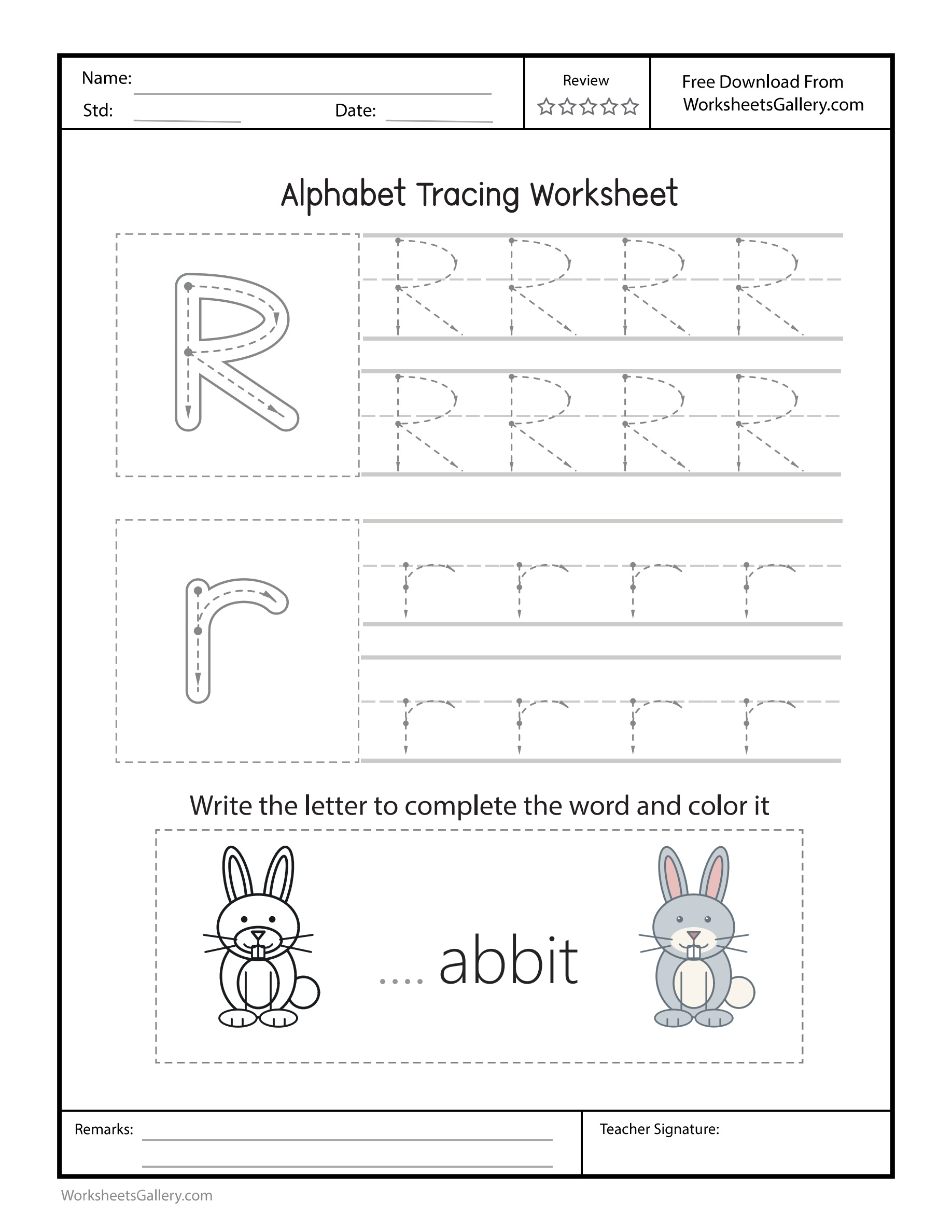
A rabbit route sign needs a beginning, and capital R needs a leg that its small partner does not share. The Rr Worksheet places those differences beside a picture word awaiting r, giving a child a reason to compare the forms before writing. The capital combines a bowl, upright and diagonal continuation; lowercase r finishes with a short open shoulder. For children around three to six, a pretend route-sign game can connect gestures and spoken observations with a few selected writing attempts. The rabbit story makes one written initial useful without demanding an independently spelled sentence.
A small Rr Worksheet shoulder stays open
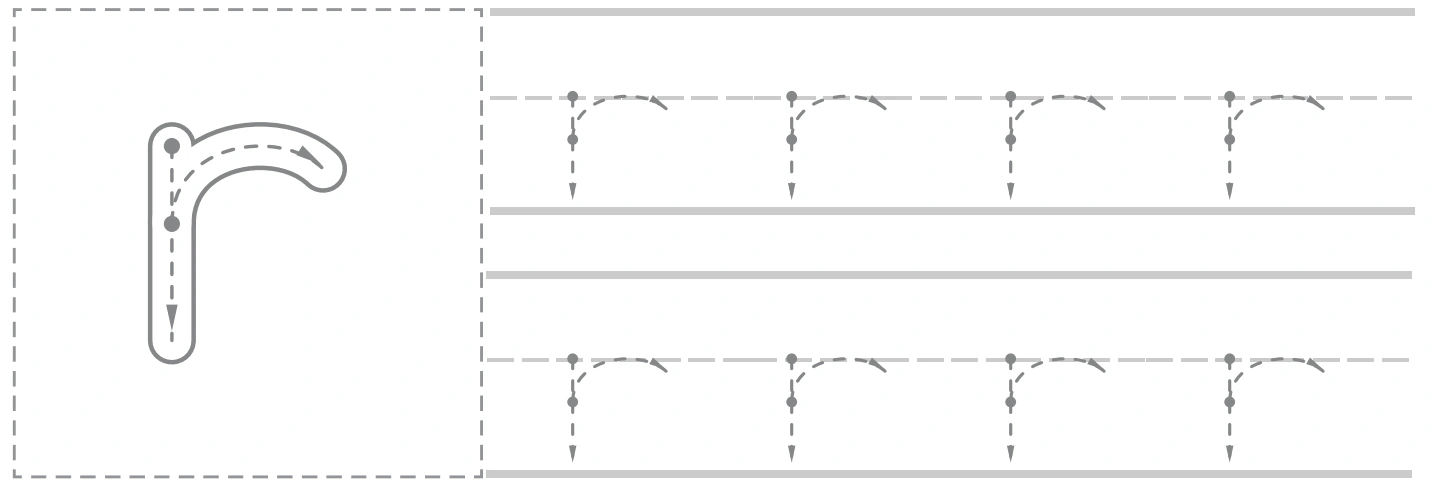
Look at lowercase r on the Rr Worksheet before borrowing any feature from the capital. Its upright and short shoulder do not form a closed round bowl. Locate the printed start and follow the source route with a finger. A learner can point to the open shoulder before controlling its small movement accurately with a pencil.
The Rr Worksheet lower rows offer eight small r examples. Try one, compare the shoulder with the large model and decide on a single adjustment. If the curve continues into a complete arch, a broad loose-paper version may make the intended ending easier to inspect. The next useful action is finding where this particular route stops, not automatically filling the rest of the row.
A child may recognize the Rr Worksheet partner accurately while drawing it in a form that resembles another small letter. Ask which case model belongs to R, then inspect the attempted movement separately. That distinction preserves a successful recognition response while giving the hand a clearer reference for the feature it still needs to produce.
The Rr Worksheet capital sends a diagonal leg outward
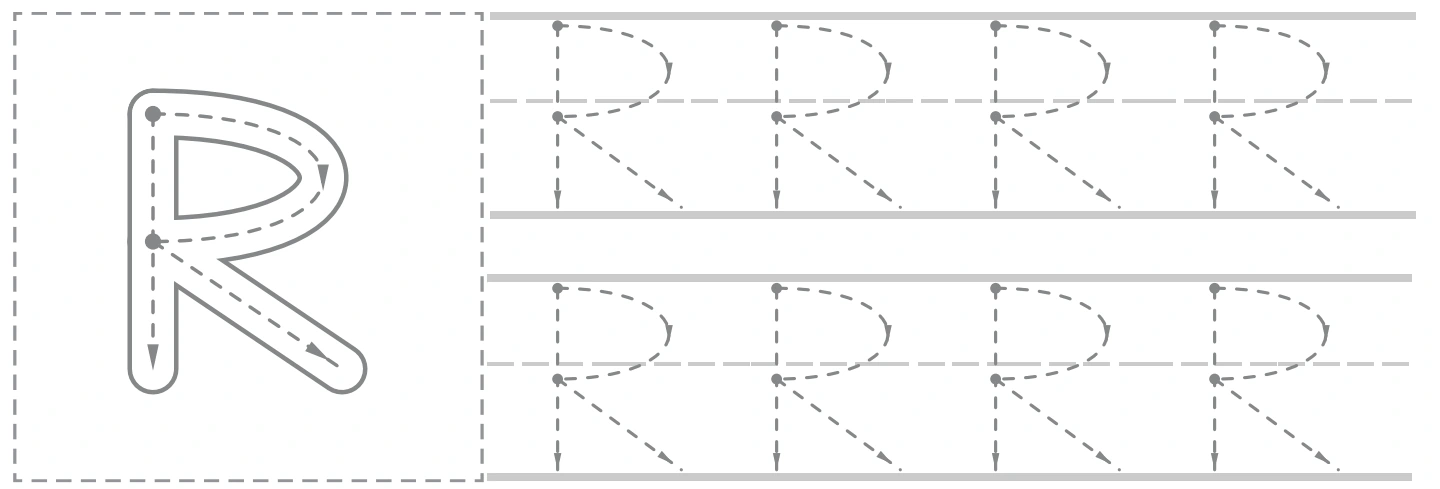
Capital R on the Rr Worksheet joins a rounded upper bowl with a tall upright and a diagonal lower leg. Locate the leg before following a small capital guide. A learner who makes only the bowl and stem has remembered part of the structure. The adult can point to the additional lower portion instead of requiring the entire form to be erased and restarted without explanation.
Follow the Rr Worksheet arrows and inspect where the diagonal travels from the body. A random line elsewhere would not have the same relationship. Use a large adult example or movable strip when the direction is hard to describe verbally. The Rr Worksheet source remains the evidence for the route, keeping the task more concrete than an instruction to make the whole letter look better.
The Rr Worksheet gives eight capital practice forms as well as the eight lowercase ones. Use them as flexible opportunities across visits. One learner may compare a single pair and finish the picture word; another may choose a short capital row. Stop when the writing is no longer being guided by the feature the child intended to inspect.
Complete the Rr Worksheet rabbit label
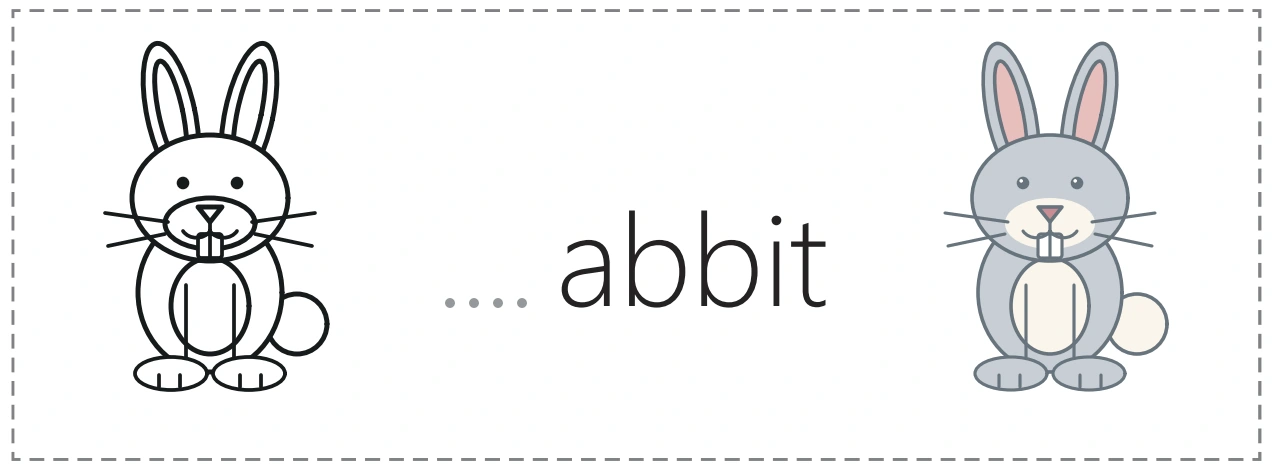
The Rr Worksheet already prints the letters after rabbit's initial, leaving r for the child to add. Name the animal and read the completed word together after that contribution. The picture supplies context while the small model supplies the actual letter form. An adult can read the full spelling without expecting a beginner to independently decode all of its remaining parts.
During Rr Worksheet talk, an adult can model rabbit’s initial sound and contrast that with saying the letter name R. A clear adult model is enough for this writing activity. A child can identify the written initial even when producing the spoken sound is still difficult, so precise pronunciation need not become a condition for being allowed to attempt the letter.
The Rr Worksheet outline and colored rabbit invite words such as ears, paws and whiskers. Those details can enrich the story without becoming extra strokes required in r. Let the child color the outline imaginatively after finding the intended initial. The colored partner helps identify the animal; it does not require every learner's artwork to look the same.
Bea checks an Rr Worksheet route sign

Bea and her uncle place a small felt rabbit beside unprinted direction cards for Rr Worksheet play. Bea wants a sign naming the rabbit's route. Her uncle reads the picture word, and she locates the lowercase model for its initial. They rehearse the short shoulder on a large card, then compare it with the capital's longer diagonal leg before she chooses a small writing attempt.
When Bea gives small r a capital-style leg, the Rr Worksheet offers a visible comparison. Her uncle asks which model she meant to use and lets her point to the small form's shoulder. They try a fresh broad route rather than repeatedly correcting the same tiny mark. The distinction concerns two actual case patterns, not whether Bea is trying hard enough.
At home, an Rr Worksheet visit can begin with a rabbit drawing or toy and one blank sign. Name the subject, select a case model and choose a short route or word-initial job. A longer route story can remain spoken or adult-recorded. The beginner's own written contribution stays clear enough to attempt without turning the game into a whole-message copying exercise.
Six Rr Worksheet observations for a route planner
An Rr Worksheet leg identifies a capital feature
The diagonal lower portion helps distinguish the complete capital from a simpler bowl-and-stem arrangement. Ask the learner to locate it and compare one attempt. A visible feature gives the next action a clearer purpose than demanding a generally neater result.
Rr Worksheet partners do not share every ending
The Rr Worksheet small shoulder is not a miniature capital leg. Naming and comparing both models helps the learner keep their routes distinct. A pointing response can show the connection before fine motor control supports confident production of both forms at the printed size.
Rr Worksheet direction can be explained with a gesture
An adult can ask where the diagonal goes or where the small shoulder finishes. A child's finger response may make the intended route clear without a long sentence. That information can guide a movement support rather than leaving the difficulty hidden behind a completed-row count.
An Rr Worksheet initial contributes to a full word
Adding r gives rabbit its written beginning. Adult reading connects the mark with the pictured subject and pretend sign. The remaining spelling can stay provided, making a meaningful communication role available without requiring independent spelling of a longer animal name.
Rr Worksheet picture language keeps the task engaging
Ears, whiskers and a route destination can support conversation around the letter job. The adult can separate those story details from the actual formation guide. A learner may enjoy the illustration while still understanding that the word gap asks for r rather than a rabbit drawing.
Rr Worksheet revision can preserve what already works
Notice a recognizable bowl or upright before focusing on a missing capital leg or an overextended small shoulder. A specific comparison lets the next attempt test one change. It avoids treating every uneven part as an equally urgent problem to be corrected at once.
Four rabbit-route tasks after the Rr Worksheet
1. A removable Rr Worksheet capital leg
Build a large capital using plain pieces, then temporarily remove its diagonal lower part. Compare the remaining shape with the complete source and ask what is absent. Restore the leg in the appropriate position, then inspect another correctly built example. The learner should use the model's actual structure rather than assume every adult arrangement is incomplete.
2. Find the Rr Worksheet shoulder's finish
Make a broad finger route for the small form while looking at the source. A partner watches for the point where the shoulder stops. Exchange the moving and watching roles afterward. The activity isolates the ending without requiring a very small pencil mark, offering another way to show understanding of the lowercase pattern.
3. A label for the Rr Worksheet route visitor
An adult writes rabbit on a loose sign and reads the whole word aloud. Ask the learner to locate the small initial and compare it with the source guide. Place the sign by the toy route. This gives the letter a written context without claiming that the child independently read an unfamiliar label simply because its picture was recognizable.
4. A broad Rr Worksheet direction sketch
Let a child draw an imagined path for the rabbit on blank paper, then add an optional R or r near a related adult-read label. Compare the chosen case with its guide before writing. The route drawing can be creative; it is not itself a diagram for how to form the letter. Keep those two purposes clear as the story grows.
An Rr Worksheet station for partners
In a classroom Rr Worksheet turn, one child can find the capital leg while another explains the small shoulder. Each may then choose a brief writing attempt or a broad route. Swap the observing roles, and record the feature that needed a cue. Different participants can pursue useful goals without being ranked by how many identical small models they completed.
| A part to inspect | A specific model cue |
|---|---|
| The capital has only its bowl and stem. | Find the Rr Worksheet diagonal lower leg. |
| The small form gains a long leg. | Compare r's shorter open shoulder. |
| The small shoulder closes into a full arch. | Locate the printed ending before another attempt. |
Keep Rr Worksheet feedback tied to one intended case. The capital leg and small shoulder need different plans. A learner aged three to six may require a broad card, a finger route or help keeping the paper steady. Offer that support before adding more small copies. If attention or grip becomes tense, spoken route play or coloring can carry the visit to a comfortable pause.
Return to the Rr Worksheet through a new pretend route or a single feature comparison rather than a demand to resume every unfinished space. Notice a remembered stopping point or correctly placed diagonal. The rabbit sign can gain one useful letter in a short visit. Regular practice remains more meaningful when the learner knows which part is being explored and can choose whether another attempt is worthwhile.
Choose an Rr Worksheet edition for printing
The Rr Worksheet original can be downloaded as a free sample. Eligible active members have access to its clean premium edition. That file clears the original website identity, domain and watermark lettering, and carries no adverts inside its pages. A separate $4 alphabet purchase combines the 26 clean letter sheets into one complete PDF through the related package link.
Inspect Rr Worksheet output in portrait US Letter format and keep both frame and pale routes visible in the printer preview. Try one copy before preparing a class set. Other visits can draw on deliberate early pencil paths, more shifts between line directions or a numeral joined to a picture task. Adult resources include PBS KIDS for Parents' growing-reader activities and NAEYC on supporting writing at home.
Popular Worksheets
Printable resources families and teachers are downloading now.
 Free
 Free
 Free
 Free