
Chick Coloring: 5 Brilliant Moves for Happy Artists
🐥 A little color plan for a big feathered friend
Yellow first, or orange? That small decision gives a young artist a place to begin. This Chick Coloring page pairs a roomy bird outline with a smaller finished example, so children can choose a color, find its destination, and try a few strokes before looking again. There is no numbered code to decode and no need to imitate every shaded feather. The guide offers a helpful direction while the child does the making. Set out a simple palette, leave some room for conversation, and let this Chick Coloring session unfold one body part at a time.
The smaller bird is the color guide
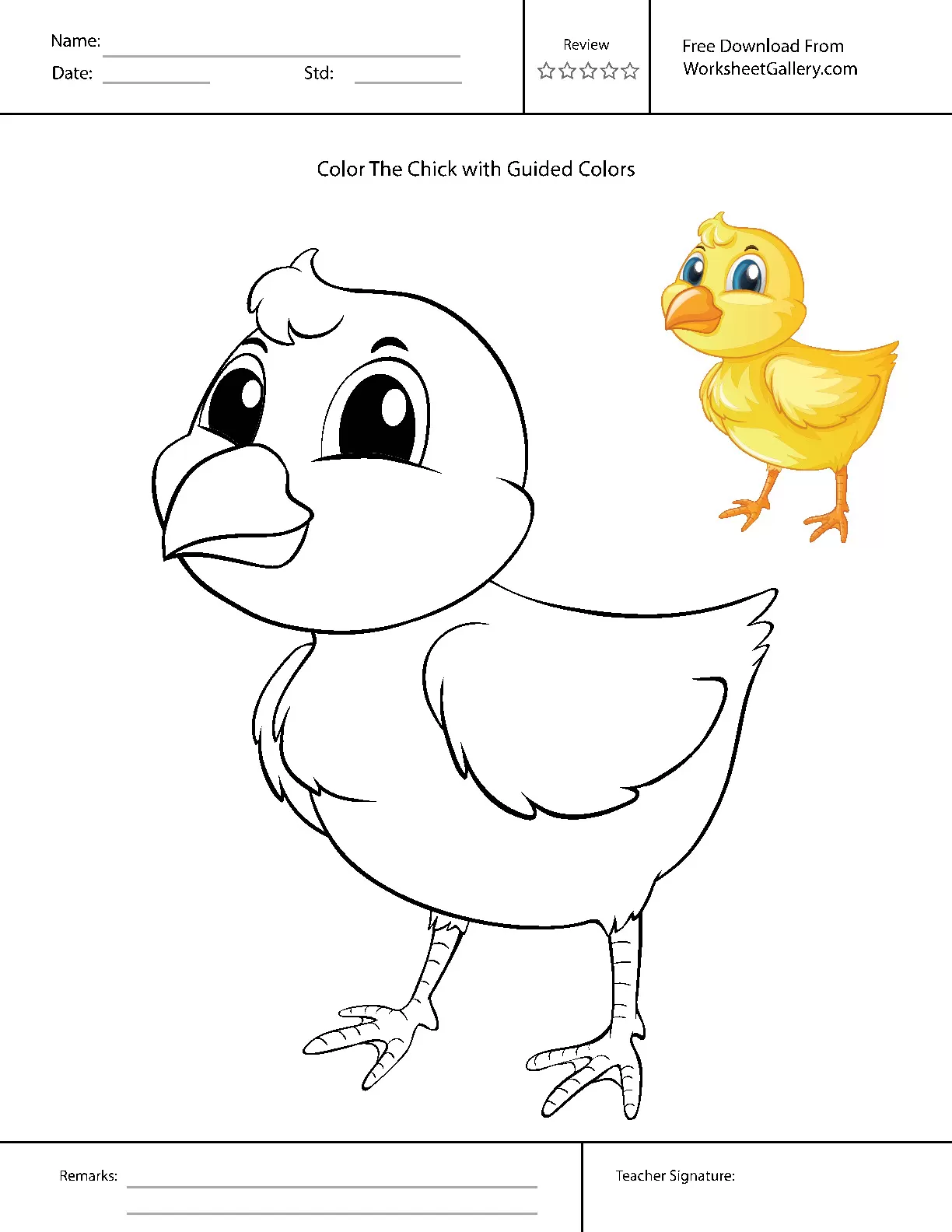
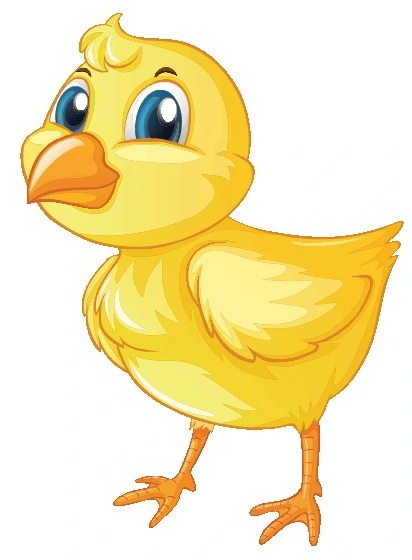
On the Chick Coloring worksheet, one large black outline occupies most of the page. A small colored chick sits above and to the right. Yellow dominates its feathers, orange appears on the beak and legs, and blue is visible around the eyes. These details provide the reference for Chick Coloring; there are no written color names, numbered sections, or separate matching boxes.
Start by pointing between corresponding parts: the small beak and the large beak, then a wing and a wing. Recognizing that two differently sized pictures show the same features is part of using the guide. A child can make a sensible Chick Coloring choice without naming every shade or reproducing the glossy finish of the example.
Five moves for a manageable Chick Coloring session
Gather the page, a few crayons, and scrap paper for testing. A yellow, an orange, and an optional blue keep the first choices manageable. The black eye details are already printed on the outline. Leave the white eye highlights alone rather than asking a child to recolor every small space during Chick Coloring.
| Move | What the child can do | A useful adult cue |
|---|---|---|
| 1 · Locate | Select one part on the small chick. | “Show me the matching part on your big bird.” |
| 2 · Choose | Pick a crayon that resembles the guide. | “Which of these would you like to try?” |
| 3 · Test | Make a small scrap-paper swatch. | “Does that mark look the way you expected?” |
| 4 · Fill | Add color to a comfortable area. | “There is space here for a broad stroke.” |
| 5 · Return | Look back before changing body parts. | “What will you color next?” |
These Chick Coloring moves can repeat as often as your learner finds them useful. Chick Coloring does not require five separate rounds or a fixed order for every crayon.
Broad feathers and narrow toes ask different things
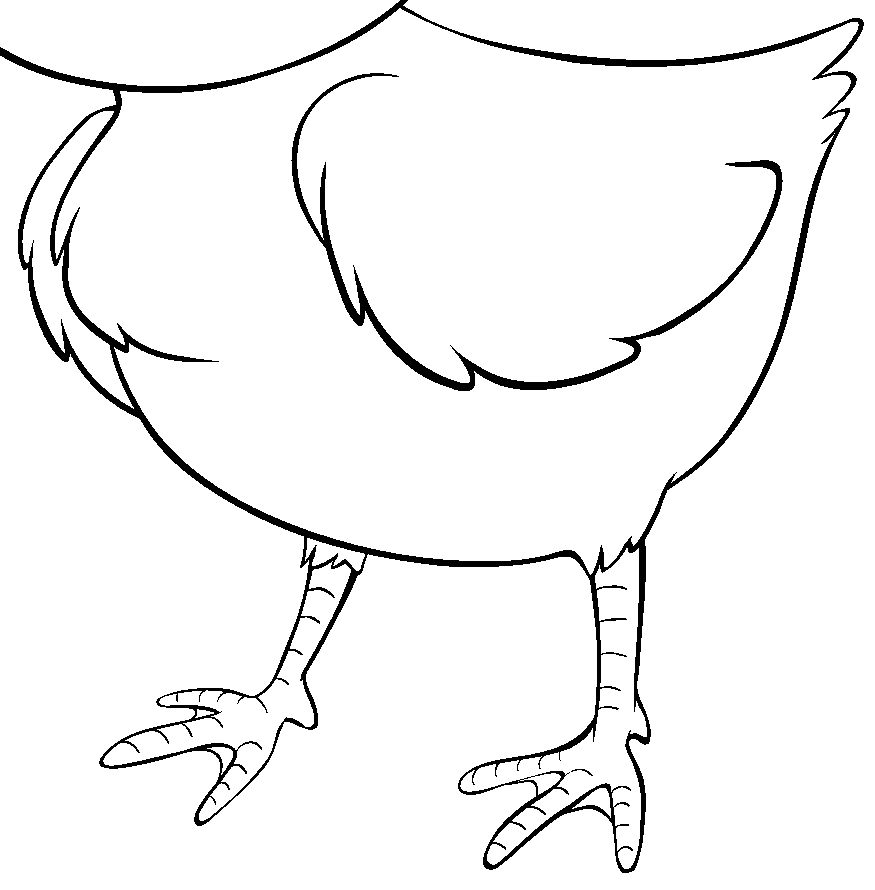
The head and body offer generous space for early marks. The toes, legs, and beak have narrower boundaries, so they demand a smaller movement. During Chick Coloring, begin with an area your child can manage, then offer a short turn at a finer detail. The aim is to notice a useful adjustment, not to demand identical precision everywhere.
A crayon held comfortably can make broad side strokes across the body and shorter marks near a toe. Keep the paper steady with the other hand and turn it if that makes a boundary easier to approach. Avoid constantly rotating or repositioning the child's drawing for them. A small Chick Coloring discovery is more valuable when the learner can feel what changed.
Fit the invitation to the artist
This Chick Coloring printable suits many preschool and early kindergarten learners around ages three to six, with expectations adjusted to their experience. A younger child may choose between two crayons and fill part of the body. A learner with more control might alternate between the reference and several smaller features.
Color naming, matching, and staying within a boundary are different Chick Coloring tasks. If a child can point to the matching yellow but cannot recall its spoken name, let the pointing count. If a color is hard to distinguish, place the choices beside the example and offer a verbal cue. Chick Coloring can remain accessible without requiring every learner to solve the same visual and language demands independently.
Choose easy-to-handle tools and a stable surface. Markers may bleed through ordinary printer paper, while paints add drying time and water management. A few crayons usually make a simpler starting setup for Chick Coloring.
Six learning opportunities inside the picture
Watch the decisions around Chick Coloring as well as the finished bird. A half-colored page may reveal a purposeful choice, a steadier stroke, or a new descriptive word.
- Visual attention
- Finding the same beak in two pictures asks the child to attend to a feature across a change in size.
- Decision-making
- Choosing a tool and checking its mark gives a small Chick Coloring decision an observable result.
- Hand control
- Varying a stroke to fit the body or a toe provides a reason to change movement size.
- Working memory
- Remembering a selected color briefly while moving from guide to outline offers a manageable recall task.
- Descriptive speech
- Words such as wing, beak, lighter, and orange can make Chick Coloring talk more specific.
- Self-observation
- Noticing that a broad mark filled an area comfortably helps the learner describe what worked.
These Chick Coloring opportunities combine cognitive, motor, and language practice. Repeated, varied art experiences provide room to develop them; a single Chick Coloring sheet is not a guarantee of any particular outcome.
Two places this bird can land
A home art session with a surprise orange
Eli picks a crayon that looks orange in the box, but its first mark is darker than expected. An adult offers scrap paper instead of replacing it immediately. He tests two choices, places the swatches beside the little bird, and decides which to use on the feet. Chick Coloring has given him a reason to compare materials before committing to the larger picture.
The adult keeps the Chick Coloring swatches nearby and asks whether the beak needs the same choice. Eli can answer by pointing. They stop when he has finished the areas he selected, leaving the body for another visit.
A classroom color basket shared by three
At a small table, a teacher sets out a common basket and gives each learner a Chick Coloring page. Before anyone starts, each child points to one feature and names or indicates a possible color. The teacher models testing a crayon, then steps back while children take turns with the shared choices.
One learner focuses on the body; another enjoys the toes. A short note about how each child used the reference helps plan a later Chick Coloring invitation. The pages need not look alike to show thoughtful participation.
A tiny swatch is permission to experiment
Let your learner make trial marks before Chick Coloring begins. The side of a crayon, its tip, and a lighter touch can produce noticeably different results. Describe what appears on the scrap rather than deciding which mark is best. “That one covers more paper” gives a child something concrete to investigate.
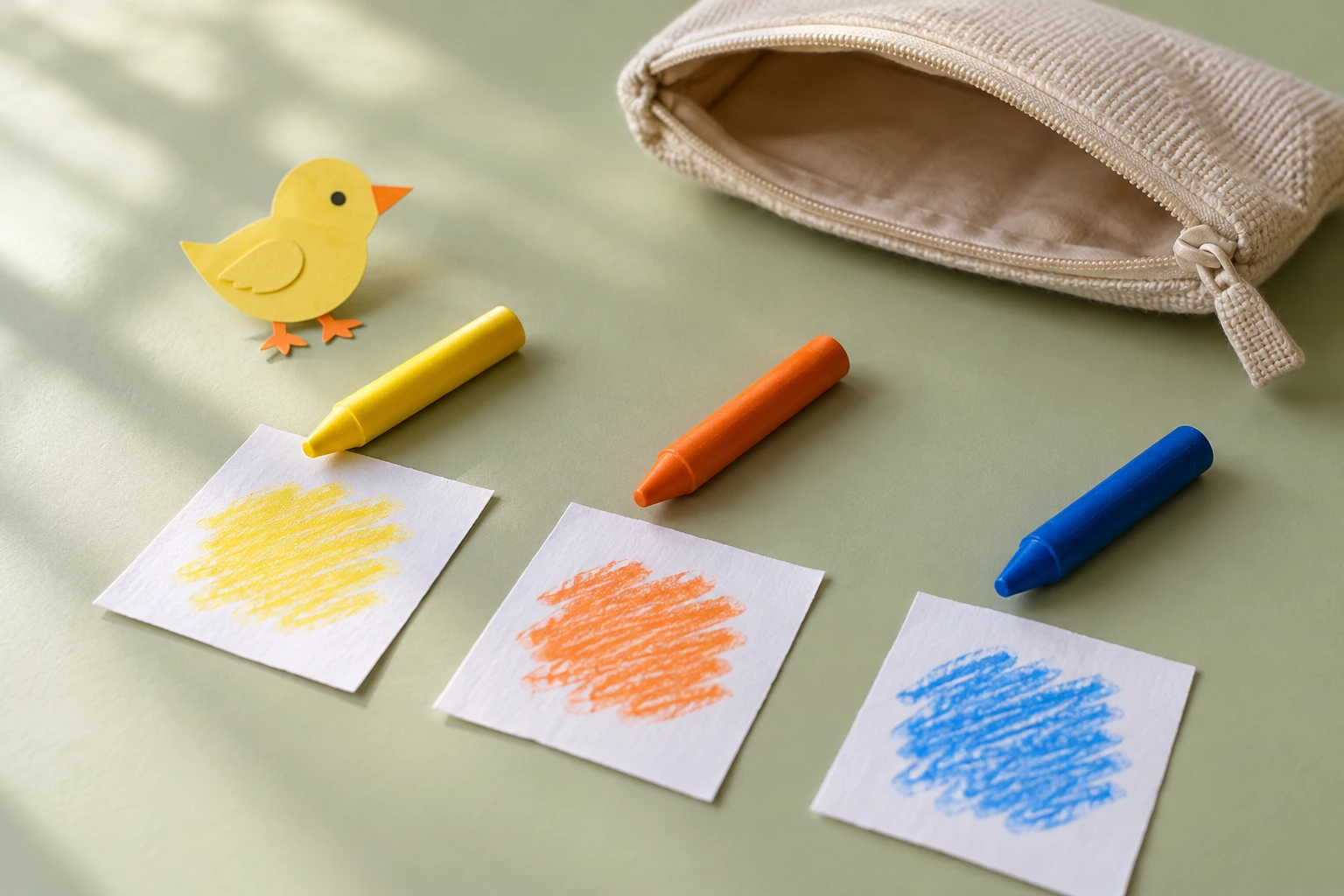
There is room for creative departures during Chick Coloring too. If the task is reference matching, explain that aim before starting Chick Coloring. After a few matching choices, invite a different palette on spare paper. Children can enjoy both guided observation and imaginative art when the purpose of each is clear.
Four fresh invitations after the crayons rest
- Build a light-to-dark feather strip. On scrap paper, try three pressures with one yellow crayon. Arrange the marks from palest to strongest and compare them with the Chick Coloring example. No extra shades need to be purchased.
- Play the silent body-part cue. An adult points to the colored chick's wing without speaking. The child finds the large outline's matching feature and gives it a name or gesture. Swap Chick Coloring roles so the learner can direct the adult.
- Trace a color through another subject. Carry an orange swatch to a carrot coloring activity. Discuss how a familiar color can serve a new picture after Chick Coloring.
- Make a reference-viewing window. Cut a window in spare card and place it over one part of the small example. Ask which feature is visible and what color you notice. Remove the card to reconnect the detail with the whole chick.
For a different guided model, explore the giraffe coloring sheet with a reference on another day. A cow coloring page can also extend the farm-animal conversation. Keep each comparison short enough that Chick Coloring retains its own purpose.
When the guide becomes too demanding
Common difficulties during Chick Coloring include trying to duplicate every highlight, pressing hard to hide a stray mark, and comparing a child's broad strokes with the polished reference. Reduce the demand: select a body part, offer two colors, or leave finer details until later. A line crossing the outline need not trigger a restart.
Ask before adding adult marks to the Chick Coloring page. Demonstrating on separate paper keeps the child's work recognizable as their own. In Chick Coloring, the guide is a tool for looking, not a verdict on the artist.
For regular practice, keep the page and a few chosen crayons together, then return at a familiar calm moment. Agree on a modest stopping point, such as one wing. Notice a specific change next time: “You checked the little beak before choosing.” That kind of feedback makes Chick Coloring progress visible without demanding a perfectly filled bird.
Bring the complete chick to the printer
The Chick Coloring download is a single portrait PDF measuring 8.5 × 11 inches, US Letter. The featured JPG displays the entire original worksheet, including its reference picture, learner fields, and remarks area. The close-ups within this guide are explanatory images; print from the PDF for the complete activity.
- Choose the free Chick Coloring sample for the original branded file. For an unbranded edition, log in to your account with a current qualifying membership, then use the premium download control.
- Open the saved Chick Coloring PDF and inspect the print preview. A color printer preserves the visual guide's yellow and orange cues; in grayscale, an adult will need to supply or explain the intended palette.
- Use US Letter paper, or fit the page to A4 and check the edges before printing. Make one test copy so the full chick and small reference remain visible.
The premium Chick Coloring edition omits website credits and domain names. It has no watermark; the PDF also carries no ads. Its exercise artwork stays intact. Member download controls supply this clean version, while the free sample keeps the source credits.
One deliberate choice is a worthwhile beginning. Let a child finish Chick Coloring with something they can describe: a tested yellow, an orange beak, or a broad stroke that finally felt comfortable.
Popular Worksheets
Printable resources families and teachers are downloading now.
 Free
Free
 Free
Free
 Free
Free
 Free
Free