
Master Short Vowels: 7 Crucial a e i o u Phonics Steps!

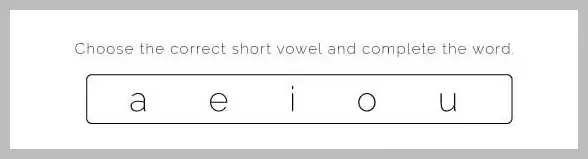
Discover the Magic of Short Vowels with Our Engaging Phonics Worksheet
Embarking on the journey of reading is an exciting milestone for any child, and mastering the short vowel sounds is a critical step. Our "Choose the Correct Short Vowel" printable is designed to make this foundational learning process both effective and enjoyable. This worksheet dives into the heart of early a e i o u phonics, specifically targeting the crucial a e i o u sounds. By engaging with familiar images and simple words, children will develop their ability to identify and use these essential vowel sounds, paving the way for stronger reading and spelling skills. It's a wonderful tool for parents and educators looking to reinforce basic phonetic principles in a playful, interactive manner.
Why This Worksheet is a Winning Choice
- Builds Foundational Phonics: Directly addresses the core short vowel sounds (a, e, i, o, u), which are building blocks for reading.
- Enhances Word Recognition: Children connect letter sounds to words, improving their ability to recognize familiar words.
- Develops Critical Thinking: Requires children to analyze words and choose the correct vowel, fostering problem-solving skills.
- Improves Spelling Skills: Reinforces the spelling patterns associated with short vowel words.
- Boosts Confidence: Successfully completing activities like this builds a child's self-assurance in their learning abilities.
- Supports Early Literacy Goals: Aligns with essential kindergarten and first-grade reading curriculum objectives.
Age Appropriateness and Skill Focus
This worksheet is ideally suited for children aged 4-6 years old. At this stage, children are typically developing their phonemic awareness and beginning to decode simple words. The visual cues and straightforward task make it accessible for preschoolers and early elementary students.
Skills Practiced:
Phonics, Short Vowel Sounds, Word Recognition, Letter-Sound Correspondence, Vocabulary, Fine Motor Skills (writing/circling), Visual Discrimination.
How to Use This 'a e i o u' Phonics Worksheet Effectively
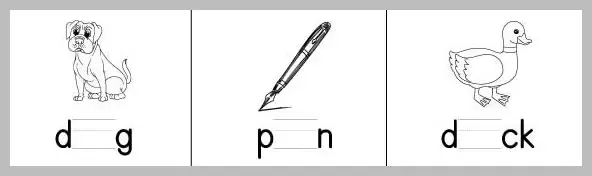
Integrating this worksheet into your child's learning routine is simple and can be adapted for various settings. Whether you're a parent looking for engaging homework or a teacher planning a phonics lesson, these tips will help maximize the learning experience.
Home Learning Scenarios
Scenario 1: Morning Skill Builder
Start the day with a quick phonics session. After breakfast, sit down with your child and the worksheet. Introduce the vowels at the top: 'a', 'e', 'i', 'o', 'u'. Point to the first image (dog) and say its name. Ask, "Does 'dog' have the short 'a', 'e', 'i', 'o', or 'u' sound?" Guide them to select the correct vowel. Repeat for each word. Celebrate each correct answer with praise!
Scenario 2: Quiet Time Activity
Offer this worksheet during a child's independent or quiet time. Ensure they have pencils or crayons ready. They can circle the correct vowel for each word. If they get stuck, encourage them to say the word slowly and listen for the vowel sound. This promotes self-reliance and problem-solving.
Classroom Implementation
Scenario 1: Phonics Centers
Set up a phonics station with this worksheet. Children can work individually or in pairs. Provide a basket of sharpened pencils and crayons. For an extra challenge, ask students to write the completed word next to the image after filling in the vowel.
Scenario 2: Small Group Instruction
Use this worksheet as a guided activity with a small group. Project the worksheet onto a screen or whiteboard. Work through each word together, prompting students to identify the short vowel sound. This allows for immediate feedback and targeted support for students who may be struggling.
Understanding the Skill Development
Cognitive Skills
This activity sharpens analytical skills as children must differentiate between vowel sounds. It also enhances memory recall as they connect sounds to letters and words.
Motor Skills
The act of circling or writing the correct vowel refines fine motor control, essential for handwriting. Precision in selecting the right letter is key.
Language Skills
Children expand their vocabulary by encountering new words and reinforce their understanding of phonetics, the relationship between letters and sounds.
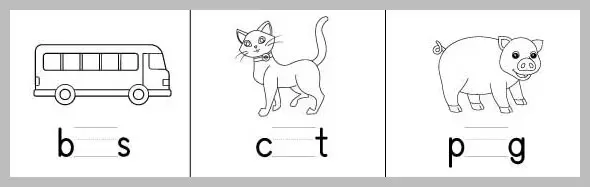
Common Challenges and Encouragement Strategies
Potential Pitfalls to Watch For
- Confusing Short and Long Vowels: Some children might naturally say the letter name instead of the short sound. Gently remind them to focus on the sound the vowel makes *within* the word.
- Difficulty Isolating Sounds: Segmenting words into individual sounds can be challenging. Breaking down words phonetically (e.g., /d/-/o/-/g/) can help.
- Fine Motor Struggles: For very young children, precise circling or writing might be difficult. Allow them to point to the answer or use larger writing tools.
- Overwhelm with Choices: Seeing all five vowels at once might be daunting. Focus on one or two vowels at a time if needed.
Fostering Continued Practice
- Positive Reinforcement: Offer specific praise for effort and correct answers. "Great job listening for that short 'a' sound in 'cat'!"
- Make it a Game: Turn it into a race against the clock (for older kids) or a "find the vowel" treasure hunt.
- Connect to Real Life: Point out words with short vowels in books, on signs, or during everyday conversations.
- Vary Activities: Supplement with other phonics games, songs, or reading aloud to keep learning fresh.
- Celebrate Progress: Acknowledge milestones, like mastering all short vowels or completing the worksheet independently.
Extend the Learning: Fun Activities Beyond the Worksheet
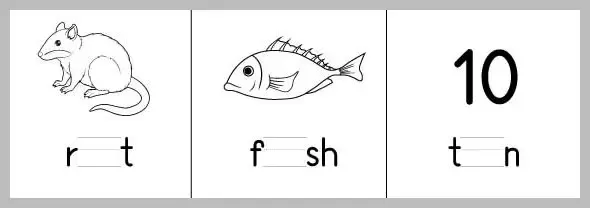
Solidify the understanding of short vowels with these engaging extensions that turn learning into play.
Creative Extensions
- Vowel Sound Sorting: Cut out pictures of objects that start with or contain short vowel sounds (e.g., cat, hen, pig, top, sun). Have children sort them into piles based on the vowel sound.
- Word Building with Magnetic Letters: Use magnetic letters to spell out the words from the worksheet (dog, pen, duck, bus, cat, pig, rat, fish, ten). Encourage children to identify the vowel in each word.
- Storytelling Time: Create short stories that heavily feature words with specific short vowel sounds. For example, a story about a "fat cat sat on a mat" for the short 'a' sound.
- Rhyming Fun: Practice rhyming words that share short vowel sounds. For instance, with 'pen', you can use 'hen', 'ten', 'men'.
Interactive Games
- Vowel Bingo: Create bingo cards with short vowel sounds or simple words. Call out words, and children mark the corresponding vowel sound or word on their card.
- Sound Charades: Act out words that contain short vowel sounds. Children guess the word and identify the vowel sound.
- Picture Match-Up: Prepare pairs of picture cards and word cards. Children match the picture to the word containing the correct short vowel sound.
Why Children Love This Activity
Children often enjoy this type of worksheet because it involves recognizable images, making abstract concepts like letter sounds more concrete. The clear task of choosing a letter is less intimidating than free-form writing. Success in identifying the correct vowel provides a sense of accomplishment, and the visual nature of the worksheet appeals to their developing senses. Plus, the opportunity to use crayons or pencils can be a highlight!

Download Your Free Printable Today!
Ready to help your child master short vowel sounds? Download this a e i o u Phonics worksheet now! It's completely free, printable, and comes with no ads or watermarks, ensuring a clean and focused learning experience.
You can also explore our full library of free educational printables for more learning fun!
Popular Worksheets
Printable resources families and teachers are downloading now.
 Free
Free
 Free
Free
 Free
Free
 Free
Free