Big Feelings, Little Words: Helping Children Express Emotions and Develop Self-Regulation
A short phrase or a gesture can tell a trusted adult what to do next. Rehearse useful messages while children are ready to play and talk.
After a block tower falls, Noor pushes the basket away and reaches for her teacher's sleeve. A few minutes later she points to a picture meaning “help” and says, “Again.” The reaching, pointing and word all tell the adult something. Young children often communicate big feelings in pieces before they can explain an experience from beginning to end. These home and classroom routines connect a child's signal with a useful phrase, a supportive response and a small next action. Three familiar worksheets can provide pretend situations for practising when everyone is ready.
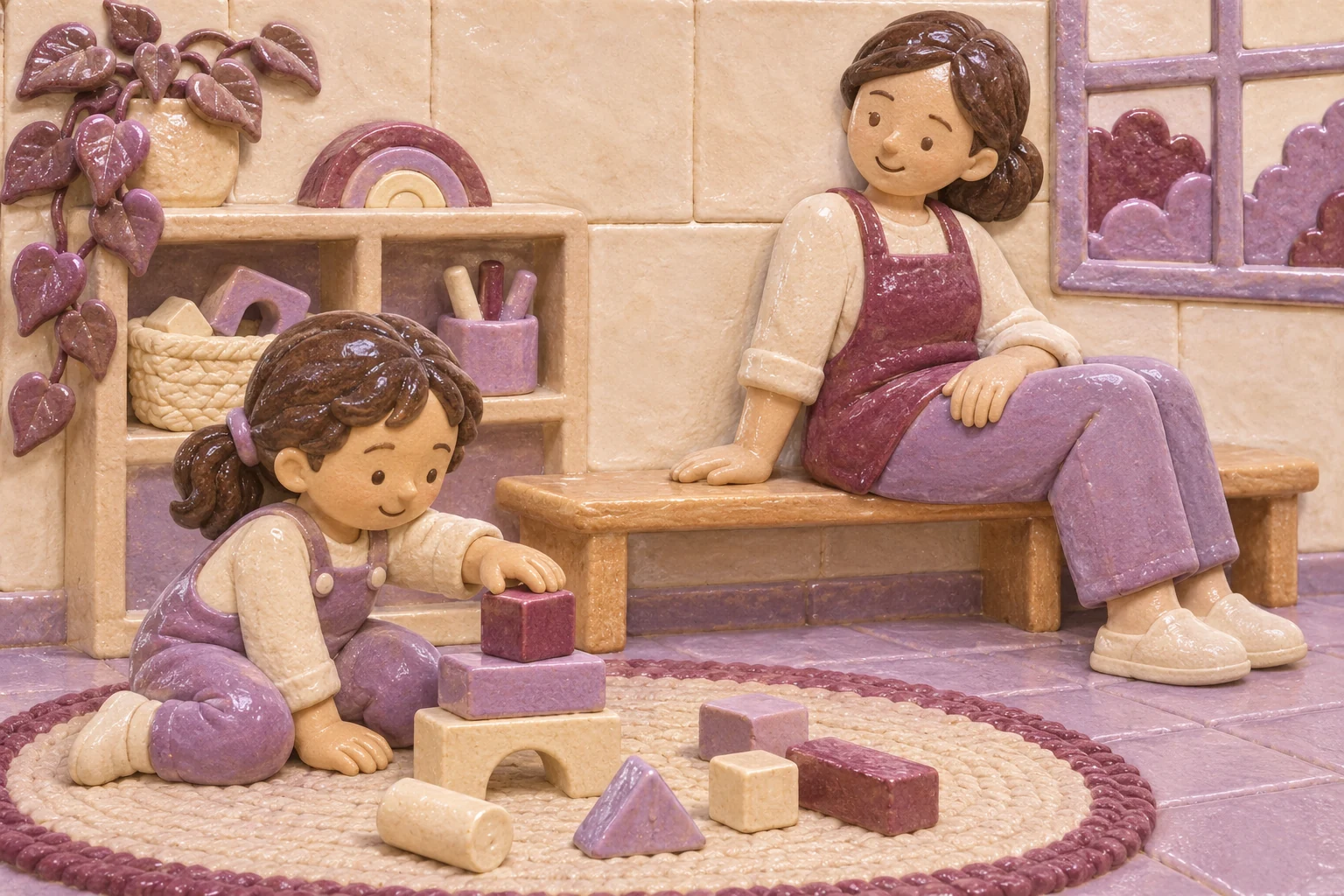
The adult sits within reach while the child handles the blocks on the rug.
Begin with what happened between you
“Your tower fell. I'm here.” That short statement gives the moment a beginning and tells the child who is available. Big feelings can make it hard to listen to several sentences or choose among many options. An adult who notices what just happened can say less, move a little closer if welcome and wait. Around other children, creating some space for a calm exchange can protect the child's privacy. If something unsafe is happening, first move people or materials to safety and use a clear, brief boundary.
An adult might then say, “You might be disappointed. You were building it high.” A tentative label is an invitation. A child might shake their head, say “mad,” point to the blocks or skip the label altogether. Take their response seriously. Accept their first language, signs, picture choices and familiar communication tools. A child who pushes a picture for space away may be telling you that the bigger need is to have someone stay.
Big feelings can come with very small messages
| What the adult sees or hears | Something the adult can say | What a child might communicate |
|---|---|---|
| A child backs away from a noisy table | “Would you like space or for me to stay beside you?” | A point toward the quieter chair. |
| A friend has taken the blue crayon | “You were using blue. I can help you ask.” | “Still using it,” “turn,” or a gesture. |
| A child grabs your sleeve after a fall | “I’m here. Show me what you need.” | Reaching, pointing or asking for help. |
| A child walks away after saying “stop” | “You got my attention. I'll keep the materials here.” | A word or sign that gives them a safe exit. |
| Two children remember an event differently | “I'll listen to you one at a time.” | One detail about what happened or a thought to share later. |
Avoid treating a single signal as a code with one universal meaning. Stamping feet might be excitement during a game or protest at the end of it. Offer a short interpretation, then watch what the child does as you respond. Families can share the words, signs or gestures they use at home. A teacher may recognise a child's signal sooner after hearing what it means during a familiar routine.
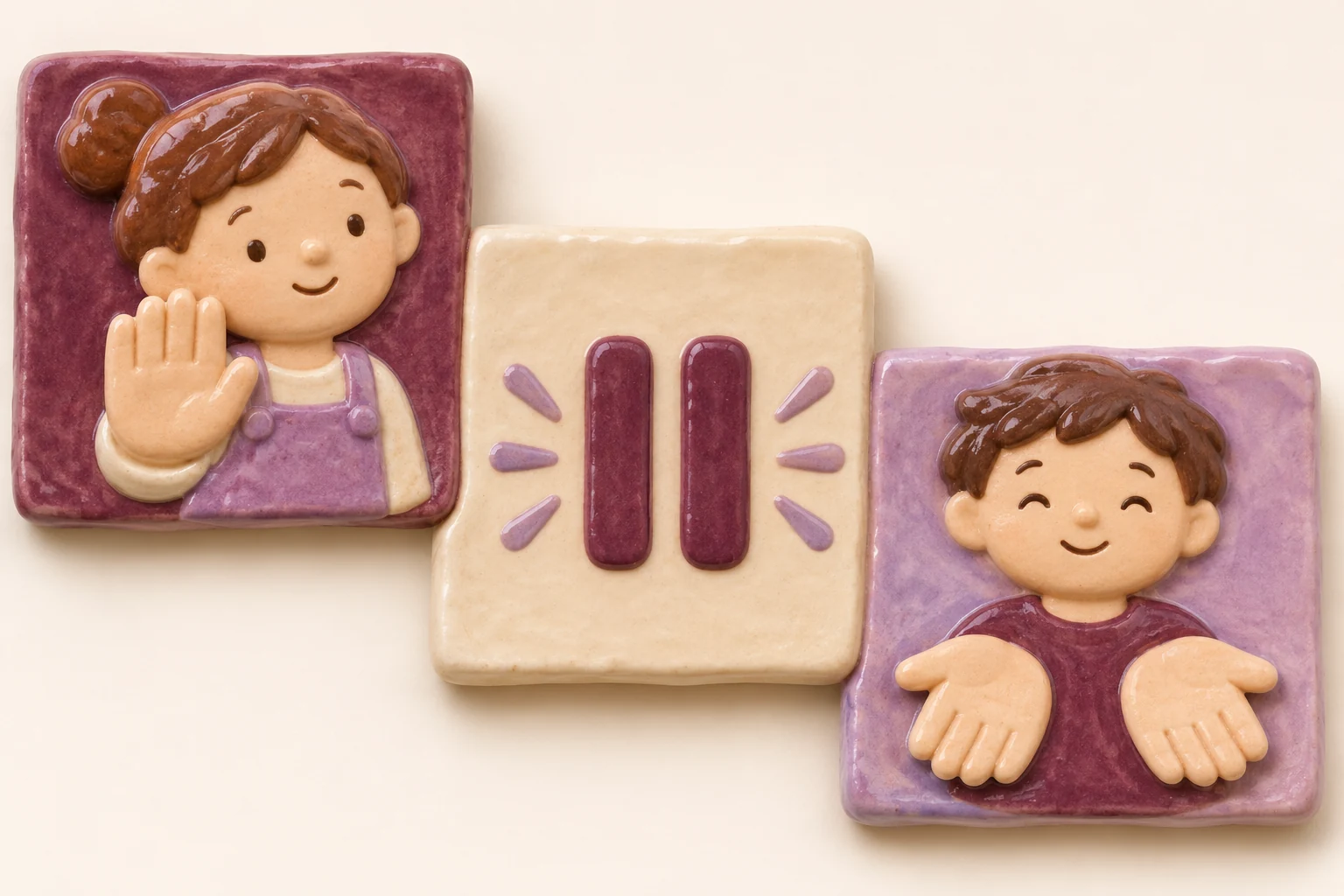
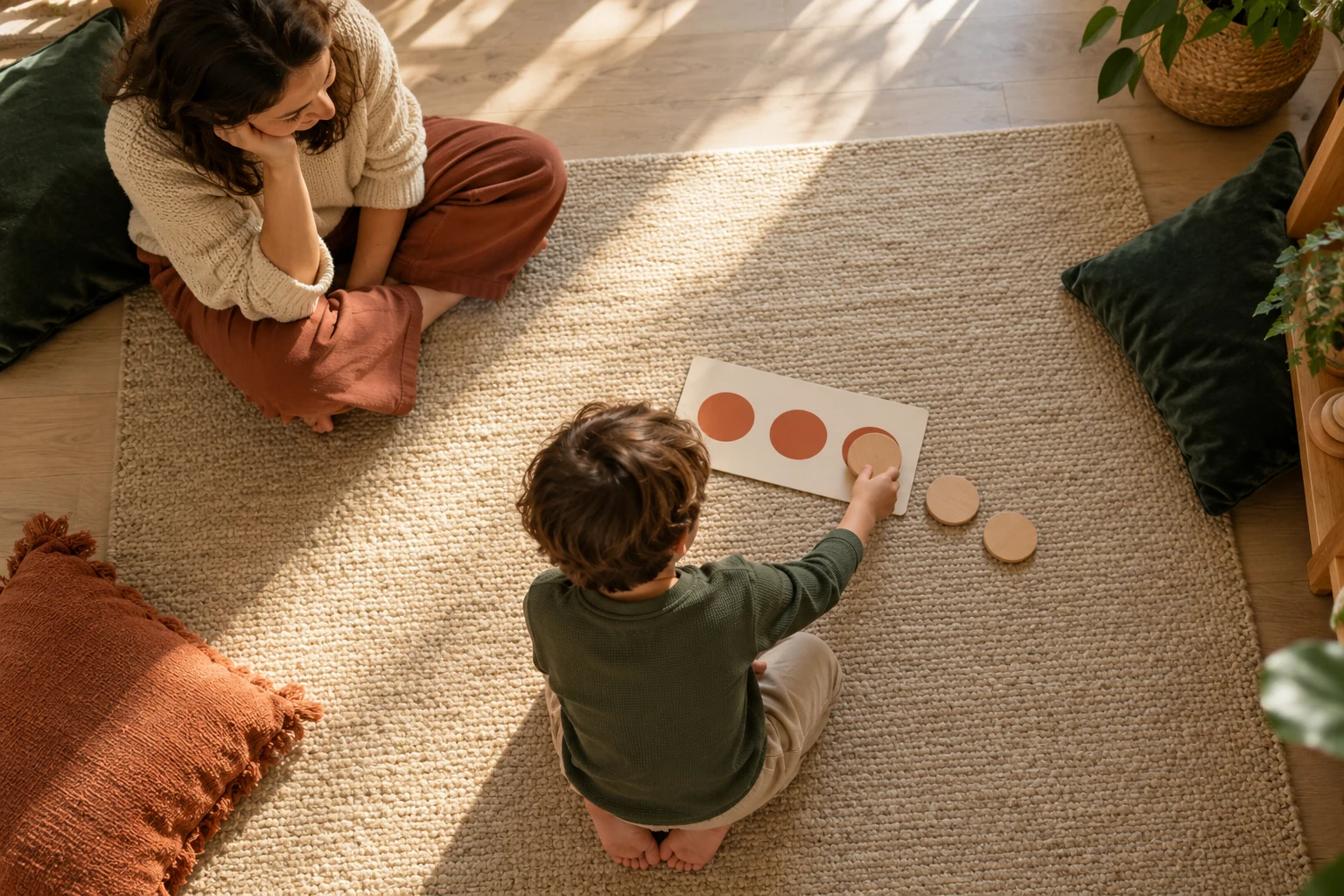
The symbols can prompt a discussion about stopping, waiting or asking for support.
From an adult's help to a child's own next move
The Office of Planning, Research and Evaluation practice brief on early self-regulation describes co-regulation as support adults offer through a warm relationship, a supportive environment and practice with skills. In a preschool room, those pieces might be a trusted adult, an accessible low-stimulation area and a chance to practise saying or pointing to “pause” before a game starts. At home, they could be a familiar voice, a safe place for a broken construction and a caregiver willing to help the child choose when to return.
- Describe one thing you saw. “The green piece came off” gives both of you a concrete event to start from. Check your voice and speed when your own frustration rises.
- Offer an emotional word or a choice of support. Use either two clear options or a single model phrase. Wait long enough for a gesture, an expression or a short answer.
- Respond to the message. Move slightly away if the child asks for space or show them where their work can wait if they ask for a break.
- Revisit one step later. Ask what helped. Make “help,” “space” or “save it” available again, then give the child another chance to direct the response.
A useful distinction for the adults in the room
Self-regulation includes finding a workable way to respond to a feeling or event. A child who requests more time, leaves a noisy corner or asks for an adult can be actively regulating while still upset. A quiet room may make this easier for one child. A familiar companion may matter more to another. Listen for the request underneath the first words. Adults can respond to that request while keeping a clear boundary about what another child can safely do nearby.
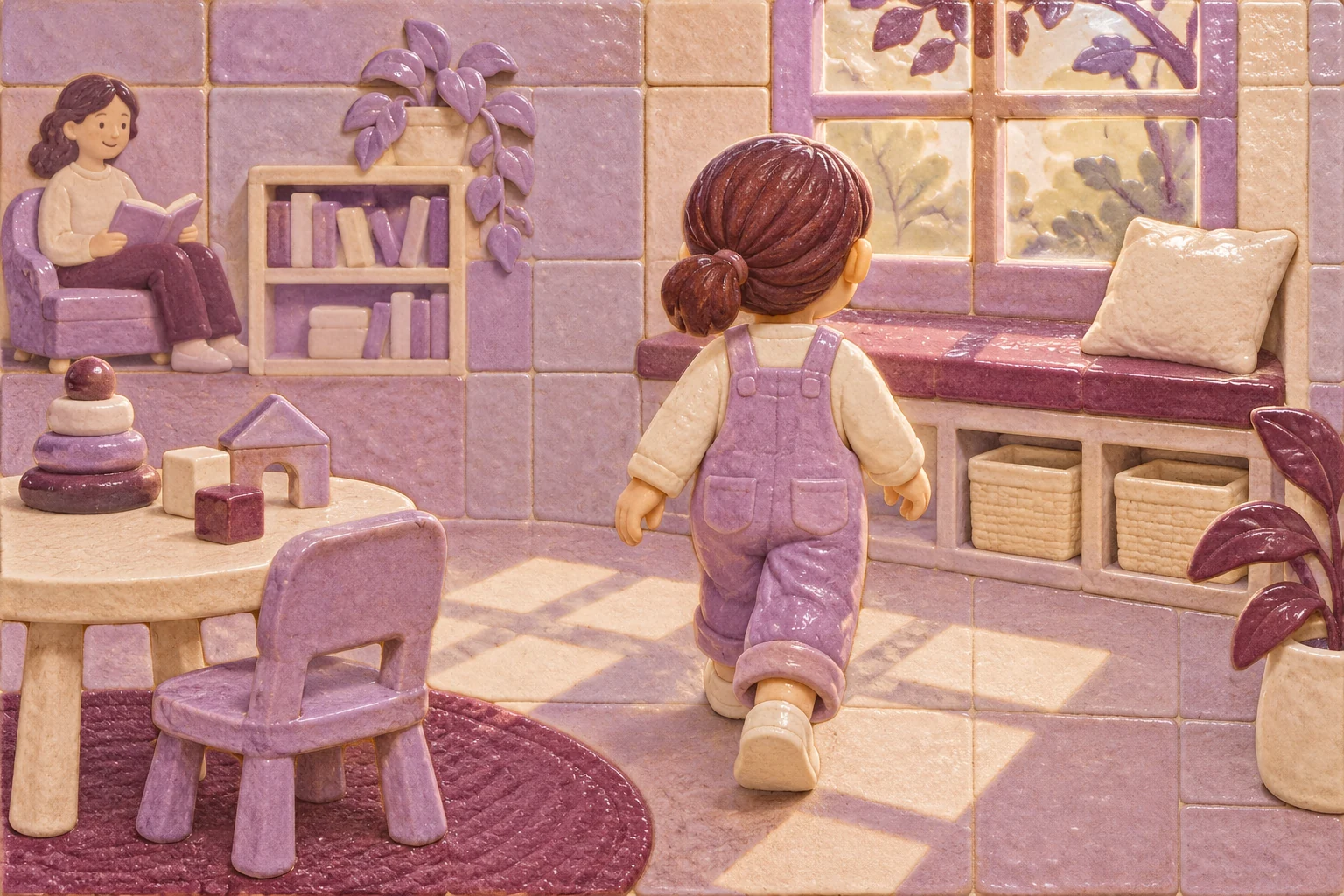
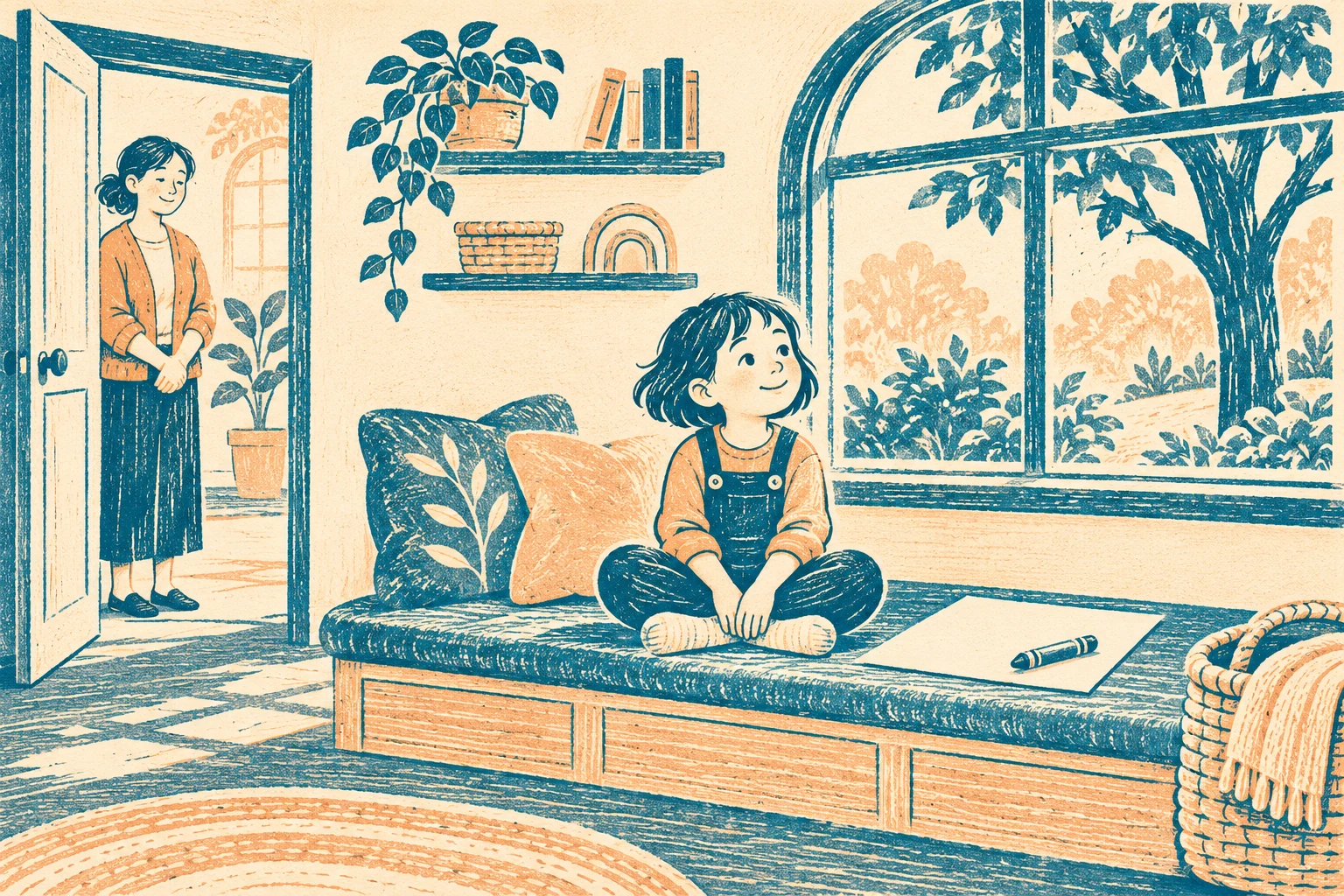
A window seat gives the child a visible destination while an adult remains nearby.
Two scenes worth slowing down
One crayon, two stories
At a shared drawing table, Ren reaches for the only cobalt crayon. Elif has set it down to draw a bridge line in grey and still needs it. Ren takes it and Elif calls out, “Mine.” The teacher puts the crayon on a clear patch of the table while both children can see it. She names each plan in a few words. Elif points to the river. Ren says, “Sky.” The group can now talk about whose drawing was still in progress and what colour or turn is available. The emotion was part of a real disagreement, and each child's words gave the adult something to work with.
A departure is harder than expected
A caregiver usually lets their four-year-old choose which tote carries home a library book. Today the tote is forgotten, and the child holds the book against their chest and stops at the door. The caregiver says, “We planned on the bag and it isn't here. You can hold it or ask me to.” The child leans closer and lets the adult carry it. Later they draw a simple bag picture for the place where they leave their shoes. “Did you want another minute or help with the book?” is a question that can wait for another time.
Five changes that tell you a message is working
- Children find a starting word. “Stop,” “space” and “help” each give an adult a clearer next action than a general demand for quiet.
- Children correct a guess. A child who says “I was worried” after hearing “You looked angry” has added important information.
- Peers can ask before acting. “Do you need it back now?” gives another child a turn to describe their plan.
- Adults offer more accessible choices. A picture or object can make a request usable when a long sentence is out of reach.
- Children can help repair a difficult moment. They may help rebuild, replace materials or wait for the person who needs more space.
Practise when the feelings belong to an imaginary character
For Good Sight Word Worksheet: 5 Happy Story-Choice Activities, read the illustrated story-choice example together. When a character says a book is good, invite the child to give a reason and suggest a more specific feeling, such as curious or excited. This is a word-reading page with space for a conversation people can choose to add. Let the learner use a picture or act out a possible feeling if they are still getting comfortable with the vocabulary.
Show the two sailboats in Number 2 Worksheet: 6 Powerful Games for Happy Sailors and offer voices for the imaginary sailors. “Can I use that place when you finish?” gives one sailor a way to wait near the dock. The task on the page concerns number two. Use the turn-taking problem as a short pretend conversation before or after counting. End when interest in the scene is still present.
With Caterpillar Color Play: 6 Brilliant Segment Stories, use one segment or the leaf as a place for the child to point when telling a story. Say, “What happens if the caterpillar wants someone to wait?” Accept different answers from the same picture. Children may choose colours independently of the story. If a child offers a word in another language, ask how they would like it to sound in the retelling.
Four rehearsals for quiet moments
Give a puppet a request
Put a puppet near two objects it could want and have it grow quiet. Let the children give it a signal or word. Respond as if the puppet had spoken. Try a different signal on a later turn and see whether the adult responds differently when the puppet asks for help instead of space.
Make a picture for “stay nearby”
Ask what would show that a person wants company while taking a pause. Let children design a card for a shared book or talk about what an existing symbol would mean in their room. Use the card in a brief pretend scene and offer a way to communicate that someone has changed their mind.
Carry the message between two people
Have an adult pretend to be a partner who has gone to get paper. Ask the child what message should be waiting when the partner comes back. “I saved your place” and “Please bring the other block” both tell the partner what to do. Let gestures or quick drawings carry the message, too.
Plan one repair
If an imaginary tower falls on a pretend street, the characters might clear the pieces, check what the other builder needs or put up a sign indicating the road is closed. Invite a child to choose a helpful action. Practising with pretend characters can make practical repair language easier to use in a real moment.
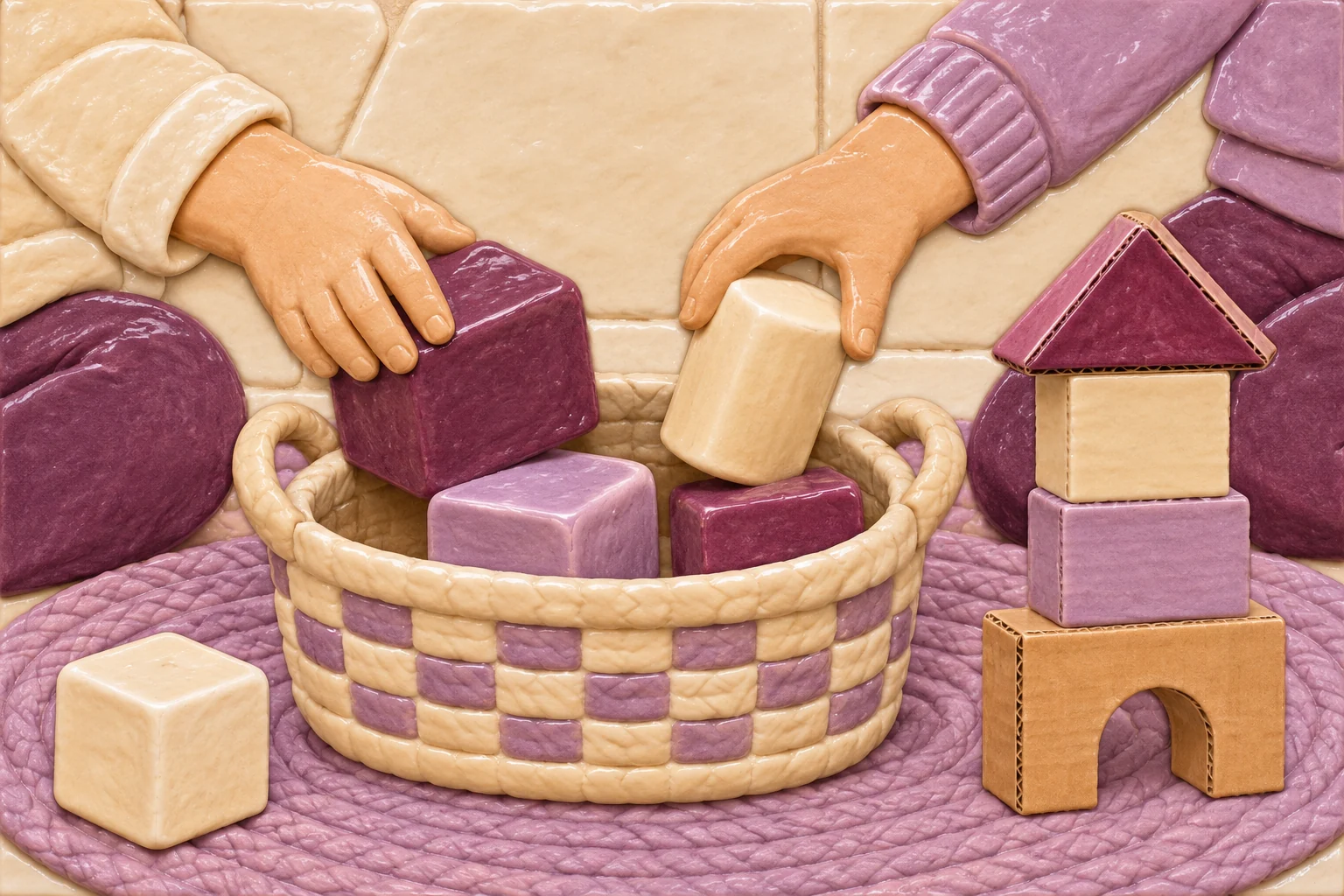
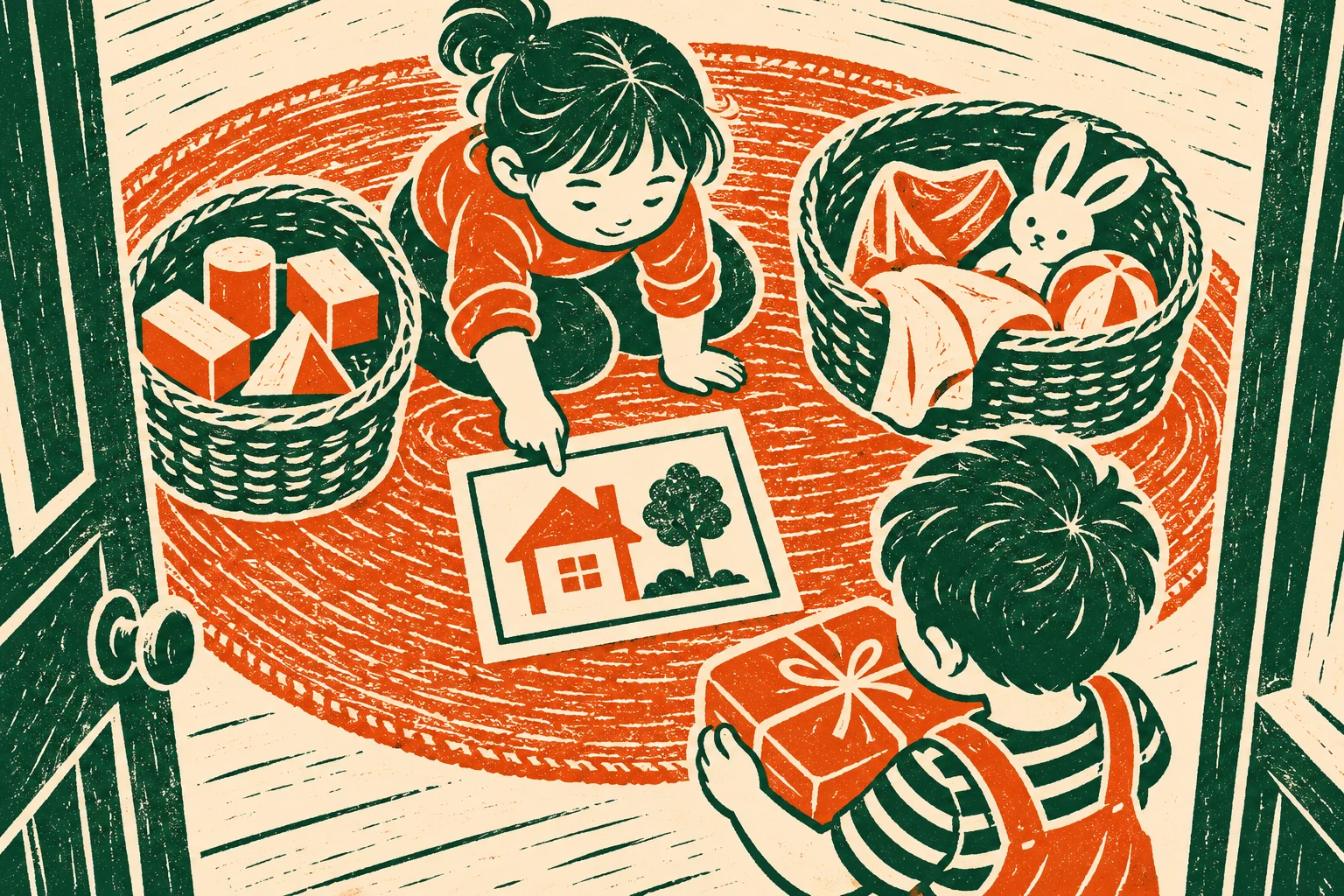
Putting pieces away can leave room for a different conversation after everyone has settled.
Keep one phrase easy to find
At the end of the day, a child might remember “save my place” more readily than the whole conversation that led to it. Agree on a word, gesture or picture adults can recognise in more than one setting. Show a second caregiver what the child actually did and how you replied. When circumstances change, bring the choice back rather than assuming that yesterday's response still fits.
Practise the phrase with something worth saving. During a calm play period, help a child pause a tower or drawing while they fetch another piece. Offer the same choice when a transition comes up. If space is limited, agree on which part can be carried or photographed for the child's own reference. Keep the conversation about what the learner wants people to understand. You can use a quick sketch when a child is uncomfortable having their work photographed.
The block tower will eventually stand or fall again. The child can reach out, point or try a word, and the adult can respond to what the child is asking for. That exchange belongs in the classroom, on the way out of the library and anywhere else a learner needs a pause before continuing. Choose the phrase together. It works best when the people who hear it know how to help.