
Caterpillar Color Play: 6 Brilliant Segment Stories
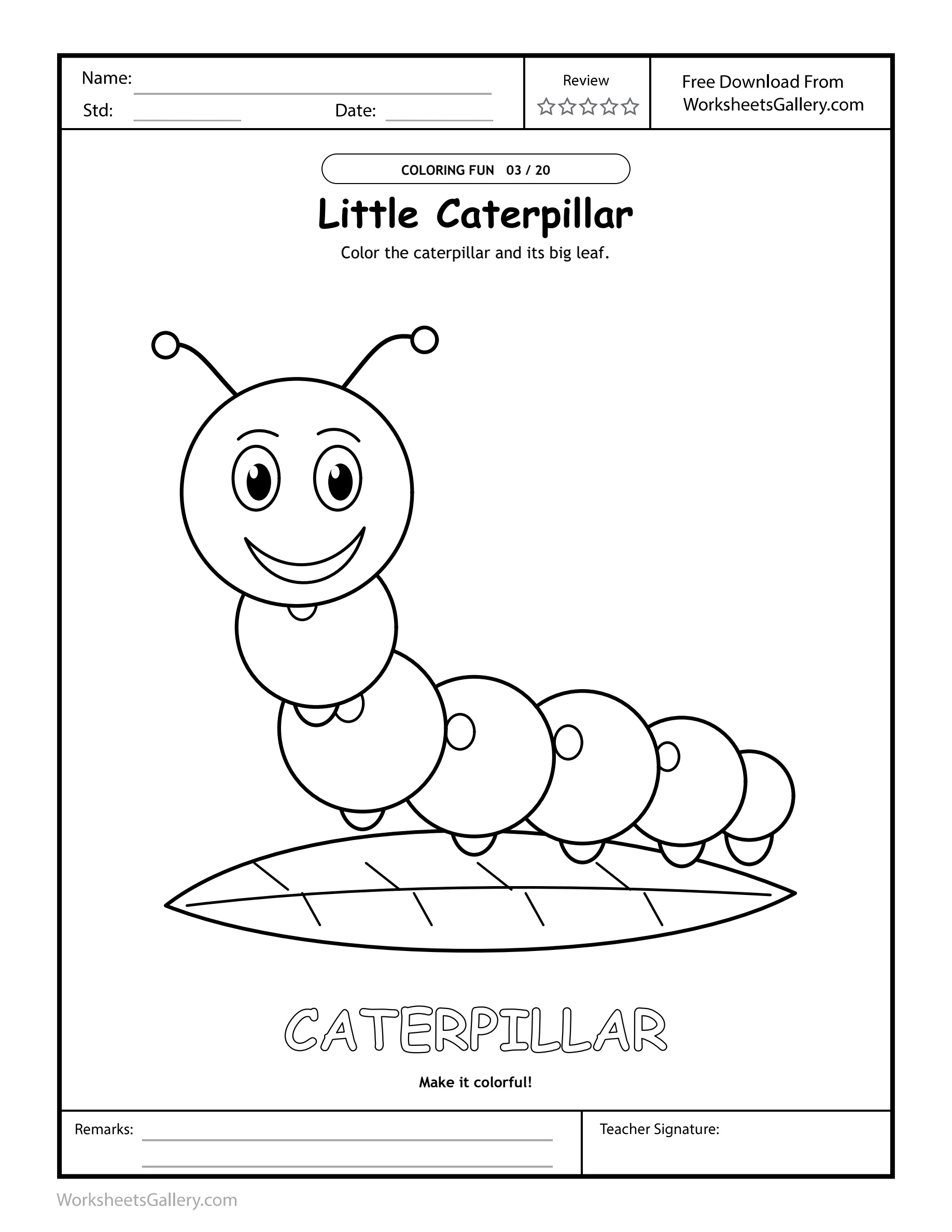
First comes a green section; perhaps the next one becomes orange, or perhaps the artist changes the plan. Caterpillar Color Play uses a rounded, segmented character to explore a sequence that belongs to its maker. The Little Caterpillar worksheet supplies an outlined creature above a broad leaf, with a large topic word below. It does not prescribe alternating colors or offer a completed reference to match. Begin by looking along the body together. The learner can choose a starting region, test a color and decide how the next section relates to the one already marked.
Caterpillar Color Play lets a sequence tell a story
The Caterpillar Color Play body sections create a visible order without dictating a color order. A child might repeat one hue, alternate two, create an irregular rainbow or give a special section its own accent. Ask about that intention before judging whether the colors follow a pattern.
Caterpillar Color Play can include a repeated sequence when the child chooses one. An adult should not quietly turn an invented story into an alternating-color test. If the learner changes the plan halfway through, discuss the new idea rather than treating every change as a mistake.
Kabir gives Caterpillar Color Play an imaginary journey
Kabir and his aunt invent a caterpillar travelling through different gardens. He chooses yellow for a sunny stop and purple for an evening stop. His aunt asks what might come next, and he points to another body region before selecting a crayon.
Their Caterpillar Color Play story does not need a color pattern an adult can predict. Kabir explains that the next garden has orange flowers, so he chooses orange. His aunt records the dictated journey on a separate card, leaving the printable's outlines and topic word unchanged.
Caterpillar Color Play at home can make a color change meaningful even when the result looks irregular. Kabir's story is an example, not a script to impose. Another child may prefer all-green sections and a short explanation about a favorite crayon.
Six Caterpillar Color Play games for a changing journey
These optional Caterpillar Color Play games use spare paper, filled swatch cards or an adult-written story strip. They extend a chosen idea without adding compulsory work to the worksheet. Select the game that makes the learner's current sequence or mark decision easier to explain.
1. Caterpillar Color Play makes a first-stop card
Invite the learner to put one chosen color mark on a card and dictate a name for that stop. Caterpillar Color Play beginnings can be about a pretend garden, a mood or simply a hue the child enjoys. An adult writes FIRST beside the filled mark if the word is useful.
Ask which body region will connect with the card. The child can point before coloring. This separates planning from tool control and avoids requiring a long spoken account before the first mark is allowed.
2. Give Caterpillar Color Play an unexpected-next turn
Partners each choose a swatch for a possible next section and explain their reasons. The artist decides which, if either, to use. Caterpillar Color Play turns give a younger learner authority over the picture instead of making the adult's suggestion the answer.
A rejected swatch remains a possible idea for another drawing. The child does not have to prove a suggestion bad in order to choose something else. Keep the exchange light and focused on the pictured sequence.
3. Caterpillar Color Play opens a repeating-stop option
On separate paper, make two color marks that the child would like to repeat. Point along the proposed order before using it anywhere. Caterpillar Color Play repetition is optional and explicit: the learner chooses a rule rather than discovering an unstated adult expectation.
If the artist changes the rule later, ask whether that change was deliberate. This distinguishes a chosen new story from an attempt to follow a repeated sequence that became confusing. The two situations deserve different responses.
4. Send Caterpillar Color Play a leaf postcard
For Caterpillar Color Play, the learner sketches a broad leaf on another card, then gives an adult a brief message from the imagined character. Caterpillar Color Play postcards give the leaf a role beyond being the last large region left to fill. The child might describe a resting place or a place to hide in a pretend story.
Keep invented events separate from claims about real caterpillar species or diets. The picture can support imagination without becoming an unverified animal-care lesson. A receiver looks for the chosen leaf color and asks about the message.
5. Caterpillar Color Play compares patch and vein marks
Create one broad patch and several short lines on a test scrap. Ask which marks the child would like for a body section and which for a leaf detail. Caterpillar Color Play comparisons use actual material effects to inform a picture decision.
The learner may invent a third mark. Let it remain a useful trial even if it is never added to the worksheet. Experimenting does not require filling every available region with every technique explored.
6. Make Caterpillar Color Play a journey narrator exchange
One partner points along the colored body while the artist explains two or three stops. Exchange roles using a separate invented drawing. Caterpillar Color Play narration allows the child to guide another person's attention through an ordered picture.
An adult can help record unfamiliar words or accept gestures instead of speech. The goal is to make the chosen journey understandable, not to memorise an adult-written tale or deliver a complete performance for the class.
Caterpillar Color Play has more than one kind of region
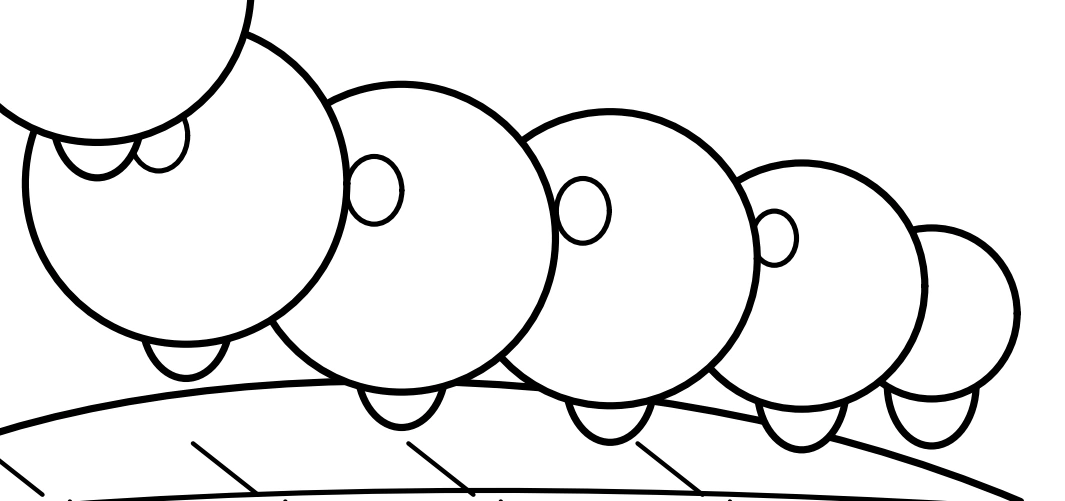
The source instruction invites coloring the caterpillar and its big leaf. The character combines rounded sections, a large face, antennae and smaller feet. The leaf is broad at its middle and pointed at its ends, with a central line and finer veins inside.
Caterpillar Color Play therefore offers several physical scales. A broad mark that feels comfortable in one body region may be too long for a small foot. An adult can point out the difference and offer spare paper for a shorter trial, without steering the child's hand across the source.
The outlined CATERPILLAR word is another optional coloring region. Read it aloud if the learner is interested. Caterpillar Color Play is not asking the child to trace that word, spell it from memory or complete a letter exercise before returning to the picture.
Five Caterpillar Color Play learning possibilities
- Sequence awareness: notice which body region comes before or after another.
- Independent decision-making: choose whether a color repeats, contrasts or changes the story.
- Boundary inspection: distinguish adjacent round sections before adding marks.
- Motor adjustment: change mark length between broad regions and narrow details.
- Narrative language: connect first, next and last with an invented picture journey.
Caterpillar Color Play brings looking, remembering a plan, language and hand coordination into one supported art visit. These possibilities are not outcomes guaranteed by finishing the page. A child can explain a sequence clearly while still finding small enclosed spaces awkward to fill.
A Caterpillar Color Play decision table for grown-ups
| Child's intention | Helpful response |
|---|---|
| Repeat a chosen pair | Point through that pair before the next section. |
| Invent a new stop | Ask about the new color's story. |
| Use one favorite hue | Notice another feature, such as mark size. |
Caterpillar Color Play works best when feedback fits the intention. A varied palette is not a failed repetition if no repeated rule was chosen. Ask the maker what they were trying before turning an observed difference into a correction.
Start Caterpillar Color Play with a small workable plan
At home, place the page where the learner can reach it comfortably and offer a familiar drawing tool. Read the instruction, inspect the body sequence and invite a chosen first region. Keep a test scrap nearby for exploring pressure or trying two neighboring colors.
For Caterpillar Color Play, an adult can steady a sliding sheet or help locate a boundary when asked. Avoid making a firm grip, perfect coverage or a fully colored tail the condition for success. Let the child show what they intended after a few marks.
Close Caterpillar Color Play with one remembered stop or one color relationship. A short dictated note can preserve the idea for later. The picture may still contain white regions; an unfinished-looking page can nevertheless record a clear artistic decision.
Caterpillar Color Play gives the leaf a separate voice
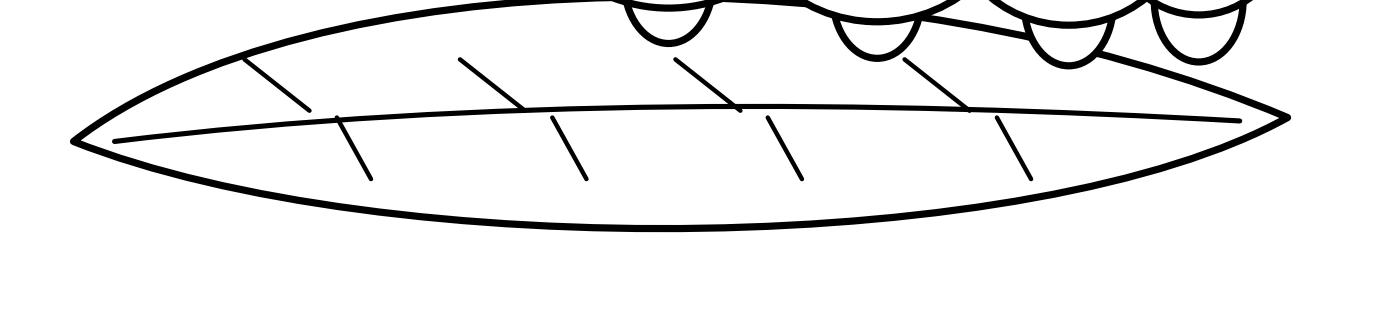
The leaf's larger outer shape and fine inner lines allow a different treatment from the body. The child may use a pale wash-like crayon mark, short strokes near a vein or a contrasting hue. None is compulsory, and green is one possibility rather than the printed answer.
Caterpillar Color Play can return to the leaf on another day with a new question: what kind of mark would make its central line remain visible? Test the idea elsewhere first if useful. A fresh drawing problem can invite regular practice without requiring the entire earlier picture to be redone.
Caterpillar Color Play in a classroom journey corner
A teacher offers individual pages with small filled swatch cards available nearby. Children decide whether their caterpillar has repeated colors, a favorite single hue or invented journey stops. The adult writes a brief dictated description on a separate display label.
Caterpillar Color Play partners point along the regions the artist described. They listen for a chosen order instead of expecting every page to follow the same pattern. Provide gestures, adult label reading and broader mark samples when needed, keeping the display free of rankings for realism or neatness.
Keep Caterpillar Color Play responsive to the learner
Preschool and kindergarten art time can include this page for many children between three and six, with support based on current experience. Reading the long topic word is an adult contribution. A learner may participate through color selection and pointing before explaining a whole story.
Caterpillar Color Play can become frustrating if an adult introduces an unwanted pattern, corrects every edge crossing or insists on finishing the broad leaf after interest has faded. Keep the chosen sequence meaningful and the amount of work negotiable. Pause for tired hands and offer another visit when a new idea attracts attention.
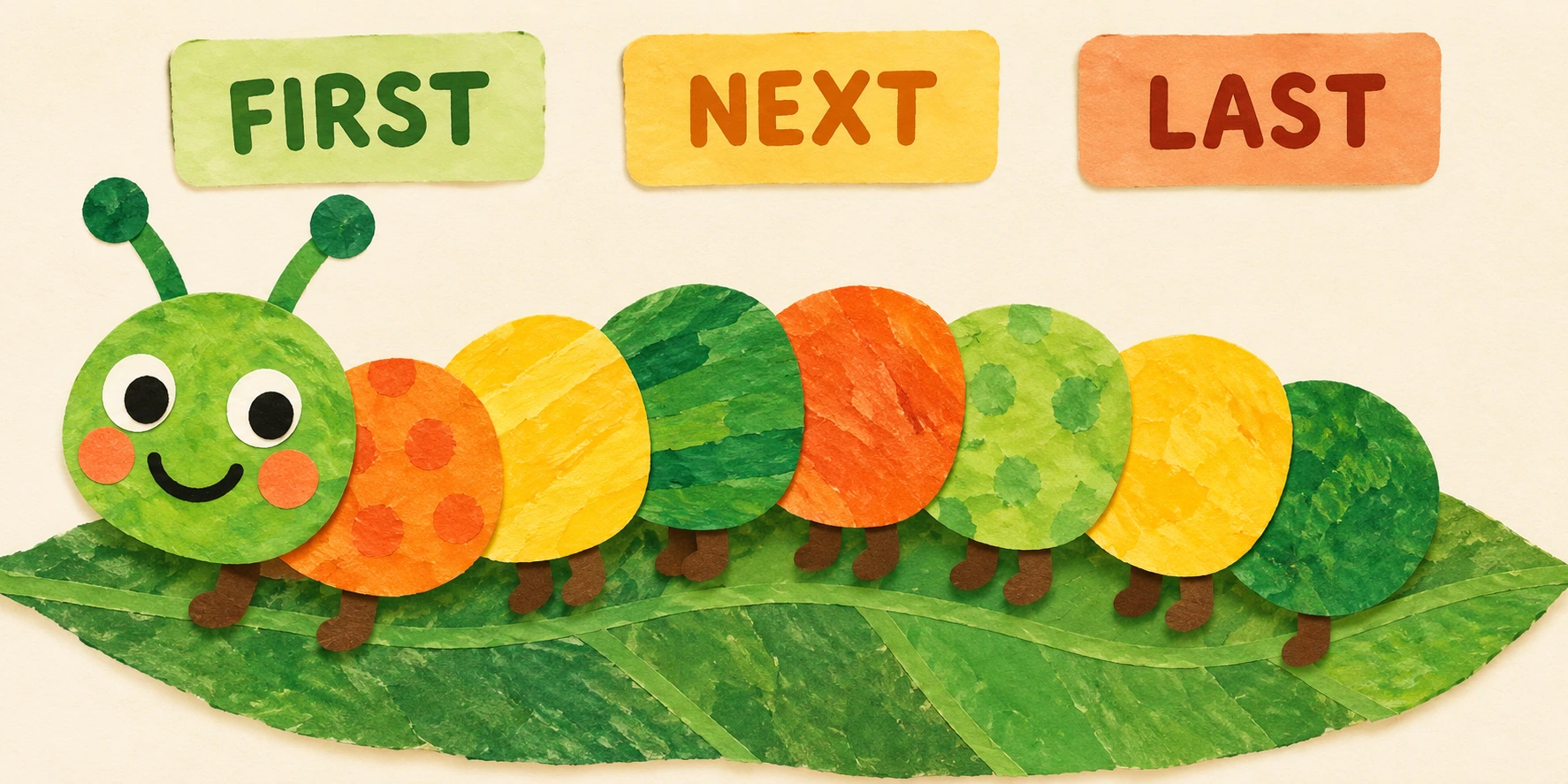
Specific Caterpillar Color Play encouragement might be “You repeated the yellow because that garden returned in your story.” The separate paper-collage scene uses FIRST, NEXT and LAST cards to illustrate one possible journey. Its colors remain an example the learner may change.
Caterpillar Color Play files and related art invitations
The original sample is distinct from the clean member edition. For unbranded Caterpillar Color Play, use the premium download while signed into a membership account that currently has eligible access. Save the printable PDF and inspect its US Letter frame in print preview. Retain the antennae, leaf tips and topic word when choosing scaling. The clean file contains no watermark, website name or embedded advertisements; site ads do not become part of the saved worksheet.
For contrasting activities, try the chick's two-color reference, a guided giraffe palette or long garden drawing paths when those tasks interest the child. Adults can explore NAEYC's family creativity article and PBS Parents' art ideas for experiences beyond printed outlines. Keep independent drawing available beside the worksheet so a story can develop into marks of the child's own design.
Popular Worksheets
Printable resources families and teachers are downloading now.
 Free
 Free
 Free
 Free