
Bunny Picnic Colors: 4 Brilliant Carrot-Story Games
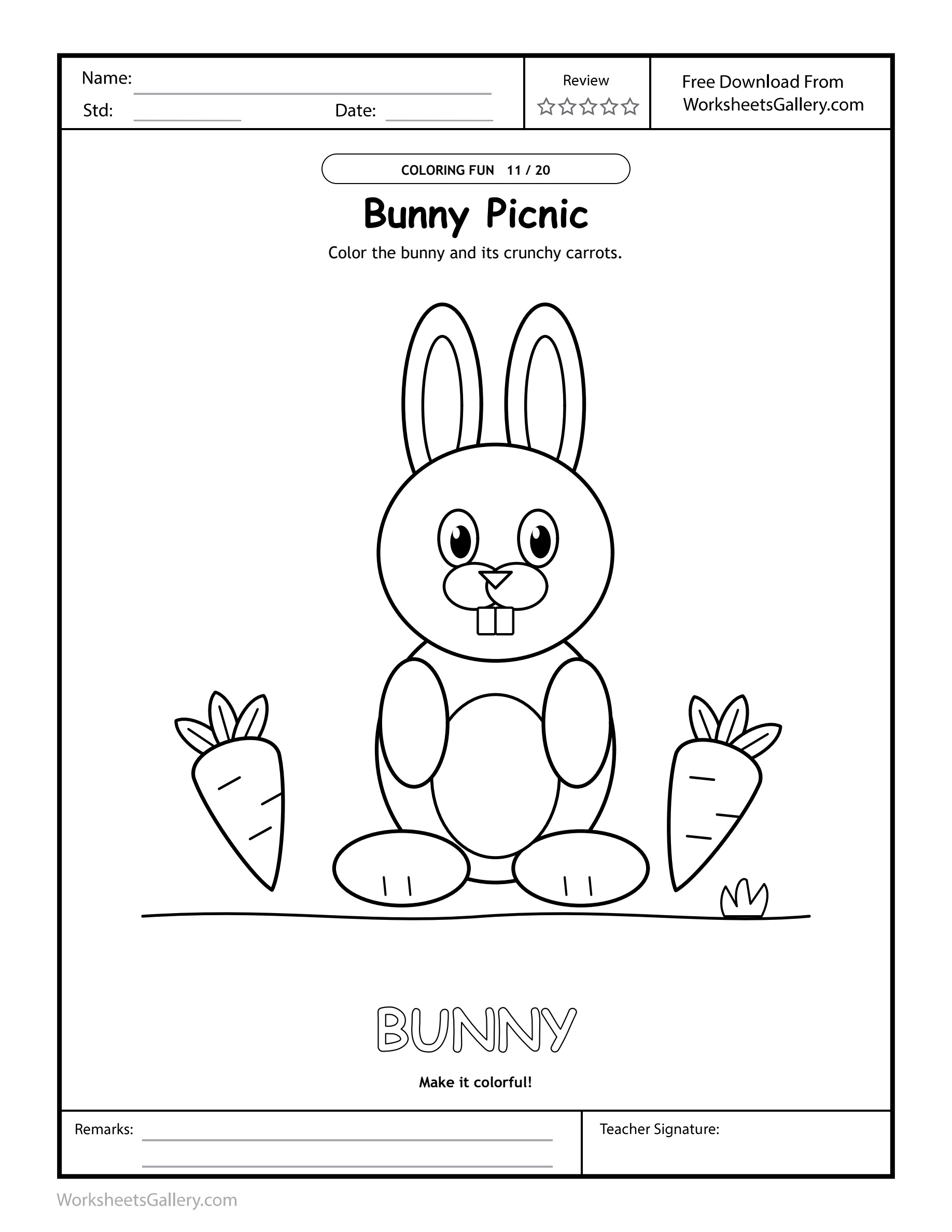
A picnic can begin with a story before anyone chooses a crayon. Bunny Picnic Colors invites preschool artists to give a seated rabbit and two carrot props their own imaginary afternoon. The long ears offer spacious outer shapes with narrower interiors, while each carrot combines a broad root and little leaves. Nothing on the page assigns the colors. Ask where the bunny is going, what it might say and which detail should carry that idea. A child may answer through pointing, a few marks or an elaborate tale, with an adult listening nearby.
Aanya opens Bunny Picnic Colors with a surprising invitation
Aanya tells her aunt that the rabbit is hosting a picnic on the moon. Ordinary orange carrots suddenly seem optional: she wants one golden prop and one purple prop because her imaginary guests enjoy surprising decorations. Her aunt asks which part of the picture will reveal the setting.
Their Bunny Picnic Colors session begins with a color trial on a spare invitation card. Aanya makes two patches and dictates “COME TO MY MOON PICNIC.” Her aunt writes the message beside the samples. They return to the worksheet with a story to discuss rather than a finished model to copy.
Bunny Picnic Colors stories need not become elaborate. “This rabbit likes yellow” is enough of a reason for a first choice. The adult's role is to make the intention welcome, then help with practical matters such as finding a comfortable tool or stopping the paper sliding.
Bunny Picnic Colors looks closely at ears and props
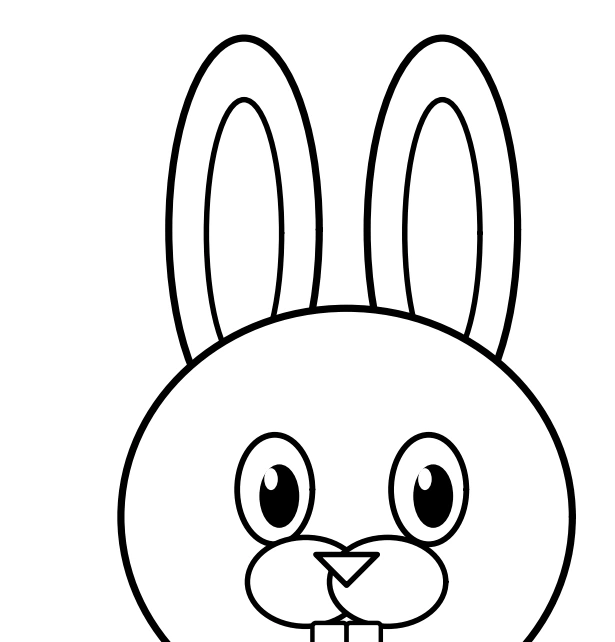
The inner ear outlines create smaller shapes inside two long outer forms. Invite a finger to indicate the region before introducing a tool. If the child wants different interior and exterior colors, the boundary gives that decision a visible place.
Bunny Picnic Colors can use short marks in a narrow tip and broader strokes lower down. These are possibilities to try, not requirements for a perfect finish. A large movement on scrap paper may explain the intended effect more comfortably than repeated attempts inside a small region.
The Bunny Picnic Colors source also prints the outlined word BUNNY beneath its picture. An adult can name it in conversation. Filling those letters or exploring their sounds remains optional; the coloring invitation does not ask the learner to trace a word or complete handwriting rows.
Six Bunny Picnic Colors opportunities beyond filling space
- Narrative planning: an imagined invitation gives a color decision a purpose that another person can understand.
- Part-and-whole noticing: inner ears belong within larger ears, making a small boundary relevant to a chosen plan.
- Movement adjustment: long shapes and compact leaves invite different mark lengths with the same familiar tool.
- Expressive vocabulary: words such as guest, prop, leaf, inside and picnic become useful during a real conversation.
- Decision ownership: the learner can accept, reject or revise a suggestion while keeping authorship of the picture.
- Shared attention: a listener follows the child's pointing and responds to the exact detail being discussed.
Bunny Picnic Colors brings thinking, hand movement and spoken explanation together, but these abilities do not advance at one fixed pace. A child may invent a detailed narrative while preferring broad scribbles. Another may carefully fill an ear without wanting to tell a story aloud.
Four Bunny Picnic Colors games for a pretend gathering
Choose a single extension when the child wants more. Each game uses ordinary paper as an additional play surface, keeping new writing demands away from the supplied coloring picture. Adult lettering can accompany the child's marks and dictated ideas.
1. Bunny Picnic Colors sends a color invitation
Fold a scrap into a small invitation and ask the artist to choose two visible color patches for the pretend event. Write a short dictated welcome beside them. Bunny Picnic Colors invitations might announce a sunny garden meal, a rainy indoor gathering or Aanya's impossible moon picnic.
Give the Bunny Picnic Colors invitation to a willing listener. They identify a patch and ask where its color appears in the drawing. The maker may explain a deliberate match or say that the invitation has a different palette; either answer supplies useful picture talk.
2. Bunny Picnic Colors gives each carrot a story role
Draw two large carrot-like shapes on another sheet. The child invents a role for each: a decoration, a pretend microphone or a present. Bunny Picnic Colors prop play shifts the discussion from the “correct” vegetable color to what a chosen mark communicates in an invented scene.
Keep Bunny Picnic Colors pretend play distinct from real rabbit care. The worksheet is a character picture, not a feeding chart. An adult can enjoy the imaginary carrot microphone without drawing conclusions about what an animal should eat or handle.
3. Bunny Picnic Colors tries an ear-size studio
Make one broad ear-shaped outline and one narrower version on spare paper. Invite the same comfortable tool to explore both. Bunny Picnic Colors size trials let the artist notice when a sweeping mark fits and when a shorter movement feels easier.
The Bunny Picnic Colors maker may choose the larger study as the main work for today. Returning to the original tiny tip is optional. Preserve the child's color intention while changing the size of the demand, rather than treating smaller coloring as the only worthwhile outcome.
4. Bunny Picnic Colors shares a guest's reply
An adult plays an imaginary guest who has received the invitation. Ask one specific question, such as which decoration the guest should look for. Bunny Picnic Colors replies give the child a reason to point, describe or add a mark that strengthens the story.
End Bunny Picnic Colors roleplay by recording the child's final sentence on a separate note. Read it back exactly enough to check the meaning. The adult handles transcription; the learner supplies the idea and decides whether the listener understood.
Bunny Picnic Colors offers two carrots with different-sized details
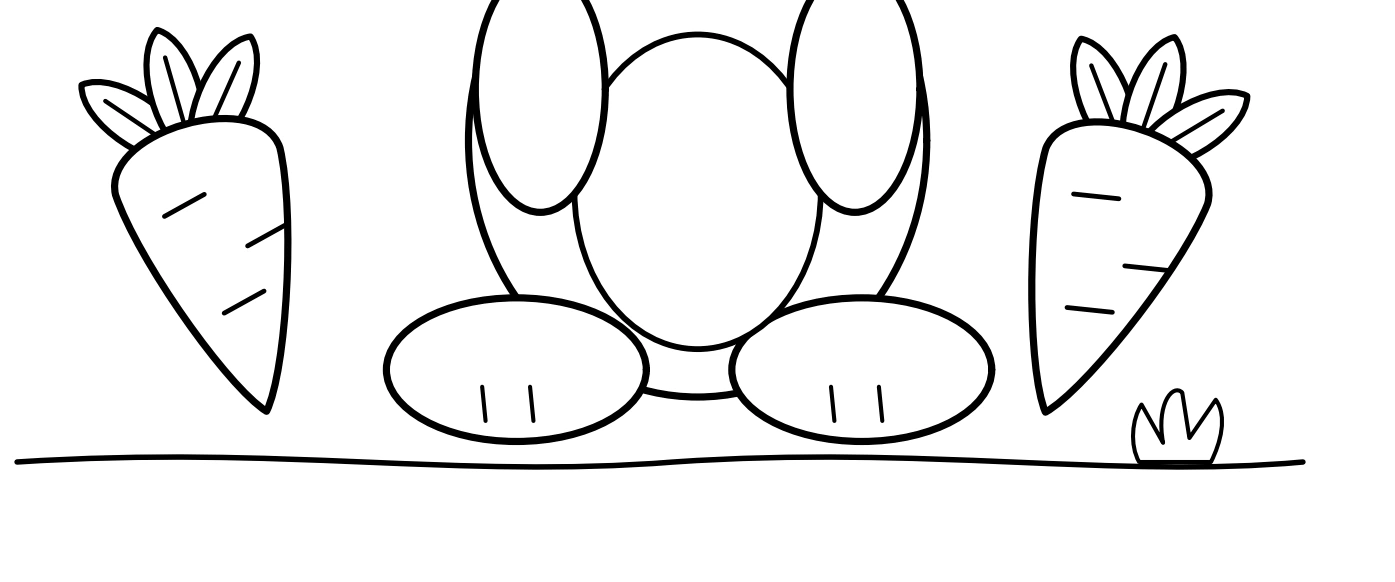
The two roots provide broader spaces than the leafy tops. Ask whether the artist wants each prop to look alike or serve a different visual role. The answer can guide a color choice without establishing a compulsory pair or alternating pattern.
Bunny Picnic Colors leaves may receive just a few marks while the roots receive fuller coverage. That difference can be intentional. If the child dislikes a crowded leafy area, offer a larger drawing of that feature for a fresh attempt instead of repeatedly correcting the original.
Bunny Picnic Colors turns a home table into a story corner
Begin with a clear place for the sheet, a small selection of familiar materials and room for a test card. Read the printed invitation to color, then let the child choose a feature worth exploring. Ask about a possible picnic story only if that kind of play appeals.
For Bunny Picnic Colors at home, the adult can steady the sheet or read a dictated note aloud. Give enough waiting time for the child to choose. Asking a string of questions while the hand is moving can make a relaxed task feel like an interview.
Close the Bunny Picnic Colors visit with a descriptive observation: “You gave the two props different jobs in your story.” Place the drawing where the child can explain it to a familiar person. A private explanation to one listener can be more comfortable than a large display.
A classroom Bunny Picnic Colors postcard exchange
Set out individual worksheets and a few postcard-sized scraps. Children choose a color intention, work on a selected area and dictate a brief message to the teacher. Partners receive the message and find the relevant feature, with adult reading support when needed.
Bunny Picnic Colors exchanges work best when responses describe what is visible. A partner might notice a bright inner ear or two unlike carrot roots. They need not assess neatness, realism or whether the picture resembles a teacher's example.
For a quieter Bunny Picnic Colors option, invite the learner to point while the adult speaks the message. Another child may prefer to show the sample card alone. These routes preserve participation without demanding public storytelling or independent writing.
Bunny Picnic Colors keeps the artist's choices visible
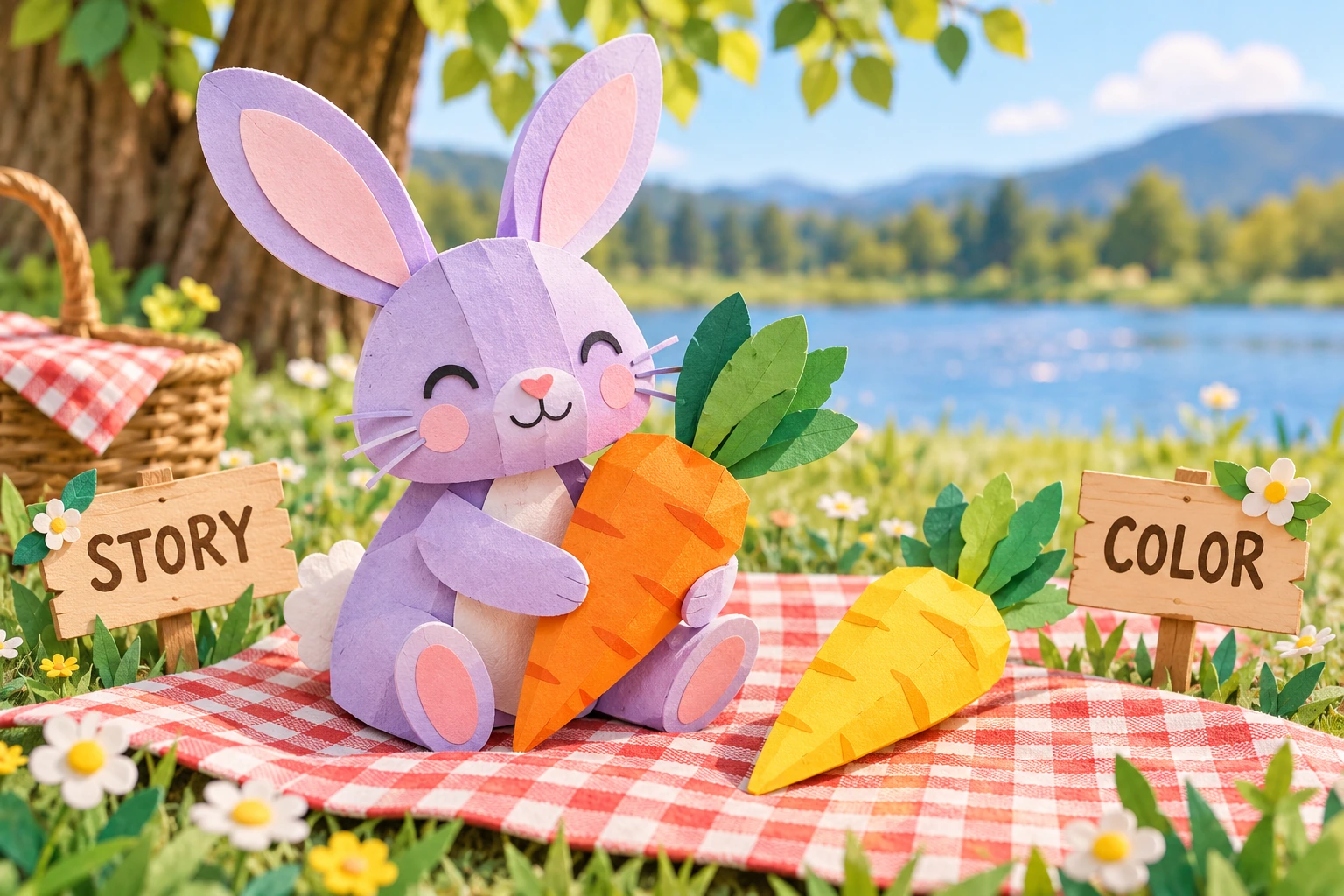
The separate collage pairs a lavender paper rabbit with orange and yellow props beside STORY and COLOR signs. Its material and composition differ from the printable outline. Use it as an invitation to discuss possibilities, rather than a target finished worksheet.
Bunny Picnic Colors can look completely different from this scene. An unexpected palette, an uncolored region or a few purposeful patches may carry the child's intention. Ask what the maker meant before adding your own interpretation.
Bunny Picnic Colors troubleshooting begins with a small question
| A moment to notice | A supportive response |
|---|---|
| The ear tip feels crowded. | Try its shape at a larger size. |
| The story changes midway. | Ask which new idea the colors should follow. |
| The child rejects your palette. | Return the choice to the artist. |
Common Bunny Picnic Colors missteps include insisting on pink ears, correcting imaginative carrot colors or requiring every letter to be filled before the picture counts as finished. Such rules do not appear in the source. Support a chosen detail rather than inventing a hidden answer key.
Who might enjoy Bunny Picnic Colors again tomorrow?
Many preschool and early kindergarten children around ages three through six can engage with this sheet, with help adjusted to their experience. Selecting tools, pointing to a feature and making a broad sample are valid entry points. Compact leaf coloring may suit a later visit.
Bunny Picnic Colors can return through a new guest, another invitation or one additional ear detail. Keep the invitation specific and light. Stop if the hand becomes tired or the child loses interest; regular opportunities are more useful than an inflexible daily completion rule.
Find the Bunny Picnic Colors printable and another art direction
For a clean member copy of Bunny Picnic Colors, sign in with an active plan that covers the premium attachment, then download that PDF. Keep the original sample as a separate edition. The premium file removes watermarks and website/domain branding and contains no embedded ads. Check the complete US Letter page in the print dialog so the ears and bottom lettering remain within the printable area. Any advertising surrounding the online download stays outside that clean document.
If assigned palettes interest your learner, visit the yellow-and-orange chick exercise or the giraffe's guided-color picture. For a separate movement activity, try bunny bounce arches. Adults may also browse PBS Parents' creative project collection and NAEYC's family art discussion, alongside chances for children to invent drawings without a supplied outline.
Popular Worksheets
Printable resources families and teachers are downloading now.
 Free
 Free
 Free
 Free