
Train Carriage Colors: 4 Powerful Journey-Label Games
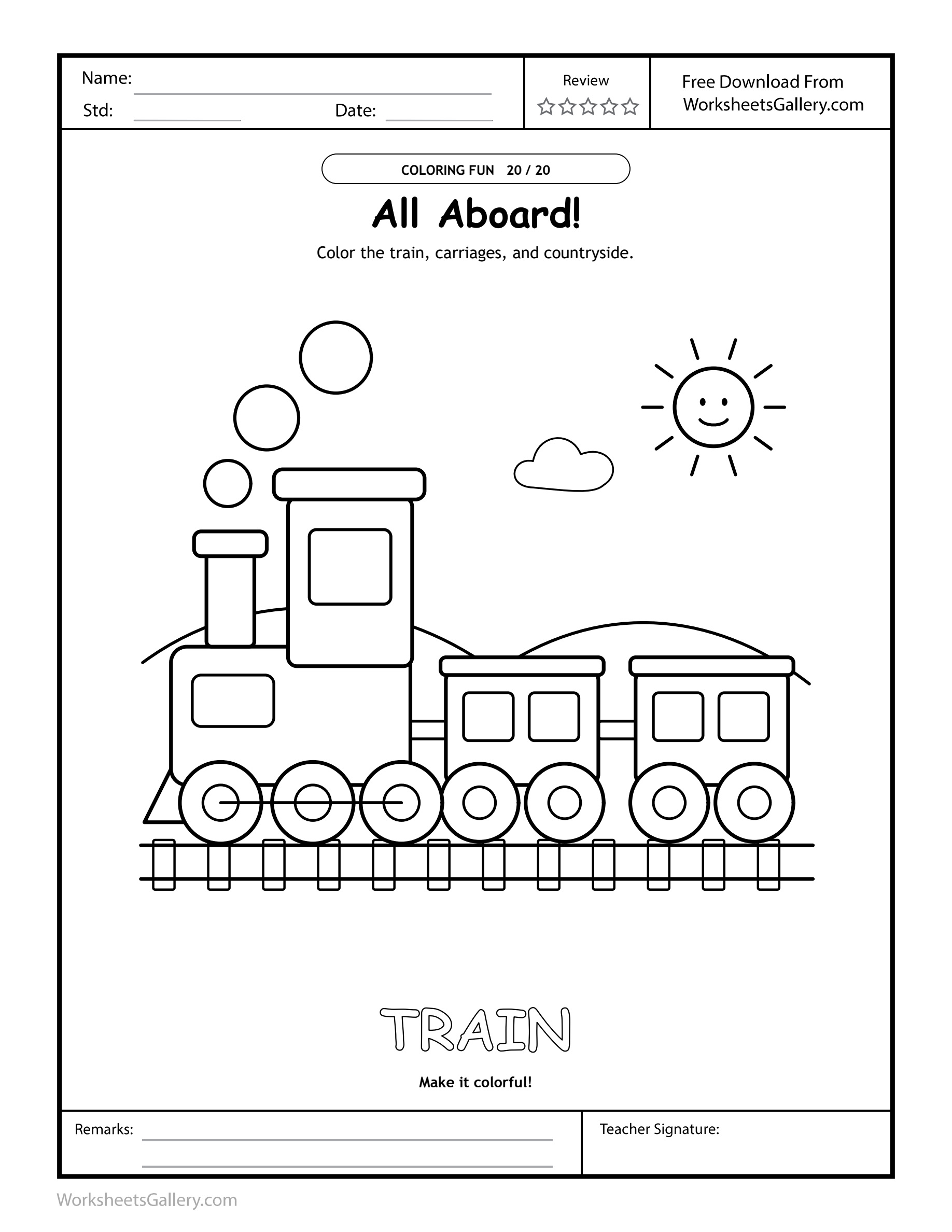
Connected carriages do not have to look identical. Train Carriage Colors invites a child to give an engine and two following cars their own visual identities in the All Aboard picture. Broad panels sit beside smaller windows and round wheel details, with countryside around the rail line. The source supplies no color pattern to complete. Ask whether the train should share one family of hues or let each unit announce something different. A learner can test that decision on a scrap, point to a chosen carriage or begin with one comfortable region of the actual page.
Train Carriage Colors plans a journey through visible choices
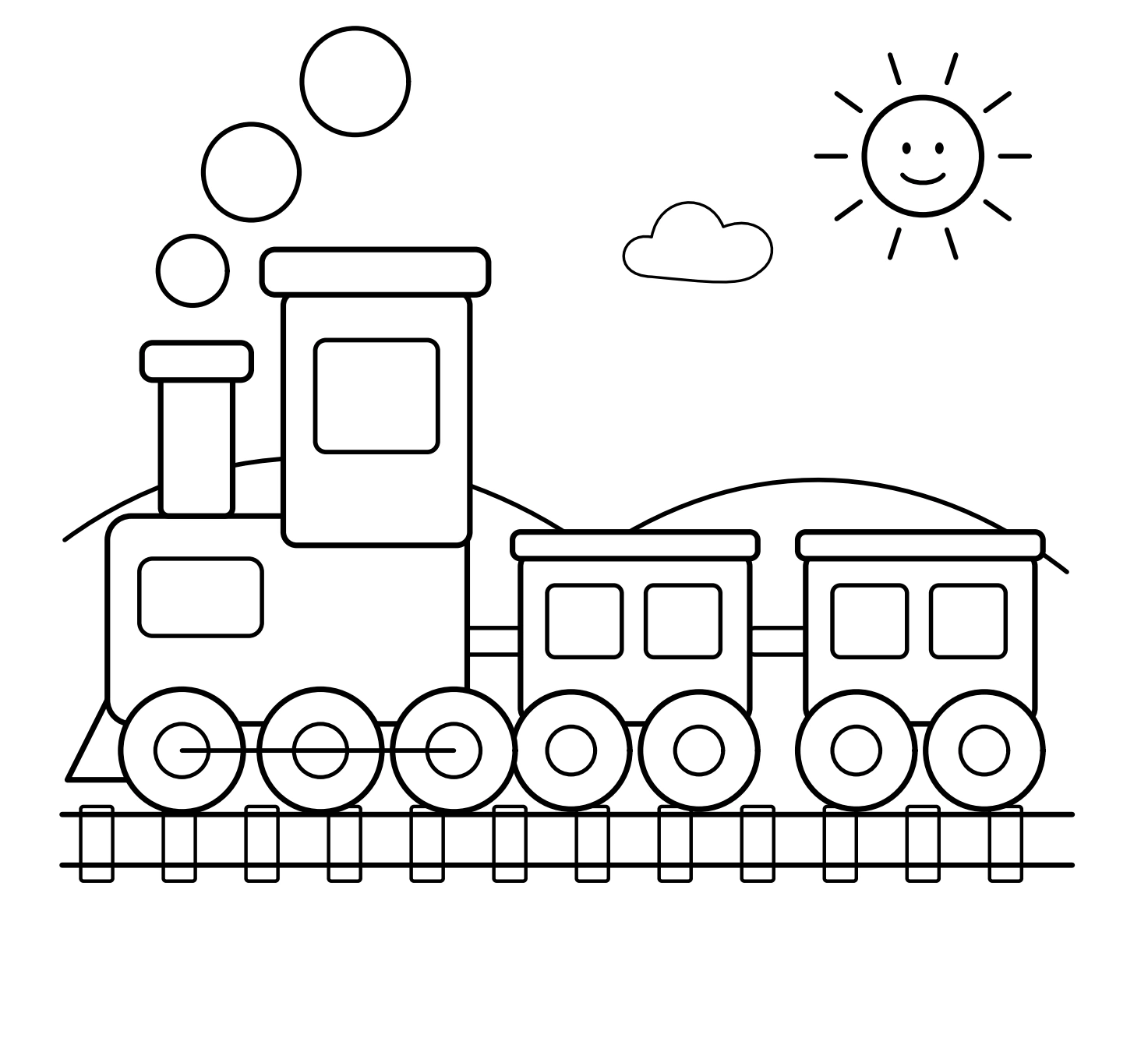
The printed direction invites coloring the train, carriages and countryside. One engine leads two cars, with connecting spaces that keep the units visibly separate. This arrangement supports a conversation about shared and different palettes without requiring a repeated sequence.
Train Carriage Colors includes the outlined TRAIN word underneath the scene. Read it aloud if it helps picture talk. The supplied activity does not ask for independent labels, letter tracing or counting before the child can begin coloring.
Ahaan gives Train Carriage Colors a three-part story
Ahaan imagines that the first carriage carries garden pictures and the second carries bedtime stories. His mother asks whether their colors should help a viewer remember those jobs. He tests greenish marks for one and lavender for the other, while choosing a warm engine.
Their Train Carriage Colors plan becomes a separate journey card. His mother writes ENGINE, CAR 1 and CAR 2 beside filled samples after he explains the roles. Later he changes one window accent and tells her that the story carriage needs a little light.
Train Carriage Colors can use identical cars for a completely different intention. The learner might want one connected-looking train rather than individually recognisable units. Ahaan's narrative illustrates a choice, not the only successful design or a rule for real railway vehicles.
Four Train Carriage Colors games for an imaginary route
Use separate scraps for these investigations so each question has room. Offer one extension at a time, following the maker's interest. A single carriage study or dictated message can be enough without producing another whole train.
1. Train Carriage Colors creates a filled journey card
Make three broad sample spaces for engine and two cars. Invite the child to place a mark in each, then dictate the job or name of that unit. Train Carriage Colors cards connect visible palette choices with meaning while an adult supplies any written labels.
Keep the Train Carriage Colors card open to revision. If the second carriage changes its role, a new sample or note can explain the change. Planning is a way to make an intention discussable, rather than a promise that the first choice must remain fixed.
2. Train Carriage Colors compares a matching pair with unlike cars
Draw two large carriage-like rectangles on one scrap and another pair on a second. The child can try matching hues in one study and different hues in the other. Train Carriage Colors comparisons make both possibilities visible without ranking one as more creative.
Ask the Train Carriage Colors maker which arrangement fits the imagined journey. Similarity may communicate belonging together; difference may make the units easier to name. The child can also prefer a repeated accent across otherwise different cars, inventing another relationship.
3. Train Carriage Colors sends a passenger clue
Invite a short description that helps an imaginary passenger find a chosen car. An adult writes and reads the clue to a partner. Train Carriage Colors clues can mention a palette, a nearby engine or a window detail instead of requiring specialist railway vocabulary.
The Train Carriage Colors listener points to the intended unit and asks one interested question. If the clue is ambiguous, the maker may add a detail or explain directly. This is an exchange about a shared picture, not a test of independent reading.
4. Train Carriage Colors opens a wheel-accent workshop
Draw a large circle with a smaller hub inside and test whether the center should repeat a carriage hue or introduce another accent. Train Carriage Colors wheel studies give compact source details a more comfortable trial surface before the learner decides whether to return.
The Train Carriage Colors artist can choose only one wheel to explore today. Identical hubs are optional. A small deliberate accent may communicate the plan without a long session filling every repeated circle beneath the train.
Train Carriage Colors studies the leading engine
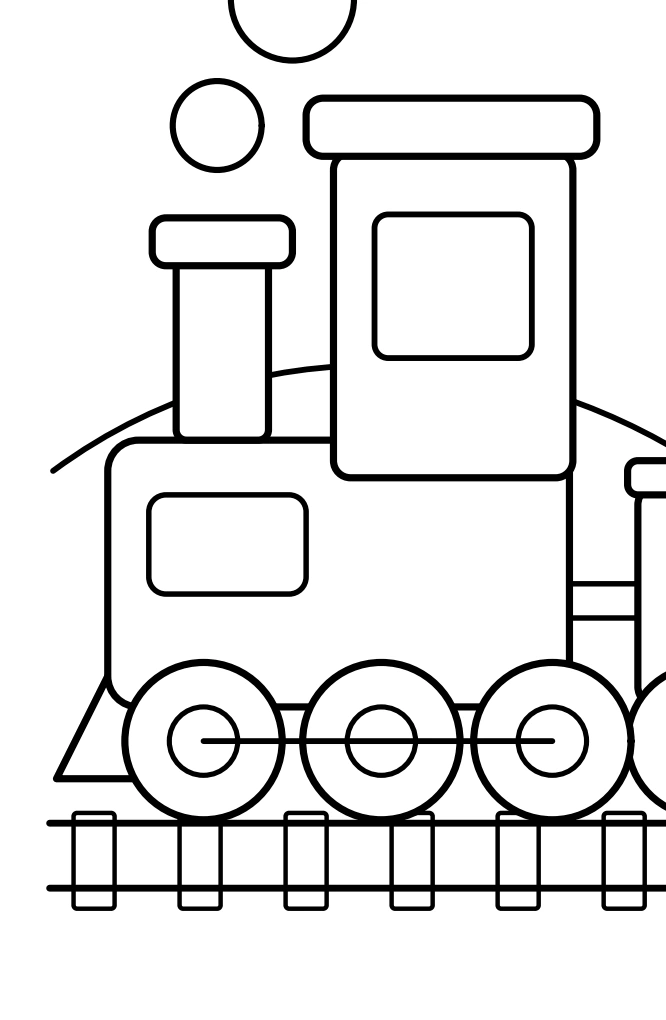
The locomotive brings a cabin, chimney, front panel and wheels into a broad silhouette. Windows and smaller details interrupt those larger areas. Let the learner locate one part and choose whether it should connect visually with the following cars or stand apart.
Train Carriage Colors can begin with a broad engine panel before exploring its fine spaces. If the child wants a small window clearly visible, make a trial on a larger rectangle first. Exact edge control is not necessary to explain a useful palette intention.
Six Train Carriage Colors opportunities on this route
- Grouping: distinguish connected units while recognising that they belong to one train picture.
- Comparison: inspect matching and contrasting arrangements before selecting a personal relationship.
- Movement planning: adjust from broad carriage panels to windows and compact circular hubs.
- Descriptive language: guide a listener through a clue about a chosen car or visible accent.
- Imaginative meaning: give a color a role in a journey story without needing a realistic model.
- Flexible authorship: change a palette or carriage identity and communicate the revised intention.
Train Carriage Colors links cognitive, motor and language choices without making them equally demanding. An elaborate narrative can accompany broad marks. A learner who prefers not to speak can use the filled journey card and pointing to make the intended arrangement clear.
Train Carriage Colors asks whether the cars should resemble each other
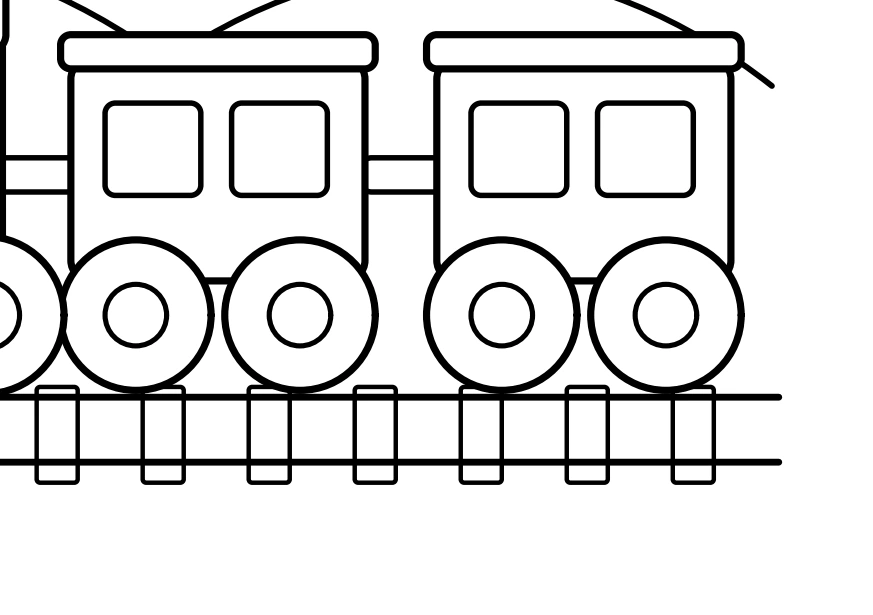
The two cars have separate windows and wheels within their own outlines. Repeated regions can invite similar marks, but the printed instruction sets no matching rule. Ask whether the learner wants one shared palette, two identities or another arrangement altogether.
Train Carriage Colors can echo one hue in both cars while changing their main panels. A child may discover that relationship through play rather than an adult demonstration. Leave room for an unexpected solution instead of presenting matching and different as the only two choices.
Train Carriage Colors at home follows the child's chosen car
Place the sheet within easy reach, with a stable surface, familiar materials and a spare card for trials. Read the direction and invite a starting unit. Offer to write a dictated journey label only when that story element appeals to the learner.
During Train Carriage Colors, support practical needs such as locating a window or keeping the page steady. Avoid making each repeated area a new instruction. Quiet work time gives the child space to explore a relationship without continually answering adult questions.
Finish Train Carriage Colors with a particular observation: “Your two cars share that small accent while their big panels differ.” This describes something visible. The maker can confirm the link or explain that the repeated color had another meaning.
A classroom Train Carriage Colors route board
The teacher provides individual worksheets and large journey cards. Each child chooses a unit or relationship to explore, tests a sample and dictates a short clue. Partners hear the clue through adult reading and locate the relevant part of the work.
Train Carriage Colors sharing can happen privately or in pairs. A learner may present one selected panel study rather than a completed scene. Welcome varying amounts of coloring without treating speed, realism or full coverage as the measure of participation.
The Train Carriage Colors board can group pictures by the intentions their makers describe: a shared train palette, distinct carriage jobs or a repeated accent. Let the children choose whether those descriptions fit. Avoid assigning a meaning from the colors alone.
Train Carriage Colors returns to a round detail
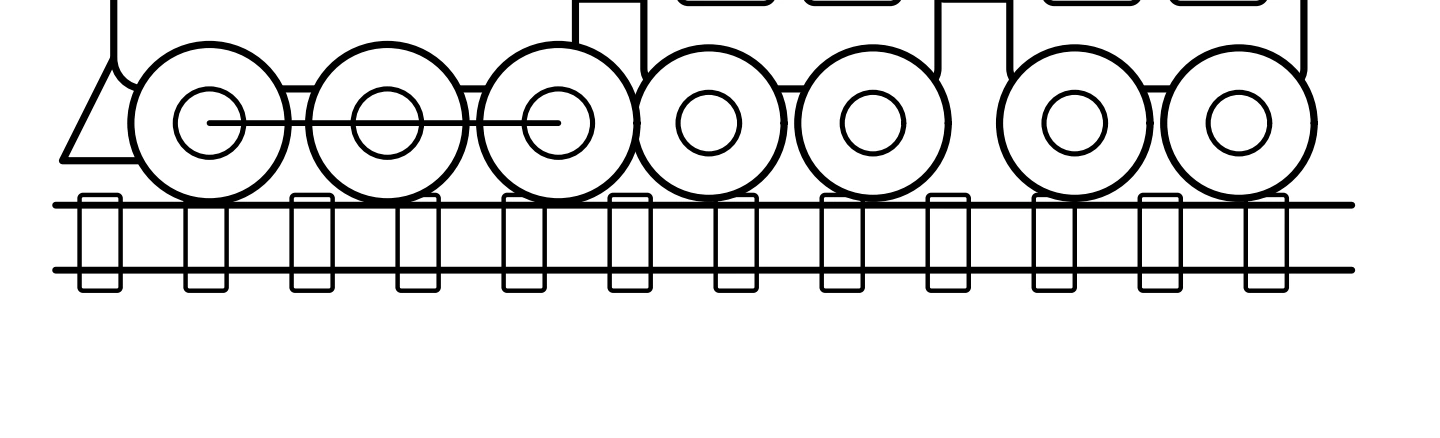
The wheel outlines and smaller central hubs supply circular regions below the larger panels. Their repeated arrangement can be explored a little at a time. The learner might choose an accent on one hub or leave several open while focusing elsewhere.
Train Carriage Colors can try a larger circle if a compact hub becomes tiring. A comfortable scale can preserve an interesting idea. Reducing the number attempted or changing the study size is often more helpful than repeatedly asking for smaller, neater marks.
Train Carriage Colors checks the intention before correcting
| A question arises | An invitation to try |
|---|---|
| The two cars look alike. | Ask whether a shared identity was intended. |
| A hub feels too small. | Make a larger circle study. |
| The story changes. | Revise the separate journey card. |
Common Train Carriage Colors support errors include enforcing an alternating palette, demanding black wheels or requiring every countryside area before stopping. Those rules are additional adult choices. The source offers open coloring, and the learner's selected focus can remain small.
Train Carriage Colors also benefits from distinguishing fantasy from real transport facts. A carriage carrying bedtime stories is an imaginative picture role. Enjoy the narrative without presenting the drawing as technical guidance about trains, engines or railway operation.
Train Carriage Colors uses a labelled craft as a possibility
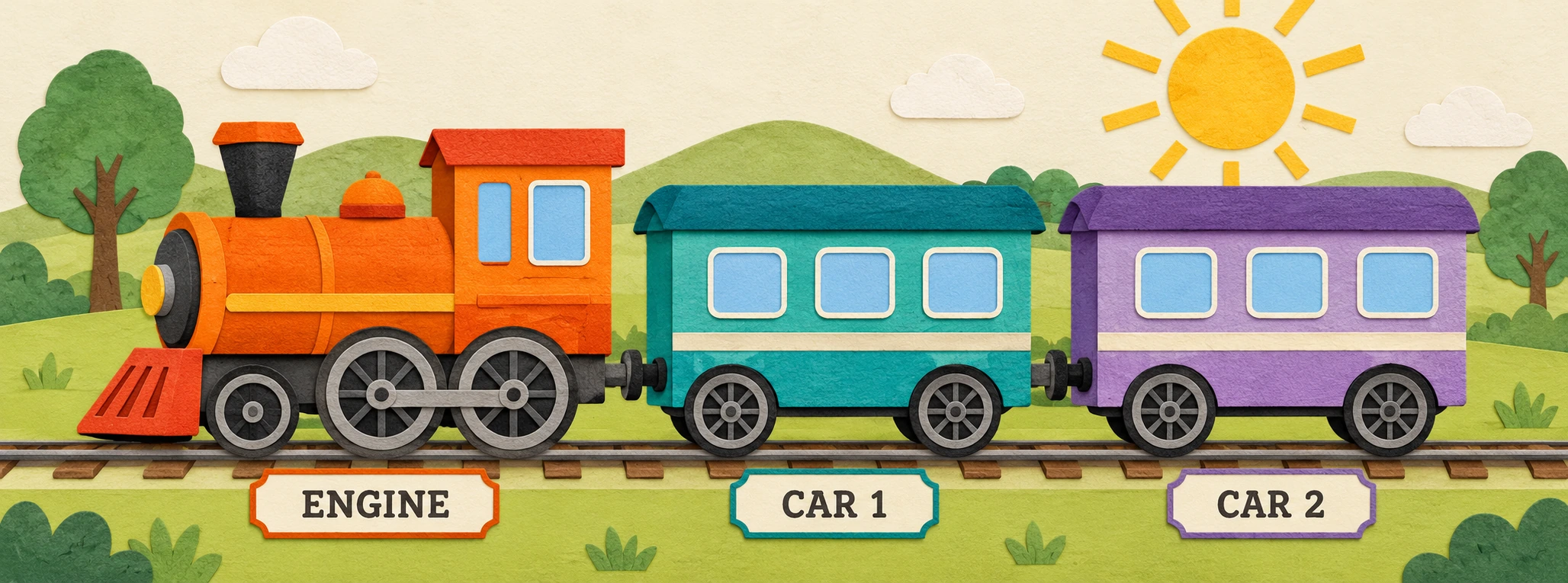
The paper example places an orange engine before one teal and one lavender car. ENGINE, CAR 1 and CAR 2 labels identify its three connected craft pieces. The filled design illustrates individual color identities without making its palette compulsory for the printable.
Train Carriage Colors may lead to a child-invented train drawing with another arrangement. That separate opportunity lets the learner control both the outline and its colors. It complements the supplied page rather than requiring a faithful copy of the craft example.
Train Carriage Colors can continue through small invitations
Preschool and early kindergarten children commonly explore pictures like this around ages three to six. Match support to tool experience, attention and interest instead of treating that range as a precision standard. Selecting a hue or pointing to a carriage can be a useful beginning.
Invite Train Carriage Colors again through one new passenger clue, a different window accent or a revised journey card. A specific small question can encourage regular art time without a full-page quota. Pause if hands tire or frustration replaces curiosity, leaving a willing return possible.
Train Carriage Colors gives repeated shapes a social purpose when the child wants one, but quiet coloring remains welcome. A learner does not need to perform a story or explain every mark for the activity to have value.
Save Train Carriage Colors for printing and a fresh direction
To obtain clean Train Carriage Colors, select the premium PDF while signed into an active membership that covers this attachment. Keep your sample copy alongside this distinct member edition. Watermark text and website/domain marks are excluded from its page, and the file carries no embedded advertising. Check the US Letter print view before printing, keeping the engine, final carriage, rails and lower label inside your printer's usable frame. Advertising on the surrounding site stays outside this clean file.
For another approach to palette support, compare the chick's guided two-color activity or a giraffe reference-palette exercise. Robot Steps corner routes is a separate tracing invitation. Adults can explore PBS Parents' art project ideas and NAEYC's perspective on creative experiences, alongside time for learners to invent pictures without supplied outlines.
Popular Worksheets
Printable resources families and teachers are downloading now.
 Free
 Free
 Free
 Free